Back

JAPANESE

$9,500

 
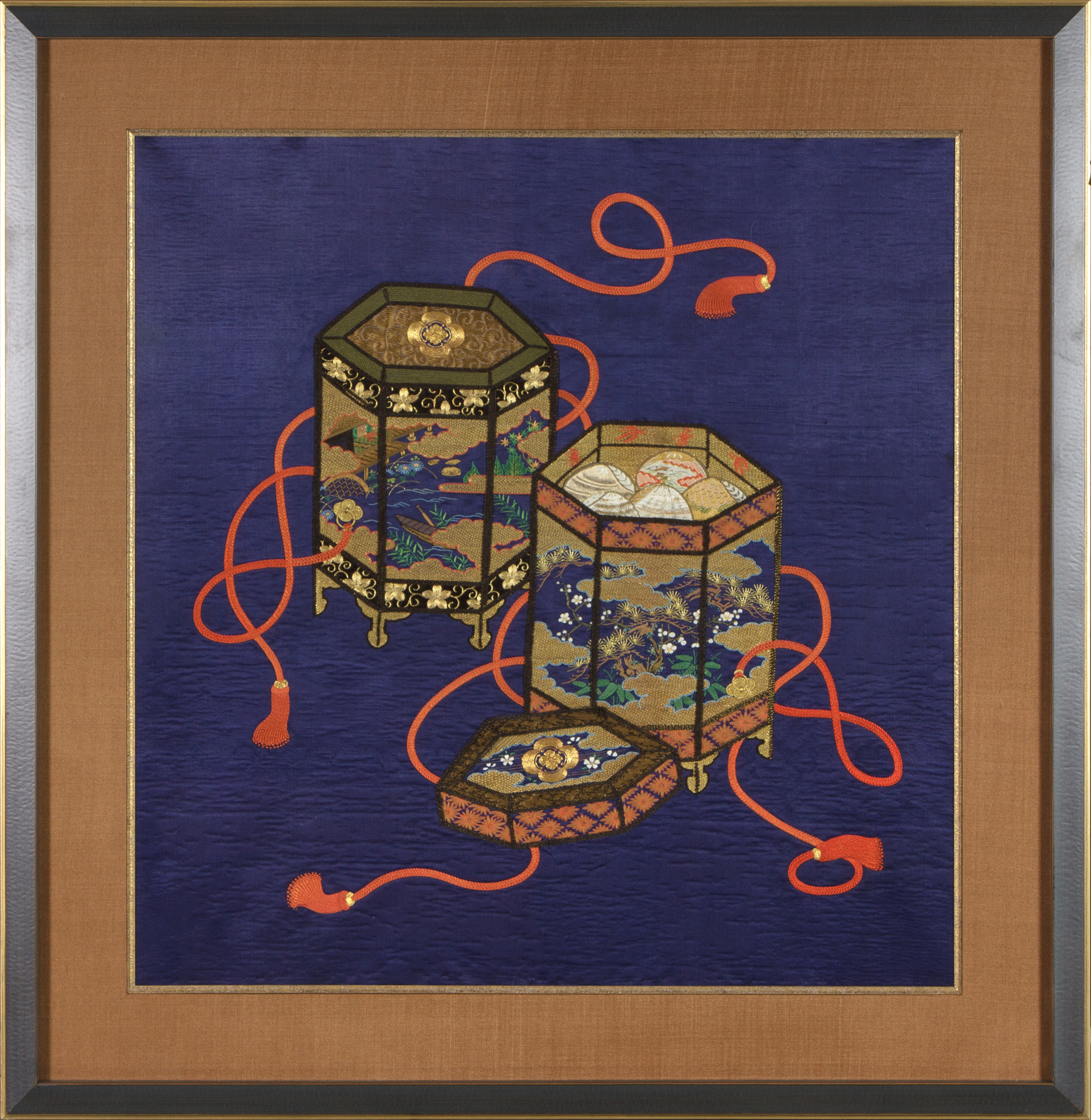
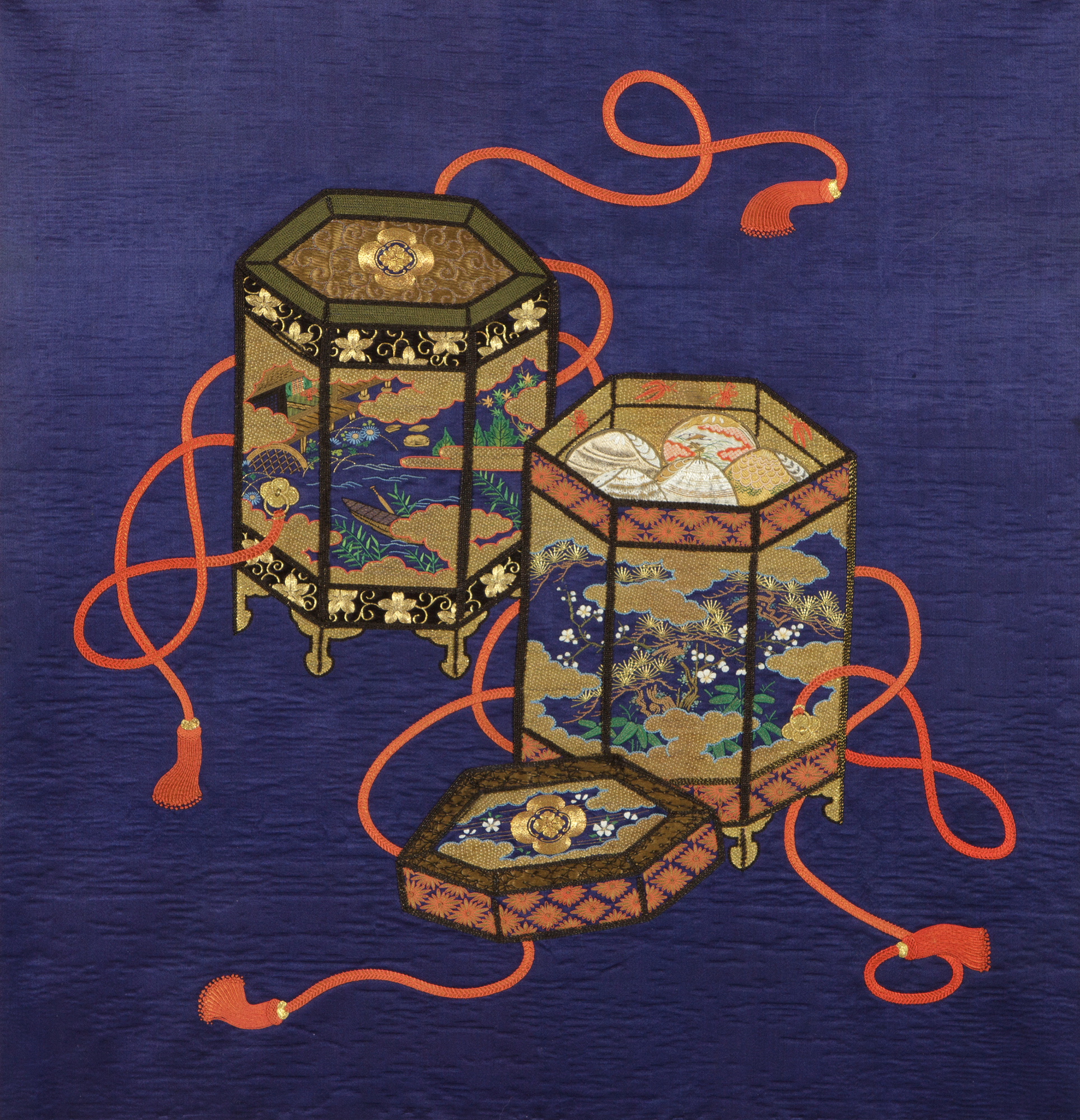
This fukusa features octagonal containers called kai-oke used to hold the traditional shell game kai-awase, or “shell-matching.” The game began around the 12th century and was originally played by court ladies, who vied with each other to match 180 pairs of clam shells painted on the inside with literary or poetic themes. Later, in the Edo period, the game became associated with weddings, and even the motif of the game symbolizes a happy match in marriage. This fukusa likely covered a wedding gift. This fukusa features octagonal containers called kai-oke used to hold the traditional shell game kai-awase, or “shell-matching.” The game began around the 12th century and was originally played by court ladies, who vied with each other to match 180 pairs of clam shells painted on the inside with literary or poetic themes. Later, in the Edo period, the game became associated with weddings, and even the motif of the game symbolizes a happy match in marriage. This fukusa likely covered a wedding gift. This fukusa features octagonal containers called kai-oke used to hold the traditional shell game kai-awase, or “shell-matching.” The game began around the 12th century and was originally played by court ladies, who vied with each other to match 180 pairs of clam shells painted on the inside with literary or poetic themes. Later, in the Edo period, the game became associated with weddings, and even the motif of the game symbolizes a happy match in marriage. This fukusa likely covered a wedding gift. This fukusa features octagonal containers called kai-oke used to hold the traditional shell game kai-awase, or “shell-matching.” The game began around the 12th century and was originally played by court ladies, who vied with each other to match 180 pairs of clam shells painted on the inside with literary or poetic themes. Later, in the Edo period, the game became associated with weddings, and even the motif of the game symbolizes a happy match in marriage. This fukusa likely covered a wedding gift.
Boxes and Shell GameMeiji Period (1868-1912)26 1/2 x 25 1/2 in.(67.31 x 64.77 cm) silk embroidery
Provenance
Private Collection, Palm Springs
Heather James Fine Art, Palm Desert
This fukusa features octagonal containers called kai-oke used to hold the traditional shell game kai-awase, or “shell-matching.” The game began around the 12th century and was originally played by court ladies, who vied with each other to match 180 pairs of clam shells painted on the inside with literary or poetic themes. Later, in the Edo period, the game became associated with weddings, and even the motif of the game symbolizes a happy match in marriage. This fukusa likely covered a wedding gift.
Inquire