
BOB THOMPSON (1937-1966)
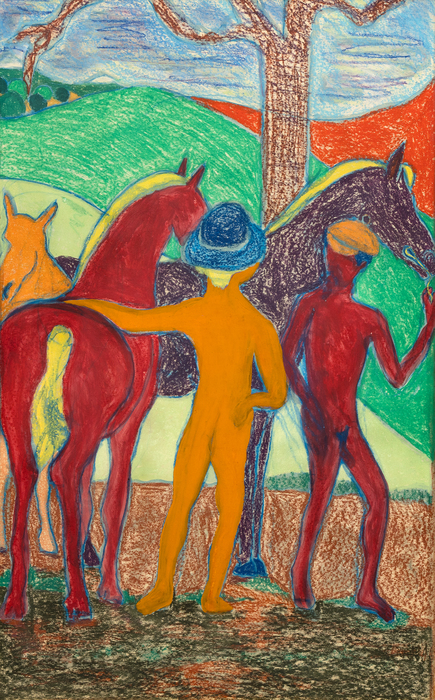 Bob Thompson (1937–1966) was an American figurative painter whose vibrant, rhythmically composed canvases bridged European art history with the improvisational energy of jazz and the cultural upheavals of the 1960s. Born in Louisville, Kentucky, Thompson studied briefly at Boston University before transferring to the University of Louisville, where he began to develop a deep interest in modern art.
After moving to New York in 1958, Thompson quickly became part of the downtown avant-garde scene, forming close ties with musicians, writers, and fellow painters. His work drew inspiration from the Old Masters—such as Piero della Francesca, Goya, and Poussin—while reimagining their compositions in bold, saturated color fields and with allegorical figures. Thompson’s paintings often explored themes of struggle, spirituality, and transformation, expressed through a uniquely modern visual language.
A frequent traveler, Thompson spent significant time in Europe, particularly in Paris and Ibiza, where exposure to classical and contemporary art further shaped his practice. Despite his short life—he died in Rome at the age of 28—he produced more than a thousand works, leaving behind a powerful and enduring legacy.
Today, Thompson’s paintings are held in major collections, including the Whitney Museum of American Art, the Smithsonian American Art Museum, and the Museum of Modern Art, and his reputation continues to grow as a vital link between historical tradition and the innovations of postwar American art.
ARTWORK
