
Paul Signac
(1863–1935)
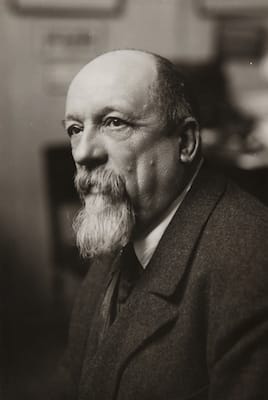
About Paul Signac
Paul Signac (1863–1935) was a central figure in modern French painting and a leading theorist of Neo-Impressionism. Alongside Georges Seurat, he pioneered pointillism, a method grounded in scientific color theory in which discrete touches of pure color are optically blended by the viewer’s eye. Following Seurat’s early death, Signac became the movement’s principal advocate, organizing exhibitions, supporting fellow artists, and shaping its intellectual foundations. He consolidated his defense of Neo-Impressionism through his influential book D’Eugène Delacroix au Néo-Impressionnisme (1899), which traced a lineage of modern color theory and exerted a lasting influence on the Italian Futurists and the Fauves in France.
Signac participated regularly in the annual Salon des Indépendants, an essential platform for avant-garde art, where he exhibited landscapes, seascapes, and large decorative panels. Over time, his style evolved from rigorous pointillism toward a more liberated and decorative language characterized by broader, mosaic-like strokes and heightened chromatic intensity. An avid sailor who owned numerous boats, Signac drew inspiration directly from his travels and maritime experiences. His work is represented in major international collections, including the Musée d’Orsay, The Metropolitan Museum of Art, and the Minneapolis Institute of Art, underscoring his enduring impact on modern art.