Zurück

ALFRED SISLEY (1839-1899)

$1,350,000

 
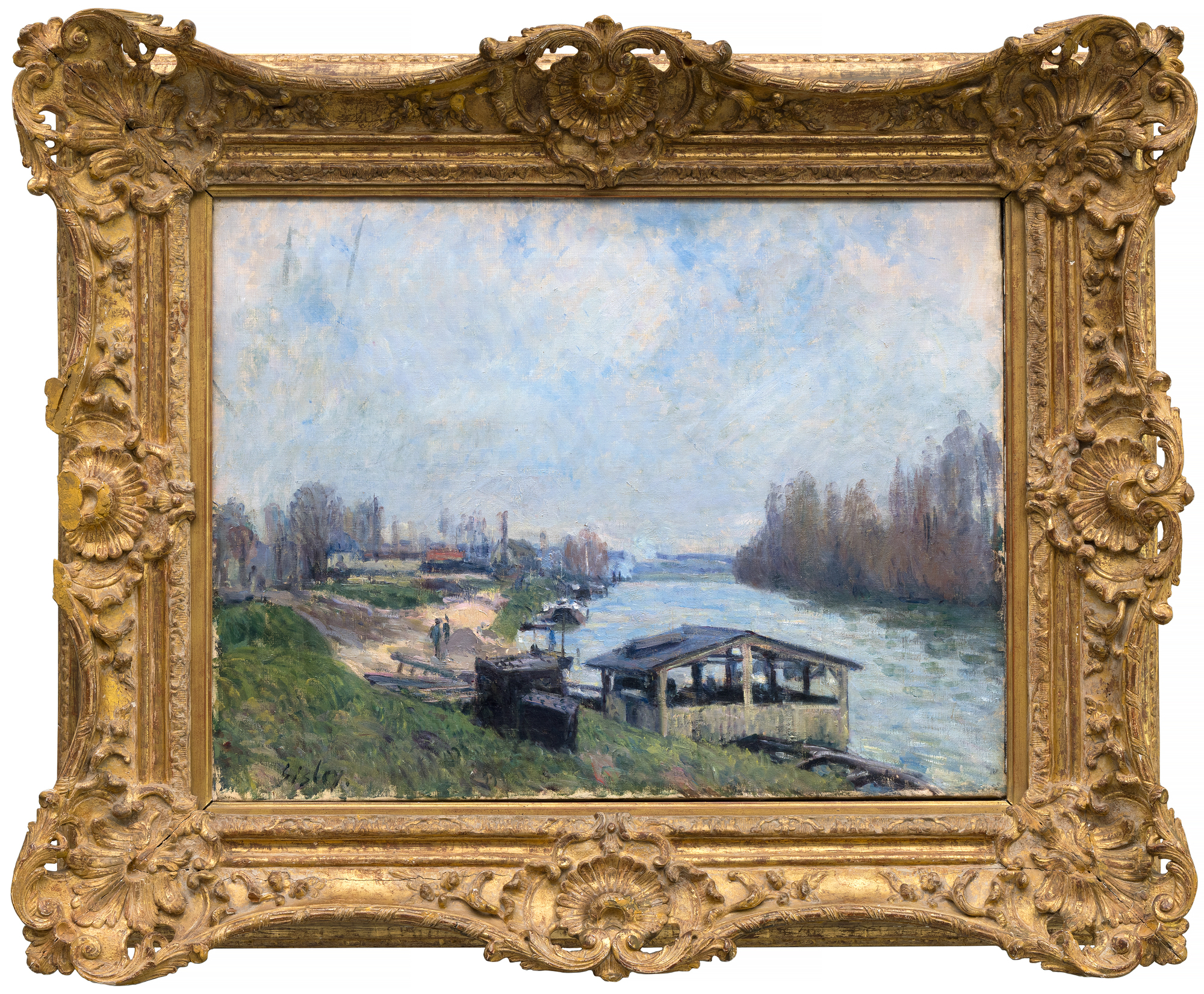
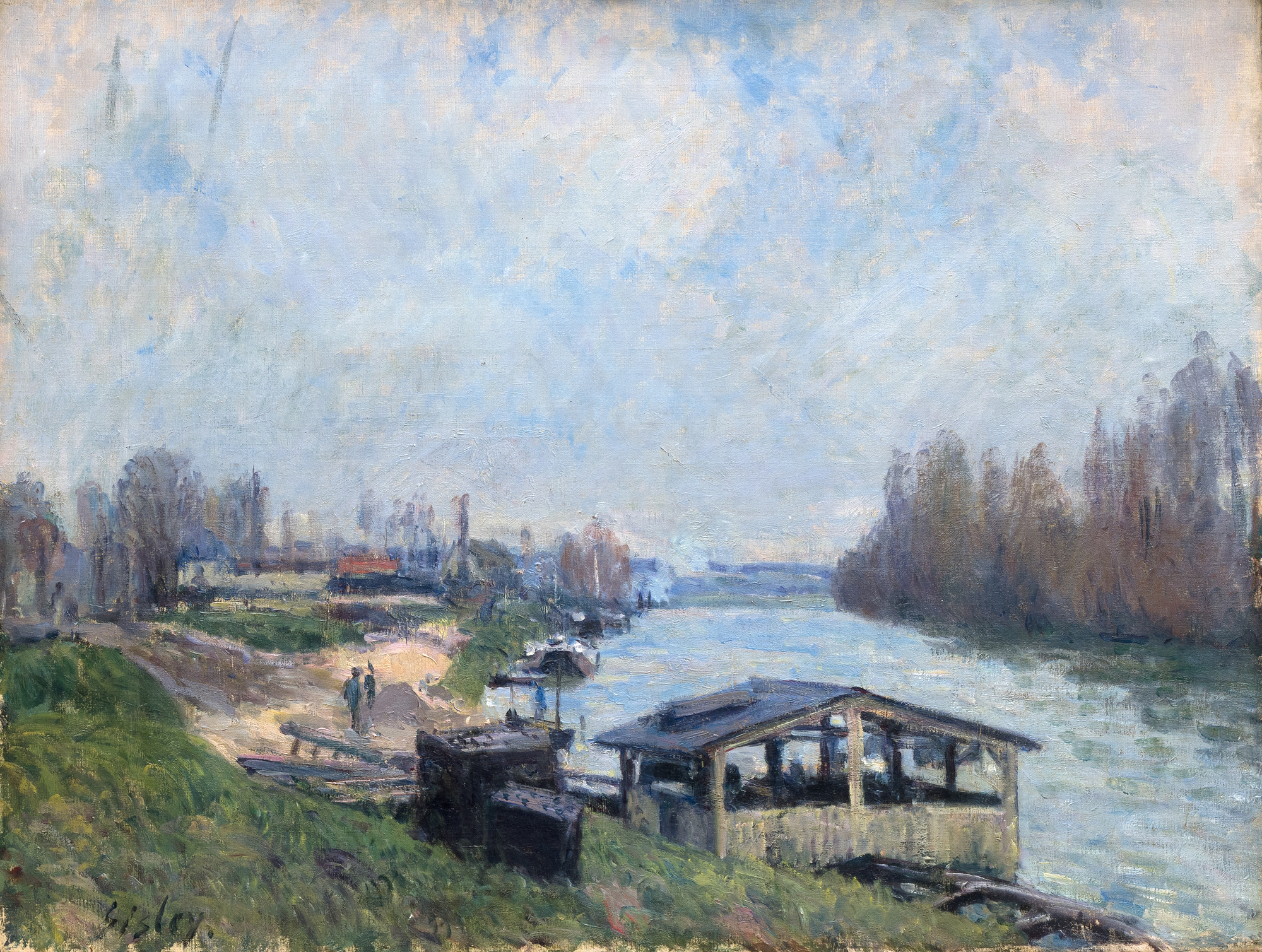
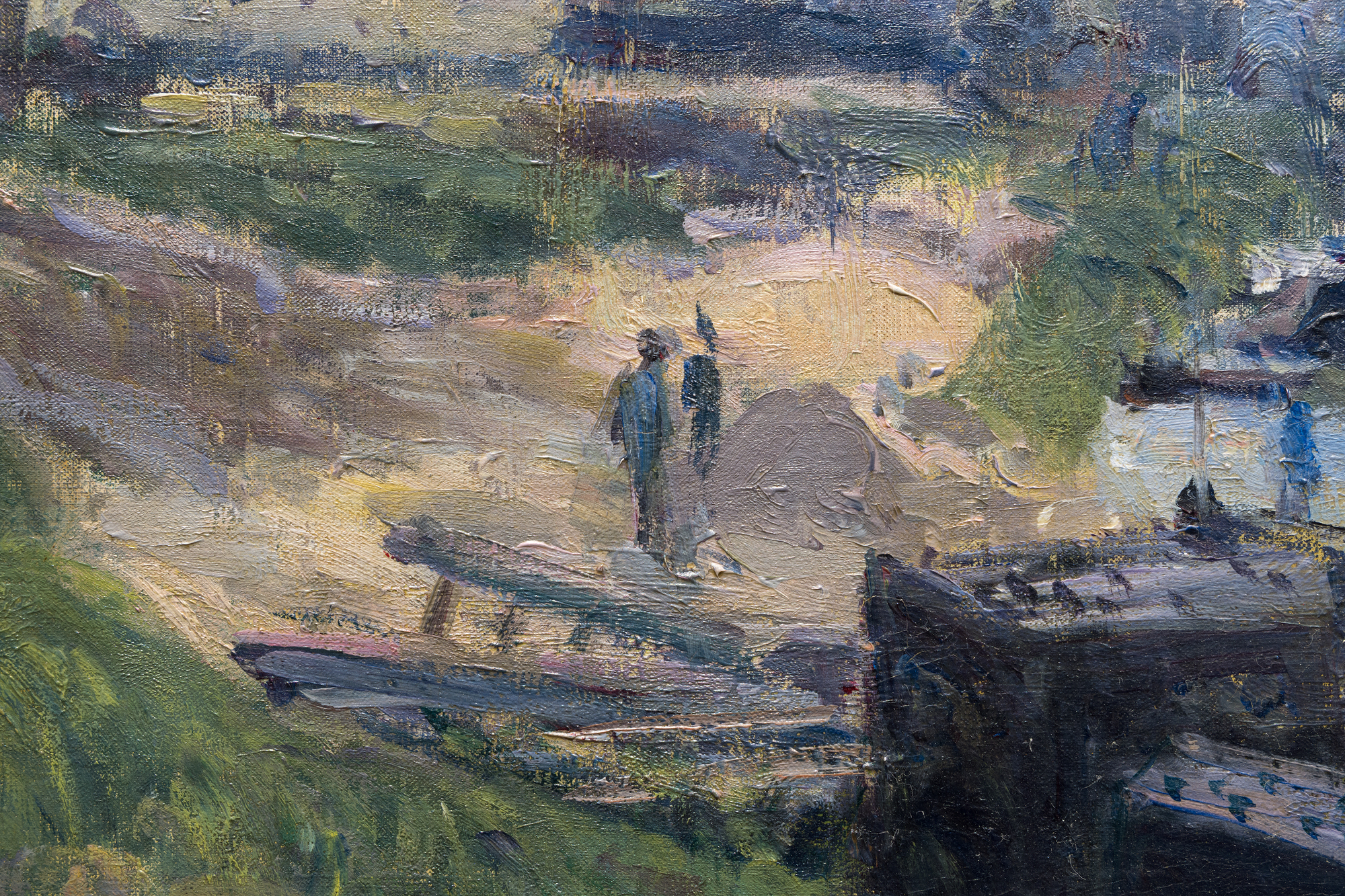
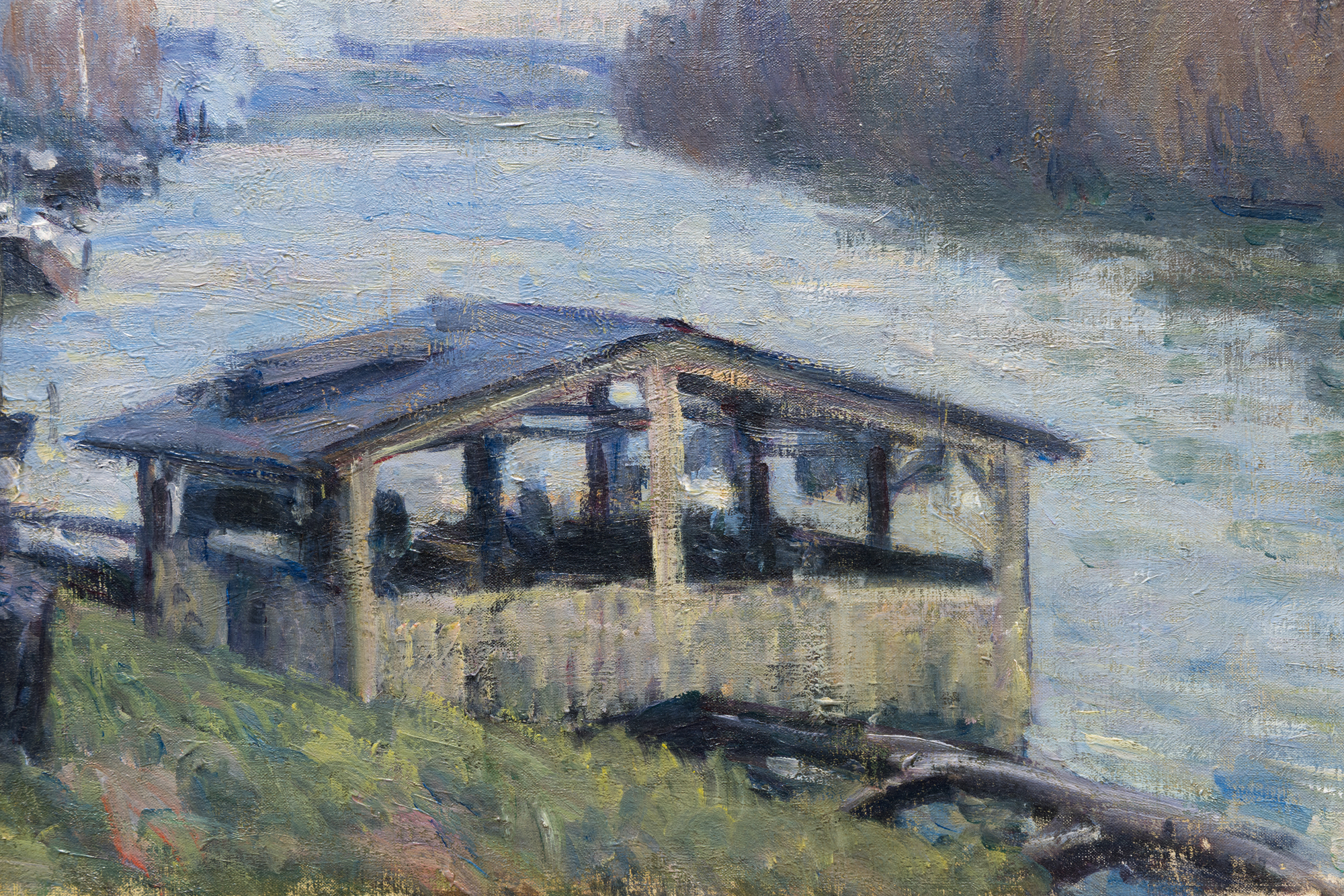
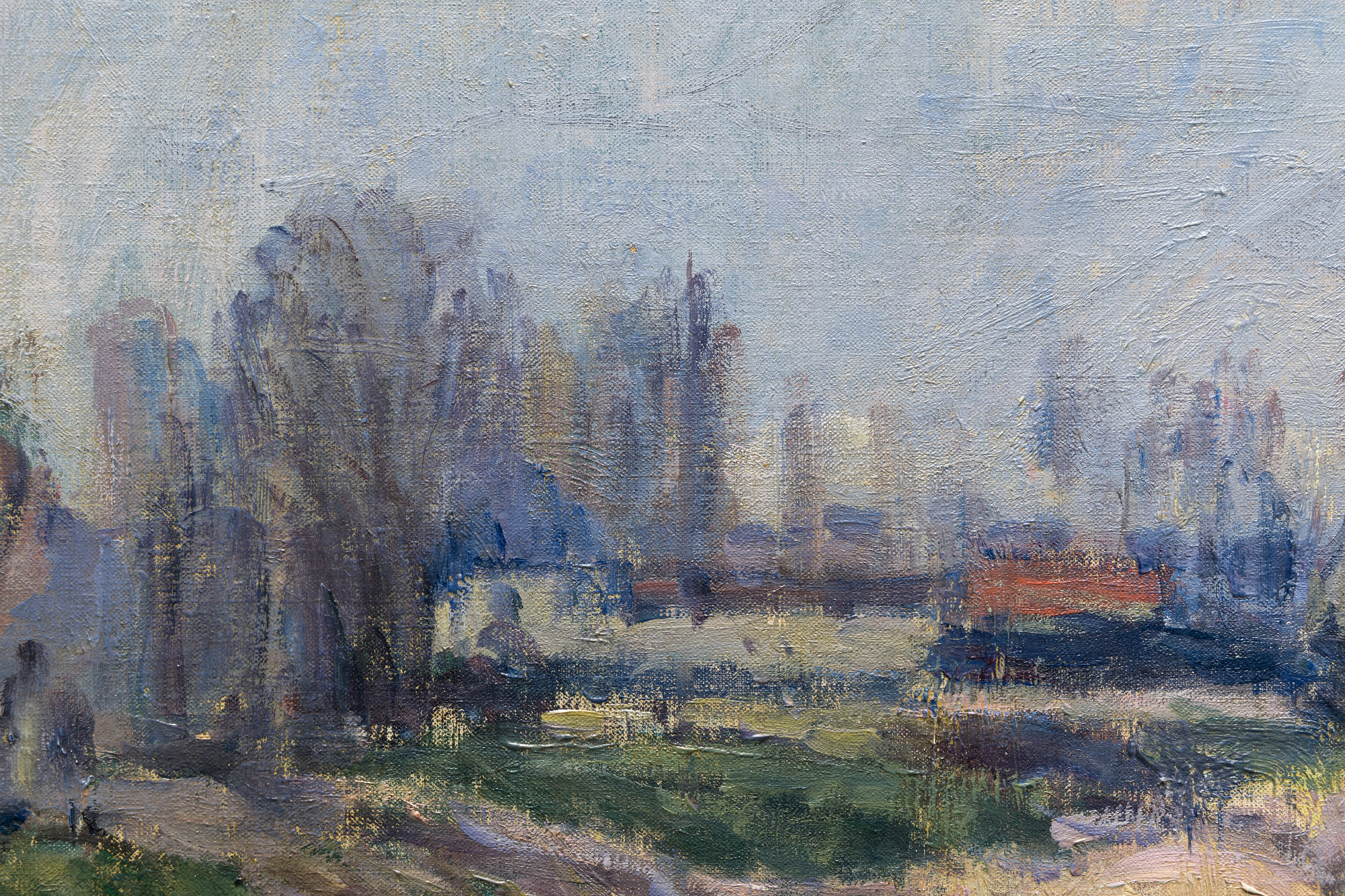
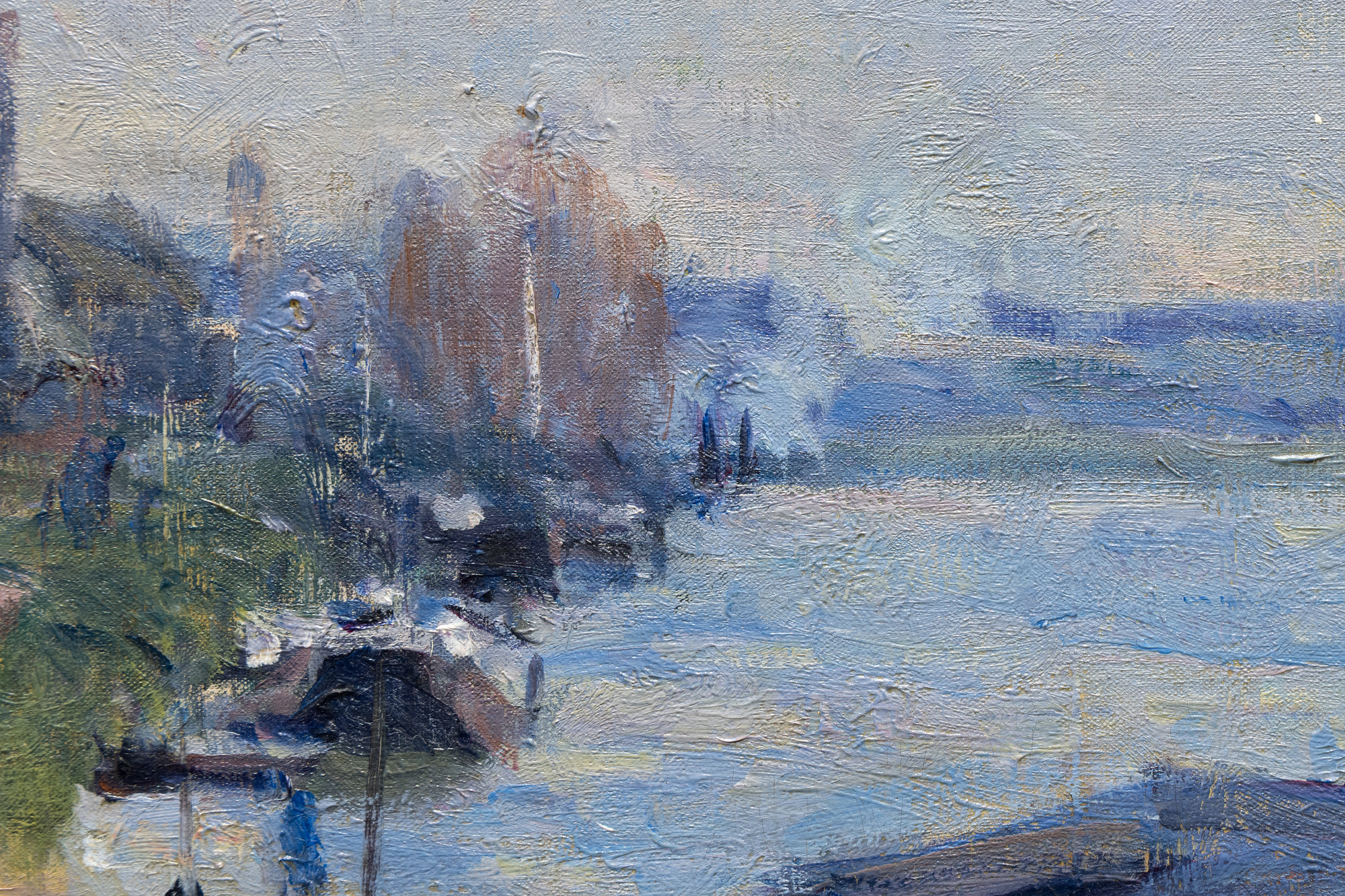
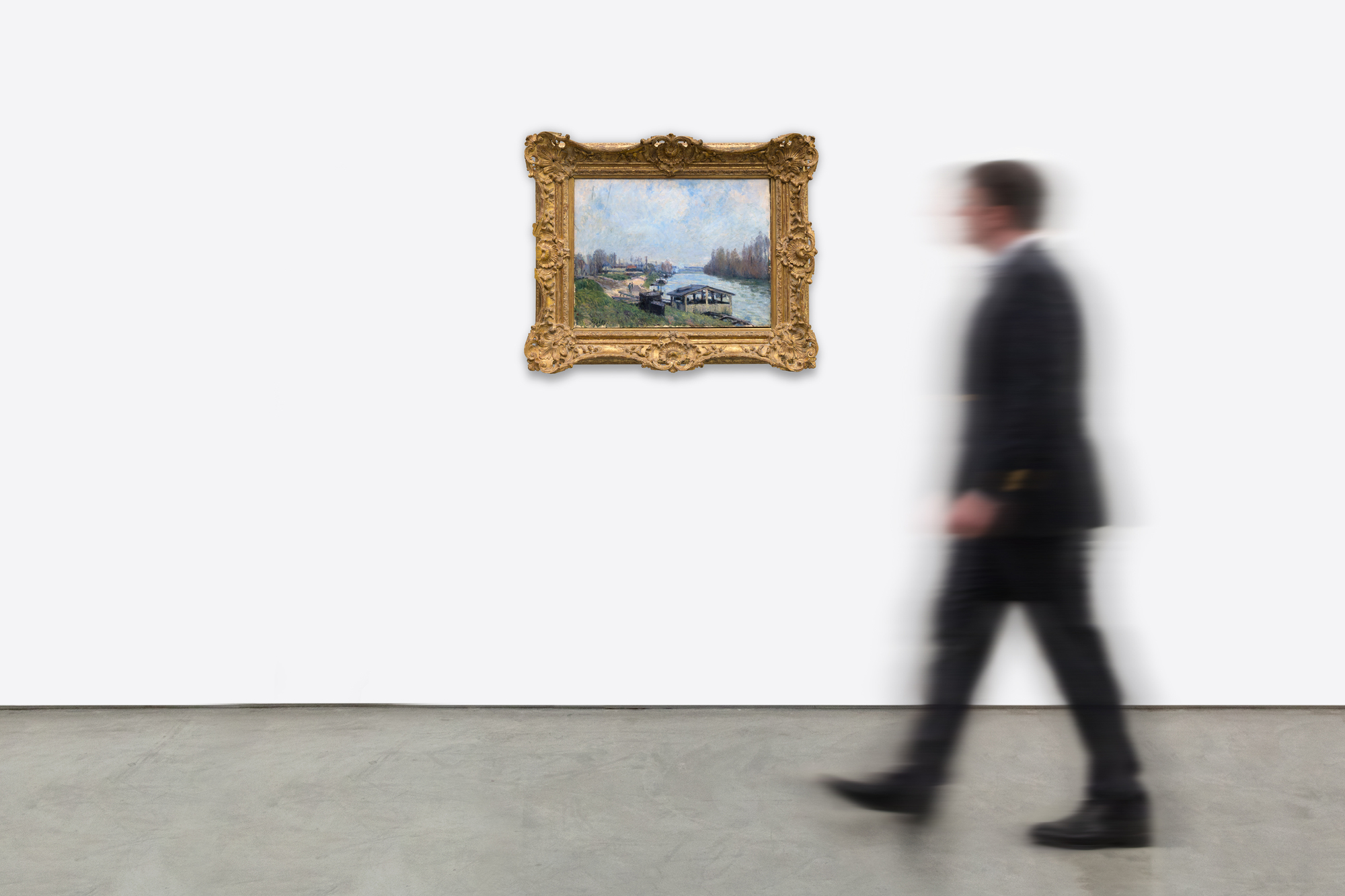
<div>Alfred Sisley’s <em>Le Lavoir de Billancourt</em> (1879) is a superb example of the artist’s lifelong devotion to painting directly before nature, and to the quiet drama of landscape in flux. Often described as the “purest” plein air painter of the Impressionist circle, Sisley maintained an almost exclusive relationship with landscape, attending to the subtlest changes of season, weather, and time of day. His river scenes in particular have long been compared to Monet’s for their sensitivity to water—its shifting reflections, softened edges, and the way light dissolves form into atmosphere. </div><br><br><div> </div><br><br><div>Painted along the Seine at Billancourt—an industrial town west of Paris—this work belongs to the sequence of views Sisley produced after the upheavals of 1871, when he moved his family first to Louveciennes and later to nearby Marly-le-Roi. The Seine valley offered him an ever-renewing motif: looping river bends, villages threaded along the banks, and a landscape marked by both history and modern life. Here, the floating washing house (a lavoir) sits low on the water, a practical structure where locals could wash clothes directly in the river for a small fee. Sisley transforms this everyday subject into an evocation of lived place, where human activity is integrated seamlessly into the broader rhythms of sky and current. </div><br><br><div> </div><br><br><div>The 1870s are widely recognized as Sisley’s “golden period”—when his work speaks in a distinctly personal voice rather than under the overt influence of Corot, Courbet, or even early Monet. After ceasing to exhibit at the Salon after 1877, his compositions grew more complex and less dependent on traditional recession and linear perspective, shifting instead toward interlocking patterns and the expressive energy of his brushwork. In<em> Le Lavoir de Billancourt</em>, layers of pigment are built up in quick, multidirectional strokes, creating a richly textured surface saturated with color and air. This heightened spontaneity aligns with contemporary praise for Sisley’s ability to seize passing moments—clouds, breeze, and trembling foliage—so that space and light feel inseparable, and the scene remains vibrantly in motion. The painting is recorded in the François Dault<em> Alfred Sisley: catalogue raisonné de l'oeuvre peint</em> (1959) as no. 315. </div> <div>Alfred Sisley’s <em>Le Lavoir de Billancourt</em> (1879) is a superb example of the artist’s lifelong devotion to painting directly before nature, and to the quiet drama of landscape in flux. Often described as the “purest” plein air painter of the Impressionist circle, Sisley maintained an almost exclusive relationship with landscape, attending to the subtlest changes of season, weather, and time of day. His river scenes in particular have long been compared to Monet’s for their sensitivity to water—its shifting reflections, softened edges, and the way light dissolves form into atmosphere. </div><br><br><div> </div><br><br><div>Painted along the Seine at Billancourt—an industrial town west of Paris—this work belongs to the sequence of views Sisley produced after the upheavals of 1871, when he moved his family first to Louveciennes and later to nearby Marly-le-Roi. The Seine valley offered him an ever-renewing motif: looping river bends, villages threaded along the banks, and a landscape marked by both history and modern life. Here, the floating washing house (a lavoir) sits low on the water, a practical structure where locals could wash clothes directly in the river for a small fee. Sisley transforms this everyday subject into an evocation of lived place, where human activity is integrated seamlessly into the broader rhythms of sky and current. </div><br><br><div> </div><br><br><div>The 1870s are widely recognized as Sisley’s “golden period”—when his work speaks in a distinctly personal voice rather than under the overt influence of Corot, Courbet, or even early Monet. After ceasing to exhibit at the Salon after 1877, his compositions grew more complex and less dependent on traditional recession and linear perspective, shifting instead toward interlocking patterns and the expressive energy of his brushwork. In<em> Le Lavoir de Billancourt</em>, layers of pigment are built up in quick, multidirectional strokes, creating a richly textured surface saturated with color and air. This heightened spontaneity aligns with contemporary praise for Sisley’s ability to seize passing moments—clouds, breeze, and trembling foliage—so that space and light feel inseparable, and the scene remains vibrantly in motion. The painting is recorded in the François Dault<em> Alfred Sisley: catalogue raisonné de l'oeuvre peint</em> (1959) as no. 315. </div> <div>Alfred Sisley’s <em>Le Lavoir de Billancourt</em> (1879) is a superb example of the artist’s lifelong devotion to painting directly before nature, and to the quiet drama of landscape in flux. Often described as the “purest” plein air painter of the Impressionist circle, Sisley maintained an almost exclusive relationship with landscape, attending to the subtlest changes of season, weather, and time of day. His river scenes in particular have long been compared to Monet’s for their sensitivity to water—its shifting reflections, softened edges, and the way light dissolves form into atmosphere. </div><br><br><div> </div><br><br><div>Painted along the Seine at Billancourt—an industrial town west of Paris—this work belongs to the sequence of views Sisley produced after the upheavals of 1871, when he moved his family first to Louveciennes and later to nearby Marly-le-Roi. The Seine valley offered him an ever-renewing motif: looping river bends, villages threaded along the banks, and a landscape marked by both history and modern life. Here, the floating washing house (a lavoir) sits low on the water, a practical structure where locals could wash clothes directly in the river for a small fee. Sisley transforms this everyday subject into an evocation of lived place, where human activity is integrated seamlessly into the broader rhythms of sky and current. </div><br><br><div> </div><br><br><div>The 1870s are widely recognized as Sisley’s “golden period”—when his work speaks in a distinctly personal voice rather than under the overt influence of Corot, Courbet, or even early Monet. After ceasing to exhibit at the Salon after 1877, his compositions grew more complex and less dependent on traditional recession and linear perspective, shifting instead toward interlocking patterns and the expressive energy of his brushwork. In<em> Le Lavoir de Billancourt</em>, layers of pigment are built up in quick, multidirectional strokes, creating a richly textured surface saturated with color and air. This heightened spontaneity aligns with contemporary praise for Sisley’s ability to seize passing moments—clouds, breeze, and trembling foliage—so that space and light feel inseparable, and the scene remains vibrantly in motion. The painting is recorded in the François Dault<em> Alfred Sisley: catalogue raisonné de l'oeuvre peint</em> (1959) as no. 315. </div> <div>Alfred Sisley’s <em>Le Lavoir de Billancourt</em> (1879) is a superb example of the artist’s lifelong devotion to painting directly before nature, and to the quiet drama of landscape in flux. Often described as the “purest” plein air painter of the Impressionist circle, Sisley maintained an almost exclusive relationship with landscape, attending to the subtlest changes of season, weather, and time of day. His river scenes in particular have long been compared to Monet’s for their sensitivity to water—its shifting reflections, softened edges, and the way light dissolves form into atmosphere. </div><br><br><div> </div><br><br><div>Painted along the Seine at Billancourt—an industrial town west of Paris—this work belongs to the sequence of views Sisley produced after the upheavals of 1871, when he moved his family first to Louveciennes and later to nearby Marly-le-Roi. The Seine valley offered him an ever-renewing motif: looping river bends, villages threaded along the banks, and a landscape marked by both history and modern life. Here, the floating washing house (a lavoir) sits low on the water, a practical structure where locals could wash clothes directly in the river for a small fee. Sisley transforms this everyday subject into an evocation of lived place, where human activity is integrated seamlessly into the broader rhythms of sky and current. </div><br><br><div> </div><br><br><div>The 1870s are widely recognized as Sisley’s “golden period”—when his work speaks in a distinctly personal voice rather than under the overt influence of Corot, Courbet, or even early Monet. After ceasing to exhibit at the Salon after 1877, his compositions grew more complex and less dependent on traditional recession and linear perspective, shifting instead toward interlocking patterns and the expressive energy of his brushwork. In<em> Le Lavoir de Billancourt</em>, layers of pigment are built up in quick, multidirectional strokes, creating a richly textured surface saturated with color and air. This heightened spontaneity aligns with contemporary praise for Sisley’s ability to seize passing moments—clouds, breeze, and trembling foliage—so that space and light feel inseparable, and the scene remains vibrantly in motion. The painting is recorded in the François Dault<em> Alfred Sisley: catalogue raisonné de l'oeuvre peint</em> (1959) as no. 315. </div> <div>Alfred Sisley’s <em>Le Lavoir de Billancourt</em> (1879) is a superb example of the artist’s lifelong devotion to painting directly before nature, and to the quiet drama of landscape in flux. Often described as the “purest” plein air painter of the Impressionist circle, Sisley maintained an almost exclusive relationship with landscape, attending to the subtlest changes of season, weather, and time of day. His river scenes in particular have long been compared to Monet’s for their sensitivity to water—its shifting reflections, softened edges, and the way light dissolves form into atmosphere. </div><br><br><div> </div><br><br><div>Painted along the Seine at Billancourt—an industrial town west of Paris—this work belongs to the sequence of views Sisley produced after the upheavals of 1871, when he moved his family first to Louveciennes and later to nearby Marly-le-Roi. The Seine valley offered him an ever-renewing motif: looping river bends, villages threaded along the banks, and a landscape marked by both history and modern life. Here, the floating washing house (a lavoir) sits low on the water, a practical structure where locals could wash clothes directly in the river for a small fee. Sisley transforms this everyday subject into an evocation of lived place, where human activity is integrated seamlessly into the broader rhythms of sky and current. </div><br><br><div> </div><br><br><div>The 1870s are widely recognized as Sisley’s “golden period”—when his work speaks in a distinctly personal voice rather than under the overt influence of Corot, Courbet, or even early Monet. After ceasing to exhibit at the Salon after 1877, his compositions grew more complex and less dependent on traditional recession and linear perspective, shifting instead toward interlocking patterns and the expressive energy of his brushwork. In<em> Le Lavoir de Billancourt</em>, layers of pigment are built up in quick, multidirectional strokes, creating a richly textured surface saturated with color and air. This heightened spontaneity aligns with contemporary praise for Sisley’s ability to seize passing moments—clouds, breeze, and trembling foliage—so that space and light feel inseparable, and the scene remains vibrantly in motion. The painting is recorded in the François Dault<em> Alfred Sisley: catalogue raisonné de l'oeuvre peint</em> (1959) as no. 315. </div> <div>Alfred Sisley’s <em>Le Lavoir de Billancourt</em> (1879) is a superb example of the artist’s lifelong devotion to painting directly before nature, and to the quiet drama of landscape in flux. Often described as the “purest” plein air painter of the Impressionist circle, Sisley maintained an almost exclusive relationship with landscape, attending to the subtlest changes of season, weather, and time of day. His river scenes in particular have long been compared to Monet’s for their sensitivity to water—its shifting reflections, softened edges, and the way light dissolves form into atmosphere. </div><br><br><div> </div><br><br><div>Painted along the Seine at Billancourt—an industrial town west of Paris—this work belongs to the sequence of views Sisley produced after the upheavals of 1871, when he moved his family first to Louveciennes and later to nearby Marly-le-Roi. The Seine valley offered him an ever-renewing motif: looping river bends, villages threaded along the banks, and a landscape marked by both history and modern life. Here, the floating washing house (a lavoir) sits low on the water, a practical structure where locals could wash clothes directly in the river for a small fee. Sisley transforms this everyday subject into an evocation of lived place, where human activity is integrated seamlessly into the broader rhythms of sky and current. </div><br><br><div> </div><br><br><div>The 1870s are widely recognized as Sisley’s “golden period”—when his work speaks in a distinctly personal voice rather than under the overt influence of Corot, Courbet, or even early Monet. After ceasing to exhibit at the Salon after 1877, his compositions grew more complex and less dependent on traditional recession and linear perspective, shifting instead toward interlocking patterns and the expressive energy of his brushwork. In<em> Le Lavoir de Billancourt</em>, layers of pigment are built up in quick, multidirectional strokes, creating a richly textured surface saturated with color and air. This heightened spontaneity aligns with contemporary praise for Sisley’s ability to seize passing moments—clouds, breeze, and trembling foliage—so that space and light feel inseparable, and the scene remains vibrantly in motion. The painting is recorded in the François Dault<em> Alfred Sisley: catalogue raisonné de l'oeuvre peint</em> (1959) as no. 315. </div> <div>Alfred Sisley’s <em>Le Lavoir de Billancourt</em> (1879) is a superb example of the artist’s lifelong devotion to painting directly before nature, and to the quiet drama of landscape in flux. Often described as the “purest” plein air painter of the Impressionist circle, Sisley maintained an almost exclusive relationship with landscape, attending to the subtlest changes of season, weather, and time of day. His river scenes in particular have long been compared to Monet’s for their sensitivity to water—its shifting reflections, softened edges, and the way light dissolves form into atmosphere. </div><br><br><div> </div><br><br><div>Painted along the Seine at Billancourt—an industrial town west of Paris—this work belongs to the sequence of views Sisley produced after the upheavals of 1871, when he moved his family first to Louveciennes and later to nearby Marly-le-Roi. The Seine valley offered him an ever-renewing motif: looping river bends, villages threaded along the banks, and a landscape marked by both history and modern life. Here, the floating washing house (a lavoir) sits low on the water, a practical structure where locals could wash clothes directly in the river for a small fee. Sisley transforms this everyday subject into an evocation of lived place, where human activity is integrated seamlessly into the broader rhythms of sky and current. </div><br><br><div> </div><br><br><div>The 1870s are widely recognized as Sisley’s “golden period”—when his work speaks in a distinctly personal voice rather than under the overt influence of Corot, Courbet, or even early Monet. After ceasing to exhibit at the Salon after 1877, his compositions grew more complex and less dependent on traditional recession and linear perspective, shifting instead toward interlocking patterns and the expressive energy of his brushwork. In<em> Le Lavoir de Billancourt</em>, layers of pigment are built up in quick, multidirectional strokes, creating a richly textured surface saturated with color and air. This heightened spontaneity aligns with contemporary praise for Sisley’s ability to seize passing moments—clouds, breeze, and trembling foliage—so that space and light feel inseparable, and the scene remains vibrantly in motion. The painting is recorded in the François Dault<em> Alfred Sisley: catalogue raisonné de l'oeuvre peint</em> (1959) as no. 315. </div> <div>Alfred Sisley’s <em>Le Lavoir de Billancourt</em> (1879) is a superb example of the artist’s lifelong devotion to painting directly before nature, and to the quiet drama of landscape in flux. Often described as the “purest” plein air painter of the Impressionist circle, Sisley maintained an almost exclusive relationship with landscape, attending to the subtlest changes of season, weather, and time of day. His river scenes in particular have long been compared to Monet’s for their sensitivity to water—its shifting reflections, softened edges, and the way light dissolves form into atmosphere. </div><br><br><div> </div><br><br><div>Painted along the Seine at Billancourt—an industrial town west of Paris—this work belongs to the sequence of views Sisley produced after the upheavals of 1871, when he moved his family first to Louveciennes and later to nearby Marly-le-Roi. The Seine valley offered him an ever-renewing motif: looping river bends, villages threaded along the banks, and a landscape marked by both history and modern life. Here, the floating washing house (a lavoir) sits low on the water, a practical structure where locals could wash clothes directly in the river for a small fee. Sisley transforms this everyday subject into an evocation of lived place, where human activity is integrated seamlessly into the broader rhythms of sky and current. </div><br><br><div> </div><br><br><div>The 1870s are widely recognized as Sisley’s “golden period”—when his work speaks in a distinctly personal voice rather than under the overt influence of Corot, Courbet, or even early Monet. After ceasing to exhibit at the Salon after 1877, his compositions grew more complex and less dependent on traditional recession and linear perspective, shifting instead toward interlocking patterns and the expressive energy of his brushwork. In<em> Le Lavoir de Billancourt</em>, layers of pigment are built up in quick, multidirectional strokes, creating a richly textured surface saturated with color and air. This heightened spontaneity aligns with contemporary praise for Sisley’s ability to seize passing moments—clouds, breeze, and trembling foliage—so that space and light feel inseparable, and the scene remains vibrantly in motion. The painting is recorded in the François Dault<em> Alfred Sisley: catalogue raisonné de l'oeuvre peint</em> (1959) as no. 315. </div> <div>Alfred Sisley’s <em>Le Lavoir de Billancourt</em> (1879) is a superb example of the artist’s lifelong devotion to painting directly before nature, and to the quiet drama of landscape in flux. Often described as the “purest” plein air painter of the Impressionist circle, Sisley maintained an almost exclusive relationship with landscape, attending to the subtlest changes of season, weather, and time of day. His river scenes in particular have long been compared to Monet’s for their sensitivity to water—its shifting reflections, softened edges, and the way light dissolves form into atmosphere. </div><br><br><div> </div><br><br><div>Painted along the Seine at Billancourt—an industrial town west of Paris—this work belongs to the sequence of views Sisley produced after the upheavals of 1871, when he moved his family first to Louveciennes and later to nearby Marly-le-Roi. The Seine valley offered him an ever-renewing motif: looping river bends, villages threaded along the banks, and a landscape marked by both history and modern life. Here, the floating washing house (a lavoir) sits low on the water, a practical structure where locals could wash clothes directly in the river for a small fee. Sisley transforms this everyday subject into an evocation of lived place, where human activity is integrated seamlessly into the broader rhythms of sky and current. </div><br><br><div> </div><br><br><div>The 1870s are widely recognized as Sisley’s “golden period”—when his work speaks in a distinctly personal voice rather than under the overt influence of Corot, Courbet, or even early Monet. After ceasing to exhibit at the Salon after 1877, his compositions grew more complex and less dependent on traditional recession and linear perspective, shifting instead toward interlocking patterns and the expressive energy of his brushwork. In<em> Le Lavoir de Billancourt</em>, layers of pigment are built up in quick, multidirectional strokes, creating a richly textured surface saturated with color and air. This heightened spontaneity aligns with contemporary praise for Sisley’s ability to seize passing moments—clouds, breeze, and trembling foliage—so that space and light feel inseparable, and the scene remains vibrantly in motion. The painting is recorded in the François Dault<em> Alfred Sisley: catalogue raisonné de l'oeuvre peint</em> (1959) as no. 315. </div> <div>Alfred Sisley’s <em>Le Lavoir de Billancourt</em> (1879) is a superb example of the artist’s lifelong devotion to painting directly before nature, and to the quiet drama of landscape in flux. Often described as the “purest” plein air painter of the Impressionist circle, Sisley maintained an almost exclusive relationship with landscape, attending to the subtlest changes of season, weather, and time of day. His river scenes in particular have long been compared to Monet’s for their sensitivity to water—its shifting reflections, softened edges, and the way light dissolves form into atmosphere. </div><br><br><div> </div><br><br><div>Painted along the Seine at Billancourt—an industrial town west of Paris—this work belongs to the sequence of views Sisley produced after the upheavals of 1871, when he moved his family first to Louveciennes and later to nearby Marly-le-Roi. The Seine valley offered him an ever-renewing motif: looping river bends, villages threaded along the banks, and a landscape marked by both history and modern life. Here, the floating washing house (a lavoir) sits low on the water, a practical structure where locals could wash clothes directly in the river for a small fee. Sisley transforms this everyday subject into an evocation of lived place, where human activity is integrated seamlessly into the broader rhythms of sky and current. </div><br><br><div> </div><br><br><div>The 1870s are widely recognized as Sisley’s “golden period”—when his work speaks in a distinctly personal voice rather than under the overt influence of Corot, Courbet, or even early Monet. After ceasing to exhibit at the Salon after 1877, his compositions grew more complex and less dependent on traditional recession and linear perspective, shifting instead toward interlocking patterns and the expressive energy of his brushwork. In<em> Le Lavoir de Billancourt</em>, layers of pigment are built up in quick, multidirectional strokes, creating a richly textured surface saturated with color and air. This heightened spontaneity aligns with contemporary praise for Sisley’s ability to seize passing moments—clouds, breeze, and trembling foliage—so that space and light feel inseparable, and the scene remains vibrantly in motion. The painting is recorded in the François Dault<em> Alfred Sisley: catalogue raisonné de l'oeuvre peint</em> (1959) as no. 315. </div>
Die Waschstelle von Billancourt187920 x 25 5/8 Zoll(50,8 x 65,09 cm) Öl auf Leinwand
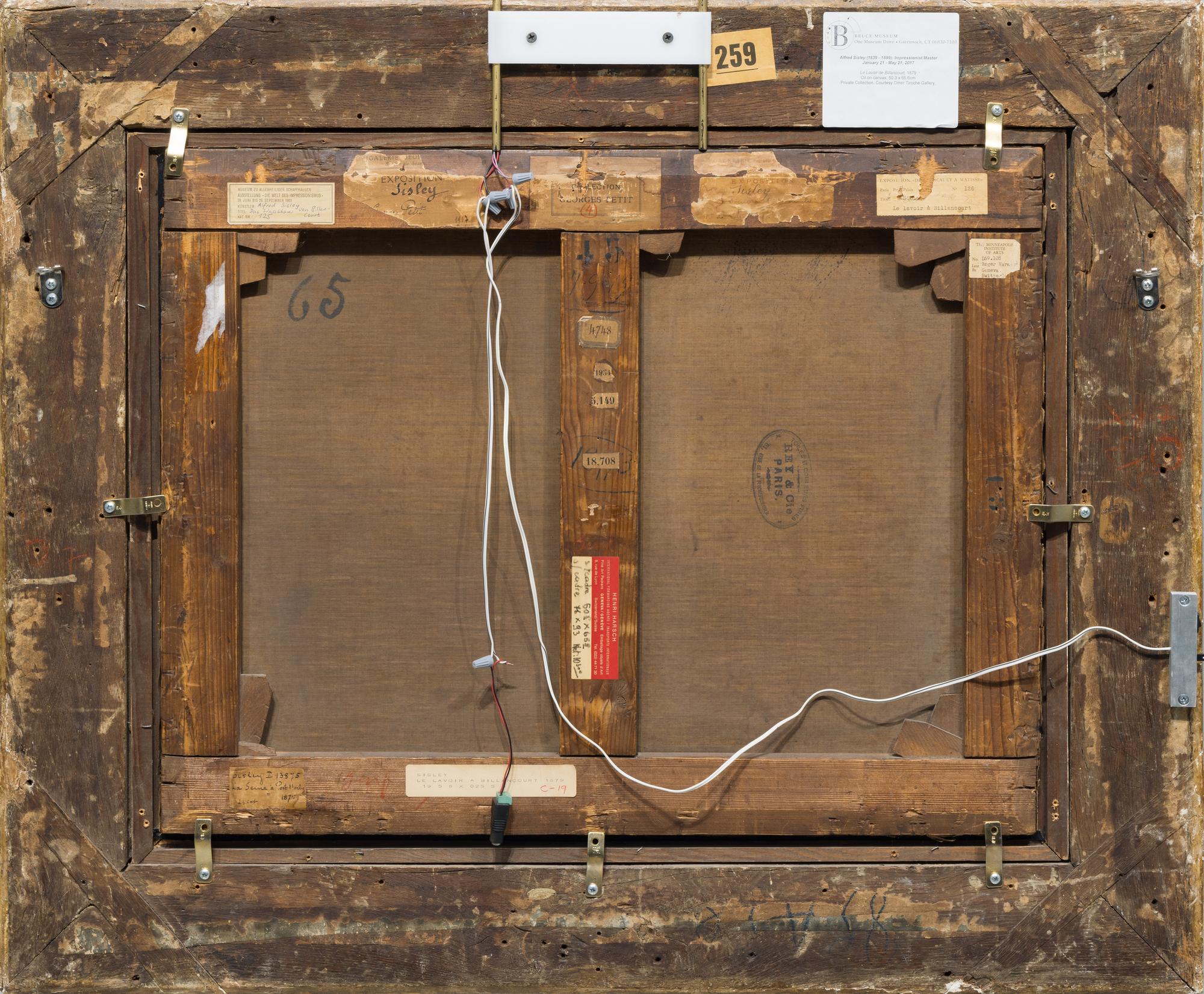
Provenienz
Henri Poidatz, Paris
Galerie Georges Petit, Paris, 27. April 1900, Los 79
Georges Petit, erworben bei der oben genannten Auktion
Auktion: Galerie Georges Petit, Paris, 4.-5. März 1921, Los 113
Comte de Lanscay, Paris
Hôtel Drouot, Paris, 6. April 1922, Los 16
Eugène Blot, Paris, erworben bei der oben genannten Auktion
Dr. Arthur Charpentier, Paris
Privatsammlung, Schweiz, erworben um 1950
Privatsammlung, aus dem Nachlass des oben genannten
Privatsammlung, Europa
Sotheby's New York, 6. Mai 2015, Los
...Mehr.....250
Privatsammlung, London, erworben bei der oben genannten Auktion
Ausstellung
Paris, Galerie Georges Petit, Alfred Sisley, 1917, Nr. 83
Paris, Durand-Ruel, Tableaux de Sisley, 1930, Nr. 23
Paris, Galerie d'Art Braun, Sisley, 1933, Nr. 13
Bern, Kunstmuseum, Alfred Sisley, 1958, Nr. 38
Paris, Musée du Petit-Palais, De Gericault à Matisse, Meisterwerke aus Schweizer Sammlungen, 1959, Nr. 126
Schaffhausen, Museum Zu Allerheiligen, Die Welt des Impressionismus, 1963, Nr. 125
Minneapolis, Minneapolis Institute of Arts, Die wiederentdeckte Vergangenheit: Französische Malerei 1800–1900, 1969
 
Literaturhinweise
Maximilien Gauthier, „Hommage à Sisley“, in: L'Art vivant, 1933, Nr. 170, S. 116 (abgebildet)
François Daulte, Alfred Sisley, Catalogue raisonné de l'oeuvre peint, Paris, 1959, Nr. 315 (abgebildet)
Jacques Lassaigne & Slyvie Gache-Patin, Sisley, Paris, 1982, S. 31 (abgebildet)
Mary Anne Stevens, Hrsg., Alfred Sisley, London, 1992, S. 154
Sylvie Brame & François Lorenceau, Alfred Sisley: Catalogue Critique des Peintures et des Pastels, Paris, 2021, S. 155, 488 (abgebildet)
...WENIGER.....
Alfred Sisleys „Le Lavoir de Billancourt“ (1879) ist ein hervorragendes Beispiel für die lebenslange Hingabe des Künstlers an das Malen direkt vor der Natur und an das stille Drama der sich wandelnden Landschaft. Sisley, der oft als der „reinste“ Pleinair-Maler des impressionistischen Kreises bezeichnet wird, pflegte eine fast ausschließliche Beziehung zur Landschaft und achtete auf die subtilsten Veränderungen der Jahreszeiten, des Wetters und der Tageszeiten. Insbesondere seine Flussszenen werden seit langem mit denen Monets verglichen, da sie eine ähnliche Sensibilität für Wasser zeigen – seine wechselnden Reflexionen, weichen Konturen und die Art und Weise, wie das Licht Formen in der Atmosphäre auflöst.


Dieses Werk, das entlang der Seine in Billancourt – einer Industriestadt westlich von Paris – gemalt wurde, gehört zu einer Reihe von Ansichten, die Sisley nach den Umwälzungen von 1871 schuf, als er mit seiner Familie zunächst nach Louveciennes und später in das nahe gelegene Marly-le-Roi zog. Das Seine-Tal bot ihm ein sich ständig erneuerndes Motiv: geschwungene Flussbiegungen, Dörfer entlang der Ufer und eine Landschaft, die sowohl von Geschichte als auch vom modernen Leben geprägt war. Hier liegt das schwimmende Waschhaus (ein Lavoir) tief im Wasser, eine praktische Konstruktion, in der die Einheimischen gegen eine geringe Gebühr ihre Wäsche direkt im Fluss waschen konnten. Sisley verwandelt dieses alltägliche Motiv in eine Beschwörung des gelebten Ortes, an dem menschliche Aktivitäten nahtlos in den größeren Rhythmus von Himmel und Strömung integriert sind.


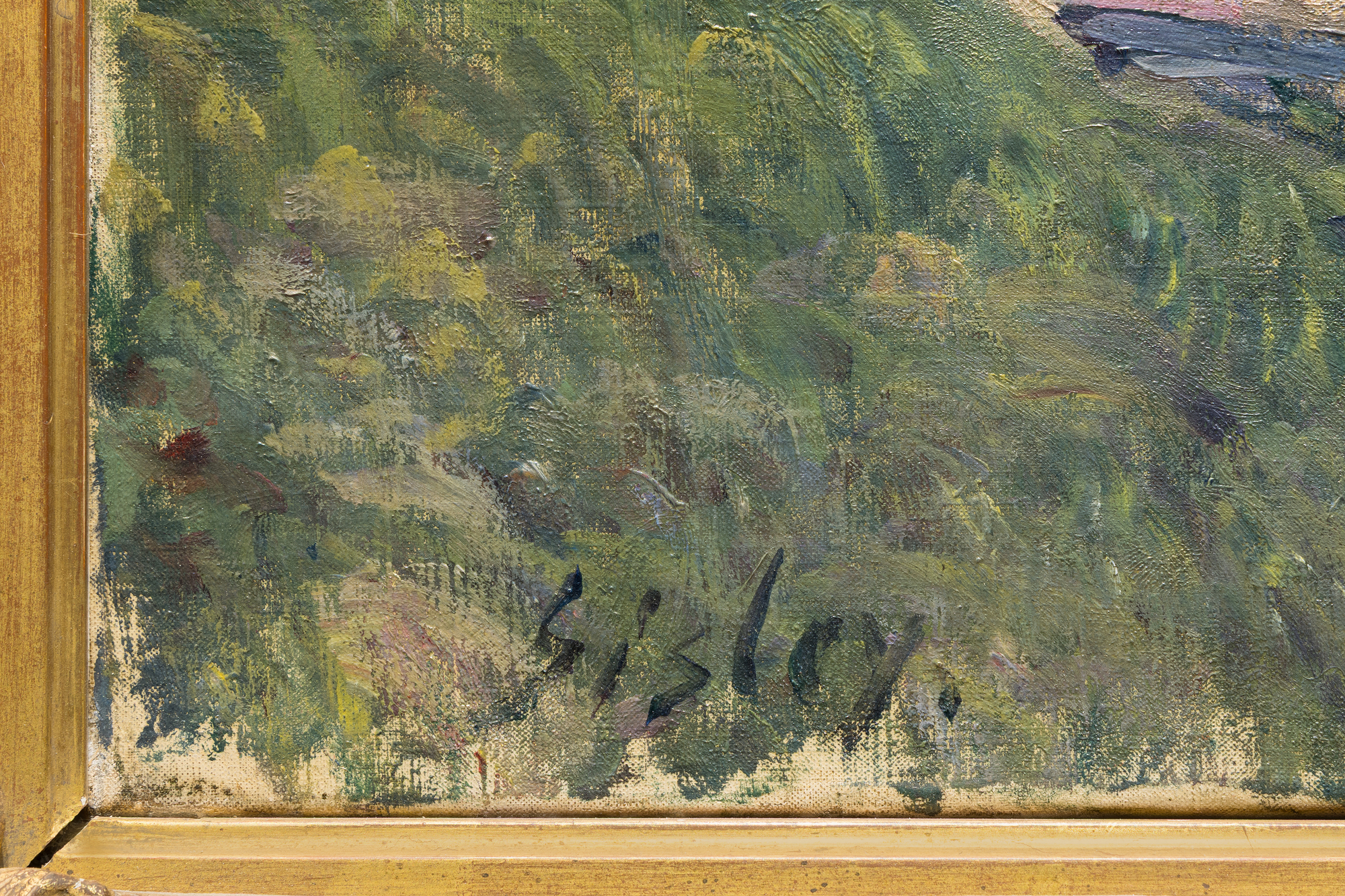
Die 1870er Jahre gelten weithin als Sisleys „goldene Zeit“ – eine Zeit, in der seine Werke eine ganz eigene persönliche Sprache sprechen und nicht mehr so stark von Corot, Courbet oder sogar dem frühen Monet beeinflusst sind. Nachdem er nach 1877 nicht mehr im Salon ausstellte, wurden seine Kompositionen komplexer und weniger abhängig von traditioneller Tiefenwirkung und linearer Perspektive. Stattdessen verlagerte er seinen Schwerpunkt auf ineinandergreifende Muster und die expressive Energie seines Pinselstrichs. In Le Lavoir de Billancourt werden Pigmentschichten in schnellen, multidirektionalen Strichen aufgebaut, wodurch eine reich strukturierte Oberfläche entsteht, die mit Farbe und Luft gesättigt ist. Diese gesteigerte Spontaneität steht im Einklang mit der zeitgenössischen Lobeshymne auf Sisleys Fähigkeit, flüchtige Momente einzufangen – Wolken, Windhauch und zitterndes Laub –, sodass Raum und Licht untrennbar miteinander verbunden wirken und die Szene lebendig in Bewegung bleibt. Das Gemälde ist im Werkverzeichnis von François Dault, Alfred Sisley: catalogue raisonné de l'oeuvre peint (1959), unter der Nummer 315 verzeichnet.
Fragen Sie