返回

阿尔弗雷德·西斯利恩(1839-1899)

$1,350,000

 
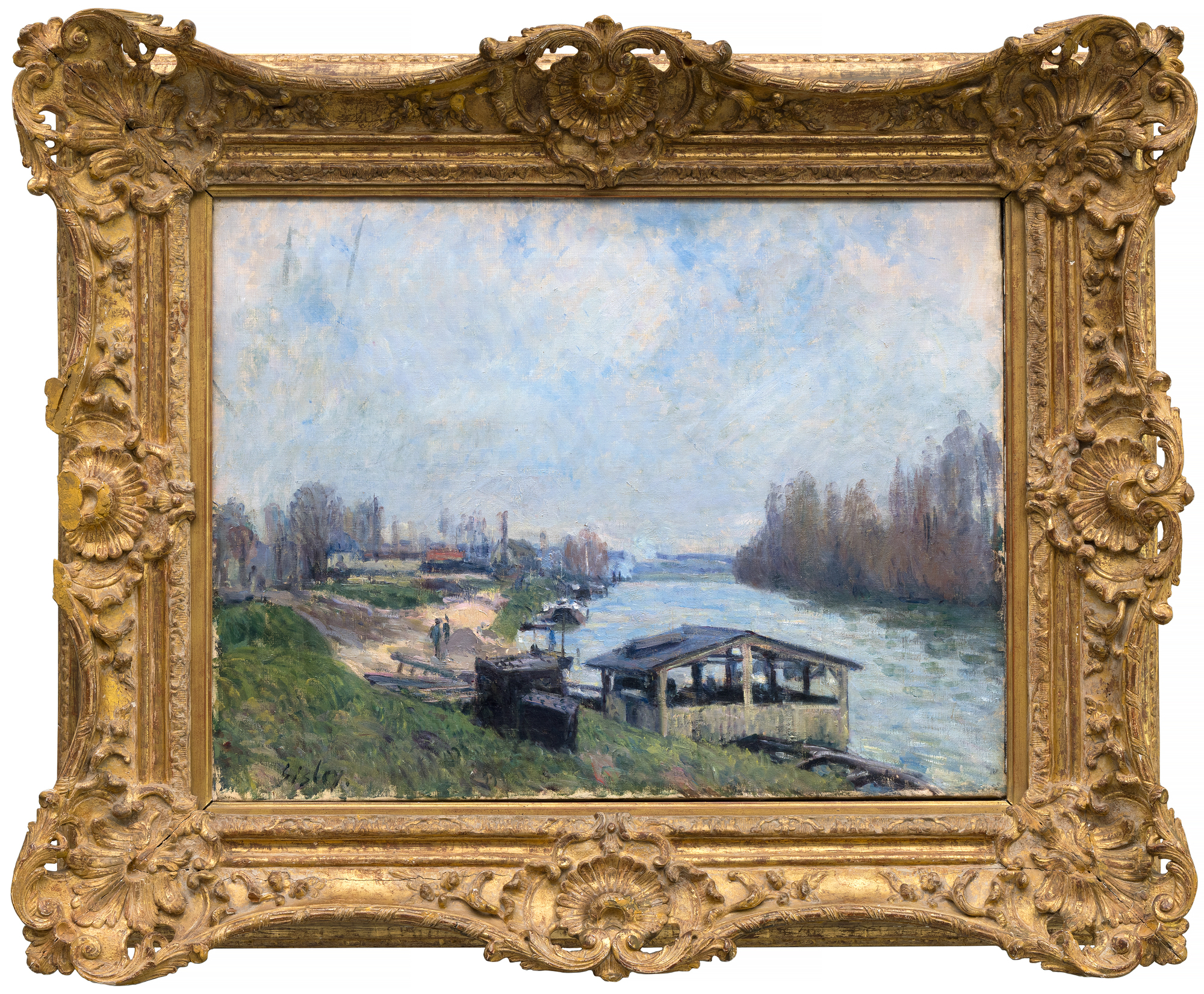
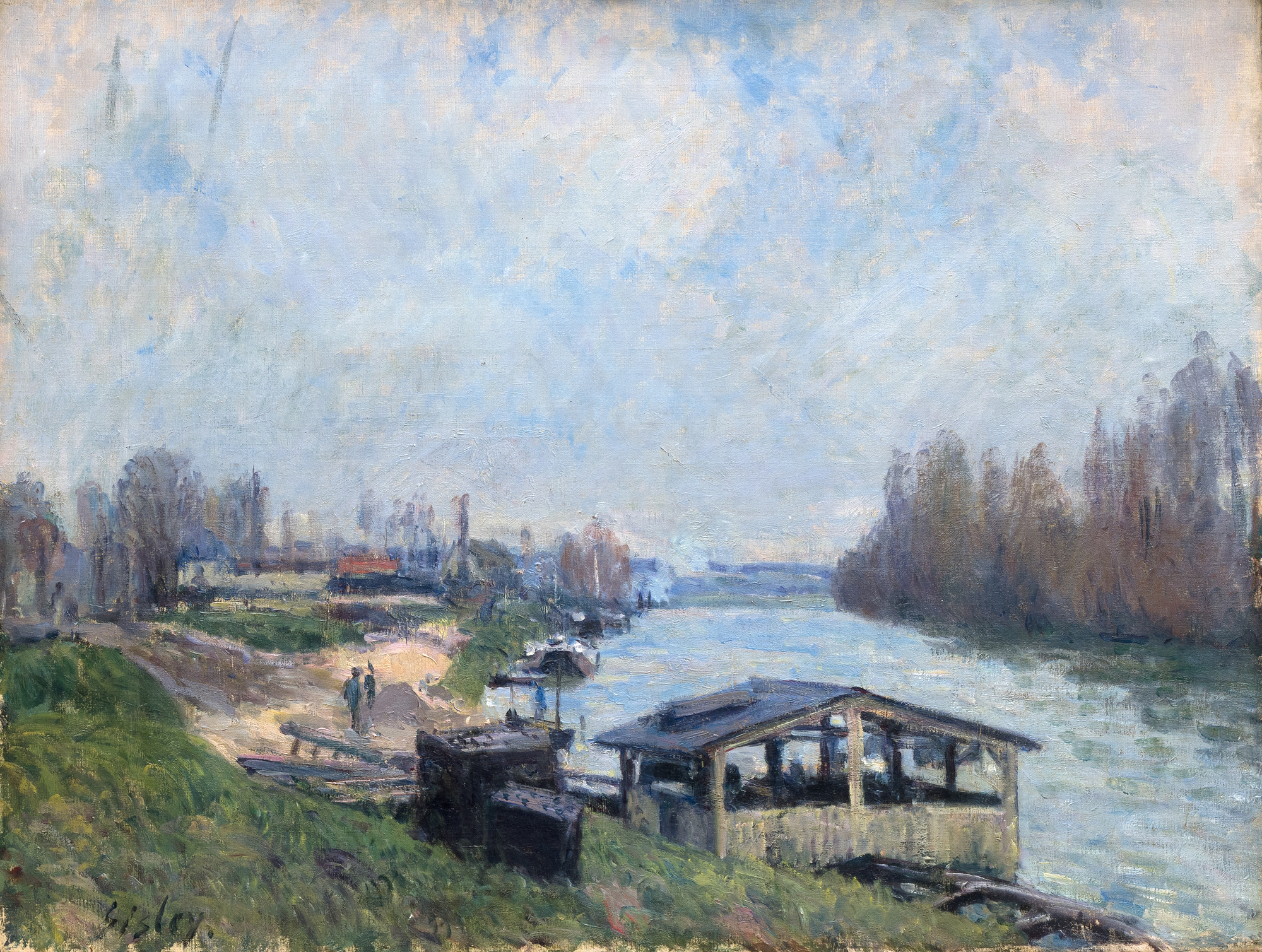
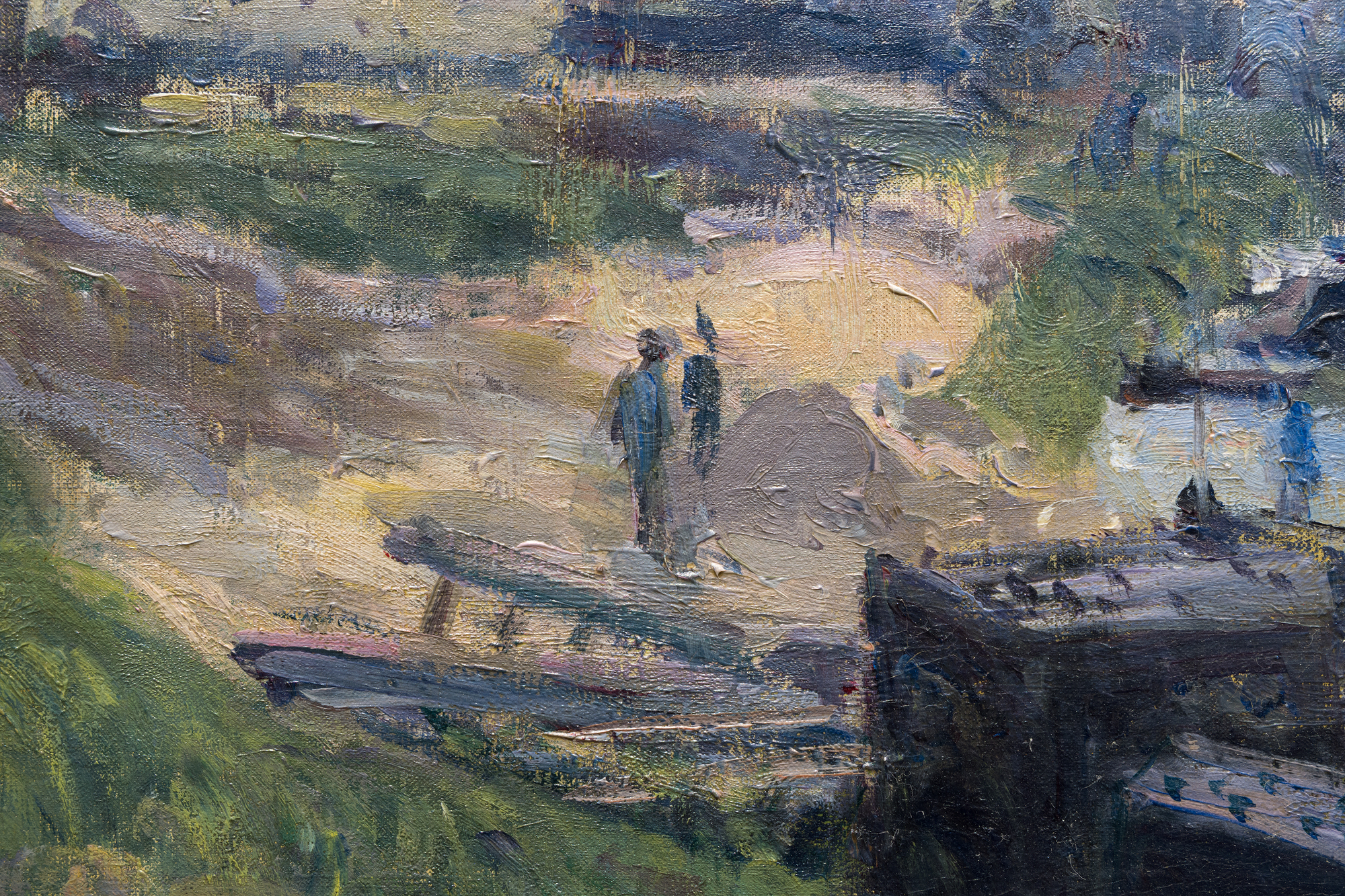
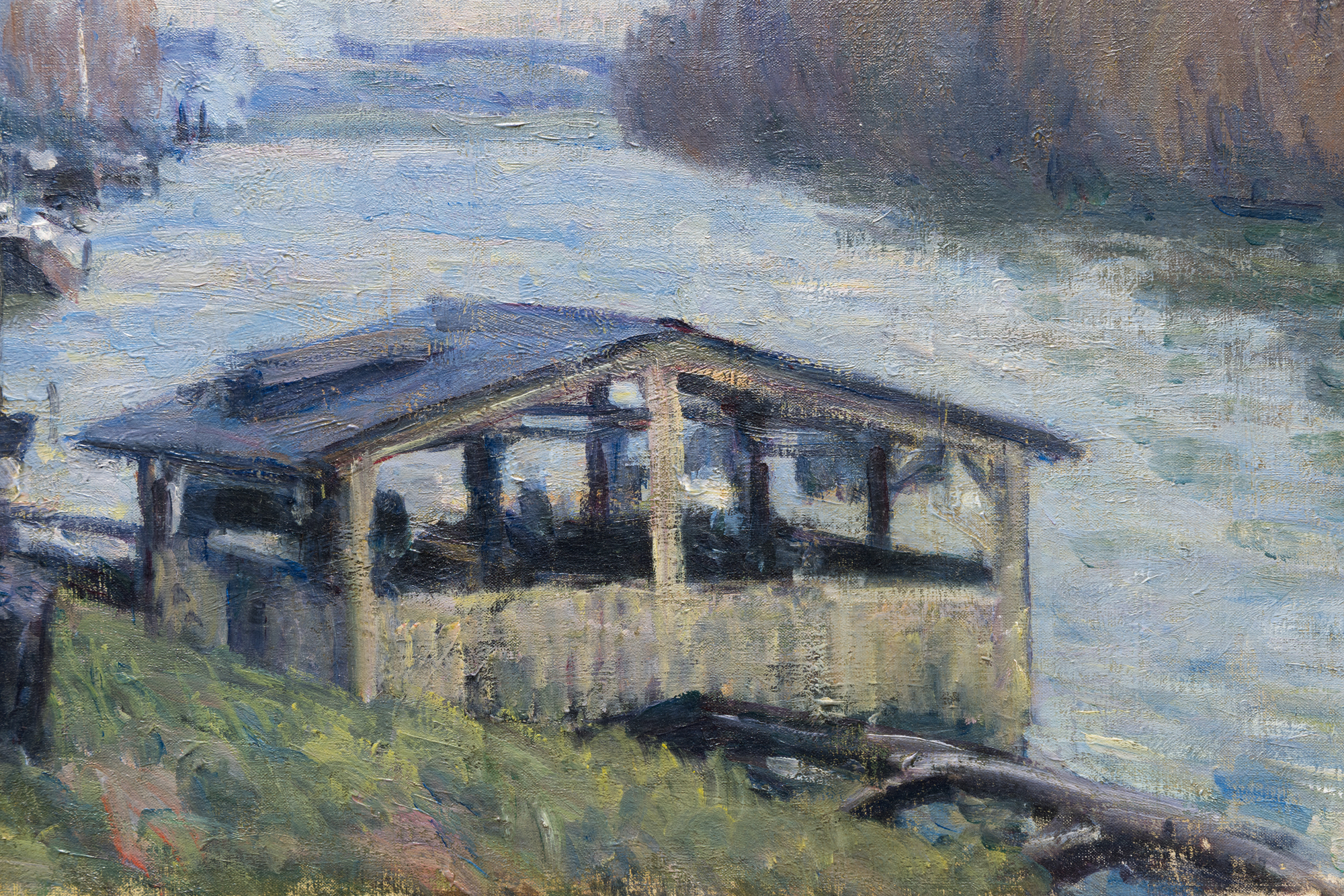
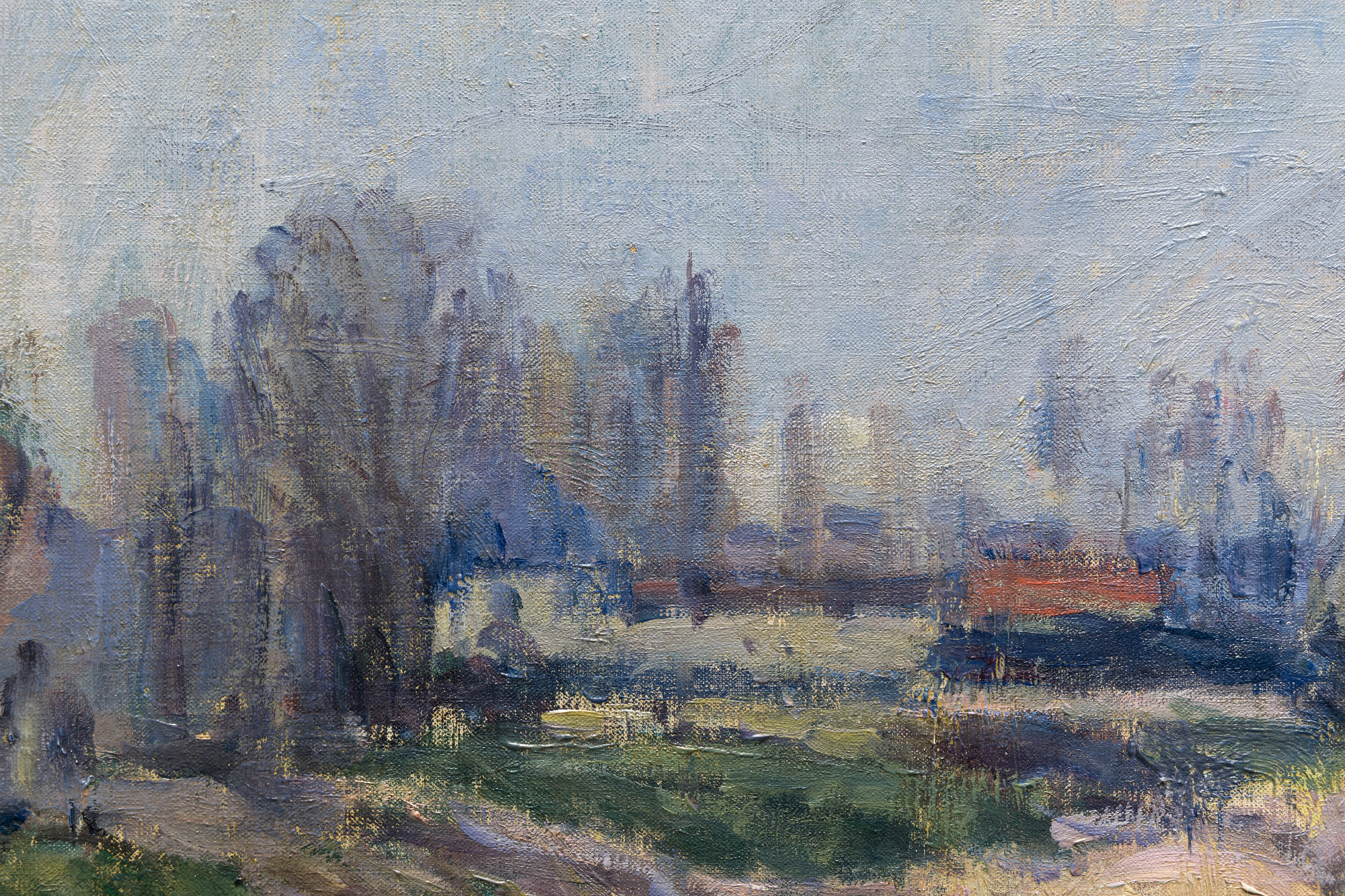
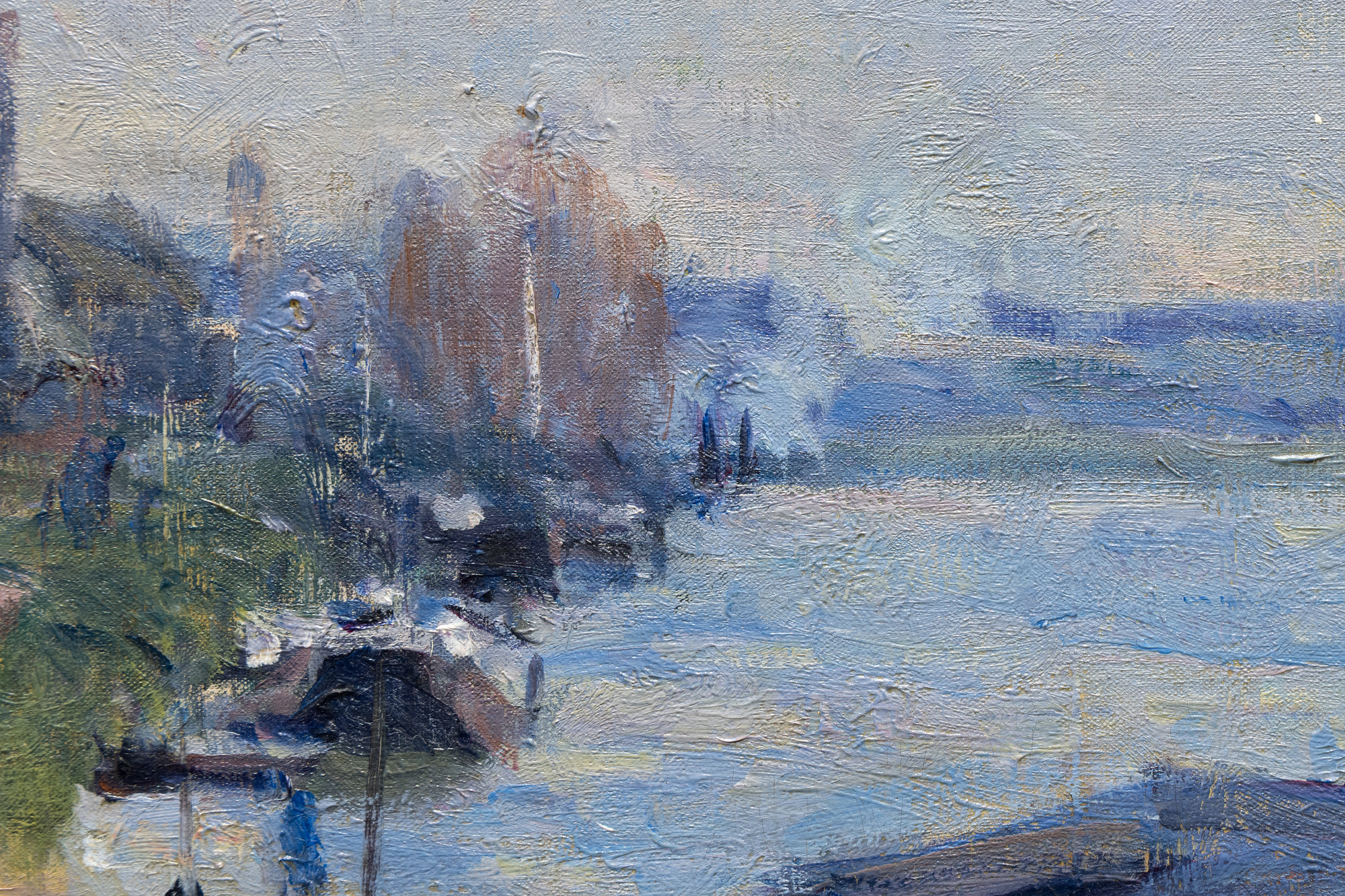
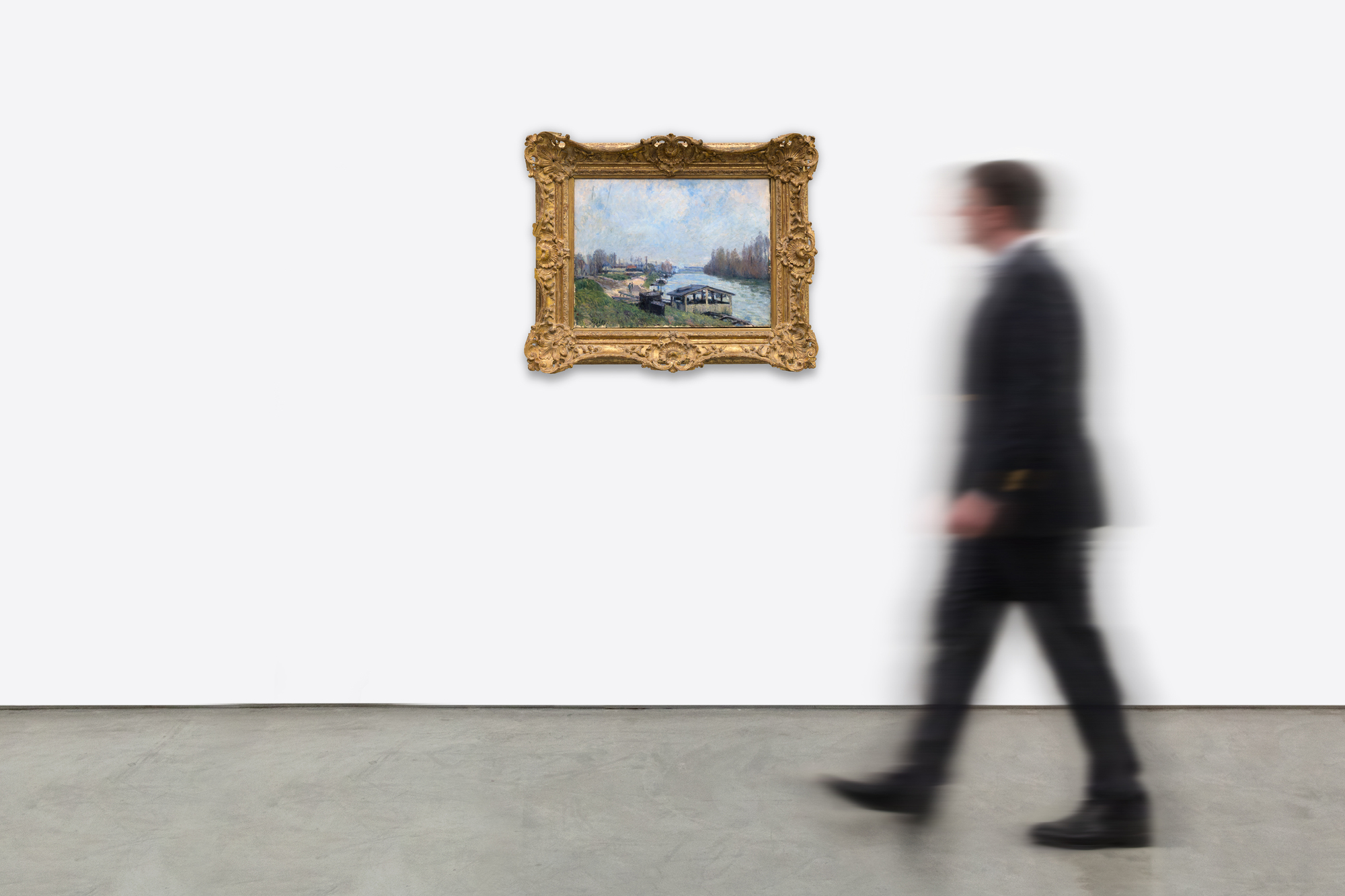
<div>Alfred Sisley’s <em>Le Lavoir de Billancourt</em> (1879) is a superb example of the artist’s lifelong devotion to painting directly before nature, and to the quiet drama of landscape in flux. Often described as the “purest” plein air painter of the Impressionist circle, Sisley maintained an almost exclusive relationship with landscape, attending to the subtlest changes of season, weather, and time of day. His river scenes in particular have long been compared to Monet’s for their sensitivity to water—its shifting reflections, softened edges, and the way light dissolves form into atmosphere. </div><br><br><div> </div><br><br><div>Painted along the Seine at Billancourt—an industrial town west of Paris—this work belongs to the sequence of views Sisley produced after the upheavals of 1871, when he moved his family first to Louveciennes and later to nearby Marly-le-Roi. The Seine valley offered him an ever-renewing motif: looping river bends, villages threaded along the banks, and a landscape marked by both history and modern life. Here, the floating washing house (a lavoir) sits low on the water, a practical structure where locals could wash clothes directly in the river for a small fee. Sisley transforms this everyday subject into an evocation of lived place, where human activity is integrated seamlessly into the broader rhythms of sky and current. </div><br><br><div> </div><br><br><div>The 1870s are widely recognized as Sisley’s “golden period”—when his work speaks in a distinctly personal voice rather than under the overt influence of Corot, Courbet, or even early Monet. After ceasing to exhibit at the Salon after 1877, his compositions grew more complex and less dependent on traditional recession and linear perspective, shifting instead toward interlocking patterns and the expressive energy of his brushwork. In<em> Le Lavoir de Billancourt</em>, layers of pigment are built up in quick, multidirectional strokes, creating a richly textured surface saturated with color and air. This heightened spontaneity aligns with contemporary praise for Sisley’s ability to seize passing moments—clouds, breeze, and trembling foliage—so that space and light feel inseparable, and the scene remains vibrantly in motion. The painting is recorded in the François Dault<em> Alfred Sisley: catalogue raisonné de l'oeuvre peint</em> (1959) as no. 315. </div> <div>Alfred Sisley’s <em>Le Lavoir de Billancourt</em> (1879) is a superb example of the artist’s lifelong devotion to painting directly before nature, and to the quiet drama of landscape in flux. Often described as the “purest” plein air painter of the Impressionist circle, Sisley maintained an almost exclusive relationship with landscape, attending to the subtlest changes of season, weather, and time of day. His river scenes in particular have long been compared to Monet’s for their sensitivity to water—its shifting reflections, softened edges, and the way light dissolves form into atmosphere. </div><br><br><div> </div><br><br><div>Painted along the Seine at Billancourt—an industrial town west of Paris—this work belongs to the sequence of views Sisley produced after the upheavals of 1871, when he moved his family first to Louveciennes and later to nearby Marly-le-Roi. The Seine valley offered him an ever-renewing motif: looping river bends, villages threaded along the banks, and a landscape marked by both history and modern life. Here, the floating washing house (a lavoir) sits low on the water, a practical structure where locals could wash clothes directly in the river for a small fee. Sisley transforms this everyday subject into an evocation of lived place, where human activity is integrated seamlessly into the broader rhythms of sky and current. </div><br><br><div> </div><br><br><div>The 1870s are widely recognized as Sisley’s “golden period”—when his work speaks in a distinctly personal voice rather than under the overt influence of Corot, Courbet, or even early Monet. After ceasing to exhibit at the Salon after 1877, his compositions grew more complex and less dependent on traditional recession and linear perspective, shifting instead toward interlocking patterns and the expressive energy of his brushwork. In<em> Le Lavoir de Billancourt</em>, layers of pigment are built up in quick, multidirectional strokes, creating a richly textured surface saturated with color and air. This heightened spontaneity aligns with contemporary praise for Sisley’s ability to seize passing moments—clouds, breeze, and trembling foliage—so that space and light feel inseparable, and the scene remains vibrantly in motion. The painting is recorded in the François Dault<em> Alfred Sisley: catalogue raisonné de l'oeuvre peint</em> (1959) as no. 315. </div> <div>Alfred Sisley’s <em>Le Lavoir de Billancourt</em> (1879) is a superb example of the artist’s lifelong devotion to painting directly before nature, and to the quiet drama of landscape in flux. Often described as the “purest” plein air painter of the Impressionist circle, Sisley maintained an almost exclusive relationship with landscape, attending to the subtlest changes of season, weather, and time of day. His river scenes in particular have long been compared to Monet’s for their sensitivity to water—its shifting reflections, softened edges, and the way light dissolves form into atmosphere. </div><br><br><div> </div><br><br><div>Painted along the Seine at Billancourt—an industrial town west of Paris—this work belongs to the sequence of views Sisley produced after the upheavals of 1871, when he moved his family first to Louveciennes and later to nearby Marly-le-Roi. The Seine valley offered him an ever-renewing motif: looping river bends, villages threaded along the banks, and a landscape marked by both history and modern life. Here, the floating washing house (a lavoir) sits low on the water, a practical structure where locals could wash clothes directly in the river for a small fee. Sisley transforms this everyday subject into an evocation of lived place, where human activity is integrated seamlessly into the broader rhythms of sky and current. </div><br><br><div> </div><br><br><div>The 1870s are widely recognized as Sisley’s “golden period”—when his work speaks in a distinctly personal voice rather than under the overt influence of Corot, Courbet, or even early Monet. After ceasing to exhibit at the Salon after 1877, his compositions grew more complex and less dependent on traditional recession and linear perspective, shifting instead toward interlocking patterns and the expressive energy of his brushwork. In<em> Le Lavoir de Billancourt</em>, layers of pigment are built up in quick, multidirectional strokes, creating a richly textured surface saturated with color and air. This heightened spontaneity aligns with contemporary praise for Sisley’s ability to seize passing moments—clouds, breeze, and trembling foliage—so that space and light feel inseparable, and the scene remains vibrantly in motion. The painting is recorded in the François Dault<em> Alfred Sisley: catalogue raisonné de l'oeuvre peint</em> (1959) as no. 315. </div> <div>Alfred Sisley’s <em>Le Lavoir de Billancourt</em> (1879) is a superb example of the artist’s lifelong devotion to painting directly before nature, and to the quiet drama of landscape in flux. Often described as the “purest” plein air painter of the Impressionist circle, Sisley maintained an almost exclusive relationship with landscape, attending to the subtlest changes of season, weather, and time of day. His river scenes in particular have long been compared to Monet’s for their sensitivity to water—its shifting reflections, softened edges, and the way light dissolves form into atmosphere. </div><br><br><div> </div><br><br><div>Painted along the Seine at Billancourt—an industrial town west of Paris—this work belongs to the sequence of views Sisley produced after the upheavals of 1871, when he moved his family first to Louveciennes and later to nearby Marly-le-Roi. The Seine valley offered him an ever-renewing motif: looping river bends, villages threaded along the banks, and a landscape marked by both history and modern life. Here, the floating washing house (a lavoir) sits low on the water, a practical structure where locals could wash clothes directly in the river for a small fee. Sisley transforms this everyday subject into an evocation of lived place, where human activity is integrated seamlessly into the broader rhythms of sky and current. </div><br><br><div> </div><br><br><div>The 1870s are widely recognized as Sisley’s “golden period”—when his work speaks in a distinctly personal voice rather than under the overt influence of Corot, Courbet, or even early Monet. After ceasing to exhibit at the Salon after 1877, his compositions grew more complex and less dependent on traditional recession and linear perspective, shifting instead toward interlocking patterns and the expressive energy of his brushwork. In<em> Le Lavoir de Billancourt</em>, layers of pigment are built up in quick, multidirectional strokes, creating a richly textured surface saturated with color and air. This heightened spontaneity aligns with contemporary praise for Sisley’s ability to seize passing moments—clouds, breeze, and trembling foliage—so that space and light feel inseparable, and the scene remains vibrantly in motion. The painting is recorded in the François Dault<em> Alfred Sisley: catalogue raisonné de l'oeuvre peint</em> (1959) as no. 315. </div> <div>Alfred Sisley’s <em>Le Lavoir de Billancourt</em> (1879) is a superb example of the artist’s lifelong devotion to painting directly before nature, and to the quiet drama of landscape in flux. Often described as the “purest” plein air painter of the Impressionist circle, Sisley maintained an almost exclusive relationship with landscape, attending to the subtlest changes of season, weather, and time of day. His river scenes in particular have long been compared to Monet’s for their sensitivity to water—its shifting reflections, softened edges, and the way light dissolves form into atmosphere. </div><br><br><div> </div><br><br><div>Painted along the Seine at Billancourt—an industrial town west of Paris—this work belongs to the sequence of views Sisley produced after the upheavals of 1871, when he moved his family first to Louveciennes and later to nearby Marly-le-Roi. The Seine valley offered him an ever-renewing motif: looping river bends, villages threaded along the banks, and a landscape marked by both history and modern life. Here, the floating washing house (a lavoir) sits low on the water, a practical structure where locals could wash clothes directly in the river for a small fee. Sisley transforms this everyday subject into an evocation of lived place, where human activity is integrated seamlessly into the broader rhythms of sky and current. </div><br><br><div> </div><br><br><div>The 1870s are widely recognized as Sisley’s “golden period”—when his work speaks in a distinctly personal voice rather than under the overt influence of Corot, Courbet, or even early Monet. After ceasing to exhibit at the Salon after 1877, his compositions grew more complex and less dependent on traditional recession and linear perspective, shifting instead toward interlocking patterns and the expressive energy of his brushwork. In<em> Le Lavoir de Billancourt</em>, layers of pigment are built up in quick, multidirectional strokes, creating a richly textured surface saturated with color and air. This heightened spontaneity aligns with contemporary praise for Sisley’s ability to seize passing moments—clouds, breeze, and trembling foliage—so that space and light feel inseparable, and the scene remains vibrantly in motion. The painting is recorded in the François Dault<em> Alfred Sisley: catalogue raisonné de l'oeuvre peint</em> (1959) as no. 315. </div> <div>Alfred Sisley’s <em>Le Lavoir de Billancourt</em> (1879) is a superb example of the artist’s lifelong devotion to painting directly before nature, and to the quiet drama of landscape in flux. Often described as the “purest” plein air painter of the Impressionist circle, Sisley maintained an almost exclusive relationship with landscape, attending to the subtlest changes of season, weather, and time of day. His river scenes in particular have long been compared to Monet’s for their sensitivity to water—its shifting reflections, softened edges, and the way light dissolves form into atmosphere. </div><br><br><div> </div><br><br><div>Painted along the Seine at Billancourt—an industrial town west of Paris—this work belongs to the sequence of views Sisley produced after the upheavals of 1871, when he moved his family first to Louveciennes and later to nearby Marly-le-Roi. The Seine valley offered him an ever-renewing motif: looping river bends, villages threaded along the banks, and a landscape marked by both history and modern life. Here, the floating washing house (a lavoir) sits low on the water, a practical structure where locals could wash clothes directly in the river for a small fee. Sisley transforms this everyday subject into an evocation of lived place, where human activity is integrated seamlessly into the broader rhythms of sky and current. </div><br><br><div> </div><br><br><div>The 1870s are widely recognized as Sisley’s “golden period”—when his work speaks in a distinctly personal voice rather than under the overt influence of Corot, Courbet, or even early Monet. After ceasing to exhibit at the Salon after 1877, his compositions grew more complex and less dependent on traditional recession and linear perspective, shifting instead toward interlocking patterns and the expressive energy of his brushwork. In<em> Le Lavoir de Billancourt</em>, layers of pigment are built up in quick, multidirectional strokes, creating a richly textured surface saturated with color and air. This heightened spontaneity aligns with contemporary praise for Sisley’s ability to seize passing moments—clouds, breeze, and trembling foliage—so that space and light feel inseparable, and the scene remains vibrantly in motion. The painting is recorded in the François Dault<em> Alfred Sisley: catalogue raisonné de l'oeuvre peint</em> (1959) as no. 315. </div> <div>Alfred Sisley’s <em>Le Lavoir de Billancourt</em> (1879) is a superb example of the artist’s lifelong devotion to painting directly before nature, and to the quiet drama of landscape in flux. Often described as the “purest” plein air painter of the Impressionist circle, Sisley maintained an almost exclusive relationship with landscape, attending to the subtlest changes of season, weather, and time of day. His river scenes in particular have long been compared to Monet’s for their sensitivity to water—its shifting reflections, softened edges, and the way light dissolves form into atmosphere. </div><br><br><div> </div><br><br><div>Painted along the Seine at Billancourt—an industrial town west of Paris—this work belongs to the sequence of views Sisley produced after the upheavals of 1871, when he moved his family first to Louveciennes and later to nearby Marly-le-Roi. The Seine valley offered him an ever-renewing motif: looping river bends, villages threaded along the banks, and a landscape marked by both history and modern life. Here, the floating washing house (a lavoir) sits low on the water, a practical structure where locals could wash clothes directly in the river for a small fee. Sisley transforms this everyday subject into an evocation of lived place, where human activity is integrated seamlessly into the broader rhythms of sky and current. </div><br><br><div> </div><br><br><div>The 1870s are widely recognized as Sisley’s “golden period”—when his work speaks in a distinctly personal voice rather than under the overt influence of Corot, Courbet, or even early Monet. After ceasing to exhibit at the Salon after 1877, his compositions grew more complex and less dependent on traditional recession and linear perspective, shifting instead toward interlocking patterns and the expressive energy of his brushwork. In<em> Le Lavoir de Billancourt</em>, layers of pigment are built up in quick, multidirectional strokes, creating a richly textured surface saturated with color and air. This heightened spontaneity aligns with contemporary praise for Sisley’s ability to seize passing moments—clouds, breeze, and trembling foliage—so that space and light feel inseparable, and the scene remains vibrantly in motion. The painting is recorded in the François Dault<em> Alfred Sisley: catalogue raisonné de l'oeuvre peint</em> (1959) as no. 315. </div> <div>Alfred Sisley’s <em>Le Lavoir de Billancourt</em> (1879) is a superb example of the artist’s lifelong devotion to painting directly before nature, and to the quiet drama of landscape in flux. Often described as the “purest” plein air painter of the Impressionist circle, Sisley maintained an almost exclusive relationship with landscape, attending to the subtlest changes of season, weather, and time of day. His river scenes in particular have long been compared to Monet’s for their sensitivity to water—its shifting reflections, softened edges, and the way light dissolves form into atmosphere. </div><br><br><div> </div><br><br><div>Painted along the Seine at Billancourt—an industrial town west of Paris—this work belongs to the sequence of views Sisley produced after the upheavals of 1871, when he moved his family first to Louveciennes and later to nearby Marly-le-Roi. The Seine valley offered him an ever-renewing motif: looping river bends, villages threaded along the banks, and a landscape marked by both history and modern life. Here, the floating washing house (a lavoir) sits low on the water, a practical structure where locals could wash clothes directly in the river for a small fee. Sisley transforms this everyday subject into an evocation of lived place, where human activity is integrated seamlessly into the broader rhythms of sky and current. </div><br><br><div> </div><br><br><div>The 1870s are widely recognized as Sisley’s “golden period”—when his work speaks in a distinctly personal voice rather than under the overt influence of Corot, Courbet, or even early Monet. After ceasing to exhibit at the Salon after 1877, his compositions grew more complex and less dependent on traditional recession and linear perspective, shifting instead toward interlocking patterns and the expressive energy of his brushwork. In<em> Le Lavoir de Billancourt</em>, layers of pigment are built up in quick, multidirectional strokes, creating a richly textured surface saturated with color and air. This heightened spontaneity aligns with contemporary praise for Sisley’s ability to seize passing moments—clouds, breeze, and trembling foliage—so that space and light feel inseparable, and the scene remains vibrantly in motion. The painting is recorded in the François Dault<em> Alfred Sisley: catalogue raisonné de l'oeuvre peint</em> (1959) as no. 315. </div> <div>Alfred Sisley’s <em>Le Lavoir de Billancourt</em> (1879) is a superb example of the artist’s lifelong devotion to painting directly before nature, and to the quiet drama of landscape in flux. Often described as the “purest” plein air painter of the Impressionist circle, Sisley maintained an almost exclusive relationship with landscape, attending to the subtlest changes of season, weather, and time of day. His river scenes in particular have long been compared to Monet’s for their sensitivity to water—its shifting reflections, softened edges, and the way light dissolves form into atmosphere. </div><br><br><div> </div><br><br><div>Painted along the Seine at Billancourt—an industrial town west of Paris—this work belongs to the sequence of views Sisley produced after the upheavals of 1871, when he moved his family first to Louveciennes and later to nearby Marly-le-Roi. The Seine valley offered him an ever-renewing motif: looping river bends, villages threaded along the banks, and a landscape marked by both history and modern life. Here, the floating washing house (a lavoir) sits low on the water, a practical structure where locals could wash clothes directly in the river for a small fee. Sisley transforms this everyday subject into an evocation of lived place, where human activity is integrated seamlessly into the broader rhythms of sky and current. </div><br><br><div> </div><br><br><div>The 1870s are widely recognized as Sisley’s “golden period”—when his work speaks in a distinctly personal voice rather than under the overt influence of Corot, Courbet, or even early Monet. After ceasing to exhibit at the Salon after 1877, his compositions grew more complex and less dependent on traditional recession and linear perspective, shifting instead toward interlocking patterns and the expressive energy of his brushwork. In<em> Le Lavoir de Billancourt</em>, layers of pigment are built up in quick, multidirectional strokes, creating a richly textured surface saturated with color and air. This heightened spontaneity aligns with contemporary praise for Sisley’s ability to seize passing moments—clouds, breeze, and trembling foliage—so that space and light feel inseparable, and the scene remains vibrantly in motion. The painting is recorded in the François Dault<em> Alfred Sisley: catalogue raisonné de l'oeuvre peint</em> (1959) as no. 315. </div> <div>Alfred Sisley’s <em>Le Lavoir de Billancourt</em> (1879) is a superb example of the artist’s lifelong devotion to painting directly before nature, and to the quiet drama of landscape in flux. Often described as the “purest” plein air painter of the Impressionist circle, Sisley maintained an almost exclusive relationship with landscape, attending to the subtlest changes of season, weather, and time of day. His river scenes in particular have long been compared to Monet’s for their sensitivity to water—its shifting reflections, softened edges, and the way light dissolves form into atmosphere. </div><br><br><div> </div><br><br><div>Painted along the Seine at Billancourt—an industrial town west of Paris—this work belongs to the sequence of views Sisley produced after the upheavals of 1871, when he moved his family first to Louveciennes and later to nearby Marly-le-Roi. The Seine valley offered him an ever-renewing motif: looping river bends, villages threaded along the banks, and a landscape marked by both history and modern life. Here, the floating washing house (a lavoir) sits low on the water, a practical structure where locals could wash clothes directly in the river for a small fee. Sisley transforms this everyday subject into an evocation of lived place, where human activity is integrated seamlessly into the broader rhythms of sky and current. </div><br><br><div> </div><br><br><div>The 1870s are widely recognized as Sisley’s “golden period”—when his work speaks in a distinctly personal voice rather than under the overt influence of Corot, Courbet, or even early Monet. After ceasing to exhibit at the Salon after 1877, his compositions grew more complex and less dependent on traditional recession and linear perspective, shifting instead toward interlocking patterns and the expressive energy of his brushwork. In<em> Le Lavoir de Billancourt</em>, layers of pigment are built up in quick, multidirectional strokes, creating a richly textured surface saturated with color and air. This heightened spontaneity aligns with contemporary praise for Sisley’s ability to seize passing moments—clouds, breeze, and trembling foliage—so that space and light feel inseparable, and the scene remains vibrantly in motion. The painting is recorded in the François Dault<em> Alfred Sisley: catalogue raisonné de l'oeuvre peint</em> (1959) as no. 315. </div>
比朗库尔洗衣场1879年20 x 25 5/8 英寸(50.8 x 65.09 厘米) 布面油画
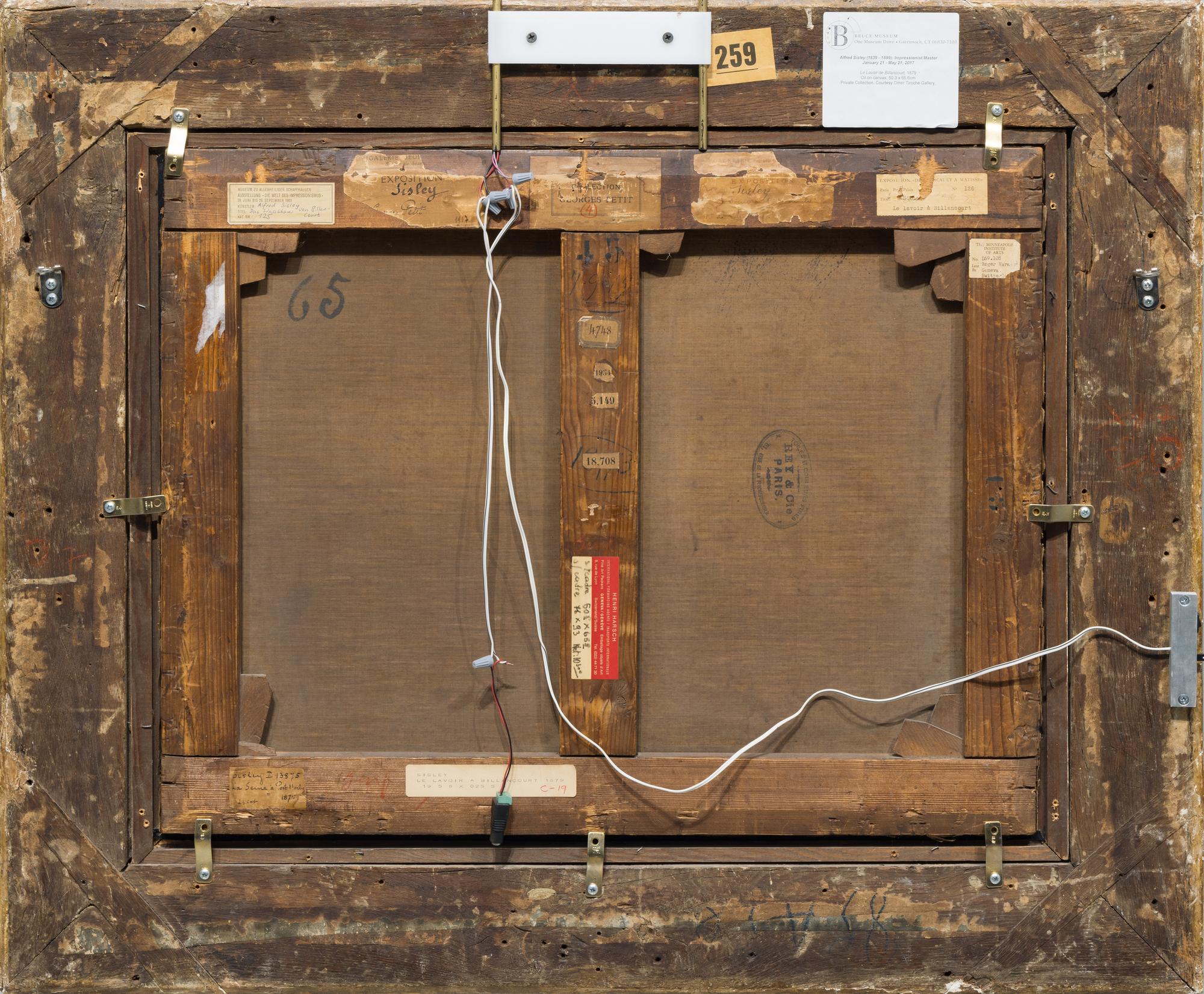
种源
亨利·波伊达兹,巴黎
乔治·佩蒂画廊,巴黎,1900年4月27日,第79号拍品
乔治·佩蒂,购自上述拍卖会
拍卖会:乔治·佩蒂画廊,巴黎,1921年3月4-5日,第113号拍品
兰斯凯伯爵,巴黎
巴黎德鲁奥拍卖行,1922年4月6日,第16号拍品
欧仁·布洛画廊,巴黎,于上述拍卖购得
阿瑟·夏庞蒂埃博士,巴黎
私人收藏,瑞士,约1950年购入
私人收藏,由上述藏家传承
私人收藏,欧洲
苏富比纽约,2015年5月6日,拍品号
...更。。。250
私人收藏,伦敦,购自上述拍卖会
展会信息
巴黎,乔治·佩蒂画廊,阿尔弗雷德·西斯莱,1917年,编号83
巴黎,杜兰-吕埃尔画廊,西斯莱画作,1930年,编号23
巴黎,布朗美术馆,西斯莱,1933年,编号13
伯尔尼,艺术博物馆,阿尔弗雷德·西斯莱,1958年,编号38
巴黎小皇宫博物馆,《从热里科到马蒂斯:瑞士馆藏杰作》,1959年,编号126
沙夫豪森,诸圣博物馆,《印象派的世界》,1963年,编号125
明尼阿波利斯,明尼阿波利斯艺术学院,《重访往昔:1800-1900年法国绘画》,1969年
 
文学
马克西米连·高蒂埃,《致希斯利》,载《活着的艺术》,1933年,第170期,第116页(附图)
弗朗索瓦·多尔特,阿尔弗雷德·西斯莱,《绘画作品全集》,巴黎,1959年,编号315(附图)
雅克·拉塞涅与西尔维·加什-帕坦,《希思黎》,巴黎,1982年,第31页(附图)
玛丽·安妮·史蒂文斯编,《阿尔弗雷德·西斯莱》,伦敦,1992年,第154页
西尔维·布雷姆 & 弗朗索瓦·洛朗索,《阿尔弗雷德·西斯莱:油画与粉彩画作品目录》,巴黎,2021年,第155页,第488页(附图)
...少。。。
阿尔弗雷德·西斯莱的《比朗库尔洗衣场》(1879)堪称艺术家毕生致力于写生创作的典范之作,生动展现了变幻莫测的自然景观中蕴藏的静谧张力。 这位常被誉为印象派圈中"最纯粹"的户外画家,几乎将毕生精力倾注于风景创作,细致捕捉四季更迭、天气变幻与昼夜流转的微妙变化。其河岸画作尤为引人注目,因对水体的敏锐感知——流动的倒影、柔和的轮廓、以及光线将形态消融于氛围中的手法——长期与莫奈的作品相提并论。


此作描绘巴黎西郊工业城镇比朗库尔的塞纳河景,属于西斯莱经历1871年动荡后创作的系列作品。当时他先携家人迁至卢夫西恩,后移居邻近的马利勒鲁瓦。 塞纳河谷为他提供了源源不断的创作素材:蜿蜒的河湾、沿岸串联的村落,以及既承载历史又融入现代生活的景致。画面中低浮于水面的漂洗屋(lavoir)便是实用建筑,当地人可在此支付小费直接在河中洗涤衣物。 西斯莱将这日常场景升华为生活空间的写照,将人类活动与天际流转、水流律动浑然交融。


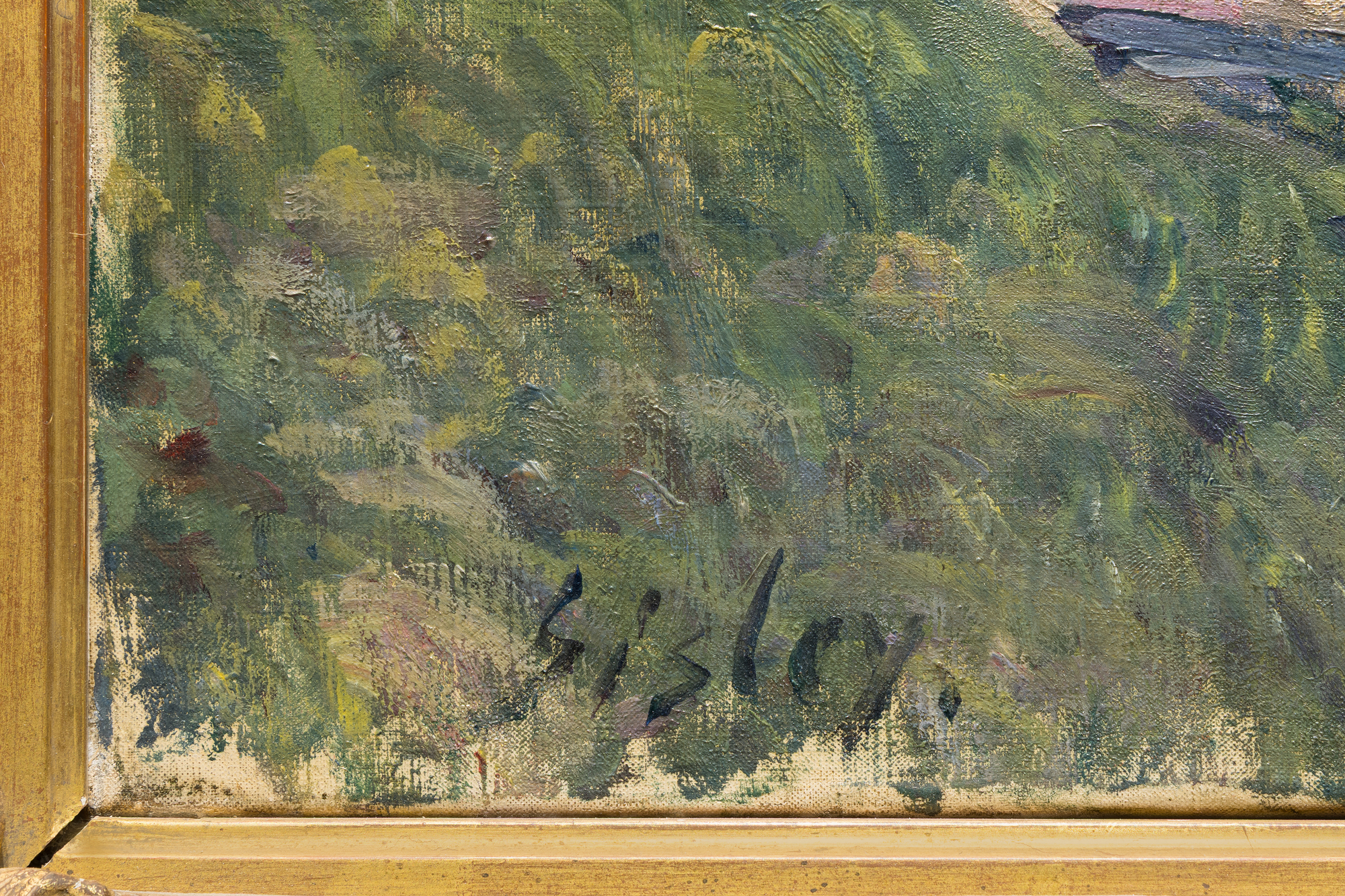
1870年代被公认为西斯莱的"黄金时期"——此时他的作品已摆脱柯罗、库尔贝乃至早期莫奈的明显影响,形成鲜明的个人风格。 自1877年退出沙龙展览后,其构图日趋复杂,摆脱传统透视法束缚,转而追求交错的纹理与笔触的张力。《比朗库尔洗衣场》中,颜料通过快速多向的笔触层层堆叠,形成饱含色彩与空气的丰富肌理。 这种高度即兴的创作方式,恰与同时代人对西斯莱捕捉转瞬即逝瞬间的赞誉相契——云朵、微风、颤动的枝叶——使空间与光线浑然一体,让画面始终充满跃动的生机。该作品在弗朗索瓦·多尔所著《阿尔弗雷德·西斯莱:绘画作品全集》(1959)中登记为编号315。
询问