קלוד מונה(1840-1926)

$5,750,000
 
<div><font face=Lato size=3 color="#191919"><em>Argenteuil, l’Hospice</em> from 1872 belongs to one of the most formative chapters in Claude Monet’s career, painted during his early years in Argenteuil where he created nearly one hundred eighty canvases between 1871 and 1878. First owned by Paul Durand Ruel, Monet’s dealer and the most important champion of the Impressionists, the painting is included in the Wildenstein catalogue and was featured in the National Gallery London’s landmark exhibition <em>Monet and Architecture </em>in 2018. Created in the same year as his breakthrough <em>Impression, Sunrise</em>, the work reflects the moment when Monet’s vision for modern landscape took shape and laid the foundation for the movement that would soon be known as Impressionism.</font></div><br><br><div> </div><br><br><div><font face=Lato size=3 color="#191919">Monet settled in Argenteuil in late 1871, determined to renew his artistic direction after the upheavals of war and exile. The town offered an enticing blend of historical architecture, modern industry, rustic gardens, and the ever-shifting Seine, all within easy reach of Paris. The Aubrey House, where Monet lived, became a gathering place for Renoir, Manet, Sisley, Caillebotte, and later Pissarro, a setting that fostered both artistic exchange and the planning of the first Impressionist exhibition of 1874. As scholar Paul Hayes Tucker has noted, Argenteuil offered Monet a rare diversity of motifs that he encountered daily, ranging from the charmingly old to the strikingly new.</font></div><br><br><div> </div><br><br><div><font face=Lato size=3 color="#191919">In this painting Monet set his easel on rue Pierre Guienne, with his back to the Aubrey House, and painted the seventeenth century building that served at the time as the hospice of the Porte Saint Denis. The structure appears at right, viewed from the Seine, rendered with a quiet clarity that captures the atmosphere of an early spring day. The palette reflects both a reverence for the site’s history and an appreciation for Eugène Boudin, the friend and mentor who had encouraged Monet to paint the play of air and light years earlier and who joined him for a housewarming at Argenteuil on January 2, 1872. The hospice later became the Musée du Vieil Argenteuil, further reinforcing the historical resonance of the site.</font></div><br><br><div> </div><br><br><div><font face=Lato size=3 color="#191919"><em>Argenteuil, l’Hospice</em> stands as one of Monet’s earliest paintings from this crucial period and offers a faithful, atmospheric interpretation of a place deeply intertwined with the origins of Impressionism. Its blend of gentle tonalities, soft spring light, and direct observation reveals the artist’s growing confidence in painting the world as he perceived it, moment by moment, as a new vision for modern landscape art emerged.</font></div> <div><font face=Lato size=3 color="#191919"><em>Argenteuil, l’Hospice</em> from 1872 belongs to one of the most formative chapters in Claude Monet’s career, painted during his early years in Argenteuil where he created nearly one hundred eighty canvases between 1871 and 1878. First owned by Paul Durand Ruel, Monet’s dealer and the most important champion of the Impressionists, the painting is included in the Wildenstein catalogue and was featured in the National Gallery London’s landmark exhibition <em>Monet and Architecture </em>in 2018. Created in the same year as his breakthrough <em>Impression, Sunrise</em>, the work reflects the moment when Monet’s vision for modern landscape took shape and laid the foundation for the movement that would soon be known as Impressionism.</font></div><br><br><div> </div><br><br><div><font face=Lato size=3 color="#191919">Monet settled in Argenteuil in late 1871, determined to renew his artistic direction after the upheavals of war and exile. The town offered an enticing blend of historical architecture, modern industry, rustic gardens, and the ever-shifting Seine, all within easy reach of Paris. The Aubrey House, where Monet lived, became a gathering place for Renoir, Manet, Sisley, Caillebotte, and later Pissarro, a setting that fostered both artistic exchange and the planning of the first Impressionist exhibition of 1874. As scholar Paul Hayes Tucker has noted, Argenteuil offered Monet a rare diversity of motifs that he encountered daily, ranging from the charmingly old to the strikingly new.</font></div><br><br><div> </div><br><br><div><font face=Lato size=3 color="#191919">In this painting Monet set his easel on rue Pierre Guienne, with his back to the Aubrey House, and painted the seventeenth century building that served at the time as the hospice of the Porte Saint Denis. The structure appears at right, viewed from the Seine, rendered with a quiet clarity that captures the atmosphere of an early spring day. The palette reflects both a reverence for the site’s history and an appreciation for Eugène Boudin, the friend and mentor who had encouraged Monet to paint the play of air and light years earlier and who joined him for a housewarming at Argenteuil on January 2, 1872. The hospice later became the Musée du Vieil Argenteuil, further reinforcing the historical resonance of the site.</font></div><br><br><div> </div><br><br><div><font face=Lato size=3 color="#191919"><em>Argenteuil, l’Hospice</em> stands as one of Monet’s earliest paintings from this crucial period and offers a faithful, atmospheric interpretation of a place deeply intertwined with the origins of Impressionism. Its blend of gentle tonalities, soft spring light, and direct observation reveals the artist’s growing confidence in painting the world as he perceived it, moment by moment, as a new vision for modern landscape art emerged.</font></div> <div><font face=Lato size=3 color="#191919"><em>Argenteuil, l’Hospice</em> from 1872 belongs to one of the most formative chapters in Claude Monet’s career, painted during his early years in Argenteuil where he created nearly one hundred eighty canvases between 1871 and 1878. First owned by Paul Durand Ruel, Monet’s dealer and the most important champion of the Impressionists, the painting is included in the Wildenstein catalogue and was featured in the National Gallery London’s landmark exhibition <em>Monet and Architecture </em>in 2018. Created in the same year as his breakthrough <em>Impression, Sunrise</em>, the work reflects the moment when Monet’s vision for modern landscape took shape and laid the foundation for the movement that would soon be known as Impressionism.</font></div><br><br><div> </div><br><br><div><font face=Lato size=3 color="#191919">Monet settled in Argenteuil in late 1871, determined to renew his artistic direction after the upheavals of war and exile. The town offered an enticing blend of historical architecture, modern industry, rustic gardens, and the ever-shifting Seine, all within easy reach of Paris. The Aubrey House, where Monet lived, became a gathering place for Renoir, Manet, Sisley, Caillebotte, and later Pissarro, a setting that fostered both artistic exchange and the planning of the first Impressionist exhibition of 1874. As scholar Paul Hayes Tucker has noted, Argenteuil offered Monet a rare diversity of motifs that he encountered daily, ranging from the charmingly old to the strikingly new.</font></div><br><br><div> </div><br><br><div><font face=Lato size=3 color="#191919">In this painting Monet set his easel on rue Pierre Guienne, with his back to the Aubrey House, and painted the seventeenth century building that served at the time as the hospice of the Porte Saint Denis. The structure appears at right, viewed from the Seine, rendered with a quiet clarity that captures the atmosphere of an early spring day. The palette reflects both a reverence for the site’s history and an appreciation for Eugène Boudin, the friend and mentor who had encouraged Monet to paint the play of air and light years earlier and who joined him for a housewarming at Argenteuil on January 2, 1872. The hospice later became the Musée du Vieil Argenteuil, further reinforcing the historical resonance of the site.</font></div><br><br><div> </div><br><br><div><font face=Lato size=3 color="#191919"><em>Argenteuil, l’Hospice</em> stands as one of Monet’s earliest paintings from this crucial period and offers a faithful, atmospheric interpretation of a place deeply intertwined with the origins of Impressionism. Its blend of gentle tonalities, soft spring light, and direct observation reveals the artist’s growing confidence in painting the world as he perceived it, moment by moment, as a new vision for modern landscape art emerged.</font></div> <div><font face=Lato size=3 color="#191919"><em>Argenteuil, l’Hospice</em> from 1872 belongs to one of the most formative chapters in Claude Monet’s career, painted during his early years in Argenteuil where he created nearly one hundred eighty canvases between 1871 and 1878. First owned by Paul Durand Ruel, Monet’s dealer and the most important champion of the Impressionists, the painting is included in the Wildenstein catalogue and was featured in the National Gallery London’s landmark exhibition <em>Monet and Architecture </em>in 2018. Created in the same year as his breakthrough <em>Impression, Sunrise</em>, the work reflects the moment when Monet’s vision for modern landscape took shape and laid the foundation for the movement that would soon be known as Impressionism.</font></div><br><br><div> </div><br><br><div><font face=Lato size=3 color="#191919">Monet settled in Argenteuil in late 1871, determined to renew his artistic direction after the upheavals of war and exile. The town offered an enticing blend of historical architecture, modern industry, rustic gardens, and the ever-shifting Seine, all within easy reach of Paris. The Aubrey House, where Monet lived, became a gathering place for Renoir, Manet, Sisley, Caillebotte, and later Pissarro, a setting that fostered both artistic exchange and the planning of the first Impressionist exhibition of 1874. As scholar Paul Hayes Tucker has noted, Argenteuil offered Monet a rare diversity of motifs that he encountered daily, ranging from the charmingly old to the strikingly new.</font></div><br><br><div> </div><br><br><div><font face=Lato size=3 color="#191919">In this painting Monet set his easel on rue Pierre Guienne, with his back to the Aubrey House, and painted the seventeenth century building that served at the time as the hospice of the Porte Saint Denis. The structure appears at right, viewed from the Seine, rendered with a quiet clarity that captures the atmosphere of an early spring day. The palette reflects both a reverence for the site’s history and an appreciation for Eugène Boudin, the friend and mentor who had encouraged Monet to paint the play of air and light years earlier and who joined him for a housewarming at Argenteuil on January 2, 1872. The hospice later became the Musée du Vieil Argenteuil, further reinforcing the historical resonance of the site.</font></div><br><br><div> </div><br><br><div><font face=Lato size=3 color="#191919"><em>Argenteuil, l’Hospice</em> stands as one of Monet’s earliest paintings from this crucial period and offers a faithful, atmospheric interpretation of a place deeply intertwined with the origins of Impressionism. Its blend of gentle tonalities, soft spring light, and direct observation reveals the artist’s growing confidence in painting the world as he perceived it, moment by moment, as a new vision for modern landscape art emerged.</font></div> <div><font face=Lato size=3 color="#191919"><em>Argenteuil, l’Hospice</em> from 1872 belongs to one of the most formative chapters in Claude Monet’s career, painted during his early years in Argenteuil where he created nearly one hundred eighty canvases between 1871 and 1878. First owned by Paul Durand Ruel, Monet’s dealer and the most important champion of the Impressionists, the painting is included in the Wildenstein catalogue and was featured in the National Gallery London’s landmark exhibition <em>Monet and Architecture </em>in 2018. Created in the same year as his breakthrough <em>Impression, Sunrise</em>, the work reflects the moment when Monet’s vision for modern landscape took shape and laid the foundation for the movement that would soon be known as Impressionism.</font></div><br><br><div> </div><br><br><div><font face=Lato size=3 color="#191919">Monet settled in Argenteuil in late 1871, determined to renew his artistic direction after the upheavals of war and exile. The town offered an enticing blend of historical architecture, modern industry, rustic gardens, and the ever-shifting Seine, all within easy reach of Paris. The Aubrey House, where Monet lived, became a gathering place for Renoir, Manet, Sisley, Caillebotte, and later Pissarro, a setting that fostered both artistic exchange and the planning of the first Impressionist exhibition of 1874. As scholar Paul Hayes Tucker has noted, Argenteuil offered Monet a rare diversity of motifs that he encountered daily, ranging from the charmingly old to the strikingly new.</font></div><br><br><div> </div><br><br><div><font face=Lato size=3 color="#191919">In this painting Monet set his easel on rue Pierre Guienne, with his back to the Aubrey House, and painted the seventeenth century building that served at the time as the hospice of the Porte Saint Denis. The structure appears at right, viewed from the Seine, rendered with a quiet clarity that captures the atmosphere of an early spring day. The palette reflects both a reverence for the site’s history and an appreciation for Eugène Boudin, the friend and mentor who had encouraged Monet to paint the play of air and light years earlier and who joined him for a housewarming at Argenteuil on January 2, 1872. The hospice later became the Musée du Vieil Argenteuil, further reinforcing the historical resonance of the site.</font></div><br><br><div> </div><br><br><div><font face=Lato size=3 color="#191919"><em>Argenteuil, l’Hospice</em> stands as one of Monet’s earliest paintings from this crucial period and offers a faithful, atmospheric interpretation of a place deeply intertwined with the origins of Impressionism. Its blend of gentle tonalities, soft spring light, and direct observation reveals the artist’s growing confidence in painting the world as he perceived it, moment by moment, as a new vision for modern landscape art emerged.</font></div> <div><font face=Lato size=3 color="#191919"><em>Argenteuil, l’Hospice</em> from 1872 belongs to one of the most formative chapters in Claude Monet’s career, painted during his early years in Argenteuil where he created nearly one hundred eighty canvases between 1871 and 1878. First owned by Paul Durand Ruel, Monet’s dealer and the most important champion of the Impressionists, the painting is included in the Wildenstein catalogue and was featured in the National Gallery London’s landmark exhibition <em>Monet and Architecture </em>in 2018. Created in the same year as his breakthrough <em>Impression, Sunrise</em>, the work reflects the moment when Monet’s vision for modern landscape took shape and laid the foundation for the movement that would soon be known as Impressionism.</font></div><br><br><div> </div><br><br><div><font face=Lato size=3 color="#191919">Monet settled in Argenteuil in late 1871, determined to renew his artistic direction after the upheavals of war and exile. The town offered an enticing blend of historical architecture, modern industry, rustic gardens, and the ever-shifting Seine, all within easy reach of Paris. The Aubrey House, where Monet lived, became a gathering place for Renoir, Manet, Sisley, Caillebotte, and later Pissarro, a setting that fostered both artistic exchange and the planning of the first Impressionist exhibition of 1874. As scholar Paul Hayes Tucker has noted, Argenteuil offered Monet a rare diversity of motifs that he encountered daily, ranging from the charmingly old to the strikingly new.</font></div><br><br><div> </div><br><br><div><font face=Lato size=3 color="#191919">In this painting Monet set his easel on rue Pierre Guienne, with his back to the Aubrey House, and painted the seventeenth century building that served at the time as the hospice of the Porte Saint Denis. The structure appears at right, viewed from the Seine, rendered with a quiet clarity that captures the atmosphere of an early spring day. The palette reflects both a reverence for the site’s history and an appreciation for Eugène Boudin, the friend and mentor who had encouraged Monet to paint the play of air and light years earlier and who joined him for a housewarming at Argenteuil on January 2, 1872. The hospice later became the Musée du Vieil Argenteuil, further reinforcing the historical resonance of the site.</font></div><br><br><div> </div><br><br><div><font face=Lato size=3 color="#191919"><em>Argenteuil, l’Hospice</em> stands as one of Monet’s earliest paintings from this crucial period and offers a faithful, atmospheric interpretation of a place deeply intertwined with the origins of Impressionism. Its blend of gentle tonalities, soft spring light, and direct observation reveals the artist’s growing confidence in painting the world as he perceived it, moment by moment, as a new vision for modern landscape art emerged.</font></div> <div><font face=Lato size=3 color="#191919"><em>Argenteuil, l’Hospice</em> from 1872 belongs to one of the most formative chapters in Claude Monet’s career, painted during his early years in Argenteuil where he created nearly one hundred eighty canvases between 1871 and 1878. First owned by Paul Durand Ruel, Monet’s dealer and the most important champion of the Impressionists, the painting is included in the Wildenstein catalogue and was featured in the National Gallery London’s landmark exhibition <em>Monet and Architecture </em>in 2018. Created in the same year as his breakthrough <em>Impression, Sunrise</em>, the work reflects the moment when Monet’s vision for modern landscape took shape and laid the foundation for the movement that would soon be known as Impressionism.</font></div><br><br><div> </div><br><br><div><font face=Lato size=3 color="#191919">Monet settled in Argenteuil in late 1871, determined to renew his artistic direction after the upheavals of war and exile. The town offered an enticing blend of historical architecture, modern industry, rustic gardens, and the ever-shifting Seine, all within easy reach of Paris. The Aubrey House, where Monet lived, became a gathering place for Renoir, Manet, Sisley, Caillebotte, and later Pissarro, a setting that fostered both artistic exchange and the planning of the first Impressionist exhibition of 1874. As scholar Paul Hayes Tucker has noted, Argenteuil offered Monet a rare diversity of motifs that he encountered daily, ranging from the charmingly old to the strikingly new.</font></div><br><br><div> </div><br><br><div><font face=Lato size=3 color="#191919">In this painting Monet set his easel on rue Pierre Guienne, with his back to the Aubrey House, and painted the seventeenth century building that served at the time as the hospice of the Porte Saint Denis. The structure appears at right, viewed from the Seine, rendered with a quiet clarity that captures the atmosphere of an early spring day. The palette reflects both a reverence for the site’s history and an appreciation for Eugène Boudin, the friend and mentor who had encouraged Monet to paint the play of air and light years earlier and who joined him for a housewarming at Argenteuil on January 2, 1872. The hospice later became the Musée du Vieil Argenteuil, further reinforcing the historical resonance of the site.</font></div><br><br><div> </div><br><br><div><font face=Lato size=3 color="#191919"><em>Argenteuil, l’Hospice</em> stands as one of Monet’s earliest paintings from this crucial period and offers a faithful, atmospheric interpretation of a place deeply intertwined with the origins of Impressionism. Its blend of gentle tonalities, soft spring light, and direct observation reveals the artist’s growing confidence in painting the world as he perceived it, moment by moment, as a new vision for modern landscape art emerged.</font></div> <div><font face=Lato size=3 color="#191919"><em>Argenteuil, l’Hospice</em> from 1872 belongs to one of the most formative chapters in Claude Monet’s career, painted during his early years in Argenteuil where he created nearly one hundred eighty canvases between 1871 and 1878. First owned by Paul Durand Ruel, Monet’s dealer and the most important champion of the Impressionists, the painting is included in the Wildenstein catalogue and was featured in the National Gallery London’s landmark exhibition <em>Monet and Architecture </em>in 2018. Created in the same year as his breakthrough <em>Impression, Sunrise</em>, the work reflects the moment when Monet’s vision for modern landscape took shape and laid the foundation for the movement that would soon be known as Impressionism.</font></div><br><br><div> </div><br><br><div><font face=Lato size=3 color="#191919">Monet settled in Argenteuil in late 1871, determined to renew his artistic direction after the upheavals of war and exile. The town offered an enticing blend of historical architecture, modern industry, rustic gardens, and the ever-shifting Seine, all within easy reach of Paris. The Aubrey House, where Monet lived, became a gathering place for Renoir, Manet, Sisley, Caillebotte, and later Pissarro, a setting that fostered both artistic exchange and the planning of the first Impressionist exhibition of 1874. As scholar Paul Hayes Tucker has noted, Argenteuil offered Monet a rare diversity of motifs that he encountered daily, ranging from the charmingly old to the strikingly new.</font></div><br><br><div> </div><br><br><div><font face=Lato size=3 color="#191919">In this painting Monet set his easel on rue Pierre Guienne, with his back to the Aubrey House, and painted the seventeenth century building that served at the time as the hospice of the Porte Saint Denis. The structure appears at right, viewed from the Seine, rendered with a quiet clarity that captures the atmosphere of an early spring day. The palette reflects both a reverence for the site’s history and an appreciation for Eugène Boudin, the friend and mentor who had encouraged Monet to paint the play of air and light years earlier and who joined him for a housewarming at Argenteuil on January 2, 1872. The hospice later became the Musée du Vieil Argenteuil, further reinforcing the historical resonance of the site.</font></div><br><br><div> </div><br><br><div><font face=Lato size=3 color="#191919"><em>Argenteuil, l’Hospice</em> stands as one of Monet’s earliest paintings from this crucial period and offers a faithful, atmospheric interpretation of a place deeply intertwined with the origins of Impressionism. Its blend of gentle tonalities, soft spring light, and direct observation reveals the artist’s growing confidence in painting the world as he perceived it, moment by moment, as a new vision for modern landscape art emerged.</font></div> <div><font face=Lato size=3 color="#191919"><em>Argenteuil, l’Hospice</em> from 1872 belongs to one of the most formative chapters in Claude Monet’s career, painted during his early years in Argenteuil where he created nearly one hundred eighty canvases between 1871 and 1878. First owned by Paul Durand Ruel, Monet’s dealer and the most important champion of the Impressionists, the painting is included in the Wildenstein catalogue and was featured in the National Gallery London’s landmark exhibition <em>Monet and Architecture </em>in 2018. Created in the same year as his breakthrough <em>Impression, Sunrise</em>, the work reflects the moment when Monet’s vision for modern landscape took shape and laid the foundation for the movement that would soon be known as Impressionism.</font></div><br><br><div> </div><br><br><div><font face=Lato size=3 color="#191919">Monet settled in Argenteuil in late 1871, determined to renew his artistic direction after the upheavals of war and exile. The town offered an enticing blend of historical architecture, modern industry, rustic gardens, and the ever-shifting Seine, all within easy reach of Paris. The Aubrey House, where Monet lived, became a gathering place for Renoir, Manet, Sisley, Caillebotte, and later Pissarro, a setting that fostered both artistic exchange and the planning of the first Impressionist exhibition of 1874. As scholar Paul Hayes Tucker has noted, Argenteuil offered Monet a rare diversity of motifs that he encountered daily, ranging from the charmingly old to the strikingly new.</font></div><br><br><div> </div><br><br><div><font face=Lato size=3 color="#191919">In this painting Monet set his easel on rue Pierre Guienne, with his back to the Aubrey House, and painted the seventeenth century building that served at the time as the hospice of the Porte Saint Denis. The structure appears at right, viewed from the Seine, rendered with a quiet clarity that captures the atmosphere of an early spring day. The palette reflects both a reverence for the site’s history and an appreciation for Eugène Boudin, the friend and mentor who had encouraged Monet to paint the play of air and light years earlier and who joined him for a housewarming at Argenteuil on January 2, 1872. The hospice later became the Musée du Vieil Argenteuil, further reinforcing the historical resonance of the site.</font></div><br><br><div> </div><br><br><div><font face=Lato size=3 color="#191919"><em>Argenteuil, l’Hospice</em> stands as one of Monet’s earliest paintings from this crucial period and offers a faithful, atmospheric interpretation of a place deeply intertwined with the origins of Impressionism. Its blend of gentle tonalities, soft spring light, and direct observation reveals the artist’s growing confidence in painting the world as he perceived it, moment by moment, as a new vision for modern landscape art emerged.</font></div> <div><font face=Lato size=3 color="#191919"><em>Argenteuil, l’Hospice</em> from 1872 belongs to one of the most formative chapters in Claude Monet’s career, painted during his early years in Argenteuil where he created nearly one hundred eighty canvases between 1871 and 1878. First owned by Paul Durand Ruel, Monet’s dealer and the most important champion of the Impressionists, the painting is included in the Wildenstein catalogue and was featured in the National Gallery London’s landmark exhibition <em>Monet and Architecture </em>in 2018. Created in the same year as his breakthrough <em>Impression, Sunrise</em>, the work reflects the moment when Monet’s vision for modern landscape took shape and laid the foundation for the movement that would soon be known as Impressionism.</font></div><br><br><div> </div><br><br><div><font face=Lato size=3 color="#191919">Monet settled in Argenteuil in late 1871, determined to renew his artistic direction after the upheavals of war and exile. The town offered an enticing blend of historical architecture, modern industry, rustic gardens, and the ever-shifting Seine, all within easy reach of Paris. The Aubrey House, where Monet lived, became a gathering place for Renoir, Manet, Sisley, Caillebotte, and later Pissarro, a setting that fostered both artistic exchange and the planning of the first Impressionist exhibition of 1874. As scholar Paul Hayes Tucker has noted, Argenteuil offered Monet a rare diversity of motifs that he encountered daily, ranging from the charmingly old to the strikingly new.</font></div><br><br><div> </div><br><br><div><font face=Lato size=3 color="#191919">In this painting Monet set his easel on rue Pierre Guienne, with his back to the Aubrey House, and painted the seventeenth century building that served at the time as the hospice of the Porte Saint Denis. The structure appears at right, viewed from the Seine, rendered with a quiet clarity that captures the atmosphere of an early spring day. The palette reflects both a reverence for the site’s history and an appreciation for Eugène Boudin, the friend and mentor who had encouraged Monet to paint the play of air and light years earlier and who joined him for a housewarming at Argenteuil on January 2, 1872. The hospice later became the Musée du Vieil Argenteuil, further reinforcing the historical resonance of the site.</font></div><br><br><div> </div><br><br><div><font face=Lato size=3 color="#191919"><em>Argenteuil, l’Hospice</em> stands as one of Monet’s earliest paintings from this crucial period and offers a faithful, atmospheric interpretation of a place deeply intertwined with the origins of Impressionism. Its blend of gentle tonalities, soft spring light, and direct observation reveals the artist’s growing confidence in painting the world as he perceived it, moment by moment, as a new vision for modern landscape art emerged.</font></div>
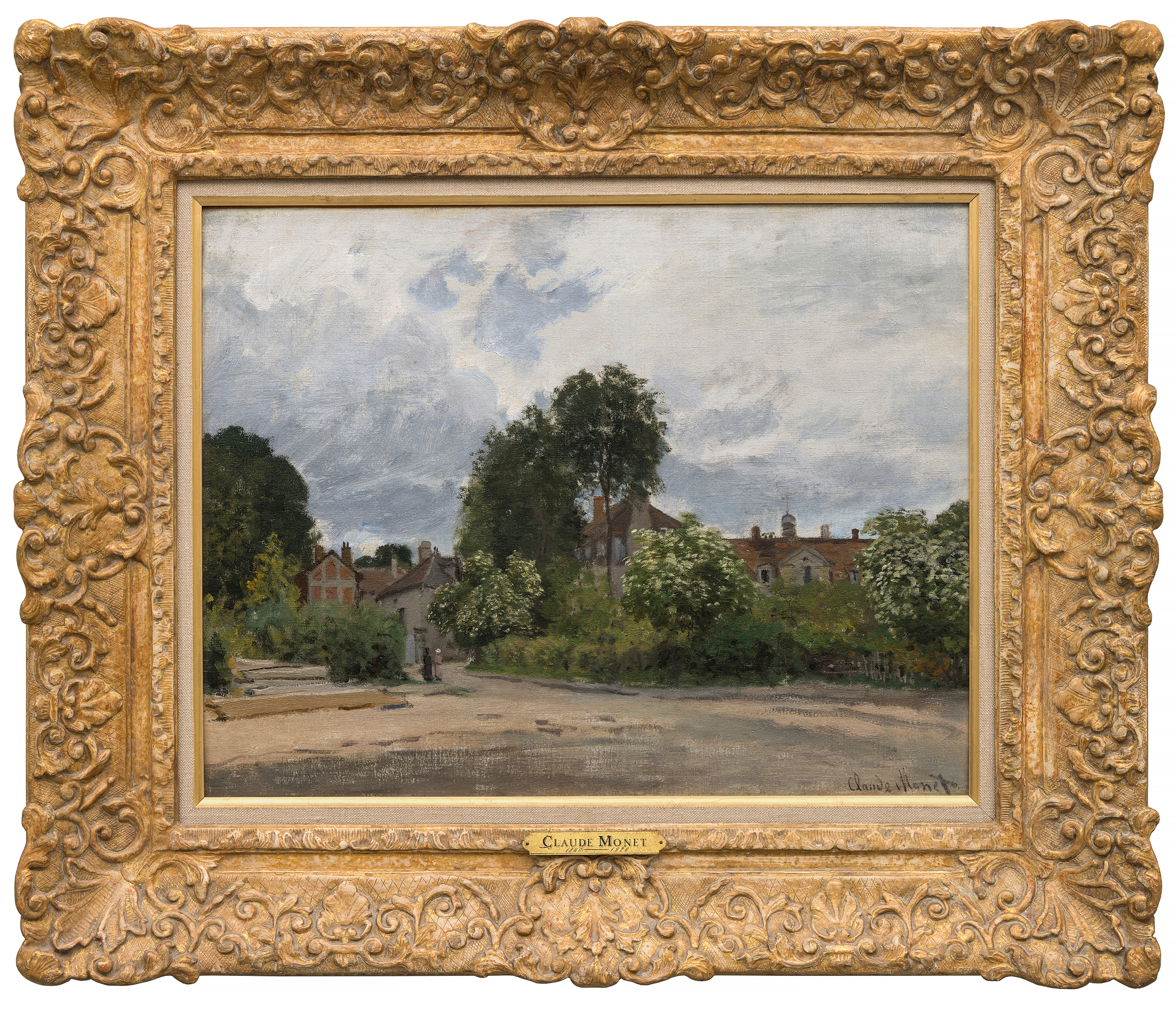
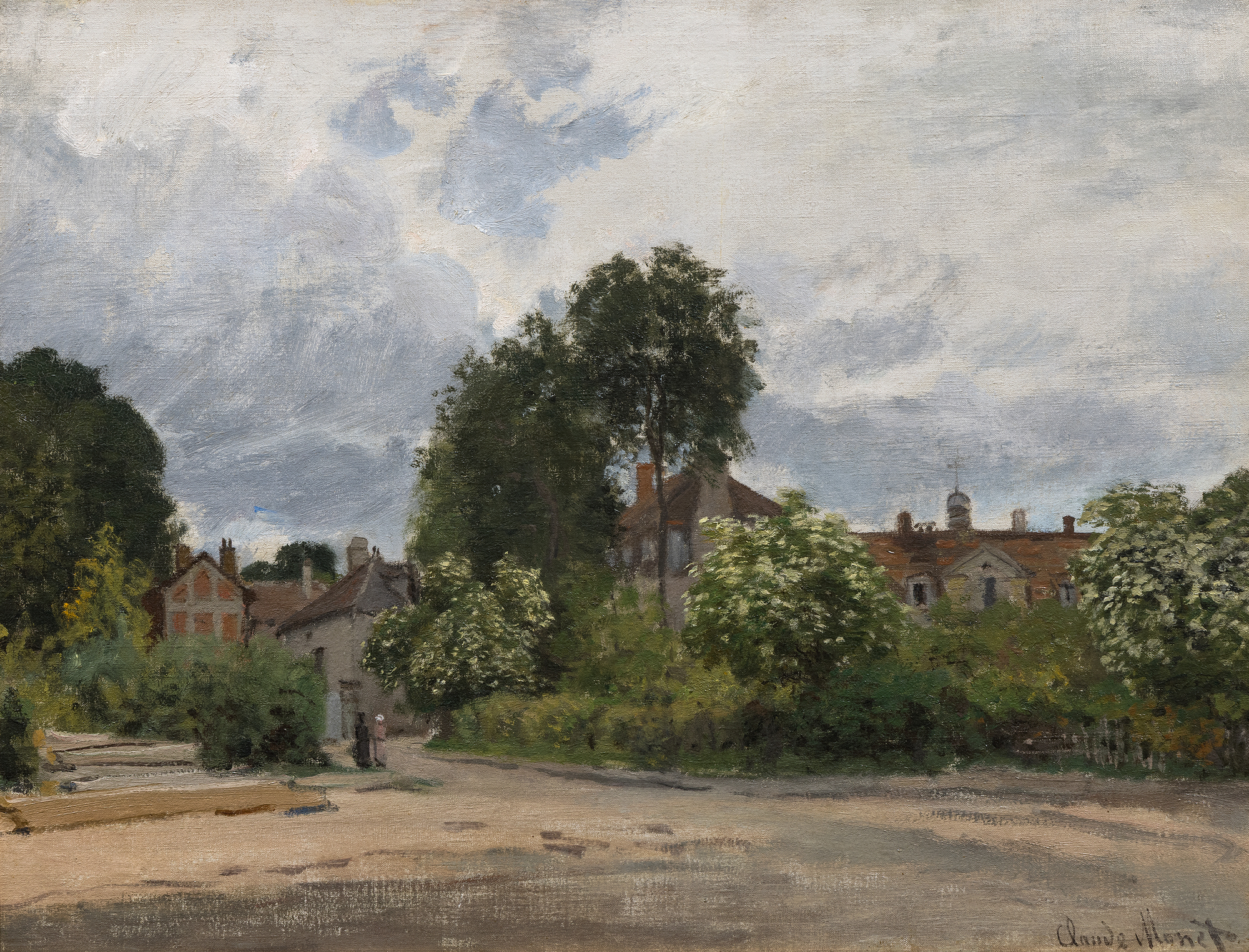
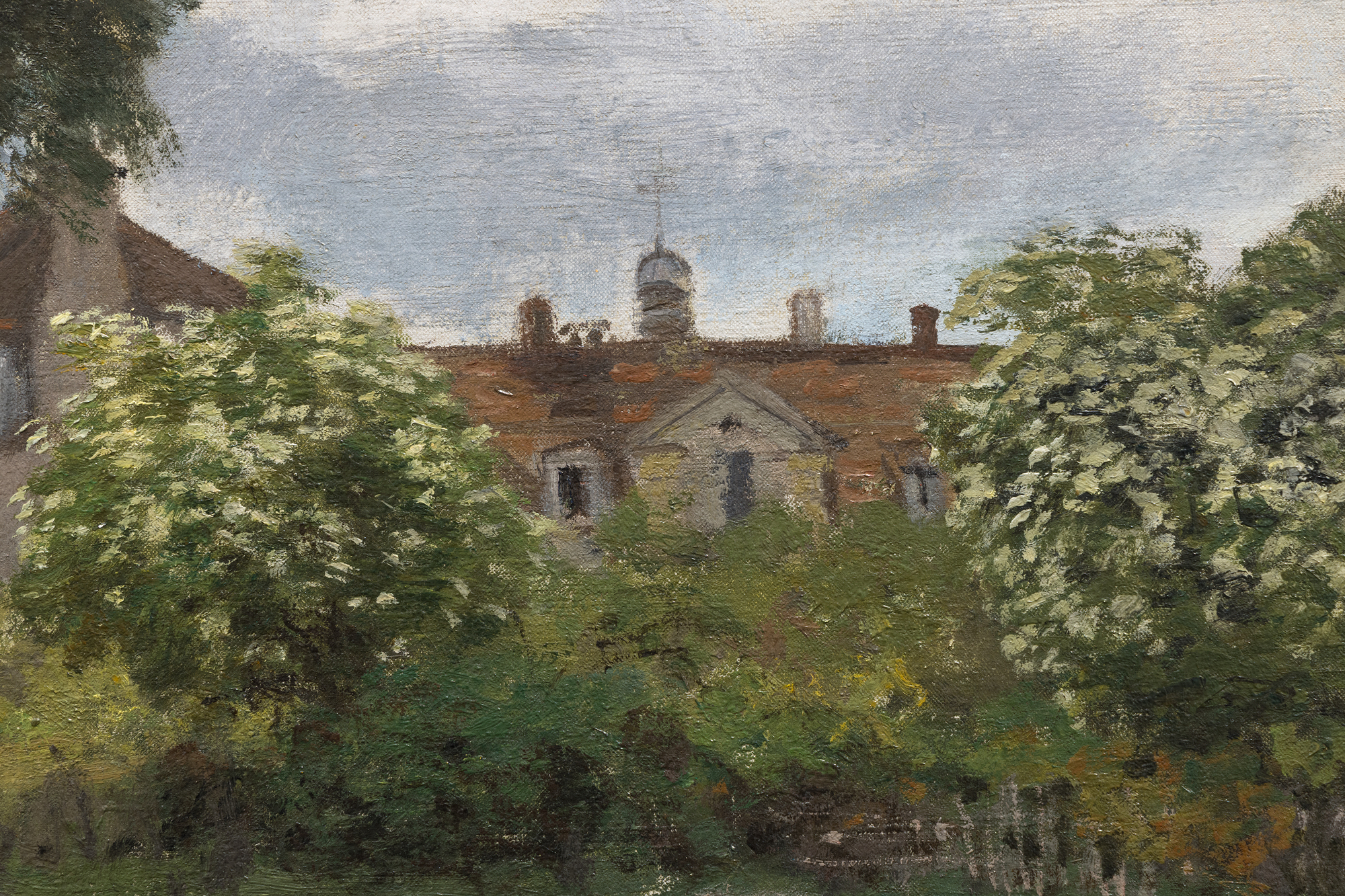
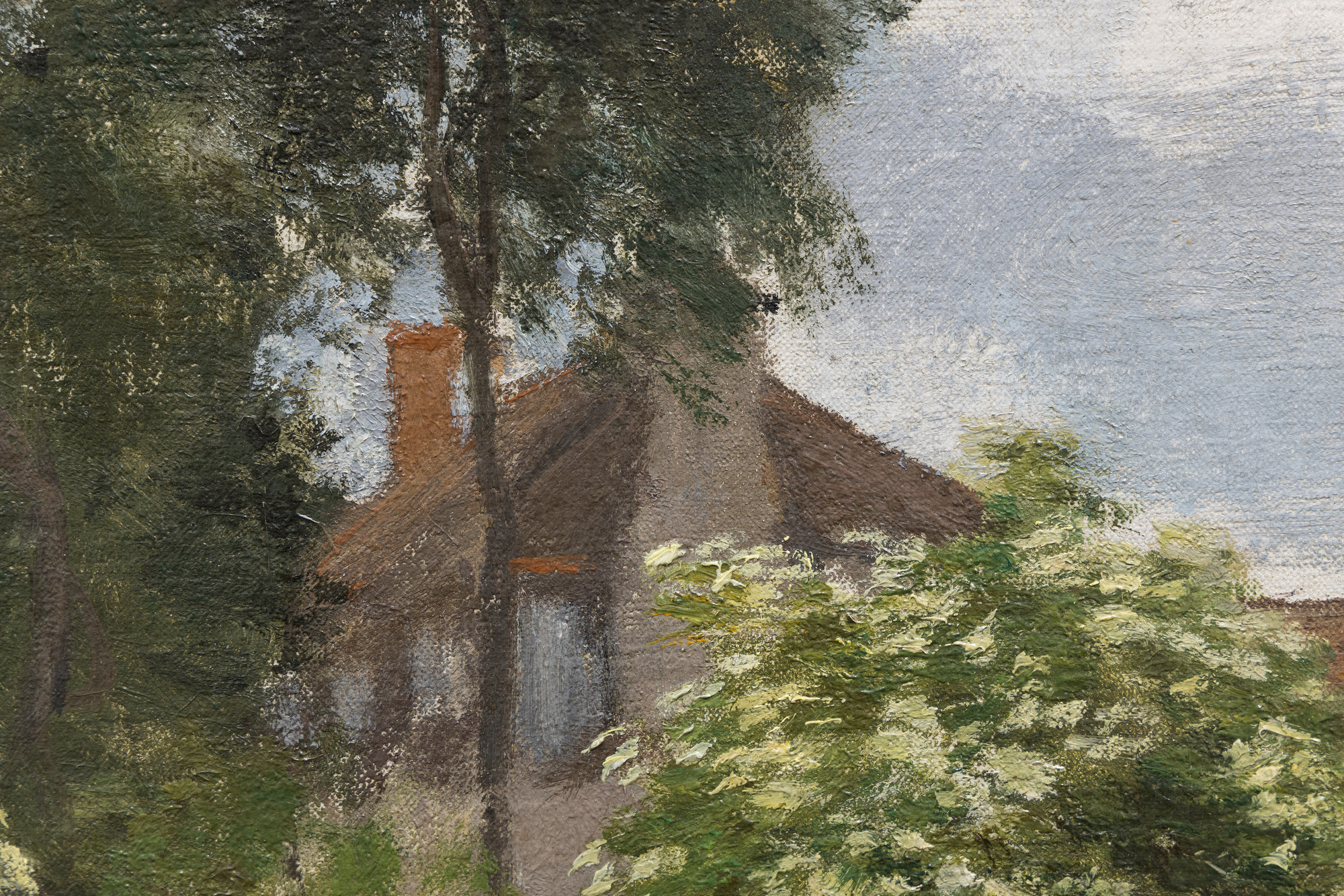
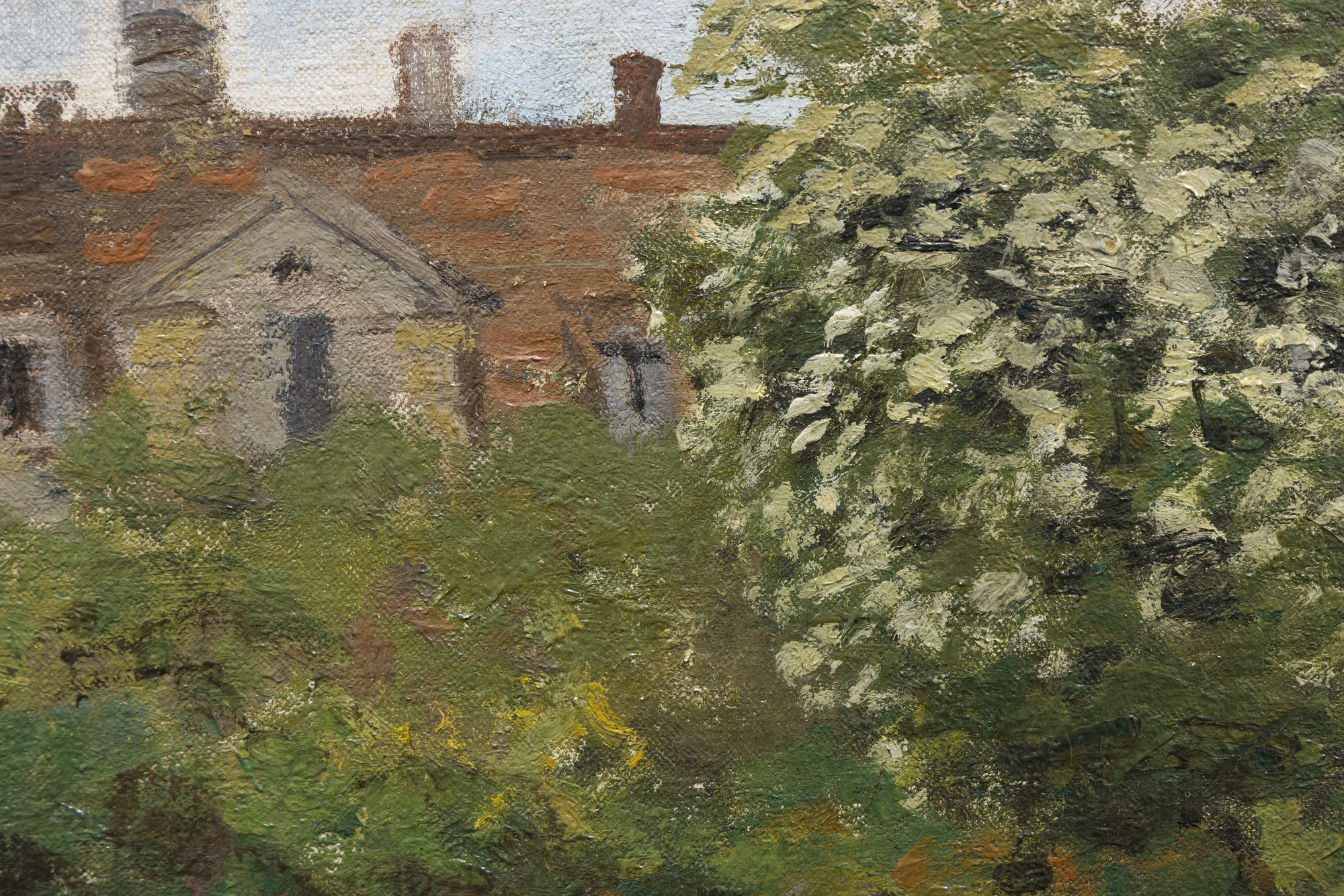
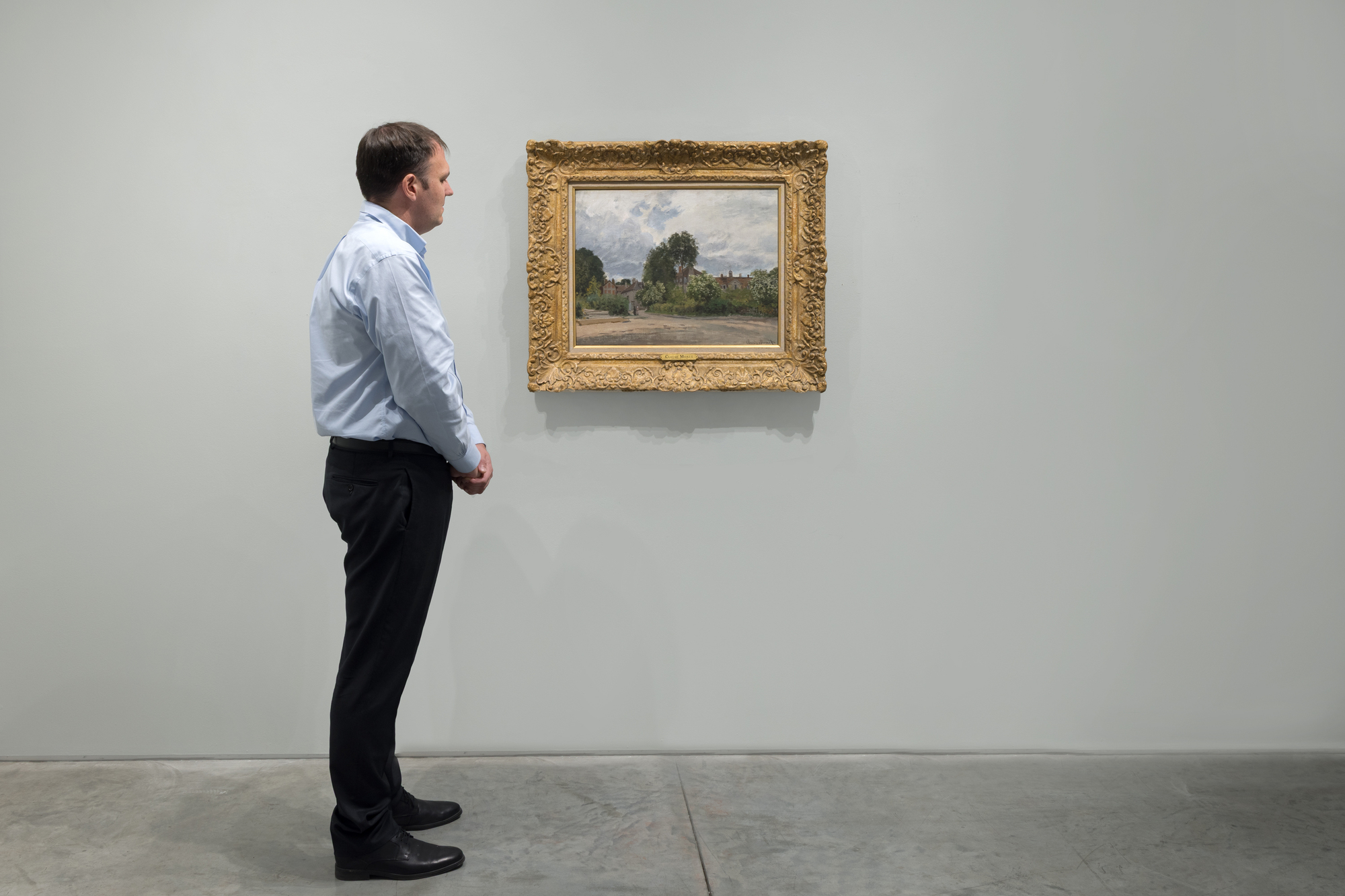
Argenteuil, l'Hospice 1872 20 x 25 5/8 אינץ' (50.8 x 65.09 ס"מ) שמן על בד
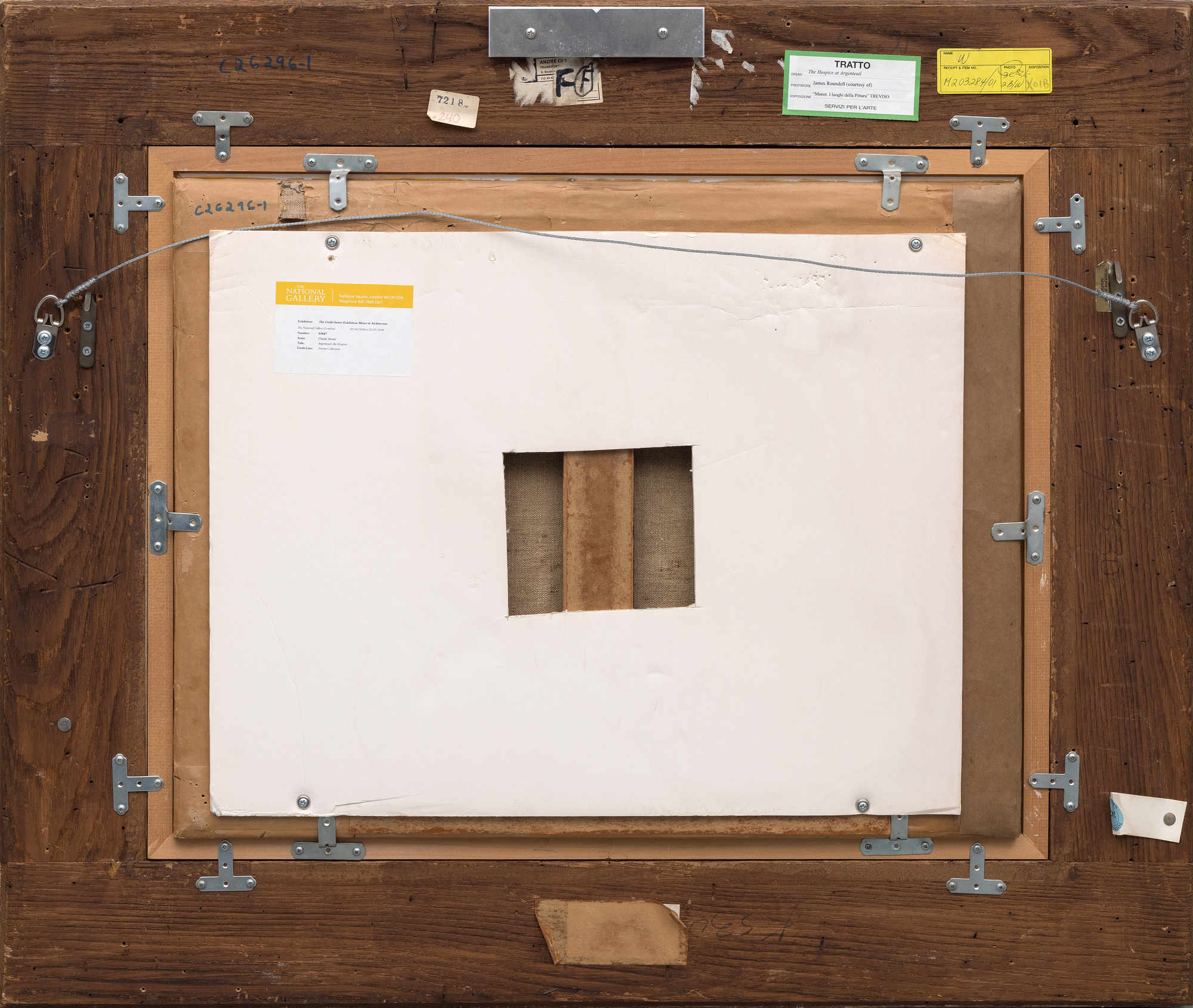
מקור ומקור
דוראן-רואל, פריז (נרכש מהאמן בספטמבר 1872)
מכירה: Vente au benefice des Alsaciens-Lorrains פריז, 18-19 באפריל 1873, חלקה 104
קתולין למברט, ניו יורק
מכירה: מלון פלאזה ניו יורק, 21-22 בפברואר 1916, מגרש 136 (שכותרת: נוף של ארג'נטיי)
מ.א. אלדרידג'
גלריות שונמן, ניו יורק
גלריית הגלים, לונדון
מכירה: סותביס ניו יורק, 17 בנובמבר 1998, פריט 240
אוסף פרטי (נרכש במכירה הנ"ל)
אוסף פרטי, לפי מוצא
אוסף פרטי, קליפורניה
... עוד...פורניה
תערוכה
Treviso, Casa dei Carraresi, Monet: I luoghi della pittura, 29 בספטמבר 2001-10 בפברואר 2002, עמ'. 358, מס'. 11 (תחת הכותרת Argenteuil, l'ospizio, מאויר)
לונדון, הגלריה הלאומית, מונה ואדריכלות, 9 באפריל-29 ביולי 2018, מס' 40 (כותרת: ארג'נטייל, ההוספיס, איורים, עמ' 122-23, מס' 115)
ספרות
D. Wildenstein, Claude Monet: Biographie et Catalogue Raisonné, Paris, 1974, vol. א, עמ' 216-17, לא. 240 (בציור)
PH טאקר, מונה בארג'נטיי, מילאנו, 1982, עמ' 27 ו-30, מס' 13 (עם איורים)
D. Wildenstein, Claude Monet, Catalogue Raisonné, Lausanne, 1991, vol. V (Supplément aux peintures, dessins, פסטלים, אינדקס), עמ'. 27, לא. 240
D. Wildenstein, Monet: Catalog Raisonné, Paris, 1996, vol. ב', עמ'. 105, לא. 240 (בציור)
... פחות...
הציור "ארג'נטיי, להוספיס" משנת 1872 שייך לאחד הפרקים המעצבים ביותר בקריירה של קלוד מונה, שצויר בשנותיו הראשונות בארג'נטיי, שם יצר כמעט מאה שמונים בדים בין השנים 1871 ו-1878. הציור, שהיה בבעלותו הראשונה של פול דוראן רואל, סוחר של מונה והמתנגד החשוב ביותר של האימפרסיוניסטים, נכלל בקטלוג וילדנשטיין והוצג בתערוכה ההיסטורית "מונה ואדריכלות" של הגלריה הלאומית לונדון בשנת 2018. היצירה, שנוצרה באותה שנה בה הוצגה פורצת הדרך שלו, "רושם, זריחה", משקפת את הרגע שבו חזונו של מונה לנוף מודרני התעצב והניח את היסודות לתנועה שתהיה ידועה בקרוב בשם אימפרסיוניזם.


מונה התיישב בארג'נטיי בסוף 1871, נחוש לחדש את דרכו האמנותית לאחר טלטלות המלחמה והגלות. העיר הציעה שילוב מפתה של אדריכלות היסטורית, תעשייה מודרנית, גנים כפריים ונהר הסיין המשתנה ללא הרף, כולם במרחק נגיעה מפריז. בית אוברי, בו התגורר מונה, הפך למקום מפגש עבור רנואר, מאנה, סיסלי, קייבוט ומאוחר יותר פיסארו, סביבה שטיפחה הן חילופי אמנות והן את תכנון התערוכה האימפרסיוניסטית הראשונה של 1874. כפי שציין החוקר פול הייז טאקר, ארג'נטיי הציע למונה מגוון נדיר של מוטיבים שנתקל בהם מדי יום, החל מהישן והמקסים ועד לחדש להפליא.


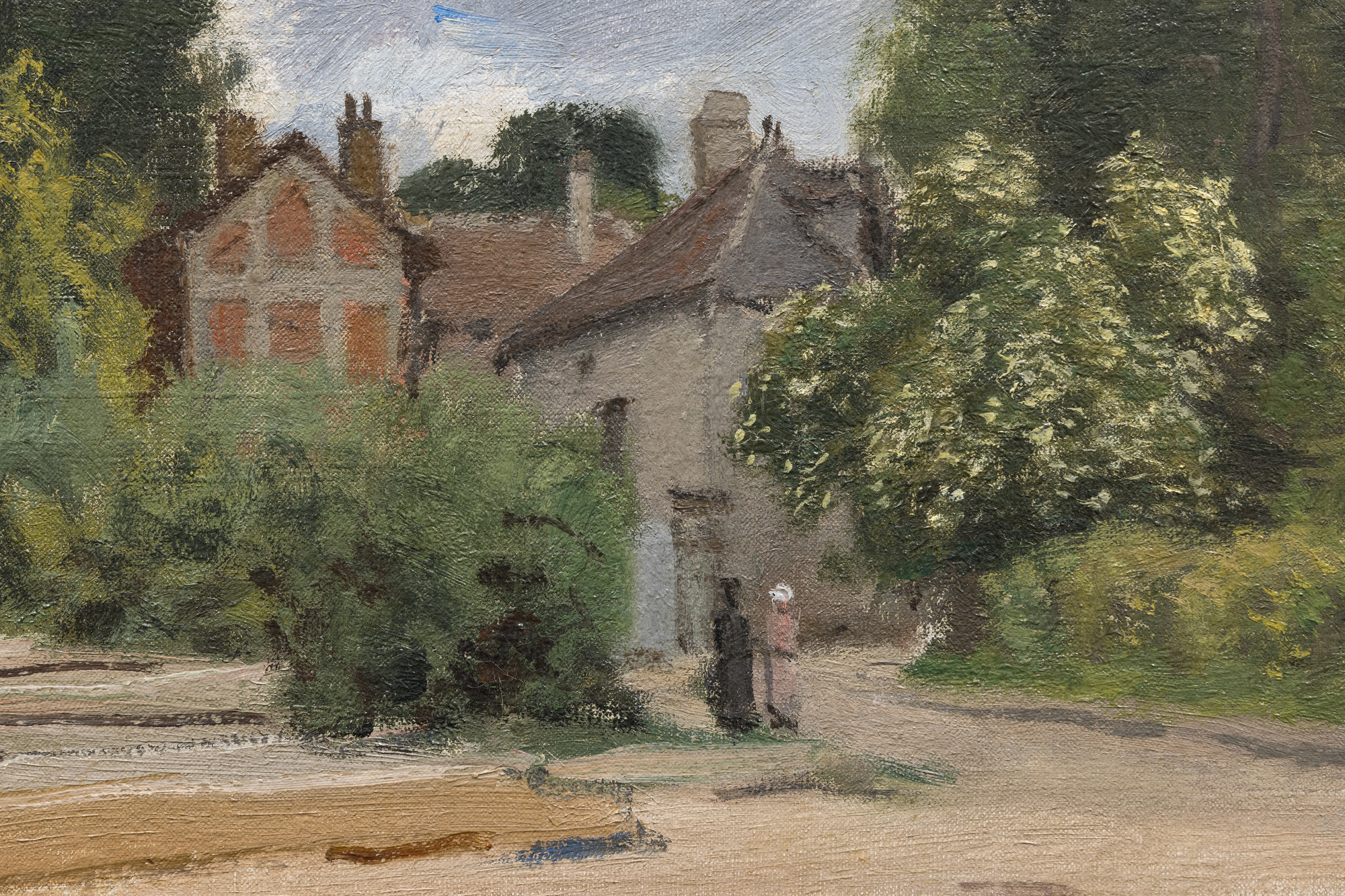
בציור זה הציב מונה את כן הציור שלו ברחוב פייר גיאן, כשגבו אל בית אוברי, וצייר את הבניין מהמאה ה-17 ששימש באותה תקופה כהוספיס של פורט סן דני. המבנה מופיע מימין, במבט מהסיין, בבהירות שקטה שלוכדת את אווירת יום האביב המוקדם. פלטת הצבעים משקפת הן יראת כבוד להיסטוריה של האתר והן הערכה לאז'ן בודן, החבר והמנטור שעודד את מונה לצייר את משחק האוויר והאור שנים קודם לכן והצטרף אליו לחנוכת בית בארג'נטיי ב-2 בינואר 1872. ההוספיס הפך מאוחר יותר למוזיאון ארג'נטיי העתיקה, מה שחיזק עוד יותר את התהודה ההיסטורית של האתר.


"ארג'נטייל, ל'הוספיס" ניצב כאחד מציוריו המוקדמים ביותר של מונה מתקופה מכרעת זו, ומציע פרשנות נאמנה ואווירתית למקום השזור עמוקות במקורות האימפרסיוניזם. שילובו של גוונים עדינים, אור אביב רך ותצפית ישירה חושף את ביטחונו הגובר של האמן בציור העולם כפי שתפס אותו, רגע אחר רגע, ככל שצץ חזון חדש לאמנות נוף מודרנית.
לברר