יפנית

$9,500

 
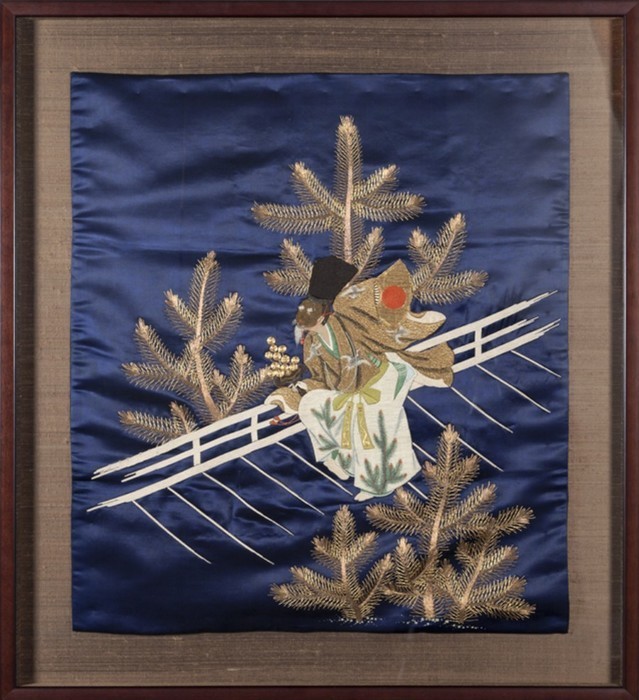
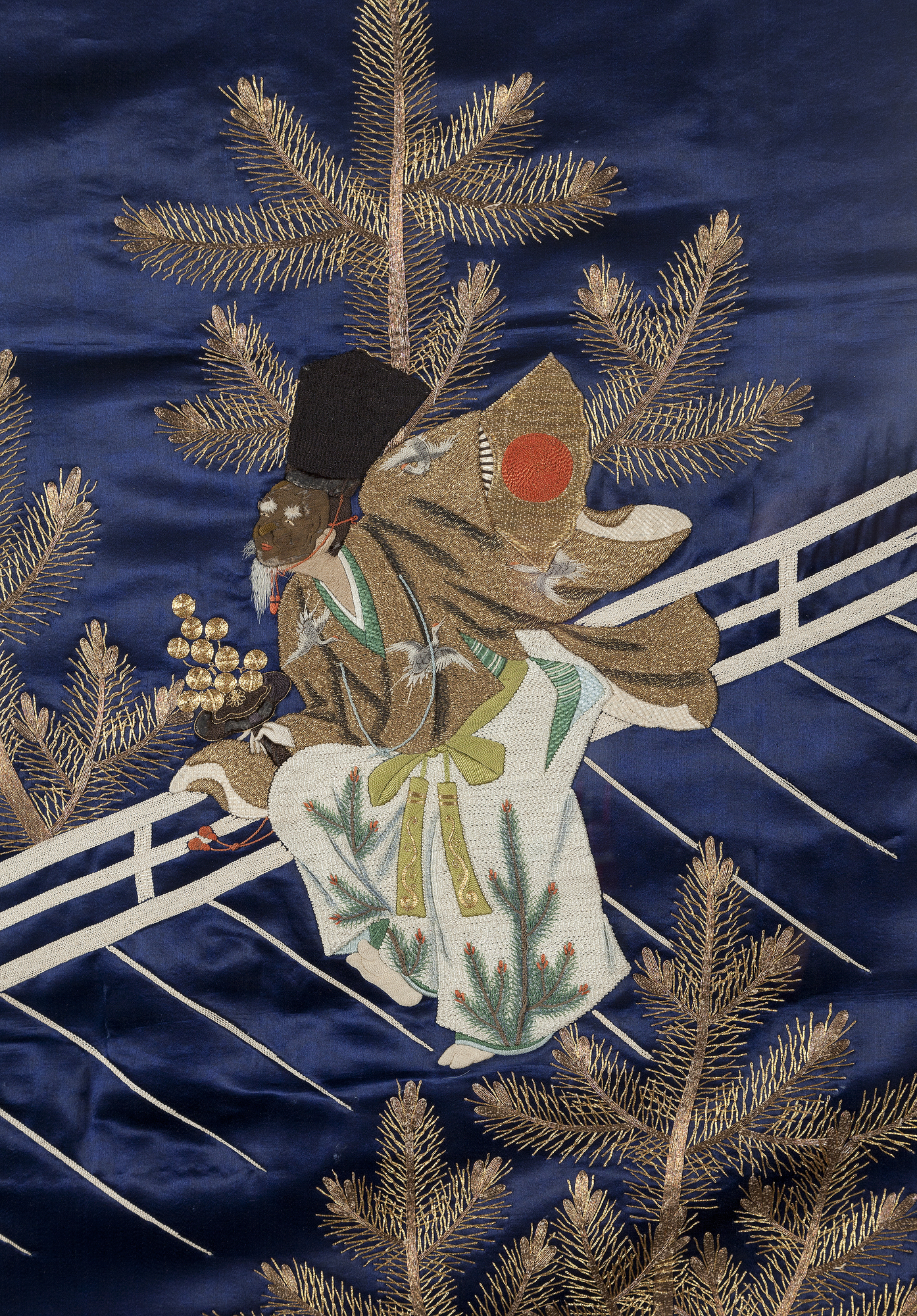
Here, a Noh actor in full costume and mask is crossing the wing of a Noh stage. The stage is flanked by pine trees, and pines are also a motif on his kimono. Typically a pine tree is painted on the back wall of Noh stages to represent the tree through which this theatrical form was, by legend, passed down from heaven to mankind. In Japanese culture, the evergreen pine has come to be an important symbol of longevity and steadfastness.<br><br>The practice of laying fukusa over presents placed on wooden or lacquer trays became wide spread during the Edo period, (17th to 19th century). What begun as a functional practice to protect gifts from the elements, took on a decorative life of its own. Well-to-do families owned large numbers of fukusa and often commissioned famous artists of the<br>time to design exclusively for them. The drawings were then created by such techniques as tie-dying, stenciling, slit embroidery, tapestry, painting with embroidery and combinations of all methods. Each time a fukusa was required, it was chosen not only for the occasion but also for the season, the gift itself, and the status of the donor and the recipient. Fukusa were also part of the brides’ trousseau and could be given on the occasion of a wedding. Fukusa were made of square or oblong pieces of silk, lined and often embellished with tassels, and sometimes bearing the monogram or family crest on the reverse. Etiquette decreed that the fukusa were not usually to be considered part of the gift itself and were to be returned covering a token gift or an acknowledgement of the gift. However, some recipients such as bureaucrats, who accepted gifts from people currying favors, elected to keep the fukusa along with the gifts they covered, thus adding to their own store of gift covers. Here, a Noh actor in full costume and mask is crossing the wing of a Noh stage. The stage is flanked by pine trees, and pines are also a motif on his kimono. Typically a pine tree is painted on the back wall of Noh stages to represent the tree through which this theatrical form was, by legend, passed down from heaven to mankind. In Japanese culture, the evergreen pine has come to be an important symbol of longevity and steadfastness.<br><br>The practice of laying fukusa over presents placed on wooden or lacquer trays became wide spread during the Edo period, (17th to 19th century). What begun as a functional practice to protect gifts from the elements, took on a decorative life of its own. Well-to-do families owned large numbers of fukusa and often commissioned famous artists of the<br>time to design exclusively for them. The drawings were then created by such techniques as tie-dying, stenciling, slit embroidery, tapestry, painting with embroidery and combinations of all methods. Each time a fukusa was required, it was chosen not only for the occasion but also for the season, the gift itself, and the status of the donor and the recipient. Fukusa were also part of the brides’ trousseau and could be given on the occasion of a wedding. Fukusa were made of square or oblong pieces of silk, lined and often embellished with tassels, and sometimes bearing the monogram or family crest on the reverse. Etiquette decreed that the fukusa were not usually to be considered part of the gift itself and were to be returned covering a token gift or an acknowledgement of the gift. However, some recipients such as bureaucrats, who accepted gifts from people currying favors, elected to keep the fukusa along with the gifts they covered, thus adding to their own store of gift covers.
שחקן נו, תקופת מייג'י (1868-1912), רקמת משי בגודל 69.85 x 63.5 ס"מ ( 27 1/2 x 25 אינץ' ) , עם חוט משי וזהב
מקור ומקור
הת'ר ג'יימס פיין ארט, קליפורניה
כאן, שחקן נו בתלבושת מלאה ומסכה חוצה את כנף במת נו. הבמה מוקפת בעצי אורן, ועצי אורן הם גם מוטיב על הקימונו שלו. בדרך כלל, עץ אורן מצויר על הקיר האחורי של במות נו כדי לייצג את העץ שדרכו צורה תיאטרלית זו, על פי האגדה, הועברה מהשמיים לאנושות. בתרבות היפנית, האורן ירוק-עד הפך לסמל חשוב של אריכות ימים ועמידה איתנה.

הנוהג של הנחת פוקוסה על מתנות שהונחו על מגשי עץ או לכה הפך לנפוץ בתקופת אדו (המאה ה-17 עד המאה ה-19). מה שהחל כנוהג פונקציונלי להגנה על מתנות מפני פגעי מזג האוויר, קיבל חיים דקורטיביים משלו. משפחות אמידות החזיקו במספרים גדולים של פוקוסה ולעתים קרובות הזמינו אמנים מפורסמים מהמאה ה-20.
הגיע הזמן לעצב באופן בלעדי עבורן. הרישומים נוצרו לאחר מכן בטכניקות כמו צביעה בטבילה, שבלונות, רקמה חרוטית, שטיחי קיר, צביעה עם רקמה ושילובים של כל השיטות. בכל פעם שנדרשה פוקוסה, היא נבחרה לא רק לאירוע אלא גם לעונה, למתנה עצמה ולמעמד התורם והמקבל. פוקוסה היו גם חלק מתלבושת הכלה ויכלו להינתן לרגל חתונה. פוקוסה היו עשויים מחתיכות משי מרובעות או מלבניות, מרופדות ולעתים קרובות מעוטרות בגדילים, ולפעמים נושאות את המונוגרמה או סמל המשפחה בצד האחורי. כללי הנימוס קבעו כי הפוקוסה בדרך כלל לא ייחשבו כחלק מהמתנה עצמה ויש להחזירם כשהם מכוסים כמתנה סמלית או כהוקרה על המתנה. עם זאת, חלק מהמקבלים, כמו ביורוקרטים, שקיבלו מתנות מאנשים שביקשו טובות הנאה, בחרו לשמור את הפוקוסה יחד עם המתנות שכיסו, ובכך הוסיפו למאגר עטיפות המתנה שלהם.
לברר