מרינו מריני(1901-1980)

$55,000

 
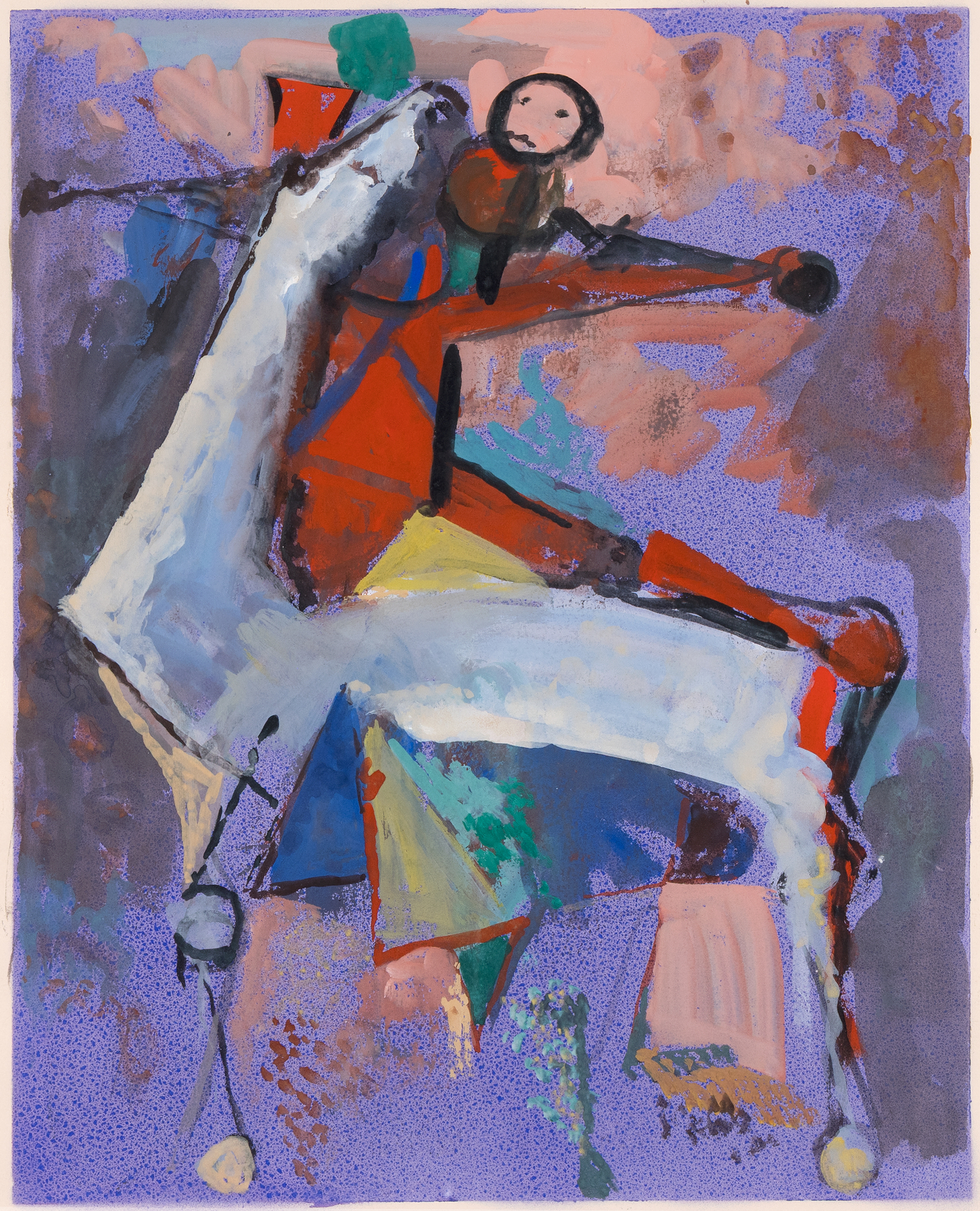
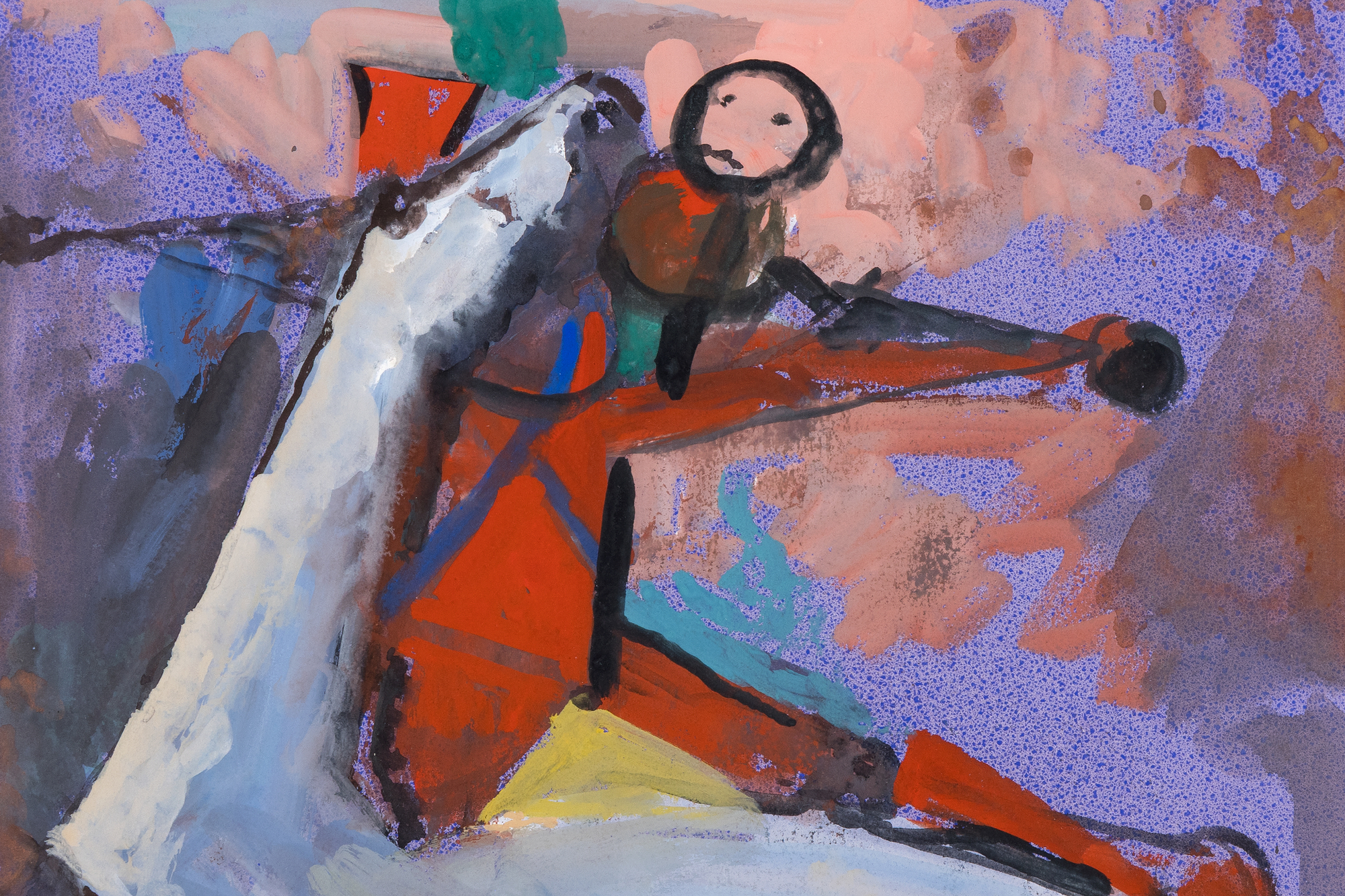
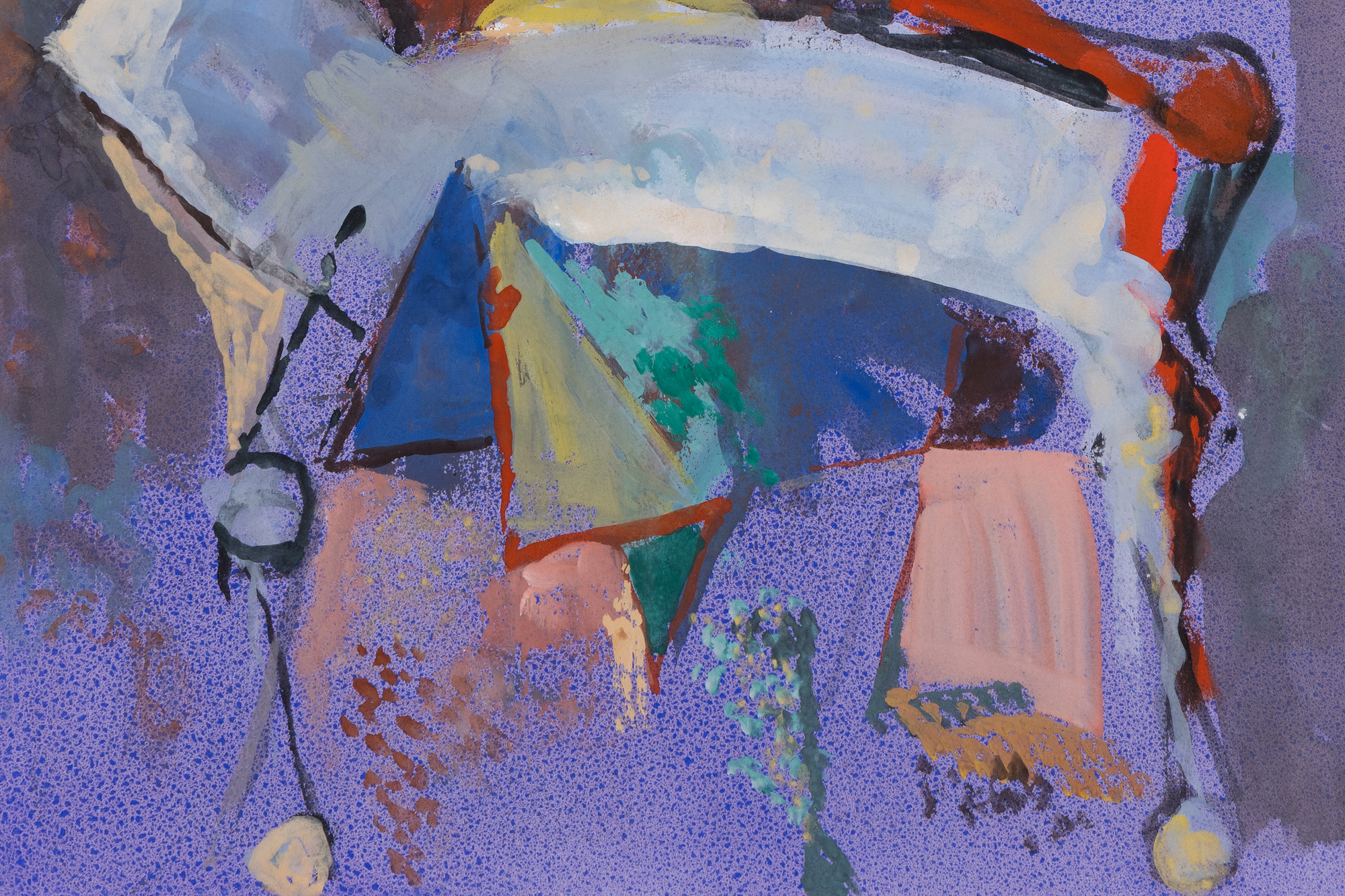
<div>Marino Marini’s <em>Marino from Shakespeare I</em> (1977) is a vivid and psychologically charged work on paper, executed in tempera over aquatint and drawn from the artist’s celebrated Marino from Shakespeare portfolio. In this variation, the equestrian figure is pushed to the foreground, its white, angular horse rearing across the composition with a sense of precarious motion. The rider is pared down to a mask-like head and simplified body, a formal reduction that places the figure in a state of fragile balance between control and collapse. </div><br><br><div> </div><br><br><div>The chromatic structure is bold and instinctive. Fields of violet, coral, and blue form a textured ground, against which the stark white of the horse and the warm reds and oranges of the rider assert themselves with dramatic clarity. Marini’s use of tempera over aquatint allows him to combine tonal depth with painterly immediacy: granular passages of aquatint dissolve into expressive sweeps of color, while linear accents stabilize the composition just enough to prevent it from tipping into chaos. </div><br><br><div> </div><br><br><div>As in many of his most significant works, the equestrian motif functions symbolically rather than narratively. Though inspired in spirit by Shakespeare, the image does not illustrate a specific text, instead channeling the emotional intensity and existential unease associated with tragic drama. Marini famously described his horse-and-rider figures as expressions of modern anxiety, stating, “My equestrian figures are symbols of the anguish that I feel when I survey contemporary events.” Here, that anguish is palpable in the strained geometry, unstable balance, and urgent movement of the forms. The print stands as a compelling demonstration of Marini’s ability to translate his sculptural language into graphic form, using color and gesture to confront the fragility of human authority and control. </div> <div>Marino Marini’s <em>Marino from Shakespeare I</em> (1977) is a vivid and psychologically charged work on paper, executed in tempera over aquatint and drawn from the artist’s celebrated Marino from Shakespeare portfolio. In this variation, the equestrian figure is pushed to the foreground, its white, angular horse rearing across the composition with a sense of precarious motion. The rider is pared down to a mask-like head and simplified body, a formal reduction that places the figure in a state of fragile balance between control and collapse. </div><br><br><div> </div><br><br><div>The chromatic structure is bold and instinctive. Fields of violet, coral, and blue form a textured ground, against which the stark white of the horse and the warm reds and oranges of the rider assert themselves with dramatic clarity. Marini’s use of tempera over aquatint allows him to combine tonal depth with painterly immediacy: granular passages of aquatint dissolve into expressive sweeps of color, while linear accents stabilize the composition just enough to prevent it from tipping into chaos. </div><br><br><div> </div><br><br><div>As in many of his most significant works, the equestrian motif functions symbolically rather than narratively. Though inspired in spirit by Shakespeare, the image does not illustrate a specific text, instead channeling the emotional intensity and existential unease associated with tragic drama. Marini famously described his horse-and-rider figures as expressions of modern anxiety, stating, “My equestrian figures are symbols of the anguish that I feel when I survey contemporary events.” Here, that anguish is palpable in the strained geometry, unstable balance, and urgent movement of the forms. The print stands as a compelling demonstration of Marini’s ability to translate his sculptural language into graphic form, using color and gesture to confront the fragility of human authority and control. </div> <div>Marino Marini’s <em>Marino from Shakespeare I</em> (1977) is a vivid and psychologically charged work on paper, executed in tempera over aquatint and drawn from the artist’s celebrated Marino from Shakespeare portfolio. In this variation, the equestrian figure is pushed to the foreground, its white, angular horse rearing across the composition with a sense of precarious motion. The rider is pared down to a mask-like head and simplified body, a formal reduction that places the figure in a state of fragile balance between control and collapse. </div><br><br><div> </div><br><br><div>The chromatic structure is bold and instinctive. Fields of violet, coral, and blue form a textured ground, against which the stark white of the horse and the warm reds and oranges of the rider assert themselves with dramatic clarity. Marini’s use of tempera over aquatint allows him to combine tonal depth with painterly immediacy: granular passages of aquatint dissolve into expressive sweeps of color, while linear accents stabilize the composition just enough to prevent it from tipping into chaos. </div><br><br><div> </div><br><br><div>As in many of his most significant works, the equestrian motif functions symbolically rather than narratively. Though inspired in spirit by Shakespeare, the image does not illustrate a specific text, instead channeling the emotional intensity and existential unease associated with tragic drama. Marini famously described his horse-and-rider figures as expressions of modern anxiety, stating, “My equestrian figures are symbols of the anguish that I feel when I survey contemporary events.” Here, that anguish is palpable in the strained geometry, unstable balance, and urgent movement of the forms. The print stands as a compelling demonstration of Marini’s ability to translate his sculptural language into graphic form, using color and gesture to confront the fragility of human authority and control. </div> <div>Marino Marini’s <em>Marino from Shakespeare I</em> (1977) is a vivid and psychologically charged work on paper, executed in tempera over aquatint and drawn from the artist’s celebrated Marino from Shakespeare portfolio. In this variation, the equestrian figure is pushed to the foreground, its white, angular horse rearing across the composition with a sense of precarious motion. The rider is pared down to a mask-like head and simplified body, a formal reduction that places the figure in a state of fragile balance between control and collapse. </div><br><br><div> </div><br><br><div>The chromatic structure is bold and instinctive. Fields of violet, coral, and blue form a textured ground, against which the stark white of the horse and the warm reds and oranges of the rider assert themselves with dramatic clarity. Marini’s use of tempera over aquatint allows him to combine tonal depth with painterly immediacy: granular passages of aquatint dissolve into expressive sweeps of color, while linear accents stabilize the composition just enough to prevent it from tipping into chaos. </div><br><br><div> </div><br><br><div>As in many of his most significant works, the equestrian motif functions symbolically rather than narratively. Though inspired in spirit by Shakespeare, the image does not illustrate a specific text, instead channeling the emotional intensity and existential unease associated with tragic drama. Marini famously described his horse-and-rider figures as expressions of modern anxiety, stating, “My equestrian figures are symbols of the anguish that I feel when I survey contemporary events.” Here, that anguish is palpable in the strained geometry, unstable balance, and urgent movement of the forms. The print stands as a compelling demonstration of Marini’s ability to translate his sculptural language into graphic form, using color and gesture to confront the fragility of human authority and control. </div> <div>Marino Marini’s <em>Marino from Shakespeare I</em> (1977) is a vivid and psychologically charged work on paper, executed in tempera over aquatint and drawn from the artist’s celebrated Marino from Shakespeare portfolio. In this variation, the equestrian figure is pushed to the foreground, its white, angular horse rearing across the composition with a sense of precarious motion. The rider is pared down to a mask-like head and simplified body, a formal reduction that places the figure in a state of fragile balance between control and collapse. </div><br><br><div> </div><br><br><div>The chromatic structure is bold and instinctive. Fields of violet, coral, and blue form a textured ground, against which the stark white of the horse and the warm reds and oranges of the rider assert themselves with dramatic clarity. Marini’s use of tempera over aquatint allows him to combine tonal depth with painterly immediacy: granular passages of aquatint dissolve into expressive sweeps of color, while linear accents stabilize the composition just enough to prevent it from tipping into chaos. </div><br><br><div> </div><br><br><div>As in many of his most significant works, the equestrian motif functions symbolically rather than narratively. Though inspired in spirit by Shakespeare, the image does not illustrate a specific text, instead channeling the emotional intensity and existential unease associated with tragic drama. Marini famously described his horse-and-rider figures as expressions of modern anxiety, stating, “My equestrian figures are symbols of the anguish that I feel when I survey contemporary events.” Here, that anguish is palpable in the strained geometry, unstable balance, and urgent movement of the forms. The print stands as a compelling demonstration of Marini’s ability to translate his sculptural language into graphic form, using color and gesture to confront the fragility of human authority and control. </div> <div>Marino Marini’s <em>Marino from Shakespeare I</em> (1977) is a vivid and psychologically charged work on paper, executed in tempera over aquatint and drawn from the artist’s celebrated Marino from Shakespeare portfolio. In this variation, the equestrian figure is pushed to the foreground, its white, angular horse rearing across the composition with a sense of precarious motion. The rider is pared down to a mask-like head and simplified body, a formal reduction that places the figure in a state of fragile balance between control and collapse. </div><br><br><div> </div><br><br><div>The chromatic structure is bold and instinctive. Fields of violet, coral, and blue form a textured ground, against which the stark white of the horse and the warm reds and oranges of the rider assert themselves with dramatic clarity. Marini’s use of tempera over aquatint allows him to combine tonal depth with painterly immediacy: granular passages of aquatint dissolve into expressive sweeps of color, while linear accents stabilize the composition just enough to prevent it from tipping into chaos. </div><br><br><div> </div><br><br><div>As in many of his most significant works, the equestrian motif functions symbolically rather than narratively. Though inspired in spirit by Shakespeare, the image does not illustrate a specific text, instead channeling the emotional intensity and existential unease associated with tragic drama. Marini famously described his horse-and-rider figures as expressions of modern anxiety, stating, “My equestrian figures are symbols of the anguish that I feel when I survey contemporary events.” Here, that anguish is palpable in the strained geometry, unstable balance, and urgent movement of the forms. The print stands as a compelling demonstration of Marini’s ability to translate his sculptural language into graphic form, using color and gesture to confront the fragility of human authority and control. </div> <div>Marino Marini’s <em>Marino from Shakespeare I</em> (1977) is a vivid and psychologically charged work on paper, executed in tempera over aquatint and drawn from the artist’s celebrated Marino from Shakespeare portfolio. In this variation, the equestrian figure is pushed to the foreground, its white, angular horse rearing across the composition with a sense of precarious motion. The rider is pared down to a mask-like head and simplified body, a formal reduction that places the figure in a state of fragile balance between control and collapse. </div><br><br><div> </div><br><br><div>The chromatic structure is bold and instinctive. Fields of violet, coral, and blue form a textured ground, against which the stark white of the horse and the warm reds and oranges of the rider assert themselves with dramatic clarity. Marini’s use of tempera over aquatint allows him to combine tonal depth with painterly immediacy: granular passages of aquatint dissolve into expressive sweeps of color, while linear accents stabilize the composition just enough to prevent it from tipping into chaos. </div><br><br><div> </div><br><br><div>As in many of his most significant works, the equestrian motif functions symbolically rather than narratively. Though inspired in spirit by Shakespeare, the image does not illustrate a specific text, instead channeling the emotional intensity and existential unease associated with tragic drama. Marini famously described his horse-and-rider figures as expressions of modern anxiety, stating, “My equestrian figures are symbols of the anguish that I feel when I survey contemporary events.” Here, that anguish is palpable in the strained geometry, unstable balance, and urgent movement of the forms. The print stands as a compelling demonstration of Marini’s ability to translate his sculptural language into graphic form, using color and gesture to confront the fragility of human authority and control. </div> <div>Marino Marini’s <em>Marino from Shakespeare I</em> (1977) is a vivid and psychologically charged work on paper, executed in tempera over aquatint and drawn from the artist’s celebrated Marino from Shakespeare portfolio. In this variation, the equestrian figure is pushed to the foreground, its white, angular horse rearing across the composition with a sense of precarious motion. The rider is pared down to a mask-like head and simplified body, a formal reduction that places the figure in a state of fragile balance between control and collapse. </div><br><br><div> </div><br><br><div>The chromatic structure is bold and instinctive. Fields of violet, coral, and blue form a textured ground, against which the stark white of the horse and the warm reds and oranges of the rider assert themselves with dramatic clarity. Marini’s use of tempera over aquatint allows him to combine tonal depth with painterly immediacy: granular passages of aquatint dissolve into expressive sweeps of color, while linear accents stabilize the composition just enough to prevent it from tipping into chaos. </div><br><br><div> </div><br><br><div>As in many of his most significant works, the equestrian motif functions symbolically rather than narratively. Though inspired in spirit by Shakespeare, the image does not illustrate a specific text, instead channeling the emotional intensity and existential unease associated with tragic drama. Marini famously described his horse-and-rider figures as expressions of modern anxiety, stating, “My equestrian figures are symbols of the anguish that I feel when I survey contemporary events.” Here, that anguish is palpable in the strained geometry, unstable balance, and urgent movement of the forms. The print stands as a compelling demonstration of Marini’s ability to translate his sculptural language into graphic form, using color and gesture to confront the fragility of human authority and control. </div> <div>Marino Marini’s <em>Marino from Shakespeare I</em> (1977) is a vivid and psychologically charged work on paper, executed in tempera over aquatint and drawn from the artist’s celebrated Marino from Shakespeare portfolio. In this variation, the equestrian figure is pushed to the foreground, its white, angular horse rearing across the composition with a sense of precarious motion. The rider is pared down to a mask-like head and simplified body, a formal reduction that places the figure in a state of fragile balance between control and collapse. </div><br><br><div> </div><br><br><div>The chromatic structure is bold and instinctive. Fields of violet, coral, and blue form a textured ground, against which the stark white of the horse and the warm reds and oranges of the rider assert themselves with dramatic clarity. Marini’s use of tempera over aquatint allows him to combine tonal depth with painterly immediacy: granular passages of aquatint dissolve into expressive sweeps of color, while linear accents stabilize the composition just enough to prevent it from tipping into chaos. </div><br><br><div> </div><br><br><div>As in many of his most significant works, the equestrian motif functions symbolically rather than narratively. Though inspired in spirit by Shakespeare, the image does not illustrate a specific text, instead channeling the emotional intensity and existential unease associated with tragic drama. Marini famously described his horse-and-rider figures as expressions of modern anxiety, stating, “My equestrian figures are symbols of the anguish that I feel when I survey contemporary events.” Here, that anguish is palpable in the strained geometry, unstable balance, and urgent movement of the forms. The print stands as a compelling demonstration of Marini’s ability to translate his sculptural language into graphic form, using color and gesture to confront the fragility of human authority and control. </div> <div>Marino Marini’s <em>Marino from Shakespeare I</em> (1977) is a vivid and psychologically charged work on paper, executed in tempera over aquatint and drawn from the artist’s celebrated Marino from Shakespeare portfolio. In this variation, the equestrian figure is pushed to the foreground, its white, angular horse rearing across the composition with a sense of precarious motion. The rider is pared down to a mask-like head and simplified body, a formal reduction that places the figure in a state of fragile balance between control and collapse. </div><br><br><div> </div><br><br><div>The chromatic structure is bold and instinctive. Fields of violet, coral, and blue form a textured ground, against which the stark white of the horse and the warm reds and oranges of the rider assert themselves with dramatic clarity. Marini’s use of tempera over aquatint allows him to combine tonal depth with painterly immediacy: granular passages of aquatint dissolve into expressive sweeps of color, while linear accents stabilize the composition just enough to prevent it from tipping into chaos. </div><br><br><div> </div><br><br><div>As in many of his most significant works, the equestrian motif functions symbolically rather than narratively. Though inspired in spirit by Shakespeare, the image does not illustrate a specific text, instead channeling the emotional intensity and existential unease associated with tragic drama. Marini famously described his horse-and-rider figures as expressions of modern anxiety, stating, “My equestrian figures are symbols of the anguish that I feel when I survey contemporary events.” Here, that anguish is palpable in the strained geometry, unstable balance, and urgent movement of the forms. The print stands as a compelling demonstration of Marini’s ability to translate his sculptural language into graphic form, using color and gesture to confront the fragility of human authority and control. </div>
מרינו מתוך שייקספיר I משנת 1977 תמונה: טמפרה בגודל 48.58 x 39.37 ס"מ (19 1/8 x 15 1/2 אינץ') על נייר
מקור ומקור
פונדציונה מרינו מריני, פיסטויה
אוסף פרטי, נרכש מהנ"ל, 2006
סותביס, ניו יורק, 14 בנובמבר 2023, פריט 117
אוסף פרטי, נרכש מהנ"ל
ספרות
פייר קאסה, עורך, מרינו מריני, מילאנו, 1999, עמ' 94, איורים
"מרינו משייקספיר 1" מאת מרינו מריני (1977) היא יצירה חיה וטעונה פסיכולוגית על נייר, שבוצעה בטמפרה על גבי אקווטינטה ונלקחה מתיק העבודות המהולל של האמן "מרינו משייקספיר". בווריאציה זו, דמות הרוכב נדחקת לקדמת הבמה, סוסו הלבן והזוויתי מתרומם על פני הקומפוזיציה בתחושה של תנועה מסוכנת. הרוכב מצטמצם לראש דמוי מסכה וגוף פשוט, צמצום צורני המציב את הדמות במצב של איזון שביר בין שליטה לקריסה.


המבנה הכרומטי נועז ואינסטינקטיבי. שדות של סגול, אלמוגים וכחול יוצרים קרקע בעלת מרקם, שעליה בולטים הלבן העז של הסוס והאדומים והכתומים החמים של הרוכב בבהירות דרמטית. השימוש של מריני בטמפרה על פני אקווטינטה מאפשר לו לשלב עומק טונאלי עם מיידיות ציורית: מעברים גרגיריים של אקווטינטה מתמוססים לכדי מטווחי צבע אקספרסיביים, בעוד שנגיעות ליניאריות מייצבים את הקומפוזיציה מספיק כדי למנוע ממנה להידרדר לכאוס.


כמו ברבות מיצירותיו המשמעותיות ביותר, מוטיב הרכיבה מתפקד באופן סמלי ולא באופן נרטיבי. למרות שההשראה ברוח שייקספיר, התמונה אינה ממחישה טקסט ספציפי, אלא מתעלת את העוצמה הרגשית וחוסר הנוחות הקיומית הקשורים לדרמה טרגית. מריני תיאר את דמויות הסוס והרוכב שלו כביטויים לחרדה מודרנית, באומרו: "דמויות הרכיבה שלי הן סמלים של הסבל שאני חש כשאני סוקר אירועים עכשוויים". כאן, הסבל הזה מוחשי בגיאומטריה המתוחה, באיזון הלא יציב ובתנועה הדחופה של הצורות. ההדפס עומד כהדגמה משכנעת ליכולתו של מריני לתרגם את שפתו הפיסולית לצורה גרפית, תוך שימוש בצבע ובמחוות כדי להתעמת עם שבריריות הסמכות והשליטה האנושית.
לברר