רוברט אינדיאנה(1928-2018)

 
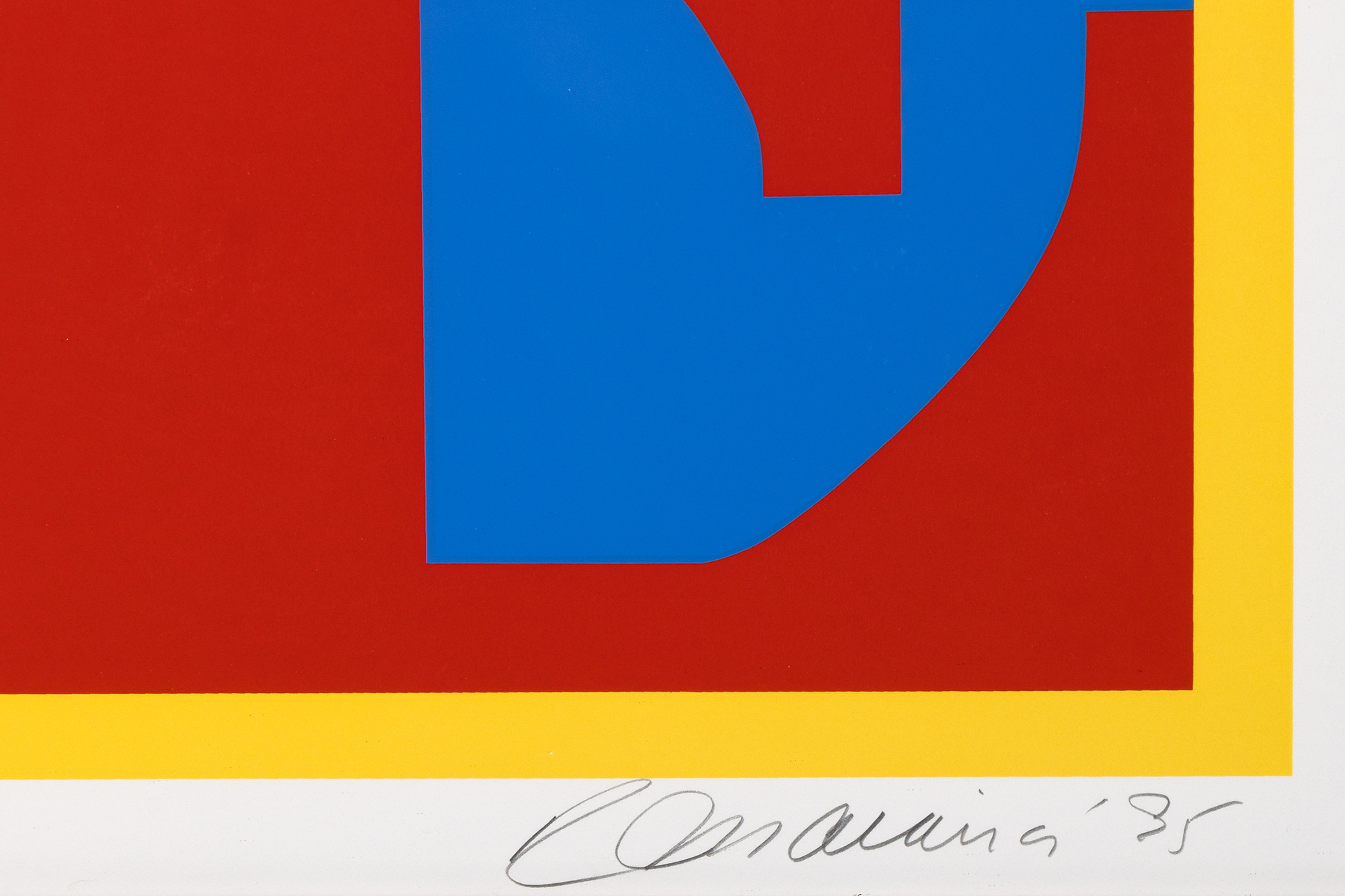
<div><font face=Lato size=3 color="#191919">Robert Indiana’s <em>Heliotherapy</em> reimagines his iconic <em>LOVE</em> motif through a vision of renewal and optimism. Created in 1995, the title refers to sunlight as a source of healing, reflecting Indiana’s desire late in life to revisit his 1960s antiwar symbol with a message of hope and compassion. He enriched the original reds, greens, and blues with radiant bands of yellow, transforming his emblem of love into one of light, warmth, and restoration.</font></div><br><br><div> </div><br><br><div><font face=Lato size=3 color="#191919">The composition echoes Indiana’s celebrated 1965 <em>LOVE</em> Christmas card for the Museum of Modern Art, the image that made him a household name. With its vivid palette and spiritual depth, <em>Heliotherapy</em> stands as a late reflection on love as both universal and curative. Comparable works are held in the collections of the Museum of Modern Art and the Smithsonian American Art Museum, underscoring the enduring legacy of Indiana’s most iconic image.</font></div> <div><font face=Lato size=3 color="#191919">Robert Indiana’s <em>Heliotherapy</em> reimagines his iconic <em>LOVE</em> motif through a vision of renewal and optimism. Created in 1995, the title refers to sunlight as a source of healing, reflecting Indiana’s desire late in life to revisit his 1960s antiwar symbol with a message of hope and compassion. He enriched the original reds, greens, and blues with radiant bands of yellow, transforming his emblem of love into one of light, warmth, and restoration.</font></div><br><br><div> </div><br><br><div><font face=Lato size=3 color="#191919">The composition echoes Indiana’s celebrated 1965 <em>LOVE</em> Christmas card for the Museum of Modern Art, the image that made him a household name. With its vivid palette and spiritual depth, <em>Heliotherapy</em> stands as a late reflection on love as both universal and curative. Comparable works are held in the collections of the Museum of Modern Art and the Smithsonian American Art Museum, underscoring the enduring legacy of Indiana’s most iconic image.</font></div> <div><font face=Lato size=3 color="#191919">Robert Indiana’s <em>Heliotherapy</em> reimagines his iconic <em>LOVE</em> motif through a vision of renewal and optimism. Created in 1995, the title refers to sunlight as a source of healing, reflecting Indiana’s desire late in life to revisit his 1960s antiwar symbol with a message of hope and compassion. He enriched the original reds, greens, and blues with radiant bands of yellow, transforming his emblem of love into one of light, warmth, and restoration.</font></div><br><br><div> </div><br><br><div><font face=Lato size=3 color="#191919">The composition echoes Indiana’s celebrated 1965 <em>LOVE</em> Christmas card for the Museum of Modern Art, the image that made him a household name. With its vivid palette and spiritual depth, <em>Heliotherapy</em> stands as a late reflection on love as both universal and curative. Comparable works are held in the collections of the Museum of Modern Art and the Smithsonian American Art Museum, underscoring the enduring legacy of Indiana’s most iconic image.</font></div> <div><font face=Lato size=3 color="#191919">Robert Indiana’s <em>Heliotherapy</em> reimagines his iconic <em>LOVE</em> motif through a vision of renewal and optimism. Created in 1995, the title refers to sunlight as a source of healing, reflecting Indiana’s desire late in life to revisit his 1960s antiwar symbol with a message of hope and compassion. He enriched the original reds, greens, and blues with radiant bands of yellow, transforming his emblem of love into one of light, warmth, and restoration.</font></div><br><br><div> </div><br><br><div><font face=Lato size=3 color="#191919">The composition echoes Indiana’s celebrated 1965 <em>LOVE</em> Christmas card for the Museum of Modern Art, the image that made him a household name. With its vivid palette and spiritual depth, <em>Heliotherapy</em> stands as a late reflection on love as both universal and curative. Comparable works are held in the collections of the Museum of Modern Art and the Smithsonian American Art Museum, underscoring the enduring legacy of Indiana’s most iconic image.</font></div> <div><font face=Lato size=3 color="#191919">Robert Indiana’s <em>Heliotherapy</em> reimagines his iconic <em>LOVE</em> motif through a vision of renewal and optimism. Created in 1995, the title refers to sunlight as a source of healing, reflecting Indiana’s desire late in life to revisit his 1960s antiwar symbol with a message of hope and compassion. He enriched the original reds, greens, and blues with radiant bands of yellow, transforming his emblem of love into one of light, warmth, and restoration.</font></div><br><br><div> </div><br><br><div><font face=Lato size=3 color="#191919">The composition echoes Indiana’s celebrated 1965 <em>LOVE</em> Christmas card for the Museum of Modern Art, the image that made him a household name. With its vivid palette and spiritual depth, <em>Heliotherapy</em> stands as a late reflection on love as both universal and curative. Comparable works are held in the collections of the Museum of Modern Art and the Smithsonian American Art Museum, underscoring the enduring legacy of Indiana’s most iconic image.</font></div> <div><font face=Lato size=3 color="#191919">Robert Indiana’s <em>Heliotherapy</em> reimagines his iconic <em>LOVE</em> motif through a vision of renewal and optimism. Created in 1995, the title refers to sunlight as a source of healing, reflecting Indiana’s desire late in life to revisit his 1960s antiwar symbol with a message of hope and compassion. He enriched the original reds, greens, and blues with radiant bands of yellow, transforming his emblem of love into one of light, warmth, and restoration.</font></div><br><br><div> </div><br><br><div><font face=Lato size=3 color="#191919">The composition echoes Indiana’s celebrated 1965 <em>LOVE</em> Christmas card for the Museum of Modern Art, the image that made him a household name. With its vivid palette and spiritual depth, <em>Heliotherapy</em> stands as a late reflection on love as both universal and curative. Comparable works are held in the collections of the Museum of Modern Art and the Smithsonian American Art Museum, underscoring the enduring legacy of Indiana’s most iconic image.</font></div> <div><font face=Lato size=3 color="#191919">Robert Indiana’s <em>Heliotherapy</em> reimagines his iconic <em>LOVE</em> motif through a vision of renewal and optimism. Created in 1995, the title refers to sunlight as a source of healing, reflecting Indiana’s desire late in life to revisit his 1960s antiwar symbol with a message of hope and compassion. He enriched the original reds, greens, and blues with radiant bands of yellow, transforming his emblem of love into one of light, warmth, and restoration.</font></div><br><br><div> </div><br><br><div><font face=Lato size=3 color="#191919">The composition echoes Indiana’s celebrated 1965 <em>LOVE</em> Christmas card for the Museum of Modern Art, the image that made him a household name. With its vivid palette and spiritual depth, <em>Heliotherapy</em> stands as a late reflection on love as both universal and curative. Comparable works are held in the collections of the Museum of Modern Art and the Smithsonian American Art Museum, underscoring the enduring legacy of Indiana’s most iconic image.</font></div> <div><font face=Lato size=3 color="#191919">Robert Indiana’s <em>Heliotherapy</em> reimagines his iconic <em>LOVE</em> motif through a vision of renewal and optimism. Created in 1995, the title refers to sunlight as a source of healing, reflecting Indiana’s desire late in life to revisit his 1960s antiwar symbol with a message of hope and compassion. He enriched the original reds, greens, and blues with radiant bands of yellow, transforming his emblem of love into one of light, warmth, and restoration.</font></div><br><br><div> </div><br><br><div><font face=Lato size=3 color="#191919">The composition echoes Indiana’s celebrated 1965 <em>LOVE</em> Christmas card for the Museum of Modern Art, the image that made him a household name. With its vivid palette and spiritual depth, <em>Heliotherapy</em> stands as a late reflection on love as both universal and curative. Comparable works are held in the collections of the Museum of Modern Art and the Smithsonian American Art Museum, underscoring the enduring legacy of Indiana’s most iconic image.</font></div> <div><font face=Lato size=3 color="#191919">Robert Indiana’s <em>Heliotherapy</em> reimagines his iconic <em>LOVE</em> motif through a vision of renewal and optimism. Created in 1995, the title refers to sunlight as a source of healing, reflecting Indiana’s desire late in life to revisit his 1960s antiwar symbol with a message of hope and compassion. He enriched the original reds, greens, and blues with radiant bands of yellow, transforming his emblem of love into one of light, warmth, and restoration.</font></div><br><br><div> </div><br><br><div><font face=Lato size=3 color="#191919">The composition echoes Indiana’s celebrated 1965 <em>LOVE</em> Christmas card for the Museum of Modern Art, the image that made him a household name. With its vivid palette and spiritual depth, <em>Heliotherapy</em> stands as a late reflection on love as both universal and curative. Comparable works are held in the collections of the Museum of Modern Art and the Smithsonian American Art Museum, underscoring the enduring legacy of Indiana’s most iconic image.</font></div> <div><font face=Lato size=3 color="#191919">Robert Indiana’s <em>Heliotherapy</em> reimagines his iconic <em>LOVE</em> motif through a vision of renewal and optimism. Created in 1995, the title refers to sunlight as a source of healing, reflecting Indiana’s desire late in life to revisit his 1960s antiwar symbol with a message of hope and compassion. He enriched the original reds, greens, and blues with radiant bands of yellow, transforming his emblem of love into one of light, warmth, and restoration.</font></div><br><br><div> </div><br><br><div><font face=Lato size=3 color="#191919">The composition echoes Indiana’s celebrated 1965 <em>LOVE</em> Christmas card for the Museum of Modern Art, the image that made him a household name. With its vivid palette and spiritual depth, <em>Heliotherapy</em> stands as a late reflection on love as both universal and curative. Comparable works are held in the collections of the Museum of Modern Art and the Smithsonian American Art Museum, underscoring the enduring legacy of Indiana’s most iconic image.</font></div>
אהבת הליותרפיה 1995 הדפס רשת צבעוני 93.98 x 95.25 ס"מ ( 37 x 37 1/2 אינץ' )
מקור ומקור
עם ארטברוקראז'
אוסף פרטי, קולורדו, נרכש מהנ"ל, 2012
"הליותרפיה" של רוברט אינדיאנה מדמיין מחדש את מוטיב האהבה האייקוני שלו באמצעות חזון של התחדשות ואופטימיות. הכותרת, שנוצרה בשנת 1995, מתייחסת לאור השמש כמקור ריפוי, ומשקפת את רצונו של אינדיאנה בשלב מאוחר בחייו לבחון מחדש את סמל האנטי-מלחמת שלו משנות ה-60 עם מסר של תקווה וחמלה. הוא העשיר את האדומים, הירוקים והכחולים המקוריים בפסי צהוב קורנים, והפך את סמל האהבה שלו לאור, חום ושיקום.


הקומפוזיציה מהדהדת את כרטיס חג המולד המהולל של אינדיאנה משנת 1965, "אהבה", עבור המוזיאון לאמנות מודרנית, הדימוי שהפך אותו לשם דבר. עם פלטת הצבעים העזה והעומק הרוחני שלה, הליותרפיה מהווה השתקפות מאוחרת על אהבה כאוניברסלית ומרפאת כאחד. עבודות דומות נמצאות באוספי המוזיאון לאמנות מודרנית ומוזיאון האמנות האמריקאי הסמית'סוניאן, ומדגישות את המורשת המתמשכת של הדימוי האייקוני ביותר של אינדיאנה.
לברר