ויין טייבו(1920-2021)

 
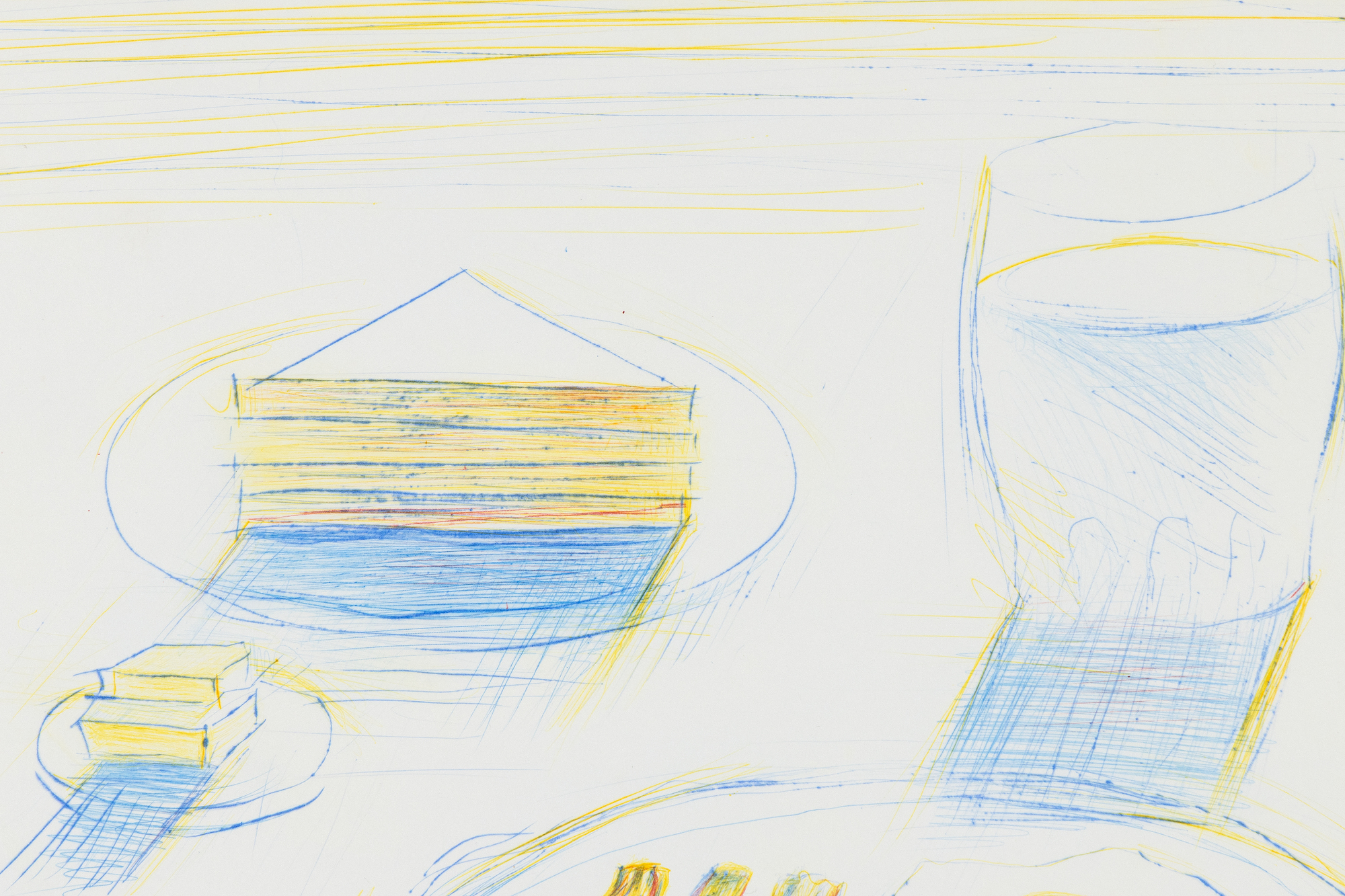
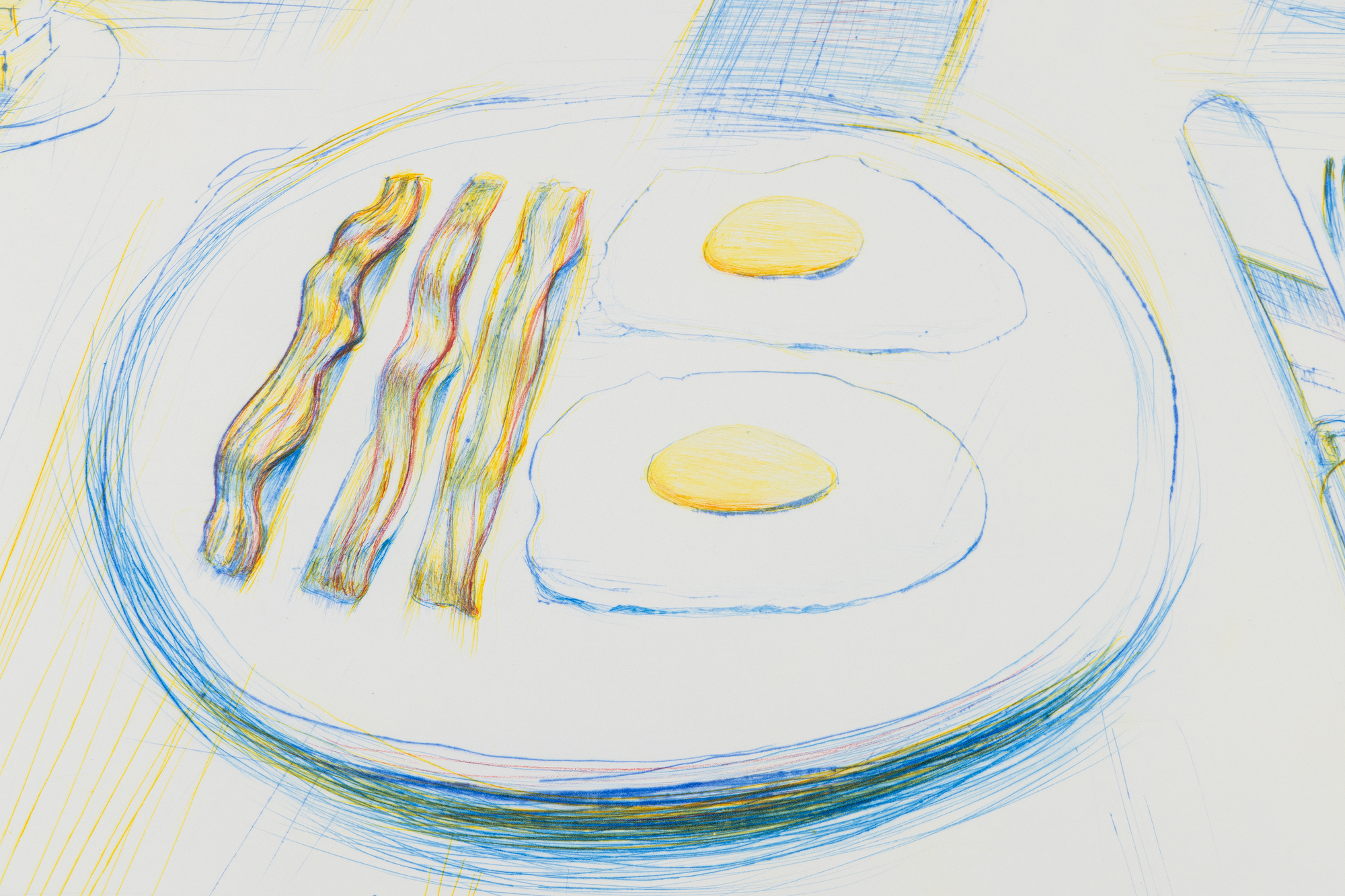
<div><font face=Lato size=3 color=black>Wayne Thiebaud’s <em>Breakfast</em>, from an edition of 50, demonstrates the artist’s signature blend of Pop-inflected realism and painterly intimacy. Executed in colored drypoint, the work captures the simple subject of a morning meal with a remarkable freshness: hatching lines soften and blur the composition, creating a pastel-like effect that distinguishes it from the crispness of commercial print design. Though slightly faded, the impression retains the playful chromatic sensibility and softly modeled shadowing that became hallmarks of Thiebaud’s style.</font></div><br><br><div><font face=Lato size=3> </font></div><br><br><div><font face=Lato size=3 color=black>Since the early 1960s, Thiebaud has been celebrated for his depictions of food—cakes, pies, gumball machines, and diner counters—rendered not as literal meals but as cultural icons, at once nostalgic and idealized. In <em>Breakfast</em>, the modest meal is transformed into a subject of contemplation and delight, celebrating the pleasures of everyday American life while evoking memory and desire. The combination of precision and informality speaks to Thiebaud’s ability to merge the immediacy of drawing with the enduring resonance of painting.</font></div><br><br><div><font face=Lato size=3> </font></div><br><br><div><font face=Lato size=3 color=black>Institutional recognition of the work’s importance is reflected in its inclusion within the National Gallery of Art, Washington, affirming its role within Thiebaud’s larger project of elevating common objects into images of enduring cultural significance.</font></div> <div><font face=Lato size=3 color=black>Wayne Thiebaud’s <em>Breakfast</em>, from an edition of 50, demonstrates the artist’s signature blend of Pop-inflected realism and painterly intimacy. Executed in colored drypoint, the work captures the simple subject of a morning meal with a remarkable freshness: hatching lines soften and blur the composition, creating a pastel-like effect that distinguishes it from the crispness of commercial print design. Though slightly faded, the impression retains the playful chromatic sensibility and softly modeled shadowing that became hallmarks of Thiebaud’s style.</font></div><br><br><div><font face=Lato size=3> </font></div><br><br><div><font face=Lato size=3 color=black>Since the early 1960s, Thiebaud has been celebrated for his depictions of food—cakes, pies, gumball machines, and diner counters—rendered not as literal meals but as cultural icons, at once nostalgic and idealized. In <em>Breakfast</em>, the modest meal is transformed into a subject of contemplation and delight, celebrating the pleasures of everyday American life while evoking memory and desire. The combination of precision and informality speaks to Thiebaud’s ability to merge the immediacy of drawing with the enduring resonance of painting.</font></div><br><br><div><font face=Lato size=3> </font></div><br><br><div><font face=Lato size=3 color=black>Institutional recognition of the work’s importance is reflected in its inclusion within the National Gallery of Art, Washington, affirming its role within Thiebaud’s larger project of elevating common objects into images of enduring cultural significance.</font></div> <div><font face=Lato size=3 color=black>Wayne Thiebaud’s <em>Breakfast</em>, from an edition of 50, demonstrates the artist’s signature blend of Pop-inflected realism and painterly intimacy. Executed in colored drypoint, the work captures the simple subject of a morning meal with a remarkable freshness: hatching lines soften and blur the composition, creating a pastel-like effect that distinguishes it from the crispness of commercial print design. Though slightly faded, the impression retains the playful chromatic sensibility and softly modeled shadowing that became hallmarks of Thiebaud’s style.</font></div><br><br><div><font face=Lato size=3> </font></div><br><br><div><font face=Lato size=3 color=black>Since the early 1960s, Thiebaud has been celebrated for his depictions of food—cakes, pies, gumball machines, and diner counters—rendered not as literal meals but as cultural icons, at once nostalgic and idealized. In <em>Breakfast</em>, the modest meal is transformed into a subject of contemplation and delight, celebrating the pleasures of everyday American life while evoking memory and desire. The combination of precision and informality speaks to Thiebaud’s ability to merge the immediacy of drawing with the enduring resonance of painting.</font></div><br><br><div><font face=Lato size=3> </font></div><br><br><div><font face=Lato size=3 color=black>Institutional recognition of the work’s importance is reflected in its inclusion within the National Gallery of Art, Washington, affirming its role within Thiebaud’s larger project of elevating common objects into images of enduring cultural significance.</font></div> <div><font face=Lato size=3 color=black>Wayne Thiebaud’s <em>Breakfast</em>, from an edition of 50, demonstrates the artist’s signature blend of Pop-inflected realism and painterly intimacy. Executed in colored drypoint, the work captures the simple subject of a morning meal with a remarkable freshness: hatching lines soften and blur the composition, creating a pastel-like effect that distinguishes it from the crispness of commercial print design. Though slightly faded, the impression retains the playful chromatic sensibility and softly modeled shadowing that became hallmarks of Thiebaud’s style.</font></div><br><br><div><font face=Lato size=3> </font></div><br><br><div><font face=Lato size=3 color=black>Since the early 1960s, Thiebaud has been celebrated for his depictions of food—cakes, pies, gumball machines, and diner counters—rendered not as literal meals but as cultural icons, at once nostalgic and idealized. In <em>Breakfast</em>, the modest meal is transformed into a subject of contemplation and delight, celebrating the pleasures of everyday American life while evoking memory and desire. The combination of precision and informality speaks to Thiebaud’s ability to merge the immediacy of drawing with the enduring resonance of painting.</font></div><br><br><div><font face=Lato size=3> </font></div><br><br><div><font face=Lato size=3 color=black>Institutional recognition of the work’s importance is reflected in its inclusion within the National Gallery of Art, Washington, affirming its role within Thiebaud’s larger project of elevating common objects into images of enduring cultural significance.</font></div> <div><font face=Lato size=3 color=black>Wayne Thiebaud’s <em>Breakfast</em>, from an edition of 50, demonstrates the artist’s signature blend of Pop-inflected realism and painterly intimacy. Executed in colored drypoint, the work captures the simple subject of a morning meal with a remarkable freshness: hatching lines soften and blur the composition, creating a pastel-like effect that distinguishes it from the crispness of commercial print design. Though slightly faded, the impression retains the playful chromatic sensibility and softly modeled shadowing that became hallmarks of Thiebaud’s style.</font></div><br><br><div><font face=Lato size=3> </font></div><br><br><div><font face=Lato size=3 color=black>Since the early 1960s, Thiebaud has been celebrated for his depictions of food—cakes, pies, gumball machines, and diner counters—rendered not as literal meals but as cultural icons, at once nostalgic and idealized. In <em>Breakfast</em>, the modest meal is transformed into a subject of contemplation and delight, celebrating the pleasures of everyday American life while evoking memory and desire. The combination of precision and informality speaks to Thiebaud’s ability to merge the immediacy of drawing with the enduring resonance of painting.</font></div><br><br><div><font face=Lato size=3> </font></div><br><br><div><font face=Lato size=3 color=black>Institutional recognition of the work’s importance is reflected in its inclusion within the National Gallery of Art, Washington, affirming its role within Thiebaud’s larger project of elevating common objects into images of enduring cultural significance.</font></div> <div><font face=Lato size=3 color=black>Wayne Thiebaud’s <em>Breakfast</em>, from an edition of 50, demonstrates the artist’s signature blend of Pop-inflected realism and painterly intimacy. Executed in colored drypoint, the work captures the simple subject of a morning meal with a remarkable freshness: hatching lines soften and blur the composition, creating a pastel-like effect that distinguishes it from the crispness of commercial print design. Though slightly faded, the impression retains the playful chromatic sensibility and softly modeled shadowing that became hallmarks of Thiebaud’s style.</font></div><br><br><div><font face=Lato size=3> </font></div><br><br><div><font face=Lato size=3 color=black>Since the early 1960s, Thiebaud has been celebrated for his depictions of food—cakes, pies, gumball machines, and diner counters—rendered not as literal meals but as cultural icons, at once nostalgic and idealized. In <em>Breakfast</em>, the modest meal is transformed into a subject of contemplation and delight, celebrating the pleasures of everyday American life while evoking memory and desire. The combination of precision and informality speaks to Thiebaud’s ability to merge the immediacy of drawing with the enduring resonance of painting.</font></div><br><br><div><font face=Lato size=3> </font></div><br><br><div><font face=Lato size=3 color=black>Institutional recognition of the work’s importance is reflected in its inclusion within the National Gallery of Art, Washington, affirming its role within Thiebaud’s larger project of elevating common objects into images of enduring cultural significance.</font></div> <div><font face=Lato size=3 color=black>Wayne Thiebaud’s <em>Breakfast</em>, from an edition of 50, demonstrates the artist’s signature blend of Pop-inflected realism and painterly intimacy. Executed in colored drypoint, the work captures the simple subject of a morning meal with a remarkable freshness: hatching lines soften and blur the composition, creating a pastel-like effect that distinguishes it from the crispness of commercial print design. Though slightly faded, the impression retains the playful chromatic sensibility and softly modeled shadowing that became hallmarks of Thiebaud’s style.</font></div><br><br><div><font face=Lato size=3> </font></div><br><br><div><font face=Lato size=3 color=black>Since the early 1960s, Thiebaud has been celebrated for his depictions of food—cakes, pies, gumball machines, and diner counters—rendered not as literal meals but as cultural icons, at once nostalgic and idealized. In <em>Breakfast</em>, the modest meal is transformed into a subject of contemplation and delight, celebrating the pleasures of everyday American life while evoking memory and desire. The combination of precision and informality speaks to Thiebaud’s ability to merge the immediacy of drawing with the enduring resonance of painting.</font></div><br><br><div><font face=Lato size=3> </font></div><br><br><div><font face=Lato size=3 color=black>Institutional recognition of the work’s importance is reflected in its inclusion within the National Gallery of Art, Washington, affirming its role within Thiebaud’s larger project of elevating common objects into images of enduring cultural significance.</font></div> <div><font face=Lato size=3 color=black>Wayne Thiebaud’s <em>Breakfast</em>, from an edition of 50, demonstrates the artist’s signature blend of Pop-inflected realism and painterly intimacy. Executed in colored drypoint, the work captures the simple subject of a morning meal with a remarkable freshness: hatching lines soften and blur the composition, creating a pastel-like effect that distinguishes it from the crispness of commercial print design. Though slightly faded, the impression retains the playful chromatic sensibility and softly modeled shadowing that became hallmarks of Thiebaud’s style.</font></div><br><br><div><font face=Lato size=3> </font></div><br><br><div><font face=Lato size=3 color=black>Since the early 1960s, Thiebaud has been celebrated for his depictions of food—cakes, pies, gumball machines, and diner counters—rendered not as literal meals but as cultural icons, at once nostalgic and idealized. In <em>Breakfast</em>, the modest meal is transformed into a subject of contemplation and delight, celebrating the pleasures of everyday American life while evoking memory and desire. The combination of precision and informality speaks to Thiebaud’s ability to merge the immediacy of drawing with the enduring resonance of painting.</font></div><br><br><div><font face=Lato size=3> </font></div><br><br><div><font face=Lato size=3 color=black>Institutional recognition of the work’s importance is reflected in its inclusion within the National Gallery of Art, Washington, affirming its role within Thiebaud’s larger project of elevating common objects into images of enduring cultural significance.</font></div> <div><font face=Lato size=3 color=black>Wayne Thiebaud’s <em>Breakfast</em>, from an edition of 50, demonstrates the artist’s signature blend of Pop-inflected realism and painterly intimacy. Executed in colored drypoint, the work captures the simple subject of a morning meal with a remarkable freshness: hatching lines soften and blur the composition, creating a pastel-like effect that distinguishes it from the crispness of commercial print design. Though slightly faded, the impression retains the playful chromatic sensibility and softly modeled shadowing that became hallmarks of Thiebaud’s style.</font></div><br><br><div><font face=Lato size=3> </font></div><br><br><div><font face=Lato size=3 color=black>Since the early 1960s, Thiebaud has been celebrated for his depictions of food—cakes, pies, gumball machines, and diner counters—rendered not as literal meals but as cultural icons, at once nostalgic and idealized. In <em>Breakfast</em>, the modest meal is transformed into a subject of contemplation and delight, celebrating the pleasures of everyday American life while evoking memory and desire. The combination of precision and informality speaks to Thiebaud’s ability to merge the immediacy of drawing with the enduring resonance of painting.</font></div><br><br><div><font face=Lato size=3> </font></div><br><br><div><font face=Lato size=3 color=black>Institutional recognition of the work’s importance is reflected in its inclusion within the National Gallery of Art, Washington, affirming its role within Thiebaud’s larger project of elevating common objects into images of enduring cultural significance.</font></div> <div><font face=Lato size=3 color=black>Wayne Thiebaud’s <em>Breakfast</em>, from an edition of 50, demonstrates the artist’s signature blend of Pop-inflected realism and painterly intimacy. Executed in colored drypoint, the work captures the simple subject of a morning meal with a remarkable freshness: hatching lines soften and blur the composition, creating a pastel-like effect that distinguishes it from the crispness of commercial print design. Though slightly faded, the impression retains the playful chromatic sensibility and softly modeled shadowing that became hallmarks of Thiebaud’s style.</font></div><br><br><div><font face=Lato size=3> </font></div><br><br><div><font face=Lato size=3 color=black>Since the early 1960s, Thiebaud has been celebrated for his depictions of food—cakes, pies, gumball machines, and diner counters—rendered not as literal meals but as cultural icons, at once nostalgic and idealized. In <em>Breakfast</em>, the modest meal is transformed into a subject of contemplation and delight, celebrating the pleasures of everyday American life while evoking memory and desire. The combination of precision and informality speaks to Thiebaud’s ability to merge the immediacy of drawing with the enduring resonance of painting.</font></div><br><br><div><font face=Lato size=3> </font></div><br><br><div><font face=Lato size=3 color=black>Institutional recognition of the work’s importance is reflected in its inclusion within the National Gallery of Art, Washington, affirming its role within Thiebaud’s larger project of elevating common objects into images of enduring cultural significance.</font></div>
ארוחת בוקר 1995 18 x 23 5/8 אינץ' (40.64 x 60.96 ס"מ) תחריט צבעוני וחומר יבש
מקור ומקור
גלריית האמנויות היפות 871
אוסף פרטי
אמנות יפה של הת'ר ג'יימס
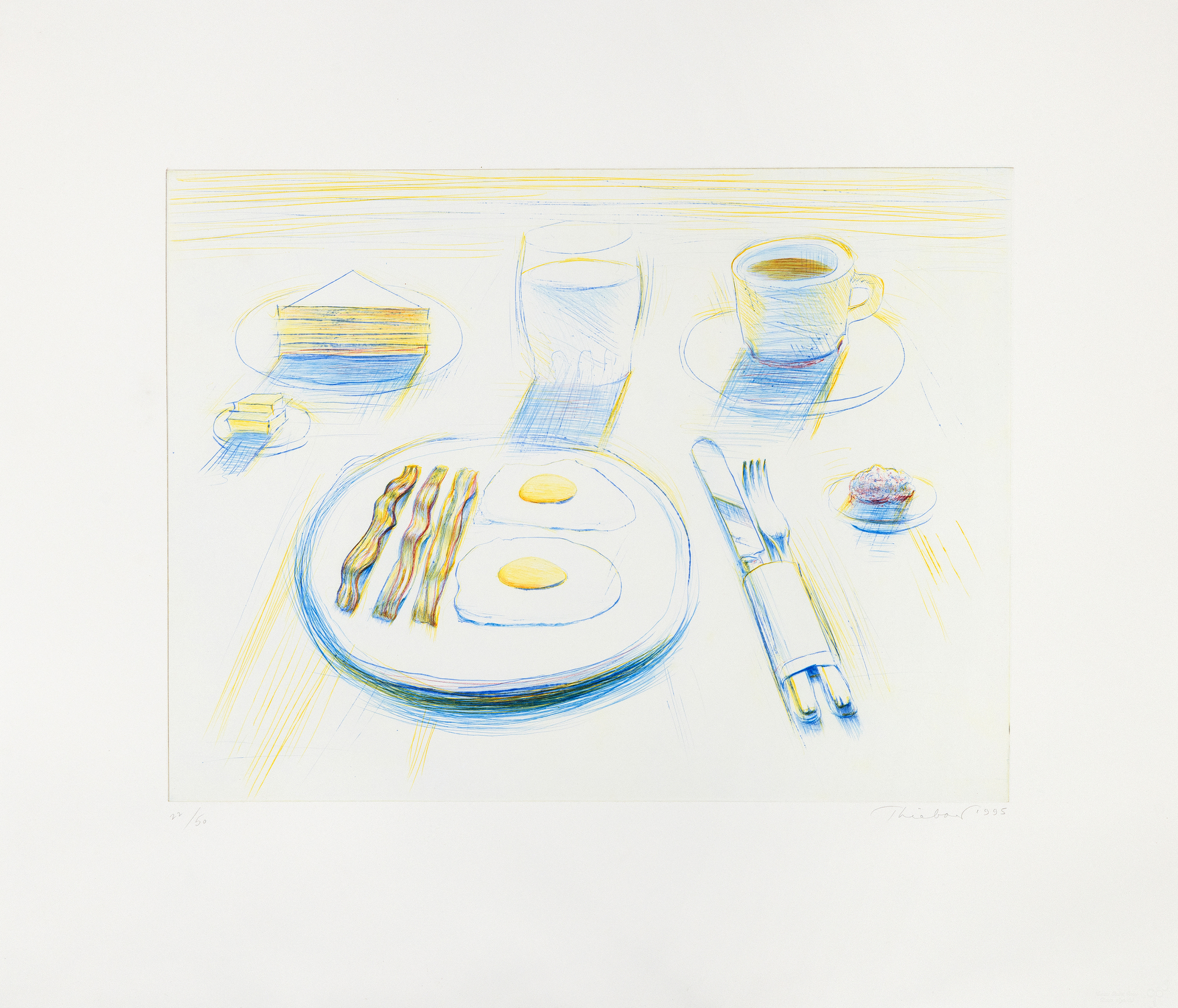
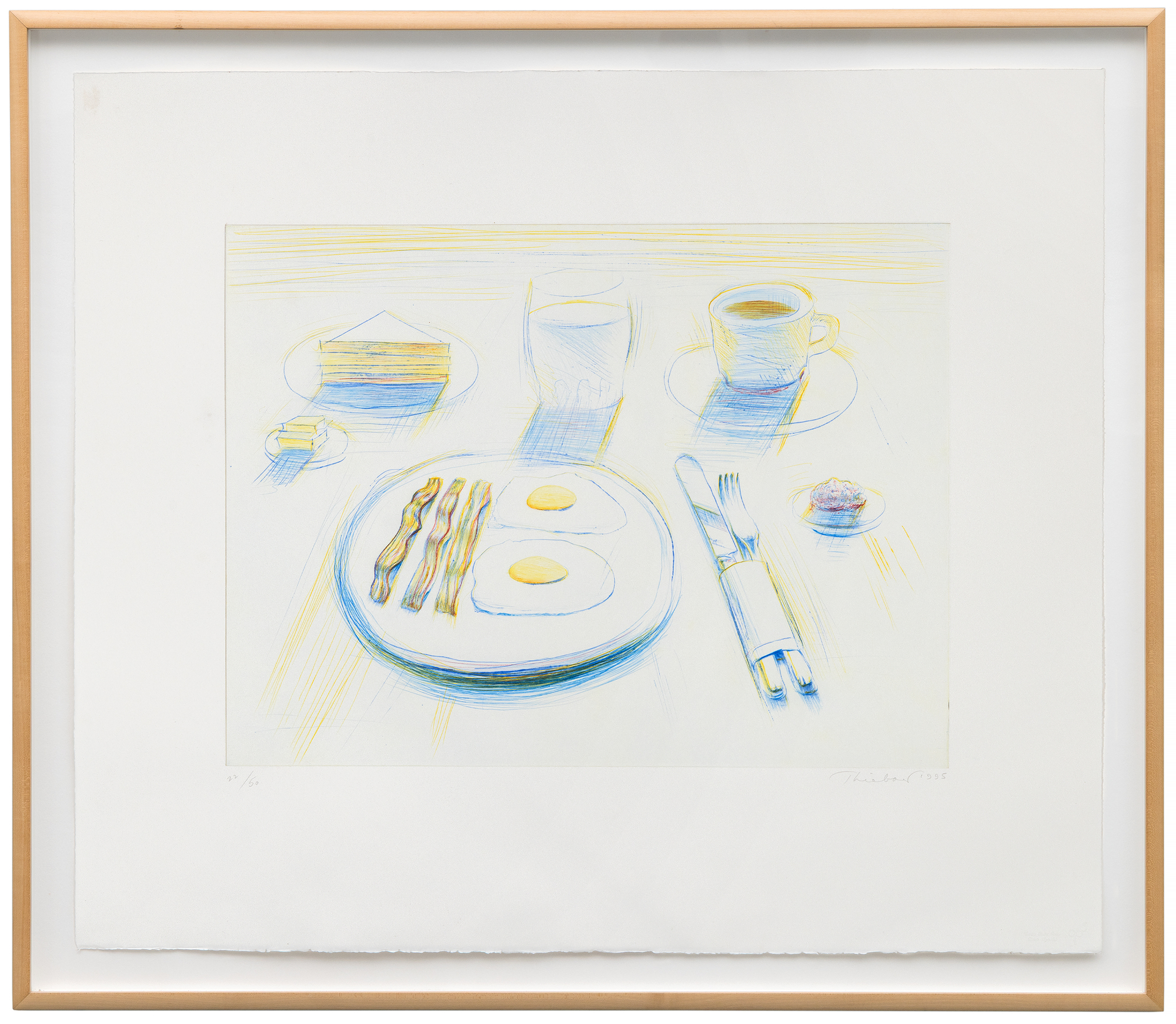
"ארוחת בוקר" של וויין תיבאו, מתוך מהדורה של 50 עותקים, מדגים את השילוב הייחודי של האמן בין ריאליזם בסגנון פופ לאינטימיות ציורית. היצירה, המבוצעת בצבע יבש, לוכדת את הנושא הפשוט של ארוחת בוקר ברעננות יוצאת דופן: קווי הבקעה מרככים ומטשטשים את הקומפוזיציה, ויוצרים אפקט דמוי פסטל המבדיל אותה מהחדות של עיצוב הדפס מסחרי. למרות שהיצירה דהויה מעט, היא שומרת על הרגישות הכרומטית השובבה וההצללה העדינה שהפכו לסימני ההיכר של סגנונו של תיבאו.


מאז תחילת שנות ה-60, תיבו זכה להוקרה בזכות תיאורי האוכל שלו - עוגות, פשטידות, מכונות מסטיק ודלפקי דיינר - המוצגים לא כארוחות פיזיות אלא כאייקונים תרבותיים, נוסטלגיים ואידיאליים בו זמנית. ב"ארוחת בוקר", הארוחה הצנועה הופכת לנושא של הרהור ועונג, חוגגת את הנאות חיי היומיום האמריקאיים תוך כדי עורר זיכרון ותשוקה. השילוב של דיוק וחוסר פורמליות מדבר על יכולתו של תיבו למזג את המיידיות של הרישום עם התהודה המתמשכת של הציור.


הכרה מוסדית בחשיבותה של היצירה באה לידי ביטוי בהכללתה בגלריה הלאומית לאמנות בוושינגטון, מה שמאשר את תפקידה בפרויקט הרחב יותר של תיבו של העלאת חפצים נפוצים לדימויים בעלי משמעות תרבותית מתמשכת.
לברר