

גב

אלכסנדר קלדר(1898-1976)

 
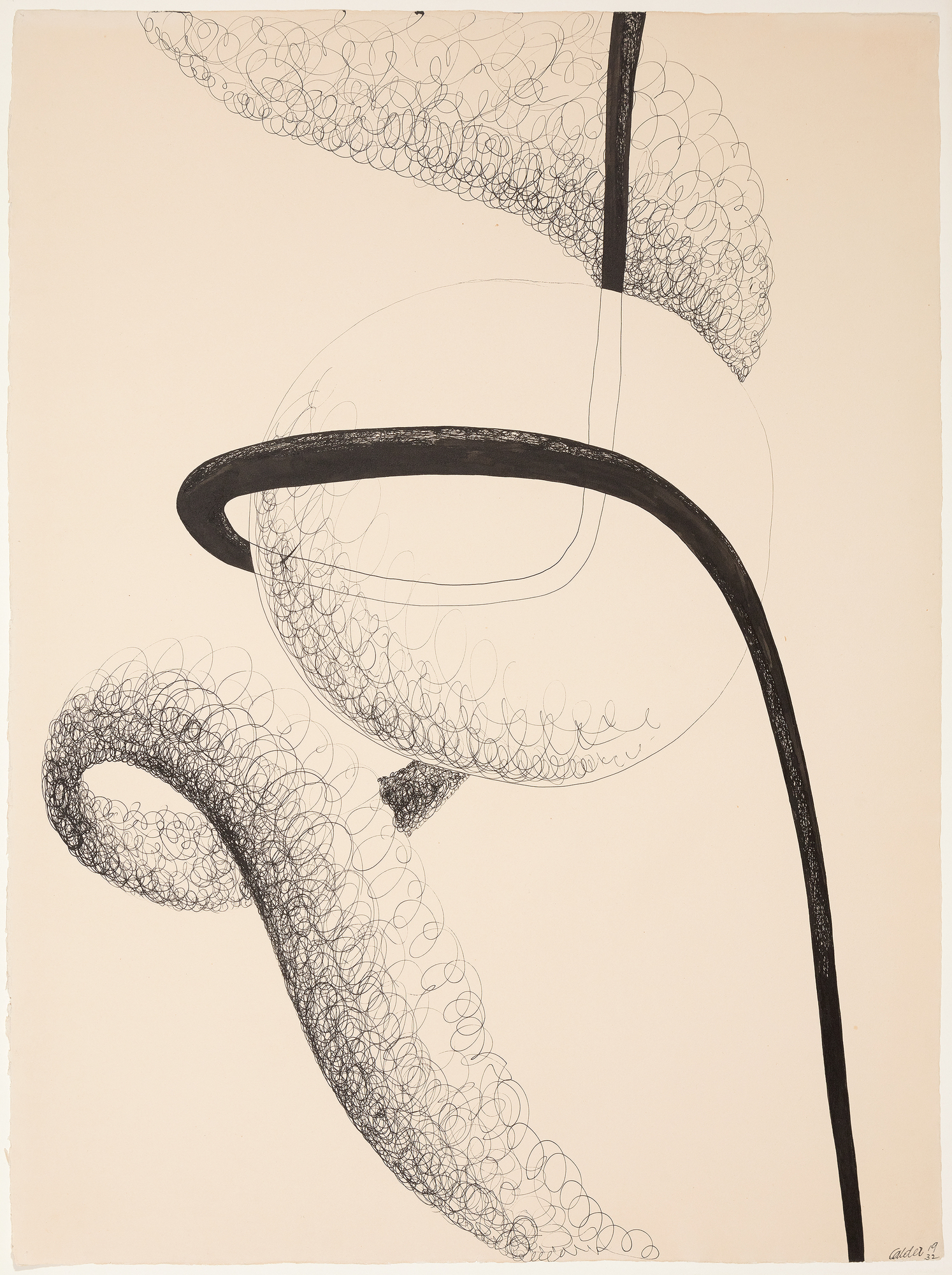
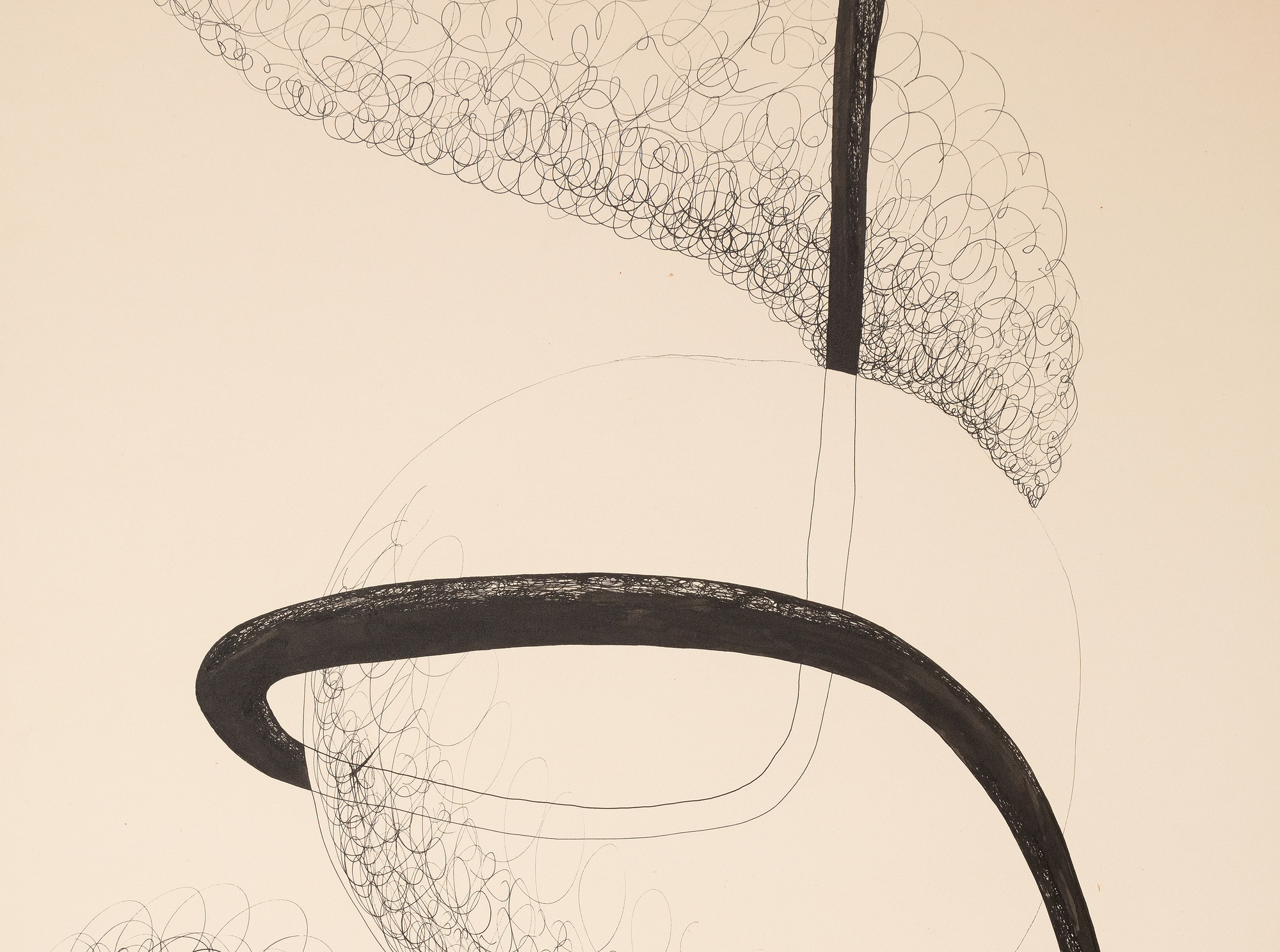
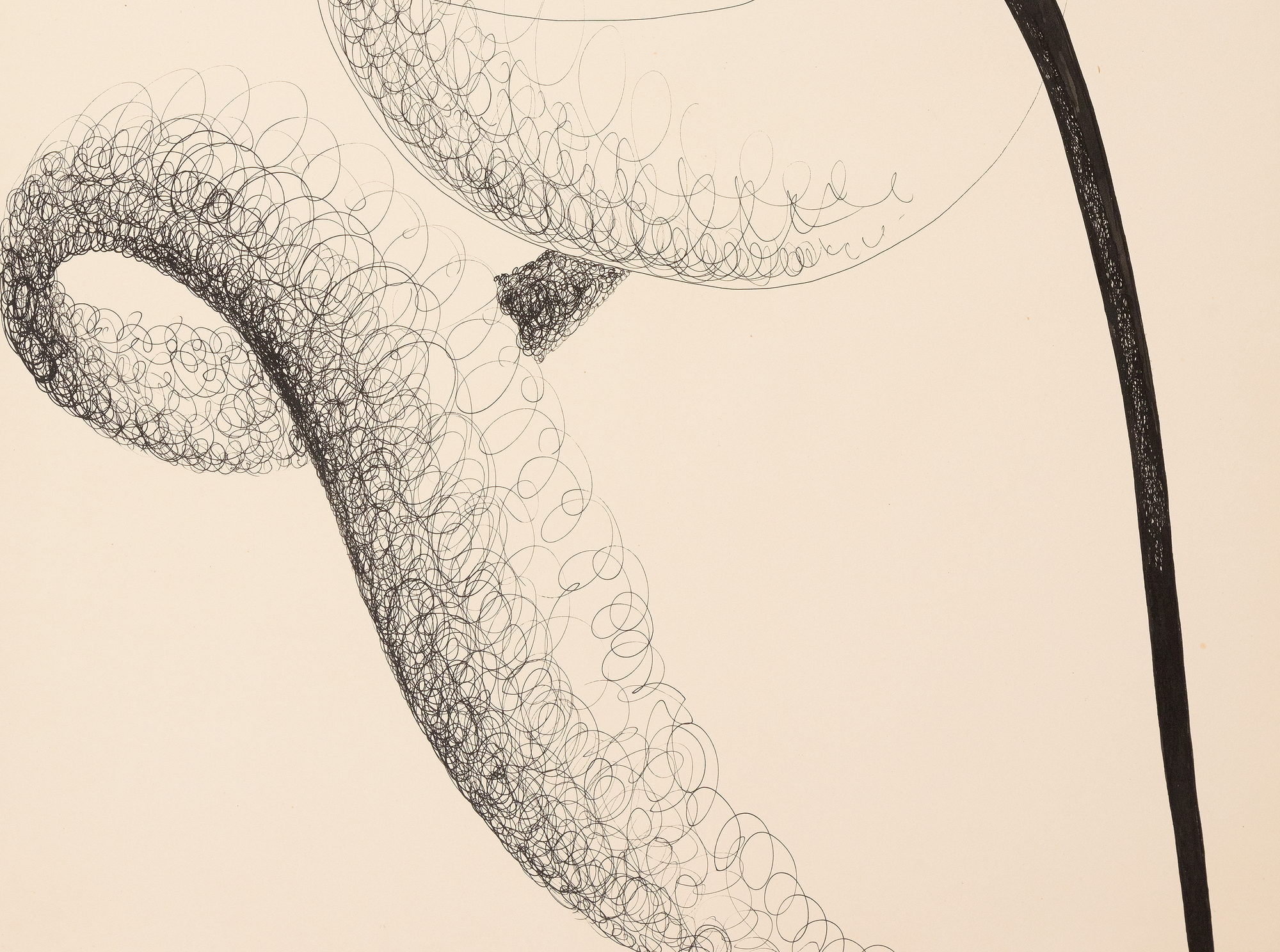
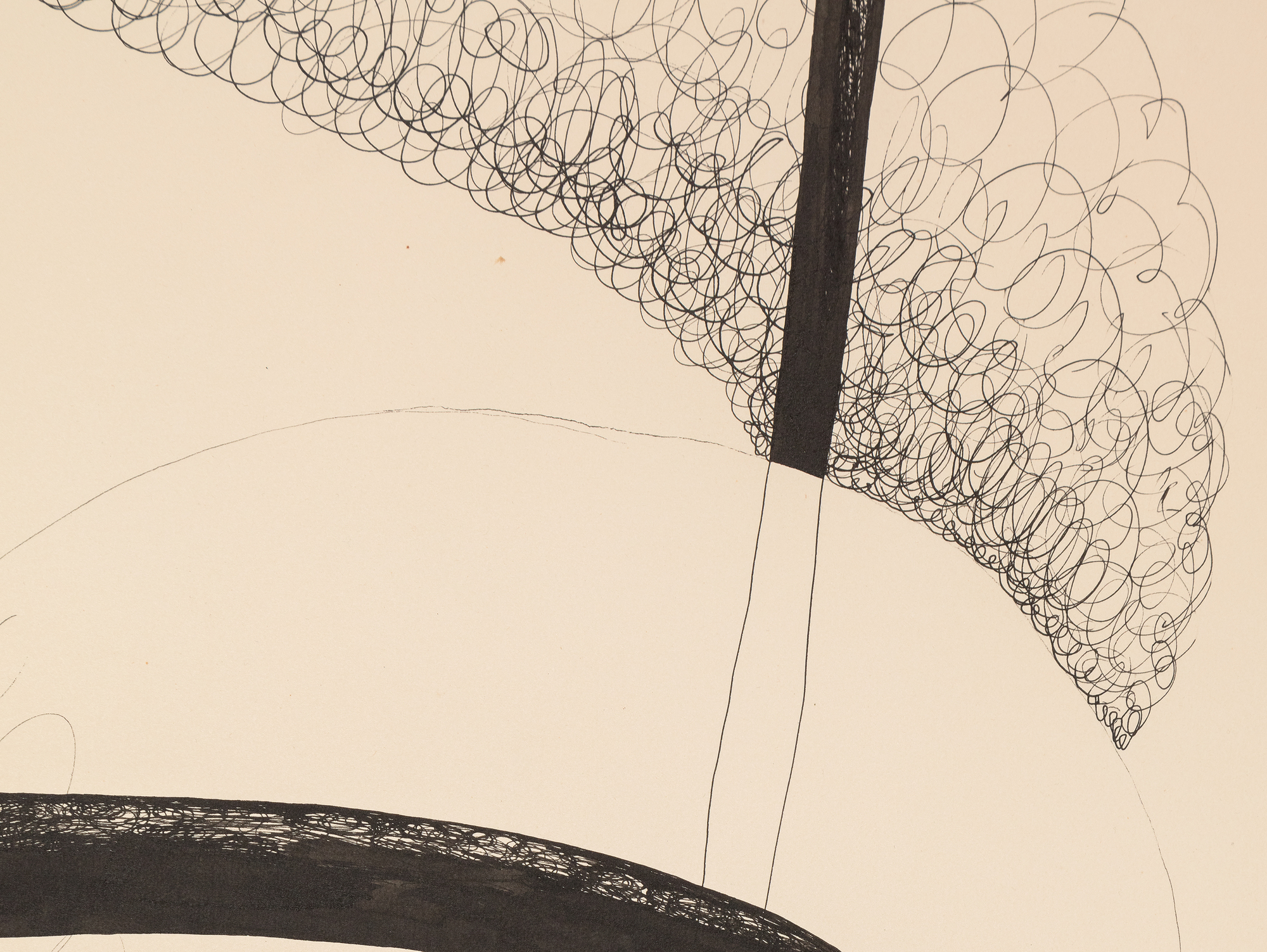
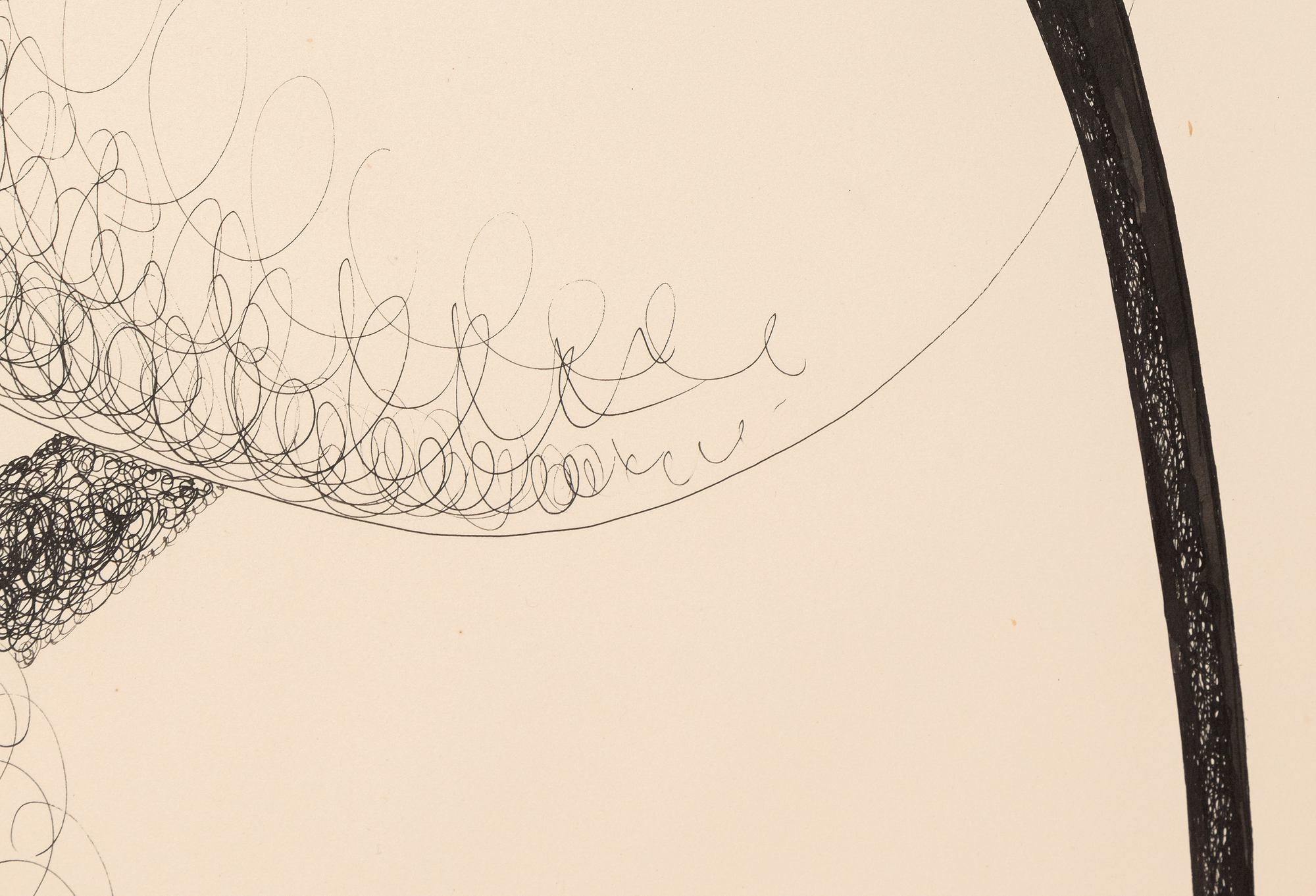
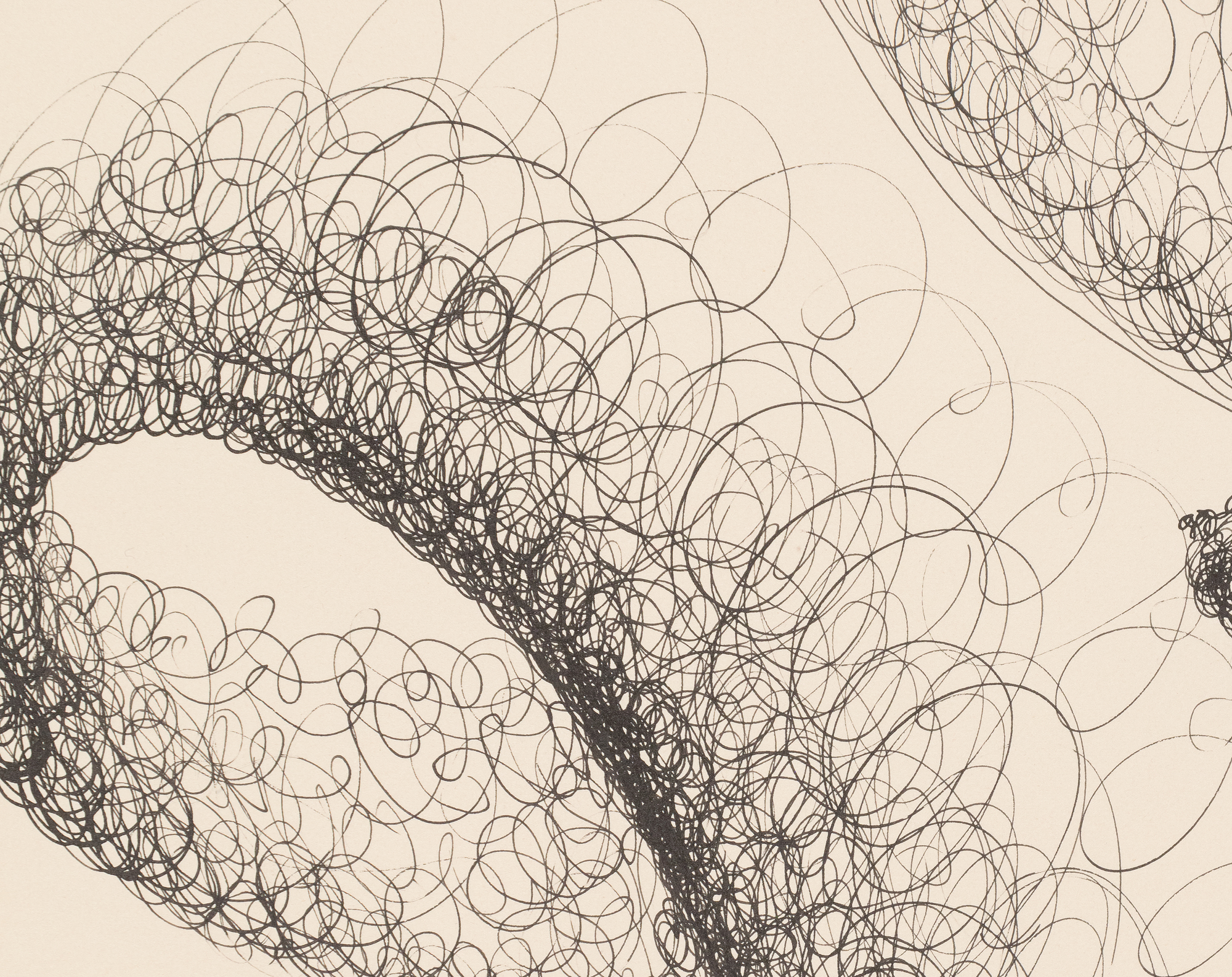
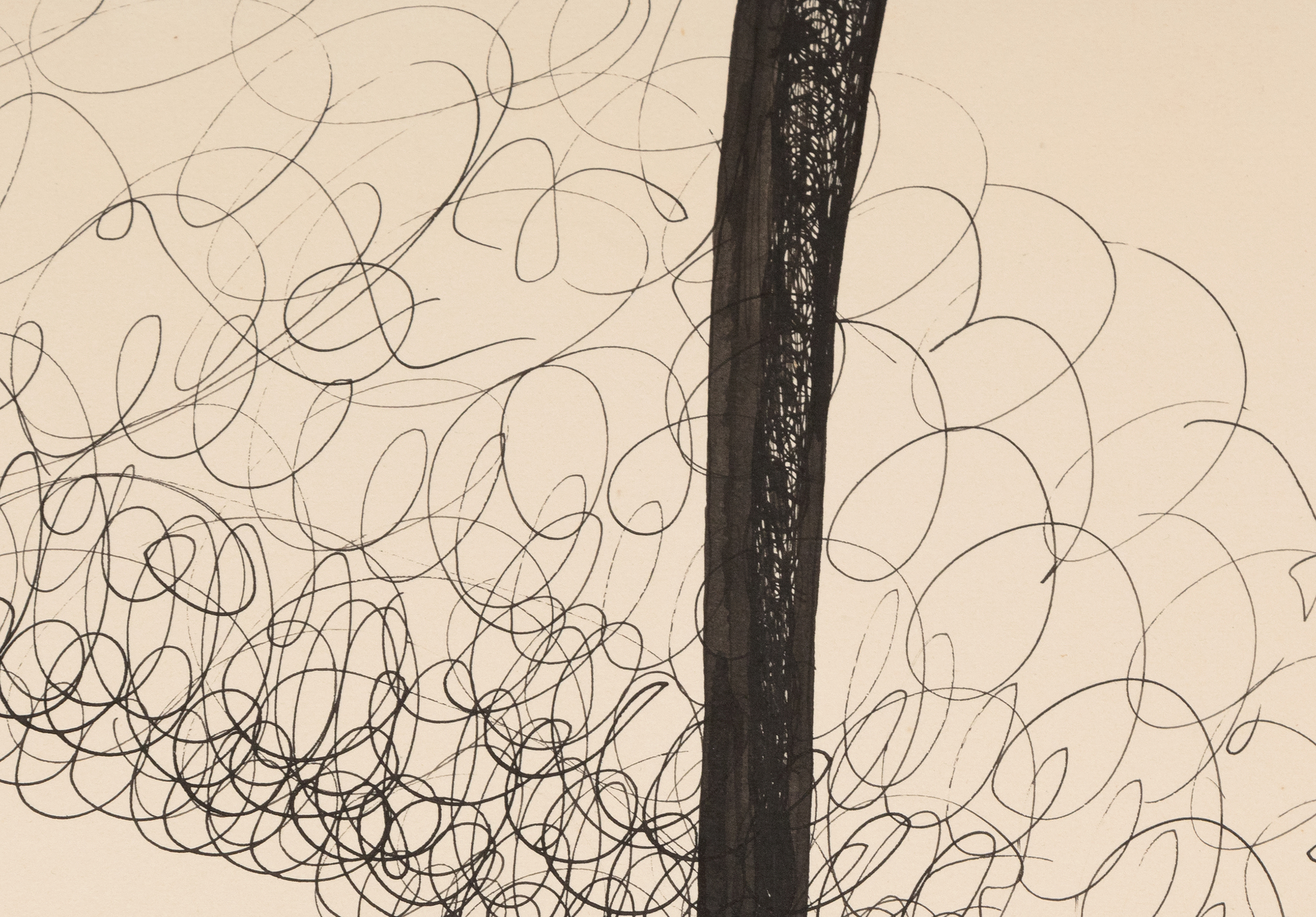
<div><font face=Lato size=3 color=black>Alexander Calder’s <em>Tornado in Space</em> (1932) is a rare drawing from the crucial moment when he was redefining his artistic language through abstraction and movement. Authenticated by the Calder Foundation (registration number A08417), the work is composed of bold, spiraling lines that circle and intersect in rhythmic trajectories. These orbit-like forms suggest both natural forces and mechanical precision, capturing the sensation of motion on a flat surface and foreshadowing the spatial dynamics of his earliest mobiles.</font></div><br><br><div> </div><br><br><div><font face=Lato size=3 color=black>The drawing embodies Calder’s fascination with the invisible energies of the universe, transforming paper into a field of movement and space. The economy of line emphasizes gesture and rhythm rather than depiction, distilling his explorations into a graphic composition of striking clarity. This sheet belongs to a key group of works on paper from 1932, including <em>Space Tunnel</em> and <em>Movement in Space</em>, in which Calder experimented with drawing as a means of testing ideas that would later find expression in three-dimensional form.</font></div><br><br><div> </div><br><br><div><font face=Lato size=3 color=black>The provenance further strengthens the importance of this work. <em>Tornado in Space </em>was acquired through Calder’s longtime New York dealer, Klaus Perl's of Perls Gallery, and has remained in the same private collection for over fifty years. Closely related works from this period are now housed in the Centre Pompidou, the National Gallery of Art, and the Museum of Modern Art, underscoring the rarity and art-historical resonance of this drawing.</font></div><br><br><div> </div><br><br><div>© 2023 Calder Foundation, New York / Artists Rights Society (ARS), New York</div> <div><font face=Lato size=3 color=black>Alexander Calder’s <em>Tornado in Space</em> (1932) is a rare drawing from the crucial moment when he was redefining his artistic language through abstraction and movement. Authenticated by the Calder Foundation (registration number A08417), the work is composed of bold, spiraling lines that circle and intersect in rhythmic trajectories. These orbit-like forms suggest both natural forces and mechanical precision, capturing the sensation of motion on a flat surface and foreshadowing the spatial dynamics of his earliest mobiles.</font></div><br><br><div> </div><br><br><div><font face=Lato size=3 color=black>The drawing embodies Calder’s fascination with the invisible energies of the universe, transforming paper into a field of movement and space. The economy of line emphasizes gesture and rhythm rather than depiction, distilling his explorations into a graphic composition of striking clarity. This sheet belongs to a key group of works on paper from 1932, including <em>Space Tunnel</em> and <em>Movement in Space</em>, in which Calder experimented with drawing as a means of testing ideas that would later find expression in three-dimensional form.</font></div><br><br><div> </div><br><br><div><font face=Lato size=3 color=black>The provenance further strengthens the importance of this work. <em>Tornado in Space </em>was acquired through Calder’s longtime New York dealer, Klaus Perl's of Perls Gallery, and has remained in the same private collection for over fifty years. Closely related works from this period are now housed in the Centre Pompidou, the National Gallery of Art, and the Museum of Modern Art, underscoring the rarity and art-historical resonance of this drawing.</font></div><br><br><div> </div><br><br><div>© 2023 Calder Foundation, New York / Artists Rights Society (ARS), New York</div> <div><font face=Lato size=3 color=black>Alexander Calder’s <em>Tornado in Space</em> (1932) is a rare drawing from the crucial moment when he was redefining his artistic language through abstraction and movement. Authenticated by the Calder Foundation (registration number A08417), the work is composed of bold, spiraling lines that circle and intersect in rhythmic trajectories. These orbit-like forms suggest both natural forces and mechanical precision, capturing the sensation of motion on a flat surface and foreshadowing the spatial dynamics of his earliest mobiles.</font></div><br><br><div> </div><br><br><div><font face=Lato size=3 color=black>The drawing embodies Calder’s fascination with the invisible energies of the universe, transforming paper into a field of movement and space. The economy of line emphasizes gesture and rhythm rather than depiction, distilling his explorations into a graphic composition of striking clarity. This sheet belongs to a key group of works on paper from 1932, including <em>Space Tunnel</em> and <em>Movement in Space</em>, in which Calder experimented with drawing as a means of testing ideas that would later find expression in three-dimensional form.</font></div><br><br><div> </div><br><br><div><font face=Lato size=3 color=black>The provenance further strengthens the importance of this work. <em>Tornado in Space </em>was acquired through Calder’s longtime New York dealer, Klaus Perl's of Perls Gallery, and has remained in the same private collection for over fifty years. Closely related works from this period are now housed in the Centre Pompidou, the National Gallery of Art, and the Museum of Modern Art, underscoring the rarity and art-historical resonance of this drawing.</font></div><br><br><div> </div><br><br><div>© 2023 Calder Foundation, New York / Artists Rights Society (ARS), New York</div> <div><font face=Lato size=3 color=black>Alexander Calder’s <em>Tornado in Space</em> (1932) is a rare drawing from the crucial moment when he was redefining his artistic language through abstraction and movement. Authenticated by the Calder Foundation (registration number A08417), the work is composed of bold, spiraling lines that circle and intersect in rhythmic trajectories. These orbit-like forms suggest both natural forces and mechanical precision, capturing the sensation of motion on a flat surface and foreshadowing the spatial dynamics of his earliest mobiles.</font></div><br><br><div> </div><br><br><div><font face=Lato size=3 color=black>The drawing embodies Calder’s fascination with the invisible energies of the universe, transforming paper into a field of movement and space. The economy of line emphasizes gesture and rhythm rather than depiction, distilling his explorations into a graphic composition of striking clarity. This sheet belongs to a key group of works on paper from 1932, including <em>Space Tunnel</em> and <em>Movement in Space</em>, in which Calder experimented with drawing as a means of testing ideas that would later find expression in three-dimensional form.</font></div><br><br><div> </div><br><br><div><font face=Lato size=3 color=black>The provenance further strengthens the importance of this work. <em>Tornado in Space </em>was acquired through Calder’s longtime New York dealer, Klaus Perl's of Perls Gallery, and has remained in the same private collection for over fifty years. Closely related works from this period are now housed in the Centre Pompidou, the National Gallery of Art, and the Museum of Modern Art, underscoring the rarity and art-historical resonance of this drawing.</font></div><br><br><div> </div><br><br><div>© 2023 Calder Foundation, New York / Artists Rights Society (ARS), New York</div> <div><font face=Lato size=3 color=black>Alexander Calder’s <em>Tornado in Space</em> (1932) is a rare drawing from the crucial moment when he was redefining his artistic language through abstraction and movement. Authenticated by the Calder Foundation (registration number A08417), the work is composed of bold, spiraling lines that circle and intersect in rhythmic trajectories. These orbit-like forms suggest both natural forces and mechanical precision, capturing the sensation of motion on a flat surface and foreshadowing the spatial dynamics of his earliest mobiles.</font></div><br><br><div> </div><br><br><div><font face=Lato size=3 color=black>The drawing embodies Calder’s fascination with the invisible energies of the universe, transforming paper into a field of movement and space. The economy of line emphasizes gesture and rhythm rather than depiction, distilling his explorations into a graphic composition of striking clarity. This sheet belongs to a key group of works on paper from 1932, including <em>Space Tunnel</em> and <em>Movement in Space</em>, in which Calder experimented with drawing as a means of testing ideas that would later find expression in three-dimensional form.</font></div><br><br><div> </div><br><br><div><font face=Lato size=3 color=black>The provenance further strengthens the importance of this work. <em>Tornado in Space </em>was acquired through Calder’s longtime New York dealer, Klaus Perl's of Perls Gallery, and has remained in the same private collection for over fifty years. Closely related works from this period are now housed in the Centre Pompidou, the National Gallery of Art, and the Museum of Modern Art, underscoring the rarity and art-historical resonance of this drawing.</font></div><br><br><div> </div><br><br><div>© 2023 Calder Foundation, New York / Artists Rights Society (ARS), New York</div> <div><font face=Lato size=3 color=black>Alexander Calder’s <em>Tornado in Space</em> (1932) is a rare drawing from the crucial moment when he was redefining his artistic language through abstraction and movement. Authenticated by the Calder Foundation (registration number A08417), the work is composed of bold, spiraling lines that circle and intersect in rhythmic trajectories. These orbit-like forms suggest both natural forces and mechanical precision, capturing the sensation of motion on a flat surface and foreshadowing the spatial dynamics of his earliest mobiles.</font></div><br><br><div> </div><br><br><div><font face=Lato size=3 color=black>The drawing embodies Calder’s fascination with the invisible energies of the universe, transforming paper into a field of movement and space. The economy of line emphasizes gesture and rhythm rather than depiction, distilling his explorations into a graphic composition of striking clarity. This sheet belongs to a key group of works on paper from 1932, including <em>Space Tunnel</em> and <em>Movement in Space</em>, in which Calder experimented with drawing as a means of testing ideas that would later find expression in three-dimensional form.</font></div><br><br><div> </div><br><br><div><font face=Lato size=3 color=black>The provenance further strengthens the importance of this work. <em>Tornado in Space </em>was acquired through Calder’s longtime New York dealer, Klaus Perl's of Perls Gallery, and has remained in the same private collection for over fifty years. Closely related works from this period are now housed in the Centre Pompidou, the National Gallery of Art, and the Museum of Modern Art, underscoring the rarity and art-historical resonance of this drawing.</font></div><br><br><div> </div><br><br><div>© 2023 Calder Foundation, New York / Artists Rights Society (ARS), New York</div> <div><font face=Lato size=3 color=black>Alexander Calder’s <em>Tornado in Space</em> (1932) is a rare drawing from the crucial moment when he was redefining his artistic language through abstraction and movement. Authenticated by the Calder Foundation (registration number A08417), the work is composed of bold, spiraling lines that circle and intersect in rhythmic trajectories. These orbit-like forms suggest both natural forces and mechanical precision, capturing the sensation of motion on a flat surface and foreshadowing the spatial dynamics of his earliest mobiles.</font></div><br><br><div> </div><br><br><div><font face=Lato size=3 color=black>The drawing embodies Calder’s fascination with the invisible energies of the universe, transforming paper into a field of movement and space. The economy of line emphasizes gesture and rhythm rather than depiction, distilling his explorations into a graphic composition of striking clarity. This sheet belongs to a key group of works on paper from 1932, including <em>Space Tunnel</em> and <em>Movement in Space</em>, in which Calder experimented with drawing as a means of testing ideas that would later find expression in three-dimensional form.</font></div><br><br><div> </div><br><br><div><font face=Lato size=3 color=black>The provenance further strengthens the importance of this work. <em>Tornado in Space </em>was acquired through Calder’s longtime New York dealer, Klaus Perl's of Perls Gallery, and has remained in the same private collection for over fifty years. Closely related works from this period are now housed in the Centre Pompidou, the National Gallery of Art, and the Museum of Modern Art, underscoring the rarity and art-historical resonance of this drawing.</font></div><br><br><div> </div><br><br><div>© 2023 Calder Foundation, New York / Artists Rights Society (ARS), New York</div> <div><font face=Lato size=3 color=black>Alexander Calder’s <em>Tornado in Space</em> (1932) is a rare drawing from the crucial moment when he was redefining his artistic language through abstraction and movement. Authenticated by the Calder Foundation (registration number A08417), the work is composed of bold, spiraling lines that circle and intersect in rhythmic trajectories. These orbit-like forms suggest both natural forces and mechanical precision, capturing the sensation of motion on a flat surface and foreshadowing the spatial dynamics of his earliest mobiles.</font></div><br><br><div> </div><br><br><div><font face=Lato size=3 color=black>The drawing embodies Calder’s fascination with the invisible energies of the universe, transforming paper into a field of movement and space. The economy of line emphasizes gesture and rhythm rather than depiction, distilling his explorations into a graphic composition of striking clarity. This sheet belongs to a key group of works on paper from 1932, including <em>Space Tunnel</em> and <em>Movement in Space</em>, in which Calder experimented with drawing as a means of testing ideas that would later find expression in three-dimensional form.</font></div><br><br><div> </div><br><br><div><font face=Lato size=3 color=black>The provenance further strengthens the importance of this work. <em>Tornado in Space </em>was acquired through Calder’s longtime New York dealer, Klaus Perl's of Perls Gallery, and has remained in the same private collection for over fifty years. Closely related works from this period are now housed in the Centre Pompidou, the National Gallery of Art, and the Museum of Modern Art, underscoring the rarity and art-historical resonance of this drawing.</font></div><br><br><div> </div><br><br><div>© 2023 Calder Foundation, New York / Artists Rights Society (ARS), New York</div> <div><font face=Lato size=3 color=black>Alexander Calder’s <em>Tornado in Space</em> (1932) is a rare drawing from the crucial moment when he was redefining his artistic language through abstraction and movement. Authenticated by the Calder Foundation (registration number A08417), the work is composed of bold, spiraling lines that circle and intersect in rhythmic trajectories. These orbit-like forms suggest both natural forces and mechanical precision, capturing the sensation of motion on a flat surface and foreshadowing the spatial dynamics of his earliest mobiles.</font></div><br><br><div> </div><br><br><div><font face=Lato size=3 color=black>The drawing embodies Calder’s fascination with the invisible energies of the universe, transforming paper into a field of movement and space. The economy of line emphasizes gesture and rhythm rather than depiction, distilling his explorations into a graphic composition of striking clarity. This sheet belongs to a key group of works on paper from 1932, including <em>Space Tunnel</em> and <em>Movement in Space</em>, in which Calder experimented with drawing as a means of testing ideas that would later find expression in three-dimensional form.</font></div><br><br><div> </div><br><br><div><font face=Lato size=3 color=black>The provenance further strengthens the importance of this work. <em>Tornado in Space </em>was acquired through Calder’s longtime New York dealer, Klaus Perl's of Perls Gallery, and has remained in the same private collection for over fifty years. Closely related works from this period are now housed in the Centre Pompidou, the National Gallery of Art, and the Museum of Modern Art, underscoring the rarity and art-historical resonance of this drawing.</font></div><br><br><div> </div><br><br><div>© 2023 Calder Foundation, New York / Artists Rights Society (ARS), New York</div> <div><font face=Lato size=3 color=black>Alexander Calder’s <em>Tornado in Space</em> (1932) is a rare drawing from the crucial moment when he was redefining his artistic language through abstraction and movement. Authenticated by the Calder Foundation (registration number A08417), the work is composed of bold, spiraling lines that circle and intersect in rhythmic trajectories. These orbit-like forms suggest both natural forces and mechanical precision, capturing the sensation of motion on a flat surface and foreshadowing the spatial dynamics of his earliest mobiles.</font></div><br><br><div> </div><br><br><div><font face=Lato size=3 color=black>The drawing embodies Calder’s fascination with the invisible energies of the universe, transforming paper into a field of movement and space. The economy of line emphasizes gesture and rhythm rather than depiction, distilling his explorations into a graphic composition of striking clarity. This sheet belongs to a key group of works on paper from 1932, including <em>Space Tunnel</em> and <em>Movement in Space</em>, in which Calder experimented with drawing as a means of testing ideas that would later find expression in three-dimensional form.</font></div><br><br><div> </div><br><br><div><font face=Lato size=3 color=black>The provenance further strengthens the importance of this work. <em>Tornado in Space </em>was acquired through Calder’s longtime New York dealer, Klaus Perl's of Perls Gallery, and has remained in the same private collection for over fifty years. Closely related works from this period are now housed in the Centre Pompidou, the National Gallery of Art, and the Museum of Modern Art, underscoring the rarity and art-historical resonance of this drawing.</font></div><br><br><div> </div><br><br><div>© 2023 Calder Foundation, New York / Artists Rights Society (ARS), New York</div>
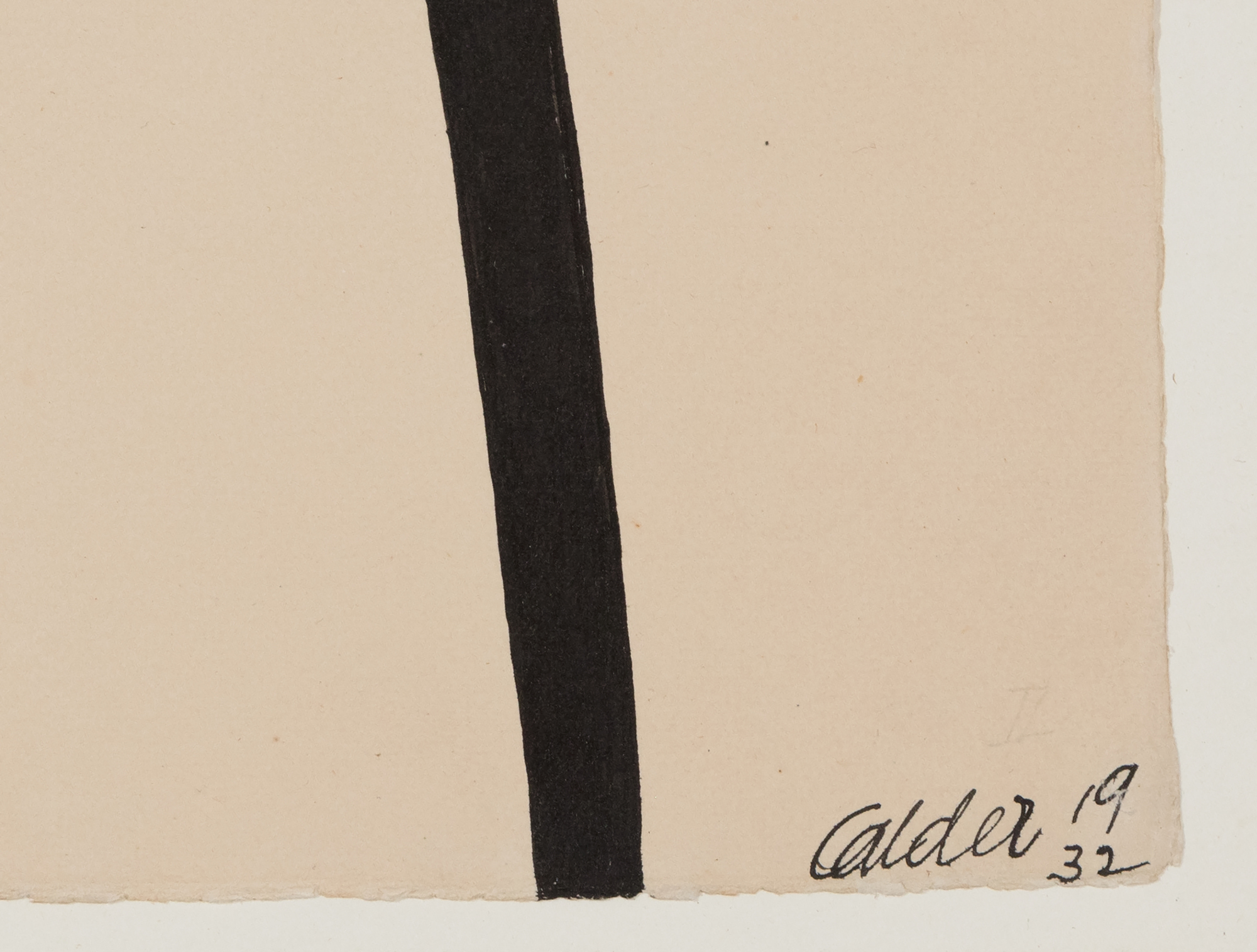
טורנדו בחלל193230 1/2 x 22 1/2 ב. (77.47 x 57.15 ס"מ) דיו על נייר
מקור ומקור
גלריות פרלס, ניו יורק
אוסף פרטי, פלורידה, 1974
"טורנדו בחלל" (1932) של אלכסנדר קלדר הוא רישום נדיר מהרגע המכריע שבו הגדיר מחדש את שפתו האמנותית באמצעות הפשטה ותנועה. היצירה, שאושרה על ידי קרן קלדר (מספר רישום A08417), מורכבת מקווים ספירליים נועזים המקיפים ומצטלבים במסלולים קצביים. צורות מסלוליות אלו מרמזות הן על כוחות טבע והן על דיוק מכני, לוכדות את תחושת התנועה על משטח ישר ומרמזות על הדינמיקה המרחבית של המוביילים המוקדמים ביותר שלו.


הרישום מגלם את הקסם של קלדר מהאנרגיות הבלתי נראות של היקום, והופך נייר לשדה של תנועה ומרחב. חסכון הקו מדגיש מחווה וקצב במקום תיאור, ומזקק את חקירותיו לקומפוזיציה גרפית בעלת בהירות מרשימה. דף זה שייך לקבוצת עבודות מפתח על נייר משנת 1932, כולל "מנהרת החלל" ו"תנועה בחלל", שבהן קלדר התנסה ברישום כאמצעי לבחינת רעיונות שימצאו מאוחר יותר ביטוי בצורה תלת-ממדית.


מקור הציור מחזק עוד יותר את חשיבותה של יצירה זו. "טורנדו בחלל" נרכשה באמצעות סוחר הוותיק של קלדר בניו יורק, קלאוס פרל מגלריית פרלס, ונשארה באותו אוסף פרטי במשך למעלה מחמישים שנה. יצירות קרובות מתקופה זו ממוקמות כיום במרכז פומפידו, בגלריה הלאומית לאמנות ובמוזיאון לאמנות מודרנית, דבר המדגיש את הנדירות ואת התהודה ההיסטורית-אמנותית של רישום זה.


© 2023 קרן קלדר, ניו יורק / אגודת זכויות האמנים (ARS), ניו יורק
לברר