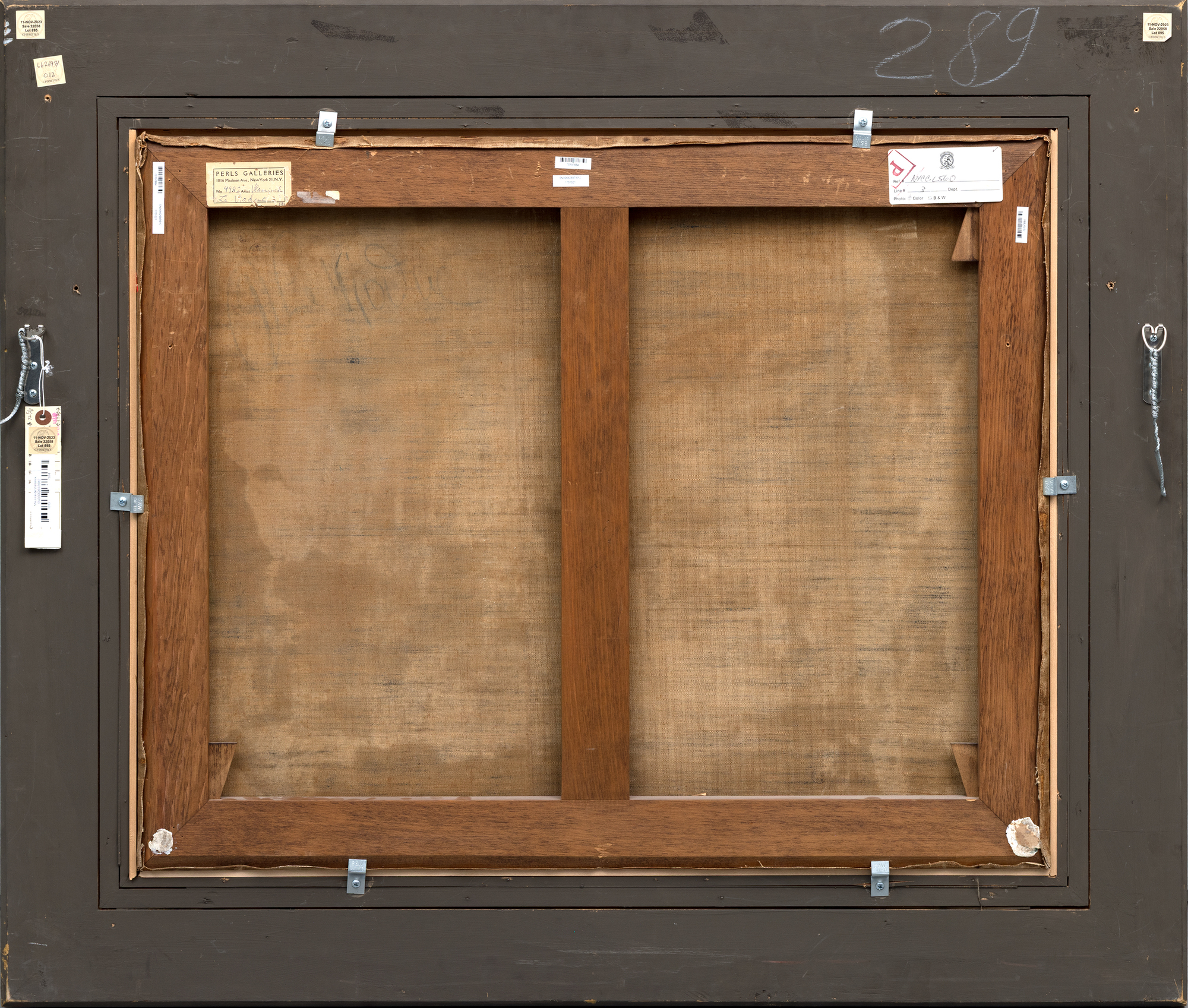
גב

מוריס דה ולמינק (1876-1958)

 
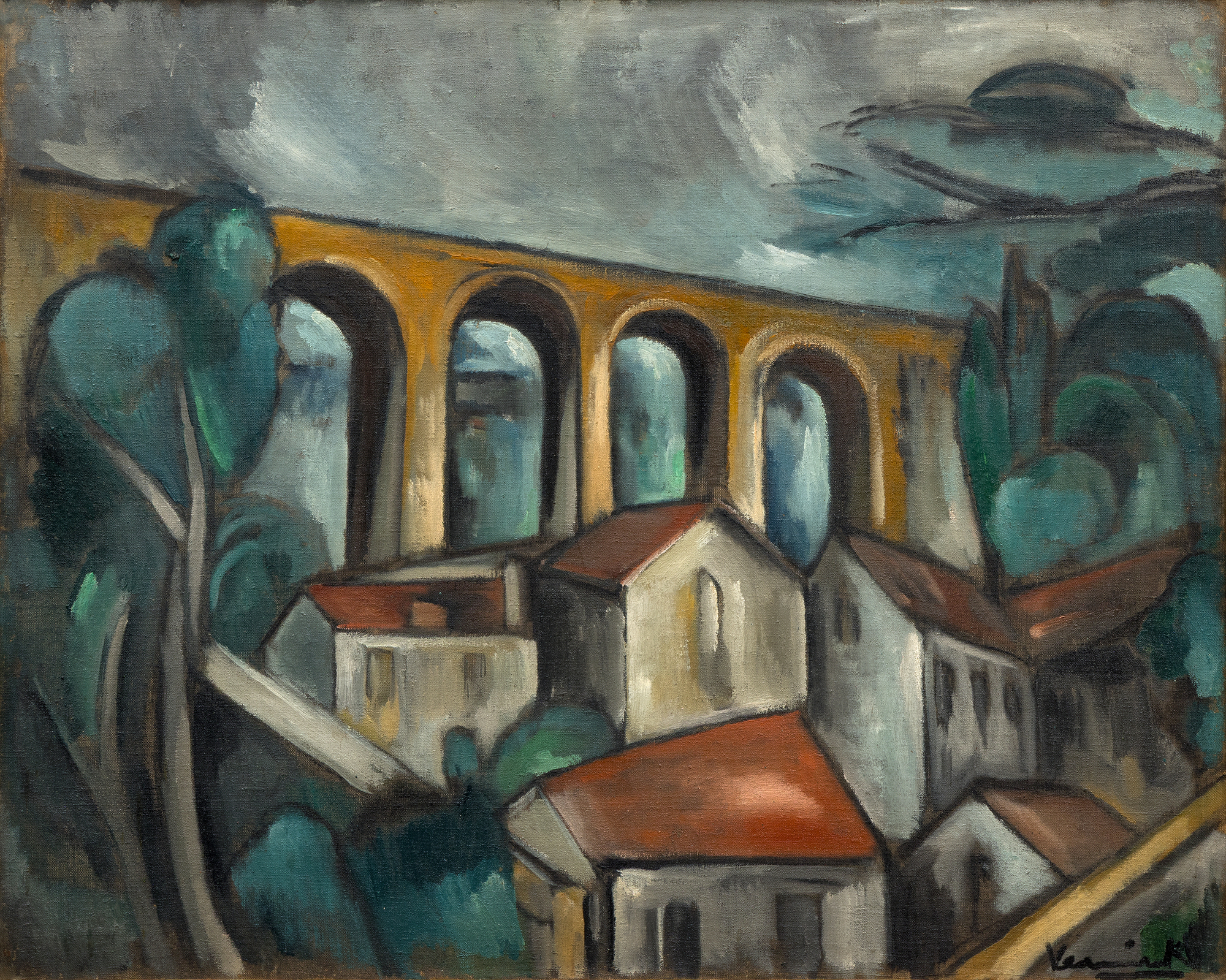
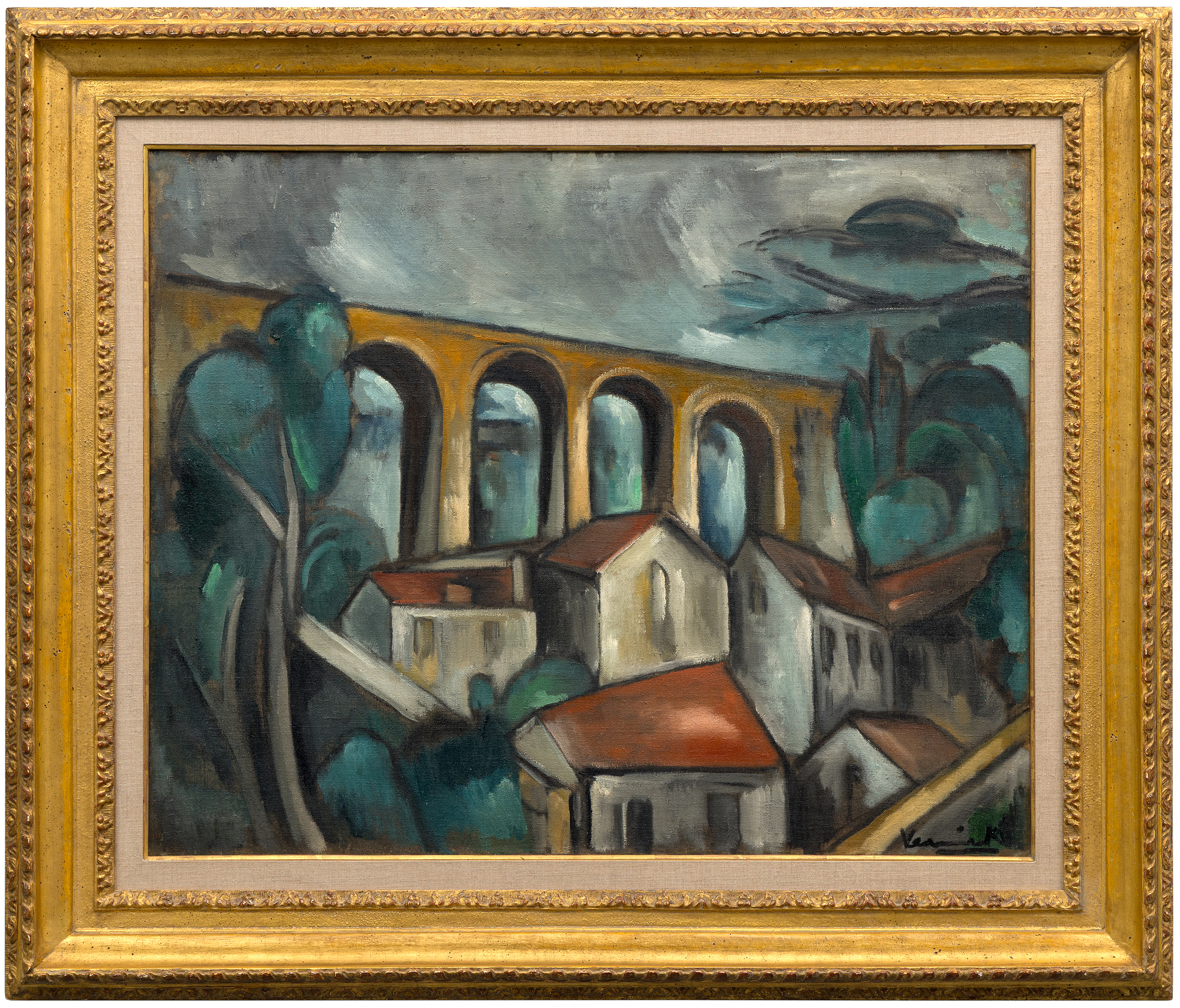
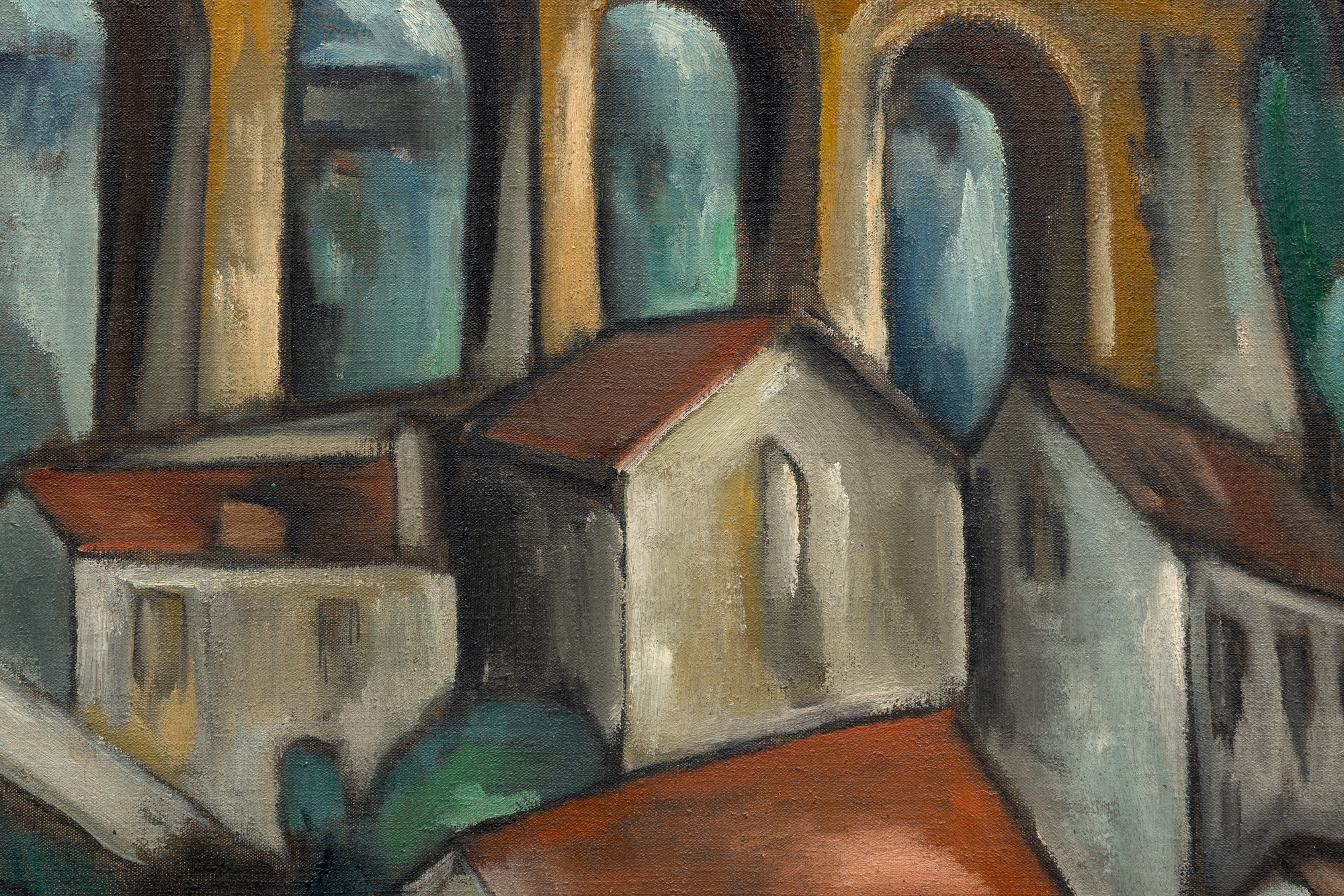
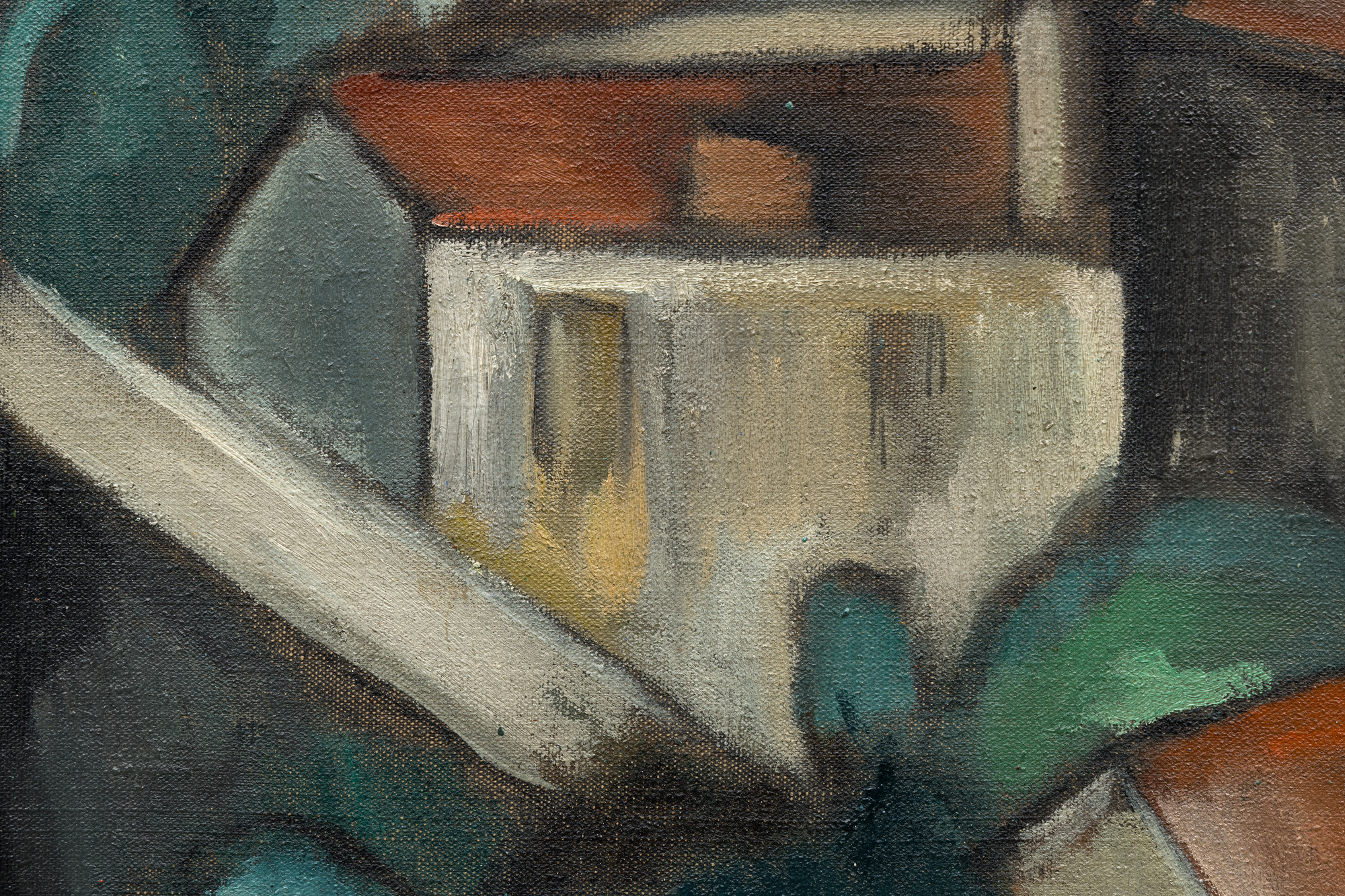
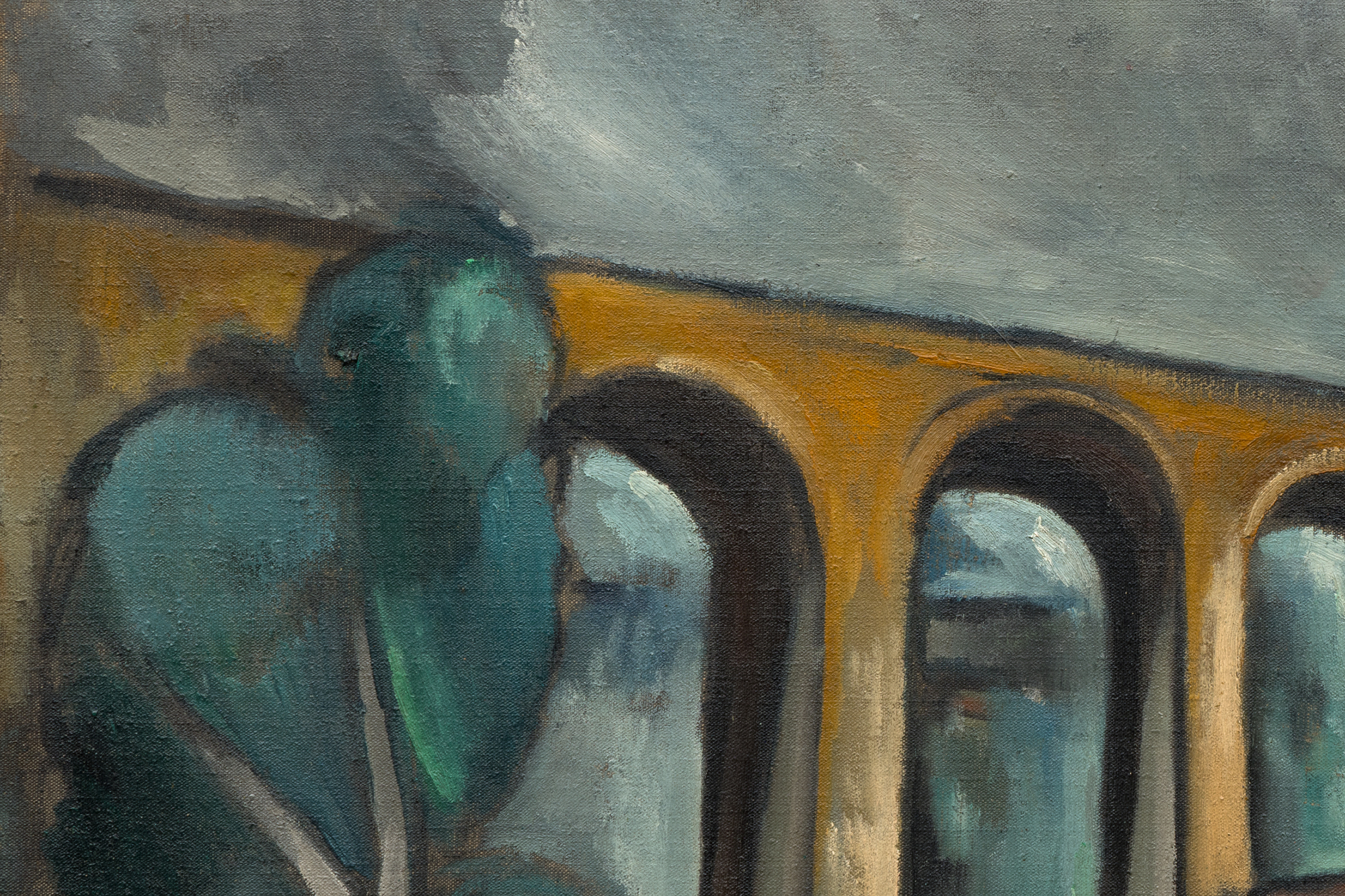
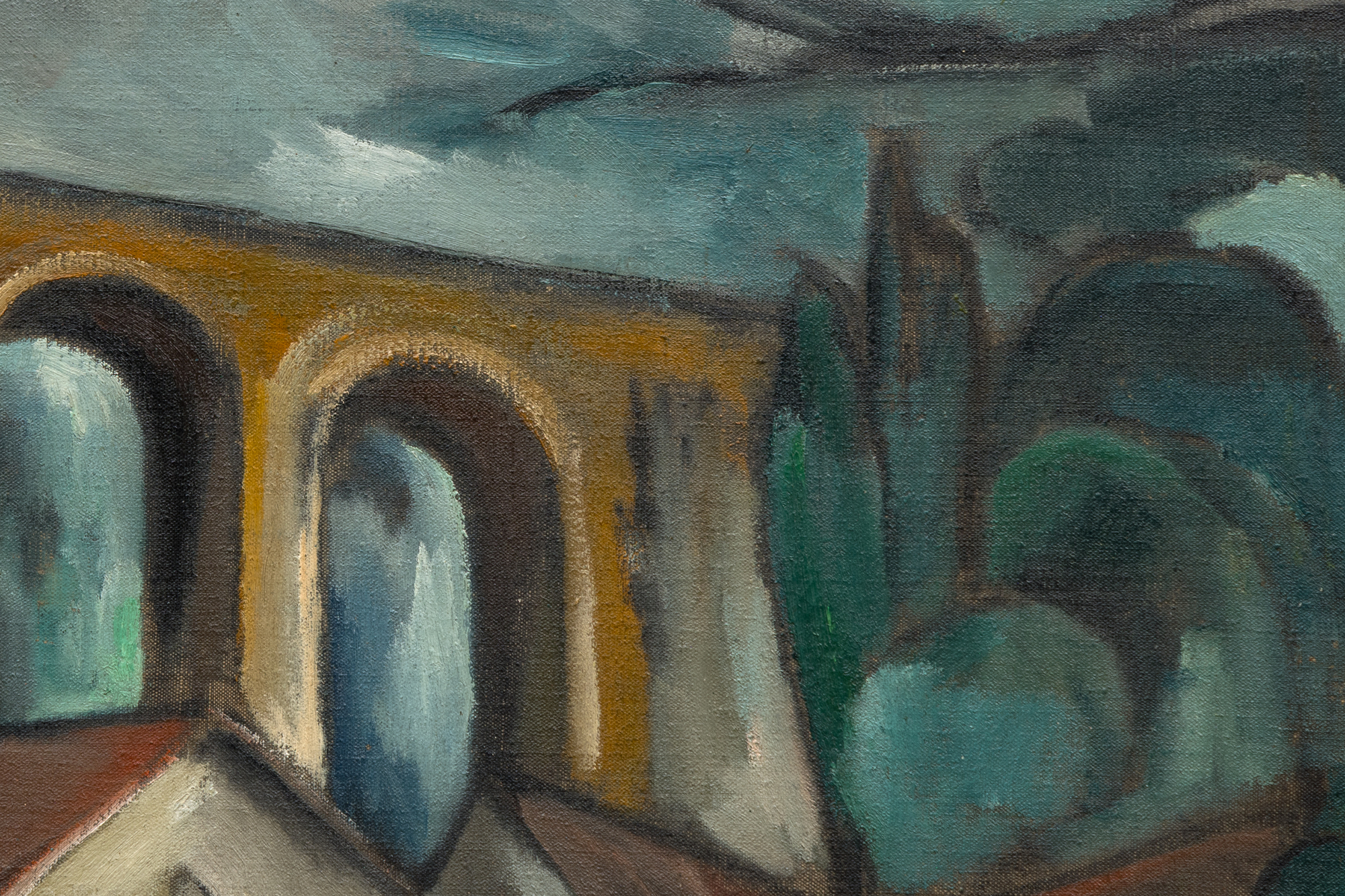
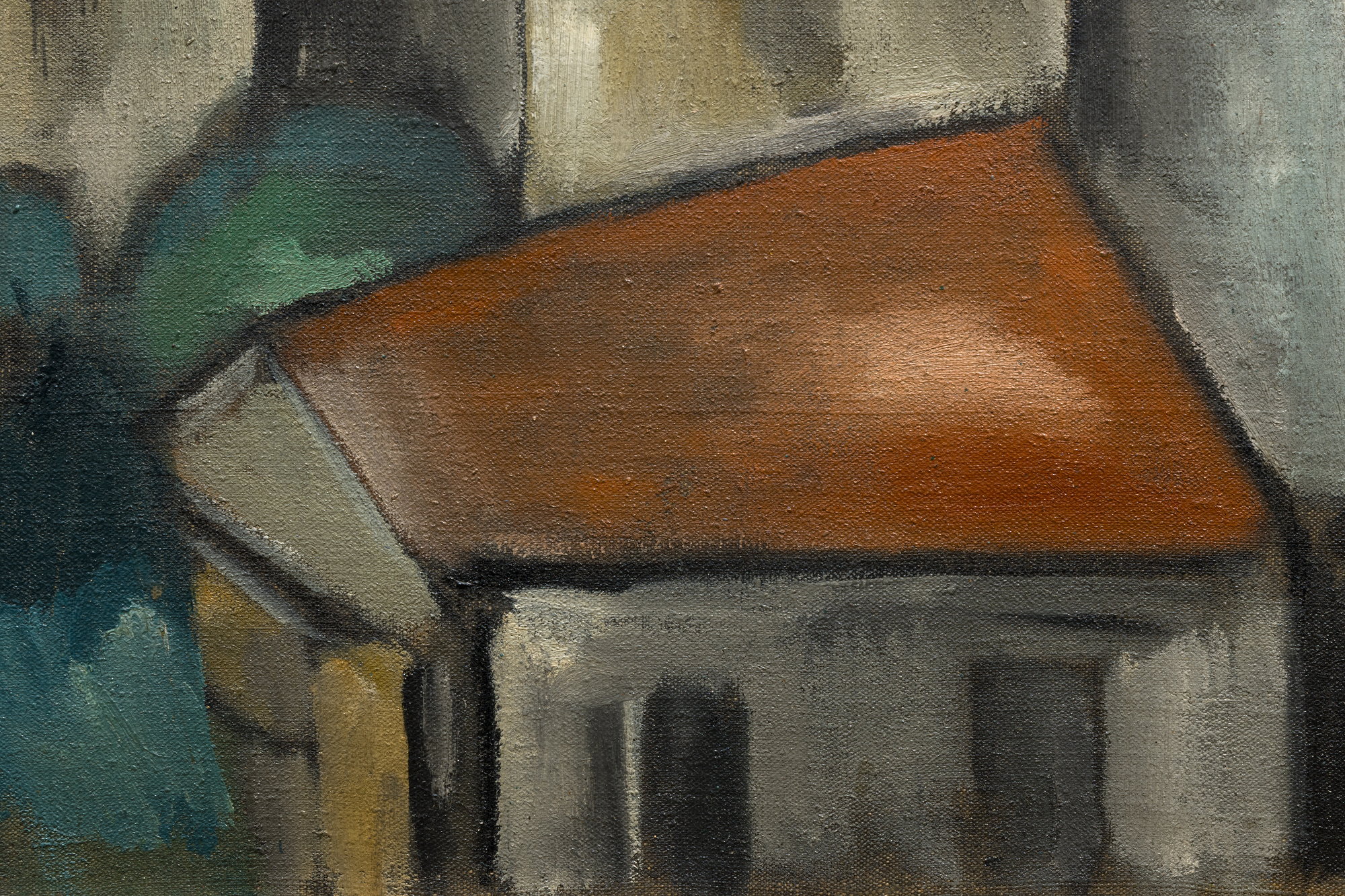
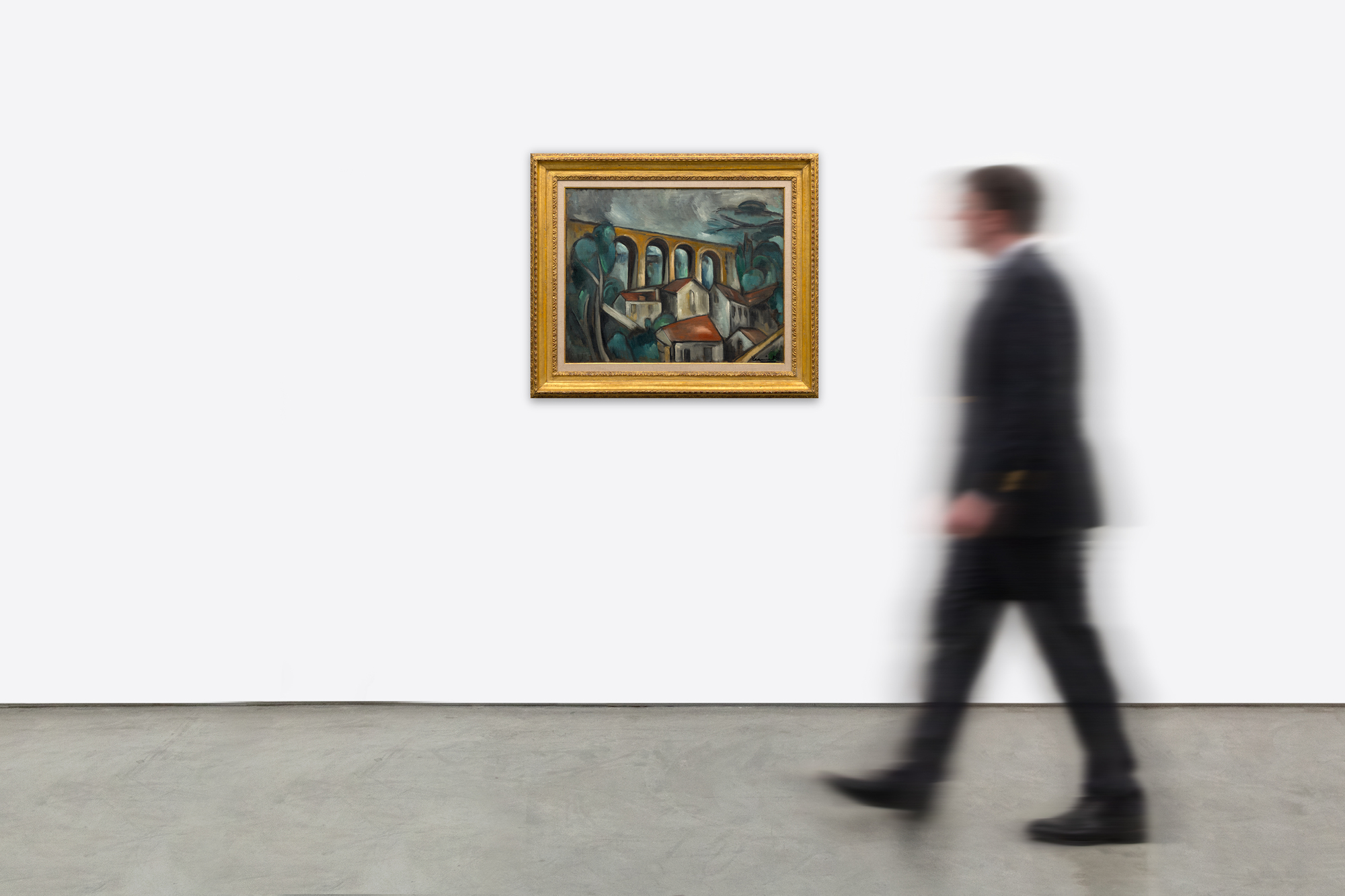
<div><font face=Lato size=3>Maurice de Vlaminck’s <em>Le Viaduc de Saint-Germain-en-Laye</em> (circa 1910-1911), an arresting oil on canvas framed in ornate gold, captures the industrial elegance of a viaduct west of Paris. This work, set to be included in the forthcoming catalogue raisonné by the Wildenstein Plattner Institute, reflects Vlaminck’s fascination with the Saint-Germain area. Known for painting its urban landscapes and Seine-side scenes, he infused this particular scene with angular Cubist elements gaining traction in early 20th-century art. The viaduct, built in the 1880s to carry the Paris-Saint-Germain railway line, looms with golden arches against a turbulent gray sky, its unyielding structure juxtaposed with the fractured rooflines of quaint village houses. </font></div><br><br><div><font face=Lato size=3> </font></div><br><br><div><font face=Lato size=3>Vlaminck’s bold brushstrokes and muted palette create a textured, almost sculptural effect, with trees and rooftops rendered in dynamic, faceted shapes. The overcast sky enhances the scene’s ambient intensity, while the viaduct’s arches dominate, symbolizing modernity amid rural charm. This work exemplifies his early Fauvist roots evolving into Cubist influences, showcasing a pioneering style. </font></div><br><br><div><font face=Lato size=3> </font></div><br><br><div><font face=Lato size=3>A resident of the region, Vlaminck frequently depicted its evolving landscape, blending tradition with innovation. "Le Viaduc de Saint-Germain-en-Laye" offers collectors a rare glimpse into his transformative period. Its striking composition and historical context make it a compelling addition to any collection, celebrating Vlaminck’s contribution to modern art’s development. </font></div> <div><font face=Lato size=3>Maurice de Vlaminck’s <em>Le Viaduc de Saint-Germain-en-Laye</em> (circa 1910-1911), an arresting oil on canvas framed in ornate gold, captures the industrial elegance of a viaduct west of Paris. This work, set to be included in the forthcoming catalogue raisonné by the Wildenstein Plattner Institute, reflects Vlaminck’s fascination with the Saint-Germain area. Known for painting its urban landscapes and Seine-side scenes, he infused this particular scene with angular Cubist elements gaining traction in early 20th-century art. The viaduct, built in the 1880s to carry the Paris-Saint-Germain railway line, looms with golden arches against a turbulent gray sky, its unyielding structure juxtaposed with the fractured rooflines of quaint village houses. </font></div><br><br><div><font face=Lato size=3> </font></div><br><br><div><font face=Lato size=3>Vlaminck’s bold brushstrokes and muted palette create a textured, almost sculptural effect, with trees and rooftops rendered in dynamic, faceted shapes. The overcast sky enhances the scene’s ambient intensity, while the viaduct’s arches dominate, symbolizing modernity amid rural charm. This work exemplifies his early Fauvist roots evolving into Cubist influences, showcasing a pioneering style. </font></div><br><br><div><font face=Lato size=3> </font></div><br><br><div><font face=Lato size=3>A resident of the region, Vlaminck frequently depicted its evolving landscape, blending tradition with innovation. "Le Viaduc de Saint-Germain-en-Laye" offers collectors a rare glimpse into his transformative period. Its striking composition and historical context make it a compelling addition to any collection, celebrating Vlaminck’s contribution to modern art’s development. </font></div> <div><font face=Lato size=3>Maurice de Vlaminck’s <em>Le Viaduc de Saint-Germain-en-Laye</em> (circa 1910-1911), an arresting oil on canvas framed in ornate gold, captures the industrial elegance of a viaduct west of Paris. This work, set to be included in the forthcoming catalogue raisonné by the Wildenstein Plattner Institute, reflects Vlaminck’s fascination with the Saint-Germain area. Known for painting its urban landscapes and Seine-side scenes, he infused this particular scene with angular Cubist elements gaining traction in early 20th-century art. The viaduct, built in the 1880s to carry the Paris-Saint-Germain railway line, looms with golden arches against a turbulent gray sky, its unyielding structure juxtaposed with the fractured rooflines of quaint village houses. </font></div><br><br><div><font face=Lato size=3> </font></div><br><br><div><font face=Lato size=3>Vlaminck’s bold brushstrokes and muted palette create a textured, almost sculptural effect, with trees and rooftops rendered in dynamic, faceted shapes. The overcast sky enhances the scene’s ambient intensity, while the viaduct’s arches dominate, symbolizing modernity amid rural charm. This work exemplifies his early Fauvist roots evolving into Cubist influences, showcasing a pioneering style. </font></div><br><br><div><font face=Lato size=3> </font></div><br><br><div><font face=Lato size=3>A resident of the region, Vlaminck frequently depicted its evolving landscape, blending tradition with innovation. "Le Viaduc de Saint-Germain-en-Laye" offers collectors a rare glimpse into his transformative period. Its striking composition and historical context make it a compelling addition to any collection, celebrating Vlaminck’s contribution to modern art’s development. </font></div> <div><font face=Lato size=3>Maurice de Vlaminck’s <em>Le Viaduc de Saint-Germain-en-Laye</em> (circa 1910-1911), an arresting oil on canvas framed in ornate gold, captures the industrial elegance of a viaduct west of Paris. This work, set to be included in the forthcoming catalogue raisonné by the Wildenstein Plattner Institute, reflects Vlaminck’s fascination with the Saint-Germain area. Known for painting its urban landscapes and Seine-side scenes, he infused this particular scene with angular Cubist elements gaining traction in early 20th-century art. The viaduct, built in the 1880s to carry the Paris-Saint-Germain railway line, looms with golden arches against a turbulent gray sky, its unyielding structure juxtaposed with the fractured rooflines of quaint village houses. </font></div><br><br><div><font face=Lato size=3> </font></div><br><br><div><font face=Lato size=3>Vlaminck’s bold brushstrokes and muted palette create a textured, almost sculptural effect, with trees and rooftops rendered in dynamic, faceted shapes. The overcast sky enhances the scene’s ambient intensity, while the viaduct’s arches dominate, symbolizing modernity amid rural charm. This work exemplifies his early Fauvist roots evolving into Cubist influences, showcasing a pioneering style. </font></div><br><br><div><font face=Lato size=3> </font></div><br><br><div><font face=Lato size=3>A resident of the region, Vlaminck frequently depicted its evolving landscape, blending tradition with innovation. "Le Viaduc de Saint-Germain-en-Laye" offers collectors a rare glimpse into his transformative period. Its striking composition and historical context make it a compelling addition to any collection, celebrating Vlaminck’s contribution to modern art’s development. </font></div> <div><font face=Lato size=3>Maurice de Vlaminck’s <em>Le Viaduc de Saint-Germain-en-Laye</em> (circa 1910-1911), an arresting oil on canvas framed in ornate gold, captures the industrial elegance of a viaduct west of Paris. This work, set to be included in the forthcoming catalogue raisonné by the Wildenstein Plattner Institute, reflects Vlaminck’s fascination with the Saint-Germain area. Known for painting its urban landscapes and Seine-side scenes, he infused this particular scene with angular Cubist elements gaining traction in early 20th-century art. The viaduct, built in the 1880s to carry the Paris-Saint-Germain railway line, looms with golden arches against a turbulent gray sky, its unyielding structure juxtaposed with the fractured rooflines of quaint village houses. </font></div><br><br><div><font face=Lato size=3> </font></div><br><br><div><font face=Lato size=3>Vlaminck’s bold brushstrokes and muted palette create a textured, almost sculptural effect, with trees and rooftops rendered in dynamic, faceted shapes. The overcast sky enhances the scene’s ambient intensity, while the viaduct’s arches dominate, symbolizing modernity amid rural charm. This work exemplifies his early Fauvist roots evolving into Cubist influences, showcasing a pioneering style. </font></div><br><br><div><font face=Lato size=3> </font></div><br><br><div><font face=Lato size=3>A resident of the region, Vlaminck frequently depicted its evolving landscape, blending tradition with innovation. "Le Viaduc de Saint-Germain-en-Laye" offers collectors a rare glimpse into his transformative period. Its striking composition and historical context make it a compelling addition to any collection, celebrating Vlaminck’s contribution to modern art’s development. </font></div> <div><font face=Lato size=3>Maurice de Vlaminck’s <em>Le Viaduc de Saint-Germain-en-Laye</em> (circa 1910-1911), an arresting oil on canvas framed in ornate gold, captures the industrial elegance of a viaduct west of Paris. This work, set to be included in the forthcoming catalogue raisonné by the Wildenstein Plattner Institute, reflects Vlaminck’s fascination with the Saint-Germain area. Known for painting its urban landscapes and Seine-side scenes, he infused this particular scene with angular Cubist elements gaining traction in early 20th-century art. The viaduct, built in the 1880s to carry the Paris-Saint-Germain railway line, looms with golden arches against a turbulent gray sky, its unyielding structure juxtaposed with the fractured rooflines of quaint village houses. </font></div><br><br><div><font face=Lato size=3> </font></div><br><br><div><font face=Lato size=3>Vlaminck’s bold brushstrokes and muted palette create a textured, almost sculptural effect, with trees and rooftops rendered in dynamic, faceted shapes. The overcast sky enhances the scene’s ambient intensity, while the viaduct’s arches dominate, symbolizing modernity amid rural charm. This work exemplifies his early Fauvist roots evolving into Cubist influences, showcasing a pioneering style. </font></div><br><br><div><font face=Lato size=3> </font></div><br><br><div><font face=Lato size=3>A resident of the region, Vlaminck frequently depicted its evolving landscape, blending tradition with innovation. "Le Viaduc de Saint-Germain-en-Laye" offers collectors a rare glimpse into his transformative period. Its striking composition and historical context make it a compelling addition to any collection, celebrating Vlaminck’s contribution to modern art’s development. </font></div> <div><font face=Lato size=3>Maurice de Vlaminck’s <em>Le Viaduc de Saint-Germain-en-Laye</em> (circa 1910-1911), an arresting oil on canvas framed in ornate gold, captures the industrial elegance of a viaduct west of Paris. This work, set to be included in the forthcoming catalogue raisonné by the Wildenstein Plattner Institute, reflects Vlaminck’s fascination with the Saint-Germain area. Known for painting its urban landscapes and Seine-side scenes, he infused this particular scene with angular Cubist elements gaining traction in early 20th-century art. The viaduct, built in the 1880s to carry the Paris-Saint-Germain railway line, looms with golden arches against a turbulent gray sky, its unyielding structure juxtaposed with the fractured rooflines of quaint village houses. </font></div><br><br><div><font face=Lato size=3> </font></div><br><br><div><font face=Lato size=3>Vlaminck’s bold brushstrokes and muted palette create a textured, almost sculptural effect, with trees and rooftops rendered in dynamic, faceted shapes. The overcast sky enhances the scene’s ambient intensity, while the viaduct’s arches dominate, symbolizing modernity amid rural charm. This work exemplifies his early Fauvist roots evolving into Cubist influences, showcasing a pioneering style. </font></div><br><br><div><font face=Lato size=3> </font></div><br><br><div><font face=Lato size=3>A resident of the region, Vlaminck frequently depicted its evolving landscape, blending tradition with innovation. "Le Viaduc de Saint-Germain-en-Laye" offers collectors a rare glimpse into his transformative period. Its striking composition and historical context make it a compelling addition to any collection, celebrating Vlaminck’s contribution to modern art’s development. </font></div> <div><font face=Lato size=3>Maurice de Vlaminck’s <em>Le Viaduc de Saint-Germain-en-Laye</em> (circa 1910-1911), an arresting oil on canvas framed in ornate gold, captures the industrial elegance of a viaduct west of Paris. This work, set to be included in the forthcoming catalogue raisonné by the Wildenstein Plattner Institute, reflects Vlaminck’s fascination with the Saint-Germain area. Known for painting its urban landscapes and Seine-side scenes, he infused this particular scene with angular Cubist elements gaining traction in early 20th-century art. The viaduct, built in the 1880s to carry the Paris-Saint-Germain railway line, looms with golden arches against a turbulent gray sky, its unyielding structure juxtaposed with the fractured rooflines of quaint village houses. </font></div><br><br><div><font face=Lato size=3> </font></div><br><br><div><font face=Lato size=3>Vlaminck’s bold brushstrokes and muted palette create a textured, almost sculptural effect, with trees and rooftops rendered in dynamic, faceted shapes. The overcast sky enhances the scene’s ambient intensity, while the viaduct’s arches dominate, symbolizing modernity amid rural charm. This work exemplifies his early Fauvist roots evolving into Cubist influences, showcasing a pioneering style. </font></div><br><br><div><font face=Lato size=3> </font></div><br><br><div><font face=Lato size=3>A resident of the region, Vlaminck frequently depicted its evolving landscape, blending tradition with innovation. "Le Viaduc de Saint-Germain-en-Laye" offers collectors a rare glimpse into his transformative period. Its striking composition and historical context make it a compelling addition to any collection, celebrating Vlaminck’s contribution to modern art’s development. </font></div> <div><font face=Lato size=3>Maurice de Vlaminck’s <em>Le Viaduc de Saint-Germain-en-Laye</em> (circa 1910-1911), an arresting oil on canvas framed in ornate gold, captures the industrial elegance of a viaduct west of Paris. This work, set to be included in the forthcoming catalogue raisonné by the Wildenstein Plattner Institute, reflects Vlaminck’s fascination with the Saint-Germain area. Known for painting its urban landscapes and Seine-side scenes, he infused this particular scene with angular Cubist elements gaining traction in early 20th-century art. The viaduct, built in the 1880s to carry the Paris-Saint-Germain railway line, looms with golden arches against a turbulent gray sky, its unyielding structure juxtaposed with the fractured rooflines of quaint village houses. </font></div><br><br><div><font face=Lato size=3> </font></div><br><br><div><font face=Lato size=3>Vlaminck’s bold brushstrokes and muted palette create a textured, almost sculptural effect, with trees and rooftops rendered in dynamic, faceted shapes. The overcast sky enhances the scene’s ambient intensity, while the viaduct’s arches dominate, symbolizing modernity amid rural charm. This work exemplifies his early Fauvist roots evolving into Cubist influences, showcasing a pioneering style. </font></div><br><br><div><font face=Lato size=3> </font></div><br><br><div><font face=Lato size=3>A resident of the region, Vlaminck frequently depicted its evolving landscape, blending tradition with innovation. "Le Viaduc de Saint-Germain-en-Laye" offers collectors a rare glimpse into his transformative period. Its striking composition and historical context make it a compelling addition to any collection, celebrating Vlaminck’s contribution to modern art’s development. </font></div> <div><font face=Lato size=3>Maurice de Vlaminck’s <em>Le Viaduc de Saint-Germain-en-Laye</em> (circa 1910-1911), an arresting oil on canvas framed in ornate gold, captures the industrial elegance of a viaduct west of Paris. This work, set to be included in the forthcoming catalogue raisonné by the Wildenstein Plattner Institute, reflects Vlaminck’s fascination with the Saint-Germain area. Known for painting its urban landscapes and Seine-side scenes, he infused this particular scene with angular Cubist elements gaining traction in early 20th-century art. The viaduct, built in the 1880s to carry the Paris-Saint-Germain railway line, looms with golden arches against a turbulent gray sky, its unyielding structure juxtaposed with the fractured rooflines of quaint village houses. </font></div><br><br><div><font face=Lato size=3> </font></div><br><br><div><font face=Lato size=3>Vlaminck’s bold brushstrokes and muted palette create a textured, almost sculptural effect, with trees and rooftops rendered in dynamic, faceted shapes. The overcast sky enhances the scene’s ambient intensity, while the viaduct’s arches dominate, symbolizing modernity amid rural charm. This work exemplifies his early Fauvist roots evolving into Cubist influences, showcasing a pioneering style. </font></div><br><br><div><font face=Lato size=3> </font></div><br><br><div><font face=Lato size=3>A resident of the region, Vlaminck frequently depicted its evolving landscape, blending tradition with innovation. "Le Viaduc de Saint-Germain-en-Laye" offers collectors a rare glimpse into his transformative period. Its striking composition and historical context make it a compelling addition to any collection, celebrating Vlaminck’s contribution to modern art’s development. </font></div>
Le Viaduc de Saint-Germain-en-Laye 1910-1911 26 x 32 x 1 אינץ' (66.04 x 81.28 x 2.54 ס"מ) שמן על בד
מקור ומקור
ורנר רושר, קלן
גלריות פארק-ברנט בע"מ, ניו יורק, 17 באפריל 1969, פריט 143
גלריית מרסל ברנהיים, פריז
גלריות פרלס, ניו יורק
אוסף פרטי, נרכש מהנ"ל, בערך 1993
תערוכה
Tokyo, Galerie Nichido and Osaka, Shin Daibiru, Vlaminck, October-November 1966, No. 10
ספרות
גלרי ניצ'ידו, ולמינק, טוקיו, 1966, מס'. 10, מאויר (מתוארך 1918 וכותרתו Viaduc)
"ויאדוקט סן ז'רמן אן ליי" (Le Viaduc de Saint-Germain-en-Laye) מאת מוריס דה ולמינק (בערך 1910-1911), ציור שמן עוצר נשימה על בד ממוסגר בזהב מעוטר, לוכד את האלגנטיות התעשייתית של ויאדוקט ממערב לפריז. יצירה זו, שעתידה להיכלל בקטלוג רייסון הקרוב של מכון וילדנשטיין פלטנר, משקפת את הקסם של ולמינק לאזור סן ז'רמן. הוא נודע בציור נופיו העירוניים וסצנותיו לצד הסיין, והחדיר לסצנה המסוימת הזו אלמנטים קוביסטיים זוויתיים שצברו תאוצה באמנות של תחילת המאה ה-20. הוויאדוקט, שנבנה בשנות ה-80 של המאה ה-19 כדי לשאת את קו הרכבת פריז-סן ז'רמן, מתנשא בקשתות זהובות על רקע שמיים אפורים סוערים, מבנהו העקשני ניצב לצד גגות שבורים של בתי כפר ציוריים.


משיכות המכחול הנועזות והפלטה העמומה של ולמינק יוצרות אפקט טקסטורי, כמעט פיסולי, עם עצים וגגות המעוצבים בצורות דינמיות ומשולבות. השמיים המעוננים משפרים את עוצמת הסביבה של הסצנה, בעוד קשתות הוויאדוקט שולטות, ומסמלות מודרניות בתוך קסם כפרי. עבודה זו מדגימה את שורשיו הפוביסטיים המוקדמים שהתפתחו להשפעות קוביסטיות, ומציגה סגנון חלוצי.


תושב האזור, ולמינק תיאר לעתים קרובות את נופו המתפתח, תוך שילוב מסורת עם חדשנות. "הוויאדוק דה סן ז'רמן אן ליי" מציע לאספנים הצצה נדירה לתקופתו הטרנספורמטיבית. הקומפוזיציה המרשימה וההקשר ההיסטורי שלה הופכים אותה לתוספת משכנעת לכל אוסף, וחוגגת את תרומתו של ולמינק להתפתחות האמנות המודרנית.
לברר