גב

ג'ון מרין (1870-1953)

 
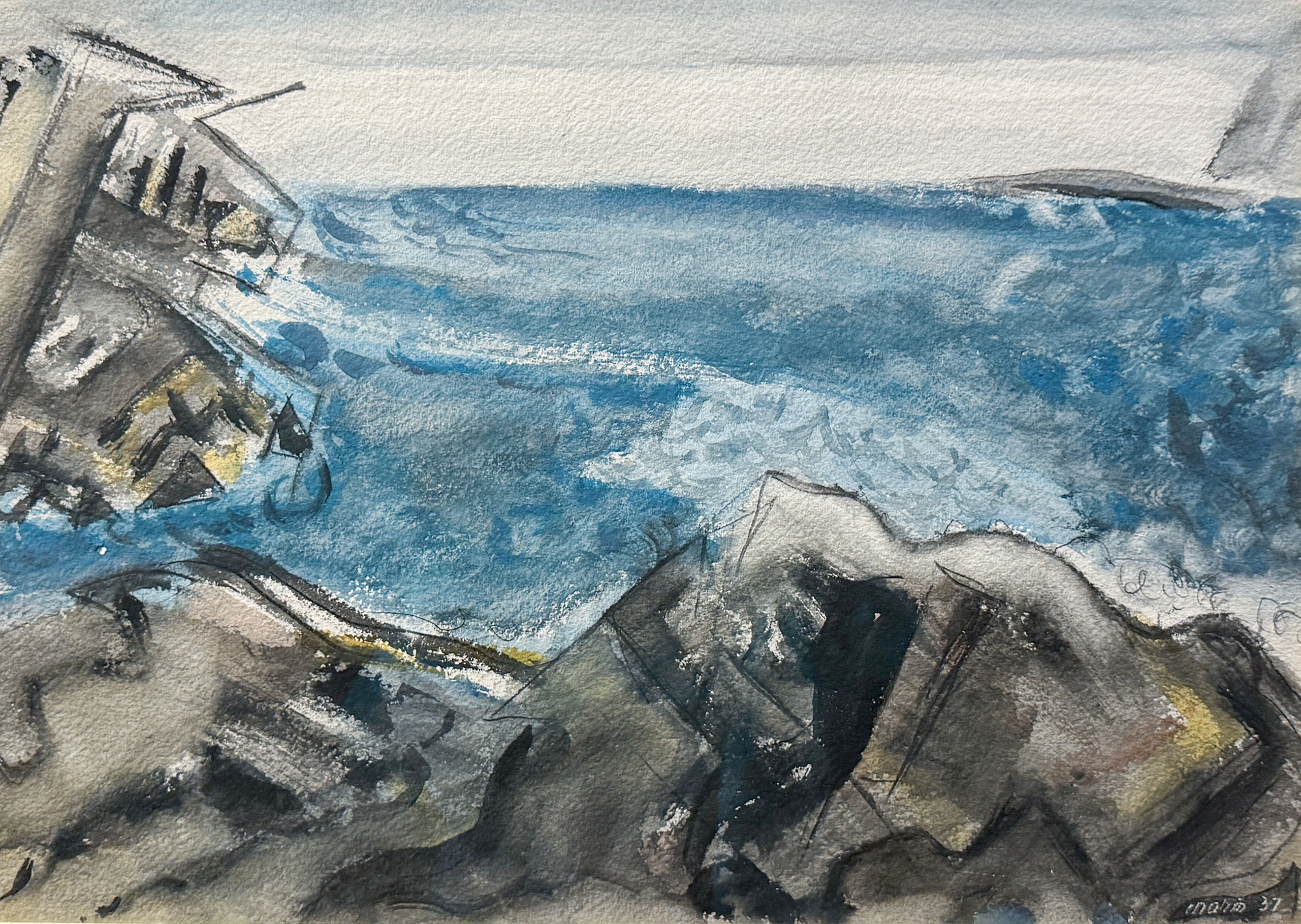
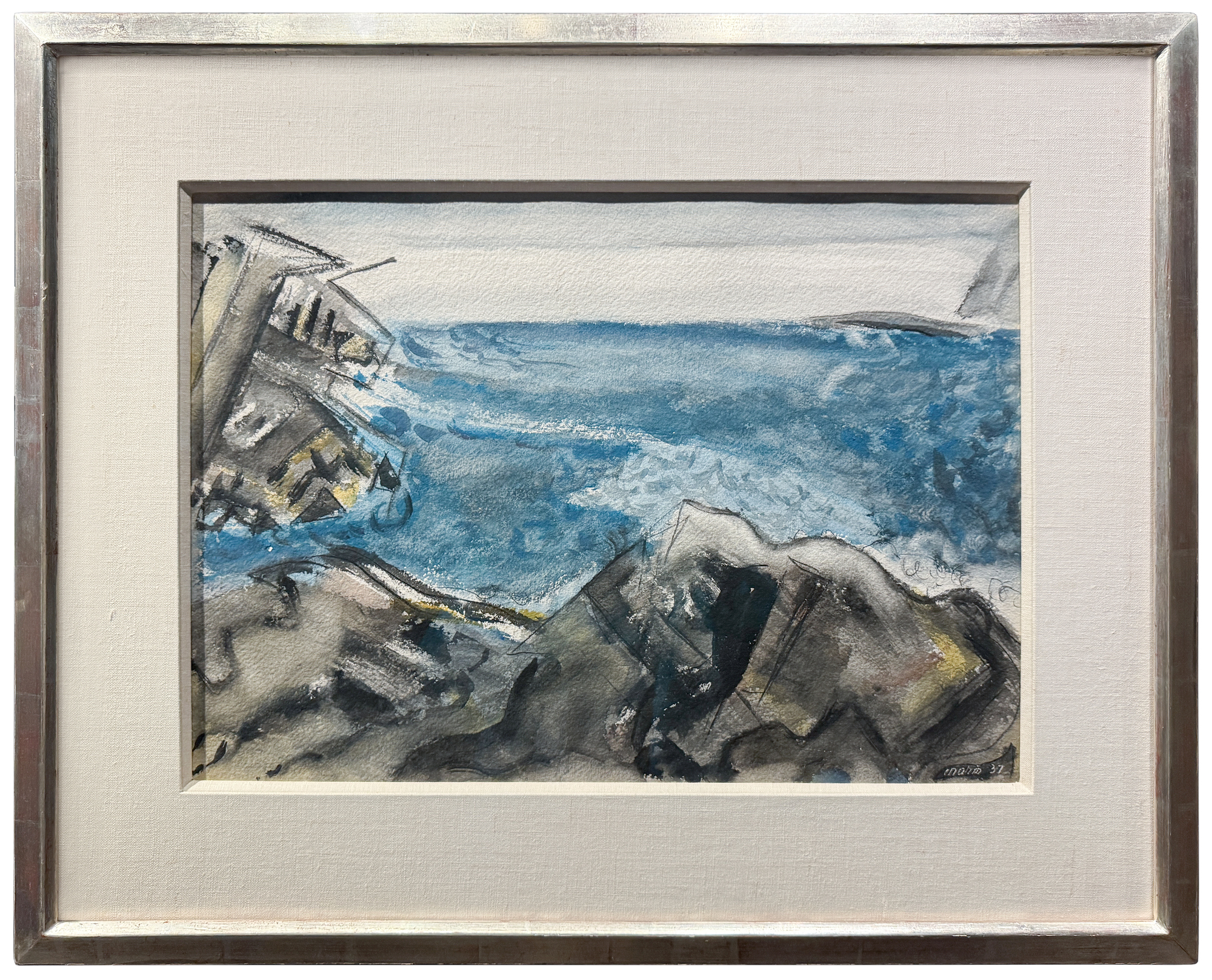
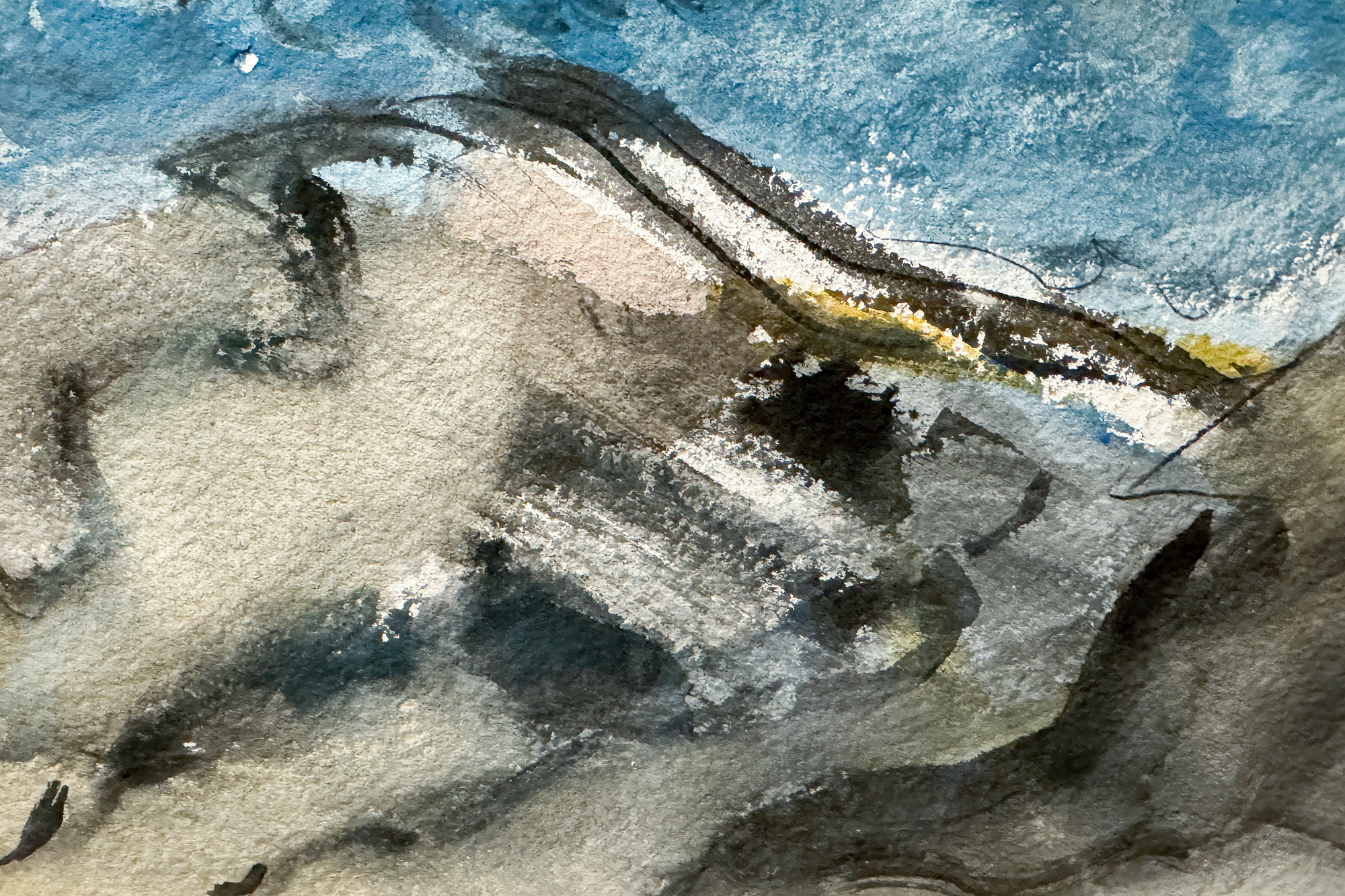
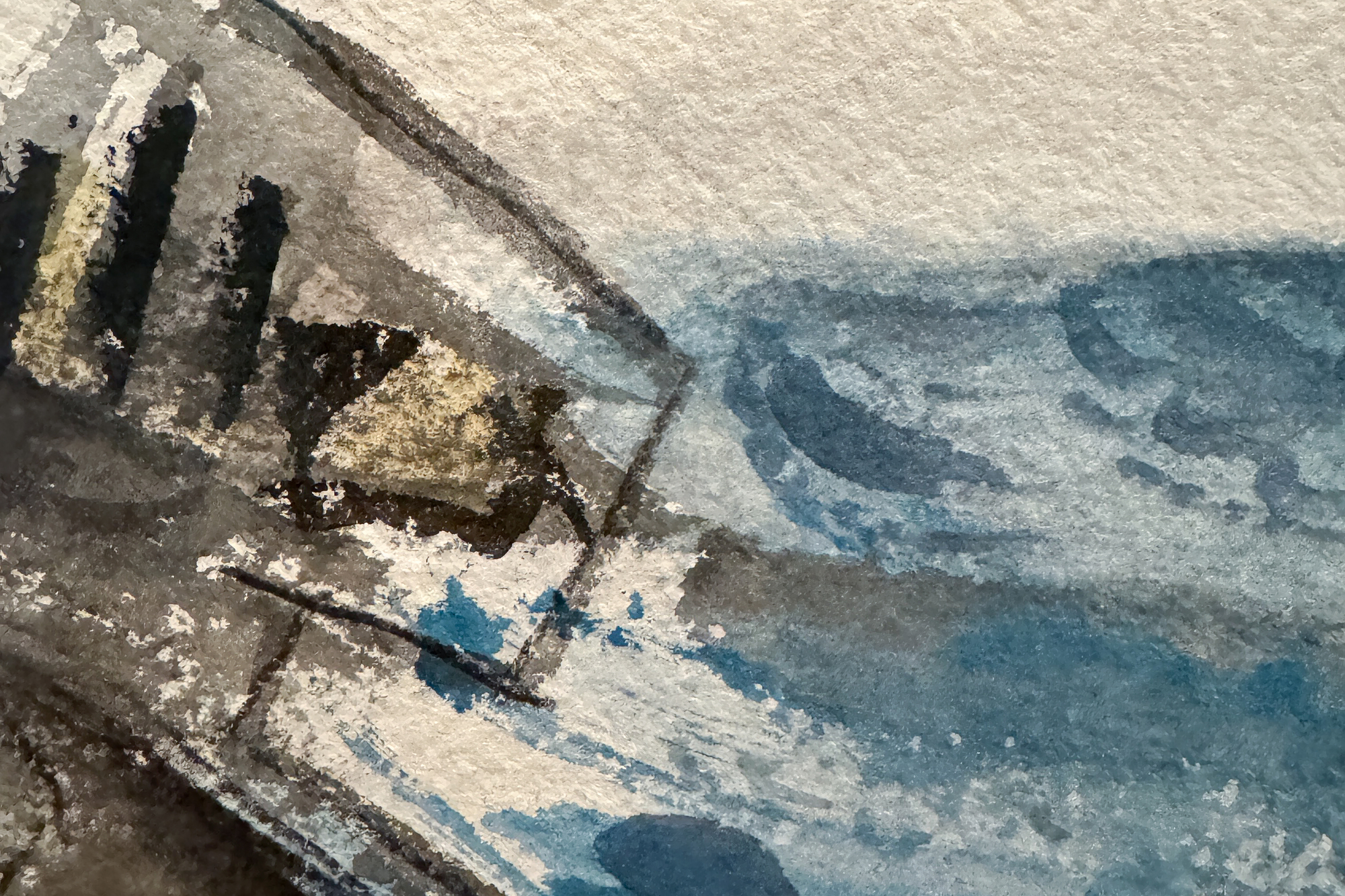
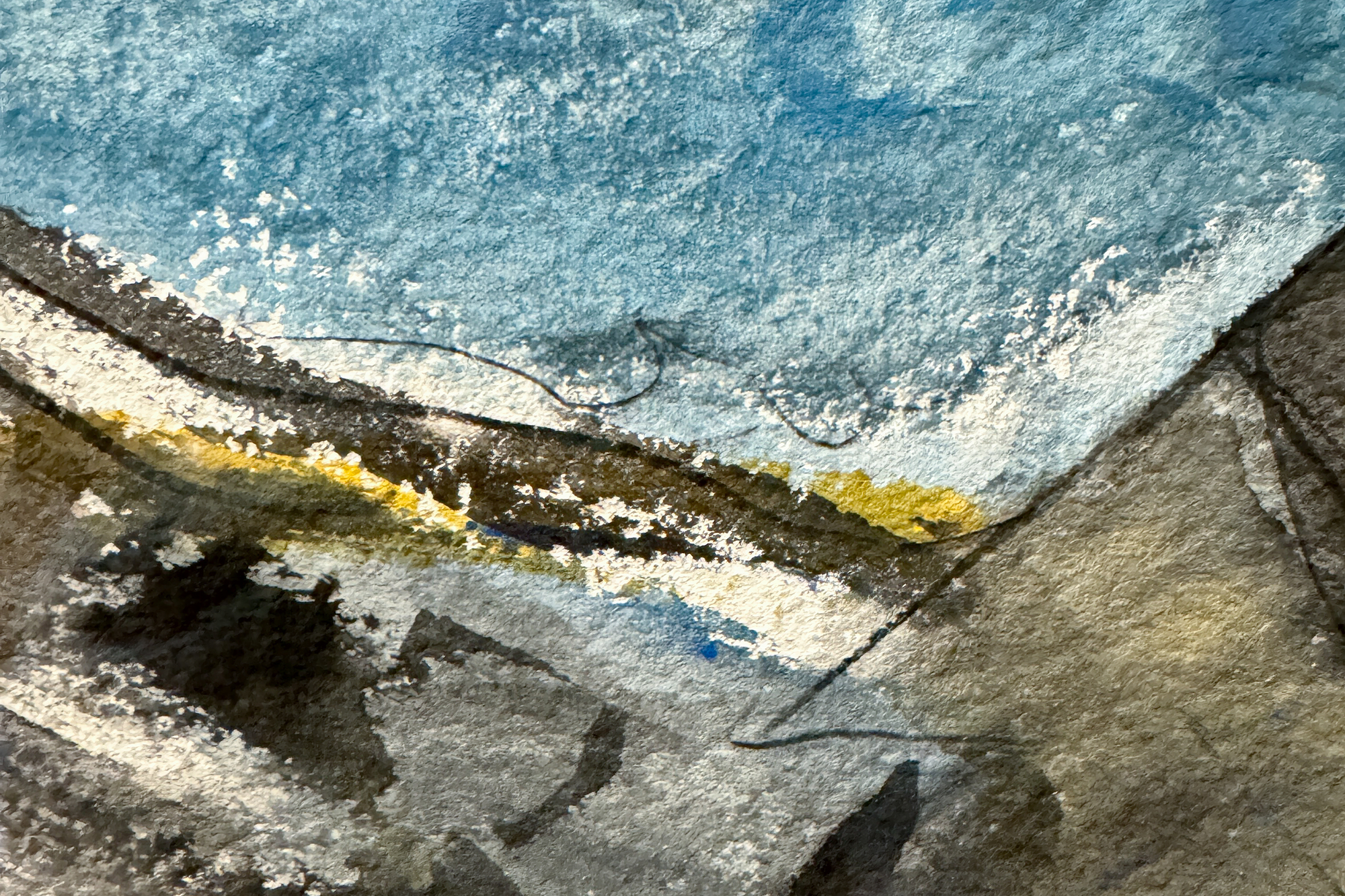
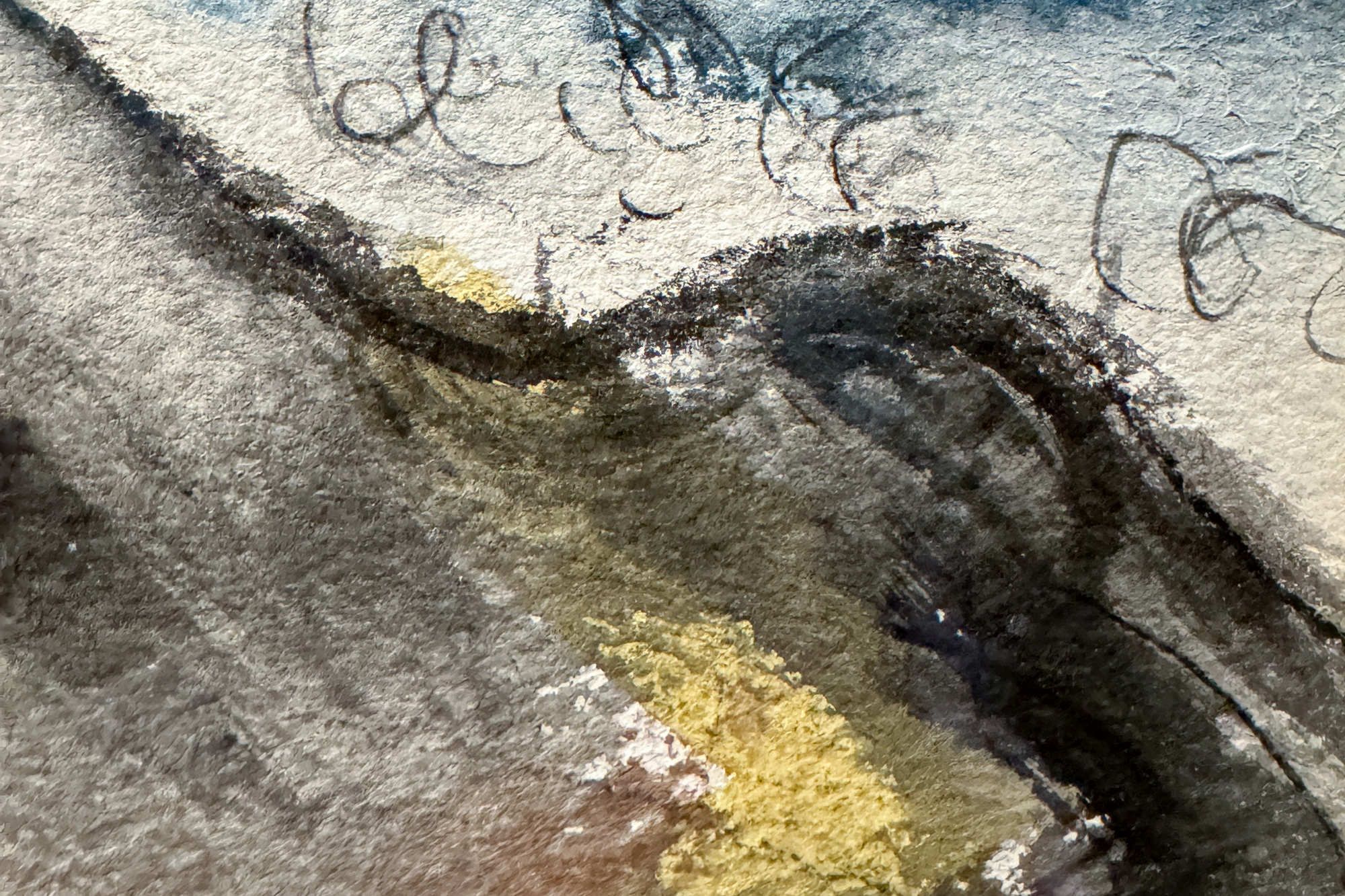
<div>John Marin’s "Sea Movement, Maine" (1937) exemplifies his dynamic approach to watercolor, a medium he transformed into one of the most expressive vehicles of early American modernism. Painted during his mature period, the work captures the restless energy of the Maine coast—a subject Marin returned to repeatedly as a source of inspiration. Quick, gestural strokes convey the surging sea and jagged rocks, while washes of deep blue, gray, and black evoke both immediacy and atmosphere. Marin’s hallmark ability to fuse abstraction with observation is evident here: the composition is at once faithful to the rhythms of the natural world and liberated in its expressive freedom. </div><br><br><div> </div><br><br><div>The significance of this work is underscored by its inclusion in Sheldon Reich’s 1970 catalogue raisonné (no. 37.19) and its exhibition history in two museum shows, affirming its place within Marin’s celebrated body of Maine seascapes. "Sea Movement, Maine" stands as a vivid testament to the artist’s lifelong pursuit of translating nature’s vitality into painterly form. </div> <div>John Marin’s "Sea Movement, Maine" (1937) exemplifies his dynamic approach to watercolor, a medium he transformed into one of the most expressive vehicles of early American modernism. Painted during his mature period, the work captures the restless energy of the Maine coast—a subject Marin returned to repeatedly as a source of inspiration. Quick, gestural strokes convey the surging sea and jagged rocks, while washes of deep blue, gray, and black evoke both immediacy and atmosphere. Marin’s hallmark ability to fuse abstraction with observation is evident here: the composition is at once faithful to the rhythms of the natural world and liberated in its expressive freedom. </div><br><br><div> </div><br><br><div>The significance of this work is underscored by its inclusion in Sheldon Reich’s 1970 catalogue raisonné (no. 37.19) and its exhibition history in two museum shows, affirming its place within Marin’s celebrated body of Maine seascapes. "Sea Movement, Maine" stands as a vivid testament to the artist’s lifelong pursuit of translating nature’s vitality into painterly form. </div> <div>John Marin’s "Sea Movement, Maine" (1937) exemplifies his dynamic approach to watercolor, a medium he transformed into one of the most expressive vehicles of early American modernism. Painted during his mature period, the work captures the restless energy of the Maine coast—a subject Marin returned to repeatedly as a source of inspiration. Quick, gestural strokes convey the surging sea and jagged rocks, while washes of deep blue, gray, and black evoke both immediacy and atmosphere. Marin’s hallmark ability to fuse abstraction with observation is evident here: the composition is at once faithful to the rhythms of the natural world and liberated in its expressive freedom. </div><br><br><div> </div><br><br><div>The significance of this work is underscored by its inclusion in Sheldon Reich’s 1970 catalogue raisonné (no. 37.19) and its exhibition history in two museum shows, affirming its place within Marin’s celebrated body of Maine seascapes. "Sea Movement, Maine" stands as a vivid testament to the artist’s lifelong pursuit of translating nature’s vitality into painterly form. </div> <div>John Marin’s "Sea Movement, Maine" (1937) exemplifies his dynamic approach to watercolor, a medium he transformed into one of the most expressive vehicles of early American modernism. Painted during his mature period, the work captures the restless energy of the Maine coast—a subject Marin returned to repeatedly as a source of inspiration. Quick, gestural strokes convey the surging sea and jagged rocks, while washes of deep blue, gray, and black evoke both immediacy and atmosphere. Marin’s hallmark ability to fuse abstraction with observation is evident here: the composition is at once faithful to the rhythms of the natural world and liberated in its expressive freedom. </div><br><br><div> </div><br><br><div>The significance of this work is underscored by its inclusion in Sheldon Reich’s 1970 catalogue raisonné (no. 37.19) and its exhibition history in two museum shows, affirming its place within Marin’s celebrated body of Maine seascapes. "Sea Movement, Maine" stands as a vivid testament to the artist’s lifelong pursuit of translating nature’s vitality into painterly form. </div> <div>John Marin’s "Sea Movement, Maine" (1937) exemplifies his dynamic approach to watercolor, a medium he transformed into one of the most expressive vehicles of early American modernism. Painted during his mature period, the work captures the restless energy of the Maine coast—a subject Marin returned to repeatedly as a source of inspiration. Quick, gestural strokes convey the surging sea and jagged rocks, while washes of deep blue, gray, and black evoke both immediacy and atmosphere. Marin’s hallmark ability to fuse abstraction with observation is evident here: the composition is at once faithful to the rhythms of the natural world and liberated in its expressive freedom. </div><br><br><div> </div><br><br><div>The significance of this work is underscored by its inclusion in Sheldon Reich’s 1970 catalogue raisonné (no. 37.19) and its exhibition history in two museum shows, affirming its place within Marin’s celebrated body of Maine seascapes. "Sea Movement, Maine" stands as a vivid testament to the artist’s lifelong pursuit of translating nature’s vitality into painterly form. </div> <div>John Marin’s "Sea Movement, Maine" (1937) exemplifies his dynamic approach to watercolor, a medium he transformed into one of the most expressive vehicles of early American modernism. Painted during his mature period, the work captures the restless energy of the Maine coast—a subject Marin returned to repeatedly as a source of inspiration. Quick, gestural strokes convey the surging sea and jagged rocks, while washes of deep blue, gray, and black evoke both immediacy and atmosphere. Marin’s hallmark ability to fuse abstraction with observation is evident here: the composition is at once faithful to the rhythms of the natural world and liberated in its expressive freedom. </div><br><br><div> </div><br><br><div>The significance of this work is underscored by its inclusion in Sheldon Reich’s 1970 catalogue raisonné (no. 37.19) and its exhibition history in two museum shows, affirming its place within Marin’s celebrated body of Maine seascapes. "Sea Movement, Maine" stands as a vivid testament to the artist’s lifelong pursuit of translating nature’s vitality into painterly form. </div> <div>John Marin’s "Sea Movement, Maine" (1937) exemplifies his dynamic approach to watercolor, a medium he transformed into one of the most expressive vehicles of early American modernism. Painted during his mature period, the work captures the restless energy of the Maine coast—a subject Marin returned to repeatedly as a source of inspiration. Quick, gestural strokes convey the surging sea and jagged rocks, while washes of deep blue, gray, and black evoke both immediacy and atmosphere. Marin’s hallmark ability to fuse abstraction with observation is evident here: the composition is at once faithful to the rhythms of the natural world and liberated in its expressive freedom. </div><br><br><div> </div><br><br><div>The significance of this work is underscored by its inclusion in Sheldon Reich’s 1970 catalogue raisonné (no. 37.19) and its exhibition history in two museum shows, affirming its place within Marin’s celebrated body of Maine seascapes. "Sea Movement, Maine" stands as a vivid testament to the artist’s lifelong pursuit of translating nature’s vitality into painterly form. </div> <div>John Marin’s "Sea Movement, Maine" (1937) exemplifies his dynamic approach to watercolor, a medium he transformed into one of the most expressive vehicles of early American modernism. Painted during his mature period, the work captures the restless energy of the Maine coast—a subject Marin returned to repeatedly as a source of inspiration. Quick, gestural strokes convey the surging sea and jagged rocks, while washes of deep blue, gray, and black evoke both immediacy and atmosphere. Marin’s hallmark ability to fuse abstraction with observation is evident here: the composition is at once faithful to the rhythms of the natural world and liberated in its expressive freedom. </div><br><br><div> </div><br><br><div>The significance of this work is underscored by its inclusion in Sheldon Reich’s 1970 catalogue raisonné (no. 37.19) and its exhibition history in two museum shows, affirming its place within Marin’s celebrated body of Maine seascapes. "Sea Movement, Maine" stands as a vivid testament to the artist’s lifelong pursuit of translating nature’s vitality into painterly form. </div> <div>John Marin’s "Sea Movement, Maine" (1937) exemplifies his dynamic approach to watercolor, a medium he transformed into one of the most expressive vehicles of early American modernism. Painted during his mature period, the work captures the restless energy of the Maine coast—a subject Marin returned to repeatedly as a source of inspiration. Quick, gestural strokes convey the surging sea and jagged rocks, while washes of deep blue, gray, and black evoke both immediacy and atmosphere. Marin’s hallmark ability to fuse abstraction with observation is evident here: the composition is at once faithful to the rhythms of the natural world and liberated in its expressive freedom. </div><br><br><div> </div><br><br><div>The significance of this work is underscored by its inclusion in Sheldon Reich’s 1970 catalogue raisonné (no. 37.19) and its exhibition history in two museum shows, affirming its place within Marin’s celebrated body of Maine seascapes. "Sea Movement, Maine" stands as a vivid testament to the artist’s lifelong pursuit of translating nature’s vitality into painterly form. </div> <div>John Marin’s "Sea Movement, Maine" (1937) exemplifies his dynamic approach to watercolor, a medium he transformed into one of the most expressive vehicles of early American modernism. Painted during his mature period, the work captures the restless energy of the Maine coast—a subject Marin returned to repeatedly as a source of inspiration. Quick, gestural strokes convey the surging sea and jagged rocks, while washes of deep blue, gray, and black evoke both immediacy and atmosphere. Marin’s hallmark ability to fuse abstraction with observation is evident here: the composition is at once faithful to the rhythms of the natural world and liberated in its expressive freedom. </div><br><br><div> </div><br><br><div>The significance of this work is underscored by its inclusion in Sheldon Reich’s 1970 catalogue raisonné (no. 37.19) and its exhibition history in two museum shows, affirming its place within Marin’s celebrated body of Maine seascapes. "Sea Movement, Maine" stands as a vivid testament to the artist’s lifelong pursuit of translating nature’s vitality into painterly form. </div>
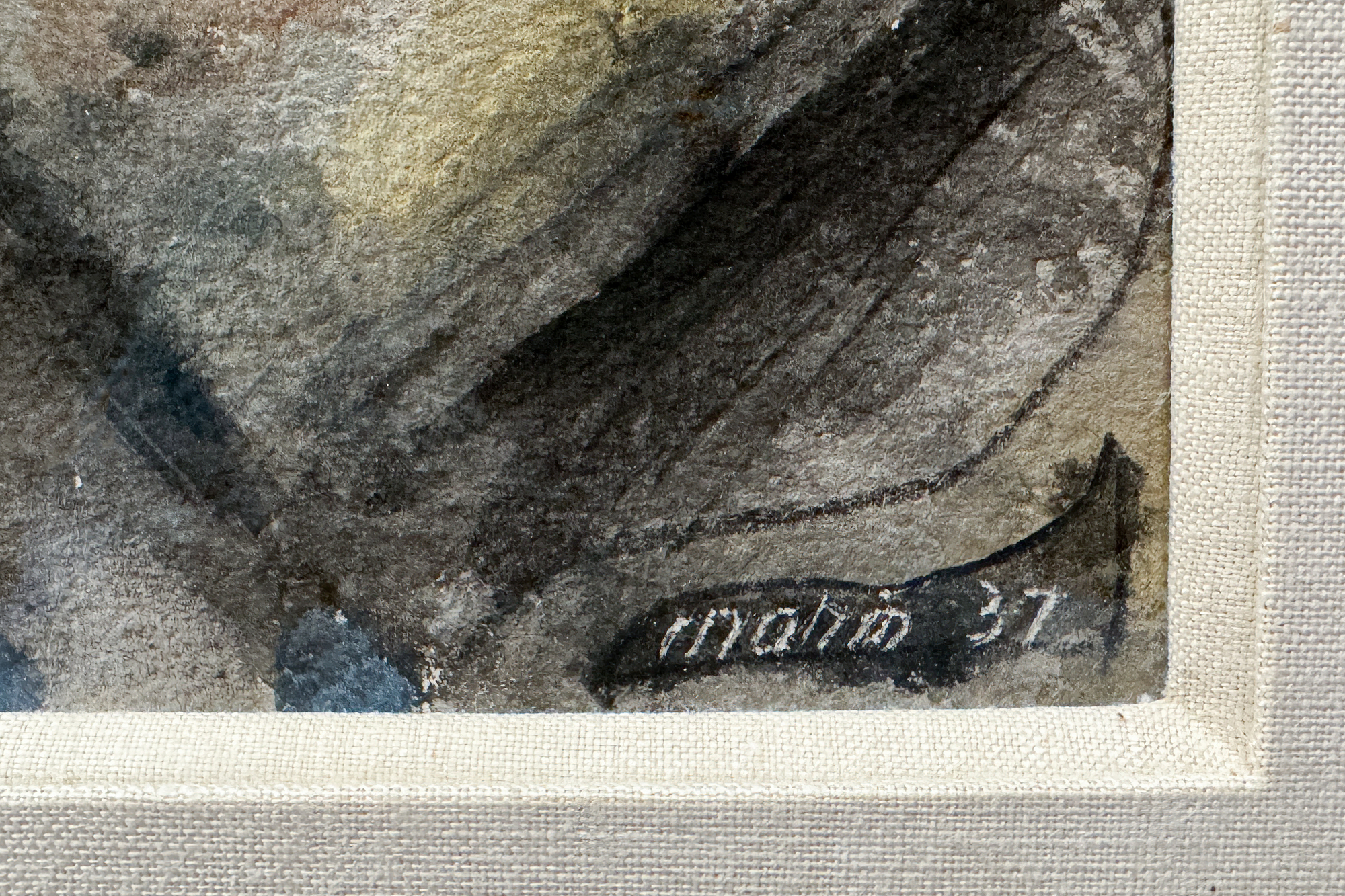
תנועת ים, מיין 1937 , 39.37 x 52.07 ס"מ ( 15 1/2 x 20 1/2 אינץ' ) , צבעי מים על נייר
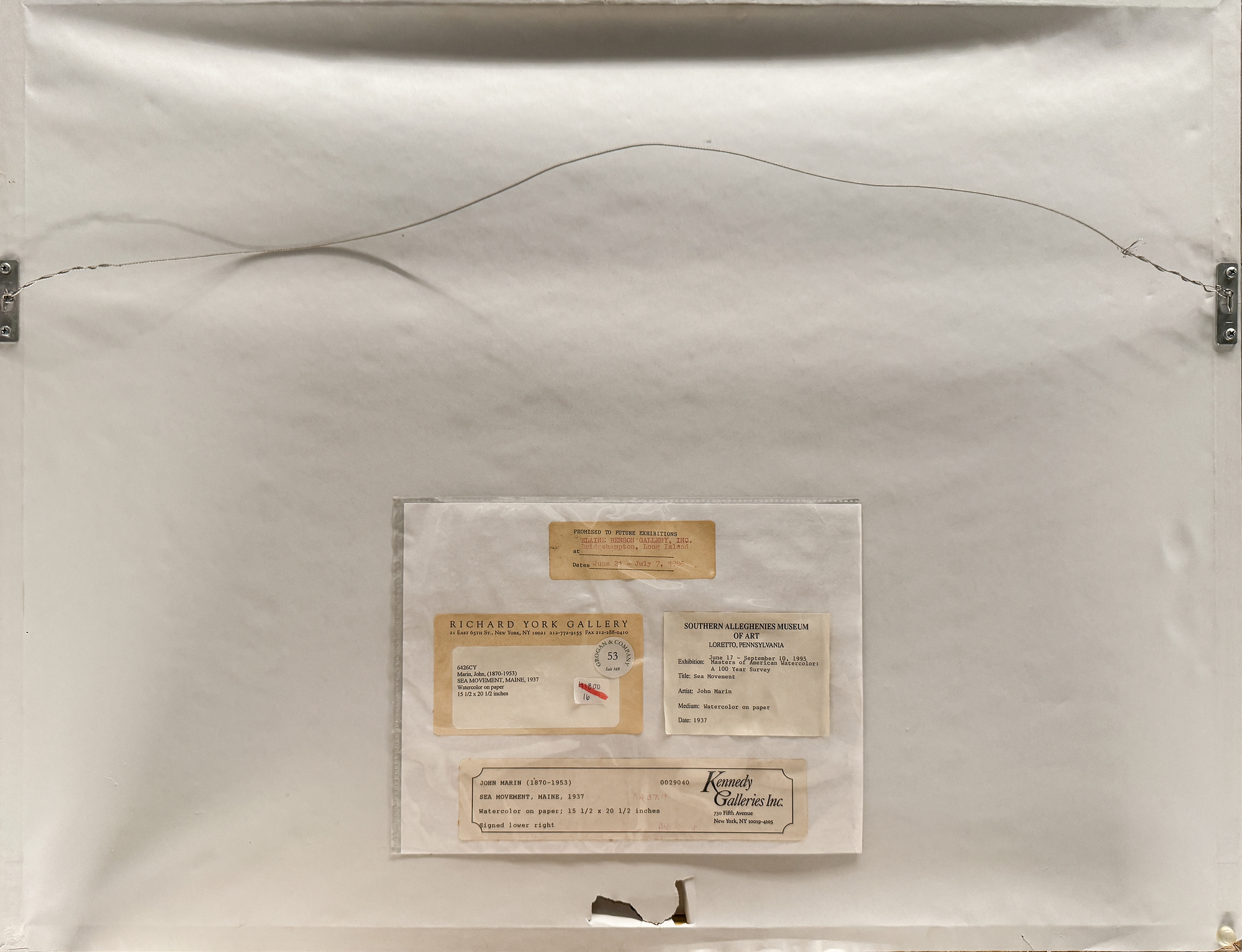
מקור ומקור
עיזבונו של האמן
גלריות קנדי, ניו יורק
גלריית ריצ'רד יורק, ניו יורק
פרספקטיבה של מיין: אוסף של ג'נטלמן מניו אינגלנד
גרוגן ושות', 17 בנובמבר 2019, פריט 53
אוסף פרטי
תערוכה
ניו יורק, גלריית וילארד, ציורי ג'ון מרין משנות ה-30, 2 במרץ - 3 באפריל, 1965
לורטו, פנסילבניה, מוזיאון האמנות של דרום אלגניס, אמן צבעי המים האמריקאי: 100 שנה, 17 ביוני - 10 בספטמבר, 1995
ווטרוויל, מיין, מוזיאון האמנות של מכללת קולבי, ג'ון מרין במיין
... עוד..., 24 ביוני - 27 בספטמבר, 1998, מס' 13
ספרות
שלדון רייך, ג'ון מרין: ניתוח סגנוני וקטלוג סיבוך, 1970, כרך 2, מס' 37.19
... פחות...
"תנועת הים, מיין" (1937) של ג'ון מרין מדגים את גישתו הדינמית לצבעי מים, מדיום אותו הפך לאחד מכלי הרכב האקספרסיביים ביותר של המודרניזם האמריקאי המוקדם. היצירה, שצוירה בתקופתו הבוגרת, לוכדת את האנרגיה חסרת המנוחה של חוף מיין - נושא שמרין חזר אליו שוב ושוב כמקור השראה. משיכות מהירות ומחוותיות מעבירות את הים הגואה והסלעים המשוננים, בעוד שטיפות של כחול עמוק, אפור ושחור מעוררות גם מיידיות וגם אווירה. יכולתו הייחודית של מרין למזג הפשטה עם התבוננות ניכרת כאן: הקומפוזיציה נאמנה בו זמנית למקצבי העולם הטבעי ומשוחררת בחופש האקספרסיבי שלה.


חשיבותה של יצירה זו מודגשת על ידי הכללתה בקטלוג הקיום של שלדון רייך משנת 1970 (מס' 37.19) ותולדות התערוכות שלה בשתי תערוכות מוזיאליות, המאשרות את מקומה בגוף נופי הים המפורסם של מרין במיין. "תנועת ים, מיין" עומדת כעדות חיה למרדף חייו של האמן לתרגם את חיוניות הטבע לצורה ציורית.
לברר