גב

לין מאפ דרקסלר (1928-1999)

$475,000

 
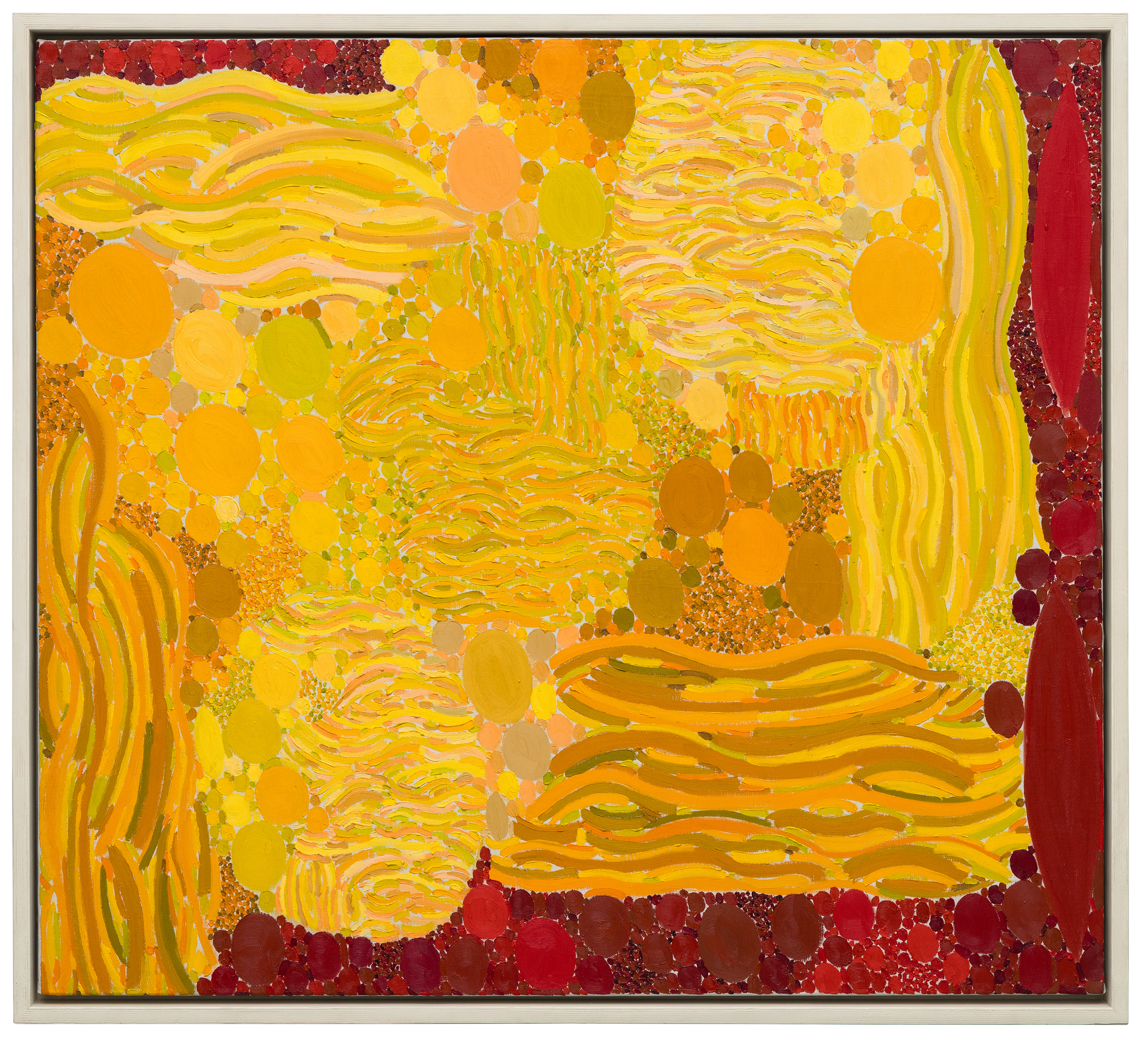
<div><font face=Lato size=3 color=black>Lynne Mapp Drexler’s <em>Spring Sun</em> (1971) exemplifies the vibrant, lyrical abstraction that has brought her renewed recognition in recent years. Composed of concentric circles, cascading brushstrokes, and radiant hues of yellow, orange, and red, the canvas pulses with the rhythm of light and season. Drexler’s painterly vocabulary—layering gestural strokes over pointillist clusters—creates a dynamic surface that evokes both natural phenomena and musical structure, reflecting her lifelong love of symphonic composition.</font></div><br><br><div><font face=Lato size=3> </font></div><br><br><div><font face=Lato size=3 color=black>Painted in 1971, <em>Spring Sun</em> belongs to an important moment in Drexler’s career when she was synthesizing her studies under Hans Hofmann and Robert Motherwell into a personal visual language rooted in color and pattern. The immersive composition suggests not only the brilliance of spring sunlight but also the expressive intensity with which Drexler approached abstraction.</font></div><br><br><div><font face=Lato size=3> </font></div><br><br><div><font face=Lato size=3 color=black>Her contributions have been increasingly recognized by major institutions. The Portland Museum of Art presented a landmark retrospective, <em>Lynne Drexler: Color Notes</em> (2022–2023), and her work has also been exhibited at MoMA PS1 and the Parrish Art Museum. <em>Spring Sun</em> demonstrates why Drexler is now regarded as a vital figure within the second generation of Abstract Expressionists, whose bold use of color and structure continues to resonate with contemporary audiences.</font></div> <div><font face=Lato size=3 color=black>Lynne Mapp Drexler’s <em>Spring Sun</em> (1971) exemplifies the vibrant, lyrical abstraction that has brought her renewed recognition in recent years. Composed of concentric circles, cascading brushstrokes, and radiant hues of yellow, orange, and red, the canvas pulses with the rhythm of light and season. Drexler’s painterly vocabulary—layering gestural strokes over pointillist clusters—creates a dynamic surface that evokes both natural phenomena and musical structure, reflecting her lifelong love of symphonic composition.</font></div><br><br><div><font face=Lato size=3> </font></div><br><br><div><font face=Lato size=3 color=black>Painted in 1971, <em>Spring Sun</em> belongs to an important moment in Drexler’s career when she was synthesizing her studies under Hans Hofmann and Robert Motherwell into a personal visual language rooted in color and pattern. The immersive composition suggests not only the brilliance of spring sunlight but also the expressive intensity with which Drexler approached abstraction.</font></div><br><br><div><font face=Lato size=3> </font></div><br><br><div><font face=Lato size=3 color=black>Her contributions have been increasingly recognized by major institutions. The Portland Museum of Art presented a landmark retrospective, <em>Lynne Drexler: Color Notes</em> (2022–2023), and her work has also been exhibited at MoMA PS1 and the Parrish Art Museum. <em>Spring Sun</em> demonstrates why Drexler is now regarded as a vital figure within the second generation of Abstract Expressionists, whose bold use of color and structure continues to resonate with contemporary audiences.</font></div> <div><font face=Lato size=3 color=black>Lynne Mapp Drexler’s <em>Spring Sun</em> (1971) exemplifies the vibrant, lyrical abstraction that has brought her renewed recognition in recent years. Composed of concentric circles, cascading brushstrokes, and radiant hues of yellow, orange, and red, the canvas pulses with the rhythm of light and season. Drexler’s painterly vocabulary—layering gestural strokes over pointillist clusters—creates a dynamic surface that evokes both natural phenomena and musical structure, reflecting her lifelong love of symphonic composition.</font></div><br><br><div><font face=Lato size=3> </font></div><br><br><div><font face=Lato size=3 color=black>Painted in 1971, <em>Spring Sun</em> belongs to an important moment in Drexler’s career when she was synthesizing her studies under Hans Hofmann and Robert Motherwell into a personal visual language rooted in color and pattern. The immersive composition suggests not only the brilliance of spring sunlight but also the expressive intensity with which Drexler approached abstraction.</font></div><br><br><div><font face=Lato size=3> </font></div><br><br><div><font face=Lato size=3 color=black>Her contributions have been increasingly recognized by major institutions. The Portland Museum of Art presented a landmark retrospective, <em>Lynne Drexler: Color Notes</em> (2022–2023), and her work has also been exhibited at MoMA PS1 and the Parrish Art Museum. <em>Spring Sun</em> demonstrates why Drexler is now regarded as a vital figure within the second generation of Abstract Expressionists, whose bold use of color and structure continues to resonate with contemporary audiences.</font></div> <div><font face=Lato size=3 color=black>Lynne Mapp Drexler’s <em>Spring Sun</em> (1971) exemplifies the vibrant, lyrical abstraction that has brought her renewed recognition in recent years. Composed of concentric circles, cascading brushstrokes, and radiant hues of yellow, orange, and red, the canvas pulses with the rhythm of light and season. Drexler’s painterly vocabulary—layering gestural strokes over pointillist clusters—creates a dynamic surface that evokes both natural phenomena and musical structure, reflecting her lifelong love of symphonic composition.</font></div><br><br><div><font face=Lato size=3> </font></div><br><br><div><font face=Lato size=3 color=black>Painted in 1971, <em>Spring Sun</em> belongs to an important moment in Drexler’s career when she was synthesizing her studies under Hans Hofmann and Robert Motherwell into a personal visual language rooted in color and pattern. The immersive composition suggests not only the brilliance of spring sunlight but also the expressive intensity with which Drexler approached abstraction.</font></div><br><br><div><font face=Lato size=3> </font></div><br><br><div><font face=Lato size=3 color=black>Her contributions have been increasingly recognized by major institutions. The Portland Museum of Art presented a landmark retrospective, <em>Lynne Drexler: Color Notes</em> (2022–2023), and her work has also been exhibited at MoMA PS1 and the Parrish Art Museum. <em>Spring Sun</em> demonstrates why Drexler is now regarded as a vital figure within the second generation of Abstract Expressionists, whose bold use of color and structure continues to resonate with contemporary audiences.</font></div> <div><font face=Lato size=3 color=black>Lynne Mapp Drexler’s <em>Spring Sun</em> (1971) exemplifies the vibrant, lyrical abstraction that has brought her renewed recognition in recent years. Composed of concentric circles, cascading brushstrokes, and radiant hues of yellow, orange, and red, the canvas pulses with the rhythm of light and season. Drexler’s painterly vocabulary—layering gestural strokes over pointillist clusters—creates a dynamic surface that evokes both natural phenomena and musical structure, reflecting her lifelong love of symphonic composition.</font></div><br><br><div><font face=Lato size=3> </font></div><br><br><div><font face=Lato size=3 color=black>Painted in 1971, <em>Spring Sun</em> belongs to an important moment in Drexler’s career when she was synthesizing her studies under Hans Hofmann and Robert Motherwell into a personal visual language rooted in color and pattern. The immersive composition suggests not only the brilliance of spring sunlight but also the expressive intensity with which Drexler approached abstraction.</font></div><br><br><div><font face=Lato size=3> </font></div><br><br><div><font face=Lato size=3 color=black>Her contributions have been increasingly recognized by major institutions. The Portland Museum of Art presented a landmark retrospective, <em>Lynne Drexler: Color Notes</em> (2022–2023), and her work has also been exhibited at MoMA PS1 and the Parrish Art Museum. <em>Spring Sun</em> demonstrates why Drexler is now regarded as a vital figure within the second generation of Abstract Expressionists, whose bold use of color and structure continues to resonate with contemporary audiences.</font></div> <div><font face=Lato size=3 color=black>Lynne Mapp Drexler’s <em>Spring Sun</em> (1971) exemplifies the vibrant, lyrical abstraction that has brought her renewed recognition in recent years. Composed of concentric circles, cascading brushstrokes, and radiant hues of yellow, orange, and red, the canvas pulses with the rhythm of light and season. Drexler’s painterly vocabulary—layering gestural strokes over pointillist clusters—creates a dynamic surface that evokes both natural phenomena and musical structure, reflecting her lifelong love of symphonic composition.</font></div><br><br><div><font face=Lato size=3> </font></div><br><br><div><font face=Lato size=3 color=black>Painted in 1971, <em>Spring Sun</em> belongs to an important moment in Drexler’s career when she was synthesizing her studies under Hans Hofmann and Robert Motherwell into a personal visual language rooted in color and pattern. The immersive composition suggests not only the brilliance of spring sunlight but also the expressive intensity with which Drexler approached abstraction.</font></div><br><br><div><font face=Lato size=3> </font></div><br><br><div><font face=Lato size=3 color=black>Her contributions have been increasingly recognized by major institutions. The Portland Museum of Art presented a landmark retrospective, <em>Lynne Drexler: Color Notes</em> (2022–2023), and her work has also been exhibited at MoMA PS1 and the Parrish Art Museum. <em>Spring Sun</em> demonstrates why Drexler is now regarded as a vital figure within the second generation of Abstract Expressionists, whose bold use of color and structure continues to resonate with contemporary audiences.</font></div> <div><font face=Lato size=3 color=black>Lynne Mapp Drexler’s <em>Spring Sun</em> (1971) exemplifies the vibrant, lyrical abstraction that has brought her renewed recognition in recent years. Composed of concentric circles, cascading brushstrokes, and radiant hues of yellow, orange, and red, the canvas pulses with the rhythm of light and season. Drexler’s painterly vocabulary—layering gestural strokes over pointillist clusters—creates a dynamic surface that evokes both natural phenomena and musical structure, reflecting her lifelong love of symphonic composition.</font></div><br><br><div><font face=Lato size=3> </font></div><br><br><div><font face=Lato size=3 color=black>Painted in 1971, <em>Spring Sun</em> belongs to an important moment in Drexler’s career when she was synthesizing her studies under Hans Hofmann and Robert Motherwell into a personal visual language rooted in color and pattern. The immersive composition suggests not only the brilliance of spring sunlight but also the expressive intensity with which Drexler approached abstraction.</font></div><br><br><div><font face=Lato size=3> </font></div><br><br><div><font face=Lato size=3 color=black>Her contributions have been increasingly recognized by major institutions. The Portland Museum of Art presented a landmark retrospective, <em>Lynne Drexler: Color Notes</em> (2022–2023), and her work has also been exhibited at MoMA PS1 and the Parrish Art Museum. <em>Spring Sun</em> demonstrates why Drexler is now regarded as a vital figure within the second generation of Abstract Expressionists, whose bold use of color and structure continues to resonate with contemporary audiences.</font></div> <div><font face=Lato size=3 color=black>Lynne Mapp Drexler’s <em>Spring Sun</em> (1971) exemplifies the vibrant, lyrical abstraction that has brought her renewed recognition in recent years. Composed of concentric circles, cascading brushstrokes, and radiant hues of yellow, orange, and red, the canvas pulses with the rhythm of light and season. Drexler’s painterly vocabulary—layering gestural strokes over pointillist clusters—creates a dynamic surface that evokes both natural phenomena and musical structure, reflecting her lifelong love of symphonic composition.</font></div><br><br><div><font face=Lato size=3> </font></div><br><br><div><font face=Lato size=3 color=black>Painted in 1971, <em>Spring Sun</em> belongs to an important moment in Drexler’s career when she was synthesizing her studies under Hans Hofmann and Robert Motherwell into a personal visual language rooted in color and pattern. The immersive composition suggests not only the brilliance of spring sunlight but also the expressive intensity with which Drexler approached abstraction.</font></div><br><br><div><font face=Lato size=3> </font></div><br><br><div><font face=Lato size=3 color=black>Her contributions have been increasingly recognized by major institutions. The Portland Museum of Art presented a landmark retrospective, <em>Lynne Drexler: Color Notes</em> (2022–2023), and her work has also been exhibited at MoMA PS1 and the Parrish Art Museum. <em>Spring Sun</em> demonstrates why Drexler is now regarded as a vital figure within the second generation of Abstract Expressionists, whose bold use of color and structure continues to resonate with contemporary audiences.</font></div> <div><font face=Lato size=3 color=black>Lynne Mapp Drexler’s <em>Spring Sun</em> (1971) exemplifies the vibrant, lyrical abstraction that has brought her renewed recognition in recent years. Composed of concentric circles, cascading brushstrokes, and radiant hues of yellow, orange, and red, the canvas pulses with the rhythm of light and season. Drexler’s painterly vocabulary—layering gestural strokes over pointillist clusters—creates a dynamic surface that evokes both natural phenomena and musical structure, reflecting her lifelong love of symphonic composition.</font></div><br><br><div><font face=Lato size=3> </font></div><br><br><div><font face=Lato size=3 color=black>Painted in 1971, <em>Spring Sun</em> belongs to an important moment in Drexler’s career when she was synthesizing her studies under Hans Hofmann and Robert Motherwell into a personal visual language rooted in color and pattern. The immersive composition suggests not only the brilliance of spring sunlight but also the expressive intensity with which Drexler approached abstraction.</font></div><br><br><div><font face=Lato size=3> </font></div><br><br><div><font face=Lato size=3 color=black>Her contributions have been increasingly recognized by major institutions. The Portland Museum of Art presented a landmark retrospective, <em>Lynne Drexler: Color Notes</em> (2022–2023), and her work has also been exhibited at MoMA PS1 and the Parrish Art Museum. <em>Spring Sun</em> demonstrates why Drexler is now regarded as a vital figure within the second generation of Abstract Expressionists, whose bold use of color and structure continues to resonate with contemporary audiences.</font></div> <div><font face=Lato size=3 color=black>Lynne Mapp Drexler’s <em>Spring Sun</em> (1971) exemplifies the vibrant, lyrical abstraction that has brought her renewed recognition in recent years. Composed of concentric circles, cascading brushstrokes, and radiant hues of yellow, orange, and red, the canvas pulses with the rhythm of light and season. Drexler’s painterly vocabulary—layering gestural strokes over pointillist clusters—creates a dynamic surface that evokes both natural phenomena and musical structure, reflecting her lifelong love of symphonic composition.</font></div><br><br><div><font face=Lato size=3> </font></div><br><br><div><font face=Lato size=3 color=black>Painted in 1971, <em>Spring Sun</em> belongs to an important moment in Drexler’s career when she was synthesizing her studies under Hans Hofmann and Robert Motherwell into a personal visual language rooted in color and pattern. The immersive composition suggests not only the brilliance of spring sunlight but also the expressive intensity with which Drexler approached abstraction.</font></div><br><br><div><font face=Lato size=3> </font></div><br><br><div><font face=Lato size=3 color=black>Her contributions have been increasingly recognized by major institutions. The Portland Museum of Art presented a landmark retrospective, <em>Lynne Drexler: Color Notes</em> (2022–2023), and her work has also been exhibited at MoMA PS1 and the Parrish Art Museum. <em>Spring Sun</em> demonstrates why Drexler is now regarded as a vital figure within the second generation of Abstract Expressionists, whose bold use of color and structure continues to resonate with contemporary audiences.</font></div>
שמש אביבית 1971 35 5/8 x 39 3/4 x 1 אינץ' (90.36 x 100.97 x 2.54 ס"מ) שמן על בד
מקור ומקור
סטודיו לאמן, רחוב ספרינג, ניו יורק סיטי, ניו יורק
עיזבונו של ג'ון הולטברג, על פי צוואה מהנ"ל
אוסף פרטי באמצעות איליין ושלר, 2013
אוסף פרטי, מיין, 2025
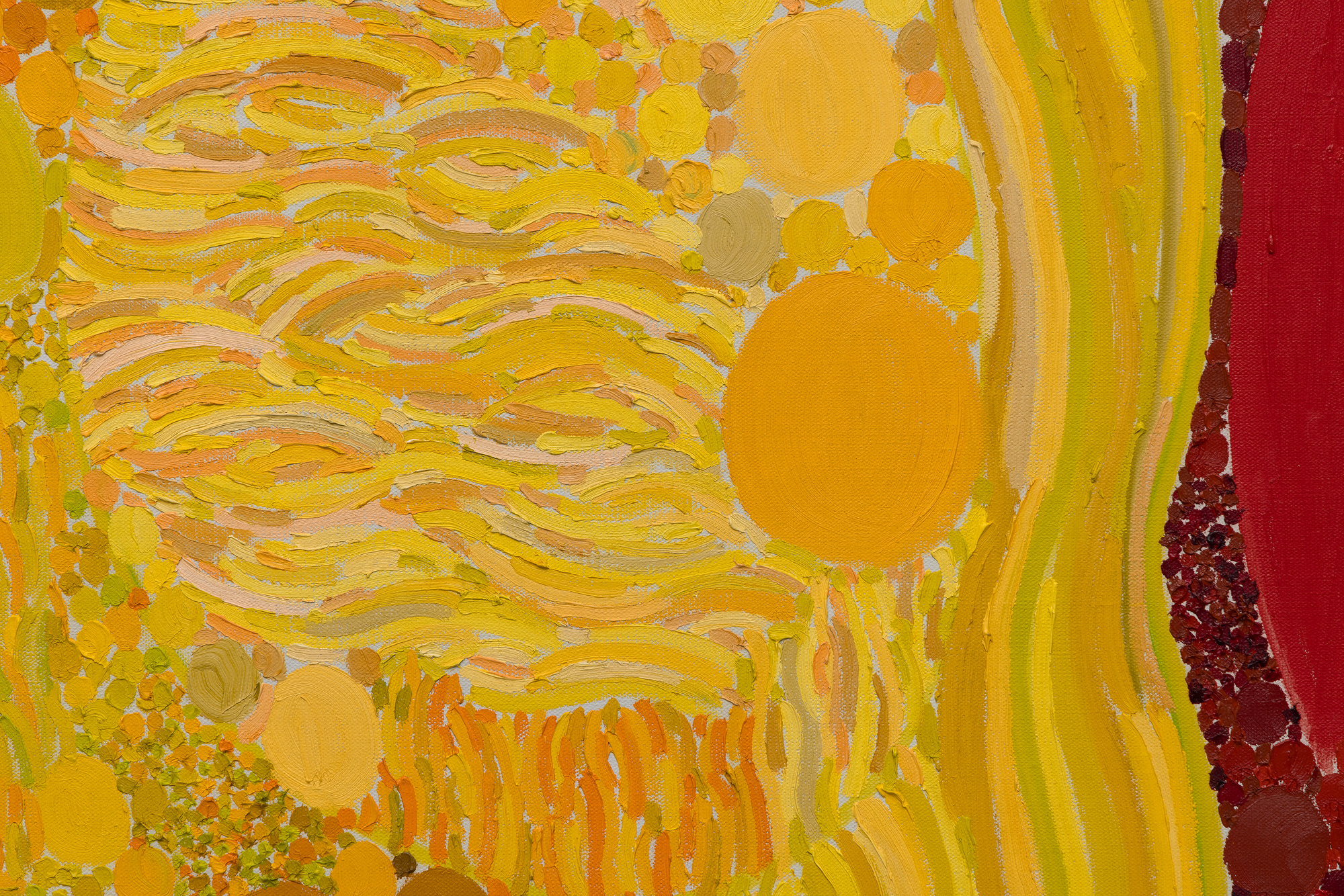
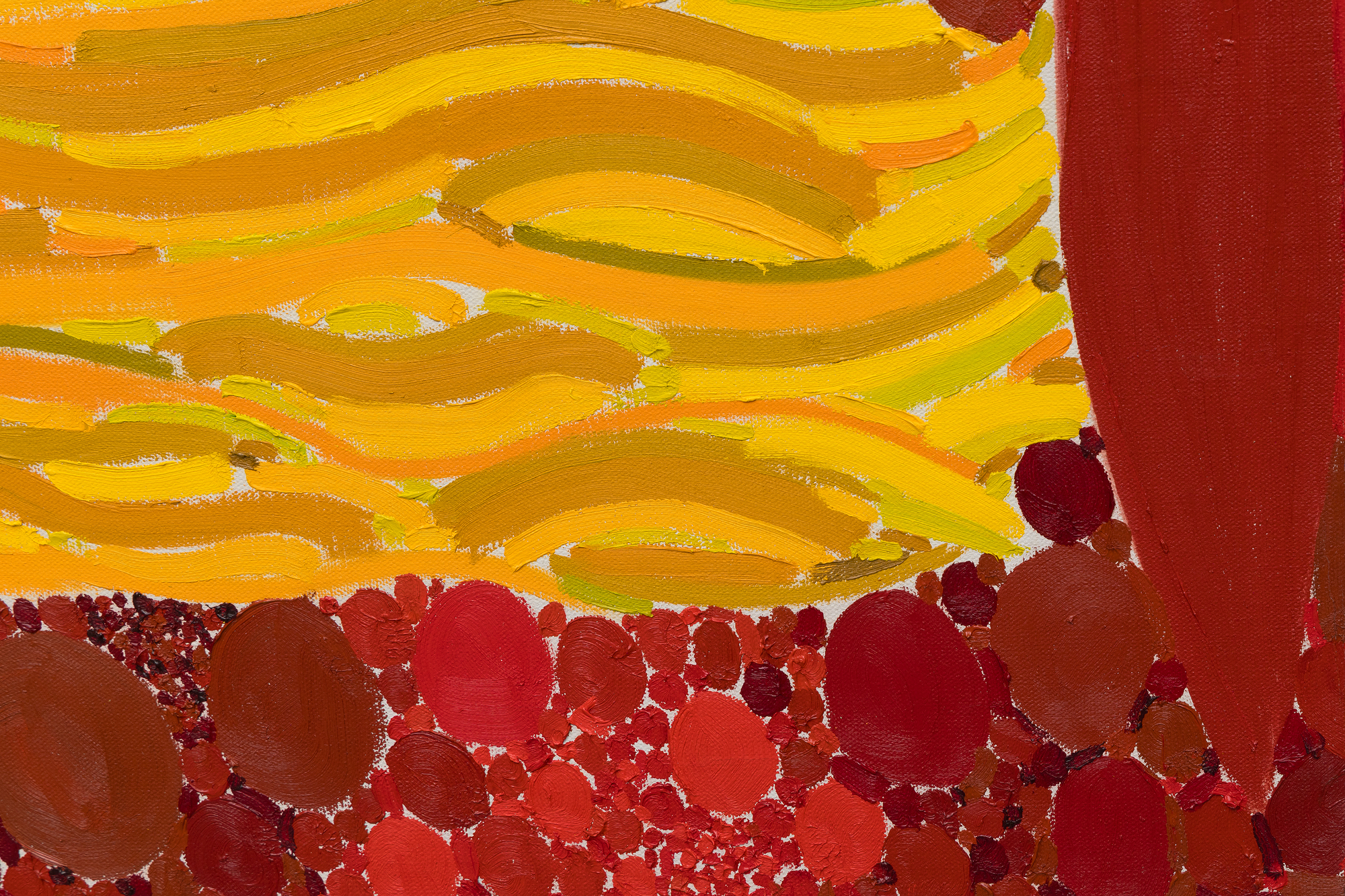
"שמש האביב" (1971) של לין מאפ דרקסלר מדגימה את האבסטרקציה התוססת והלירית שהביאה לה הכרה מחודשת בשנים האחרונות. הבד, המורכב מעיגולים קונצנטריים, משיכות מכחול מדורגות וגוונים קורנים של צהוב, כתום ואדום, פועם בקצב האור והעונה. אוצר המילים הציורי של דרקסלר - שכבות של משיכות מחוות על גבי אשכולות פונטיליסטים - יוצר משטח דינמי המעורר הן תופעות טבע והן מבנה מוזיקלי, ומשקף את אהבתה לכל החיים לקומפוזיציה סימפונית.


הציור "שמש אביב", שצויר בשנת 1971, שייך לרגע חשוב בקריירה של דרקסלר, כאשר היא סינתזה את לימודיה תחת הנס הופמן ורוברט מאת'רוול לשפה חזותית אישית המושרשת בצבע ובדוגמאות. הקומפוזיציה הסוחפת מרמזת לא רק על זוהר אור השמש האביבי, אלא גם על עוצמת ההבעה שבה דרקסלר ניגש לאבסטרקציה.


תרומותיה זכו להכרה גוברת על ידי מוסדות גדולים. מוזיאון פורטלנד לאמנות הציג רטרוספקטיבה פורצת דרך, לין דרקסלר: הערות צבע (2022–2023), ועבודותיה הוצגו גם ב-MoMA PS1 ובמוזיאון פאריש לאמנות. ספרינג סאן מדגימה מדוע דרקסלר נחשבת כיום לדמות חיונית בדור השני של האקספרסיוניסטים המופשטים, שהשימוש הנועז שלהם בצבע ובמבנה ממשיך להדהד בקרב קהלים עכשוויים.
לברר