גב

קלוד מונה(1840-1926)

 
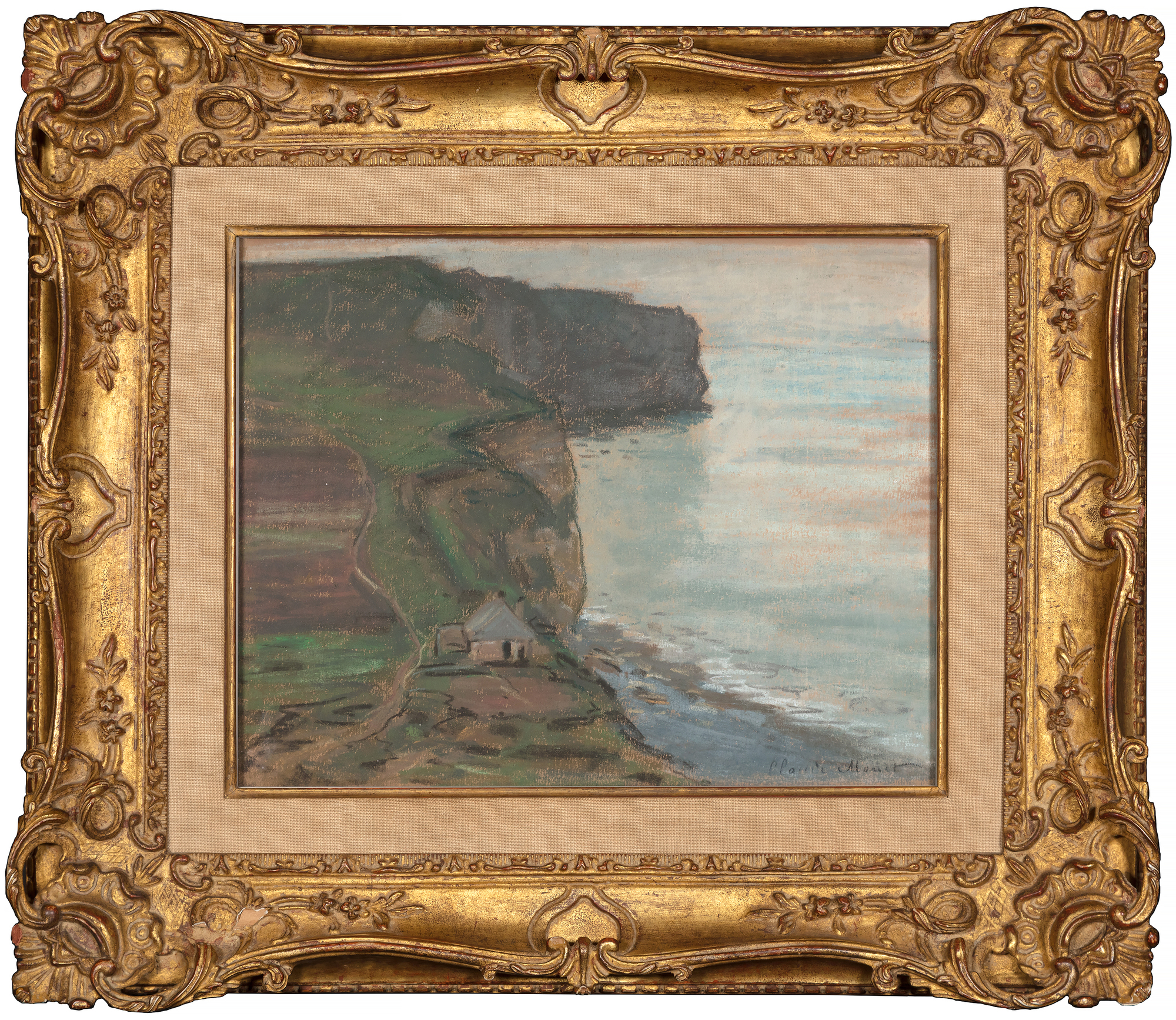
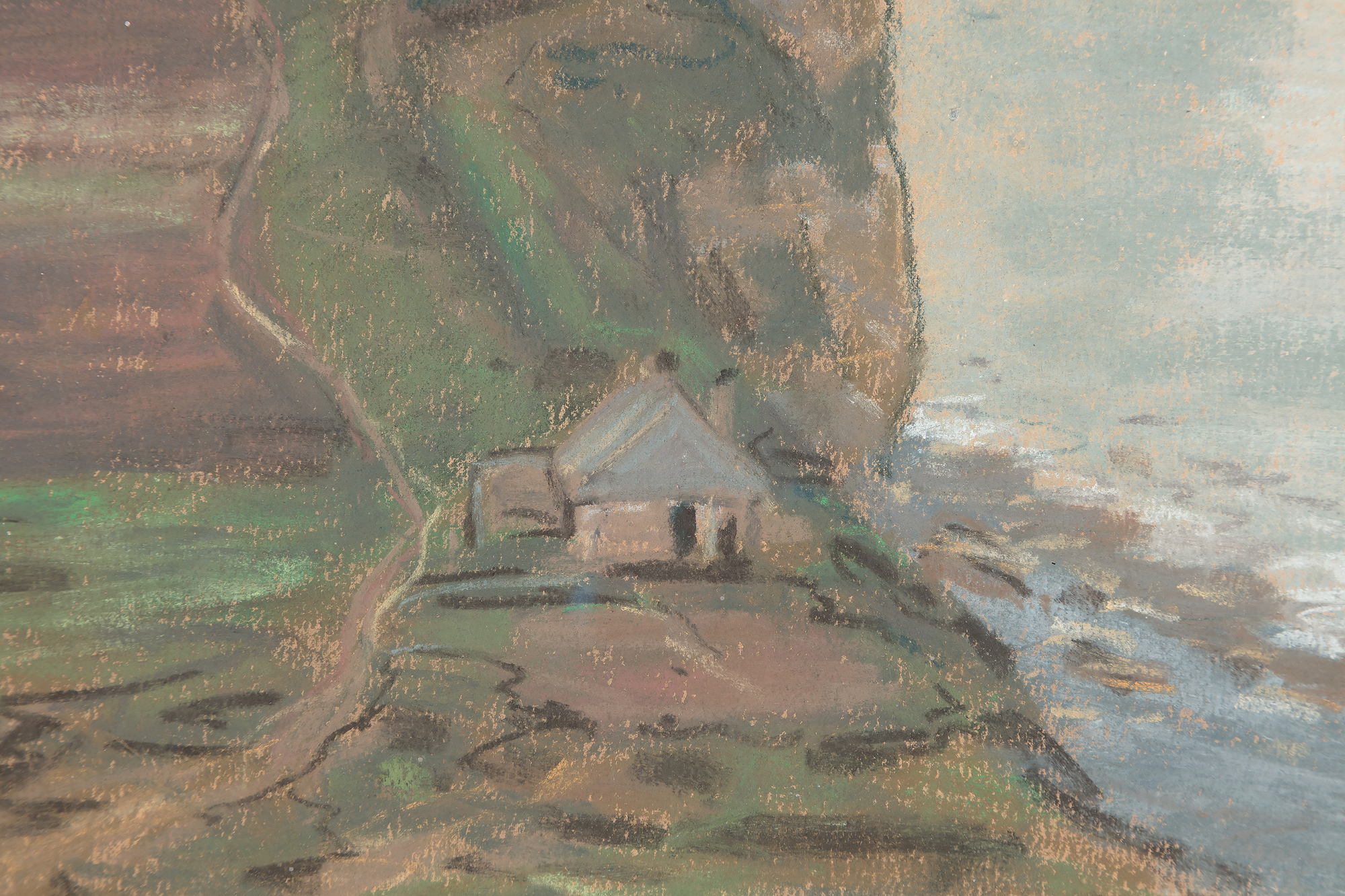
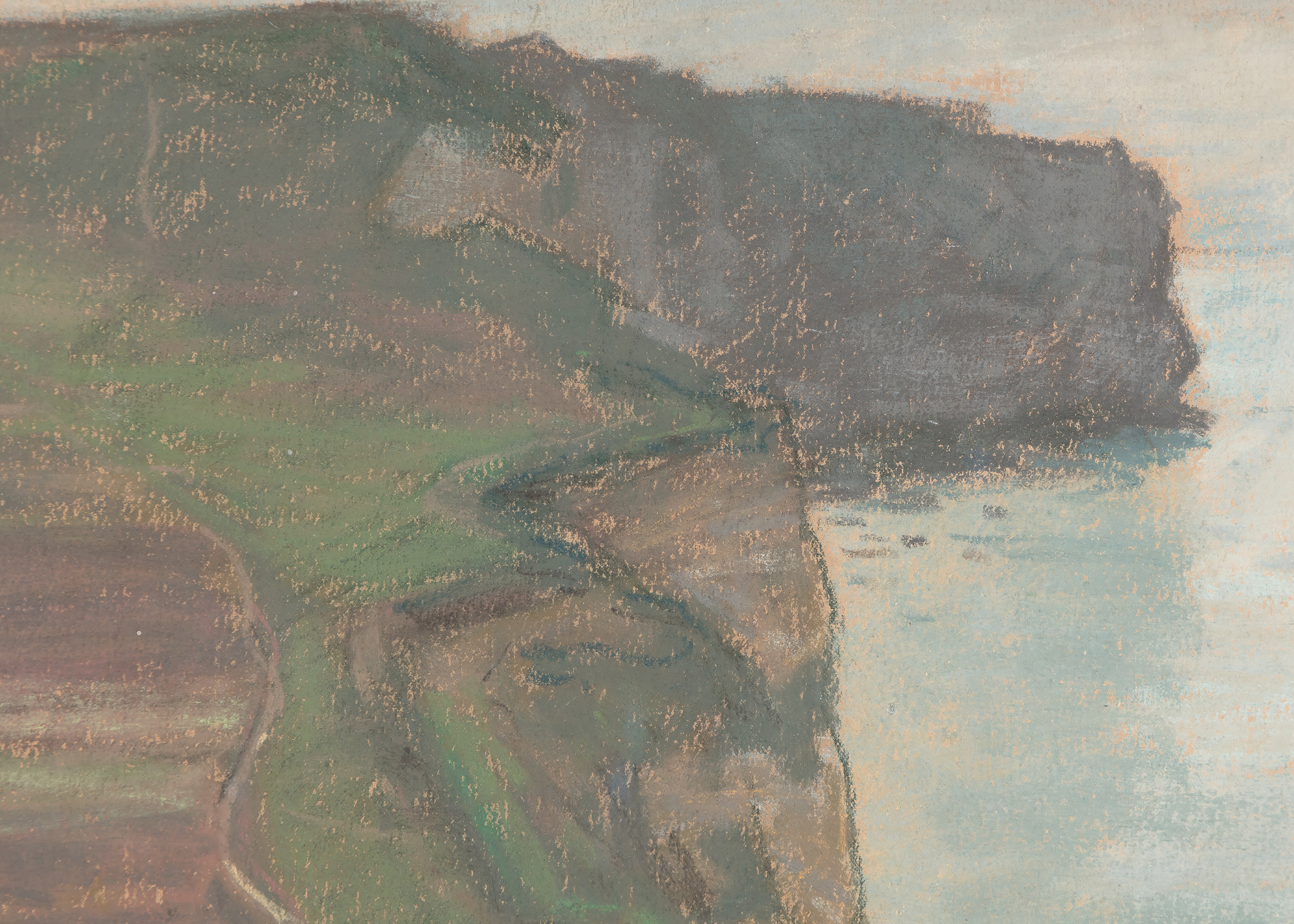
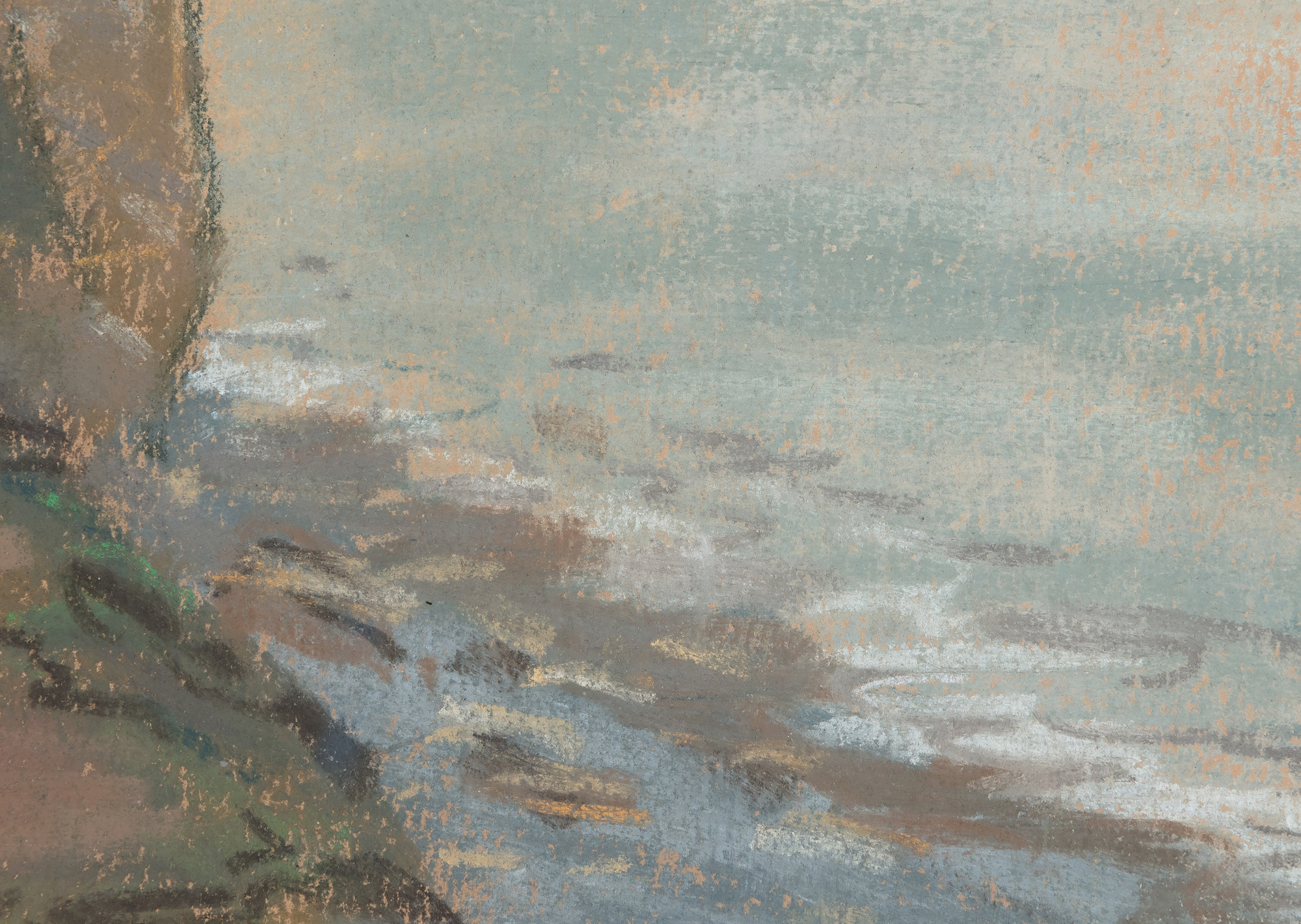
<div><font face=Lato size=3 color="#191919">As the idea of using drawings, whether in pencil or pastel to prepare a painting was at odds with Monet’s publicised creative process, he tended to downplay its importance in his work. However, after his death eight folios containing over four hundred drawings came to light as well as many pastels. This convenient and lightweight medium allowed him to experiment with composition and colour and develop ideas for his oil paintings at speed. He also used pastel to produce finished pictures, as in this example.</font></div><br><br><div><font face=Lato size=3 color="#191919"> </font></div><br><br><div><font face=Lato size=3 color="#191919">During the 1880s Monet returned to the Normandy coast. He found inspiration in the sparkling light and famous limestone cliffs, as had Delacroix and Courbet. As well as working directly in oils, he followed Boudin’s example and used black chalk and pastel to study the effects of light and colour on the sky, sea and land.</font></div><br><br><div><font face=Lato size=3 color="#191919"> </font></div><br><br><div><font face=Lato size=3 color="#191919">In this seascape at Etretat, twenty miles round the coast to the north of Le Havre, Monet has chosen an unusual composition, dividing the landscape down the centre with the vertiginous cliffs; the left half of the picture composed of earthy greens and browns, the right half a sun dappled sea that dissolves into the sky, the horizon only suggested by the lightest touch of charcoal. This picture has a marked difference in atmosphere to another pastel of the nearby Porte d’Aval, dateable to the same period, whose late afternoon sky shows the range of expression that could be achieved with pastel. By the summer of 1885 the year he made this pastel Monet had largely abandoned urban subjects, and was more drawn towards natural phenomena. He painted many views along the coast under different light conditions. As noted in the catalogue raisonné on Monet, this pastel is not a preparatory study for an oil painting, but a wholly original composition. It demonstrates how well the painter understood and enjoyed the versatility of the medium when trying to capture such variable weather.</font></div> <div><font face=Lato size=3 color="#191919">As the idea of using drawings, whether in pencil or pastel to prepare a painting was at odds with Monet’s publicised creative process, he tended to downplay its importance in his work. However, after his death eight folios containing over four hundred drawings came to light as well as many pastels. This convenient and lightweight medium allowed him to experiment with composition and colour and develop ideas for his oil paintings at speed. He also used pastel to produce finished pictures, as in this example.</font></div><br><br><div><font face=Lato size=3 color="#191919"> </font></div><br><br><div><font face=Lato size=3 color="#191919">During the 1880s Monet returned to the Normandy coast. He found inspiration in the sparkling light and famous limestone cliffs, as had Delacroix and Courbet. As well as working directly in oils, he followed Boudin’s example and used black chalk and pastel to study the effects of light and colour on the sky, sea and land.</font></div><br><br><div><font face=Lato size=3 color="#191919"> </font></div><br><br><div><font face=Lato size=3 color="#191919">In this seascape at Etretat, twenty miles round the coast to the north of Le Havre, Monet has chosen an unusual composition, dividing the landscape down the centre with the vertiginous cliffs; the left half of the picture composed of earthy greens and browns, the right half a sun dappled sea that dissolves into the sky, the horizon only suggested by the lightest touch of charcoal. This picture has a marked difference in atmosphere to another pastel of the nearby Porte d’Aval, dateable to the same period, whose late afternoon sky shows the range of expression that could be achieved with pastel. By the summer of 1885 the year he made this pastel Monet had largely abandoned urban subjects, and was more drawn towards natural phenomena. He painted many views along the coast under different light conditions. As noted in the catalogue raisonné on Monet, this pastel is not a preparatory study for an oil painting, but a wholly original composition. It demonstrates how well the painter understood and enjoyed the versatility of the medium when trying to capture such variable weather.</font></div> <div><font face=Lato size=3 color="#191919">As the idea of using drawings, whether in pencil or pastel to prepare a painting was at odds with Monet’s publicised creative process, he tended to downplay its importance in his work. However, after his death eight folios containing over four hundred drawings came to light as well as many pastels. This convenient and lightweight medium allowed him to experiment with composition and colour and develop ideas for his oil paintings at speed. He also used pastel to produce finished pictures, as in this example.</font></div><br><br><div><font face=Lato size=3 color="#191919"> </font></div><br><br><div><font face=Lato size=3 color="#191919">During the 1880s Monet returned to the Normandy coast. He found inspiration in the sparkling light and famous limestone cliffs, as had Delacroix and Courbet. As well as working directly in oils, he followed Boudin’s example and used black chalk and pastel to study the effects of light and colour on the sky, sea and land.</font></div><br><br><div><font face=Lato size=3 color="#191919"> </font></div><br><br><div><font face=Lato size=3 color="#191919">In this seascape at Etretat, twenty miles round the coast to the north of Le Havre, Monet has chosen an unusual composition, dividing the landscape down the centre with the vertiginous cliffs; the left half of the picture composed of earthy greens and browns, the right half a sun dappled sea that dissolves into the sky, the horizon only suggested by the lightest touch of charcoal. This picture has a marked difference in atmosphere to another pastel of the nearby Porte d’Aval, dateable to the same period, whose late afternoon sky shows the range of expression that could be achieved with pastel. By the summer of 1885 the year he made this pastel Monet had largely abandoned urban subjects, and was more drawn towards natural phenomena. He painted many views along the coast under different light conditions. As noted in the catalogue raisonné on Monet, this pastel is not a preparatory study for an oil painting, but a wholly original composition. It demonstrates how well the painter understood and enjoyed the versatility of the medium when trying to capture such variable weather.</font></div> <div><font face=Lato size=3 color="#191919">As the idea of using drawings, whether in pencil or pastel to prepare a painting was at odds with Monet’s publicised creative process, he tended to downplay its importance in his work. However, after his death eight folios containing over four hundred drawings came to light as well as many pastels. This convenient and lightweight medium allowed him to experiment with composition and colour and develop ideas for his oil paintings at speed. He also used pastel to produce finished pictures, as in this example.</font></div><br><br><div><font face=Lato size=3 color="#191919"> </font></div><br><br><div><font face=Lato size=3 color="#191919">During the 1880s Monet returned to the Normandy coast. He found inspiration in the sparkling light and famous limestone cliffs, as had Delacroix and Courbet. As well as working directly in oils, he followed Boudin’s example and used black chalk and pastel to study the effects of light and colour on the sky, sea and land.</font></div><br><br><div><font face=Lato size=3 color="#191919"> </font></div><br><br><div><font face=Lato size=3 color="#191919">In this seascape at Etretat, twenty miles round the coast to the north of Le Havre, Monet has chosen an unusual composition, dividing the landscape down the centre with the vertiginous cliffs; the left half of the picture composed of earthy greens and browns, the right half a sun dappled sea that dissolves into the sky, the horizon only suggested by the lightest touch of charcoal. This picture has a marked difference in atmosphere to another pastel of the nearby Porte d’Aval, dateable to the same period, whose late afternoon sky shows the range of expression that could be achieved with pastel. By the summer of 1885 the year he made this pastel Monet had largely abandoned urban subjects, and was more drawn towards natural phenomena. He painted many views along the coast under different light conditions. As noted in the catalogue raisonné on Monet, this pastel is not a preparatory study for an oil painting, but a wholly original composition. It demonstrates how well the painter understood and enjoyed the versatility of the medium when trying to capture such variable weather.</font></div> <div><font face=Lato size=3 color="#191919">As the idea of using drawings, whether in pencil or pastel to prepare a painting was at odds with Monet’s publicised creative process, he tended to downplay its importance in his work. However, after his death eight folios containing over four hundred drawings came to light as well as many pastels. This convenient and lightweight medium allowed him to experiment with composition and colour and develop ideas for his oil paintings at speed. He also used pastel to produce finished pictures, as in this example.</font></div><br><br><div><font face=Lato size=3 color="#191919"> </font></div><br><br><div><font face=Lato size=3 color="#191919">During the 1880s Monet returned to the Normandy coast. He found inspiration in the sparkling light and famous limestone cliffs, as had Delacroix and Courbet. As well as working directly in oils, he followed Boudin’s example and used black chalk and pastel to study the effects of light and colour on the sky, sea and land.</font></div><br><br><div><font face=Lato size=3 color="#191919"> </font></div><br><br><div><font face=Lato size=3 color="#191919">In this seascape at Etretat, twenty miles round the coast to the north of Le Havre, Monet has chosen an unusual composition, dividing the landscape down the centre with the vertiginous cliffs; the left half of the picture composed of earthy greens and browns, the right half a sun dappled sea that dissolves into the sky, the horizon only suggested by the lightest touch of charcoal. This picture has a marked difference in atmosphere to another pastel of the nearby Porte d’Aval, dateable to the same period, whose late afternoon sky shows the range of expression that could be achieved with pastel. By the summer of 1885 the year he made this pastel Monet had largely abandoned urban subjects, and was more drawn towards natural phenomena. He painted many views along the coast under different light conditions. As noted in the catalogue raisonné on Monet, this pastel is not a preparatory study for an oil painting, but a wholly original composition. It demonstrates how well the painter understood and enjoyed the versatility of the medium when trying to capture such variable weather.</font></div> <div><font face=Lato size=3 color="#191919">As the idea of using drawings, whether in pencil or pastel to prepare a painting was at odds with Monet’s publicised creative process, he tended to downplay its importance in his work. However, after his death eight folios containing over four hundred drawings came to light as well as many pastels. This convenient and lightweight medium allowed him to experiment with composition and colour and develop ideas for his oil paintings at speed. He also used pastel to produce finished pictures, as in this example.</font></div><br><br><div><font face=Lato size=3 color="#191919"> </font></div><br><br><div><font face=Lato size=3 color="#191919">During the 1880s Monet returned to the Normandy coast. He found inspiration in the sparkling light and famous limestone cliffs, as had Delacroix and Courbet. As well as working directly in oils, he followed Boudin’s example and used black chalk and pastel to study the effects of light and colour on the sky, sea and land.</font></div><br><br><div><font face=Lato size=3 color="#191919"> </font></div><br><br><div><font face=Lato size=3 color="#191919">In this seascape at Etretat, twenty miles round the coast to the north of Le Havre, Monet has chosen an unusual composition, dividing the landscape down the centre with the vertiginous cliffs; the left half of the picture composed of earthy greens and browns, the right half a sun dappled sea that dissolves into the sky, the horizon only suggested by the lightest touch of charcoal. This picture has a marked difference in atmosphere to another pastel of the nearby Porte d’Aval, dateable to the same period, whose late afternoon sky shows the range of expression that could be achieved with pastel. By the summer of 1885 the year he made this pastel Monet had largely abandoned urban subjects, and was more drawn towards natural phenomena. He painted many views along the coast under different light conditions. As noted in the catalogue raisonné on Monet, this pastel is not a preparatory study for an oil painting, but a wholly original composition. It demonstrates how well the painter understood and enjoyed the versatility of the medium when trying to capture such variable weather.</font></div> <div><font face=Lato size=3 color="#191919">As the idea of using drawings, whether in pencil or pastel to prepare a painting was at odds with Monet’s publicised creative process, he tended to downplay its importance in his work. However, after his death eight folios containing over four hundred drawings came to light as well as many pastels. This convenient and lightweight medium allowed him to experiment with composition and colour and develop ideas for his oil paintings at speed. He also used pastel to produce finished pictures, as in this example.</font></div><br><br><div><font face=Lato size=3 color="#191919"> </font></div><br><br><div><font face=Lato size=3 color="#191919">During the 1880s Monet returned to the Normandy coast. He found inspiration in the sparkling light and famous limestone cliffs, as had Delacroix and Courbet. As well as working directly in oils, he followed Boudin’s example and used black chalk and pastel to study the effects of light and colour on the sky, sea and land.</font></div><br><br><div><font face=Lato size=3 color="#191919"> </font></div><br><br><div><font face=Lato size=3 color="#191919">In this seascape at Etretat, twenty miles round the coast to the north of Le Havre, Monet has chosen an unusual composition, dividing the landscape down the centre with the vertiginous cliffs; the left half of the picture composed of earthy greens and browns, the right half a sun dappled sea that dissolves into the sky, the horizon only suggested by the lightest touch of charcoal. This picture has a marked difference in atmosphere to another pastel of the nearby Porte d’Aval, dateable to the same period, whose late afternoon sky shows the range of expression that could be achieved with pastel. By the summer of 1885 the year he made this pastel Monet had largely abandoned urban subjects, and was more drawn towards natural phenomena. He painted many views along the coast under different light conditions. As noted in the catalogue raisonné on Monet, this pastel is not a preparatory study for an oil painting, but a wholly original composition. It demonstrates how well the painter understood and enjoyed the versatility of the medium when trying to capture such variable weather.</font></div>
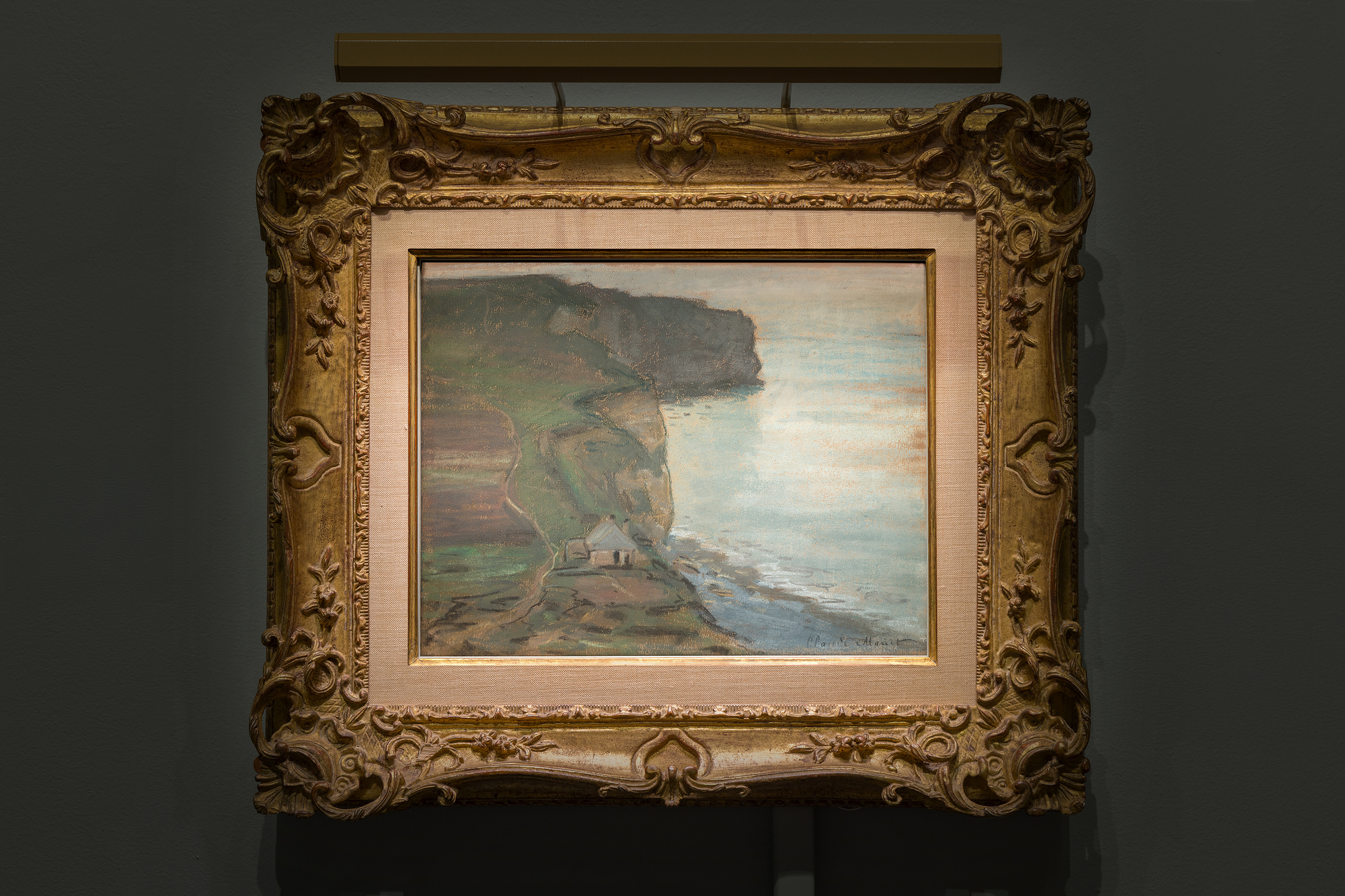
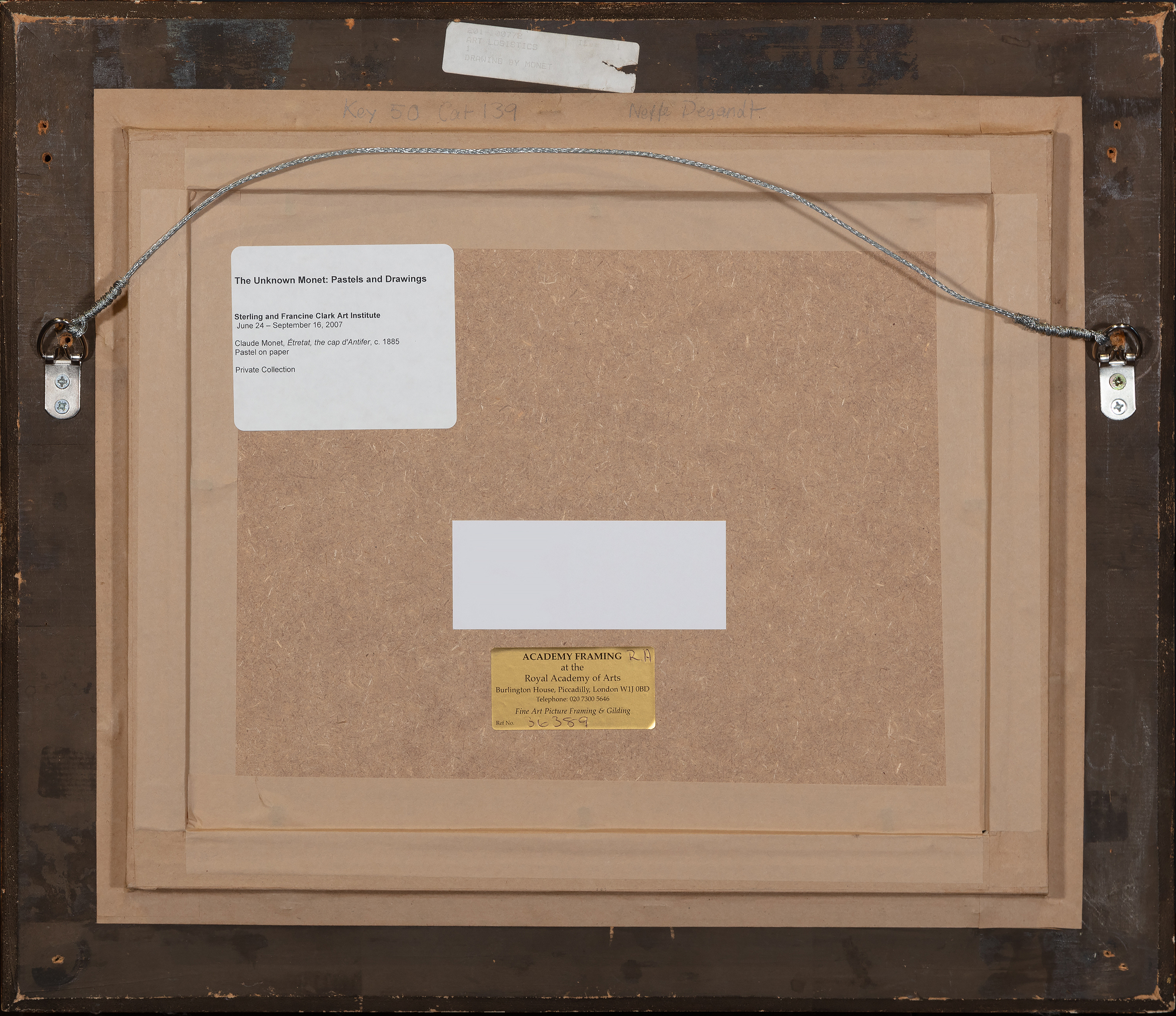
אטרט, כף אנטיפר , בערך 1885, פסטל על נייר , 26.67 x 33.97 ס"מ ( 10 1/2 x 13 3/8 אינץ' ) , מודבק על קרטון
מקור ומקור
(אולי) מאדאם מטרן, בערך 1894
א. סצ'וקין, פריז
Hôtel Drouot, פריז, 24 במרץ 1900, חלקה 36
אוליבייה וינסר
גלריית לורנסו, פריז
וילדנשטיין ושות', פריז
אליס טולי, נרכשה מהנ"ל, 1973
כריסטי'ס, ניו יורק, 10 בנובמבר 1994, פריט 138
גלריית נפה-דגנדט, לונדון
אוסף פרטי, נרכש מהנ"ל, 2002, משם בירושה
אוסף פרטי, קליפורניה
תערוכה
איסט המפטון, ניו יורק, גילדה הול, הים סביבנו, אוגוסט - ספטמבר 1953, מס' 45
וואשי
... עוד...נגטון, וושינגטון די.סי., גלריות אדמס דיווידסון, האימפרסיוניסטים הצרפתים ועוקביהם, דצמבר 1971 - ינואר 1972
לונדון, האקדמיה המלכותית לאמנויות; וויליאמסטאון, המכון לאמנות ע"ש סטרלינג ופרנסין קלארק, מונה הלא ידועה: פסטלים ורישומים, מרץ - ספטמבר 2007, מס' 139
ספרות
Daniel Wildenstein, Claude Monet, Catalog raisonné, Supplément aux peintures, dessins, pastels, לוזאן, 1991, vol. V, לא. P 80, p. 171 (בציור)
ג'יימס גנץ וריצ'רד קנדל, מונה הלא ידוע: פסטלים ורישומים, וויליאמסטאון, מסצ'וסטס, 2007, מס' 139, עמ' 158-159 ו-302 (עם איורים, עמ' 158)
... פחות...
מכיוון שהרעיון של שימוש ברישומים, בין אם בעיפרון ובין אם בפסטל, להכנת ציור עמד בסתירה לתהליך היצירתי המתוקשר של מונה, הוא נטה להמעיט בחשיבותם ביצירתו. עם זאת, לאחר מותו נחשפו שמונה דפים המכילים למעלה מארבע מאות רישומים, כמו גם פסטלים רבים. מדיום נוח וקל משקל זה אפשר לו להתנסות בקומפוזיציה ובצבע ולפתח רעיונות לציורי השמן שלו במהירות. הוא גם השתמש בפסטל כדי לייצר תמונות מוגמרות, כמו בדוגמה זו.


במהלך שנות ה-80 של המאה ה-19 חזר מונה לחוף נורמנדי. הוא מצא השראה באור הנוצץ ובצוקי הגיר המפורסמים, וכך גם דלקרואה וקורבה. בנוסף לעבודה ישירה בצבעי שמן, הוא הלך בעקבות בודין והשתמש בגיר שחור ובפסטל כדי לחקור את השפעות האור והצבע על השמיים, הים והיבשה.


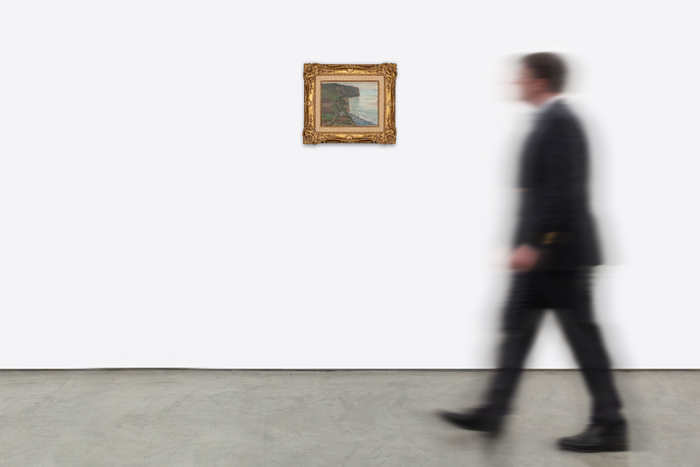
בנוף ימי זה באטרטה, במרחק של עשרים מיילים מסביב לחוף מצפון ללה האבר, מונה בחרה קומפוזיציה יוצאת דופן, כשהיא מחלקת את הנוף במרכז עם הצוקים המסחררים; החצי השמאלי של התמונה מורכב מירוק וחום אדמתיים, החצי הימני ים מנומר בשמש המתמוסס אל תוך השמיים, האופק נרמז רק על ידי נגיעה קלה ביותר של פחם. לתמונה זו יש הבדל ניכר באווירה מפסטל אחר של פורט ד'אוואל הסמוך, המתוארך לאותה תקופה, ששמי אחר הצהריים המאוחרים שלו מראים את טווח הביטוי שניתן להשיג באמצעות פסטל. עד קיץ 1885, השנה בה יצר את הפסטל הזה, מונה נטש במידה רבה נושאים עירוניים, ונמשך יותר לתופעות טבע. הוא צייר נופים רבים לאורך החוף בתנאי תאורה שונים. כפי שצוין בקטלוג הריאליזונה על מונה, פסטל זה אינו מחקר הכנה לציור שמן, אלא קומפוזיציה מקורית לחלוטין. הוא מדגים עד כמה הצייר הבין ונהנה מהרבגוניות של המדיום כשניסה ללכוד מזג אוויר כה משתנה.
לברר