גב

קלוד מונה(1840-1926)

 
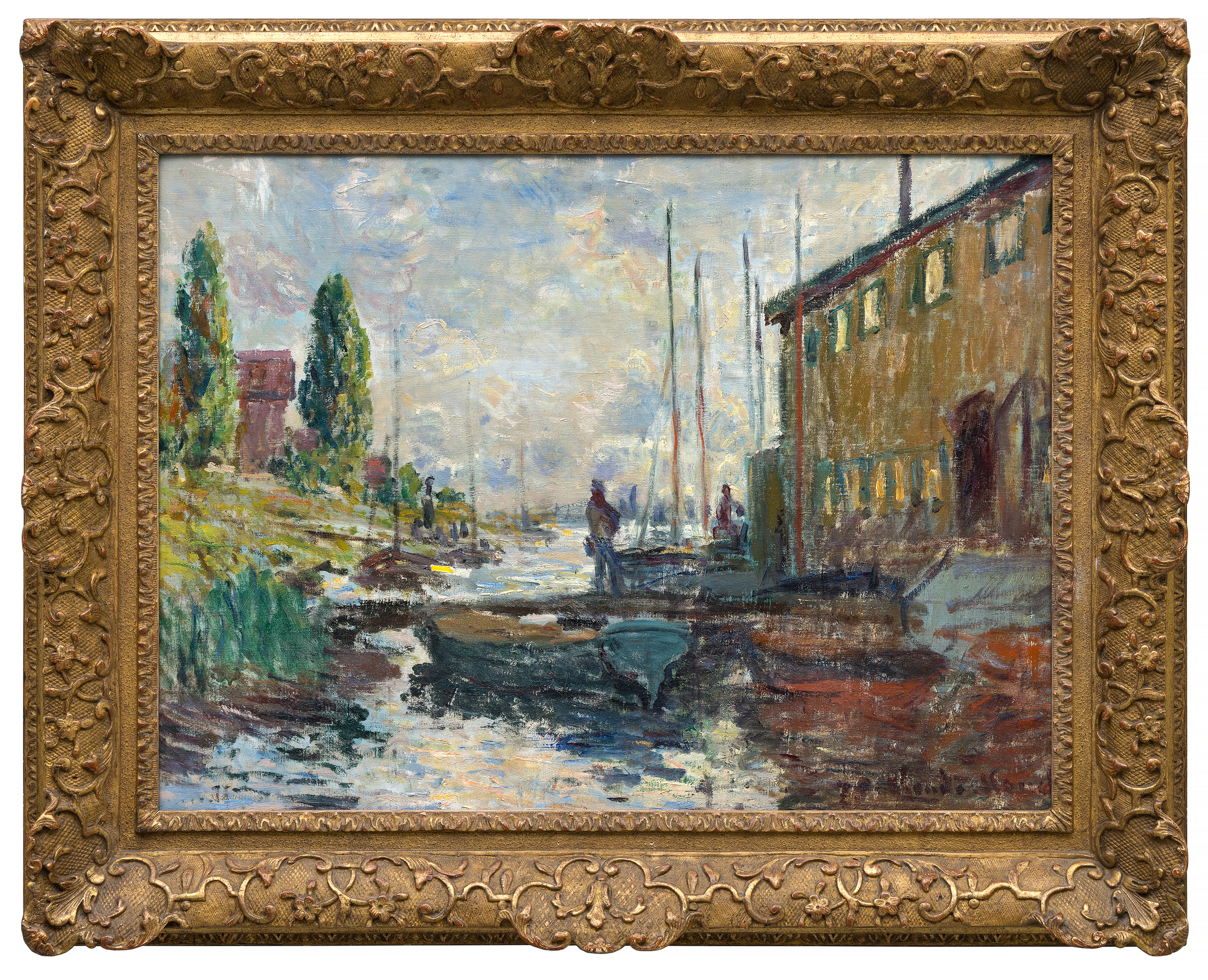
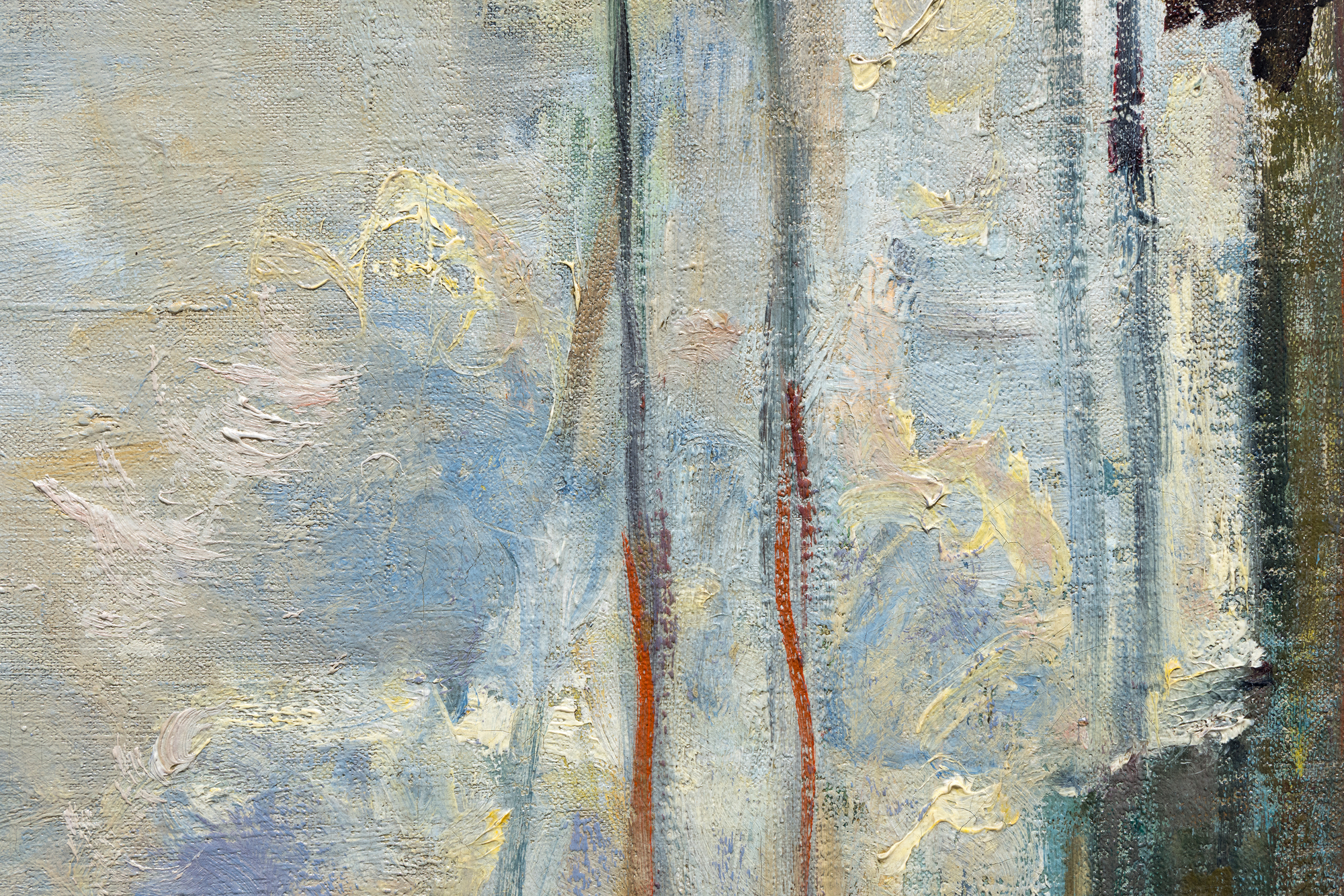
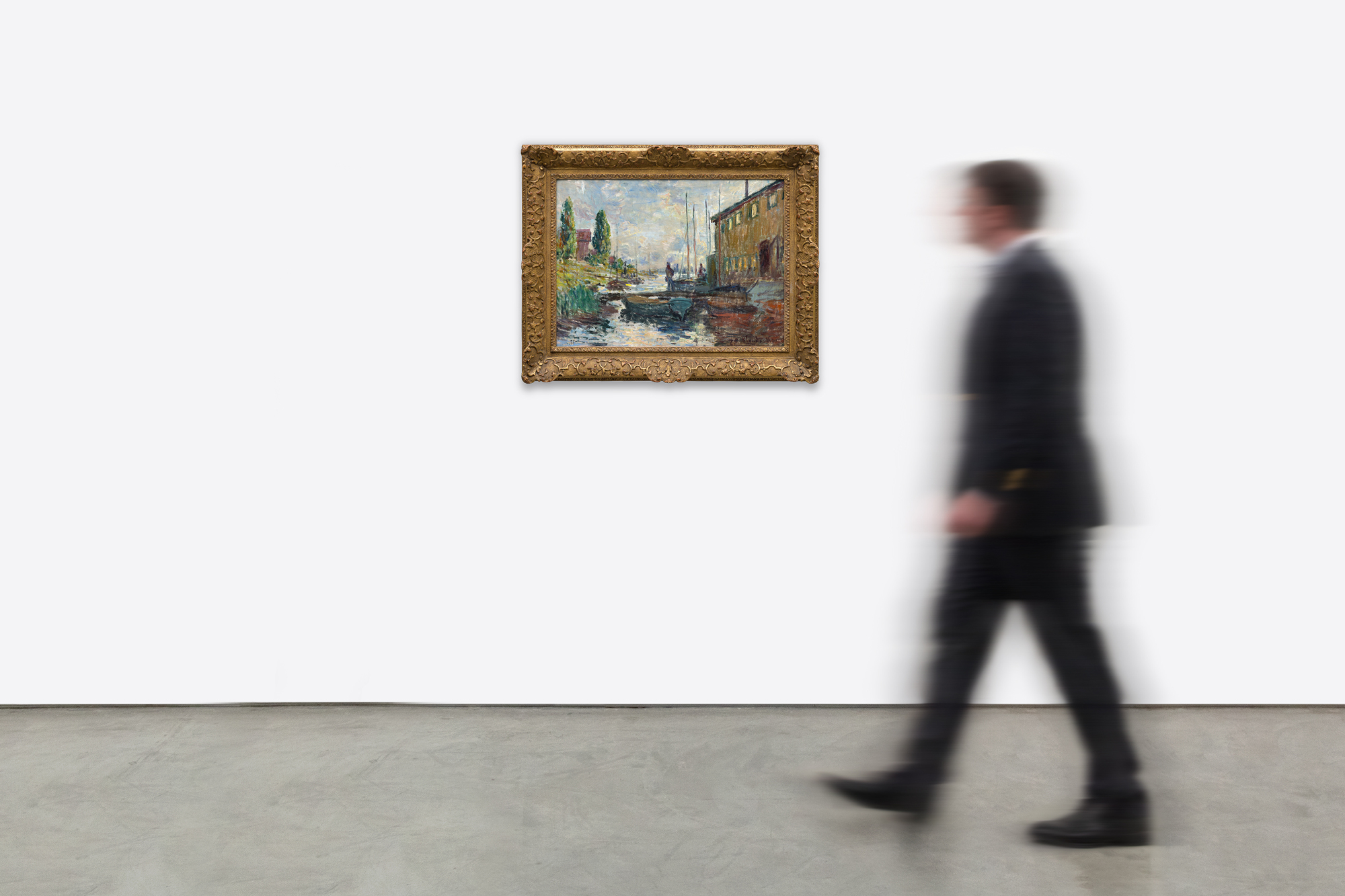
<div>Claude Monet’s <em>Le bassin d’Argenteuil</em> (1875) is a luminous example from one of the most pivotal periods of his career, painted in the late spring or summer of 1875, just one year after the groundbreaking first Impressionist exhibition. Set along the Seine at Argenteuil, the composition captures a quiet basin animated by small boats, figures, and reflections, rendered with loose, expressive brushwork that conveys the fleeting effects of light and atmosphere. The gentle diffusion of water and sky creates a shimmering surface, perfectly suited to Monet’s plein air practice and his desire to record perception in the moment. </div><br><br><div> </div><br><br><div>Argenteuil was central to the crystallization of Impressionism, marking a time when its ideas, subject matter, and collaborative spirit fully coalesced. Between 1871 and 1878, Monet’s presence there drew fellow artists including Renoir, Manet, Sisley, and Caillebotte, fostering an environment of shared experimentation and innovation. </div><br><br><div> </div><br><br><div>The painting’s early provenance further enhances its significance. It was owned by Oscar A. H. Schmitz, the German writer and intellectual known for his writings on Jungian psychology and his discerning collection of 19th-century art. Following Schmitz’s unexpected death in 1933, the collection was sent to the Kunstmuseum Basel. In 1936, the art dealer Wildenstein & Co. took over 62 works from the collection and organized a major exhibition and sale in Paris and New York.<em> Le bassin d’Argenteuil</em> is included in the Daniel Wildenstein catalogue raisonné (1996), vol. II, p. 153, as no. 371, and is published in eight books. </div> <div>Claude Monet’s <em>Le bassin d’Argenteuil</em> (1875) is a luminous example from one of the most pivotal periods of his career, painted in the late spring or summer of 1875, just one year after the groundbreaking first Impressionist exhibition. Set along the Seine at Argenteuil, the composition captures a quiet basin animated by small boats, figures, and reflections, rendered with loose, expressive brushwork that conveys the fleeting effects of light and atmosphere. The gentle diffusion of water and sky creates a shimmering surface, perfectly suited to Monet’s plein air practice and his desire to record perception in the moment. </div><br><br><div> </div><br><br><div>Argenteuil was central to the crystallization of Impressionism, marking a time when its ideas, subject matter, and collaborative spirit fully coalesced. Between 1871 and 1878, Monet’s presence there drew fellow artists including Renoir, Manet, Sisley, and Caillebotte, fostering an environment of shared experimentation and innovation. </div><br><br><div> </div><br><br><div>The painting’s early provenance further enhances its significance. It was owned by Oscar A. H. Schmitz, the German writer and intellectual known for his writings on Jungian psychology and his discerning collection of 19th-century art. Following Schmitz’s unexpected death in 1933, the collection was sent to the Kunstmuseum Basel. In 1936, the art dealer Wildenstein & Co. took over 62 works from the collection and organized a major exhibition and sale in Paris and New York.<em> Le bassin d’Argenteuil</em> is included in the Daniel Wildenstein catalogue raisonné (1996), vol. II, p. 153, as no. 371, and is published in eight books. </div> <div>Claude Monet’s <em>Le bassin d’Argenteuil</em> (1875) is a luminous example from one of the most pivotal periods of his career, painted in the late spring or summer of 1875, just one year after the groundbreaking first Impressionist exhibition. Set along the Seine at Argenteuil, the composition captures a quiet basin animated by small boats, figures, and reflections, rendered with loose, expressive brushwork that conveys the fleeting effects of light and atmosphere. The gentle diffusion of water and sky creates a shimmering surface, perfectly suited to Monet’s plein air practice and his desire to record perception in the moment. </div><br><br><div> </div><br><br><div>Argenteuil was central to the crystallization of Impressionism, marking a time when its ideas, subject matter, and collaborative spirit fully coalesced. Between 1871 and 1878, Monet’s presence there drew fellow artists including Renoir, Manet, Sisley, and Caillebotte, fostering an environment of shared experimentation and innovation. </div><br><br><div> </div><br><br><div>The painting’s early provenance further enhances its significance. It was owned by Oscar A. H. Schmitz, the German writer and intellectual known for his writings on Jungian psychology and his discerning collection of 19th-century art. Following Schmitz’s unexpected death in 1933, the collection was sent to the Kunstmuseum Basel. In 1936, the art dealer Wildenstein & Co. took over 62 works from the collection and organized a major exhibition and sale in Paris and New York.<em> Le bassin d’Argenteuil</em> is included in the Daniel Wildenstein catalogue raisonné (1996), vol. II, p. 153, as no. 371, and is published in eight books. </div> <div>Claude Monet’s <em>Le bassin d’Argenteuil</em> (1875) is a luminous example from one of the most pivotal periods of his career, painted in the late spring or summer of 1875, just one year after the groundbreaking first Impressionist exhibition. Set along the Seine at Argenteuil, the composition captures a quiet basin animated by small boats, figures, and reflections, rendered with loose, expressive brushwork that conveys the fleeting effects of light and atmosphere. The gentle diffusion of water and sky creates a shimmering surface, perfectly suited to Monet’s plein air practice and his desire to record perception in the moment. </div><br><br><div> </div><br><br><div>Argenteuil was central to the crystallization of Impressionism, marking a time when its ideas, subject matter, and collaborative spirit fully coalesced. Between 1871 and 1878, Monet’s presence there drew fellow artists including Renoir, Manet, Sisley, and Caillebotte, fostering an environment of shared experimentation and innovation. </div><br><br><div> </div><br><br><div>The painting’s early provenance further enhances its significance. It was owned by Oscar A. H. Schmitz, the German writer and intellectual known for his writings on Jungian psychology and his discerning collection of 19th-century art. Following Schmitz’s unexpected death in 1933, the collection was sent to the Kunstmuseum Basel. In 1936, the art dealer Wildenstein & Co. took over 62 works from the collection and organized a major exhibition and sale in Paris and New York.<em> Le bassin d’Argenteuil</em> is included in the Daniel Wildenstein catalogue raisonné (1996), vol. II, p. 153, as no. 371, and is published in eight books. </div> <div>Claude Monet’s <em>Le bassin d’Argenteuil</em> (1875) is a luminous example from one of the most pivotal periods of his career, painted in the late spring or summer of 1875, just one year after the groundbreaking first Impressionist exhibition. Set along the Seine at Argenteuil, the composition captures a quiet basin animated by small boats, figures, and reflections, rendered with loose, expressive brushwork that conveys the fleeting effects of light and atmosphere. The gentle diffusion of water and sky creates a shimmering surface, perfectly suited to Monet’s plein air practice and his desire to record perception in the moment. </div><br><br><div> </div><br><br><div>Argenteuil was central to the crystallization of Impressionism, marking a time when its ideas, subject matter, and collaborative spirit fully coalesced. Between 1871 and 1878, Monet’s presence there drew fellow artists including Renoir, Manet, Sisley, and Caillebotte, fostering an environment of shared experimentation and innovation. </div><br><br><div> </div><br><br><div>The painting’s early provenance further enhances its significance. It was owned by Oscar A. H. Schmitz, the German writer and intellectual known for his writings on Jungian psychology and his discerning collection of 19th-century art. Following Schmitz’s unexpected death in 1933, the collection was sent to the Kunstmuseum Basel. In 1936, the art dealer Wildenstein & Co. took over 62 works from the collection and organized a major exhibition and sale in Paris and New York.<em> Le bassin d’Argenteuil</em> is included in the Daniel Wildenstein catalogue raisonné (1996), vol. II, p. 153, as no. 371, and is published in eight books. </div> <div>Claude Monet’s <em>Le bassin d’Argenteuil</em> (1875) is a luminous example from one of the most pivotal periods of his career, painted in the late spring or summer of 1875, just one year after the groundbreaking first Impressionist exhibition. Set along the Seine at Argenteuil, the composition captures a quiet basin animated by small boats, figures, and reflections, rendered with loose, expressive brushwork that conveys the fleeting effects of light and atmosphere. The gentle diffusion of water and sky creates a shimmering surface, perfectly suited to Monet’s plein air practice and his desire to record perception in the moment. </div><br><br><div> </div><br><br><div>Argenteuil was central to the crystallization of Impressionism, marking a time when its ideas, subject matter, and collaborative spirit fully coalesced. Between 1871 and 1878, Monet’s presence there drew fellow artists including Renoir, Manet, Sisley, and Caillebotte, fostering an environment of shared experimentation and innovation. </div><br><br><div> </div><br><br><div>The painting’s early provenance further enhances its significance. It was owned by Oscar A. H. Schmitz, the German writer and intellectual known for his writings on Jungian psychology and his discerning collection of 19th-century art. Following Schmitz’s unexpected death in 1933, the collection was sent to the Kunstmuseum Basel. In 1936, the art dealer Wildenstein & Co. took over 62 works from the collection and organized a major exhibition and sale in Paris and New York.<em> Le bassin d’Argenteuil</em> is included in the Daniel Wildenstein catalogue raisonné (1996), vol. II, p. 153, as no. 371, and is published in eight books. </div> <div>Claude Monet’s <em>Le bassin d’Argenteuil</em> (1875) is a luminous example from one of the most pivotal periods of his career, painted in the late spring or summer of 1875, just one year after the groundbreaking first Impressionist exhibition. Set along the Seine at Argenteuil, the composition captures a quiet basin animated by small boats, figures, and reflections, rendered with loose, expressive brushwork that conveys the fleeting effects of light and atmosphere. The gentle diffusion of water and sky creates a shimmering surface, perfectly suited to Monet’s plein air practice and his desire to record perception in the moment. </div><br><br><div> </div><br><br><div>Argenteuil was central to the crystallization of Impressionism, marking a time when its ideas, subject matter, and collaborative spirit fully coalesced. Between 1871 and 1878, Monet’s presence there drew fellow artists including Renoir, Manet, Sisley, and Caillebotte, fostering an environment of shared experimentation and innovation. </div><br><br><div> </div><br><br><div>The painting’s early provenance further enhances its significance. It was owned by Oscar A. H. Schmitz, the German writer and intellectual known for his writings on Jungian psychology and his discerning collection of 19th-century art. Following Schmitz’s unexpected death in 1933, the collection was sent to the Kunstmuseum Basel. In 1936, the art dealer Wildenstein & Co. took over 62 works from the collection and organized a major exhibition and sale in Paris and New York.<em> Le bassin d’Argenteuil</em> is included in the Daniel Wildenstein catalogue raisonné (1996), vol. II, p. 153, as no. 371, and is published in eight books. </div>
Le bassin d'Argenteuil 1875 21 3/4 x 29 1/4 אינץ' (55.25 x 74.3 ס"מ) שמן על בד
מקור ומקור
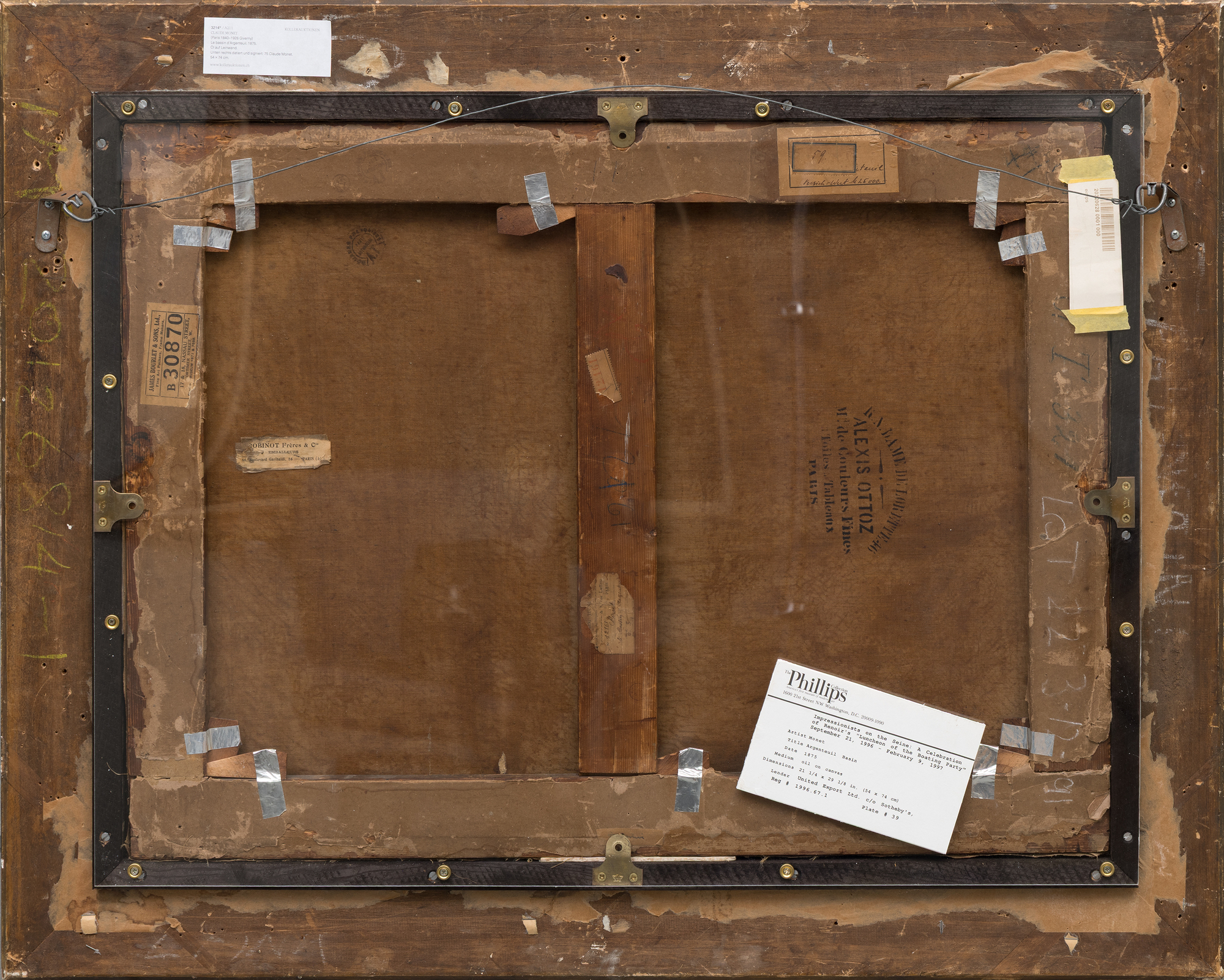
עם גלרי ברנהיים-ז'ון, פריז, לא. 12161 (תווית מאחור)
אוסף אוסקר שמיץ, דרזדן, 1904
קונסטהאוס ציריך, בהשאלה משנת 1931 מאוסף אוסקר שמיץ
מוזיאון האמנות באזל, בהשאלה משנת 1934 מאוסף אוסקר שמיץ
וילדנשטיין ושות', לונדון, משנת 1936
מר EW Fattorini, בריטניה הגדולה, 1940
סותביס, לונדון, 16 באפריל 1975, פריט 25
אוסף פרטי, אנגליה
סותביס, לונדון, 3 בדצמבר 1991, פריט 22
אוסף פרטי, לונדון, נרכש במכירה הפומבית הנ"ל
... עוד...עַל
אוסף פרטי, אירופה
Koller Auktionen AG, ציריך, 29 בנובמבר 2024, מגרש 03214
אוסף פרטי, לונדון, נרכש במכירה הפומבית הנ"ל
תערוכה
ציריך, Kunsthaus Zürich, Sammlung Oscar Schmitz, 14 בינואר-14 בפברואר 1932, מס'. 35/47
Balingen, Stadthalle, Claude Monet, 18 ביוני-31 באוגוסט, 1992, מס'. 6
וושינגטון די.סי., אוסף פיליפס, אימפרסיוניסטים על הסיין: חגיגה של "ארוחת צהריים של מסיבת השייט" מאת רנואר, 21 בספטמבר 1996 - 2 בפברואר 1997, מס' 39
ספרות
דניאל וילדנשטיין, מונה. קטלוג raisonné. Werkverzeichnis, Bonn, 1996, vol. ב', עמ'. 153, מס'. 371 (בציור)
פול פכטר, "Die Sammlung Schmitz," Kunst und Künstler: Illustrierte Monatsschrift für bildende Kunst und Kunstgewerbe, ברלין, אוקטובר 1909, עמ'. 21
Karl Scheffler, "Die Sammlung Oskar Schmitz in Dresden," Kunst und Künstler: Illustrierte Monatsschrift für bildende Kunst und Kunstgewerbe, Berlin, 1920/21, p. 186
מארי דורמוי, "La collection Schmitz à Dresde", L'Amour de l'art, פריז, אוקטובר 1926, עמ'. 342
Daniel Wildenstein, Monet, vie et œuvre, Lausanne/Paris, 1974, vol. אני, עמ'. 237, 272 (אייר)
ג'ואל אייזקסון, התבוננות והשתקפות. קלוד מונה, אוקספורד, 1978, עמ' 95, 207 (עם איורים)
פול הייז טאקר, מונה בארג'נטיי, ניו הייבן/לונדון, 1982, עמ' 120 (מאויר מס' XXI)
Daniel Wildenstein, Monet, vie et œuvre, Lausanne/Paris, 1991, Vol. V, p. 30 (בציור)
... פחות...
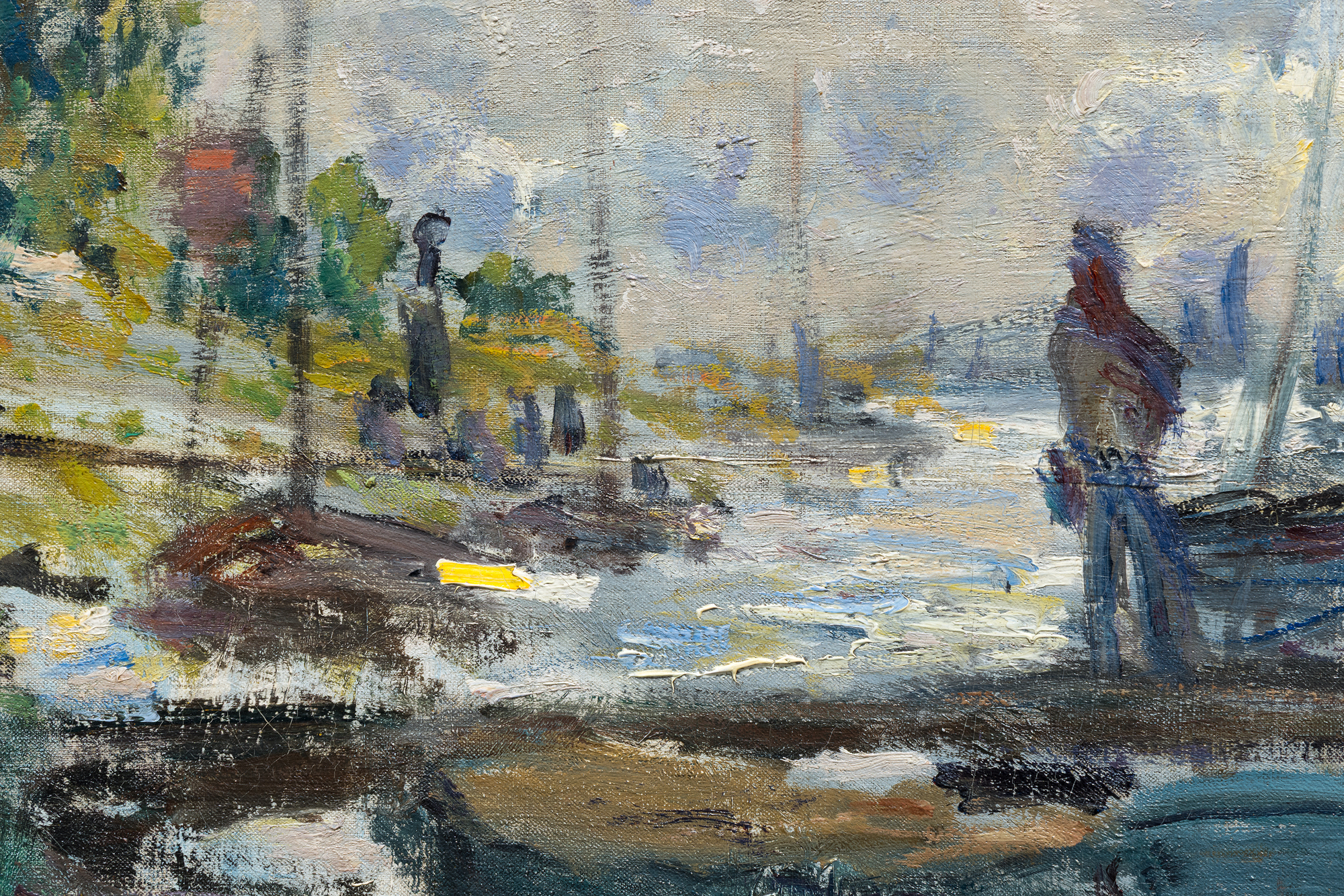
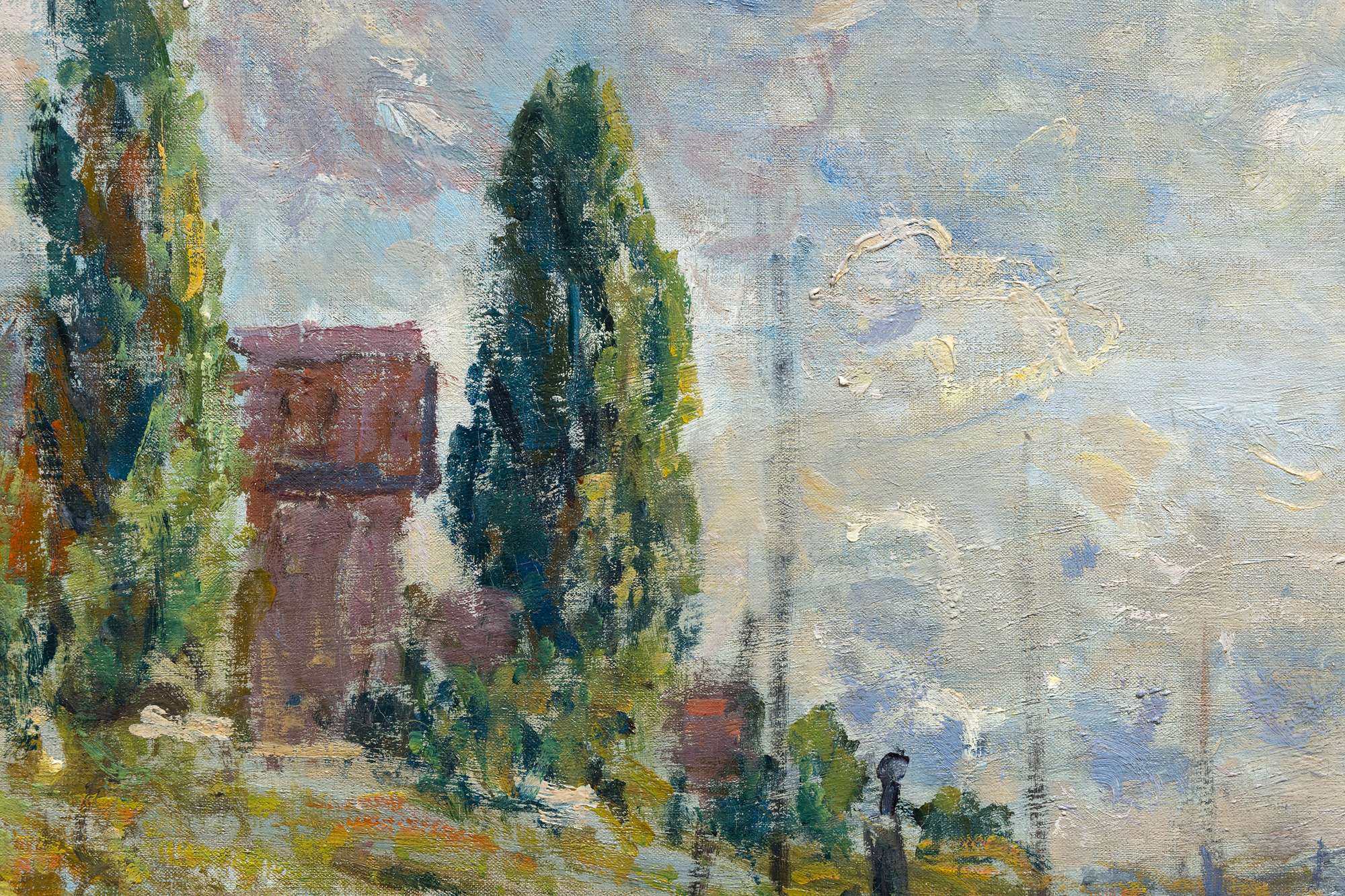
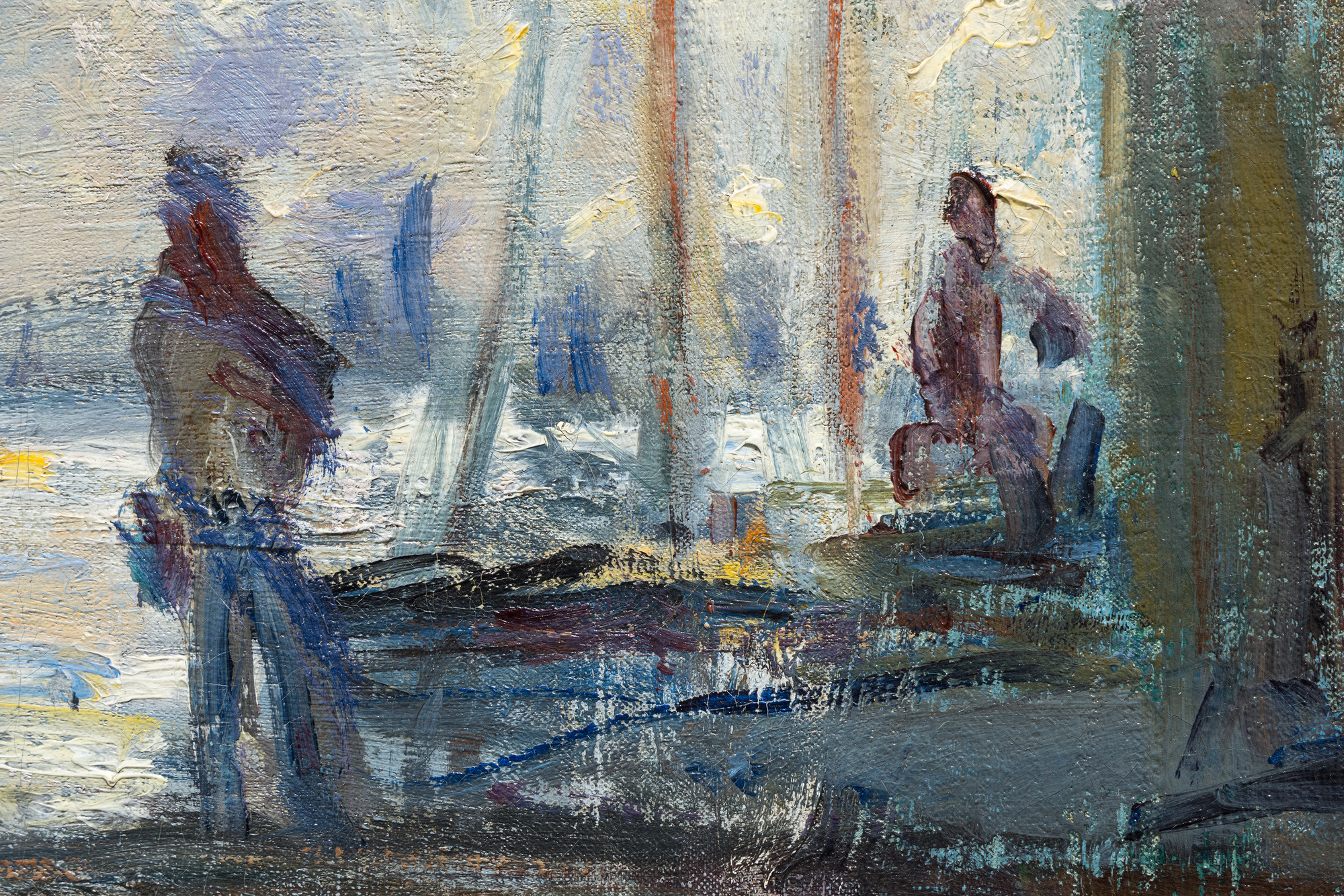
"אגן ארגנטיי" (Le bassin d'Argenteuil) (1875) של קלוד מונה הוא דוגמה זוהרת מאחת התקופות המכריעות ביותר בקריירה שלו, שצוירה בסוף האביב או בקיץ 1875, שנה אחת בלבד לאחר התערוכה האימפרסיוניסטית פורצת הדרך הראשונה. הקומפוזיציה, הממוקמת לאורך הסיין בארגנטיי, לוכדת אגן שקט מונפש על ידי סירות קטנות, דמויות והשתקפויות, המוצגות בעבודת מכחול רופפת ואקספרסיבית המעבירה את ההשפעות החולפות של אור ואווירה. הפיזור העדין של מים ושמיים יוצר משטח מנצנץ, המתאים באופן מושלם לפרקטיקה של מונה בפליין אייר ולרצונו לתעד את התפיסה ברגע.


לארג'נטיי היה אלמנט מרכזי בגיבוש האימפרסיוניזם, וסימן תקופה שבה רעיונותיו, נושאיו ורוח שיתוף הפעולה שלו התגבשו במלואם. בין השנים 1871 ו-1878, נוכחותו של מונה שם משכה אמנים אחרים, ביניהם רנואר, מאנה, סיסלי וקייבוט, וטיפחה סביבה של ניסויים וחדשנות משותפים.


מקורו המוקדם של הציור מחזק עוד יותר את חשיבותו. הוא היה בבעלותו של אוסקר א.ה. שמיץ, הסופר והאינטלקטואל הגרמני הידוע בכתביו על הפסיכולוגיה היונגיאנית ובאוסף האמנות המעמיק שלו מהמאה ה-19. לאחר מותו הבלתי צפוי של שמיץ בשנת 1933, האוסף נשלח למוזיאון האמנות באזל. בשנת 1936, סוחר האמנות וילדנשטיין ושות' לקח לידיו 62 יצירות מהאוסף וארגן תערוכה ומכירה גדולה בפריז ובניו יורק. "אגן הארגנטייל" נכלל בקטלוג הקיום של דניאל וילדנשטיין (1996), כרך ב', עמ' 153, כמס' 371, ופורסם בשמונה ספרים.
לברר