גב

קמיל פיסארו(1830-1903)

$235,000

 
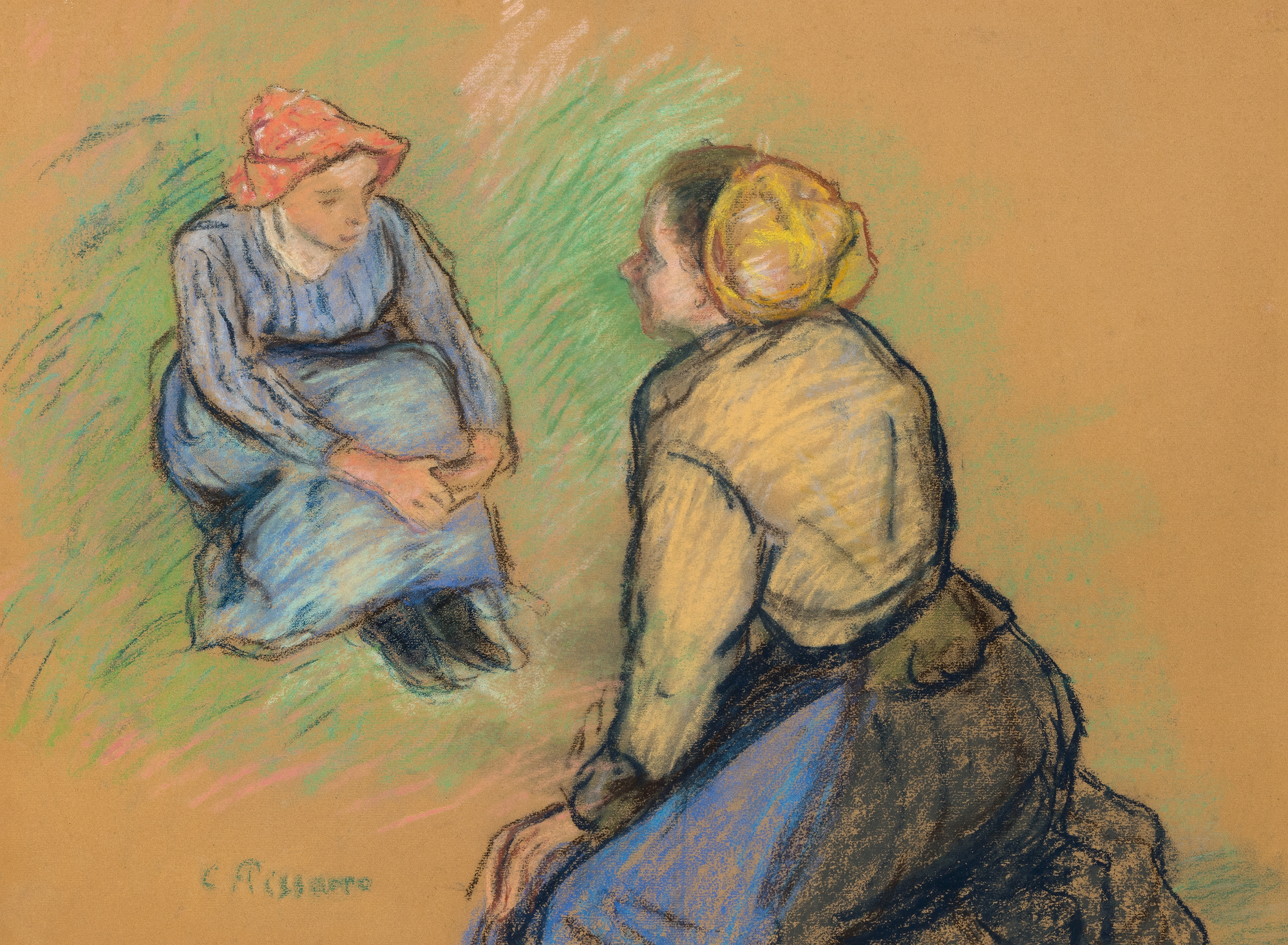
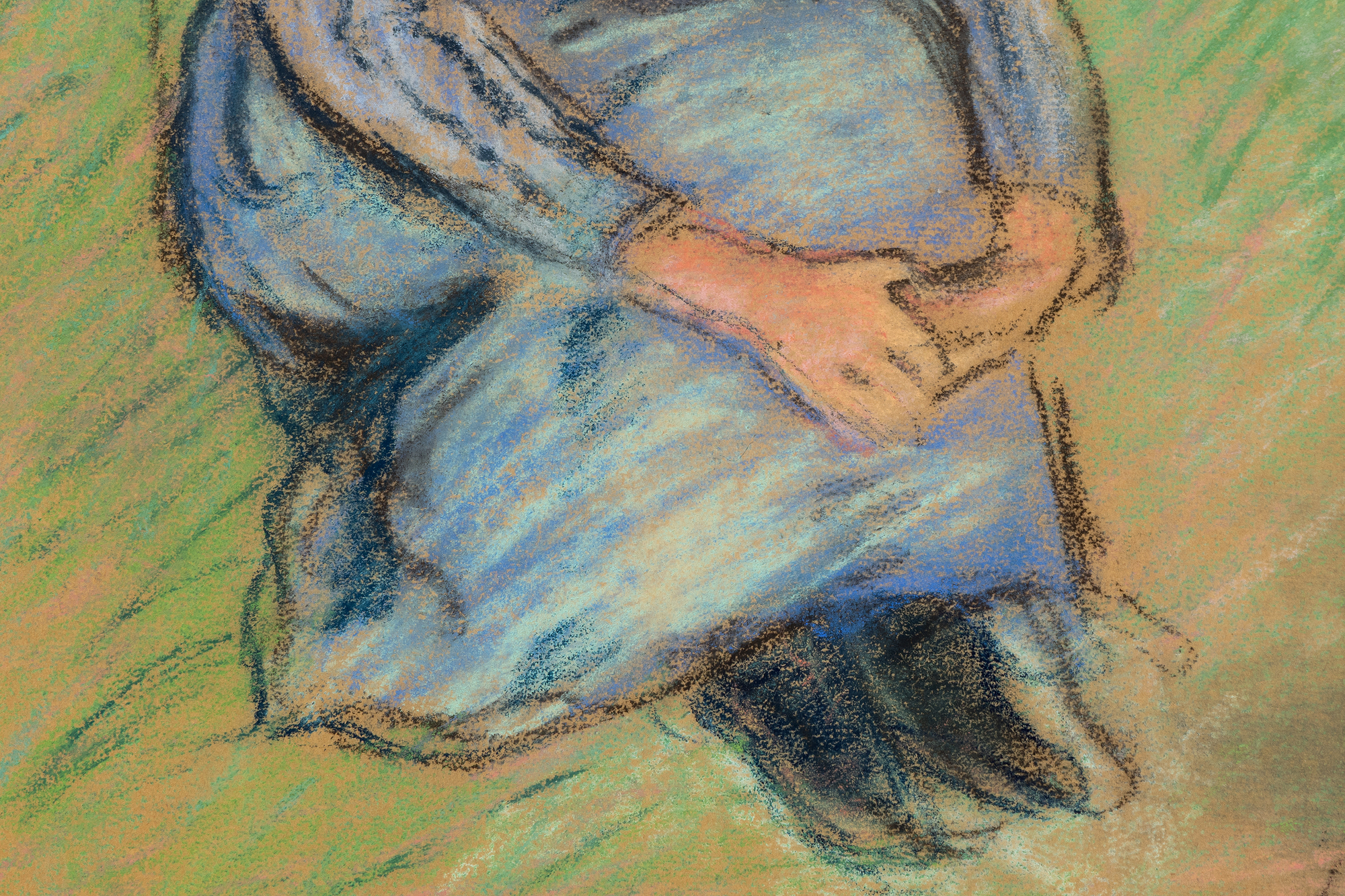
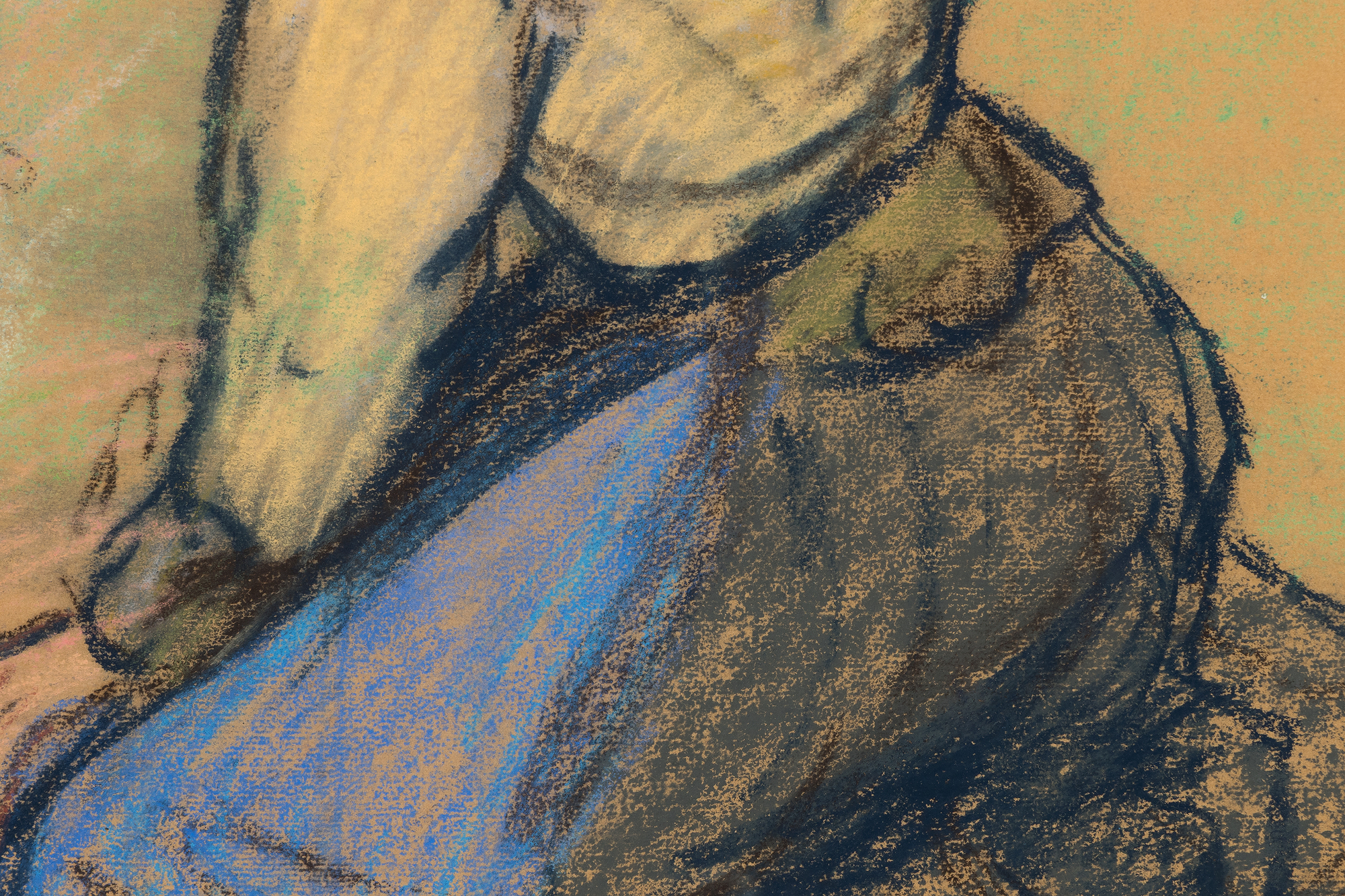
<div>Camille Pissarro’s<em> Paysannes assises </em>(c. 1880) is a richly colored, large-scale pastel that distills the artist’s humanism and modernity into an intimate, everyday encounter. Two peasant women sit in quiet conversation, their bodies described with confident contour and softened planes of color that feel both immediate and tender. The warm tone of the paper becomes an active field, allowing passages of blue, green, and rose to breathe around the figures, while Pissarro’s unmistakably painterly strokes—alternately feathered and emphatic—give the scene texture, light, and lived presence. Bright yet restrained, the work is iconically Pissarro: direct, unsentimental, and deeply attentive to rural life. </div><br><br><div> </div><br><br><div>Often called the backbone of Impressionism, Pissarro was the movement’s most consistent, experimental, and unifying force. He was the only artist to exhibit in all eight Impressionist exhibitions from 1874 to 1886, and his generosity as a mentor shaped the next generation—Cézanne, Gauguin, Seurat, and Signac among them. In pastel, a medium prized for its speed and chromatic intensity, Pissarro found an especially apt vehicle for capturing fleeting effects and the immediacy of observation, without sacrificing structure or psychological nuance. </div><br><br><div> </div><br><br><div>The enduring importance of his work is underscored by recent museum attention, including the Denver Art Museum’s major exhibition positioning him as “the first Impressionist” (<em>The Honest Eye: Camille Pissarro's Impressionism</em>, October 26, 2025 – February 8, 2026), the first significant U.S. survey of the artist in four decades. <em>Paysannes assises</em> also resonates with closely related figure studies in major collections, such as examples at LACMA and The Morgan Library, affirming the centrality of these pastoral subjects within Pissarro’s practice and within Impressionism itself. </div> <div>Camille Pissarro’s<em> Paysannes assises </em>(c. 1880) is a richly colored, large-scale pastel that distills the artist’s humanism and modernity into an intimate, everyday encounter. Two peasant women sit in quiet conversation, their bodies described with confident contour and softened planes of color that feel both immediate and tender. The warm tone of the paper becomes an active field, allowing passages of blue, green, and rose to breathe around the figures, while Pissarro’s unmistakably painterly strokes—alternately feathered and emphatic—give the scene texture, light, and lived presence. Bright yet restrained, the work is iconically Pissarro: direct, unsentimental, and deeply attentive to rural life. </div><br><br><div> </div><br><br><div>Often called the backbone of Impressionism, Pissarro was the movement’s most consistent, experimental, and unifying force. He was the only artist to exhibit in all eight Impressionist exhibitions from 1874 to 1886, and his generosity as a mentor shaped the next generation—Cézanne, Gauguin, Seurat, and Signac among them. In pastel, a medium prized for its speed and chromatic intensity, Pissarro found an especially apt vehicle for capturing fleeting effects and the immediacy of observation, without sacrificing structure or psychological nuance. </div><br><br><div> </div><br><br><div>The enduring importance of his work is underscored by recent museum attention, including the Denver Art Museum’s major exhibition positioning him as “the first Impressionist” (<em>The Honest Eye: Camille Pissarro's Impressionism</em>, October 26, 2025 – February 8, 2026), the first significant U.S. survey of the artist in four decades. <em>Paysannes assises</em> also resonates with closely related figure studies in major collections, such as examples at LACMA and The Morgan Library, affirming the centrality of these pastoral subjects within Pissarro’s practice and within Impressionism itself. </div> <div>Camille Pissarro’s<em> Paysannes assises </em>(c. 1880) is a richly colored, large-scale pastel that distills the artist’s humanism and modernity into an intimate, everyday encounter. Two peasant women sit in quiet conversation, their bodies described with confident contour and softened planes of color that feel both immediate and tender. The warm tone of the paper becomes an active field, allowing passages of blue, green, and rose to breathe around the figures, while Pissarro’s unmistakably painterly strokes—alternately feathered and emphatic—give the scene texture, light, and lived presence. Bright yet restrained, the work is iconically Pissarro: direct, unsentimental, and deeply attentive to rural life. </div><br><br><div> </div><br><br><div>Often called the backbone of Impressionism, Pissarro was the movement’s most consistent, experimental, and unifying force. He was the only artist to exhibit in all eight Impressionist exhibitions from 1874 to 1886, and his generosity as a mentor shaped the next generation—Cézanne, Gauguin, Seurat, and Signac among them. In pastel, a medium prized for its speed and chromatic intensity, Pissarro found an especially apt vehicle for capturing fleeting effects and the immediacy of observation, without sacrificing structure or psychological nuance. </div><br><br><div> </div><br><br><div>The enduring importance of his work is underscored by recent museum attention, including the Denver Art Museum’s major exhibition positioning him as “the first Impressionist” (<em>The Honest Eye: Camille Pissarro's Impressionism</em>, October 26, 2025 – February 8, 2026), the first significant U.S. survey of the artist in four decades. <em>Paysannes assises</em> also resonates with closely related figure studies in major collections, such as examples at LACMA and The Morgan Library, affirming the centrality of these pastoral subjects within Pissarro’s practice and within Impressionism itself. </div> <div>Camille Pissarro’s<em> Paysannes assises </em>(c. 1880) is a richly colored, large-scale pastel that distills the artist’s humanism and modernity into an intimate, everyday encounter. Two peasant women sit in quiet conversation, their bodies described with confident contour and softened planes of color that feel both immediate and tender. The warm tone of the paper becomes an active field, allowing passages of blue, green, and rose to breathe around the figures, while Pissarro’s unmistakably painterly strokes—alternately feathered and emphatic—give the scene texture, light, and lived presence. Bright yet restrained, the work is iconically Pissarro: direct, unsentimental, and deeply attentive to rural life. </div><br><br><div> </div><br><br><div>Often called the backbone of Impressionism, Pissarro was the movement’s most consistent, experimental, and unifying force. He was the only artist to exhibit in all eight Impressionist exhibitions from 1874 to 1886, and his generosity as a mentor shaped the next generation—Cézanne, Gauguin, Seurat, and Signac among them. In pastel, a medium prized for its speed and chromatic intensity, Pissarro found an especially apt vehicle for capturing fleeting effects and the immediacy of observation, without sacrificing structure or psychological nuance. </div><br><br><div> </div><br><br><div>The enduring importance of his work is underscored by recent museum attention, including the Denver Art Museum’s major exhibition positioning him as “the first Impressionist” (<em>The Honest Eye: Camille Pissarro's Impressionism</em>, October 26, 2025 – February 8, 2026), the first significant U.S. survey of the artist in four decades. <em>Paysannes assises</em> also resonates with closely related figure studies in major collections, such as examples at LACMA and The Morgan Library, affirming the centrality of these pastoral subjects within Pissarro’s practice and within Impressionism itself. </div> <div>Camille Pissarro’s<em> Paysannes assises </em>(c. 1880) is a richly colored, large-scale pastel that distills the artist’s humanism and modernity into an intimate, everyday encounter. Two peasant women sit in quiet conversation, their bodies described with confident contour and softened planes of color that feel both immediate and tender. The warm tone of the paper becomes an active field, allowing passages of blue, green, and rose to breathe around the figures, while Pissarro’s unmistakably painterly strokes—alternately feathered and emphatic—give the scene texture, light, and lived presence. Bright yet restrained, the work is iconically Pissarro: direct, unsentimental, and deeply attentive to rural life. </div><br><br><div> </div><br><br><div>Often called the backbone of Impressionism, Pissarro was the movement’s most consistent, experimental, and unifying force. He was the only artist to exhibit in all eight Impressionist exhibitions from 1874 to 1886, and his generosity as a mentor shaped the next generation—Cézanne, Gauguin, Seurat, and Signac among them. In pastel, a medium prized for its speed and chromatic intensity, Pissarro found an especially apt vehicle for capturing fleeting effects and the immediacy of observation, without sacrificing structure or psychological nuance. </div><br><br><div> </div><br><br><div>The enduring importance of his work is underscored by recent museum attention, including the Denver Art Museum’s major exhibition positioning him as “the first Impressionist” (<em>The Honest Eye: Camille Pissarro's Impressionism</em>, October 26, 2025 – February 8, 2026), the first significant U.S. survey of the artist in four decades. <em>Paysannes assises</em> also resonates with closely related figure studies in major collections, such as examples at LACMA and The Morgan Library, affirming the centrality of these pastoral subjects within Pissarro’s practice and within Impressionism itself. </div> <div>Camille Pissarro’s<em> Paysannes assises </em>(c. 1880) is a richly colored, large-scale pastel that distills the artist’s humanism and modernity into an intimate, everyday encounter. Two peasant women sit in quiet conversation, their bodies described with confident contour and softened planes of color that feel both immediate and tender. The warm tone of the paper becomes an active field, allowing passages of blue, green, and rose to breathe around the figures, while Pissarro’s unmistakably painterly strokes—alternately feathered and emphatic—give the scene texture, light, and lived presence. Bright yet restrained, the work is iconically Pissarro: direct, unsentimental, and deeply attentive to rural life. </div><br><br><div> </div><br><br><div>Often called the backbone of Impressionism, Pissarro was the movement’s most consistent, experimental, and unifying force. He was the only artist to exhibit in all eight Impressionist exhibitions from 1874 to 1886, and his generosity as a mentor shaped the next generation—Cézanne, Gauguin, Seurat, and Signac among them. In pastel, a medium prized for its speed and chromatic intensity, Pissarro found an especially apt vehicle for capturing fleeting effects and the immediacy of observation, without sacrificing structure or psychological nuance. </div><br><br><div> </div><br><br><div>The enduring importance of his work is underscored by recent museum attention, including the Denver Art Museum’s major exhibition positioning him as “the first Impressionist” (<em>The Honest Eye: Camille Pissarro's Impressionism</em>, October 26, 2025 – February 8, 2026), the first significant U.S. survey of the artist in four decades. <em>Paysannes assises</em> also resonates with closely related figure studies in major collections, such as examples at LACMA and The Morgan Library, affirming the centrality of these pastoral subjects within Pissarro’s practice and within Impressionism itself. </div> <div>Camille Pissarro’s<em> Paysannes assises </em>(c. 1880) is a richly colored, large-scale pastel that distills the artist’s humanism and modernity into an intimate, everyday encounter. Two peasant women sit in quiet conversation, their bodies described with confident contour and softened planes of color that feel both immediate and tender. The warm tone of the paper becomes an active field, allowing passages of blue, green, and rose to breathe around the figures, while Pissarro’s unmistakably painterly strokes—alternately feathered and emphatic—give the scene texture, light, and lived presence. Bright yet restrained, the work is iconically Pissarro: direct, unsentimental, and deeply attentive to rural life. </div><br><br><div> </div><br><br><div>Often called the backbone of Impressionism, Pissarro was the movement’s most consistent, experimental, and unifying force. He was the only artist to exhibit in all eight Impressionist exhibitions from 1874 to 1886, and his generosity as a mentor shaped the next generation—Cézanne, Gauguin, Seurat, and Signac among them. In pastel, a medium prized for its speed and chromatic intensity, Pissarro found an especially apt vehicle for capturing fleeting effects and the immediacy of observation, without sacrificing structure or psychological nuance. </div><br><br><div> </div><br><br><div>The enduring importance of his work is underscored by recent museum attention, including the Denver Art Museum’s major exhibition positioning him as “the first Impressionist” (<em>The Honest Eye: Camille Pissarro's Impressionism</em>, October 26, 2025 – February 8, 2026), the first significant U.S. survey of the artist in four decades. <em>Paysannes assises</em> also resonates with closely related figure studies in major collections, such as examples at LACMA and The Morgan Library, affirming the centrality of these pastoral subjects within Pissarro’s practice and within Impressionism itself. </div>
Paysannes Assises c.1880 עפרון בגודל 16 x 22 אינץ' (40.64 x 55.88 ס"מ) על נייר
מקור ומקור
אוסף ארנה שטיבל
כריסטי'ס, ניו יורק, 11 במאי 1995, פריט 231 (מעיזבונה של ארנה שטיבל)
פאולו דאל בוסקו, טרנטו, נרכש במכירה הנ"ל
פנדולפיני קאסה ד'אסטה: יום שלישי, 29 באוקטובר, 2019, פריט 00004, אוצרות שהתגלו מחדש, יצירות מופת אימפרסיוניסטיות ומודרניות (מאוסף פרטי)
אוסף פרטי, לונדון, נרכש במכירה הפומבית הנ"ל
ספרות
עבודה זו תיכלל בקטלוג הדיגיטלי של פיסארו הקרוב, "ריזונה".

"Paysannes assises" מאת קמיל פיסארו (בסביבות 1880) הוא פסטל עשיר בצבעים ובקנה מידה גדול, הממזקק את ההומניזם והמודרניות של האמנית למפגש אינטימי ויומיומי. שתי נשים איכרות יושבות בשיחה שקטה, גופן מתואר בקווי מתאר בטוחים ובמישורי צבע מרוככים, המרגישים גם מיידיים וגם עדינים. הגוון החם של הנייר הופך לשדה פעיל, המאפשר למעברים של כחול, ירוק וורוד לנשום סביב הדמויות, בעוד משיכות הציור הברורות של פיסארו - נוצות ודגשניות לסירוגין - מעניקות לסצנה מרקם, אור ונוכחות חיה. בהירה אך מאופקת, היצירה היא אייקונית של פיסארו: ישירה, לא סנטימנטלית וקשובה עמוקות לחיי הכפר.


פיסארו, המכונה לעתים קרובות עמוד השדרה של האימפרסיוניסטים, היה הכוח העקבי, הניסיוני והמאחד ביותר של התנועה. הוא היה האמן היחיד שהציג בכל שמונה התערוכות האימפרסיוניסטיות בין השנים 1874 ל-1886, ונדיבותו כמנטור עיצבה את הדור הבא - סזאן, גוגן, סרה וסיניאק ביניהם. בפסטל, מדיום המוערך בזכות מהירותו ועוצמתו הכרומטית, מצא פיסארו כלי מתאים במיוחד ללכידת אפקטים חולפים ומיידיות התצפית, מבלי לוותר על מבנה או ניואנסים פסיכולוגיים.


החשיבות המתמשכת של עבודתו מודגשת על ידי תשומת הלב המוזיאונית האחרונה, כולל התערוכה הגדולה של מוזיאון האמנות של דנבר, המציגה אותו כ"אימפרסיוניסט הראשון" (העין הכנה: האימפרסיוניזם של קמיל פיסארו, 26 באוקטובר 2025 - 8 בפברואר 2026), הסקירה המשמעותית הראשונה בארה"ב של האמן מזה ארבעה עשורים. "Paysannes assises" מהדהדת גם עם מחקרי דמויות קרובים באוספים גדולים, כמו דוגמאות ב-LACMA ובספריית מורגן, ומאשרת את מרכזיותם של נושאים פסטורליים אלה בעבודה של פיסארו ובתוך האימפרסיוניזם עצמו.
לברר