Back

MARC CHAGALL (1887-1985)

 
<div><font face=Lato size=3 color=black>Marc Chagall’s <em>Sur la table</em> is a radiant celebration of color, memory, and imagination. Bathed in a deep blue palette, the painting brings together several of the artist’s most beloved motifs: a rooster, violinist, goat, and exuberant bouquet. The composition is animated with Chagall’s signature sense of movement and dreamlike harmony, creating a world where everyday life, folklore, and love coexist in vibrant equilibrium.</font></div>
<br>
<br><div> </div>
<br>
<br><div><font face=Lato size=3 color=black>Painted in a richly productive period just after Chagall’s return to his homeland in the early 1970s, <em>Sur la table</em> reflects the renewed emotional and visual energy that came from reconnecting with his roots in Vitebsk, represented here by the white domed church in the distance. The expansive bouquet, one of Chagall’s enduring symbols of love for his first wife, Bella, dominates the foreground and infuses the work with emotional warmth and vitality.</font></div>
<br>
<br><div> </div>
<br>
<br><div><font face=Lato size=3 color=black>The painting remained in Chagall’s own collection and estate until after his death in 1985, underscoring its personal significance. Authenticated by the Comité Marc Chagall, <em>Sur la table</em> belongs to a lineage of floral and symbolic compositions that define his mature work.</font></div> <div><font face=Lato size=3 color=black>Marc Chagall’s <em>Sur la table</em> is a radiant celebration of color, memory, and imagination. Bathed in a deep blue palette, the painting brings together several of the artist’s most beloved motifs: a rooster, violinist, goat, and exuberant bouquet. The composition is animated with Chagall’s signature sense of movement and dreamlike harmony, creating a world where everyday life, folklore, and love coexist in vibrant equilibrium.</font></div>
<br>
<br><div> </div>
<br>
<br><div><font face=Lato size=3 color=black>Painted in a richly productive period just after Chagall’s return to his homeland in the early 1970s, <em>Sur la table</em> reflects the renewed emotional and visual energy that came from reconnecting with his roots in Vitebsk, represented here by the white domed church in the distance. The expansive bouquet, one of Chagall’s enduring symbols of love for his first wife, Bella, dominates the foreground and infuses the work with emotional warmth and vitality.</font></div>
<br>
<br><div> </div>
<br>
<br><div><font face=Lato size=3 color=black>The painting remained in Chagall’s own collection and estate until after his death in 1985, underscoring its personal significance. Authenticated by the Comité Marc Chagall, <em>Sur la table</em> belongs to a lineage of floral and symbolic compositions that define his mature work.</font></div> <div><font face=Lato size=3 color=black>Marc Chagall’s <em>Sur la table</em> is a radiant celebration of color, memory, and imagination. Bathed in a deep blue palette, the painting brings together several of the artist’s most beloved motifs: a rooster, violinist, goat, and exuberant bouquet. The composition is animated with Chagall’s signature sense of movement and dreamlike harmony, creating a world where everyday life, folklore, and love coexist in vibrant equilibrium.</font></div>
<br>
<br><div> </div>
<br>
<br><div><font face=Lato size=3 color=black>Painted in a richly productive period just after Chagall’s return to his homeland in the early 1970s, <em>Sur la table</em> reflects the renewed emotional and visual energy that came from reconnecting with his roots in Vitebsk, represented here by the white domed church in the distance. The expansive bouquet, one of Chagall’s enduring symbols of love for his first wife, Bella, dominates the foreground and infuses the work with emotional warmth and vitality.</font></div>
<br>
<br><div> </div>
<br>
<br><div><font face=Lato size=3 color=black>The painting remained in Chagall’s own collection and estate until after his death in 1985, underscoring its personal significance. Authenticated by the Comité Marc Chagall, <em>Sur la table</em> belongs to a lineage of floral and symbolic compositions that define his mature work.</font></div> <div><font face=Lato size=3 color=black>Marc Chagall’s <em>Sur la table</em> is a radiant celebration of color, memory, and imagination. Bathed in a deep blue palette, the painting brings together several of the artist’s most beloved motifs: a rooster, violinist, goat, and exuberant bouquet. The composition is animated with Chagall’s signature sense of movement and dreamlike harmony, creating a world where everyday life, folklore, and love coexist in vibrant equilibrium.</font></div>
<br>
<br><div> </div>
<br>
<br><div><font face=Lato size=3 color=black>Painted in a richly productive period just after Chagall’s return to his homeland in the early 1970s, <em>Sur la table</em> reflects the renewed emotional and visual energy that came from reconnecting with his roots in Vitebsk, represented here by the white domed church in the distance. The expansive bouquet, one of Chagall’s enduring symbols of love for his first wife, Bella, dominates the foreground and infuses the work with emotional warmth and vitality.</font></div>
<br>
<br><div> </div>
<br>
<br><div><font face=Lato size=3 color=black>The painting remained in Chagall’s own collection and estate until after his death in 1985, underscoring its personal significance. Authenticated by the Comité Marc Chagall, <em>Sur la table</em> belongs to a lineage of floral and symbolic compositions that define his mature work.</font></div> <div><font face=Lato size=3 color=black>Marc Chagall’s <em>Sur la table</em> is a radiant celebration of color, memory, and imagination. Bathed in a deep blue palette, the painting brings together several of the artist’s most beloved motifs: a rooster, violinist, goat, and exuberant bouquet. The composition is animated with Chagall’s signature sense of movement and dreamlike harmony, creating a world where everyday life, folklore, and love coexist in vibrant equilibrium.</font></div>
<br>
<br><div> </div>
<br>
<br><div><font face=Lato size=3 color=black>Painted in a richly productive period just after Chagall’s return to his homeland in the early 1970s, <em>Sur la table</em> reflects the renewed emotional and visual energy that came from reconnecting with his roots in Vitebsk, represented here by the white domed church in the distance. The expansive bouquet, one of Chagall’s enduring symbols of love for his first wife, Bella, dominates the foreground and infuses the work with emotional warmth and vitality.</font></div>
<br>
<br><div> </div>
<br>
<br><div><font face=Lato size=3 color=black>The painting remained in Chagall’s own collection and estate until after his death in 1985, underscoring its personal significance. Authenticated by the Comité Marc Chagall, <em>Sur la table</em> belongs to a lineage of floral and symbolic compositions that define his mature work.</font></div> <div><font face=Lato size=3 color=black>Marc Chagall’s <em>Sur la table</em> is a radiant celebration of color, memory, and imagination. Bathed in a deep blue palette, the painting brings together several of the artist’s most beloved motifs: a rooster, violinist, goat, and exuberant bouquet. The composition is animated with Chagall’s signature sense of movement and dreamlike harmony, creating a world where everyday life, folklore, and love coexist in vibrant equilibrium.</font></div>
<br>
<br><div> </div>
<br>
<br><div><font face=Lato size=3 color=black>Painted in a richly productive period just after Chagall’s return to his homeland in the early 1970s, <em>Sur la table</em> reflects the renewed emotional and visual energy that came from reconnecting with his roots in Vitebsk, represented here by the white domed church in the distance. The expansive bouquet, one of Chagall’s enduring symbols of love for his first wife, Bella, dominates the foreground and infuses the work with emotional warmth and vitality.</font></div>
<br>
<br><div> </div>
<br>
<br><div><font face=Lato size=3 color=black>The painting remained in Chagall’s own collection and estate until after his death in 1985, underscoring its personal significance. Authenticated by the Comité Marc Chagall, <em>Sur la table</em> belongs to a lineage of floral and symbolic compositions that define his mature work.</font></div> <div><font face=Lato size=3 color=black>Marc Chagall’s <em>Sur la table</em> is a radiant celebration of color, memory, and imagination. Bathed in a deep blue palette, the painting brings together several of the artist’s most beloved motifs: a rooster, violinist, goat, and exuberant bouquet. The composition is animated with Chagall’s signature sense of movement and dreamlike harmony, creating a world where everyday life, folklore, and love coexist in vibrant equilibrium.</font></div>
<br>
<br><div> </div>
<br>
<br><div><font face=Lato size=3 color=black>Painted in a richly productive period just after Chagall’s return to his homeland in the early 1970s, <em>Sur la table</em> reflects the renewed emotional and visual energy that came from reconnecting with his roots in Vitebsk, represented here by the white domed church in the distance. The expansive bouquet, one of Chagall’s enduring symbols of love for his first wife, Bella, dominates the foreground and infuses the work with emotional warmth and vitality.</font></div>
<br>
<br><div> </div>
<br>
<br><div><font face=Lato size=3 color=black>The painting remained in Chagall’s own collection and estate until after his death in 1985, underscoring its personal significance. Authenticated by the Comité Marc Chagall, <em>Sur la table</em> belongs to a lineage of floral and symbolic compositions that define his mature work.</font></div> <div><font face=Lato size=3 color=black>Marc Chagall’s <em>Sur la table</em> is a radiant celebration of color, memory, and imagination. Bathed in a deep blue palette, the painting brings together several of the artist’s most beloved motifs: a rooster, violinist, goat, and exuberant bouquet. The composition is animated with Chagall’s signature sense of movement and dreamlike harmony, creating a world where everyday life, folklore, and love coexist in vibrant equilibrium.</font></div>
<br>
<br><div> </div>
<br>
<br><div><font face=Lato size=3 color=black>Painted in a richly productive period just after Chagall’s return to his homeland in the early 1970s, <em>Sur la table</em> reflects the renewed emotional and visual energy that came from reconnecting with his roots in Vitebsk, represented here by the white domed church in the distance. The expansive bouquet, one of Chagall’s enduring symbols of love for his first wife, Bella, dominates the foreground and infuses the work with emotional warmth and vitality.</font></div>
<br>
<br><div> </div>
<br>
<br><div><font face=Lato size=3 color=black>The painting remained in Chagall’s own collection and estate until after his death in 1985, underscoring its personal significance. Authenticated by the Comité Marc Chagall, <em>Sur la table</em> belongs to a lineage of floral and symbolic compositions that define his mature work.</font></div> <div><font face=Lato size=3 color=black>Marc Chagall’s <em>Sur la table</em> is a radiant celebration of color, memory, and imagination. Bathed in a deep blue palette, the painting brings together several of the artist’s most beloved motifs: a rooster, violinist, goat, and exuberant bouquet. The composition is animated with Chagall’s signature sense of movement and dreamlike harmony, creating a world where everyday life, folklore, and love coexist in vibrant equilibrium.</font></div>
<br>
<br><div> </div>
<br>
<br><div><font face=Lato size=3 color=black>Painted in a richly productive period just after Chagall’s return to his homeland in the early 1970s, <em>Sur la table</em> reflects the renewed emotional and visual energy that came from reconnecting with his roots in Vitebsk, represented here by the white domed church in the distance. The expansive bouquet, one of Chagall’s enduring symbols of love for his first wife, Bella, dominates the foreground and infuses the work with emotional warmth and vitality.</font></div>
<br>
<br><div> </div>
<br>
<br><div><font face=Lato size=3 color=black>The painting remained in Chagall’s own collection and estate until after his death in 1985, underscoring its personal significance. Authenticated by the Comité Marc Chagall, <em>Sur la table</em> belongs to a lineage of floral and symbolic compositions that define his mature work.</font></div> <div><font face=Lato size=3 color=black>Marc Chagall’s <em>Sur la table</em> is a radiant celebration of color, memory, and imagination. Bathed in a deep blue palette, the painting brings together several of the artist’s most beloved motifs: a rooster, violinist, goat, and exuberant bouquet. The composition is animated with Chagall’s signature sense of movement and dreamlike harmony, creating a world where everyday life, folklore, and love coexist in vibrant equilibrium.</font></div>
<br>
<br><div> </div>
<br>
<br><div><font face=Lato size=3 color=black>Painted in a richly productive period just after Chagall’s return to his homeland in the early 1970s, <em>Sur la table</em> reflects the renewed emotional and visual energy that came from reconnecting with his roots in Vitebsk, represented here by the white domed church in the distance. The expansive bouquet, one of Chagall’s enduring symbols of love for his first wife, Bella, dominates the foreground and infuses the work with emotional warmth and vitality.</font></div>
<br>
<br><div> </div>
<br>
<br><div><font face=Lato size=3 color=black>The painting remained in Chagall’s own collection and estate until after his death in 1985, underscoring its personal significance. Authenticated by the Comité Marc Chagall, <em>Sur la table</em> belongs to a lineage of floral and symbolic compositions that define his mature work.</font></div>
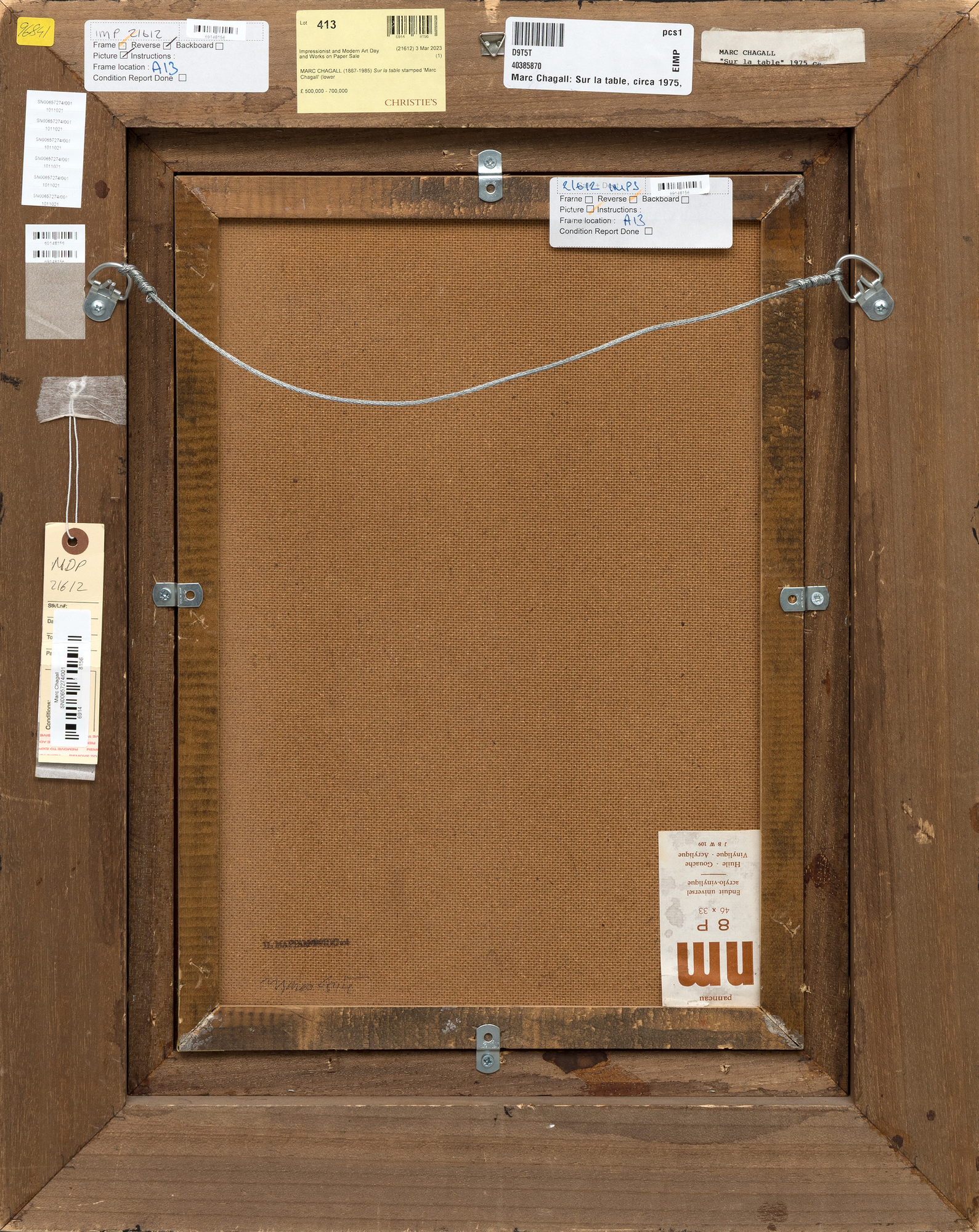
Sur la tablec. 197517 3/4 x 12 3/4 in.(45.09 x 32.39 cm) oil on board
Provenance
The Artist's Estate
Contini Art Gallery, Mestre
Private Collection, Padua
Galleria Il Mappamondo, Milan
Private Collection, Milan
Private Collection, acquired from the above
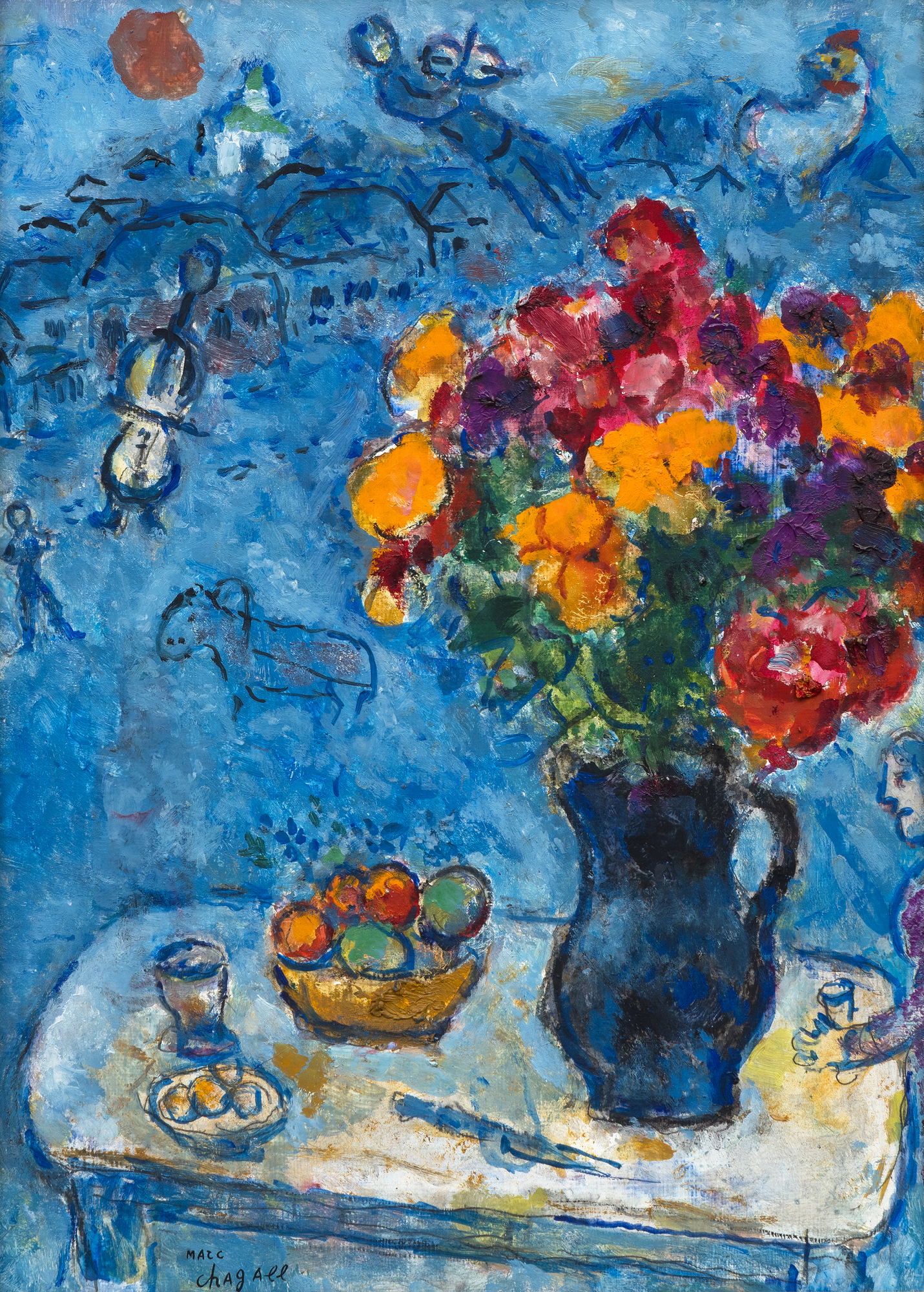
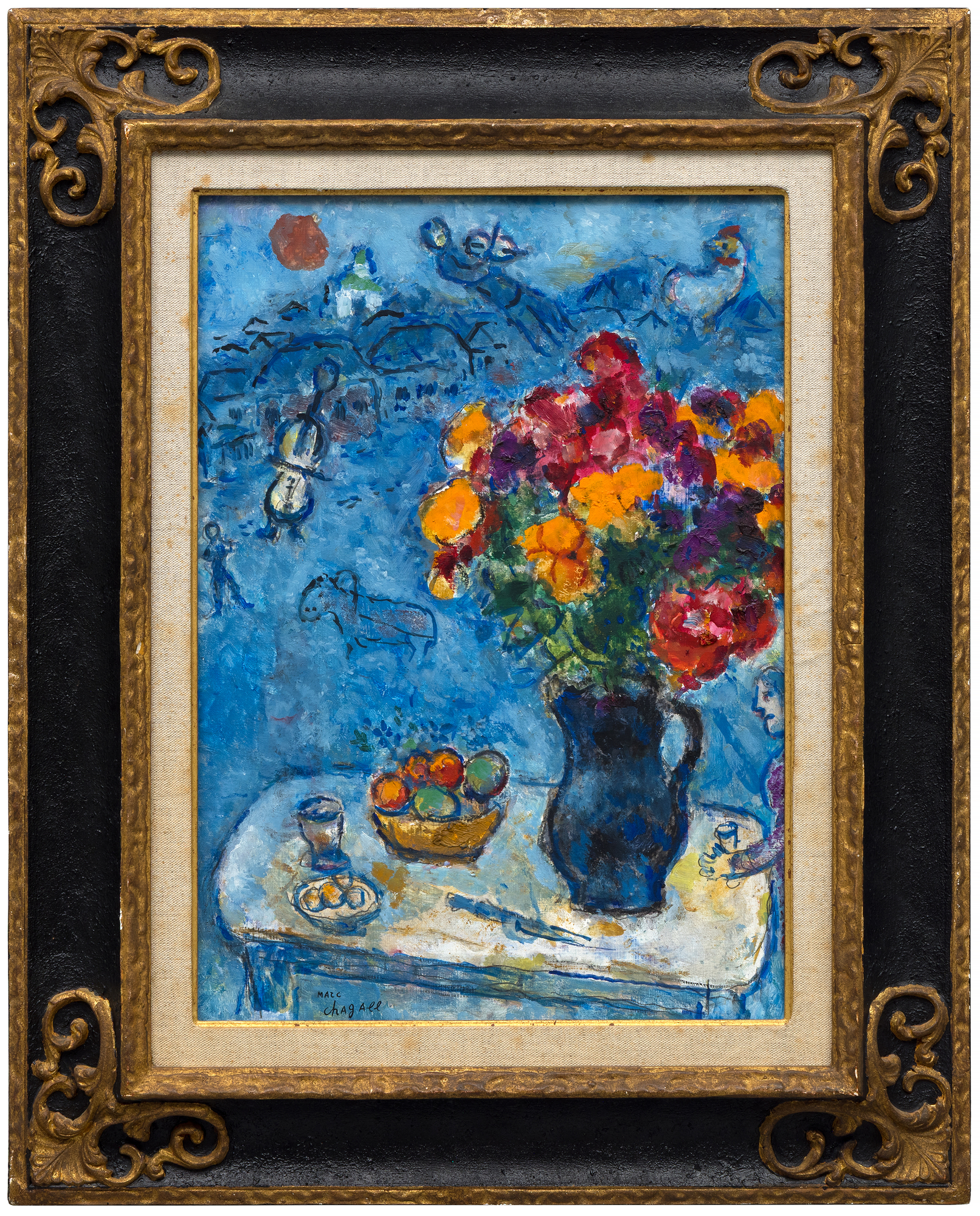
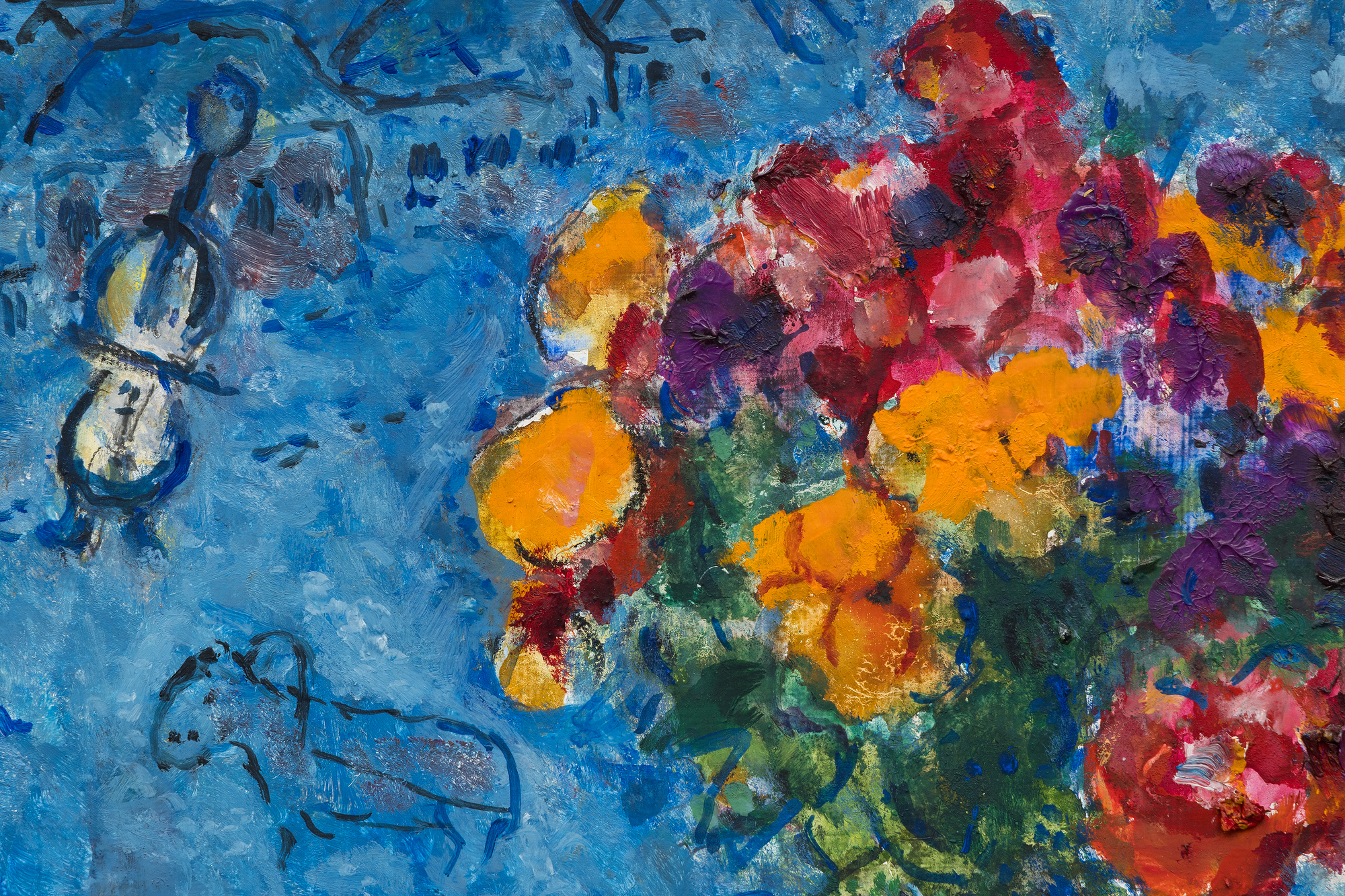
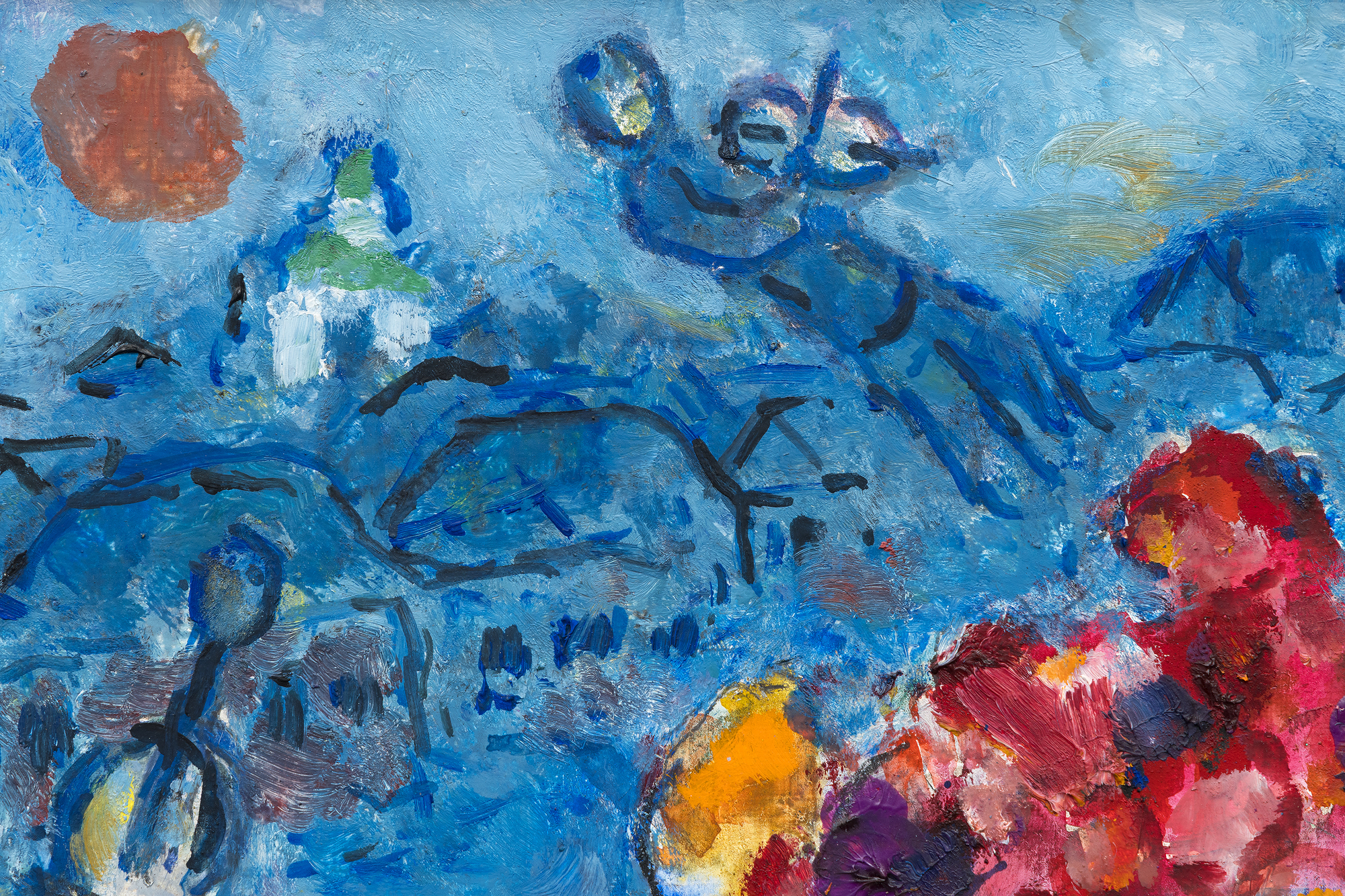
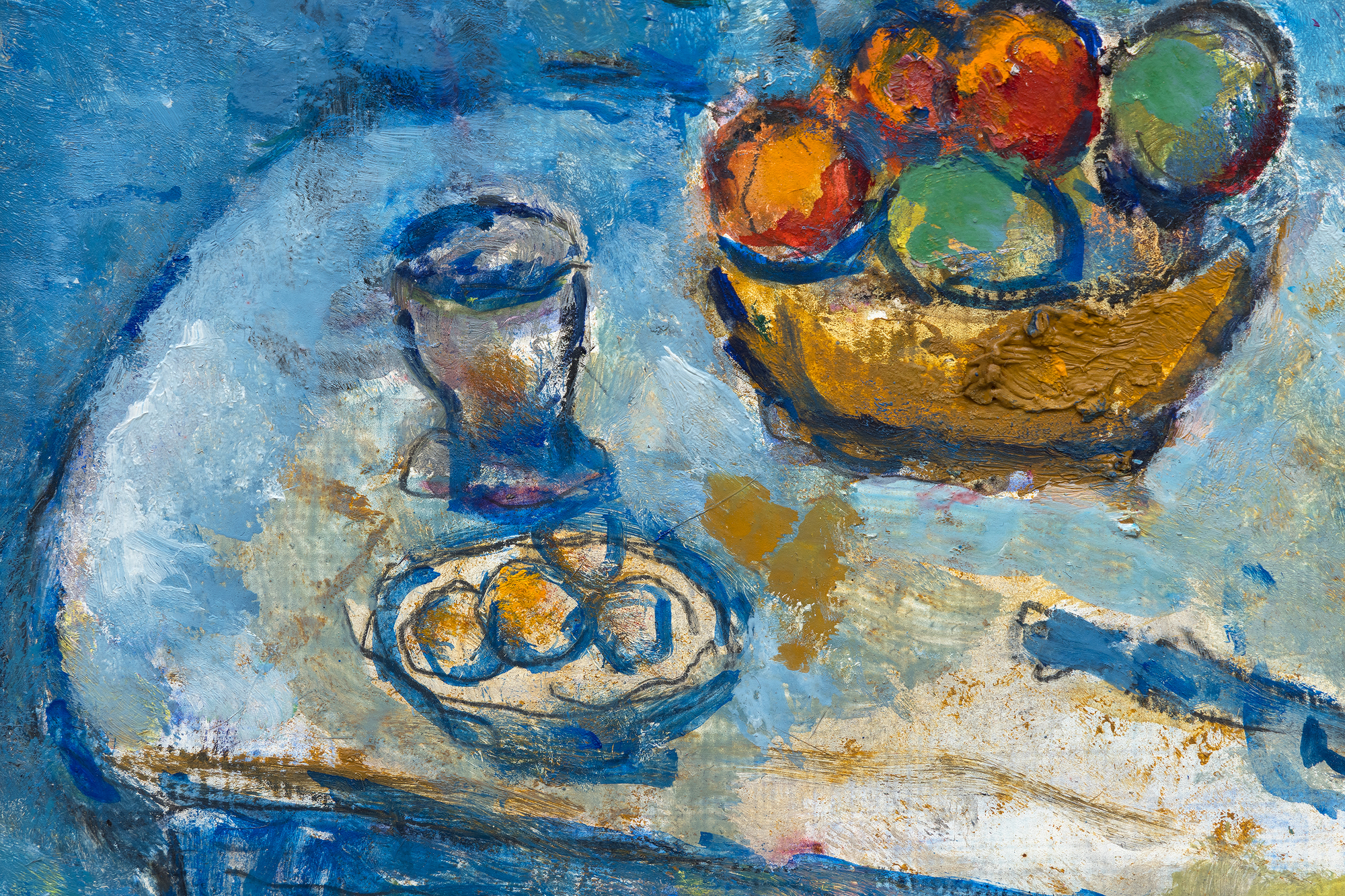
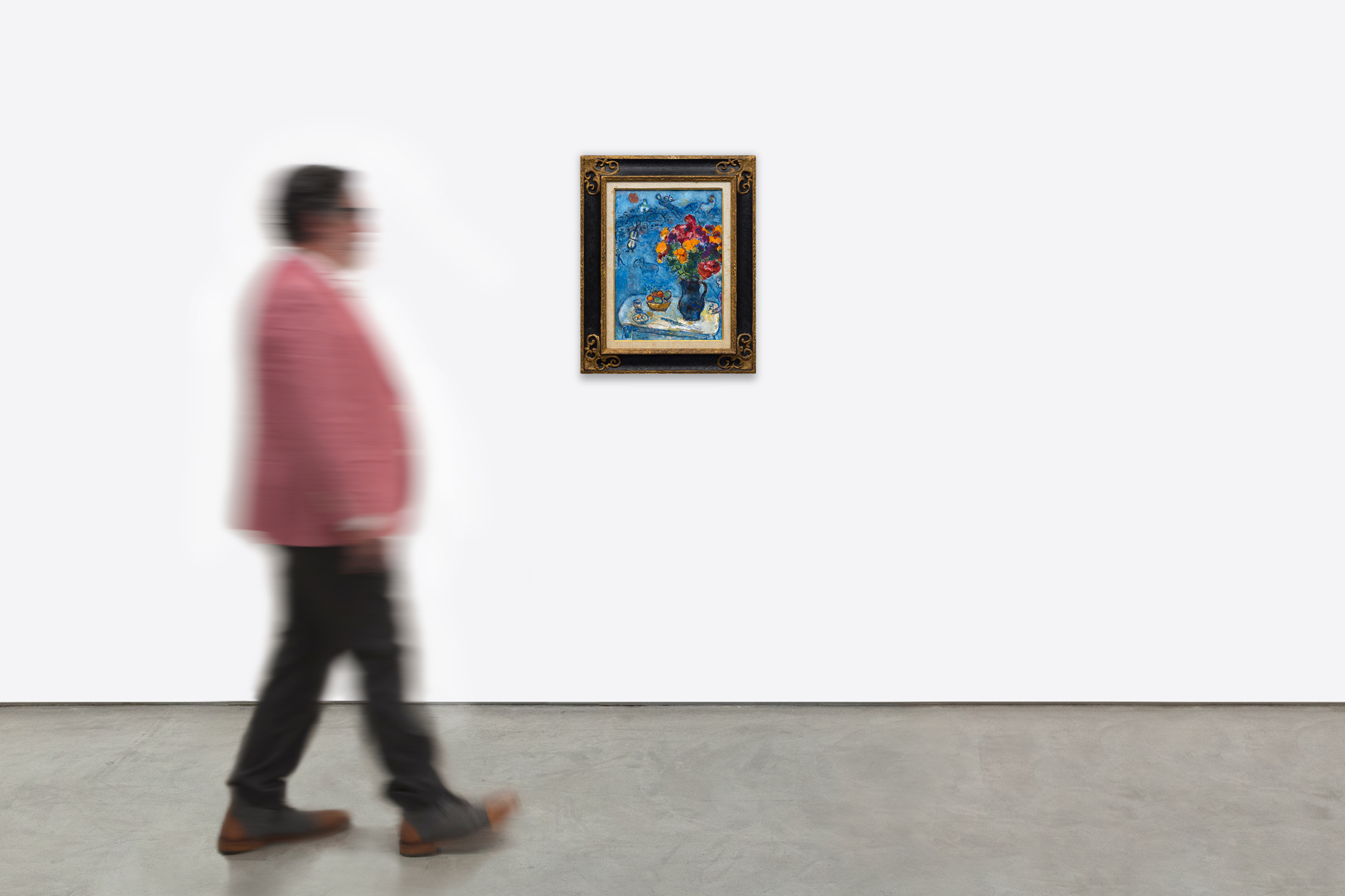
Marc Chagall’s Sur la table is a radiant celebration of color, memory, and imagination. Bathed in a deep blue palette, the painting brings together several of the artist’s most beloved motifs: a rooster, violinist, goat, and exuberant bouquet. The composition is animated with Chagall’s signature sense of movement and dreamlike harmony, creating a world where everyday life, folklore, and love coexist in vibrant equilibrium.


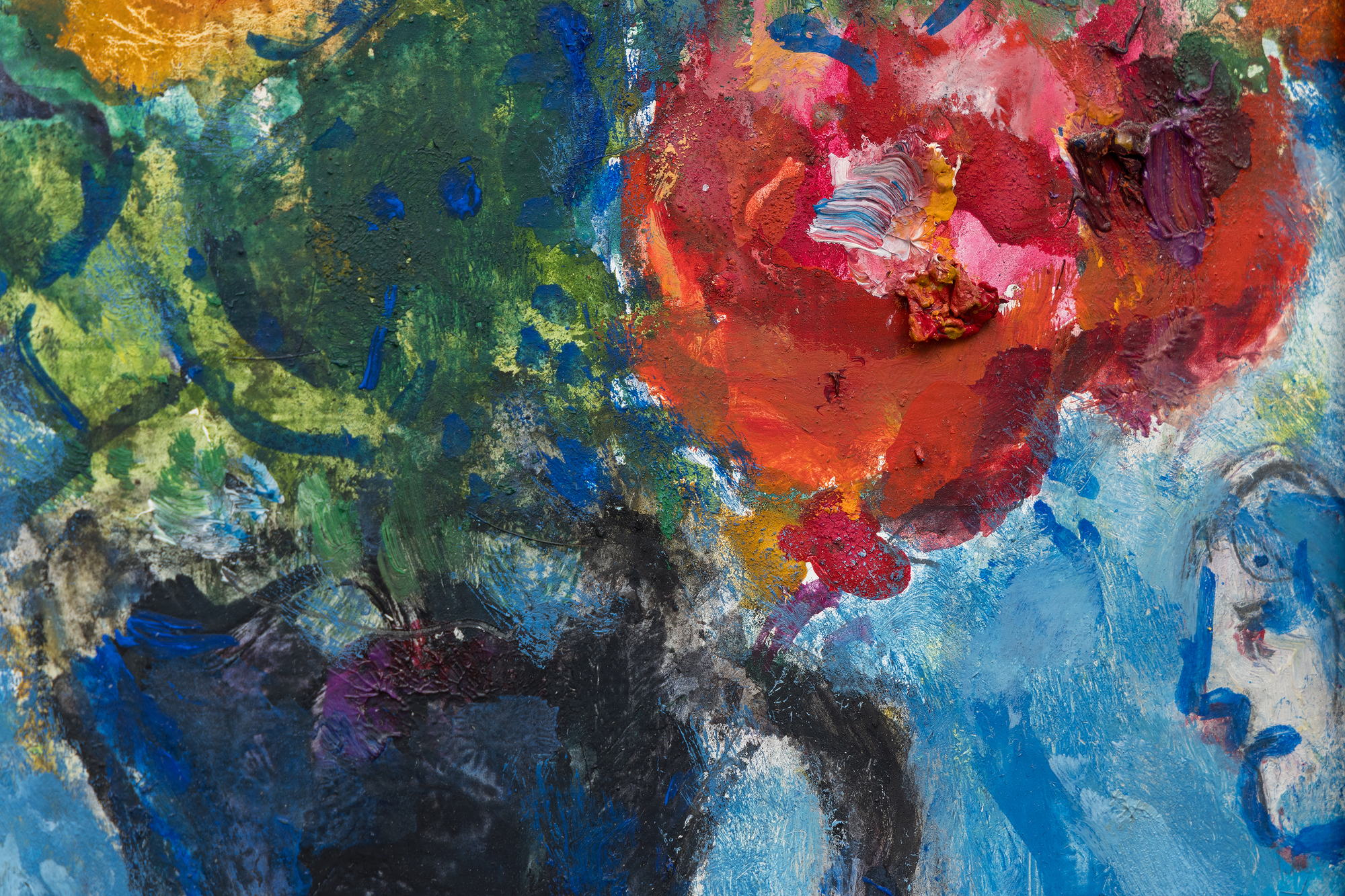
Painted in a richly productive period just after Chagall’s return to his homeland in the early 1970s, Sur la table reflects the renewed emotional and visual energy that came from reconnecting with his roots in Vitebsk, represented here by the white domed church in the distance. The expansive bouquet, one of Chagall’s enduring symbols of love for his first wife, Bella, dominates the foreground and infuses the work with emotional warmth and vitality.


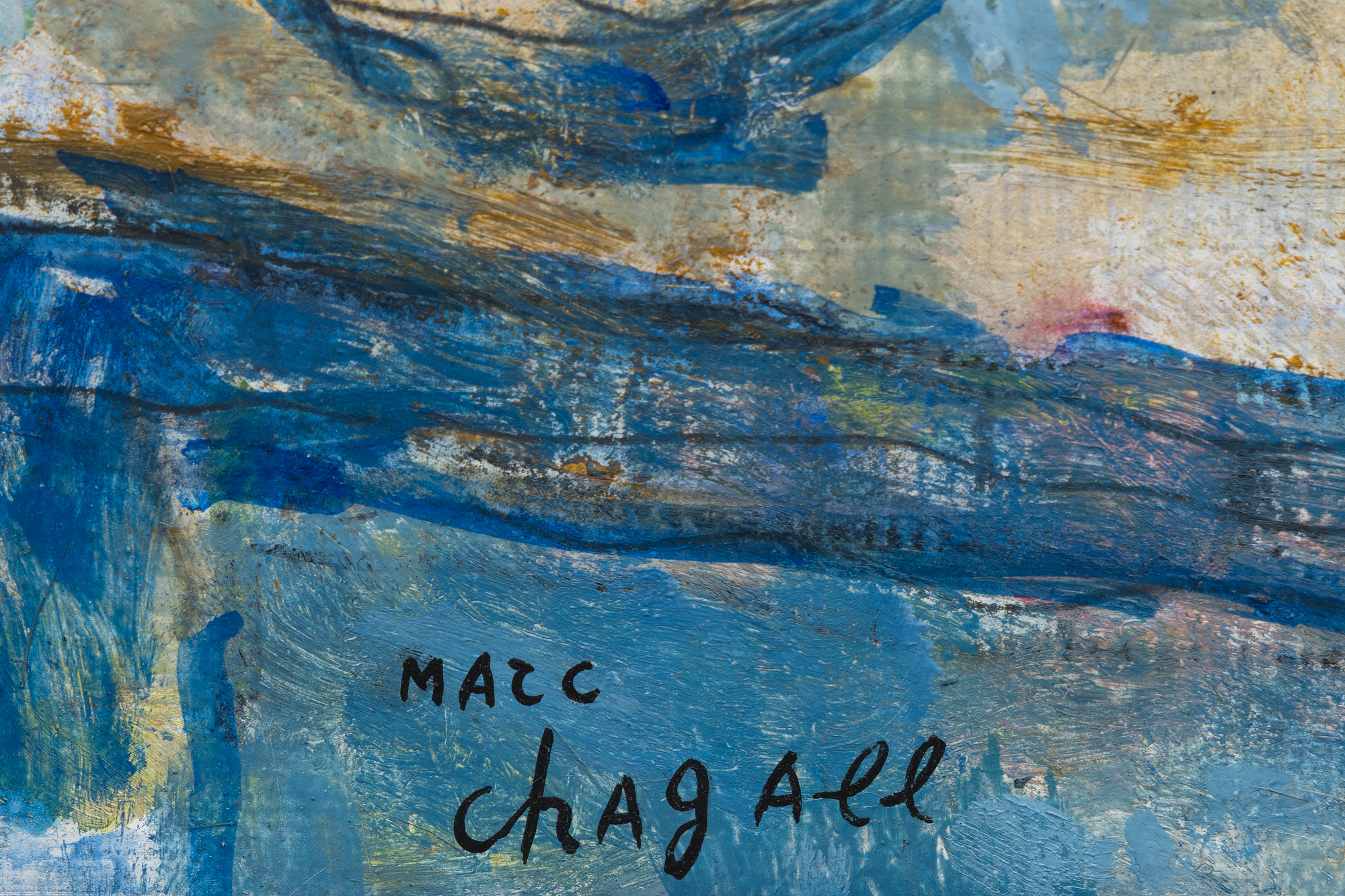
The painting remained in Chagall’s own collection and estate until after his death in 1985, underscoring its personal significance. Authenticated by the Comité Marc Chagall, Sur la table belongs to a lineage of floral and symbolic compositions that define his mature work.
Inquire