


Back

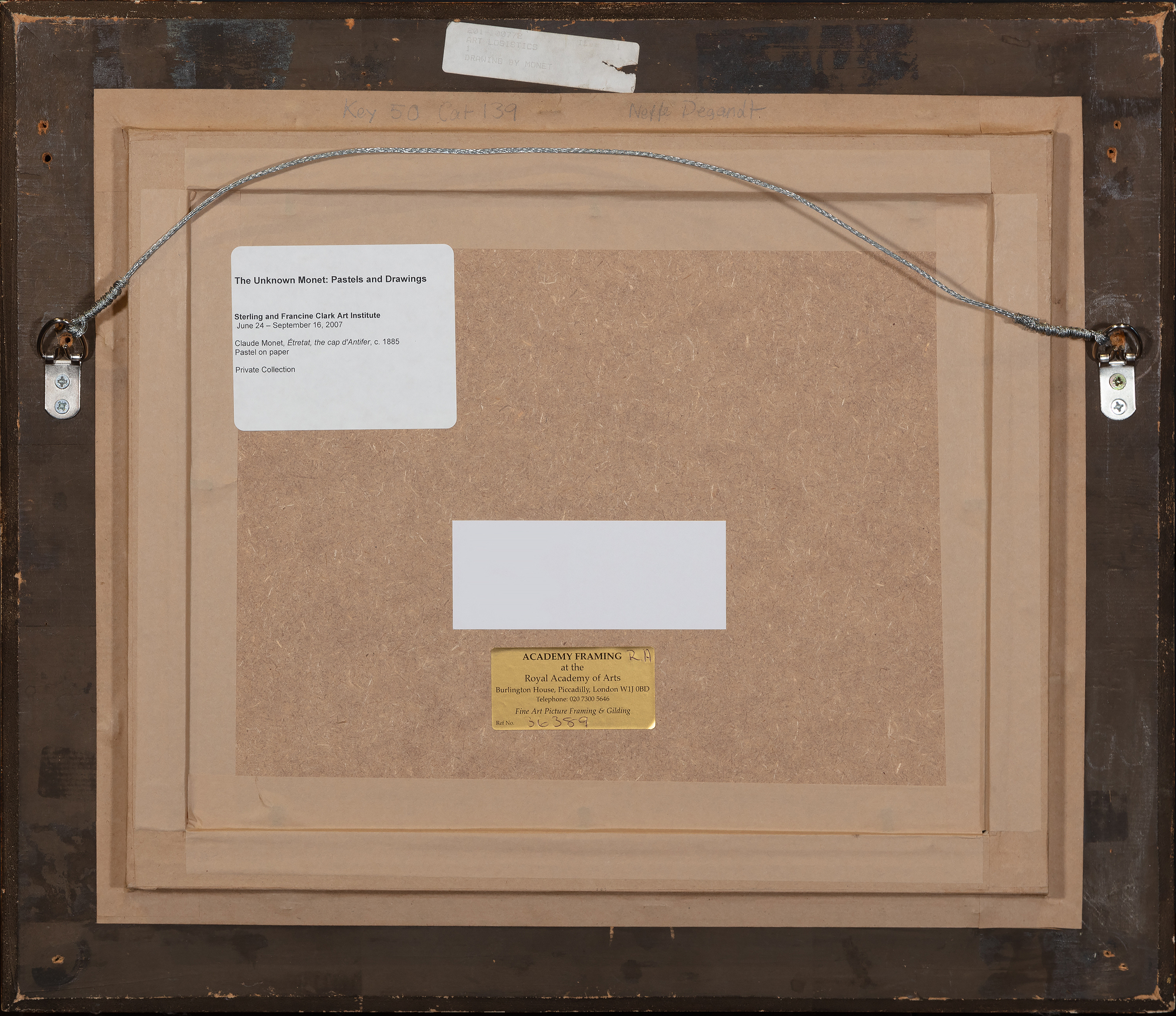
I. Stchoukine, Paris
Hôtel Drouot, Paris, March 24, 1900, lot 36
Olivier Vainsère
Galerie Lorenceau, Paris
Wildenstein & Co., Paris
Alice Tully, acquired from the above, 1973
Christie's, New York, November 10, 1994, lot 138
Neffe-Degandt Gallery, London
Private Collection, acquired from the above, 2002, thence by descent
Private Collection, California
Washi...More...ngton, D.C, Adams Davidson Galleries, The French Impressionists and their Followers, December 1971 - January 1972
London, Royal Academy of Arts; Williamstown, The Sterling and Francine Clark Art Institute, The Unknown Monet: Pastels and Drawings, March - September 2007, no. 139
James Ganz and Richard Kendell, The Unknown Monet: Pastels and Drawings, Williamstown, MA, 2007, no. 139, p. 158-159 and 302 (illustrated p. 158)
...LESS...
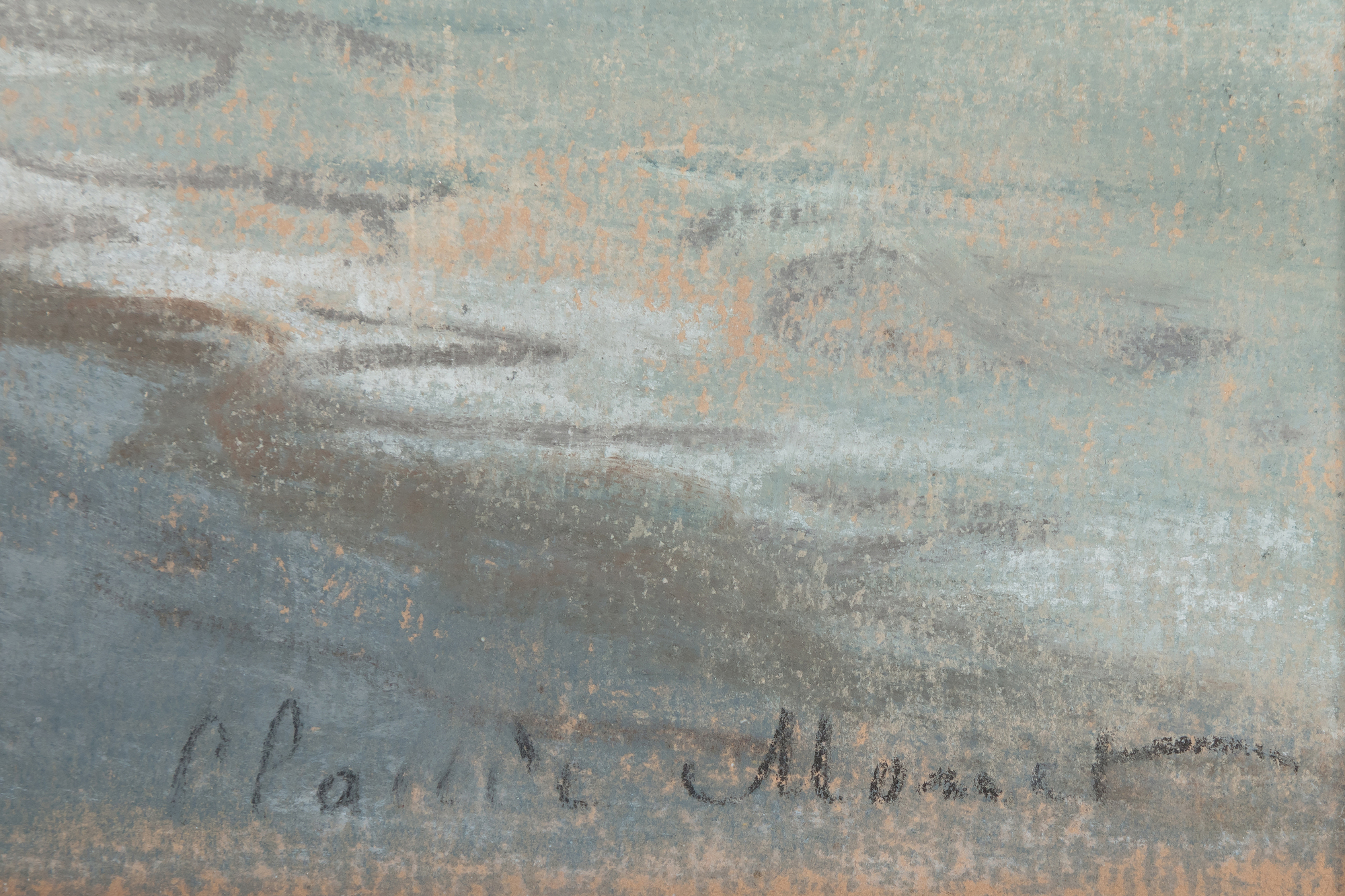
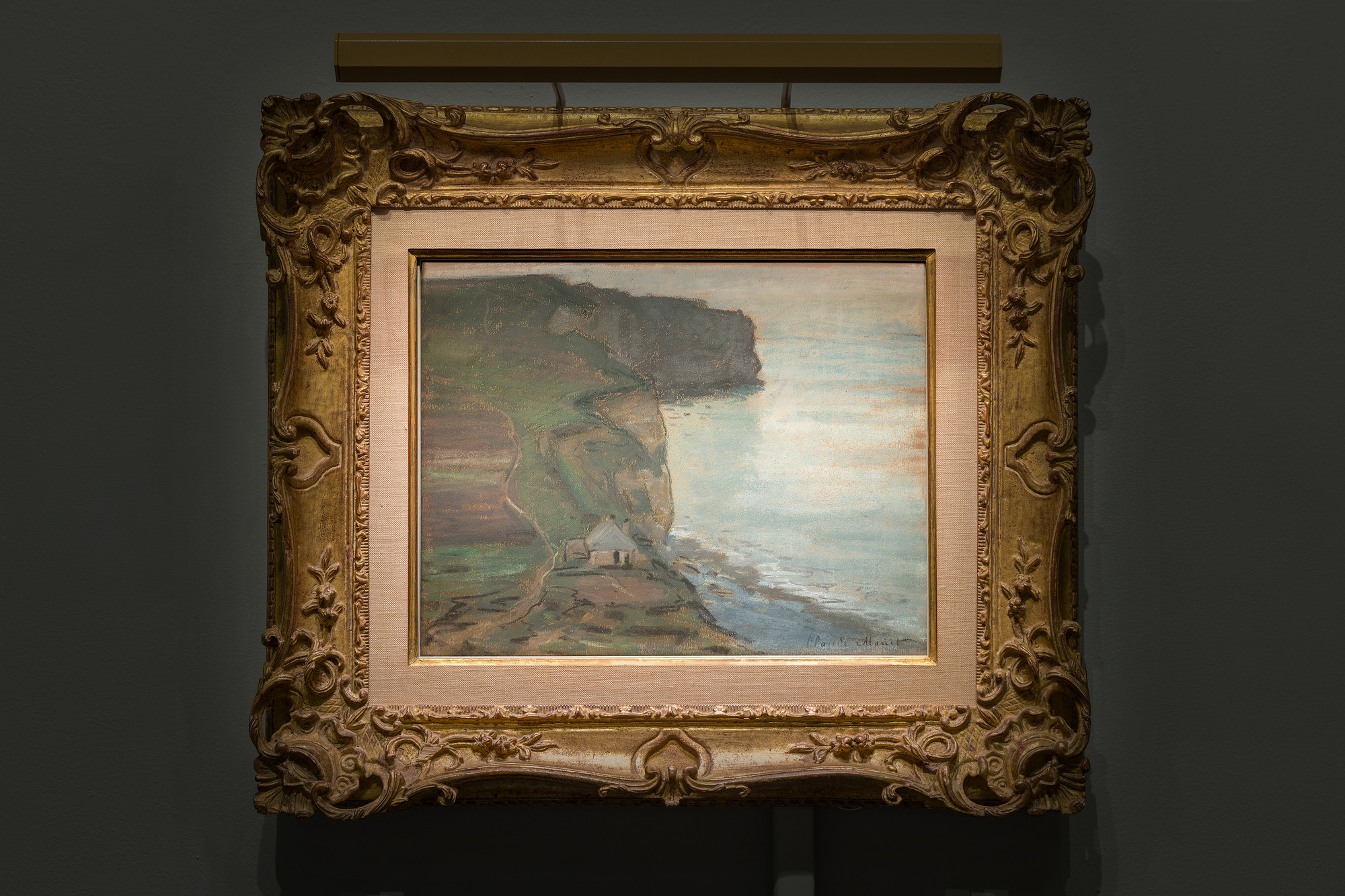
CLAUDE MONET (1840-1926)
$1,950,000
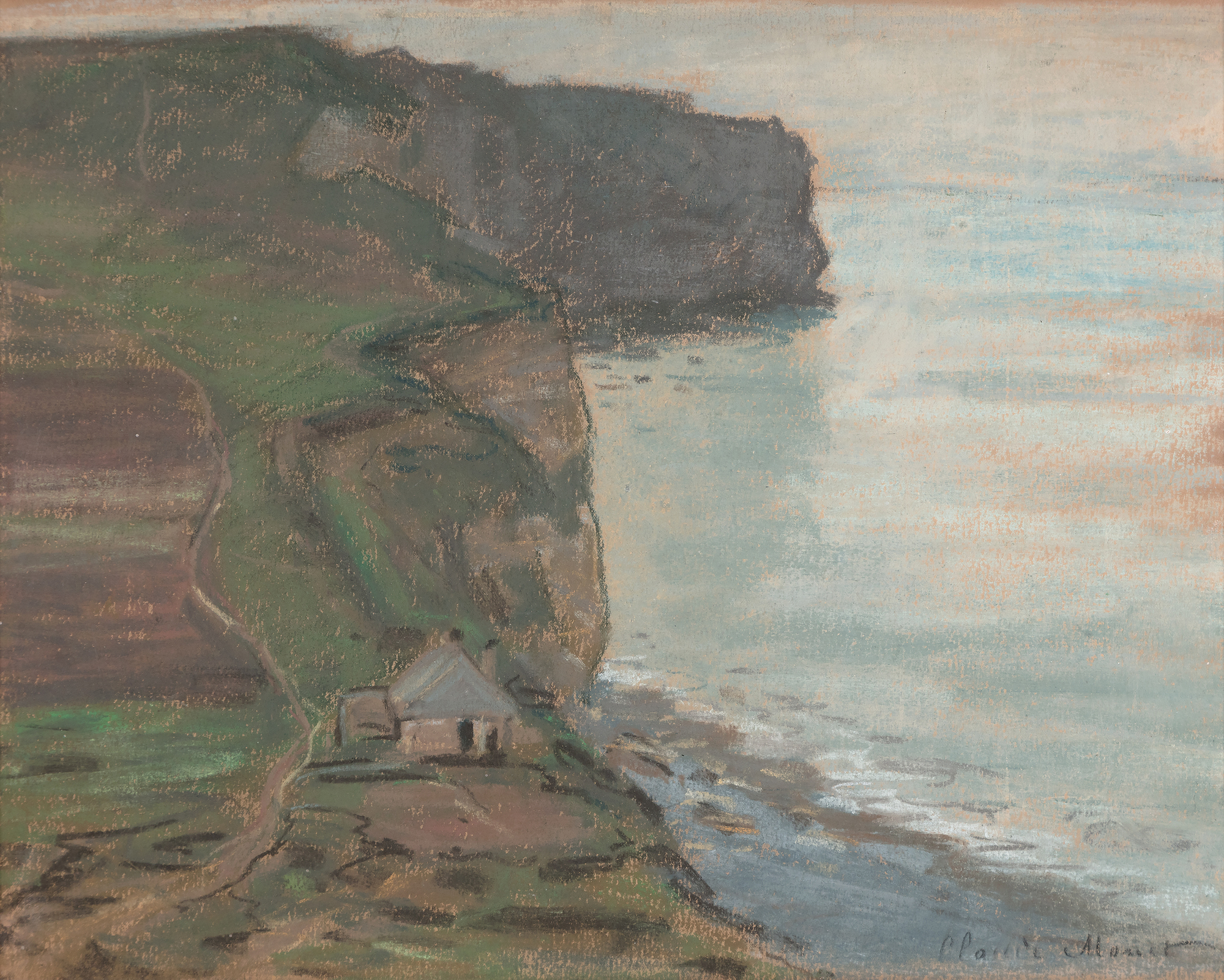
Étretat, le Cap d’Antiferc. 188510 1/2 x 13 3/8 in.(26.67 x 33.97 cm) pastel on paper mounted on board
Provenance
(possibly) Mme Materne, c. 1894I. Stchoukine, Paris
Hôtel Drouot, Paris, March 24, 1900, lot 36
Olivier Vainsère
Galerie Lorenceau, Paris
Wildenstein & Co., Paris
Alice Tully, acquired from the above, 1973
Christie's, New York, November 10, 1994, lot 138
Neffe-Degandt Gallery, London
Private Collection, acquired from the above, 2002, thence by descent
Private Collection, California
Exhibition
East Hampton, New York, Guild Hall, The Sea Around Us, August - September 1953, no. 45Washi...More...ngton, D.C, Adams Davidson Galleries, The French Impressionists and their Followers, December 1971 - January 1972
London, Royal Academy of Arts; Williamstown, The Sterling and Francine Clark Art Institute, The Unknown Monet: Pastels and Drawings, March - September 2007, no. 139
Literature
Daniel Wildenstein, Claude Monet, Catalogue raisonné, Supplément aux peintures, dessins, pastels, Lausanne, 1991, vol. V, no. P 80, p. 171 (illustrated)James Ganz and Richard Kendell, The Unknown Monet: Pastels and Drawings, Williamstown, MA, 2007, no. 139, p. 158-159 and 302 (illustrated p. 158)
...LESS...
As the idea of using drawings, whether in pencil or pastel to prepare a painting was at odds with Monet’s publicised creative process, he tended to downplay its importance in his work. However, after his death eight folios containing over four hundred drawings came to light as well as many pastels. This convenient and lightweight medium allowed him to experiment with composition and colour and develop ideas for his oil paintings at speed. He also used pastel to produce finished pictures, as in this example.
During the 1880s Monet returned to the Normandy coast. He found inspiration in the sparkling light and famous limestone cliffs, as had Delacroix and Courbet. As well as working directly in oils, he followed Boudin’s example and used black chalk and pastel to study the effects of light and colour on the sky, sea and land.
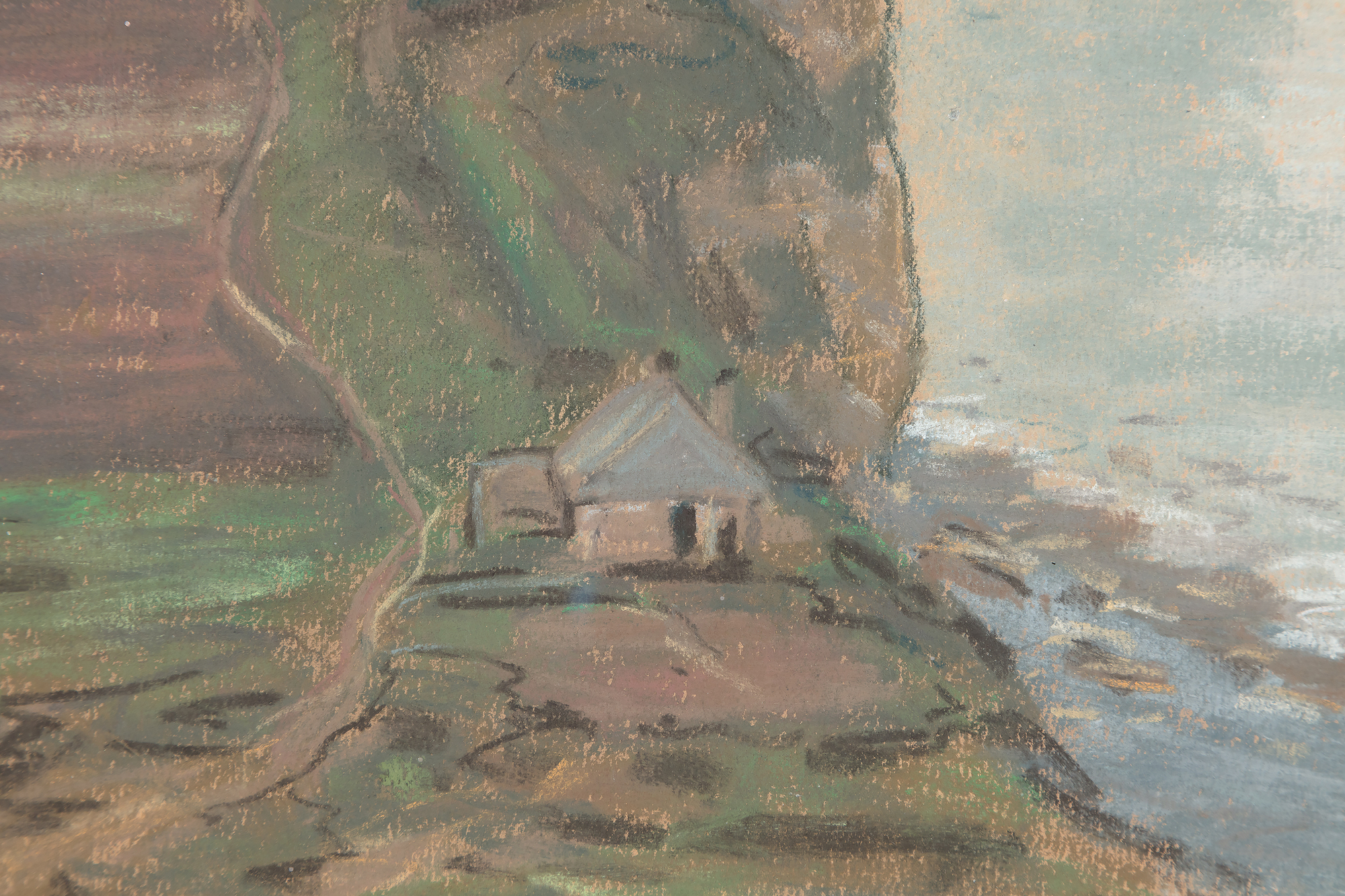
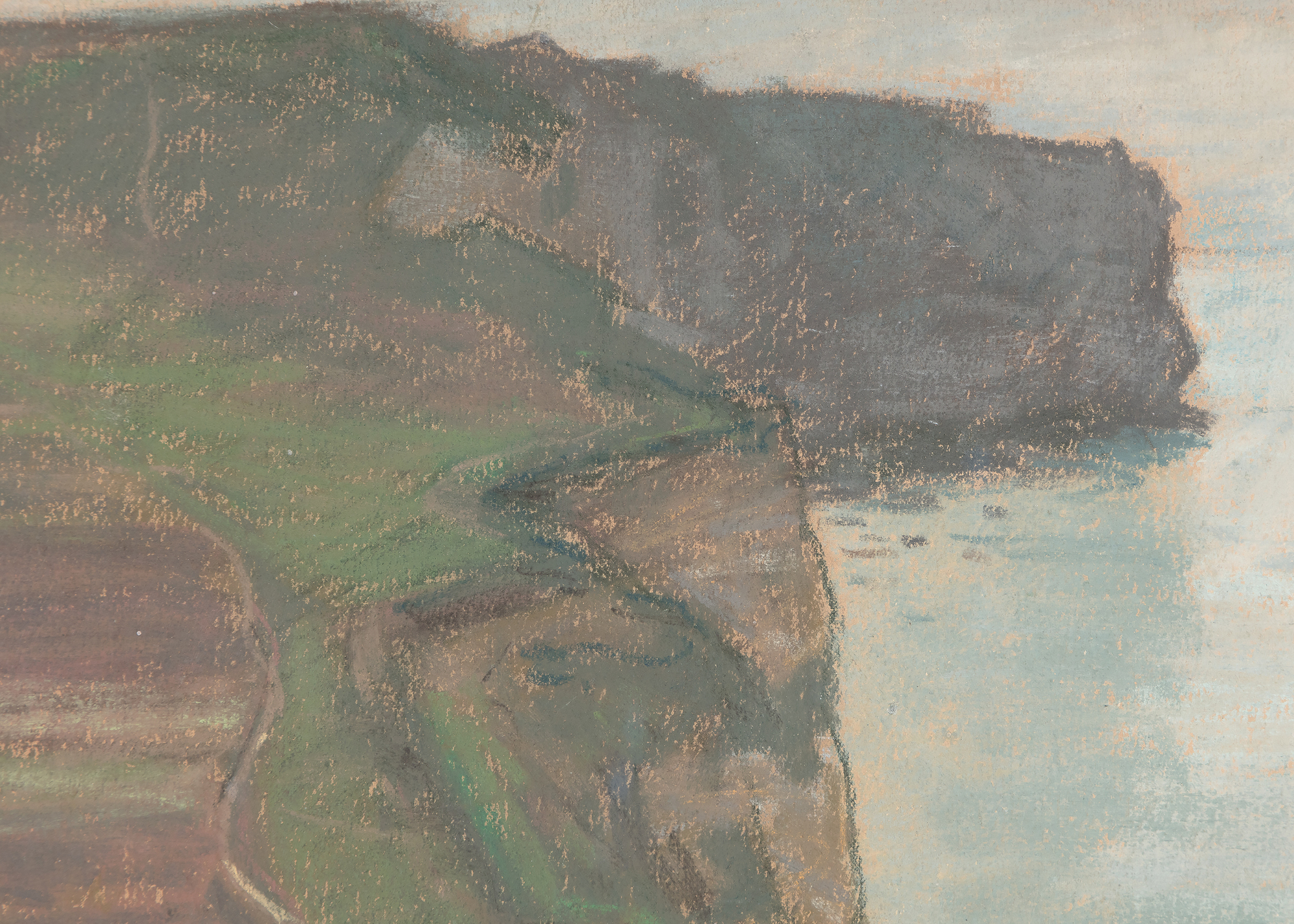
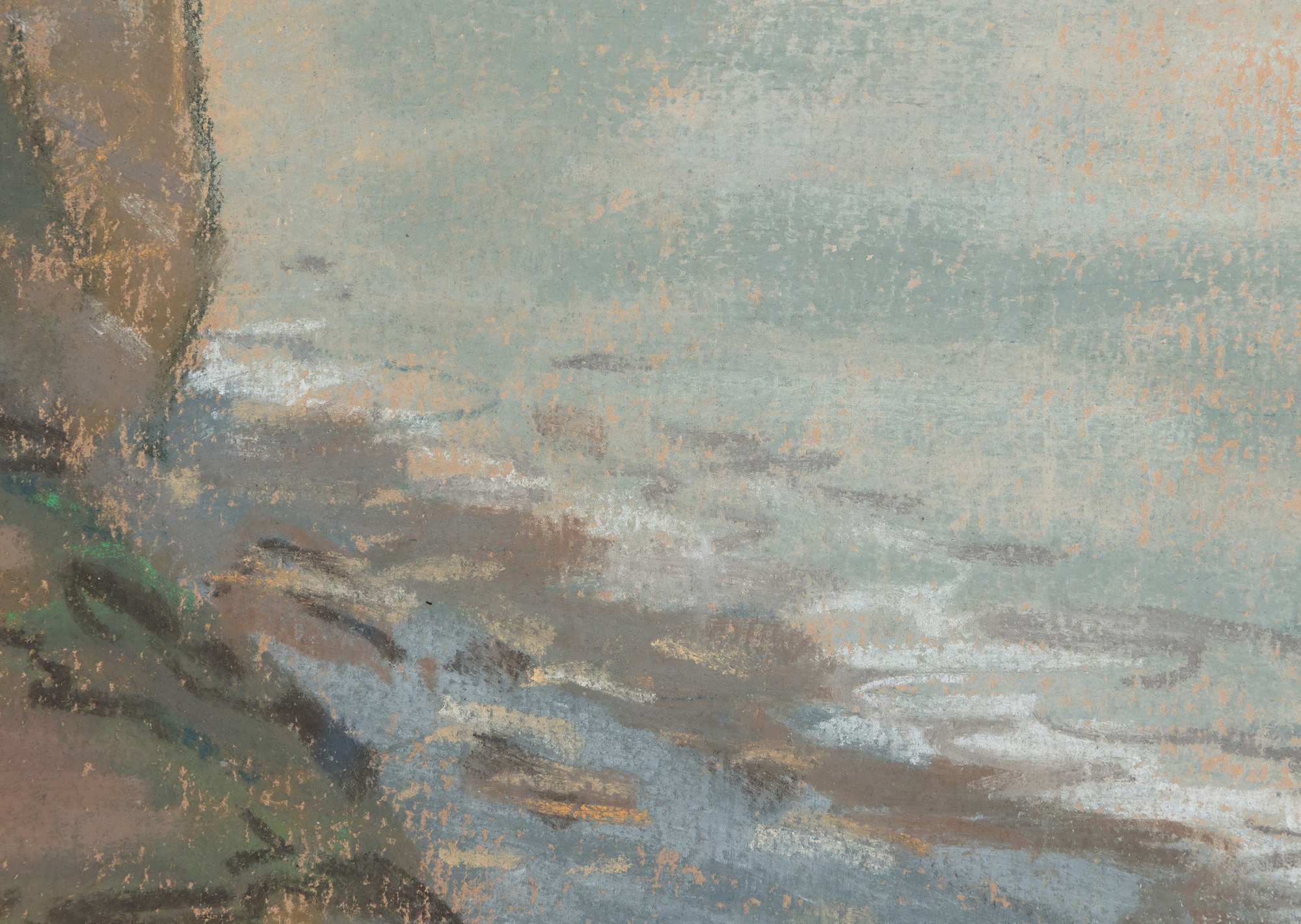
In this seascape at Etretat, twenty miles round the coast to the north of Le Havre, Monet has chosen an unusual composition, dividing the landscape down the centre with the vertiginous cliffs; the left half of the picture composed of earthy greens and browns, the right half a sun dappled sea that dissolves into the sky, the horizon only suggested by the lightest touch of charcoal. This picture has a marked difference in atmosphere to another pastel of the nearby Porte d’Aval, dateable to the same period, whose late afternoon sky shows the range of expression that could be achieved with pastel. By the summer of 1885 the year he made this pastel Monet had largely abandoned urban subjects, and was more drawn towards natural phenomena. He painted many views along the coast under different light conditions. As noted in the catalogue raisonné on Monet, this pastel is not a preparatory study for an oil painting, but a wholly original composition. It demonstrates how well the painter understood and enjoyed the versatility of the medium when trying to capture such variable weather.
During the 1880s Monet returned to the Normandy coast. He found inspiration in the sparkling light and famous limestone cliffs, as had Delacroix and Courbet. As well as working directly in oils, he followed Boudin’s example and used black chalk and pastel to study the effects of light and colour on the sky, sea and land.
In this seascape at Etretat, twenty miles round the coast to the north of Le Havre, Monet has chosen an unusual composition, dividing the landscape down the centre with the vertiginous cliffs; the left half of the picture composed of earthy greens and browns, the right half a sun dappled sea that dissolves into the sky, the horizon only suggested by the lightest touch of charcoal. This picture has a marked difference in atmosphere to another pastel of the nearby Porte d’Aval, dateable to the same period, whose late afternoon sky shows the range of expression that could be achieved with pastel. By the summer of 1885 the year he made this pastel Monet had largely abandoned urban subjects, and was more drawn towards natural phenomena. He painted many views along the coast under different light conditions. As noted in the catalogue raisonné on Monet, this pastel is not a preparatory study for an oil painting, but a wholly original composition. It demonstrates how well the painter understood and enjoyed the versatility of the medium when trying to capture such variable weather.