
Zurück

MARINO MARINI (1901-1980)

$55,000

 
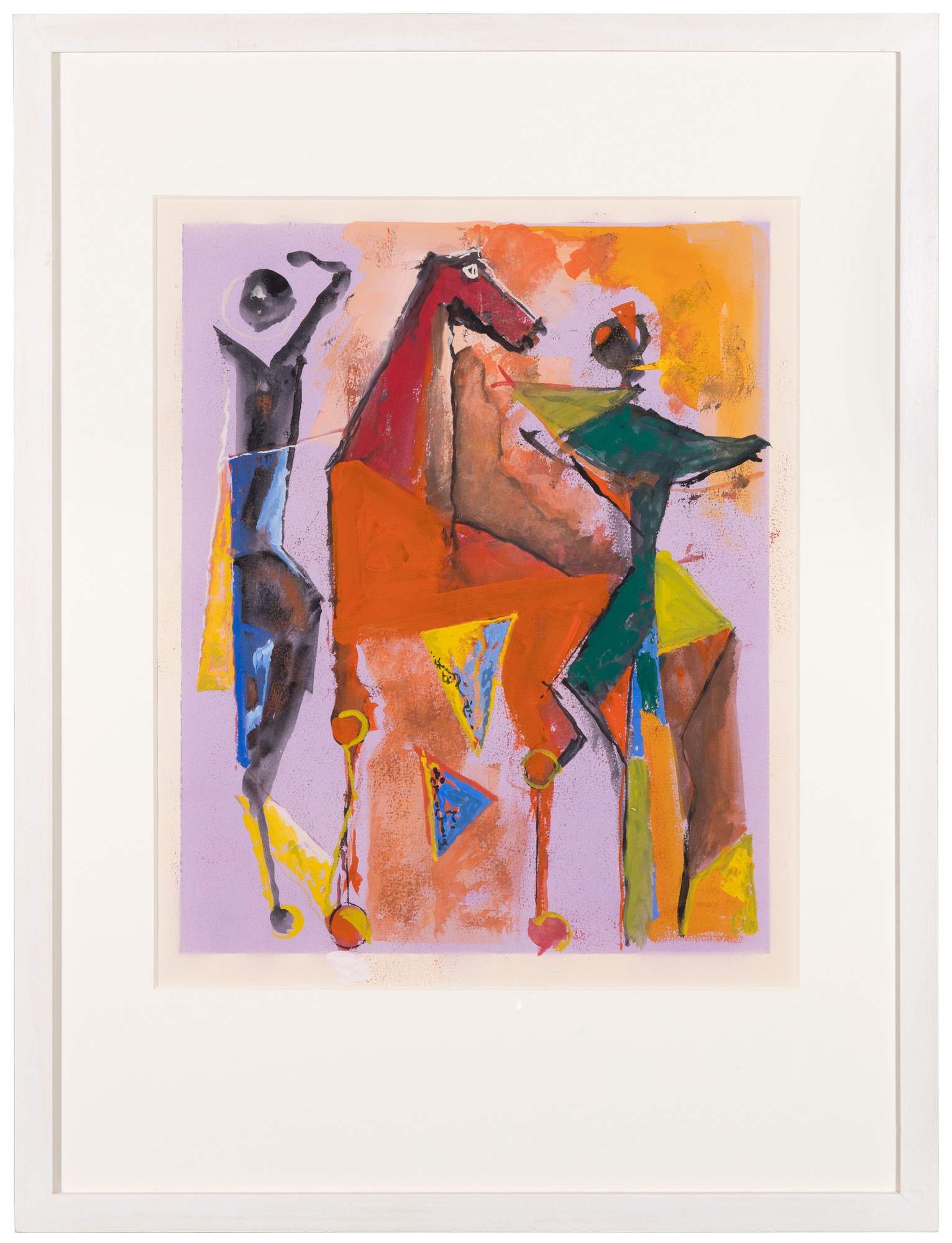
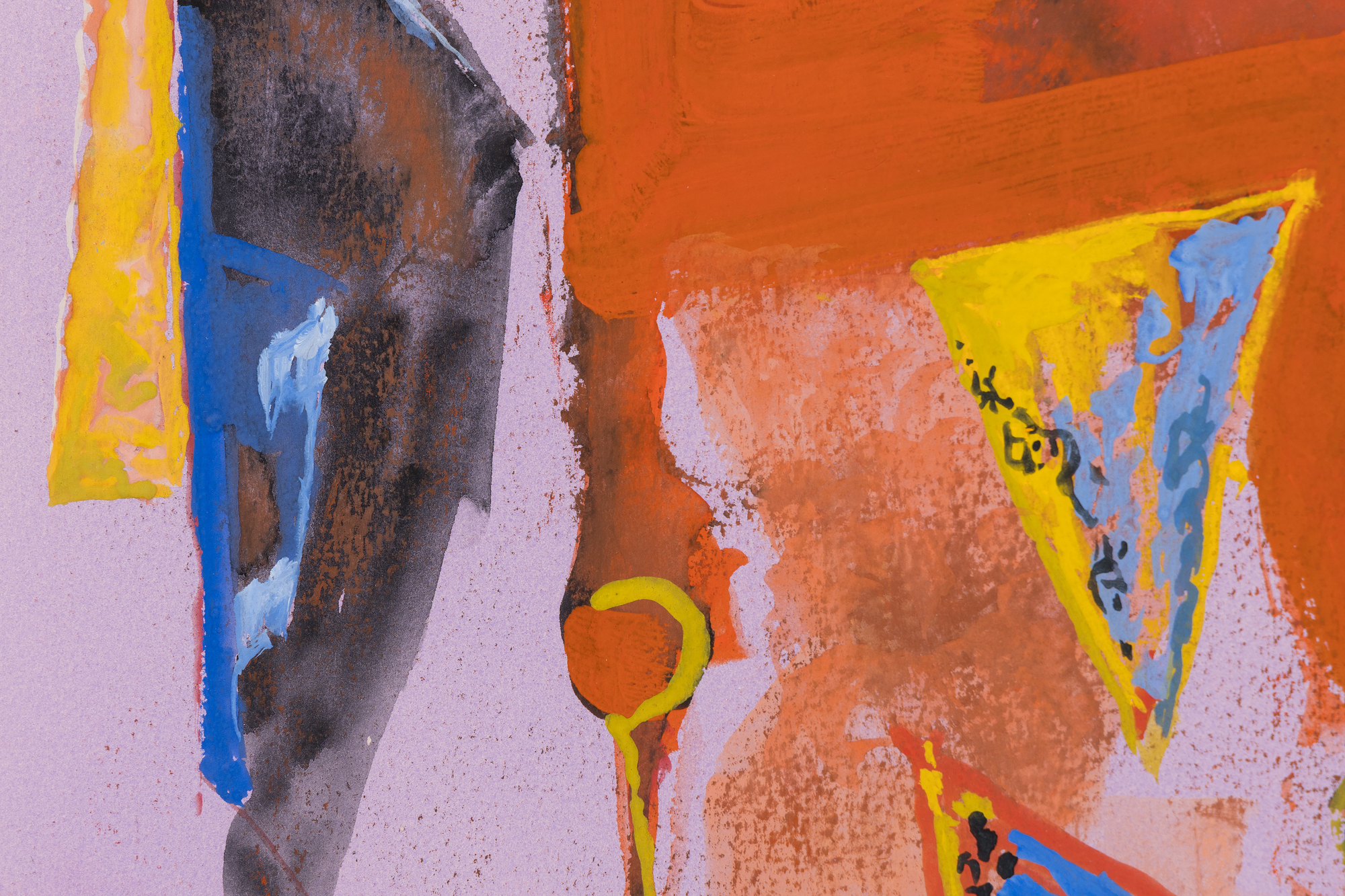
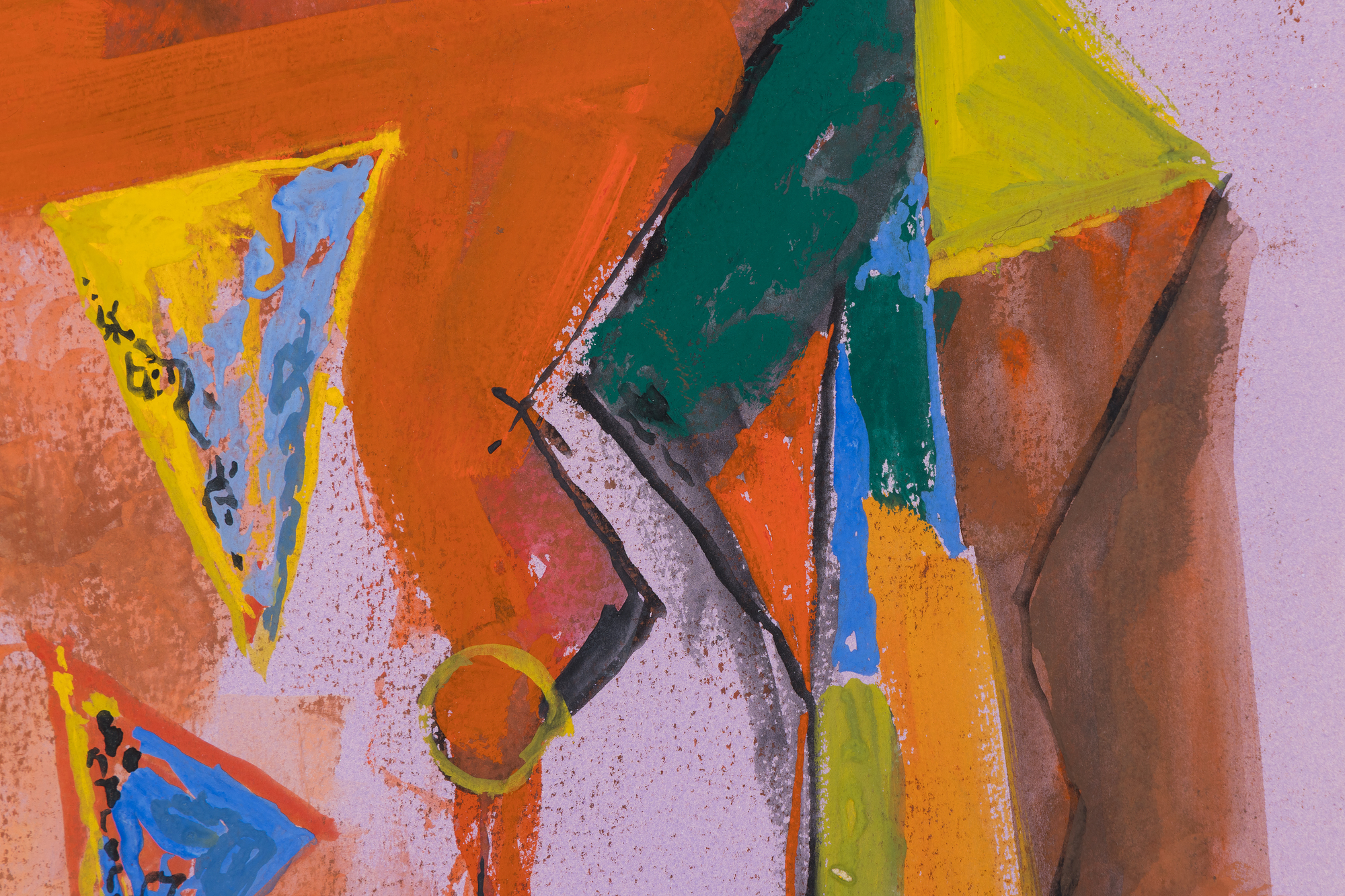
<div>Marino Marini’s <em>Marino from Shakespeare I </em>(1977) is a vibrant and theatrically charged work on paper, executed in tempera over aquatint and drawn from the celebrated Marino from Shakespeare portfolio. The composition is animated by bold, gestural forms and a heightened palette of oranges, yellows, reds, and lilac that infuse the scene with dramatic urgency. A central equine form dominates the image, flanked by attenuated human figures whose raised arms and angled bodies suggest performance, confrontation, or ritualized movement. </div><br><br><div> </div><br><br><div>Although the title references Shakespeare, the connection is thematic rather than illustrative. Marini evokes the emotional intensity and existential drama associated with Shakespearean tragedy—conflict, power, instability—through dynamic relationships rather than narrative detail. The horse and rider, a recurring motif throughout Marini’s career, function here as symbolic protagonists rather than literal subjects. As the artist himself noted, “My equestrian figures are symbols of the anguish that I feel when I survey contemporary events,” and this sense of unease is palpable in the fractured forms and off-balance poses that animate the composition. </div><br><br><div> </div><br><br><div>Best known as one of the great sculptors of the twentieth century, Marini demonstrates in this suite his mastery of printmaking as an expressive language. The combination of aquatint’s tonal depth with painterly applications of tempera allows for both structural clarity and emotional immediacy. <em>Marino from Shakespeare I </em>stands as a compelling example of Marini’s late graphic work, translating his sculptural vocabulary into a vivid, modern meditation on the human condition. </div> <div>Marino Marini’s <em>Marino from Shakespeare I </em>(1977) is a vibrant and theatrically charged work on paper, executed in tempera over aquatint and drawn from the celebrated Marino from Shakespeare portfolio. The composition is animated by bold, gestural forms and a heightened palette of oranges, yellows, reds, and lilac that infuse the scene with dramatic urgency. A central equine form dominates the image, flanked by attenuated human figures whose raised arms and angled bodies suggest performance, confrontation, or ritualized movement. </div><br><br><div> </div><br><br><div>Although the title references Shakespeare, the connection is thematic rather than illustrative. Marini evokes the emotional intensity and existential drama associated with Shakespearean tragedy—conflict, power, instability—through dynamic relationships rather than narrative detail. The horse and rider, a recurring motif throughout Marini’s career, function here as symbolic protagonists rather than literal subjects. As the artist himself noted, “My equestrian figures are symbols of the anguish that I feel when I survey contemporary events,” and this sense of unease is palpable in the fractured forms and off-balance poses that animate the composition. </div><br><br><div> </div><br><br><div>Best known as one of the great sculptors of the twentieth century, Marini demonstrates in this suite his mastery of printmaking as an expressive language. The combination of aquatint’s tonal depth with painterly applications of tempera allows for both structural clarity and emotional immediacy. <em>Marino from Shakespeare I </em>stands as a compelling example of Marini’s late graphic work, translating his sculptural vocabulary into a vivid, modern meditation on the human condition. </div> <div>Marino Marini’s <em>Marino from Shakespeare I </em>(1977) is a vibrant and theatrically charged work on paper, executed in tempera over aquatint and drawn from the celebrated Marino from Shakespeare portfolio. The composition is animated by bold, gestural forms and a heightened palette of oranges, yellows, reds, and lilac that infuse the scene with dramatic urgency. A central equine form dominates the image, flanked by attenuated human figures whose raised arms and angled bodies suggest performance, confrontation, or ritualized movement. </div><br><br><div> </div><br><br><div>Although the title references Shakespeare, the connection is thematic rather than illustrative. Marini evokes the emotional intensity and existential drama associated with Shakespearean tragedy—conflict, power, instability—through dynamic relationships rather than narrative detail. The horse and rider, a recurring motif throughout Marini’s career, function here as symbolic protagonists rather than literal subjects. As the artist himself noted, “My equestrian figures are symbols of the anguish that I feel when I survey contemporary events,” and this sense of unease is palpable in the fractured forms and off-balance poses that animate the composition. </div><br><br><div> </div><br><br><div>Best known as one of the great sculptors of the twentieth century, Marini demonstrates in this suite his mastery of printmaking as an expressive language. The combination of aquatint’s tonal depth with painterly applications of tempera allows for both structural clarity and emotional immediacy. <em>Marino from Shakespeare I </em>stands as a compelling example of Marini’s late graphic work, translating his sculptural vocabulary into a vivid, modern meditation on the human condition. </div> <div>Marino Marini’s <em>Marino from Shakespeare I </em>(1977) is a vibrant and theatrically charged work on paper, executed in tempera over aquatint and drawn from the celebrated Marino from Shakespeare portfolio. The composition is animated by bold, gestural forms and a heightened palette of oranges, yellows, reds, and lilac that infuse the scene with dramatic urgency. A central equine form dominates the image, flanked by attenuated human figures whose raised arms and angled bodies suggest performance, confrontation, or ritualized movement. </div><br><br><div> </div><br><br><div>Although the title references Shakespeare, the connection is thematic rather than illustrative. Marini evokes the emotional intensity and existential drama associated with Shakespearean tragedy—conflict, power, instability—through dynamic relationships rather than narrative detail. The horse and rider, a recurring motif throughout Marini’s career, function here as symbolic protagonists rather than literal subjects. As the artist himself noted, “My equestrian figures are symbols of the anguish that I feel when I survey contemporary events,” and this sense of unease is palpable in the fractured forms and off-balance poses that animate the composition. </div><br><br><div> </div><br><br><div>Best known as one of the great sculptors of the twentieth century, Marini demonstrates in this suite his mastery of printmaking as an expressive language. The combination of aquatint’s tonal depth with painterly applications of tempera allows for both structural clarity and emotional immediacy. <em>Marino from Shakespeare I </em>stands as a compelling example of Marini’s late graphic work, translating his sculptural vocabulary into a vivid, modern meditation on the human condition. </div> <div>Marino Marini’s <em>Marino from Shakespeare I </em>(1977) is a vibrant and theatrically charged work on paper, executed in tempera over aquatint and drawn from the celebrated Marino from Shakespeare portfolio. The composition is animated by bold, gestural forms and a heightened palette of oranges, yellows, reds, and lilac that infuse the scene with dramatic urgency. A central equine form dominates the image, flanked by attenuated human figures whose raised arms and angled bodies suggest performance, confrontation, or ritualized movement. </div><br><br><div> </div><br><br><div>Although the title references Shakespeare, the connection is thematic rather than illustrative. Marini evokes the emotional intensity and existential drama associated with Shakespearean tragedy—conflict, power, instability—through dynamic relationships rather than narrative detail. The horse and rider, a recurring motif throughout Marini’s career, function here as symbolic protagonists rather than literal subjects. As the artist himself noted, “My equestrian figures are symbols of the anguish that I feel when I survey contemporary events,” and this sense of unease is palpable in the fractured forms and off-balance poses that animate the composition. </div><br><br><div> </div><br><br><div>Best known as one of the great sculptors of the twentieth century, Marini demonstrates in this suite his mastery of printmaking as an expressive language. The combination of aquatint’s tonal depth with painterly applications of tempera allows for both structural clarity and emotional immediacy. <em>Marino from Shakespeare I </em>stands as a compelling example of Marini’s late graphic work, translating his sculptural vocabulary into a vivid, modern meditation on the human condition. </div> <div>Marino Marini’s <em>Marino from Shakespeare I </em>(1977) is a vibrant and theatrically charged work on paper, executed in tempera over aquatint and drawn from the celebrated Marino from Shakespeare portfolio. The composition is animated by bold, gestural forms and a heightened palette of oranges, yellows, reds, and lilac that infuse the scene with dramatic urgency. A central equine form dominates the image, flanked by attenuated human figures whose raised arms and angled bodies suggest performance, confrontation, or ritualized movement. </div><br><br><div> </div><br><br><div>Although the title references Shakespeare, the connection is thematic rather than illustrative. Marini evokes the emotional intensity and existential drama associated with Shakespearean tragedy—conflict, power, instability—through dynamic relationships rather than narrative detail. The horse and rider, a recurring motif throughout Marini’s career, function here as symbolic protagonists rather than literal subjects. As the artist himself noted, “My equestrian figures are symbols of the anguish that I feel when I survey contemporary events,” and this sense of unease is palpable in the fractured forms and off-balance poses that animate the composition. </div><br><br><div> </div><br><br><div>Best known as one of the great sculptors of the twentieth century, Marini demonstrates in this suite his mastery of printmaking as an expressive language. The combination of aquatint’s tonal depth with painterly applications of tempera allows for both structural clarity and emotional immediacy. <em>Marino from Shakespeare I </em>stands as a compelling example of Marini’s late graphic work, translating his sculptural vocabulary into a vivid, modern meditation on the human condition. </div> <div>Marino Marini’s <em>Marino from Shakespeare I </em>(1977) is a vibrant and theatrically charged work on paper, executed in tempera over aquatint and drawn from the celebrated Marino from Shakespeare portfolio. The composition is animated by bold, gestural forms and a heightened palette of oranges, yellows, reds, and lilac that infuse the scene with dramatic urgency. A central equine form dominates the image, flanked by attenuated human figures whose raised arms and angled bodies suggest performance, confrontation, or ritualized movement. </div><br><br><div> </div><br><br><div>Although the title references Shakespeare, the connection is thematic rather than illustrative. Marini evokes the emotional intensity and existential drama associated with Shakespearean tragedy—conflict, power, instability—through dynamic relationships rather than narrative detail. The horse and rider, a recurring motif throughout Marini’s career, function here as symbolic protagonists rather than literal subjects. As the artist himself noted, “My equestrian figures are symbols of the anguish that I feel when I survey contemporary events,” and this sense of unease is palpable in the fractured forms and off-balance poses that animate the composition. </div><br><br><div> </div><br><br><div>Best known as one of the great sculptors of the twentieth century, Marini demonstrates in this suite his mastery of printmaking as an expressive language. The combination of aquatint’s tonal depth with painterly applications of tempera allows for both structural clarity and emotional immediacy. <em>Marino from Shakespeare I </em>stands as a compelling example of Marini’s late graphic work, translating his sculptural vocabulary into a vivid, modern meditation on the human condition. </div> <div>Marino Marini’s <em>Marino from Shakespeare I </em>(1977) is a vibrant and theatrically charged work on paper, executed in tempera over aquatint and drawn from the celebrated Marino from Shakespeare portfolio. The composition is animated by bold, gestural forms and a heightened palette of oranges, yellows, reds, and lilac that infuse the scene with dramatic urgency. A central equine form dominates the image, flanked by attenuated human figures whose raised arms and angled bodies suggest performance, confrontation, or ritualized movement. </div><br><br><div> </div><br><br><div>Although the title references Shakespeare, the connection is thematic rather than illustrative. Marini evokes the emotional intensity and existential drama associated with Shakespearean tragedy—conflict, power, instability—through dynamic relationships rather than narrative detail. The horse and rider, a recurring motif throughout Marini’s career, function here as symbolic protagonists rather than literal subjects. As the artist himself noted, “My equestrian figures are symbols of the anguish that I feel when I survey contemporary events,” and this sense of unease is palpable in the fractured forms and off-balance poses that animate the composition. </div><br><br><div> </div><br><br><div>Best known as one of the great sculptors of the twentieth century, Marini demonstrates in this suite his mastery of printmaking as an expressive language. The combination of aquatint’s tonal depth with painterly applications of tempera allows for both structural clarity and emotional immediacy. <em>Marino from Shakespeare I </em>stands as a compelling example of Marini’s late graphic work, translating his sculptural vocabulary into a vivid, modern meditation on the human condition. </div> <div>Marino Marini’s <em>Marino from Shakespeare I </em>(1977) is a vibrant and theatrically charged work on paper, executed in tempera over aquatint and drawn from the celebrated Marino from Shakespeare portfolio. The composition is animated by bold, gestural forms and a heightened palette of oranges, yellows, reds, and lilac that infuse the scene with dramatic urgency. A central equine form dominates the image, flanked by attenuated human figures whose raised arms and angled bodies suggest performance, confrontation, or ritualized movement. </div><br><br><div> </div><br><br><div>Although the title references Shakespeare, the connection is thematic rather than illustrative. Marini evokes the emotional intensity and existential drama associated with Shakespearean tragedy—conflict, power, instability—through dynamic relationships rather than narrative detail. The horse and rider, a recurring motif throughout Marini’s career, function here as symbolic protagonists rather than literal subjects. As the artist himself noted, “My equestrian figures are symbols of the anguish that I feel when I survey contemporary events,” and this sense of unease is palpable in the fractured forms and off-balance poses that animate the composition. </div><br><br><div> </div><br><br><div>Best known as one of the great sculptors of the twentieth century, Marini demonstrates in this suite his mastery of printmaking as an expressive language. The combination of aquatint’s tonal depth with painterly applications of tempera allows for both structural clarity and emotional immediacy. <em>Marino from Shakespeare I </em>stands as a compelling example of Marini’s late graphic work, translating his sculptural vocabulary into a vivid, modern meditation on the human condition. </div> <div>Marino Marini’s <em>Marino from Shakespeare I </em>(1977) is a vibrant and theatrically charged work on paper, executed in tempera over aquatint and drawn from the celebrated Marino from Shakespeare portfolio. The composition is animated by bold, gestural forms and a heightened palette of oranges, yellows, reds, and lilac that infuse the scene with dramatic urgency. A central equine form dominates the image, flanked by attenuated human figures whose raised arms and angled bodies suggest performance, confrontation, or ritualized movement. </div><br><br><div> </div><br><br><div>Although the title references Shakespeare, the connection is thematic rather than illustrative. Marini evokes the emotional intensity and existential drama associated with Shakespearean tragedy—conflict, power, instability—through dynamic relationships rather than narrative detail. The horse and rider, a recurring motif throughout Marini’s career, function here as symbolic protagonists rather than literal subjects. As the artist himself noted, “My equestrian figures are symbols of the anguish that I feel when I survey contemporary events,” and this sense of unease is palpable in the fractured forms and off-balance poses that animate the composition. </div><br><br><div> </div><br><br><div>Best known as one of the great sculptors of the twentieth century, Marini demonstrates in this suite his mastery of printmaking as an expressive language. The combination of aquatint’s tonal depth with painterly applications of tempera allows for both structural clarity and emotional immediacy. <em>Marino from Shakespeare I </em>stands as a compelling example of Marini’s late graphic work, translating his sculptural vocabulary into a vivid, modern meditation on the human condition. </div>
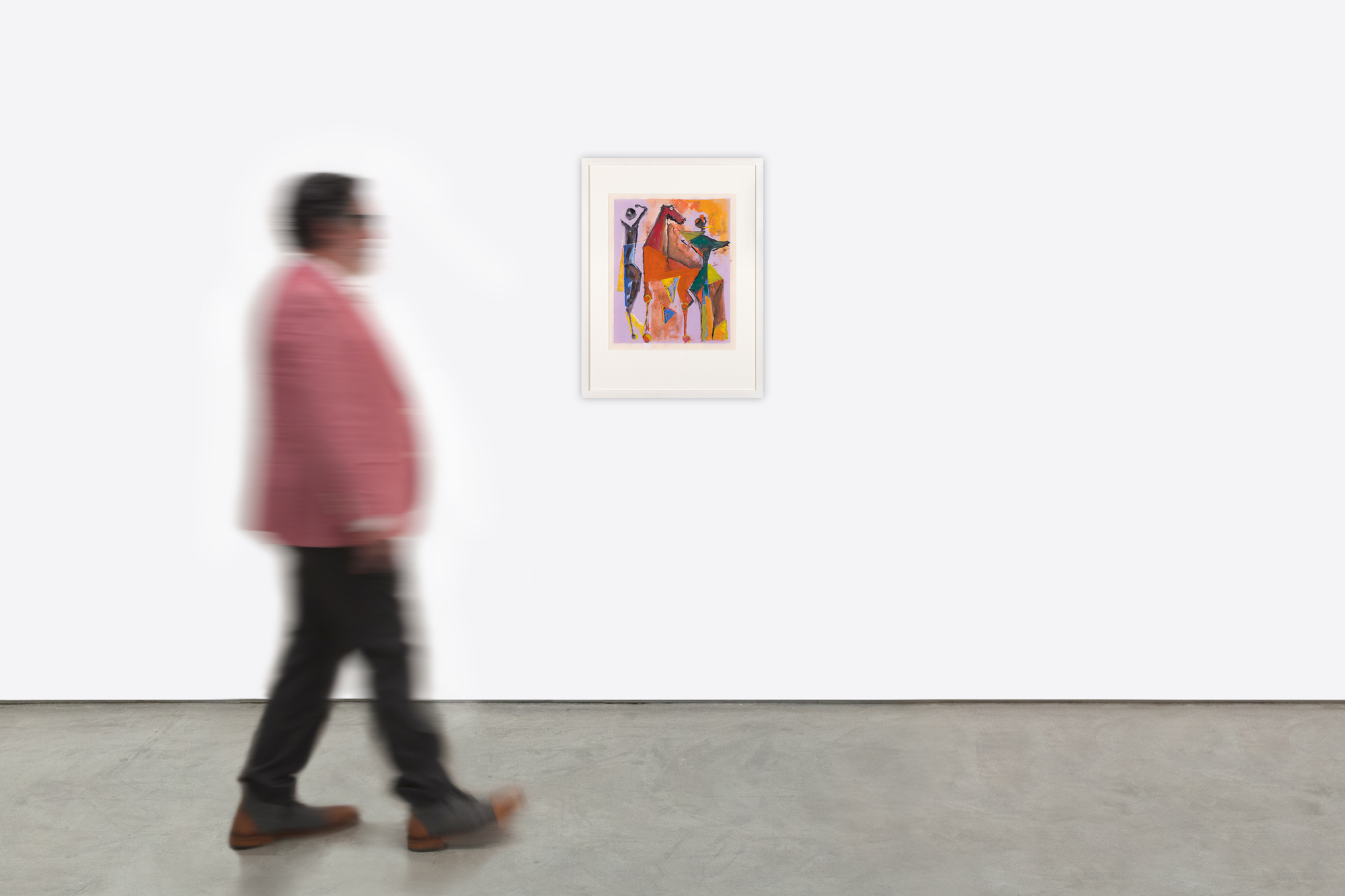
Marino aus Shakespeare I197719 1/8 x 15 1/2 in.(48,58 x 39,37 cm) Tempera über Aquatinta auf Papier
Provenienz
Fondazione Marino Marini, Pistoia
Privatsammlung, erworben von oben genanntem, 2006
Sotheby's, New York, 14. November 2023, Los 115
Privatsammlung, erworben von oben genanntem
Marino Marinis „Marino from Shakespeare I“ (1977) ist ein lebendiges und theatralisch aufgeladenes Werk auf Papier, ausgeführt in Tempera über Aquatinta und entnommen aus dem berühmten Portfolio „Marino from Shakespeare“. Die Komposition wird durch kühne, gestische Formen und eine intensive Farbpalette aus Orange-, Gelb-, Rot- und Lilatönen belebt, die der Szene eine dramatische Dringlichkeit verleihen. Eine zentrale Pferdefigur dominiert das Bild, flankiert von schlanken menschlichen Figuren, deren erhobene Arme und gewinkelte Körper auf eine Aufführung, eine Konfrontation oder eine ritualisierte Bewegung hindeuten.


Obwohl der Titel auf Shakespeare verweist, ist die Verbindung eher thematischer als illustrativer Natur. Marini evoziert die emotionale Intensität und das existenzielle Drama, das mit Shakespeares Tragödien verbunden ist – Konflikt, Macht, Instabilität – durch dynamische Beziehungen statt durch narrative Details. Das Pferd und der Reiter, ein wiederkehrendes Motiv in Marinis Schaffen, fungieren hier eher als symbolische Protagonisten denn als wörtliche Motive. Wie der Künstler selbst bemerkte: „Meine Reiterfiguren sind Symbole für die Angst, die ich empfinde, wenn ich die aktuellen Ereignisse betrachte.“ Dieses Gefühl der Unruhe ist in den zerbrochenen Formen und unausgewogenen Posen, die die Komposition beleben, deutlich spürbar.


Marini, der vor allem als einer der großen Bildhauer des 20. Jahrhunderts bekannt ist, demonstriert in dieser Serie seine Meisterschaft in der Druckgrafik als Ausdrucksmittel. Die Kombination der tonalen Tiefe der Aquatinta mit malerischen Tempera-Applikationen ermöglicht sowohl strukturelle Klarheit als auch emotionale Unmittelbarkeit. Marino from Shakespeare I ist ein überzeugendes Beispiel für Marinis spätes grafisches Werk, in dem er sein bildhauerisches Vokabular in eine lebendige, moderne Meditation über die conditio humana übersetzt.
Fragen Sie