גב

מרינו מריני(1901-1980)

$55,000

 
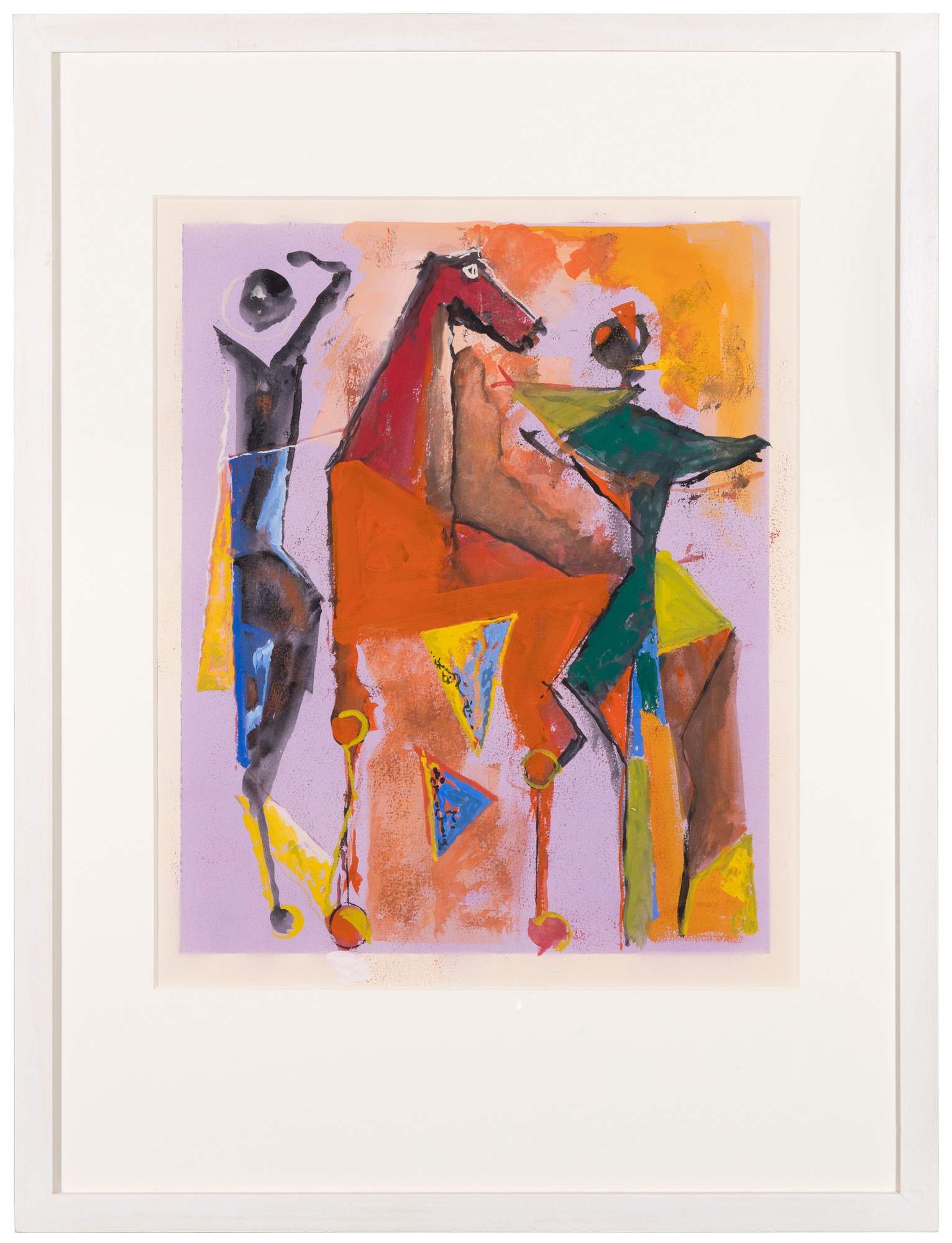
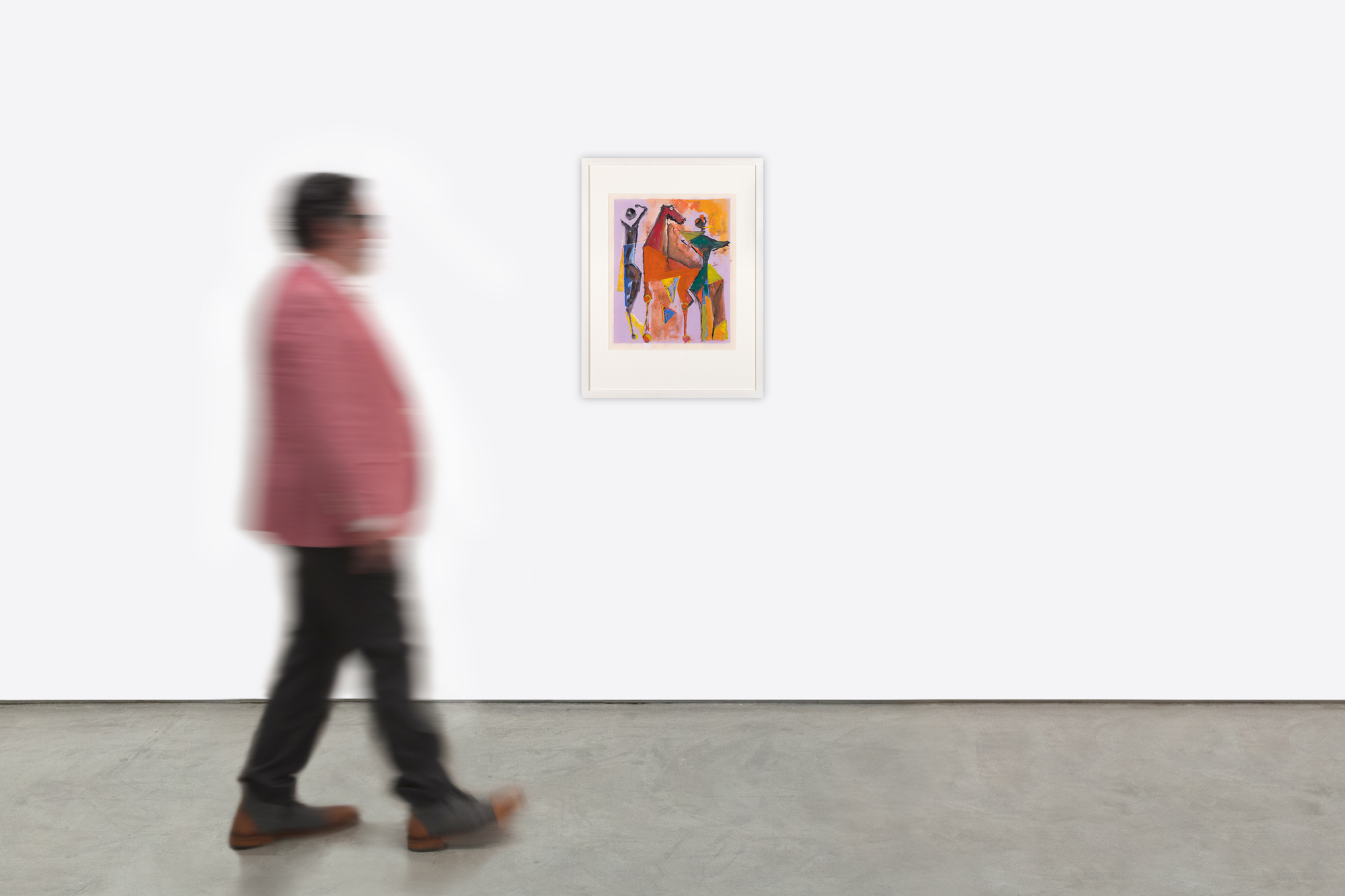
<div>Marino Marini’s <em>Marino from Shakespeare I </em>(1977) is a vibrant and theatrically charged work on paper, executed in tempera over aquatint and drawn from the celebrated Marino from Shakespeare portfolio. The composition is animated by bold, gestural forms and a heightened palette of oranges, yellows, reds, and lilac that infuse the scene with dramatic urgency. A central equine form dominates the image, flanked by attenuated human figures whose raised arms and angled bodies suggest performance, confrontation, or ritualized movement. </div><br><br><div> </div><br><br><div>Although the title references Shakespeare, the connection is thematic rather than illustrative. Marini evokes the emotional intensity and existential drama associated with Shakespearean tragedy—conflict, power, instability—through dynamic relationships rather than narrative detail. The horse and rider, a recurring motif throughout Marini’s career, function here as symbolic protagonists rather than literal subjects. As the artist himself noted, “My equestrian figures are symbols of the anguish that I feel when I survey contemporary events,” and this sense of unease is palpable in the fractured forms and off-balance poses that animate the composition. </div><br><br><div> </div><br><br><div>Best known as one of the great sculptors of the twentieth century, Marini demonstrates in this suite his mastery of printmaking as an expressive language. The combination of aquatint’s tonal depth with painterly applications of tempera allows for both structural clarity and emotional immediacy. <em>Marino from Shakespeare I </em>stands as a compelling example of Marini’s late graphic work, translating his sculptural vocabulary into a vivid, modern meditation on the human condition. </div> <div>Marino Marini’s <em>Marino from Shakespeare I </em>(1977) is a vibrant and theatrically charged work on paper, executed in tempera over aquatint and drawn from the celebrated Marino from Shakespeare portfolio. The composition is animated by bold, gestural forms and a heightened palette of oranges, yellows, reds, and lilac that infuse the scene with dramatic urgency. A central equine form dominates the image, flanked by attenuated human figures whose raised arms and angled bodies suggest performance, confrontation, or ritualized movement. </div><br><br><div> </div><br><br><div>Although the title references Shakespeare, the connection is thematic rather than illustrative. Marini evokes the emotional intensity and existential drama associated with Shakespearean tragedy—conflict, power, instability—through dynamic relationships rather than narrative detail. The horse and rider, a recurring motif throughout Marini’s career, function here as symbolic protagonists rather than literal subjects. As the artist himself noted, “My equestrian figures are symbols of the anguish that I feel when I survey contemporary events,” and this sense of unease is palpable in the fractured forms and off-balance poses that animate the composition. </div><br><br><div> </div><br><br><div>Best known as one of the great sculptors of the twentieth century, Marini demonstrates in this suite his mastery of printmaking as an expressive language. The combination of aquatint’s tonal depth with painterly applications of tempera allows for both structural clarity and emotional immediacy. <em>Marino from Shakespeare I </em>stands as a compelling example of Marini’s late graphic work, translating his sculptural vocabulary into a vivid, modern meditation on the human condition. </div> <div>Marino Marini’s <em>Marino from Shakespeare I </em>(1977) is a vibrant and theatrically charged work on paper, executed in tempera over aquatint and drawn from the celebrated Marino from Shakespeare portfolio. The composition is animated by bold, gestural forms and a heightened palette of oranges, yellows, reds, and lilac that infuse the scene with dramatic urgency. A central equine form dominates the image, flanked by attenuated human figures whose raised arms and angled bodies suggest performance, confrontation, or ritualized movement. </div><br><br><div> </div><br><br><div>Although the title references Shakespeare, the connection is thematic rather than illustrative. Marini evokes the emotional intensity and existential drama associated with Shakespearean tragedy—conflict, power, instability—through dynamic relationships rather than narrative detail. The horse and rider, a recurring motif throughout Marini’s career, function here as symbolic protagonists rather than literal subjects. As the artist himself noted, “My equestrian figures are symbols of the anguish that I feel when I survey contemporary events,” and this sense of unease is palpable in the fractured forms and off-balance poses that animate the composition. </div><br><br><div> </div><br><br><div>Best known as one of the great sculptors of the twentieth century, Marini demonstrates in this suite his mastery of printmaking as an expressive language. The combination of aquatint’s tonal depth with painterly applications of tempera allows for both structural clarity and emotional immediacy. <em>Marino from Shakespeare I </em>stands as a compelling example of Marini’s late graphic work, translating his sculptural vocabulary into a vivid, modern meditation on the human condition. </div> <div>Marino Marini’s <em>Marino from Shakespeare I </em>(1977) is a vibrant and theatrically charged work on paper, executed in tempera over aquatint and drawn from the celebrated Marino from Shakespeare portfolio. The composition is animated by bold, gestural forms and a heightened palette of oranges, yellows, reds, and lilac that infuse the scene with dramatic urgency. A central equine form dominates the image, flanked by attenuated human figures whose raised arms and angled bodies suggest performance, confrontation, or ritualized movement. </div><br><br><div> </div><br><br><div>Although the title references Shakespeare, the connection is thematic rather than illustrative. Marini evokes the emotional intensity and existential drama associated with Shakespearean tragedy—conflict, power, instability—through dynamic relationships rather than narrative detail. The horse and rider, a recurring motif throughout Marini’s career, function here as symbolic protagonists rather than literal subjects. As the artist himself noted, “My equestrian figures are symbols of the anguish that I feel when I survey contemporary events,” and this sense of unease is palpable in the fractured forms and off-balance poses that animate the composition. </div><br><br><div> </div><br><br><div>Best known as one of the great sculptors of the twentieth century, Marini demonstrates in this suite his mastery of printmaking as an expressive language. The combination of aquatint’s tonal depth with painterly applications of tempera allows for both structural clarity and emotional immediacy. <em>Marino from Shakespeare I </em>stands as a compelling example of Marini’s late graphic work, translating his sculptural vocabulary into a vivid, modern meditation on the human condition. </div> <div>Marino Marini’s <em>Marino from Shakespeare I </em>(1977) is a vibrant and theatrically charged work on paper, executed in tempera over aquatint and drawn from the celebrated Marino from Shakespeare portfolio. The composition is animated by bold, gestural forms and a heightened palette of oranges, yellows, reds, and lilac that infuse the scene with dramatic urgency. A central equine form dominates the image, flanked by attenuated human figures whose raised arms and angled bodies suggest performance, confrontation, or ritualized movement. </div><br><br><div> </div><br><br><div>Although the title references Shakespeare, the connection is thematic rather than illustrative. Marini evokes the emotional intensity and existential drama associated with Shakespearean tragedy—conflict, power, instability—through dynamic relationships rather than narrative detail. The horse and rider, a recurring motif throughout Marini’s career, function here as symbolic protagonists rather than literal subjects. As the artist himself noted, “My equestrian figures are symbols of the anguish that I feel when I survey contemporary events,” and this sense of unease is palpable in the fractured forms and off-balance poses that animate the composition. </div><br><br><div> </div><br><br><div>Best known as one of the great sculptors of the twentieth century, Marini demonstrates in this suite his mastery of printmaking as an expressive language. The combination of aquatint’s tonal depth with painterly applications of tempera allows for both structural clarity and emotional immediacy. <em>Marino from Shakespeare I </em>stands as a compelling example of Marini’s late graphic work, translating his sculptural vocabulary into a vivid, modern meditation on the human condition. </div> <div>Marino Marini’s <em>Marino from Shakespeare I </em>(1977) is a vibrant and theatrically charged work on paper, executed in tempera over aquatint and drawn from the celebrated Marino from Shakespeare portfolio. The composition is animated by bold, gestural forms and a heightened palette of oranges, yellows, reds, and lilac that infuse the scene with dramatic urgency. A central equine form dominates the image, flanked by attenuated human figures whose raised arms and angled bodies suggest performance, confrontation, or ritualized movement. </div><br><br><div> </div><br><br><div>Although the title references Shakespeare, the connection is thematic rather than illustrative. Marini evokes the emotional intensity and existential drama associated with Shakespearean tragedy—conflict, power, instability—through dynamic relationships rather than narrative detail. The horse and rider, a recurring motif throughout Marini’s career, function here as symbolic protagonists rather than literal subjects. As the artist himself noted, “My equestrian figures are symbols of the anguish that I feel when I survey contemporary events,” and this sense of unease is palpable in the fractured forms and off-balance poses that animate the composition. </div><br><br><div> </div><br><br><div>Best known as one of the great sculptors of the twentieth century, Marini demonstrates in this suite his mastery of printmaking as an expressive language. The combination of aquatint’s tonal depth with painterly applications of tempera allows for both structural clarity and emotional immediacy. <em>Marino from Shakespeare I </em>stands as a compelling example of Marini’s late graphic work, translating his sculptural vocabulary into a vivid, modern meditation on the human condition. </div> <div>Marino Marini’s <em>Marino from Shakespeare I </em>(1977) is a vibrant and theatrically charged work on paper, executed in tempera over aquatint and drawn from the celebrated Marino from Shakespeare portfolio. The composition is animated by bold, gestural forms and a heightened palette of oranges, yellows, reds, and lilac that infuse the scene with dramatic urgency. A central equine form dominates the image, flanked by attenuated human figures whose raised arms and angled bodies suggest performance, confrontation, or ritualized movement. </div><br><br><div> </div><br><br><div>Although the title references Shakespeare, the connection is thematic rather than illustrative. Marini evokes the emotional intensity and existential drama associated with Shakespearean tragedy—conflict, power, instability—through dynamic relationships rather than narrative detail. The horse and rider, a recurring motif throughout Marini’s career, function here as symbolic protagonists rather than literal subjects. As the artist himself noted, “My equestrian figures are symbols of the anguish that I feel when I survey contemporary events,” and this sense of unease is palpable in the fractured forms and off-balance poses that animate the composition. </div><br><br><div> </div><br><br><div>Best known as one of the great sculptors of the twentieth century, Marini demonstrates in this suite his mastery of printmaking as an expressive language. The combination of aquatint’s tonal depth with painterly applications of tempera allows for both structural clarity and emotional immediacy. <em>Marino from Shakespeare I </em>stands as a compelling example of Marini’s late graphic work, translating his sculptural vocabulary into a vivid, modern meditation on the human condition. </div> <div>Marino Marini’s <em>Marino from Shakespeare I </em>(1977) is a vibrant and theatrically charged work on paper, executed in tempera over aquatint and drawn from the celebrated Marino from Shakespeare portfolio. The composition is animated by bold, gestural forms and a heightened palette of oranges, yellows, reds, and lilac that infuse the scene with dramatic urgency. A central equine form dominates the image, flanked by attenuated human figures whose raised arms and angled bodies suggest performance, confrontation, or ritualized movement. </div><br><br><div> </div><br><br><div>Although the title references Shakespeare, the connection is thematic rather than illustrative. Marini evokes the emotional intensity and existential drama associated with Shakespearean tragedy—conflict, power, instability—through dynamic relationships rather than narrative detail. The horse and rider, a recurring motif throughout Marini’s career, function here as symbolic protagonists rather than literal subjects. As the artist himself noted, “My equestrian figures are symbols of the anguish that I feel when I survey contemporary events,” and this sense of unease is palpable in the fractured forms and off-balance poses that animate the composition. </div><br><br><div> </div><br><br><div>Best known as one of the great sculptors of the twentieth century, Marini demonstrates in this suite his mastery of printmaking as an expressive language. The combination of aquatint’s tonal depth with painterly applications of tempera allows for both structural clarity and emotional immediacy. <em>Marino from Shakespeare I </em>stands as a compelling example of Marini’s late graphic work, translating his sculptural vocabulary into a vivid, modern meditation on the human condition. </div> <div>Marino Marini’s <em>Marino from Shakespeare I </em>(1977) is a vibrant and theatrically charged work on paper, executed in tempera over aquatint and drawn from the celebrated Marino from Shakespeare portfolio. The composition is animated by bold, gestural forms and a heightened palette of oranges, yellows, reds, and lilac that infuse the scene with dramatic urgency. A central equine form dominates the image, flanked by attenuated human figures whose raised arms and angled bodies suggest performance, confrontation, or ritualized movement. </div><br><br><div> </div><br><br><div>Although the title references Shakespeare, the connection is thematic rather than illustrative. Marini evokes the emotional intensity and existential drama associated with Shakespearean tragedy—conflict, power, instability—through dynamic relationships rather than narrative detail. The horse and rider, a recurring motif throughout Marini’s career, function here as symbolic protagonists rather than literal subjects. As the artist himself noted, “My equestrian figures are symbols of the anguish that I feel when I survey contemporary events,” and this sense of unease is palpable in the fractured forms and off-balance poses that animate the composition. </div><br><br><div> </div><br><br><div>Best known as one of the great sculptors of the twentieth century, Marini demonstrates in this suite his mastery of printmaking as an expressive language. The combination of aquatint’s tonal depth with painterly applications of tempera allows for both structural clarity and emotional immediacy. <em>Marino from Shakespeare I </em>stands as a compelling example of Marini’s late graphic work, translating his sculptural vocabulary into a vivid, modern meditation on the human condition. </div> <div>Marino Marini’s <em>Marino from Shakespeare I </em>(1977) is a vibrant and theatrically charged work on paper, executed in tempera over aquatint and drawn from the celebrated Marino from Shakespeare portfolio. The composition is animated by bold, gestural forms and a heightened palette of oranges, yellows, reds, and lilac that infuse the scene with dramatic urgency. A central equine form dominates the image, flanked by attenuated human figures whose raised arms and angled bodies suggest performance, confrontation, or ritualized movement. </div><br><br><div> </div><br><br><div>Although the title references Shakespeare, the connection is thematic rather than illustrative. Marini evokes the emotional intensity and existential drama associated with Shakespearean tragedy—conflict, power, instability—through dynamic relationships rather than narrative detail. The horse and rider, a recurring motif throughout Marini’s career, function here as symbolic protagonists rather than literal subjects. As the artist himself noted, “My equestrian figures are symbols of the anguish that I feel when I survey contemporary events,” and this sense of unease is palpable in the fractured forms and off-balance poses that animate the composition. </div><br><br><div> </div><br><br><div>Best known as one of the great sculptors of the twentieth century, Marini demonstrates in this suite his mastery of printmaking as an expressive language. The combination of aquatint’s tonal depth with painterly applications of tempera allows for both structural clarity and emotional immediacy. <em>Marino from Shakespeare I </em>stands as a compelling example of Marini’s late graphic work, translating his sculptural vocabulary into a vivid, modern meditation on the human condition. </div>
מרינו מתוך שייקספיר I 1977 19 1/8 x 15 1/2 אינץ' (48.58 x 39.37 ס"מ) טמפרה על אקווטינטה על נייר
מקור ומקור
Fondazione Marino Marini, Pistoia
אוסף פרטי, נרכש מהנ"ל, 2006
סותביס, ניו יורק, 14 בנובמבר 2023, פריט 115
אוסף פרטי, נרכש מהנ"ל
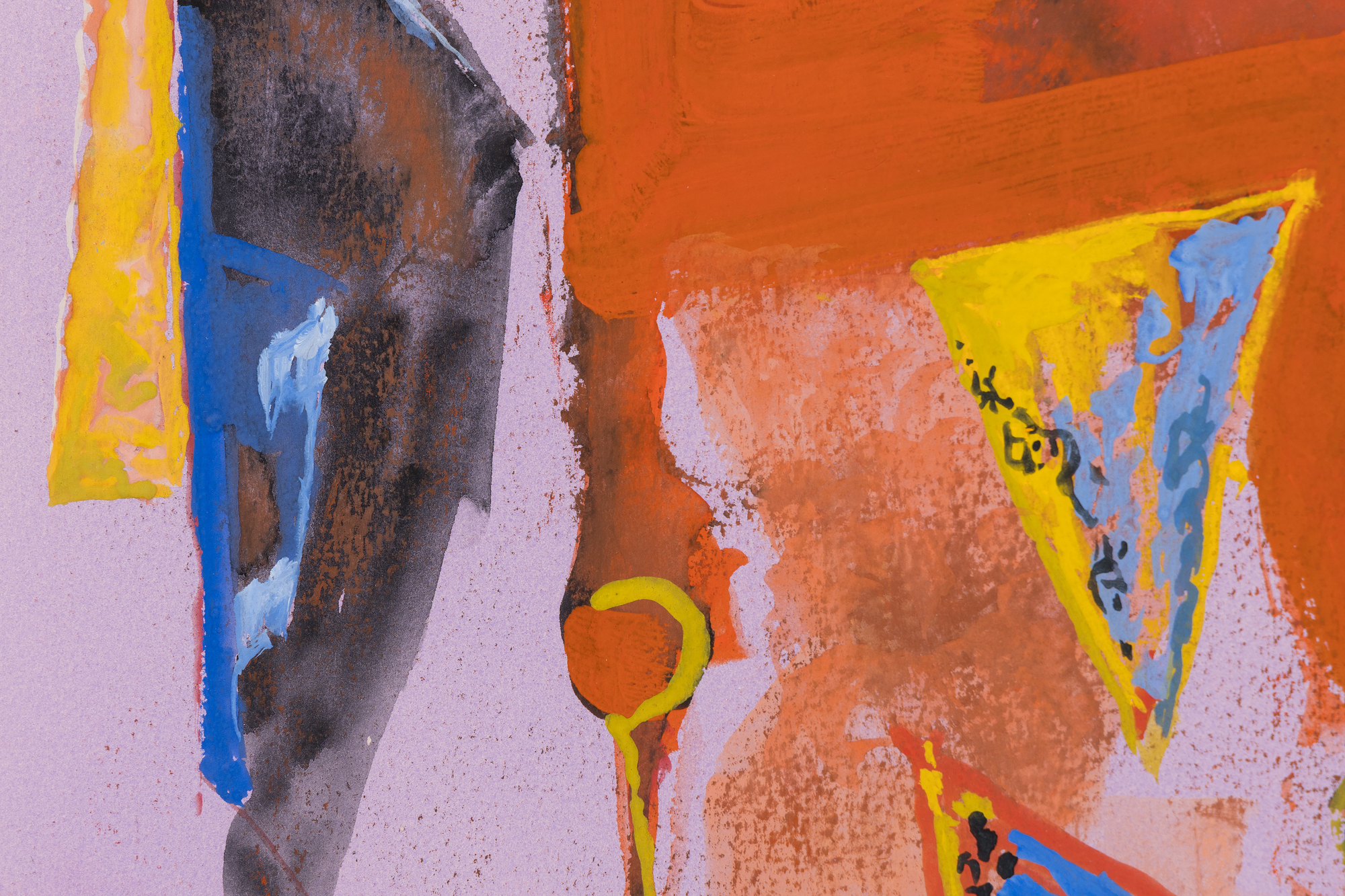
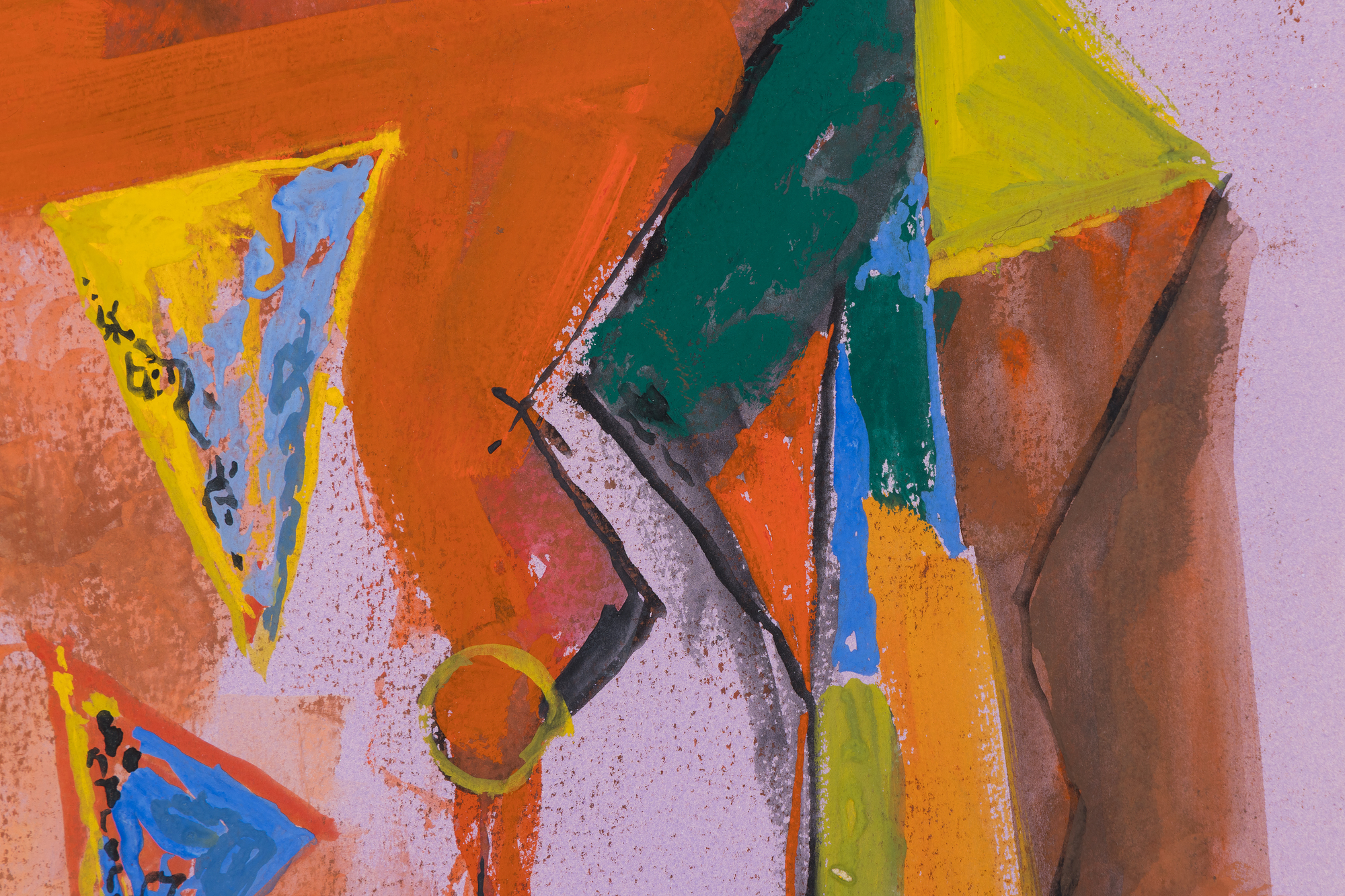
"מרינו משייקספיר 1" מאת מרינו מריני (1977) היא יצירה תוססת וטעונה מבחינה תיאטרלית על נייר, המבוצעת בטמפרה על גבי אקווטינטה ונלקחה מתיק העבודות המפורסם של מרינו משייקספיר. הקומפוזיציה מונפשת על ידי צורות נועזות ומחוותיות ופלטת צבעים מוגברת של כתומים, צהובים, אדומים ולילך, המעניקים לסצנה דחיפות דרמטית. צורה מרכזית של סוס שולטת בתמונה, מוקפת בדמויות אנושיות מוחלשות שזרועותיהן המורמות וגופן הזוויתי מרמזים על הופעה, עימות או תנועה טקסית.


למרות שהכותרת מתייחסת לשייקספיר, הקשר הוא תמטי ולא אילוסטרי. מריני מעורר את העוצמה הרגשית והדרמה הקיומית הקשורות לטרגדיה השייקספירית - קונפליקט, כוח, חוסר יציבות - באמצעות מערכות יחסים דינמיות ולא פרטים נרטיביים. הסוס והרוכב, מוטיב חוזר לאורך הקריירה של מריני, מתפקדים כאן כגיבורים סמליים ולא כנושאים ממשיים. כפי שציין האמן עצמו, "דמויות הרוכבים שלי הן סמלים של הסבל שאני חש כשאני סוקר אירועים עכשוויים", ותחושת אי הנוחות הזו מוחשית בצורות השבורות ובתנוחות חוסר האיזון המעוררות את הקומפוזיציה.


בסוויטה זו, מריני, הידוע בעיקר כאחד הפסלים הגדולים של המאה העשרים, מדגים את שליטתו בהדפס כשפה אקספרסיבית. השילוב של עומק הגוונים של האקווטינטה עם יישומים ציוריים של טמפרה מאפשר הן בהירות מבנית והן מיידיות רגשית. מרינו משייקספיר הראשון מהווה דוגמה משכנעת לעבודתו הגרפית המאוחרת של מריני, המתרגם את אוצר המילים הפיסולי שלו להרהור מודרני ותוסס על המצב האנושי.
לברר