
Back

MARINO MARINI (1901-1980)

$55,000

 
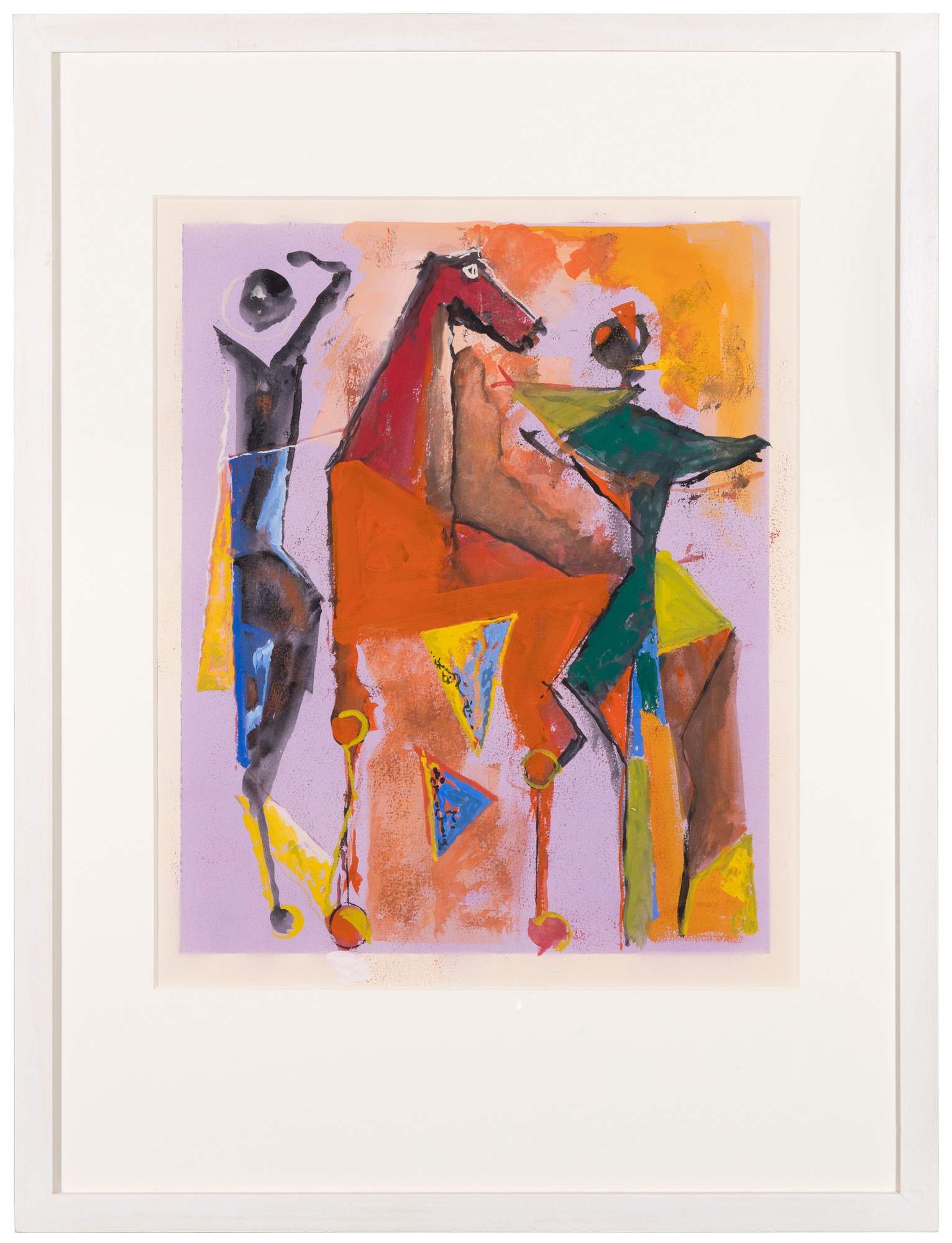
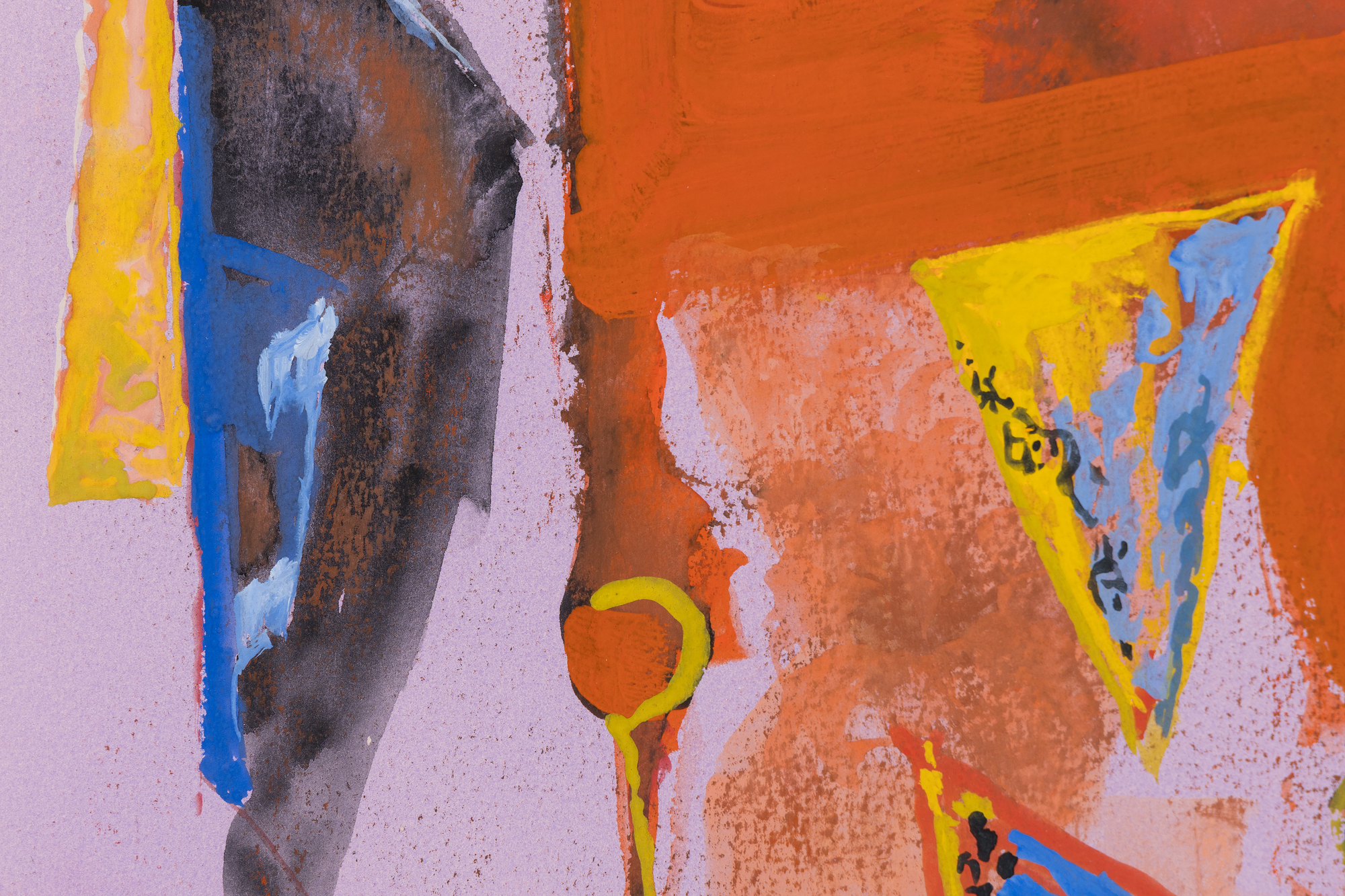
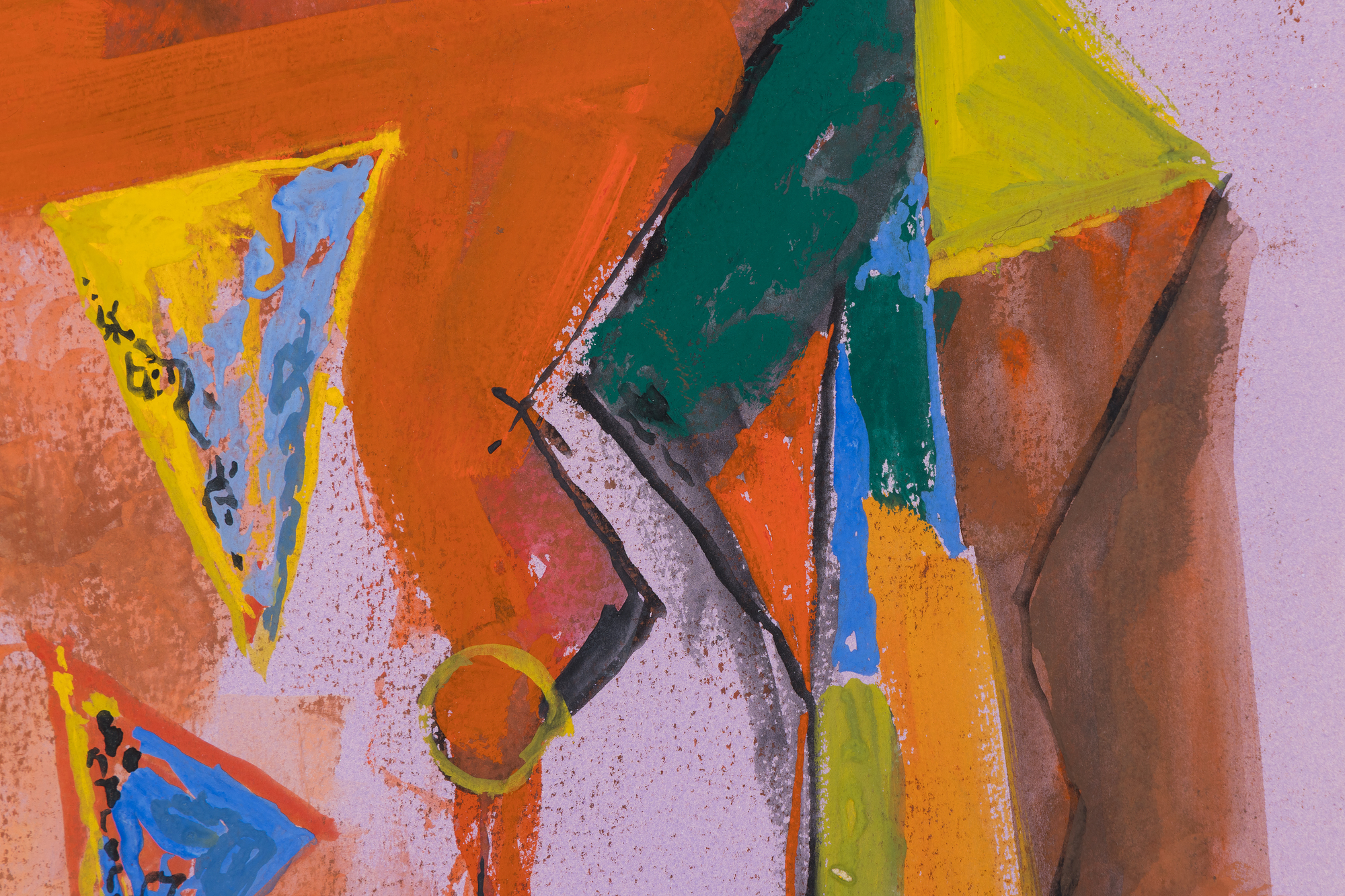
<div>Marino Marini’s <em>Marino from Shakespeare I </em>(1977) is a vibrant and theatrically charged work on paper, executed in tempera over aquatint and drawn from the celebrated Marino from Shakespeare portfolio. The composition is animated by bold, gestural forms and a heightened palette of oranges, yellows, reds, and lilac that infuse the scene with dramatic urgency. A central equine form dominates the image, flanked by attenuated human figures whose raised arms and angled bodies suggest performance, confrontation, or ritualized movement. </div>
<br>
<br><div> </div>
<br>
<br><div>Although the title references Shakespeare, the connection is thematic rather than illustrative. Marini evokes the emotional intensity and existential drama associated with Shakespearean tragedy—conflict, power, instability—through dynamic relationships rather than narrative detail. The horse and rider, a recurring motif throughout Marini’s career, function here as symbolic protagonists rather than literal subjects. As the artist himself noted, “My equestrian figures are symbols of the anguish that I feel when I survey contemporary events,” and this sense of unease is palpable in the fractured forms and off-balance poses that animate the composition. </div>
<br>
<br><div> </div>
<br>
<br><div>Best known as one of the great sculptors of the twentieth century, Marini demonstrates in this suite his mastery of printmaking as an expressive language. The combination of aquatint’s tonal depth with painterly applications of tempera allows for both structural clarity and emotional immediacy. <em>Marino from Shakespeare I </em>stands as a compelling example of Marini’s late graphic work, translating his sculptural vocabulary into a vivid, modern meditation on the human condition. </div> <div>Marino Marini’s <em>Marino from Shakespeare I </em>(1977) is a vibrant and theatrically charged work on paper, executed in tempera over aquatint and drawn from the celebrated Marino from Shakespeare portfolio. The composition is animated by bold, gestural forms and a heightened palette of oranges, yellows, reds, and lilac that infuse the scene with dramatic urgency. A central equine form dominates the image, flanked by attenuated human figures whose raised arms and angled bodies suggest performance, confrontation, or ritualized movement. </div>
<br>
<br><div> </div>
<br>
<br><div>Although the title references Shakespeare, the connection is thematic rather than illustrative. Marini evokes the emotional intensity and existential drama associated with Shakespearean tragedy—conflict, power, instability—through dynamic relationships rather than narrative detail. The horse and rider, a recurring motif throughout Marini’s career, function here as symbolic protagonists rather than literal subjects. As the artist himself noted, “My equestrian figures are symbols of the anguish that I feel when I survey contemporary events,” and this sense of unease is palpable in the fractured forms and off-balance poses that animate the composition. </div>
<br>
<br><div> </div>
<br>
<br><div>Best known as one of the great sculptors of the twentieth century, Marini demonstrates in this suite his mastery of printmaking as an expressive language. The combination of aquatint’s tonal depth with painterly applications of tempera allows for both structural clarity and emotional immediacy. <em>Marino from Shakespeare I </em>stands as a compelling example of Marini’s late graphic work, translating his sculptural vocabulary into a vivid, modern meditation on the human condition. </div> <div>Marino Marini’s <em>Marino from Shakespeare I </em>(1977) is a vibrant and theatrically charged work on paper, executed in tempera over aquatint and drawn from the celebrated Marino from Shakespeare portfolio. The composition is animated by bold, gestural forms and a heightened palette of oranges, yellows, reds, and lilac that infuse the scene with dramatic urgency. A central equine form dominates the image, flanked by attenuated human figures whose raised arms and angled bodies suggest performance, confrontation, or ritualized movement. </div>
<br>
<br><div> </div>
<br>
<br><div>Although the title references Shakespeare, the connection is thematic rather than illustrative. Marini evokes the emotional intensity and existential drama associated with Shakespearean tragedy—conflict, power, instability—through dynamic relationships rather than narrative detail. The horse and rider, a recurring motif throughout Marini’s career, function here as symbolic protagonists rather than literal subjects. As the artist himself noted, “My equestrian figures are symbols of the anguish that I feel when I survey contemporary events,” and this sense of unease is palpable in the fractured forms and off-balance poses that animate the composition. </div>
<br>
<br><div> </div>
<br>
<br><div>Best known as one of the great sculptors of the twentieth century, Marini demonstrates in this suite his mastery of printmaking as an expressive language. The combination of aquatint’s tonal depth with painterly applications of tempera allows for both structural clarity and emotional immediacy. <em>Marino from Shakespeare I </em>stands as a compelling example of Marini’s late graphic work, translating his sculptural vocabulary into a vivid, modern meditation on the human condition. </div> <div>Marino Marini’s <em>Marino from Shakespeare I </em>(1977) is a vibrant and theatrically charged work on paper, executed in tempera over aquatint and drawn from the celebrated Marino from Shakespeare portfolio. The composition is animated by bold, gestural forms and a heightened palette of oranges, yellows, reds, and lilac that infuse the scene with dramatic urgency. A central equine form dominates the image, flanked by attenuated human figures whose raised arms and angled bodies suggest performance, confrontation, or ritualized movement. </div>
<br>
<br><div> </div>
<br>
<br><div>Although the title references Shakespeare, the connection is thematic rather than illustrative. Marini evokes the emotional intensity and existential drama associated with Shakespearean tragedy—conflict, power, instability—through dynamic relationships rather than narrative detail. The horse and rider, a recurring motif throughout Marini’s career, function here as symbolic protagonists rather than literal subjects. As the artist himself noted, “My equestrian figures are symbols of the anguish that I feel when I survey contemporary events,” and this sense of unease is palpable in the fractured forms and off-balance poses that animate the composition. </div>
<br>
<br><div> </div>
<br>
<br><div>Best known as one of the great sculptors of the twentieth century, Marini demonstrates in this suite his mastery of printmaking as an expressive language. The combination of aquatint’s tonal depth with painterly applications of tempera allows for both structural clarity and emotional immediacy. <em>Marino from Shakespeare I </em>stands as a compelling example of Marini’s late graphic work, translating his sculptural vocabulary into a vivid, modern meditation on the human condition. </div> <div>Marino Marini’s <em>Marino from Shakespeare I </em>(1977) is a vibrant and theatrically charged work on paper, executed in tempera over aquatint and drawn from the celebrated Marino from Shakespeare portfolio. The composition is animated by bold, gestural forms and a heightened palette of oranges, yellows, reds, and lilac that infuse the scene with dramatic urgency. A central equine form dominates the image, flanked by attenuated human figures whose raised arms and angled bodies suggest performance, confrontation, or ritualized movement. </div>
<br>
<br><div> </div>
<br>
<br><div>Although the title references Shakespeare, the connection is thematic rather than illustrative. Marini evokes the emotional intensity and existential drama associated with Shakespearean tragedy—conflict, power, instability—through dynamic relationships rather than narrative detail. The horse and rider, a recurring motif throughout Marini’s career, function here as symbolic protagonists rather than literal subjects. As the artist himself noted, “My equestrian figures are symbols of the anguish that I feel when I survey contemporary events,” and this sense of unease is palpable in the fractured forms and off-balance poses that animate the composition. </div>
<br>
<br><div> </div>
<br>
<br><div>Best known as one of the great sculptors of the twentieth century, Marini demonstrates in this suite his mastery of printmaking as an expressive language. The combination of aquatint’s tonal depth with painterly applications of tempera allows for both structural clarity and emotional immediacy. <em>Marino from Shakespeare I </em>stands as a compelling example of Marini’s late graphic work, translating his sculptural vocabulary into a vivid, modern meditation on the human condition. </div> <div>Marino Marini’s <em>Marino from Shakespeare I </em>(1977) is a vibrant and theatrically charged work on paper, executed in tempera over aquatint and drawn from the celebrated Marino from Shakespeare portfolio. The composition is animated by bold, gestural forms and a heightened palette of oranges, yellows, reds, and lilac that infuse the scene with dramatic urgency. A central equine form dominates the image, flanked by attenuated human figures whose raised arms and angled bodies suggest performance, confrontation, or ritualized movement. </div>
<br>
<br><div> </div>
<br>
<br><div>Although the title references Shakespeare, the connection is thematic rather than illustrative. Marini evokes the emotional intensity and existential drama associated with Shakespearean tragedy—conflict, power, instability—through dynamic relationships rather than narrative detail. The horse and rider, a recurring motif throughout Marini’s career, function here as symbolic protagonists rather than literal subjects. As the artist himself noted, “My equestrian figures are symbols of the anguish that I feel when I survey contemporary events,” and this sense of unease is palpable in the fractured forms and off-balance poses that animate the composition. </div>
<br>
<br><div> </div>
<br>
<br><div>Best known as one of the great sculptors of the twentieth century, Marini demonstrates in this suite his mastery of printmaking as an expressive language. The combination of aquatint’s tonal depth with painterly applications of tempera allows for both structural clarity and emotional immediacy. <em>Marino from Shakespeare I </em>stands as a compelling example of Marini’s late graphic work, translating his sculptural vocabulary into a vivid, modern meditation on the human condition. </div> <div>Marino Marini’s <em>Marino from Shakespeare I </em>(1977) is a vibrant and theatrically charged work on paper, executed in tempera over aquatint and drawn from the celebrated Marino from Shakespeare portfolio. The composition is animated by bold, gestural forms and a heightened palette of oranges, yellows, reds, and lilac that infuse the scene with dramatic urgency. A central equine form dominates the image, flanked by attenuated human figures whose raised arms and angled bodies suggest performance, confrontation, or ritualized movement. </div>
<br>
<br><div> </div>
<br>
<br><div>Although the title references Shakespeare, the connection is thematic rather than illustrative. Marini evokes the emotional intensity and existential drama associated with Shakespearean tragedy—conflict, power, instability—through dynamic relationships rather than narrative detail. The horse and rider, a recurring motif throughout Marini’s career, function here as symbolic protagonists rather than literal subjects. As the artist himself noted, “My equestrian figures are symbols of the anguish that I feel when I survey contemporary events,” and this sense of unease is palpable in the fractured forms and off-balance poses that animate the composition. </div>
<br>
<br><div> </div>
<br>
<br><div>Best known as one of the great sculptors of the twentieth century, Marini demonstrates in this suite his mastery of printmaking as an expressive language. The combination of aquatint’s tonal depth with painterly applications of tempera allows for both structural clarity and emotional immediacy. <em>Marino from Shakespeare I </em>stands as a compelling example of Marini’s late graphic work, translating his sculptural vocabulary into a vivid, modern meditation on the human condition. </div> <div>Marino Marini’s <em>Marino from Shakespeare I </em>(1977) is a vibrant and theatrically charged work on paper, executed in tempera over aquatint and drawn from the celebrated Marino from Shakespeare portfolio. The composition is animated by bold, gestural forms and a heightened palette of oranges, yellows, reds, and lilac that infuse the scene with dramatic urgency. A central equine form dominates the image, flanked by attenuated human figures whose raised arms and angled bodies suggest performance, confrontation, or ritualized movement. </div>
<br>
<br><div> </div>
<br>
<br><div>Although the title references Shakespeare, the connection is thematic rather than illustrative. Marini evokes the emotional intensity and existential drama associated with Shakespearean tragedy—conflict, power, instability—through dynamic relationships rather than narrative detail. The horse and rider, a recurring motif throughout Marini’s career, function here as symbolic protagonists rather than literal subjects. As the artist himself noted, “My equestrian figures are symbols of the anguish that I feel when I survey contemporary events,” and this sense of unease is palpable in the fractured forms and off-balance poses that animate the composition. </div>
<br>
<br><div> </div>
<br>
<br><div>Best known as one of the great sculptors of the twentieth century, Marini demonstrates in this suite his mastery of printmaking as an expressive language. The combination of aquatint’s tonal depth with painterly applications of tempera allows for both structural clarity and emotional immediacy. <em>Marino from Shakespeare I </em>stands as a compelling example of Marini’s late graphic work, translating his sculptural vocabulary into a vivid, modern meditation on the human condition. </div> <div>Marino Marini’s <em>Marino from Shakespeare I </em>(1977) is a vibrant and theatrically charged work on paper, executed in tempera over aquatint and drawn from the celebrated Marino from Shakespeare portfolio. The composition is animated by bold, gestural forms and a heightened palette of oranges, yellows, reds, and lilac that infuse the scene with dramatic urgency. A central equine form dominates the image, flanked by attenuated human figures whose raised arms and angled bodies suggest performance, confrontation, or ritualized movement. </div>
<br>
<br><div> </div>
<br>
<br><div>Although the title references Shakespeare, the connection is thematic rather than illustrative. Marini evokes the emotional intensity and existential drama associated with Shakespearean tragedy—conflict, power, instability—through dynamic relationships rather than narrative detail. The horse and rider, a recurring motif throughout Marini’s career, function here as symbolic protagonists rather than literal subjects. As the artist himself noted, “My equestrian figures are symbols of the anguish that I feel when I survey contemporary events,” and this sense of unease is palpable in the fractured forms and off-balance poses that animate the composition. </div>
<br>
<br><div> </div>
<br>
<br><div>Best known as one of the great sculptors of the twentieth century, Marini demonstrates in this suite his mastery of printmaking as an expressive language. The combination of aquatint’s tonal depth with painterly applications of tempera allows for both structural clarity and emotional immediacy. <em>Marino from Shakespeare I </em>stands as a compelling example of Marini’s late graphic work, translating his sculptural vocabulary into a vivid, modern meditation on the human condition. </div> <div>Marino Marini’s <em>Marino from Shakespeare I </em>(1977) is a vibrant and theatrically charged work on paper, executed in tempera over aquatint and drawn from the celebrated Marino from Shakespeare portfolio. The composition is animated by bold, gestural forms and a heightened palette of oranges, yellows, reds, and lilac that infuse the scene with dramatic urgency. A central equine form dominates the image, flanked by attenuated human figures whose raised arms and angled bodies suggest performance, confrontation, or ritualized movement. </div>
<br>
<br><div> </div>
<br>
<br><div>Although the title references Shakespeare, the connection is thematic rather than illustrative. Marini evokes the emotional intensity and existential drama associated with Shakespearean tragedy—conflict, power, instability—through dynamic relationships rather than narrative detail. The horse and rider, a recurring motif throughout Marini’s career, function here as symbolic protagonists rather than literal subjects. As the artist himself noted, “My equestrian figures are symbols of the anguish that I feel when I survey contemporary events,” and this sense of unease is palpable in the fractured forms and off-balance poses that animate the composition. </div>
<br>
<br><div> </div>
<br>
<br><div>Best known as one of the great sculptors of the twentieth century, Marini demonstrates in this suite his mastery of printmaking as an expressive language. The combination of aquatint’s tonal depth with painterly applications of tempera allows for both structural clarity and emotional immediacy. <em>Marino from Shakespeare I </em>stands as a compelling example of Marini’s late graphic work, translating his sculptural vocabulary into a vivid, modern meditation on the human condition. </div>
Marino From Shakespeare I197719 1/8 x 15 1/2 in.(48.58 x 39.37 cm) tempera over aquatint on paper
Provenance
Fondazione Marino Marini, Pistoia
Private Collection, acquired from the above, 2006
Sotheby's, New York, November 14, 2023, lot 115
Private Collection, acquired from the above
Marino Marini’s Marino from Shakespeare I (1977) is a vibrant and theatrically charged work on paper, executed in tempera over aquatint and drawn from the celebrated Marino from Shakespeare portfolio. The composition is animated by bold, gestural forms and a heightened palette of oranges, yellows, reds, and lilac that infuse the scene with dramatic urgency. A central equine form dominates the image, flanked by attenuated human figures whose raised arms and angled bodies suggest performance, confrontation, or ritualized movement.


Although the title references Shakespeare, the connection is thematic rather than illustrative. Marini evokes the emotional intensity and existential drama associated with Shakespearean tragedy—conflict, power, instability—through dynamic relationships rather than narrative detail. The horse and rider, a recurring motif throughout Marini’s career, function here as symbolic protagonists rather than literal subjects. As the artist himself noted, “My equestrian figures are symbols of the anguish that I feel when I survey contemporary events,” and this sense of unease is palpable in the fractured forms and off-balance poses that animate the composition.


Best known as one of the great sculptors of the twentieth century, Marini demonstrates in this suite his mastery of printmaking as an expressive language. The combination of aquatint’s tonal depth with painterly applications of tempera allows for both structural clarity and emotional immediacy. Marino from Shakespeare I stands as a compelling example of Marini’s late graphic work, translating his sculptural vocabulary into a vivid, modern meditation on the human condition.
Inquire