戻る

マリノ・マリーニ (1901-1980)

$55,000

 
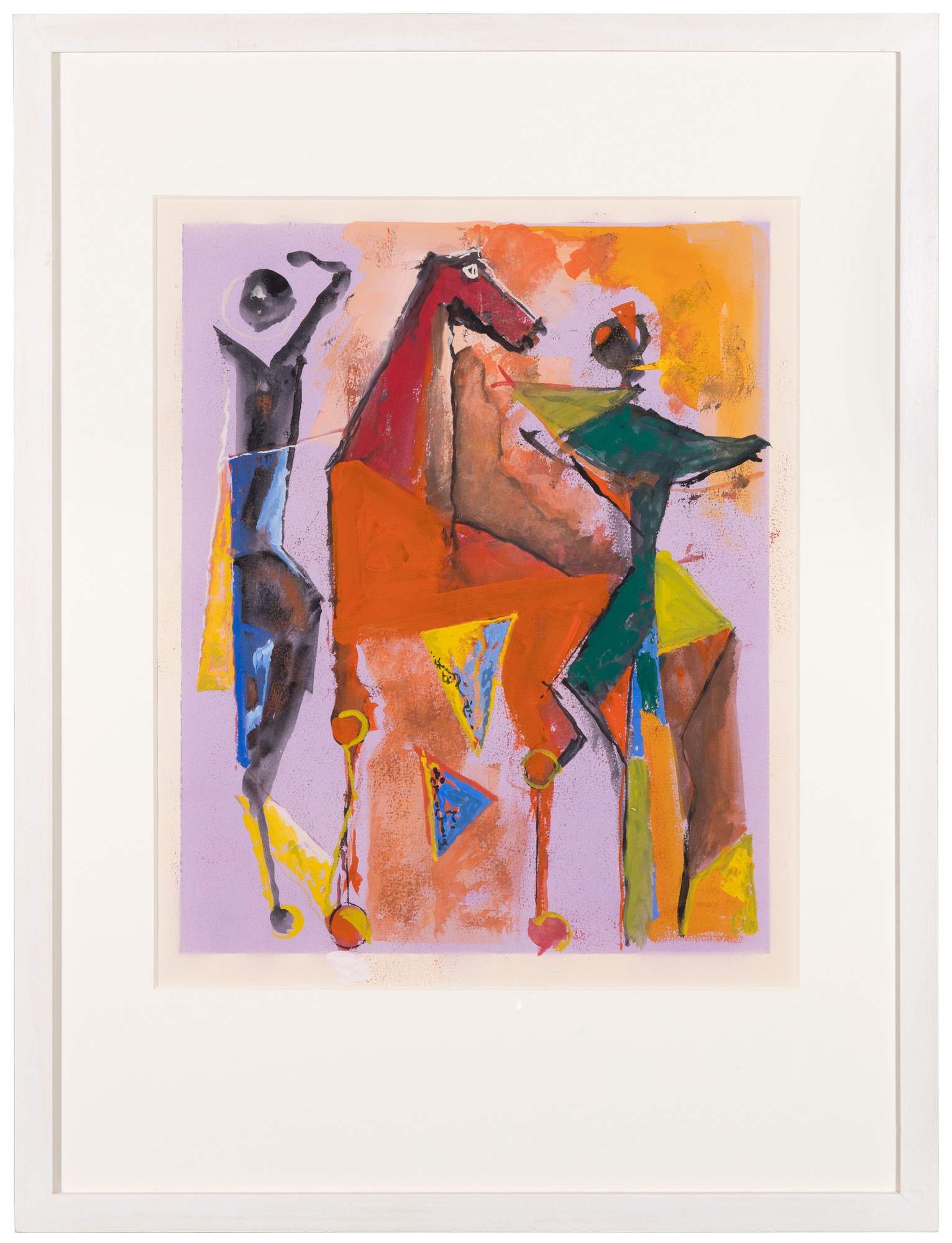
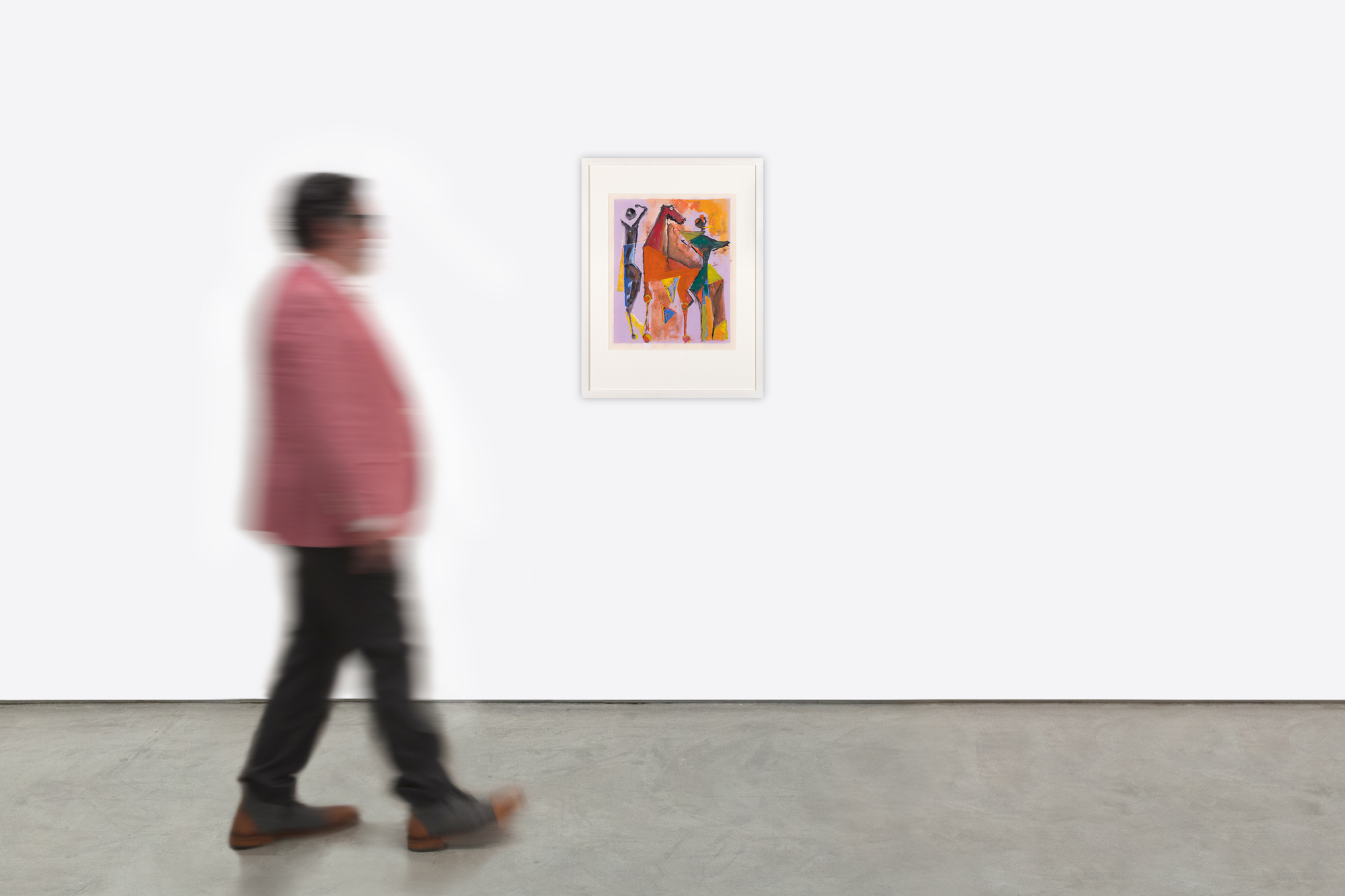
<div>Marino Marini’s <em>Marino from Shakespeare I </em>(1977) is a vibrant and theatrically charged work on paper, executed in tempera over aquatint and drawn from the celebrated Marino from Shakespeare portfolio. The composition is animated by bold, gestural forms and a heightened palette of oranges, yellows, reds, and lilac that infuse the scene with dramatic urgency. A central equine form dominates the image, flanked by attenuated human figures whose raised arms and angled bodies suggest performance, confrontation, or ritualized movement. </div><br><br><div> </div><br><br><div>Although the title references Shakespeare, the connection is thematic rather than illustrative. Marini evokes the emotional intensity and existential drama associated with Shakespearean tragedy—conflict, power, instability—through dynamic relationships rather than narrative detail. The horse and rider, a recurring motif throughout Marini’s career, function here as symbolic protagonists rather than literal subjects. As the artist himself noted, “My equestrian figures are symbols of the anguish that I feel when I survey contemporary events,” and this sense of unease is palpable in the fractured forms and off-balance poses that animate the composition. </div><br><br><div> </div><br><br><div>Best known as one of the great sculptors of the twentieth century, Marini demonstrates in this suite his mastery of printmaking as an expressive language. The combination of aquatint’s tonal depth with painterly applications of tempera allows for both structural clarity and emotional immediacy. <em>Marino from Shakespeare I </em>stands as a compelling example of Marini’s late graphic work, translating his sculptural vocabulary into a vivid, modern meditation on the human condition. </div> <div>Marino Marini’s <em>Marino from Shakespeare I </em>(1977) is a vibrant and theatrically charged work on paper, executed in tempera over aquatint and drawn from the celebrated Marino from Shakespeare portfolio. The composition is animated by bold, gestural forms and a heightened palette of oranges, yellows, reds, and lilac that infuse the scene with dramatic urgency. A central equine form dominates the image, flanked by attenuated human figures whose raised arms and angled bodies suggest performance, confrontation, or ritualized movement. </div><br><br><div> </div><br><br><div>Although the title references Shakespeare, the connection is thematic rather than illustrative. Marini evokes the emotional intensity and existential drama associated with Shakespearean tragedy—conflict, power, instability—through dynamic relationships rather than narrative detail. The horse and rider, a recurring motif throughout Marini’s career, function here as symbolic protagonists rather than literal subjects. As the artist himself noted, “My equestrian figures are symbols of the anguish that I feel when I survey contemporary events,” and this sense of unease is palpable in the fractured forms and off-balance poses that animate the composition. </div><br><br><div> </div><br><br><div>Best known as one of the great sculptors of the twentieth century, Marini demonstrates in this suite his mastery of printmaking as an expressive language. The combination of aquatint’s tonal depth with painterly applications of tempera allows for both structural clarity and emotional immediacy. <em>Marino from Shakespeare I </em>stands as a compelling example of Marini’s late graphic work, translating his sculptural vocabulary into a vivid, modern meditation on the human condition. </div> <div>Marino Marini’s <em>Marino from Shakespeare I </em>(1977) is a vibrant and theatrically charged work on paper, executed in tempera over aquatint and drawn from the celebrated Marino from Shakespeare portfolio. The composition is animated by bold, gestural forms and a heightened palette of oranges, yellows, reds, and lilac that infuse the scene with dramatic urgency. A central equine form dominates the image, flanked by attenuated human figures whose raised arms and angled bodies suggest performance, confrontation, or ritualized movement. </div><br><br><div> </div><br><br><div>Although the title references Shakespeare, the connection is thematic rather than illustrative. Marini evokes the emotional intensity and existential drama associated with Shakespearean tragedy—conflict, power, instability—through dynamic relationships rather than narrative detail. The horse and rider, a recurring motif throughout Marini’s career, function here as symbolic protagonists rather than literal subjects. As the artist himself noted, “My equestrian figures are symbols of the anguish that I feel when I survey contemporary events,” and this sense of unease is palpable in the fractured forms and off-balance poses that animate the composition. </div><br><br><div> </div><br><br><div>Best known as one of the great sculptors of the twentieth century, Marini demonstrates in this suite his mastery of printmaking as an expressive language. The combination of aquatint’s tonal depth with painterly applications of tempera allows for both structural clarity and emotional immediacy. <em>Marino from Shakespeare I </em>stands as a compelling example of Marini’s late graphic work, translating his sculptural vocabulary into a vivid, modern meditation on the human condition. </div> <div>Marino Marini’s <em>Marino from Shakespeare I </em>(1977) is a vibrant and theatrically charged work on paper, executed in tempera over aquatint and drawn from the celebrated Marino from Shakespeare portfolio. The composition is animated by bold, gestural forms and a heightened palette of oranges, yellows, reds, and lilac that infuse the scene with dramatic urgency. A central equine form dominates the image, flanked by attenuated human figures whose raised arms and angled bodies suggest performance, confrontation, or ritualized movement. </div><br><br><div> </div><br><br><div>Although the title references Shakespeare, the connection is thematic rather than illustrative. Marini evokes the emotional intensity and existential drama associated with Shakespearean tragedy—conflict, power, instability—through dynamic relationships rather than narrative detail. The horse and rider, a recurring motif throughout Marini’s career, function here as symbolic protagonists rather than literal subjects. As the artist himself noted, “My equestrian figures are symbols of the anguish that I feel when I survey contemporary events,” and this sense of unease is palpable in the fractured forms and off-balance poses that animate the composition. </div><br><br><div> </div><br><br><div>Best known as one of the great sculptors of the twentieth century, Marini demonstrates in this suite his mastery of printmaking as an expressive language. The combination of aquatint’s tonal depth with painterly applications of tempera allows for both structural clarity and emotional immediacy. <em>Marino from Shakespeare I </em>stands as a compelling example of Marini’s late graphic work, translating his sculptural vocabulary into a vivid, modern meditation on the human condition. </div> <div>Marino Marini’s <em>Marino from Shakespeare I </em>(1977) is a vibrant and theatrically charged work on paper, executed in tempera over aquatint and drawn from the celebrated Marino from Shakespeare portfolio. The composition is animated by bold, gestural forms and a heightened palette of oranges, yellows, reds, and lilac that infuse the scene with dramatic urgency. A central equine form dominates the image, flanked by attenuated human figures whose raised arms and angled bodies suggest performance, confrontation, or ritualized movement. </div><br><br><div> </div><br><br><div>Although the title references Shakespeare, the connection is thematic rather than illustrative. Marini evokes the emotional intensity and existential drama associated with Shakespearean tragedy—conflict, power, instability—through dynamic relationships rather than narrative detail. The horse and rider, a recurring motif throughout Marini’s career, function here as symbolic protagonists rather than literal subjects. As the artist himself noted, “My equestrian figures are symbols of the anguish that I feel when I survey contemporary events,” and this sense of unease is palpable in the fractured forms and off-balance poses that animate the composition. </div><br><br><div> </div><br><br><div>Best known as one of the great sculptors of the twentieth century, Marini demonstrates in this suite his mastery of printmaking as an expressive language. The combination of aquatint’s tonal depth with painterly applications of tempera allows for both structural clarity and emotional immediacy. <em>Marino from Shakespeare I </em>stands as a compelling example of Marini’s late graphic work, translating his sculptural vocabulary into a vivid, modern meditation on the human condition. </div> <div>Marino Marini’s <em>Marino from Shakespeare I </em>(1977) is a vibrant and theatrically charged work on paper, executed in tempera over aquatint and drawn from the celebrated Marino from Shakespeare portfolio. The composition is animated by bold, gestural forms and a heightened palette of oranges, yellows, reds, and lilac that infuse the scene with dramatic urgency. A central equine form dominates the image, flanked by attenuated human figures whose raised arms and angled bodies suggest performance, confrontation, or ritualized movement. </div><br><br><div> </div><br><br><div>Although the title references Shakespeare, the connection is thematic rather than illustrative. Marini evokes the emotional intensity and existential drama associated with Shakespearean tragedy—conflict, power, instability—through dynamic relationships rather than narrative detail. The horse and rider, a recurring motif throughout Marini’s career, function here as symbolic protagonists rather than literal subjects. As the artist himself noted, “My equestrian figures are symbols of the anguish that I feel when I survey contemporary events,” and this sense of unease is palpable in the fractured forms and off-balance poses that animate the composition. </div><br><br><div> </div><br><br><div>Best known as one of the great sculptors of the twentieth century, Marini demonstrates in this suite his mastery of printmaking as an expressive language. The combination of aquatint’s tonal depth with painterly applications of tempera allows for both structural clarity and emotional immediacy. <em>Marino from Shakespeare I </em>stands as a compelling example of Marini’s late graphic work, translating his sculptural vocabulary into a vivid, modern meditation on the human condition. </div> <div>Marino Marini’s <em>Marino from Shakespeare I </em>(1977) is a vibrant and theatrically charged work on paper, executed in tempera over aquatint and drawn from the celebrated Marino from Shakespeare portfolio. The composition is animated by bold, gestural forms and a heightened palette of oranges, yellows, reds, and lilac that infuse the scene with dramatic urgency. A central equine form dominates the image, flanked by attenuated human figures whose raised arms and angled bodies suggest performance, confrontation, or ritualized movement. </div><br><br><div> </div><br><br><div>Although the title references Shakespeare, the connection is thematic rather than illustrative. Marini evokes the emotional intensity and existential drama associated with Shakespearean tragedy—conflict, power, instability—through dynamic relationships rather than narrative detail. The horse and rider, a recurring motif throughout Marini’s career, function here as symbolic protagonists rather than literal subjects. As the artist himself noted, “My equestrian figures are symbols of the anguish that I feel when I survey contemporary events,” and this sense of unease is palpable in the fractured forms and off-balance poses that animate the composition. </div><br><br><div> </div><br><br><div>Best known as one of the great sculptors of the twentieth century, Marini demonstrates in this suite his mastery of printmaking as an expressive language. The combination of aquatint’s tonal depth with painterly applications of tempera allows for both structural clarity and emotional immediacy. <em>Marino from Shakespeare I </em>stands as a compelling example of Marini’s late graphic work, translating his sculptural vocabulary into a vivid, modern meditation on the human condition. </div> <div>Marino Marini’s <em>Marino from Shakespeare I </em>(1977) is a vibrant and theatrically charged work on paper, executed in tempera over aquatint and drawn from the celebrated Marino from Shakespeare portfolio. The composition is animated by bold, gestural forms and a heightened palette of oranges, yellows, reds, and lilac that infuse the scene with dramatic urgency. A central equine form dominates the image, flanked by attenuated human figures whose raised arms and angled bodies suggest performance, confrontation, or ritualized movement. </div><br><br><div> </div><br><br><div>Although the title references Shakespeare, the connection is thematic rather than illustrative. Marini evokes the emotional intensity and existential drama associated with Shakespearean tragedy—conflict, power, instability—through dynamic relationships rather than narrative detail. The horse and rider, a recurring motif throughout Marini’s career, function here as symbolic protagonists rather than literal subjects. As the artist himself noted, “My equestrian figures are symbols of the anguish that I feel when I survey contemporary events,” and this sense of unease is palpable in the fractured forms and off-balance poses that animate the composition. </div><br><br><div> </div><br><br><div>Best known as one of the great sculptors of the twentieth century, Marini demonstrates in this suite his mastery of printmaking as an expressive language. The combination of aquatint’s tonal depth with painterly applications of tempera allows for both structural clarity and emotional immediacy. <em>Marino from Shakespeare I </em>stands as a compelling example of Marini’s late graphic work, translating his sculptural vocabulary into a vivid, modern meditation on the human condition. </div> <div>Marino Marini’s <em>Marino from Shakespeare I </em>(1977) is a vibrant and theatrically charged work on paper, executed in tempera over aquatint and drawn from the celebrated Marino from Shakespeare portfolio. The composition is animated by bold, gestural forms and a heightened palette of oranges, yellows, reds, and lilac that infuse the scene with dramatic urgency. A central equine form dominates the image, flanked by attenuated human figures whose raised arms and angled bodies suggest performance, confrontation, or ritualized movement. </div><br><br><div> </div><br><br><div>Although the title references Shakespeare, the connection is thematic rather than illustrative. Marini evokes the emotional intensity and existential drama associated with Shakespearean tragedy—conflict, power, instability—through dynamic relationships rather than narrative detail. The horse and rider, a recurring motif throughout Marini’s career, function here as symbolic protagonists rather than literal subjects. As the artist himself noted, “My equestrian figures are symbols of the anguish that I feel when I survey contemporary events,” and this sense of unease is palpable in the fractured forms and off-balance poses that animate the composition. </div><br><br><div> </div><br><br><div>Best known as one of the great sculptors of the twentieth century, Marini demonstrates in this suite his mastery of printmaking as an expressive language. The combination of aquatint’s tonal depth with painterly applications of tempera allows for both structural clarity and emotional immediacy. <em>Marino from Shakespeare I </em>stands as a compelling example of Marini’s late graphic work, translating his sculptural vocabulary into a vivid, modern meditation on the human condition. </div> <div>Marino Marini’s <em>Marino from Shakespeare I </em>(1977) is a vibrant and theatrically charged work on paper, executed in tempera over aquatint and drawn from the celebrated Marino from Shakespeare portfolio. The composition is animated by bold, gestural forms and a heightened palette of oranges, yellows, reds, and lilac that infuse the scene with dramatic urgency. A central equine form dominates the image, flanked by attenuated human figures whose raised arms and angled bodies suggest performance, confrontation, or ritualized movement. </div><br><br><div> </div><br><br><div>Although the title references Shakespeare, the connection is thematic rather than illustrative. Marini evokes the emotional intensity and existential drama associated with Shakespearean tragedy—conflict, power, instability—through dynamic relationships rather than narrative detail. The horse and rider, a recurring motif throughout Marini’s career, function here as symbolic protagonists rather than literal subjects. As the artist himself noted, “My equestrian figures are symbols of the anguish that I feel when I survey contemporary events,” and this sense of unease is palpable in the fractured forms and off-balance poses that animate the composition. </div><br><br><div> </div><br><br><div>Best known as one of the great sculptors of the twentieth century, Marini demonstrates in this suite his mastery of printmaking as an expressive language. The combination of aquatint’s tonal depth with painterly applications of tempera allows for both structural clarity and emotional immediacy. <em>Marino from Shakespeare I </em>stands as a compelling example of Marini’s late graphic work, translating his sculptural vocabulary into a vivid, modern meditation on the human condition. </div>
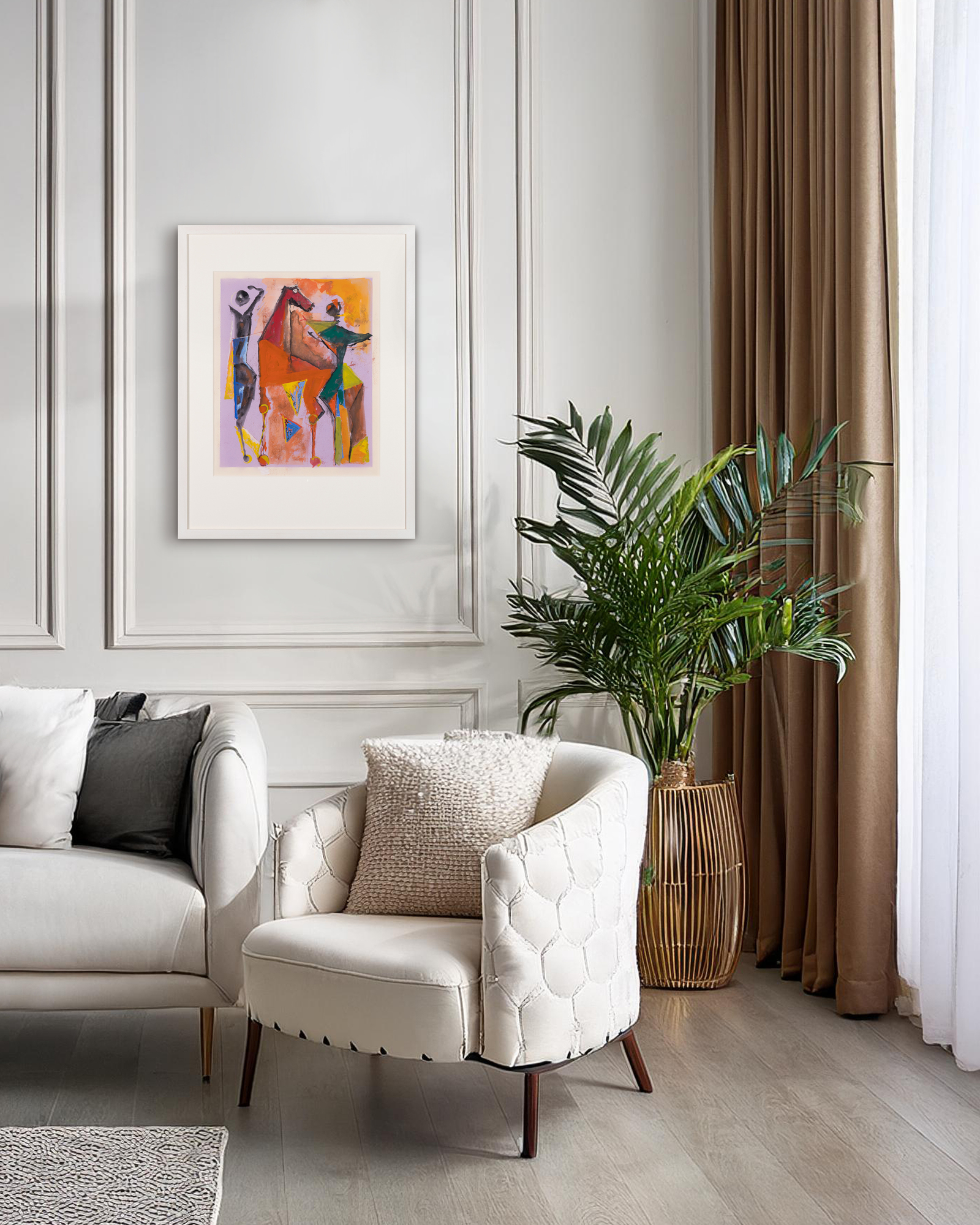
マリーノ シェイクスピア I1977年19 1/8 x 15 1/2 インチ(48.58 x 39.37 cm) 紙上のアクアチント、テンペラ
出所
マリーノ・マリーニ財団、ピストイア
個人コレクション、上記より取得、2006年
サザビーズ、ニューヨーク、2023年11月14日、ロット115
個人コレクション、上記より取得
マリーノ・マリーニの『シェイクスピア I のマリーノ』(1977 年)は、アクワティントの上にテンペラで描かれた、活気に満ち、演劇的な力強さを感じさせる紙上の作品で、有名な『シェイクスピアのマリーノ』ポートフォリオから引用されています。大胆でジェスチャー的な形と、オレンジ、黄色、赤、ライラック色の鮮やかな色調が、この構図に活気を与え、劇的な緊迫感をシーンに吹き込んでいます。 中央の馬の姿が画面を支配し、その両脇には、腕を上げ、体を斜めに傾けた、パフォーマンスや対決、あるいは儀式的な動きを思わせる、細長い人物像が並んでいます。


タイトルはシェイクスピアに言及していますが、その関連性は、イラスト的なものというよりも、テーマ的なものです。マリーノは、物語の詳細ではなく、ダイナミックな関係性を通じて、シェイクスピアの悲劇に関連する感情的な強烈さや実存的なドラマ、すなわち葛藤、権力、不安定さを呼び起こしています。 マリニの作品群に繰り返し登場する馬と騎手は、ここでは文字通りの主題というより象徴的な主人公として機能する。作家自身が「私の騎馬像は現代の出来事を眺める際に感じる苦悩の象徴である」と述べたように、この不安感は、構図に躍動感を与える断片化された形態と不安定な姿勢に如実に表れている。


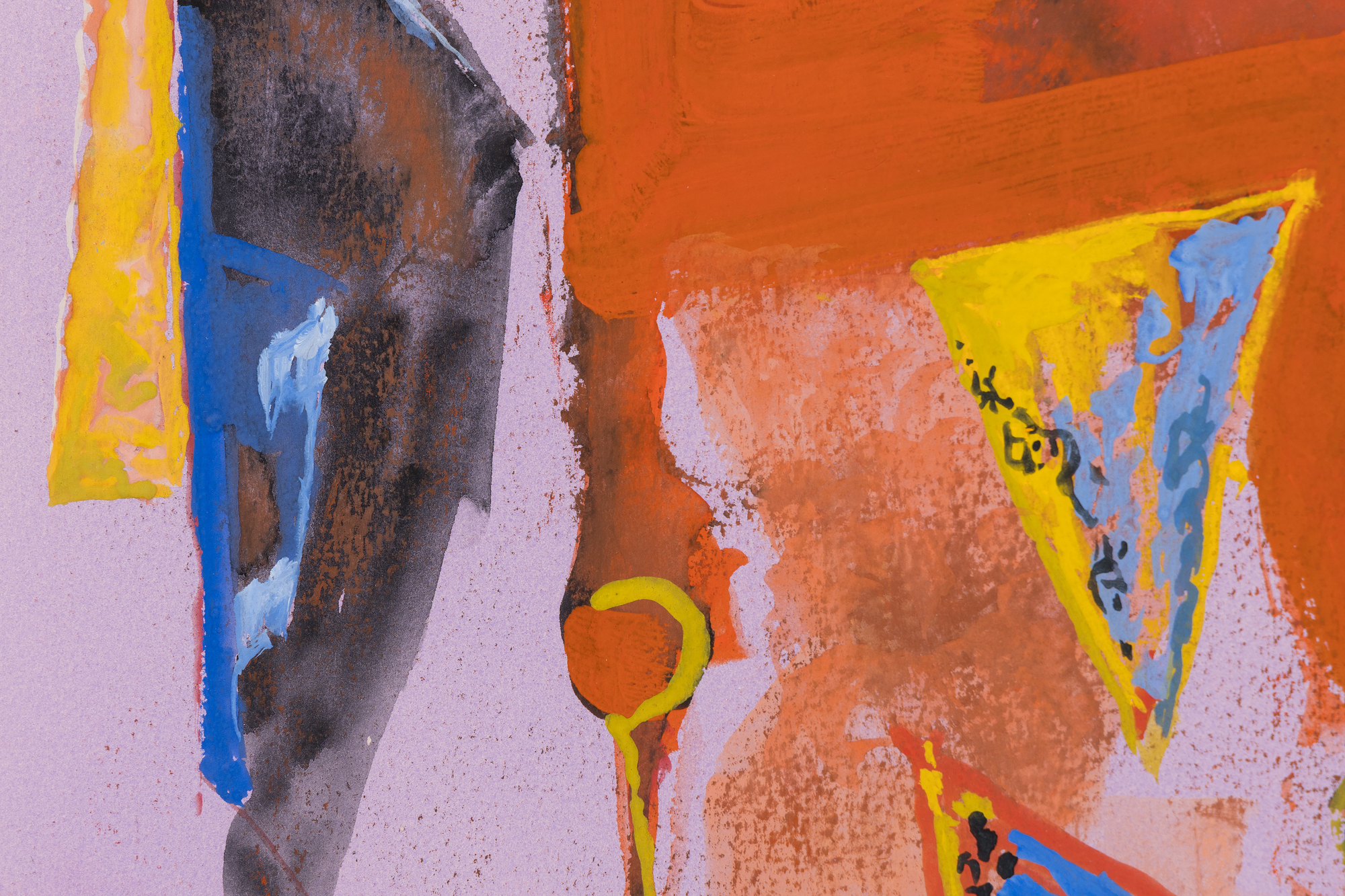
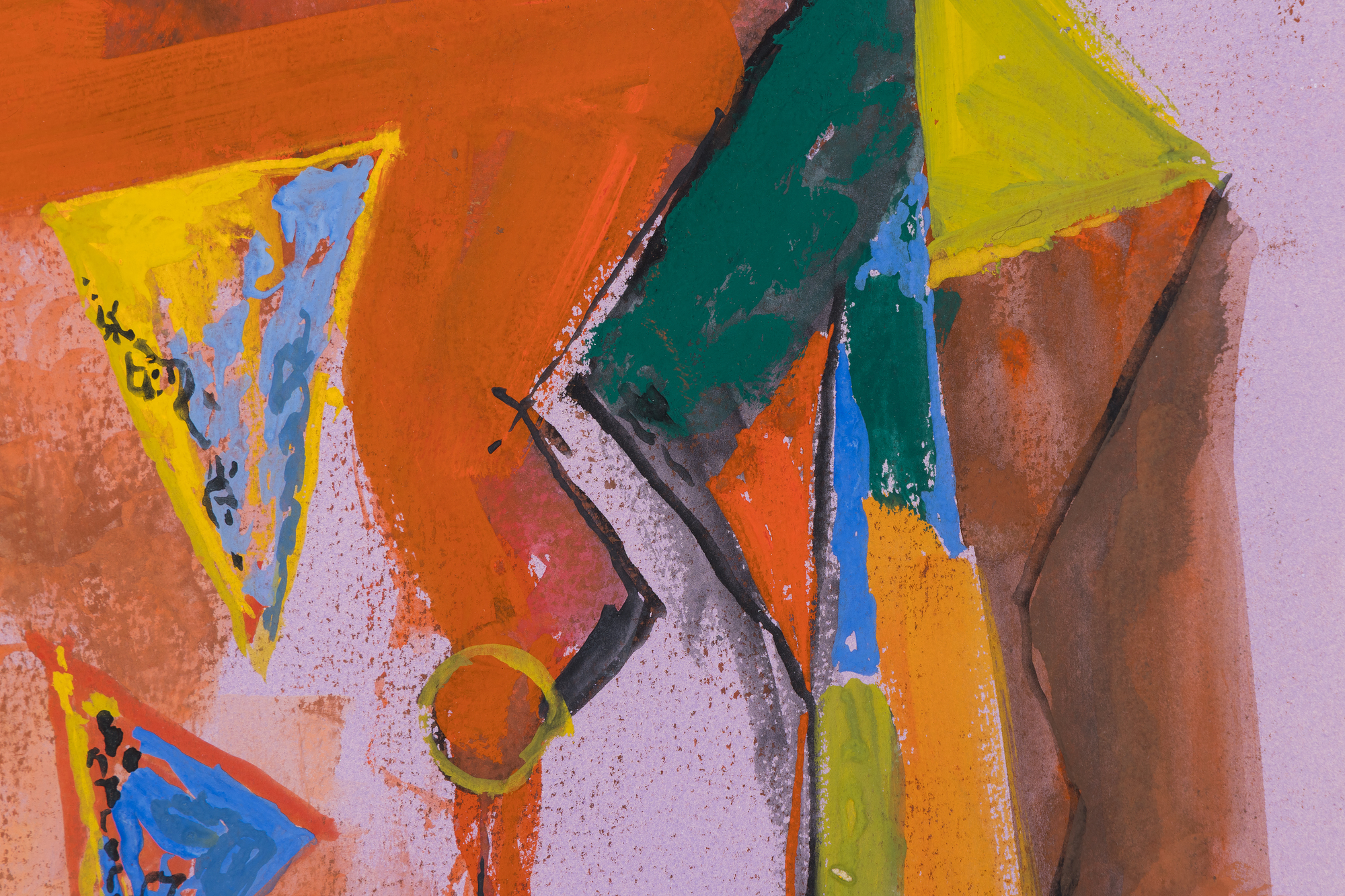
20 世紀の偉大な彫刻家の一人として最もよく知られるマリーノは、この作品群で、表現手段としての版画の達人としての腕前を発揮しています。アクアチントの深みのある色調と、テンペラによる絵画的な表現を組み合わせることで、構造的な明快さと感情的な即時性の両方を実現しています。『シェイクスピア I のマリーノ』は、マリーノの晩年のグラフィック作品の魅力的な一例であり、彼の彫刻の語彙を、人間の条件に関する鮮やかで現代的な瞑想へと変換しています。
お 問い合わせ