פאול סיניאק (1863-1935)

$3,750,000
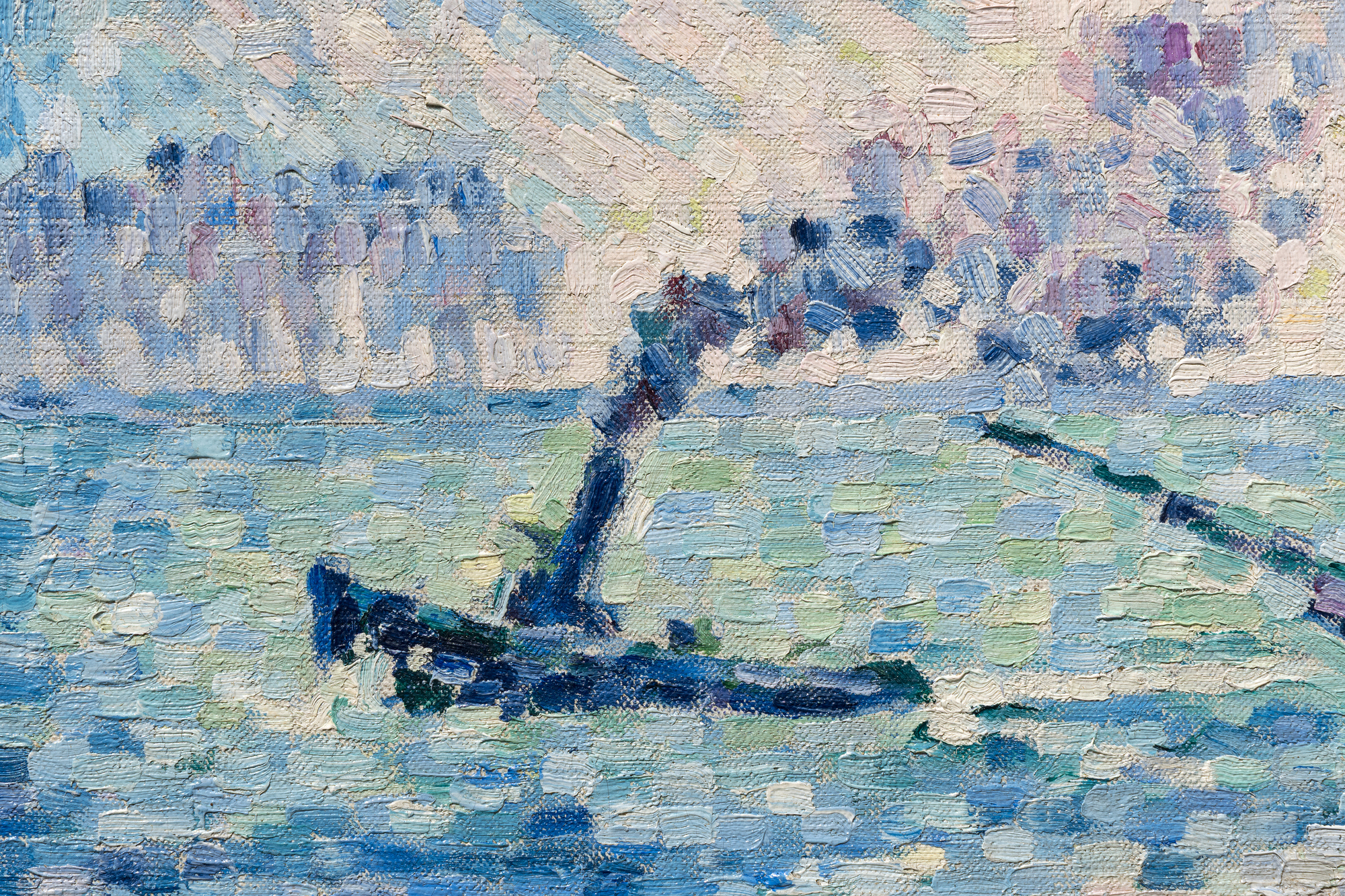
 
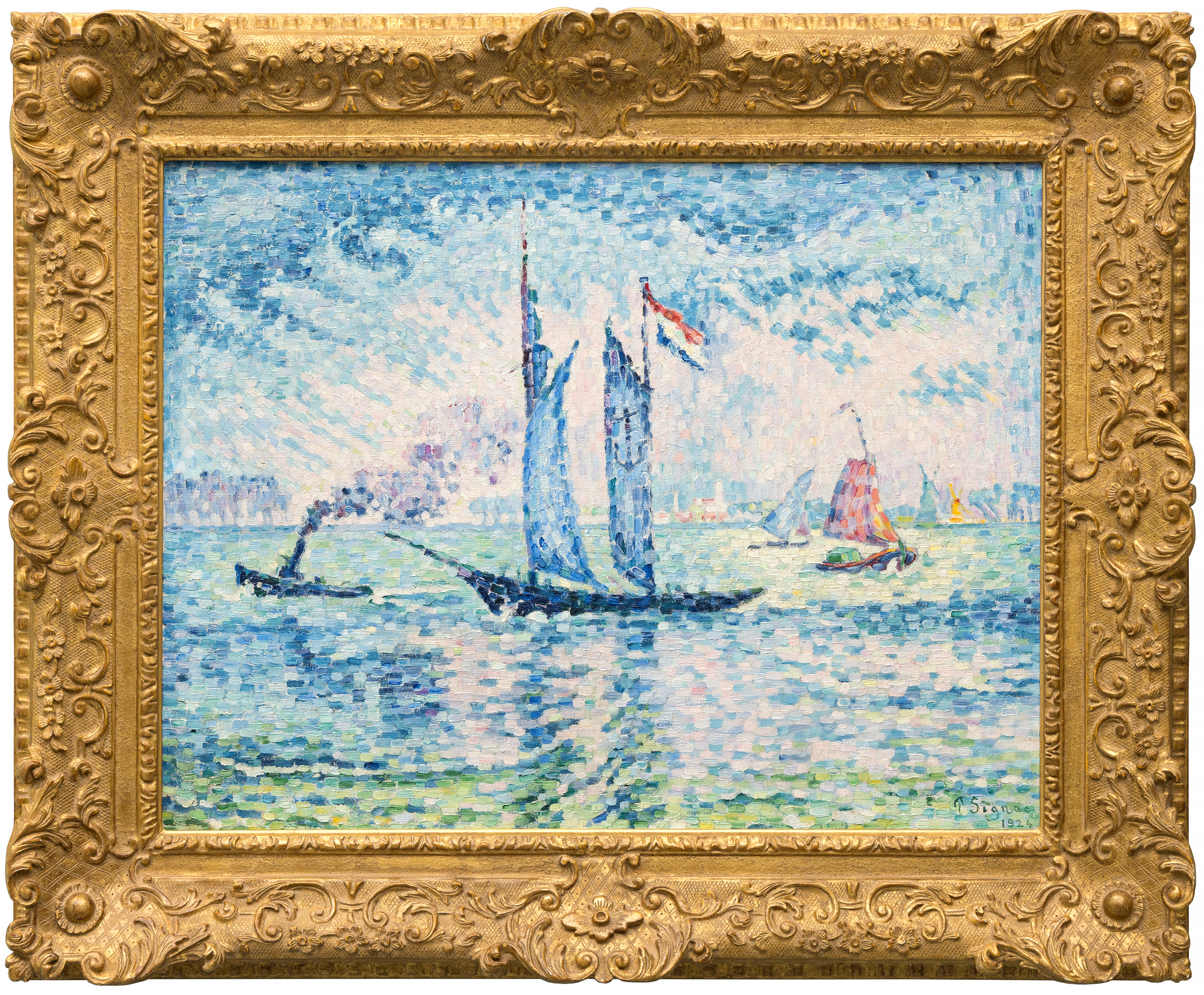
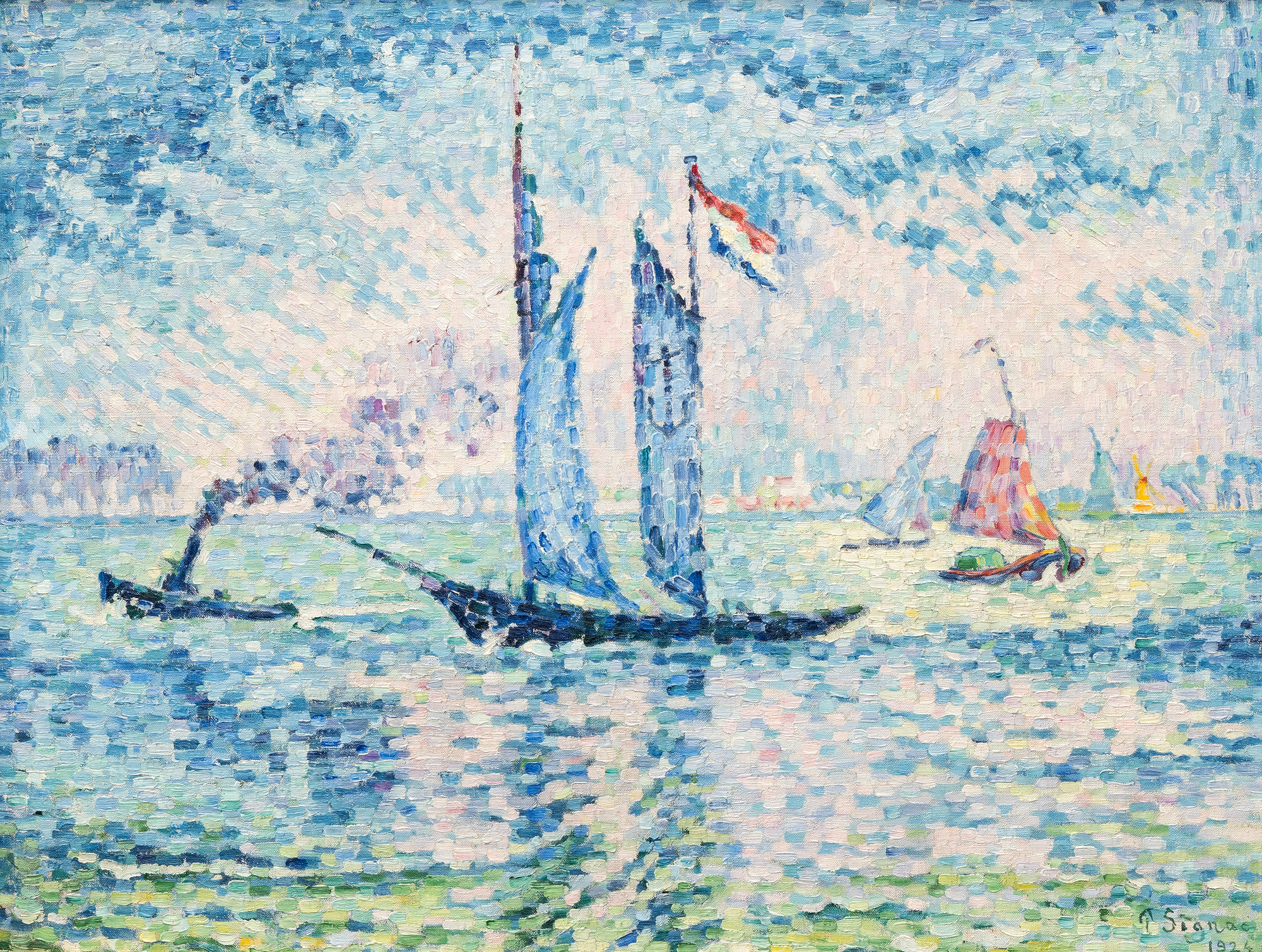
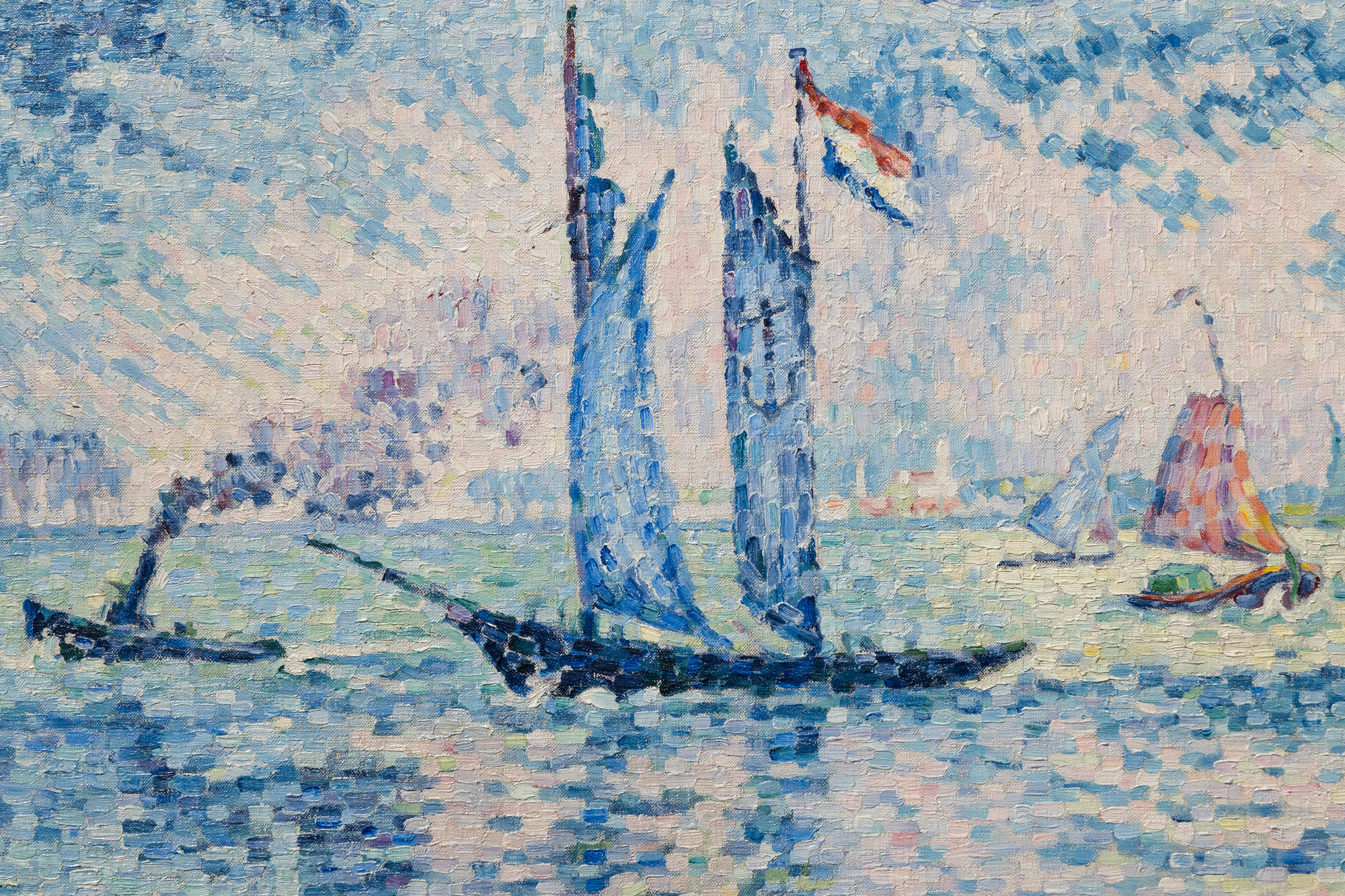
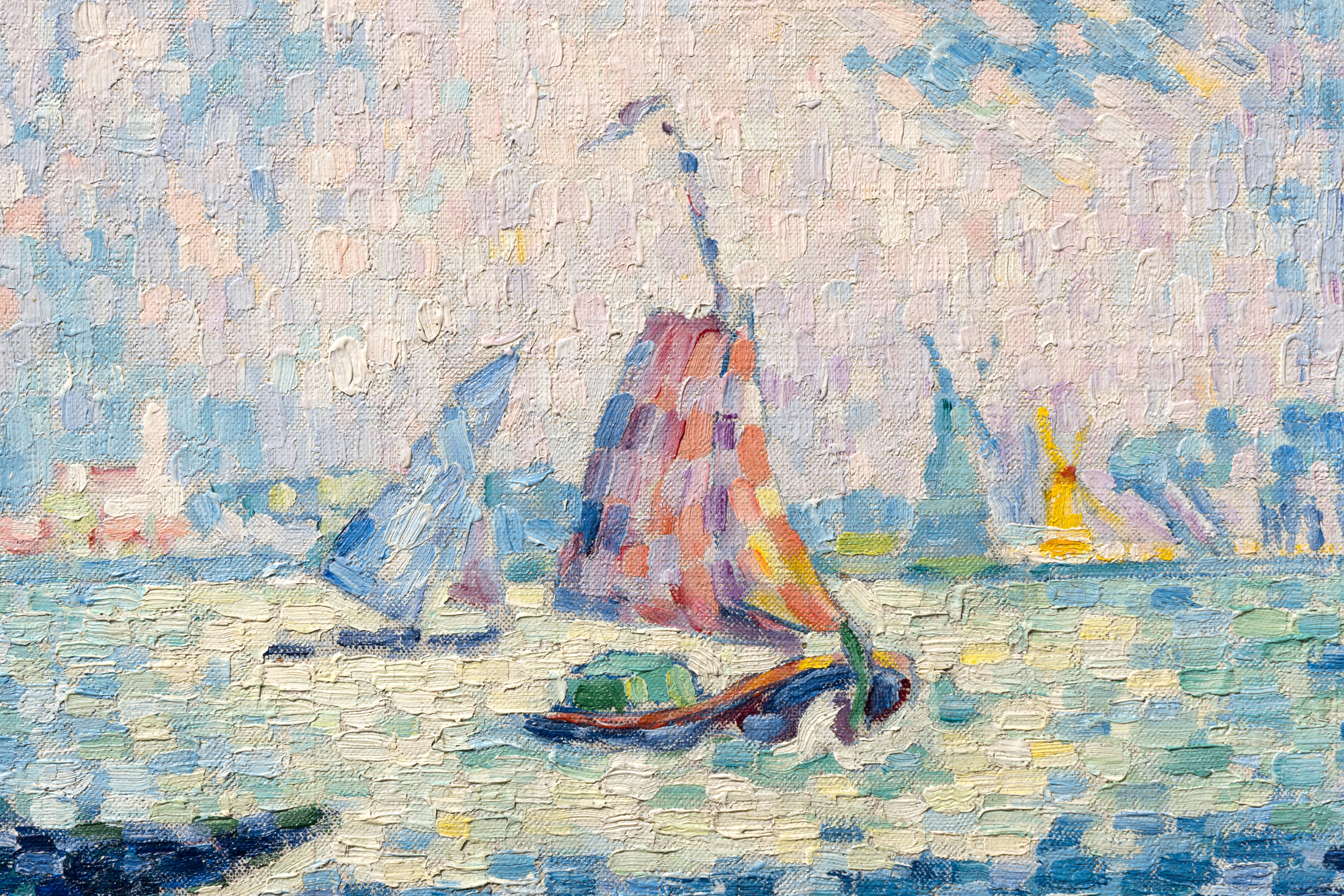
<div>Paul Signac’s "Pilote de la Meuse" (1924) is a refined late masterpiece that unites his devotion to color theory with his lifelong love of sailing. The composition is rigorously constructed around a highly structured framework of verticals and horizontals—the horizon line, the river’s surface, and the upright masts establish a sense of order and clarity. This geometry is gently softened by subtle diagonals: the angled masts, the slanted smokestack of a distant tugboat, and the wind-filled sails introduce movement and visual counterpoint without disrupting the overall balance.</div><br><br><div> </div><br><br><div>Executed in predominantly blue and green tones, the painting exemplifies Signac’s evolved Neo-Impressionist technique. While he and Georges Seurat pioneered pointillism as a scientific, color-theory-driven alternative to Impressionism, Signac’s later works from the 1910s and 1920s mark a decisive shift. Here, the earlier tight dots give way to broader, rectangular “mosaic strokes,” allowing color to carry greater physical presence and expressive freedom. The water in the foreground becomes a vibrant checkerboard of shifting hues, conveying turbulent weather, moving light, and wind-driven currents.</div><br><br><div> </div><br><br><div>A single prominent sailboat dominates the scene, accompanied by a few smaller vessels and the tugboat in the distance, whose swirling smoke animates the sky. This restrained yet dynamic marine subject reflects Signac’s deep personal connection to sailing—he owned 32 boats and traveled extensively by water.</div><br><br><div> </div><br><br><div>Similar maritime scenes from this mature period are held in major institutional collections, including the Minneapolis Institute of Art, The Metropolitan Museum of Art, and the Musée d’Orsay, underscoring the significance of this composition within Signac’s final artistic phase.</div><br><br><div> </div><br><br><div>The painting is accompanied by exceptional archival material: nine typed onion skins by Edmond Sussfeld; three autograph letters signed by Paul Signac; two autograph letters and the original invoice from the merchant Léon Marseille; and a certificate of authenticity from Mrs. Marina Ferretti-Bocquillon, providing outstanding historical context and provenance.</div> <div>Paul Signac’s "Pilote de la Meuse" (1924) is a refined late masterpiece that unites his devotion to color theory with his lifelong love of sailing. The composition is rigorously constructed around a highly structured framework of verticals and horizontals—the horizon line, the river’s surface, and the upright masts establish a sense of order and clarity. This geometry is gently softened by subtle diagonals: the angled masts, the slanted smokestack of a distant tugboat, and the wind-filled sails introduce movement and visual counterpoint without disrupting the overall balance.</div><br><br><div> </div><br><br><div>Executed in predominantly blue and green tones, the painting exemplifies Signac’s evolved Neo-Impressionist technique. While he and Georges Seurat pioneered pointillism as a scientific, color-theory-driven alternative to Impressionism, Signac’s later works from the 1910s and 1920s mark a decisive shift. Here, the earlier tight dots give way to broader, rectangular “mosaic strokes,” allowing color to carry greater physical presence and expressive freedom. The water in the foreground becomes a vibrant checkerboard of shifting hues, conveying turbulent weather, moving light, and wind-driven currents.</div><br><br><div> </div><br><br><div>A single prominent sailboat dominates the scene, accompanied by a few smaller vessels and the tugboat in the distance, whose swirling smoke animates the sky. This restrained yet dynamic marine subject reflects Signac’s deep personal connection to sailing—he owned 32 boats and traveled extensively by water.</div><br><br><div> </div><br><br><div>Similar maritime scenes from this mature period are held in major institutional collections, including the Minneapolis Institute of Art, The Metropolitan Museum of Art, and the Musée d’Orsay, underscoring the significance of this composition within Signac’s final artistic phase.</div><br><br><div> </div><br><br><div>The painting is accompanied by exceptional archival material: nine typed onion skins by Edmond Sussfeld; three autograph letters signed by Paul Signac; two autograph letters and the original invoice from the merchant Léon Marseille; and a certificate of authenticity from Mrs. Marina Ferretti-Bocquillon, providing outstanding historical context and provenance.</div> <div>Paul Signac’s "Pilote de la Meuse" (1924) is a refined late masterpiece that unites his devotion to color theory with his lifelong love of sailing. The composition is rigorously constructed around a highly structured framework of verticals and horizontals—the horizon line, the river’s surface, and the upright masts establish a sense of order and clarity. This geometry is gently softened by subtle diagonals: the angled masts, the slanted smokestack of a distant tugboat, and the wind-filled sails introduce movement and visual counterpoint without disrupting the overall balance.</div><br><br><div> </div><br><br><div>Executed in predominantly blue and green tones, the painting exemplifies Signac’s evolved Neo-Impressionist technique. While he and Georges Seurat pioneered pointillism as a scientific, color-theory-driven alternative to Impressionism, Signac’s later works from the 1910s and 1920s mark a decisive shift. Here, the earlier tight dots give way to broader, rectangular “mosaic strokes,” allowing color to carry greater physical presence and expressive freedom. The water in the foreground becomes a vibrant checkerboard of shifting hues, conveying turbulent weather, moving light, and wind-driven currents.</div><br><br><div> </div><br><br><div>A single prominent sailboat dominates the scene, accompanied by a few smaller vessels and the tugboat in the distance, whose swirling smoke animates the sky. This restrained yet dynamic marine subject reflects Signac’s deep personal connection to sailing—he owned 32 boats and traveled extensively by water.</div><br><br><div> </div><br><br><div>Similar maritime scenes from this mature period are held in major institutional collections, including the Minneapolis Institute of Art, The Metropolitan Museum of Art, and the Musée d’Orsay, underscoring the significance of this composition within Signac’s final artistic phase.</div><br><br><div> </div><br><br><div>The painting is accompanied by exceptional archival material: nine typed onion skins by Edmond Sussfeld; three autograph letters signed by Paul Signac; two autograph letters and the original invoice from the merchant Léon Marseille; and a certificate of authenticity from Mrs. Marina Ferretti-Bocquillon, providing outstanding historical context and provenance.</div> <div>Paul Signac’s "Pilote de la Meuse" (1924) is a refined late masterpiece that unites his devotion to color theory with his lifelong love of sailing. The composition is rigorously constructed around a highly structured framework of verticals and horizontals—the horizon line, the river’s surface, and the upright masts establish a sense of order and clarity. This geometry is gently softened by subtle diagonals: the angled masts, the slanted smokestack of a distant tugboat, and the wind-filled sails introduce movement and visual counterpoint without disrupting the overall balance.</div><br><br><div> </div><br><br><div>Executed in predominantly blue and green tones, the painting exemplifies Signac’s evolved Neo-Impressionist technique. While he and Georges Seurat pioneered pointillism as a scientific, color-theory-driven alternative to Impressionism, Signac’s later works from the 1910s and 1920s mark a decisive shift. Here, the earlier tight dots give way to broader, rectangular “mosaic strokes,” allowing color to carry greater physical presence and expressive freedom. The water in the foreground becomes a vibrant checkerboard of shifting hues, conveying turbulent weather, moving light, and wind-driven currents.</div><br><br><div> </div><br><br><div>A single prominent sailboat dominates the scene, accompanied by a few smaller vessels and the tugboat in the distance, whose swirling smoke animates the sky. This restrained yet dynamic marine subject reflects Signac’s deep personal connection to sailing—he owned 32 boats and traveled extensively by water.</div><br><br><div> </div><br><br><div>Similar maritime scenes from this mature period are held in major institutional collections, including the Minneapolis Institute of Art, The Metropolitan Museum of Art, and the Musée d’Orsay, underscoring the significance of this composition within Signac’s final artistic phase.</div><br><br><div> </div><br><br><div>The painting is accompanied by exceptional archival material: nine typed onion skins by Edmond Sussfeld; three autograph letters signed by Paul Signac; two autograph letters and the original invoice from the merchant Léon Marseille; and a certificate of authenticity from Mrs. Marina Ferretti-Bocquillon, providing outstanding historical context and provenance.</div> <div>Paul Signac’s "Pilote de la Meuse" (1924) is a refined late masterpiece that unites his devotion to color theory with his lifelong love of sailing. The composition is rigorously constructed around a highly structured framework of verticals and horizontals—the horizon line, the river’s surface, and the upright masts establish a sense of order and clarity. This geometry is gently softened by subtle diagonals: the angled masts, the slanted smokestack of a distant tugboat, and the wind-filled sails introduce movement and visual counterpoint without disrupting the overall balance.</div><br><br><div> </div><br><br><div>Executed in predominantly blue and green tones, the painting exemplifies Signac’s evolved Neo-Impressionist technique. While he and Georges Seurat pioneered pointillism as a scientific, color-theory-driven alternative to Impressionism, Signac’s later works from the 1910s and 1920s mark a decisive shift. Here, the earlier tight dots give way to broader, rectangular “mosaic strokes,” allowing color to carry greater physical presence and expressive freedom. The water in the foreground becomes a vibrant checkerboard of shifting hues, conveying turbulent weather, moving light, and wind-driven currents.</div><br><br><div> </div><br><br><div>A single prominent sailboat dominates the scene, accompanied by a few smaller vessels and the tugboat in the distance, whose swirling smoke animates the sky. This restrained yet dynamic marine subject reflects Signac’s deep personal connection to sailing—he owned 32 boats and traveled extensively by water.</div><br><br><div> </div><br><br><div>Similar maritime scenes from this mature period are held in major institutional collections, including the Minneapolis Institute of Art, The Metropolitan Museum of Art, and the Musée d’Orsay, underscoring the significance of this composition within Signac’s final artistic phase.</div><br><br><div> </div><br><br><div>The painting is accompanied by exceptional archival material: nine typed onion skins by Edmond Sussfeld; three autograph letters signed by Paul Signac; two autograph letters and the original invoice from the merchant Léon Marseille; and a certificate of authenticity from Mrs. Marina Ferretti-Bocquillon, providing outstanding historical context and provenance.</div> <div>Paul Signac’s "Pilote de la Meuse" (1924) is a refined late masterpiece that unites his devotion to color theory with his lifelong love of sailing. The composition is rigorously constructed around a highly structured framework of verticals and horizontals—the horizon line, the river’s surface, and the upright masts establish a sense of order and clarity. This geometry is gently softened by subtle diagonals: the angled masts, the slanted smokestack of a distant tugboat, and the wind-filled sails introduce movement and visual counterpoint without disrupting the overall balance.</div><br><br><div> </div><br><br><div>Executed in predominantly blue and green tones, the painting exemplifies Signac’s evolved Neo-Impressionist technique. While he and Georges Seurat pioneered pointillism as a scientific, color-theory-driven alternative to Impressionism, Signac’s later works from the 1910s and 1920s mark a decisive shift. Here, the earlier tight dots give way to broader, rectangular “mosaic strokes,” allowing color to carry greater physical presence and expressive freedom. The water in the foreground becomes a vibrant checkerboard of shifting hues, conveying turbulent weather, moving light, and wind-driven currents.</div><br><br><div> </div><br><br><div>A single prominent sailboat dominates the scene, accompanied by a few smaller vessels and the tugboat in the distance, whose swirling smoke animates the sky. This restrained yet dynamic marine subject reflects Signac’s deep personal connection to sailing—he owned 32 boats and traveled extensively by water.</div><br><br><div> </div><br><br><div>Similar maritime scenes from this mature period are held in major institutional collections, including the Minneapolis Institute of Art, The Metropolitan Museum of Art, and the Musée d’Orsay, underscoring the significance of this composition within Signac’s final artistic phase.</div><br><br><div> </div><br><br><div>The painting is accompanied by exceptional archival material: nine typed onion skins by Edmond Sussfeld; three autograph letters signed by Paul Signac; two autograph letters and the original invoice from the merchant Léon Marseille; and a certificate of authenticity from Mrs. Marina Ferretti-Bocquillon, providing outstanding historical context and provenance.</div> <div>Paul Signac’s "Pilote de la Meuse" (1924) is a refined late masterpiece that unites his devotion to color theory with his lifelong love of sailing. The composition is rigorously constructed around a highly structured framework of verticals and horizontals—the horizon line, the river’s surface, and the upright masts establish a sense of order and clarity. This geometry is gently softened by subtle diagonals: the angled masts, the slanted smokestack of a distant tugboat, and the wind-filled sails introduce movement and visual counterpoint without disrupting the overall balance.</div><br><br><div> </div><br><br><div>Executed in predominantly blue and green tones, the painting exemplifies Signac’s evolved Neo-Impressionist technique. While he and Georges Seurat pioneered pointillism as a scientific, color-theory-driven alternative to Impressionism, Signac’s later works from the 1910s and 1920s mark a decisive shift. Here, the earlier tight dots give way to broader, rectangular “mosaic strokes,” allowing color to carry greater physical presence and expressive freedom. The water in the foreground becomes a vibrant checkerboard of shifting hues, conveying turbulent weather, moving light, and wind-driven currents.</div><br><br><div> </div><br><br><div>A single prominent sailboat dominates the scene, accompanied by a few smaller vessels and the tugboat in the distance, whose swirling smoke animates the sky. This restrained yet dynamic marine subject reflects Signac’s deep personal connection to sailing—he owned 32 boats and traveled extensively by water.</div><br><br><div> </div><br><br><div>Similar maritime scenes from this mature period are held in major institutional collections, including the Minneapolis Institute of Art, The Metropolitan Museum of Art, and the Musée d’Orsay, underscoring the significance of this composition within Signac’s final artistic phase.</div><br><br><div> </div><br><br><div>The painting is accompanied by exceptional archival material: nine typed onion skins by Edmond Sussfeld; three autograph letters signed by Paul Signac; two autograph letters and the original invoice from the merchant Léon Marseille; and a certificate of authenticity from Mrs. Marina Ferretti-Bocquillon, providing outstanding historical context and provenance.</div> <div>Paul Signac’s "Pilote de la Meuse" (1924) is a refined late masterpiece that unites his devotion to color theory with his lifelong love of sailing. The composition is rigorously constructed around a highly structured framework of verticals and horizontals—the horizon line, the river’s surface, and the upright masts establish a sense of order and clarity. This geometry is gently softened by subtle diagonals: the angled masts, the slanted smokestack of a distant tugboat, and the wind-filled sails introduce movement and visual counterpoint without disrupting the overall balance.</div><br><br><div> </div><br><br><div>Executed in predominantly blue and green tones, the painting exemplifies Signac’s evolved Neo-Impressionist technique. While he and Georges Seurat pioneered pointillism as a scientific, color-theory-driven alternative to Impressionism, Signac’s later works from the 1910s and 1920s mark a decisive shift. Here, the earlier tight dots give way to broader, rectangular “mosaic strokes,” allowing color to carry greater physical presence and expressive freedom. The water in the foreground becomes a vibrant checkerboard of shifting hues, conveying turbulent weather, moving light, and wind-driven currents.</div><br><br><div> </div><br><br><div>A single prominent sailboat dominates the scene, accompanied by a few smaller vessels and the tugboat in the distance, whose swirling smoke animates the sky. This restrained yet dynamic marine subject reflects Signac’s deep personal connection to sailing—he owned 32 boats and traveled extensively by water.</div><br><br><div> </div><br><br><div>Similar maritime scenes from this mature period are held in major institutional collections, including the Minneapolis Institute of Art, The Metropolitan Museum of Art, and the Musée d’Orsay, underscoring the significance of this composition within Signac’s final artistic phase.</div><br><br><div> </div><br><br><div>The painting is accompanied by exceptional archival material: nine typed onion skins by Edmond Sussfeld; three autograph letters signed by Paul Signac; two autograph letters and the original invoice from the merchant Léon Marseille; and a certificate of authenticity from Mrs. Marina Ferretti-Bocquillon, providing outstanding historical context and provenance.</div> <div>Paul Signac’s "Pilote de la Meuse" (1924) is a refined late masterpiece that unites his devotion to color theory with his lifelong love of sailing. The composition is rigorously constructed around a highly structured framework of verticals and horizontals—the horizon line, the river’s surface, and the upright masts establish a sense of order and clarity. This geometry is gently softened by subtle diagonals: the angled masts, the slanted smokestack of a distant tugboat, and the wind-filled sails introduce movement and visual counterpoint without disrupting the overall balance.</div><br><br><div> </div><br><br><div>Executed in predominantly blue and green tones, the painting exemplifies Signac’s evolved Neo-Impressionist technique. While he and Georges Seurat pioneered pointillism as a scientific, color-theory-driven alternative to Impressionism, Signac’s later works from the 1910s and 1920s mark a decisive shift. Here, the earlier tight dots give way to broader, rectangular “mosaic strokes,” allowing color to carry greater physical presence and expressive freedom. The water in the foreground becomes a vibrant checkerboard of shifting hues, conveying turbulent weather, moving light, and wind-driven currents.</div><br><br><div> </div><br><br><div>A single prominent sailboat dominates the scene, accompanied by a few smaller vessels and the tugboat in the distance, whose swirling smoke animates the sky. This restrained yet dynamic marine subject reflects Signac’s deep personal connection to sailing—he owned 32 boats and traveled extensively by water.</div><br><br><div> </div><br><br><div>Similar maritime scenes from this mature period are held in major institutional collections, including the Minneapolis Institute of Art, The Metropolitan Museum of Art, and the Musée d’Orsay, underscoring the significance of this composition within Signac’s final artistic phase.</div><br><br><div> </div><br><br><div>The painting is accompanied by exceptional archival material: nine typed onion skins by Edmond Sussfeld; three autograph letters signed by Paul Signac; two autograph letters and the original invoice from the merchant Léon Marseille; and a certificate of authenticity from Mrs. Marina Ferretti-Bocquillon, providing outstanding historical context and provenance.</div> <div>Paul Signac’s "Pilote de la Meuse" (1924) is a refined late masterpiece that unites his devotion to color theory with his lifelong love of sailing. The composition is rigorously constructed around a highly structured framework of verticals and horizontals—the horizon line, the river’s surface, and the upright masts establish a sense of order and clarity. This geometry is gently softened by subtle diagonals: the angled masts, the slanted smokestack of a distant tugboat, and the wind-filled sails introduce movement and visual counterpoint without disrupting the overall balance.</div><br><br><div> </div><br><br><div>Executed in predominantly blue and green tones, the painting exemplifies Signac’s evolved Neo-Impressionist technique. While he and Georges Seurat pioneered pointillism as a scientific, color-theory-driven alternative to Impressionism, Signac’s later works from the 1910s and 1920s mark a decisive shift. Here, the earlier tight dots give way to broader, rectangular “mosaic strokes,” allowing color to carry greater physical presence and expressive freedom. The water in the foreground becomes a vibrant checkerboard of shifting hues, conveying turbulent weather, moving light, and wind-driven currents.</div><br><br><div> </div><br><br><div>A single prominent sailboat dominates the scene, accompanied by a few smaller vessels and the tugboat in the distance, whose swirling smoke animates the sky. This restrained yet dynamic marine subject reflects Signac’s deep personal connection to sailing—he owned 32 boats and traveled extensively by water.</div><br><br><div> </div><br><br><div>Similar maritime scenes from this mature period are held in major institutional collections, including the Minneapolis Institute of Art, The Metropolitan Museum of Art, and the Musée d’Orsay, underscoring the significance of this composition within Signac’s final artistic phase.</div><br><br><div> </div><br><br><div>The painting is accompanied by exceptional archival material: nine typed onion skins by Edmond Sussfeld; three autograph letters signed by Paul Signac; two autograph letters and the original invoice from the merchant Léon Marseille; and a certificate of authenticity from Mrs. Marina Ferretti-Bocquillon, providing outstanding historical context and provenance.</div>
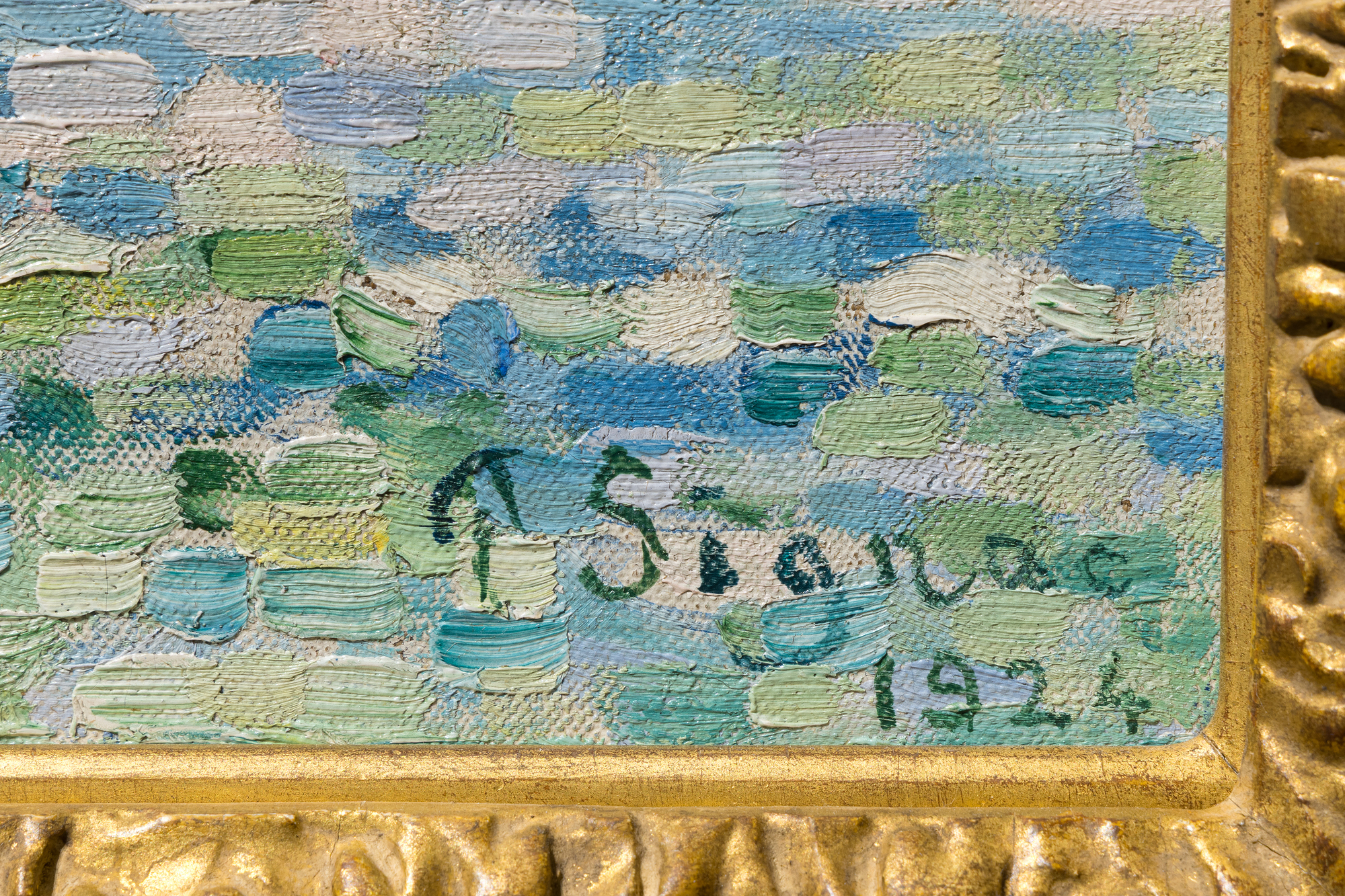
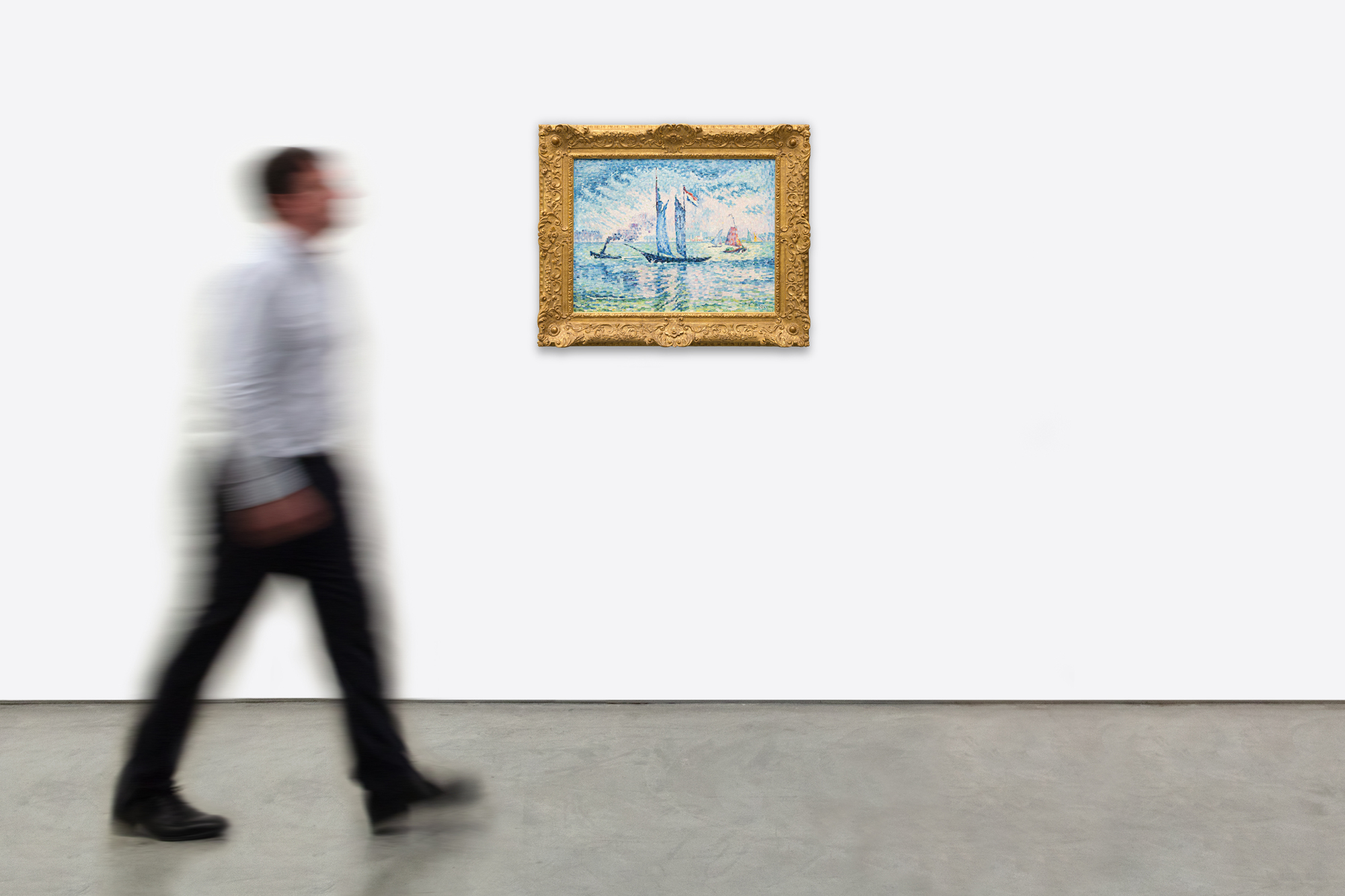
Pilote de la Meuse 1924 19 3/4 x 25 1/2 אינץ' (50.17 x 64.77 ס"מ) שמן על בד
מקור ומקור
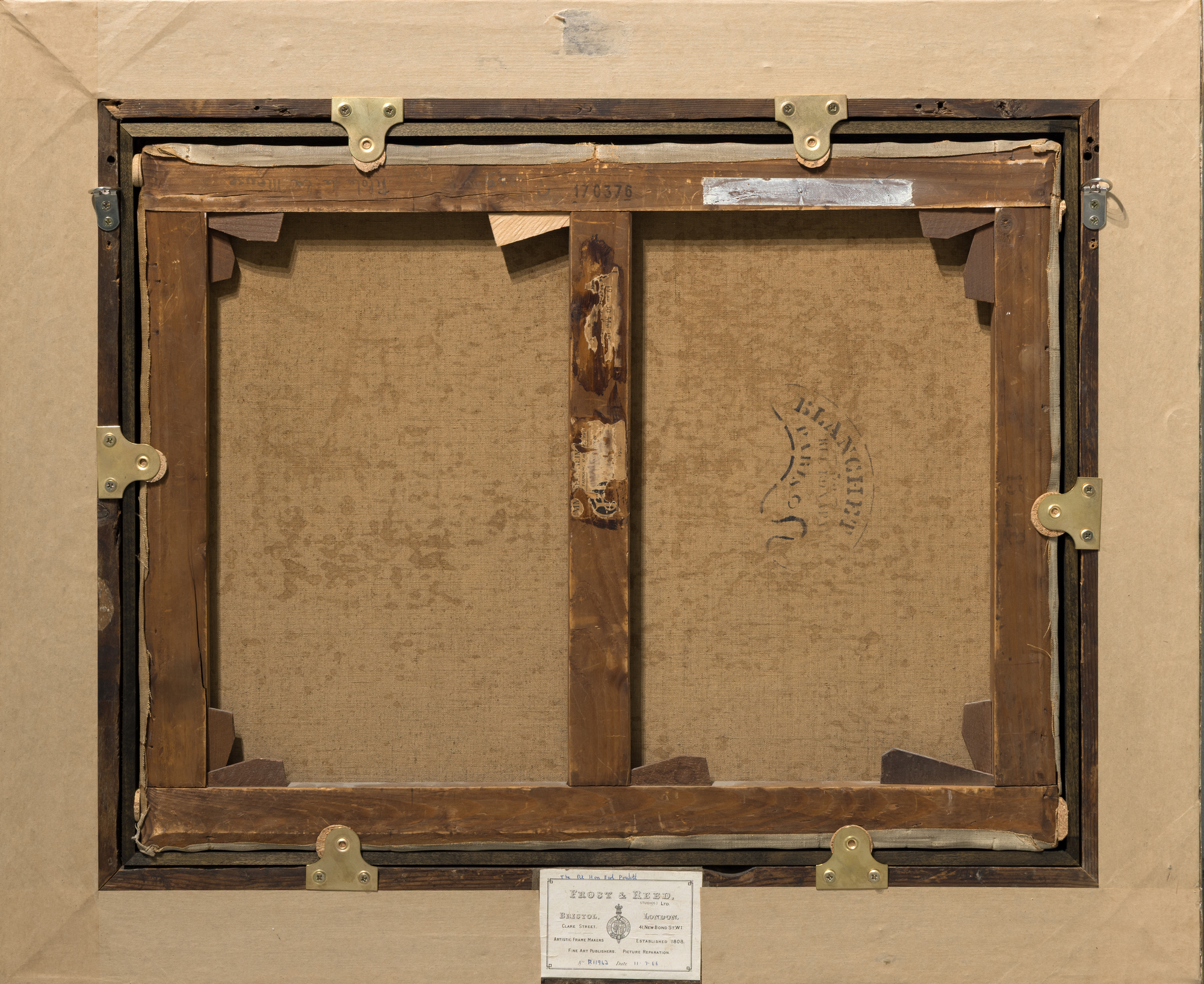
גלריה לאון מרסיי, פריז
אוסף אדמונד סוספלד
אוסף פרטי, ממוצא של הנ"ל
אוסף פרטי, אירופה
הערכות דרואו, פריז, 18 בנובמבר 2022, פריט 00003 (אוסף אדמונד סוספלד)
אוסף פרטי, לונדון, נרכש במכירה הנ"ל
תערוכה
פריז, ברנהיים-ז'ון, פול סינאק, 19 במאי-30 במאי 1930, מס'. 40
פריז, פטיט פאלה, פול סינאק, 1934, מס'. 35
Viroflay, Salon du Souvenir de Corot, תערוכה 13, 1965
ספרות
Bernheim-Jeune, Exposition Paul Signac du lundi 19 mai au... עוד... vendredi 30 מאי 1930, פריז, 1930, no. 40 (בציור)
Françoise Cachin, Signac: Catalogue Raisonné of the Painted Work, Paris, 2000, no. 565, עמ'. 323 (בציור)
... פחות...
"הטייס של המז" (1924) של פול סיניאק הוא יצירת מופת מאוחרת ומעודנת המאחדת את מסירותו לתורת הצבעים עם אהבתו לשיט לאורך כל חייו. הקומפוזיציה בנויה בקפדנות סביב מסגרת מובנית מאוד של קווים אנכיים ואופקיים - קו האופק, פני הנהר והתרנים הזקופים יוצרים תחושה של סדר ובהירות. גיאומטריה זו מרוככת בעדינות על ידי אלכסונים עדינים: התרנים הזוויתיים, ארובת העשן המשופעת של סירת גרר רחוקה והמפרשים המלאים ברוח מכניסים תנועה וקונטרהפונקט חזותי מבלי לשבש את האיזון הכללי.


הציור, המבוצע בעיקר בגוונים כחולים וירוקים, מדגים את הטכניקה הניאו-אימפרסיוניסטית המתפתחת של סיניאק. בעוד שהוא וז'ורז' סרה היו חלוצים בפואנטיליזם כחלופה מדעית לאימפרסיוניזם, המונעת על ידי תורת הצבע, עבודותיו המאוחרות יותר של סיניאק משנות ה-1910 וה-1920 מסמנות שינוי מכריע. כאן, הנקודות הצפופות המוקדמות יותר מפנים את מקומן ל"משיכות פסיפס" מלבניות ורחבות יותר, המאפשרות לצבע לשאת נוכחות פיזית גדולה יותר וחופש ביטוי. המים בקדמת התמונה הופכים ללוח שחמט תוסס של גוונים משתנים, המעבירים מזג אוויר סוער, אור נע וזרמים מונעי רוח.


סירת מפרש בולטת אחת שולטת בסצנה, מלווה בכמה כלי שיט קטנים יותר ובסירת הגרר במרחק, שעשן המסתחרר שלה מחייה את השמיים. נושא ימי מאופק אך דינמי זה משקף את הקשר האישי העמוק של סיניאק לשיט - הוא היה הבעלים של 32 סירות ונסע רבות במים.


סצנות ימיות דומות מתקופה בוגרת זו נמצאות באוספים מוסדיים גדולים, כולל מכון מיניאפוליס לאמנות, מוזיאון המטרופוליטן לאמנות ומוזיאון ד'אורסיי, דבר המדגיש את חשיבותה של יצירה זו בשלב האמנותי הסופי של סיניאק.


הציור מלווה בחומר ארכיוני יוצא דופן: תשעה קליפות בצל מודפסות מאת אדמונד סוספלד; שלושה מכתבים בחתימה של פול סיניאק; שני מכתבים בחתימה וחשבונית מקורית מהסוחר ליאון מרסיי; ותעודת מקוריות מגברת מרינה פרטי-בוקילון, המספקת הקשר היסטורי ומקור יוצאי דופן.
לברר