גב

ג'ורג'יה אוקיף(1887-1986)

$7,950,000

 
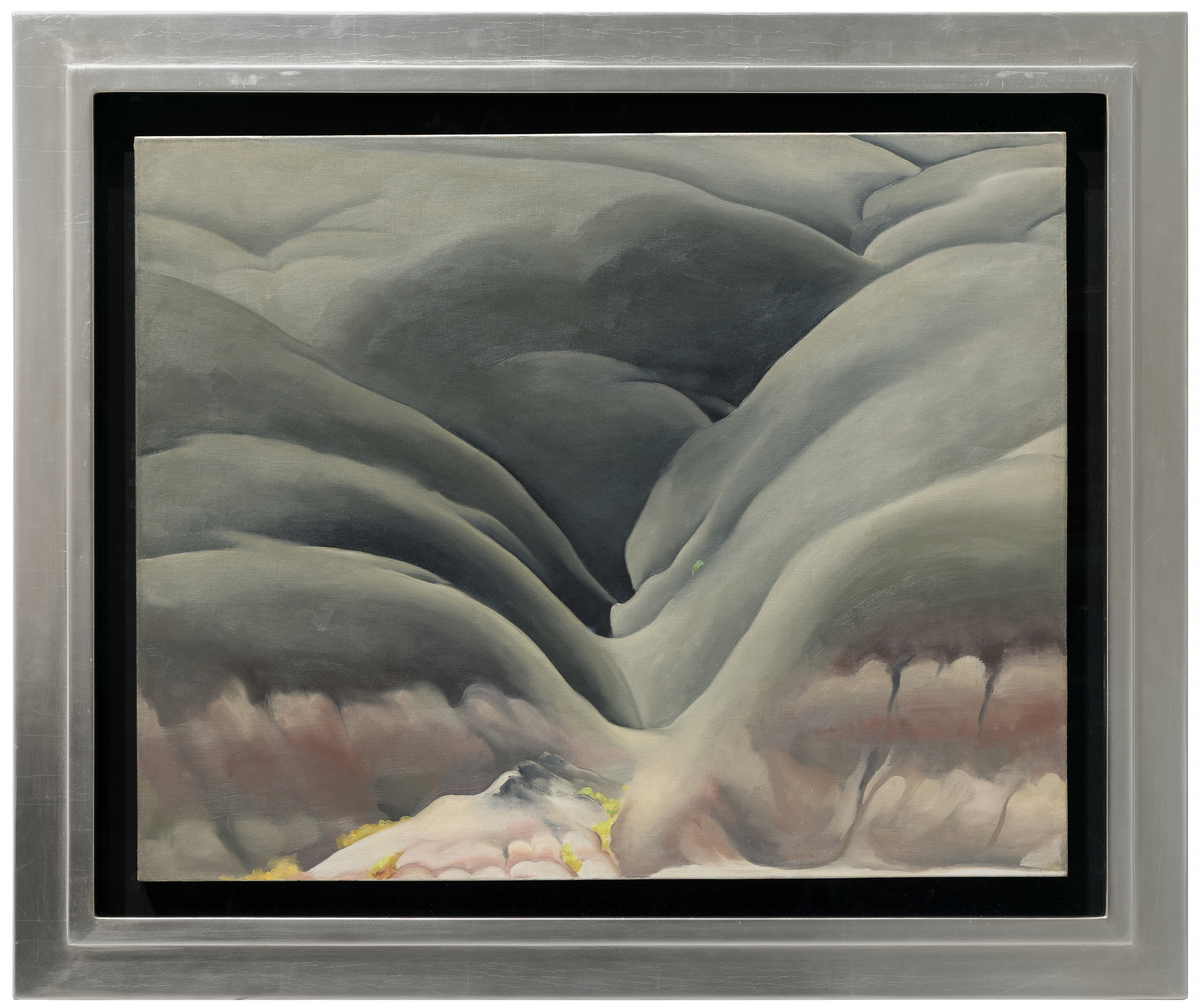
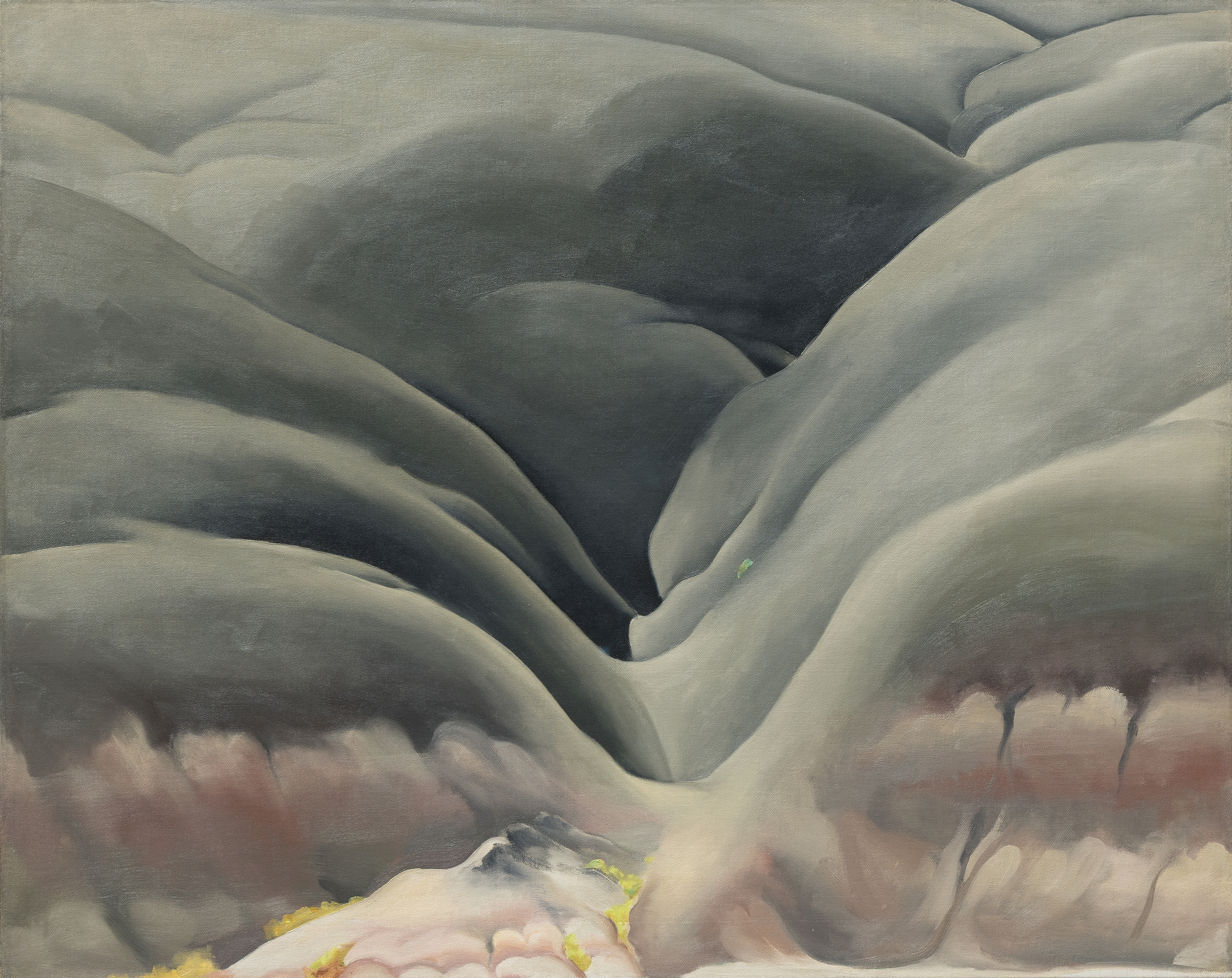
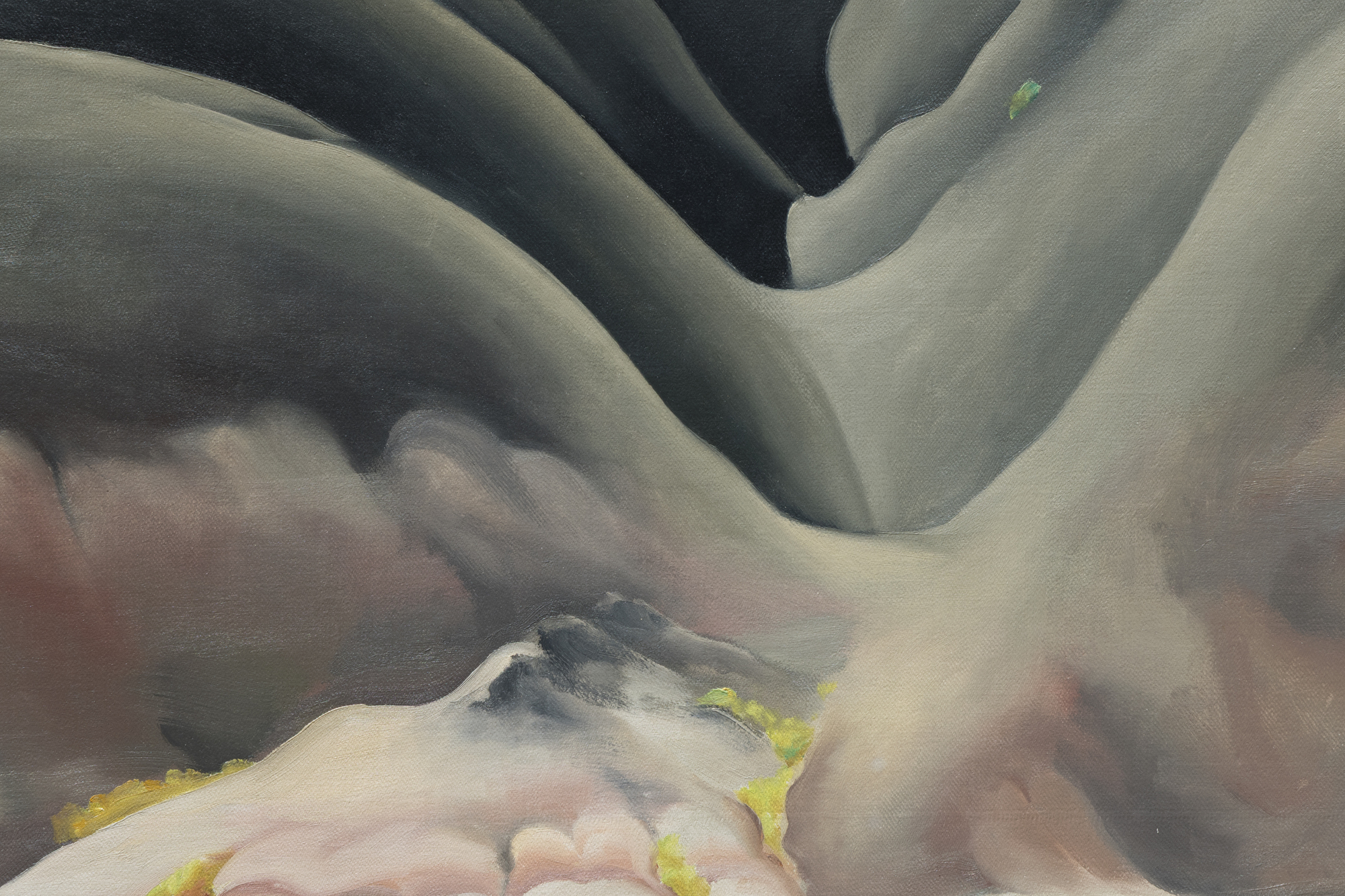
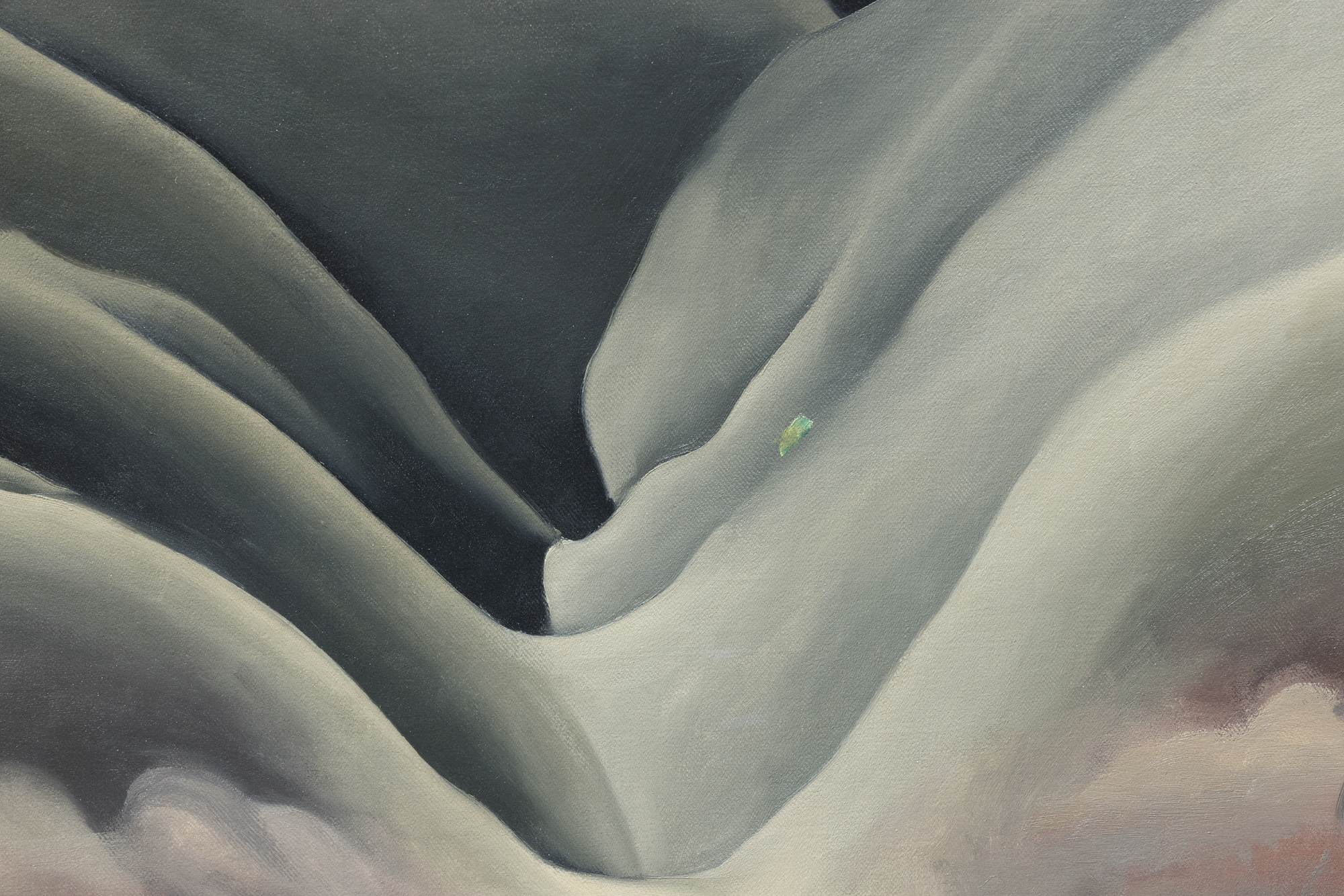
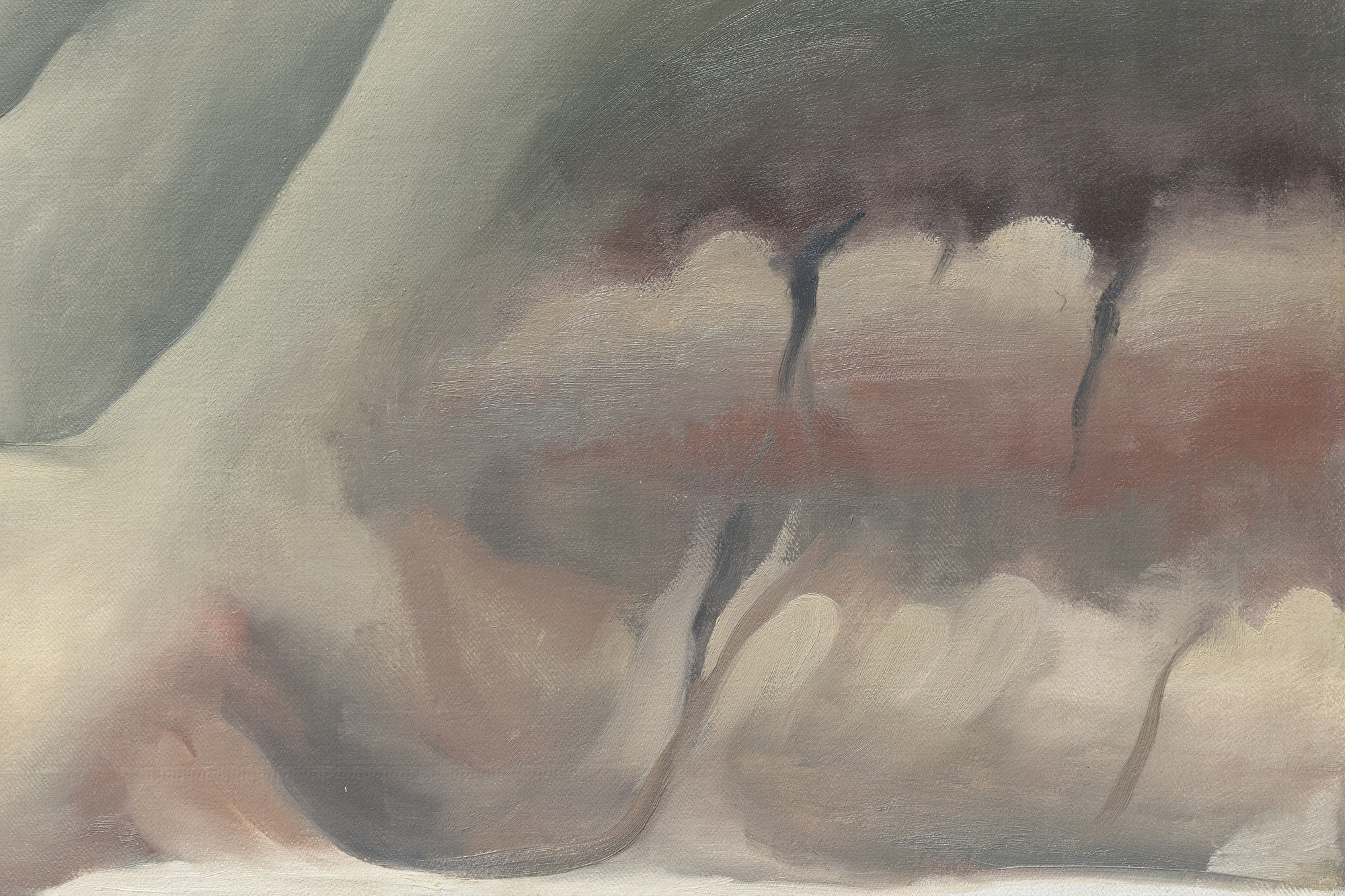
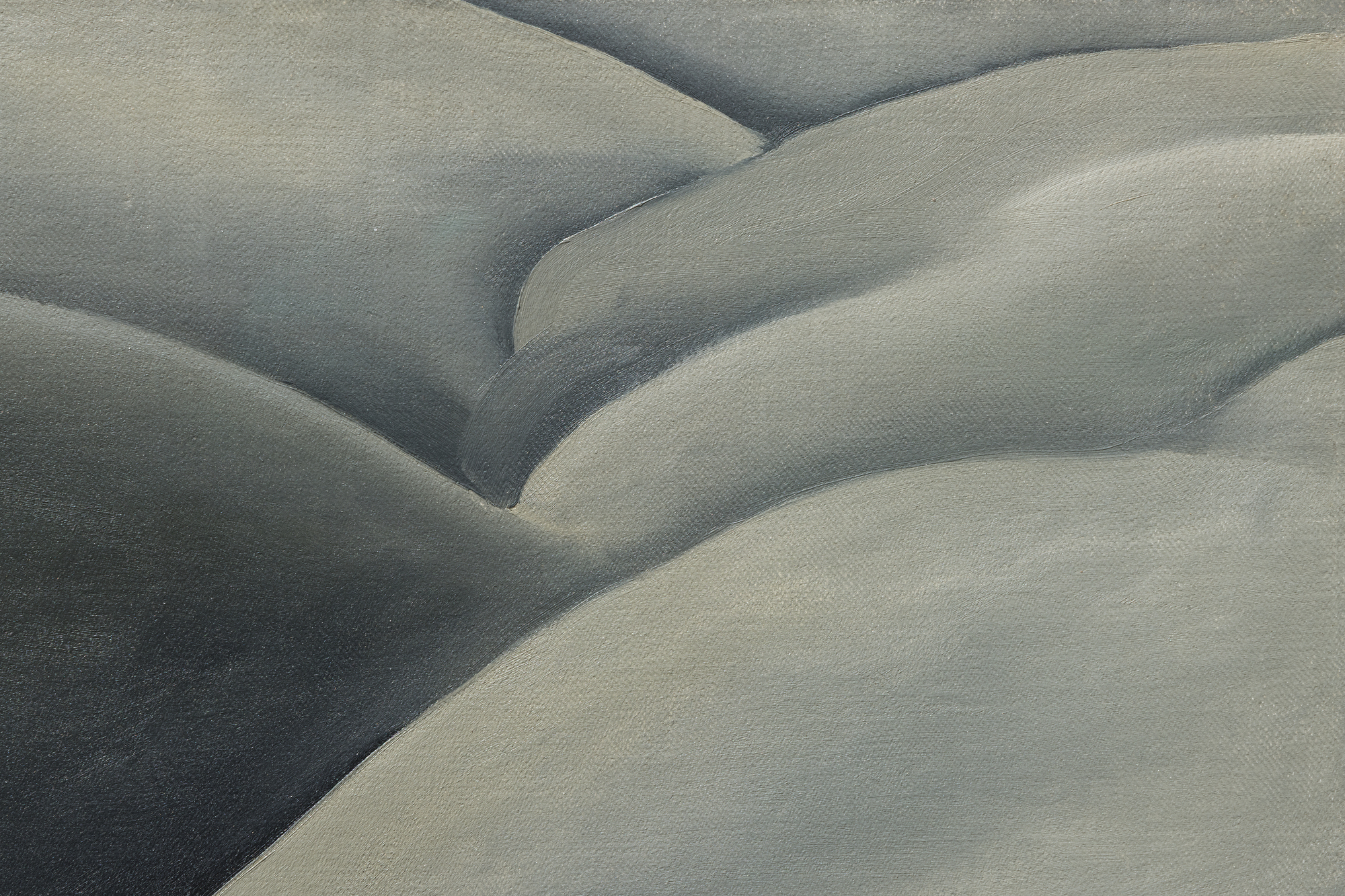
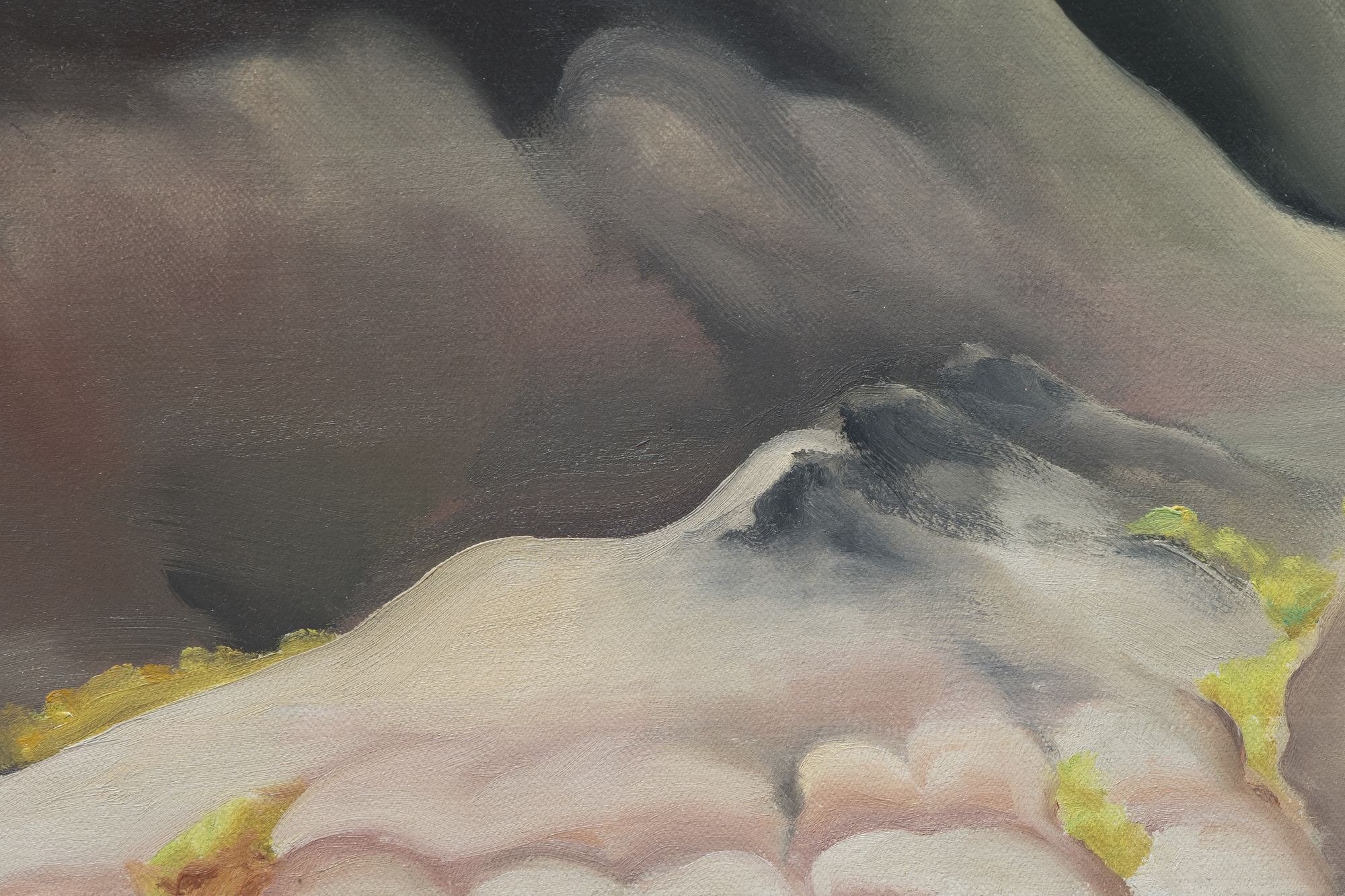
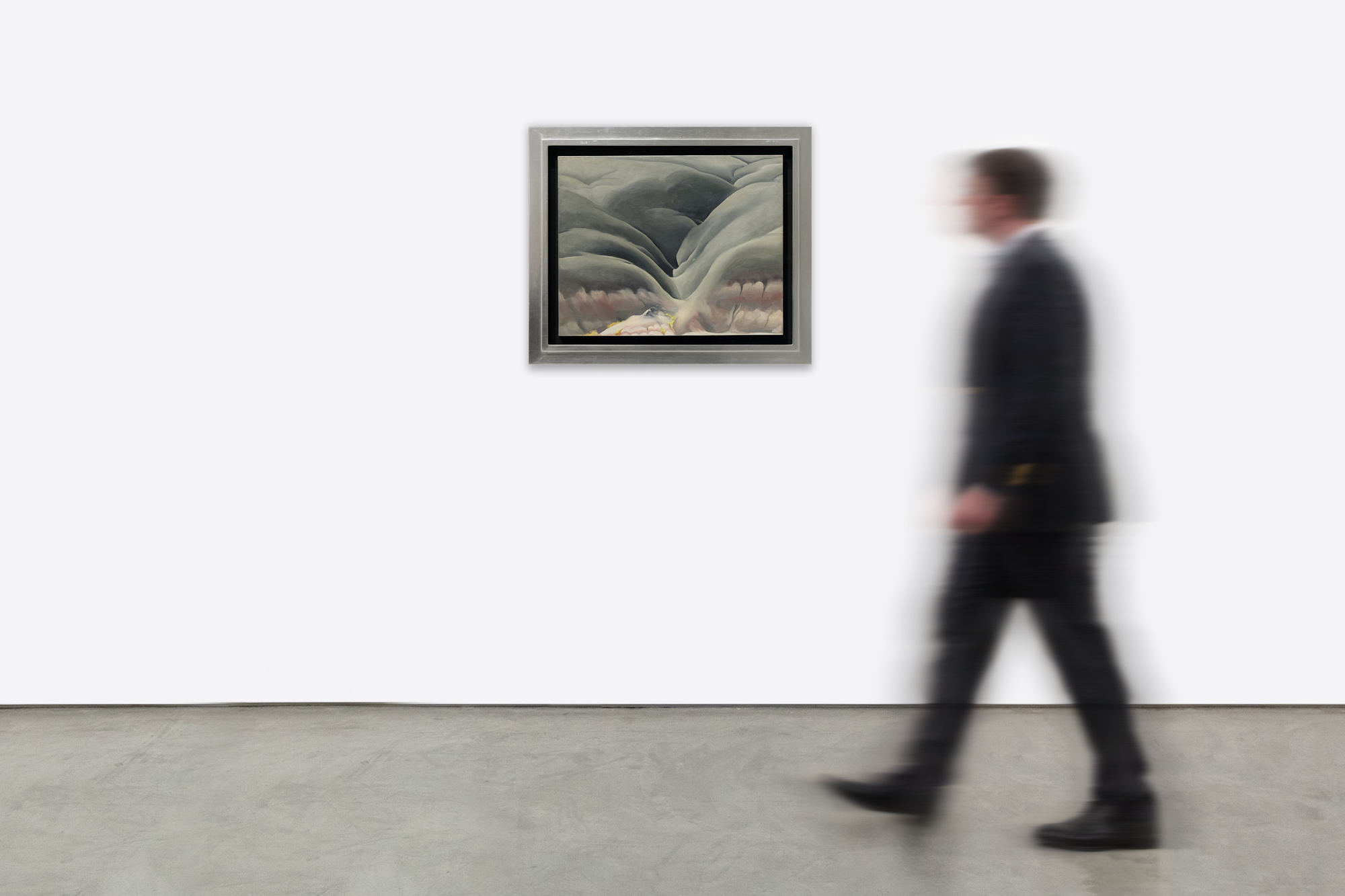
<div>Georgia O’Keeffe’s <em>Black Place II</em> (1945) belongs to one of the most profound and austere series of her career, inspired by repeated journeys to the Bisti Badlands, a remote, otherworldly area of northwestern New Mexico that she called the Black Place. Deeply compelled by this landscape, O’Keeffe often camped there so she could study its shifting forms and tonal subtleties at different hours of the day. In this work, she reduces the scene to its essentials: two massive hills pressing together, no visible horizon, and a composition defined by gravity, stillness, and quiet monumentality. The sweeping, interlocking forms create a sense of scale that feels both intimate and immense, evoking a landscape experienced as presence rather than panorama. </div><br><br><div> </div><br><br><div>Works from the Black Place series are exceptionally rare. Of the fourteen canvases O’Keeffe painted, only four remain in private hands; the remainder are held by major institutions including The Metropolitan Museum of Art, SFMOMA, and the Art Institute of Chicago. As a result, opportunities to encounter a work from this group outside of museum collections are exceedingly uncommon. </div><br><br><div> </div><br><br><div><em>Black Place II </em>has an illustrious lineage, from its earliest days in the holdings of Alfred Stieglitz’s famous New York gallery, An American Place, to the noted Philadelphia philanthropist and collector Daniel Dietrich, to the collection of Jan T. and Marica Vilcek. The painting’s legacy is further underscored by its unusually long institutional life. It was shown as early as 1946 at Stieglitz’s An American Place, and has continued to appear in major institutional retrospectives, including exhibitions at the Centre Pompidou and, most recently, the Museum of Fine Arts, Boston. This sustained public and scholarly attention has firmly established the importance of the Black Place paintings within O’Keeffe’s oeuvre. </div> <div>Georgia O’Keeffe’s <em>Black Place II</em> (1945) belongs to one of the most profound and austere series of her career, inspired by repeated journeys to the Bisti Badlands, a remote, otherworldly area of northwestern New Mexico that she called the Black Place. Deeply compelled by this landscape, O’Keeffe often camped there so she could study its shifting forms and tonal subtleties at different hours of the day. In this work, she reduces the scene to its essentials: two massive hills pressing together, no visible horizon, and a composition defined by gravity, stillness, and quiet monumentality. The sweeping, interlocking forms create a sense of scale that feels both intimate and immense, evoking a landscape experienced as presence rather than panorama. </div><br><br><div> </div><br><br><div>Works from the Black Place series are exceptionally rare. Of the fourteen canvases O’Keeffe painted, only four remain in private hands; the remainder are held by major institutions including The Metropolitan Museum of Art, SFMOMA, and the Art Institute of Chicago. As a result, opportunities to encounter a work from this group outside of museum collections are exceedingly uncommon. </div><br><br><div> </div><br><br><div><em>Black Place II </em>has an illustrious lineage, from its earliest days in the holdings of Alfred Stieglitz’s famous New York gallery, An American Place, to the noted Philadelphia philanthropist and collector Daniel Dietrich, to the collection of Jan T. and Marica Vilcek. The painting’s legacy is further underscored by its unusually long institutional life. It was shown as early as 1946 at Stieglitz’s An American Place, and has continued to appear in major institutional retrospectives, including exhibitions at the Centre Pompidou and, most recently, the Museum of Fine Arts, Boston. This sustained public and scholarly attention has firmly established the importance of the Black Place paintings within O’Keeffe’s oeuvre. </div> <div>Georgia O’Keeffe’s <em>Black Place II</em> (1945) belongs to one of the most profound and austere series of her career, inspired by repeated journeys to the Bisti Badlands, a remote, otherworldly area of northwestern New Mexico that she called the Black Place. Deeply compelled by this landscape, O’Keeffe often camped there so she could study its shifting forms and tonal subtleties at different hours of the day. In this work, she reduces the scene to its essentials: two massive hills pressing together, no visible horizon, and a composition defined by gravity, stillness, and quiet monumentality. The sweeping, interlocking forms create a sense of scale that feels both intimate and immense, evoking a landscape experienced as presence rather than panorama. </div><br><br><div> </div><br><br><div>Works from the Black Place series are exceptionally rare. Of the fourteen canvases O’Keeffe painted, only four remain in private hands; the remainder are held by major institutions including The Metropolitan Museum of Art, SFMOMA, and the Art Institute of Chicago. As a result, opportunities to encounter a work from this group outside of museum collections are exceedingly uncommon. </div><br><br><div> </div><br><br><div><em>Black Place II </em>has an illustrious lineage, from its earliest days in the holdings of Alfred Stieglitz’s famous New York gallery, An American Place, to the noted Philadelphia philanthropist and collector Daniel Dietrich, to the collection of Jan T. and Marica Vilcek. The painting’s legacy is further underscored by its unusually long institutional life. It was shown as early as 1946 at Stieglitz’s An American Place, and has continued to appear in major institutional retrospectives, including exhibitions at the Centre Pompidou and, most recently, the Museum of Fine Arts, Boston. This sustained public and scholarly attention has firmly established the importance of the Black Place paintings within O’Keeffe’s oeuvre. </div> <div>Georgia O’Keeffe’s <em>Black Place II</em> (1945) belongs to one of the most profound and austere series of her career, inspired by repeated journeys to the Bisti Badlands, a remote, otherworldly area of northwestern New Mexico that she called the Black Place. Deeply compelled by this landscape, O’Keeffe often camped there so she could study its shifting forms and tonal subtleties at different hours of the day. In this work, she reduces the scene to its essentials: two massive hills pressing together, no visible horizon, and a composition defined by gravity, stillness, and quiet monumentality. The sweeping, interlocking forms create a sense of scale that feels both intimate and immense, evoking a landscape experienced as presence rather than panorama. </div><br><br><div> </div><br><br><div>Works from the Black Place series are exceptionally rare. Of the fourteen canvases O’Keeffe painted, only four remain in private hands; the remainder are held by major institutions including The Metropolitan Museum of Art, SFMOMA, and the Art Institute of Chicago. As a result, opportunities to encounter a work from this group outside of museum collections are exceedingly uncommon. </div><br><br><div> </div><br><br><div><em>Black Place II </em>has an illustrious lineage, from its earliest days in the holdings of Alfred Stieglitz’s famous New York gallery, An American Place, to the noted Philadelphia philanthropist and collector Daniel Dietrich, to the collection of Jan T. and Marica Vilcek. The painting’s legacy is further underscored by its unusually long institutional life. It was shown as early as 1946 at Stieglitz’s An American Place, and has continued to appear in major institutional retrospectives, including exhibitions at the Centre Pompidou and, most recently, the Museum of Fine Arts, Boston. This sustained public and scholarly attention has firmly established the importance of the Black Place paintings within O’Keeffe’s oeuvre. </div> <div>Georgia O’Keeffe’s <em>Black Place II</em> (1945) belongs to one of the most profound and austere series of her career, inspired by repeated journeys to the Bisti Badlands, a remote, otherworldly area of northwestern New Mexico that she called the Black Place. Deeply compelled by this landscape, O’Keeffe often camped there so she could study its shifting forms and tonal subtleties at different hours of the day. In this work, she reduces the scene to its essentials: two massive hills pressing together, no visible horizon, and a composition defined by gravity, stillness, and quiet monumentality. The sweeping, interlocking forms create a sense of scale that feels both intimate and immense, evoking a landscape experienced as presence rather than panorama. </div><br><br><div> </div><br><br><div>Works from the Black Place series are exceptionally rare. Of the fourteen canvases O’Keeffe painted, only four remain in private hands; the remainder are held by major institutions including The Metropolitan Museum of Art, SFMOMA, and the Art Institute of Chicago. As a result, opportunities to encounter a work from this group outside of museum collections are exceedingly uncommon. </div><br><br><div> </div><br><br><div><em>Black Place II </em>has an illustrious lineage, from its earliest days in the holdings of Alfred Stieglitz’s famous New York gallery, An American Place, to the noted Philadelphia philanthropist and collector Daniel Dietrich, to the collection of Jan T. and Marica Vilcek. The painting’s legacy is further underscored by its unusually long institutional life. It was shown as early as 1946 at Stieglitz’s An American Place, and has continued to appear in major institutional retrospectives, including exhibitions at the Centre Pompidou and, most recently, the Museum of Fine Arts, Boston. This sustained public and scholarly attention has firmly established the importance of the Black Place paintings within O’Keeffe’s oeuvre. </div> <div>Georgia O’Keeffe’s <em>Black Place II</em> (1945) belongs to one of the most profound and austere series of her career, inspired by repeated journeys to the Bisti Badlands, a remote, otherworldly area of northwestern New Mexico that she called the Black Place. Deeply compelled by this landscape, O’Keeffe often camped there so she could study its shifting forms and tonal subtleties at different hours of the day. In this work, she reduces the scene to its essentials: two massive hills pressing together, no visible horizon, and a composition defined by gravity, stillness, and quiet monumentality. The sweeping, interlocking forms create a sense of scale that feels both intimate and immense, evoking a landscape experienced as presence rather than panorama. </div><br><br><div> </div><br><br><div>Works from the Black Place series are exceptionally rare. Of the fourteen canvases O’Keeffe painted, only four remain in private hands; the remainder are held by major institutions including The Metropolitan Museum of Art, SFMOMA, and the Art Institute of Chicago. As a result, opportunities to encounter a work from this group outside of museum collections are exceedingly uncommon. </div><br><br><div> </div><br><br><div><em>Black Place II </em>has an illustrious lineage, from its earliest days in the holdings of Alfred Stieglitz’s famous New York gallery, An American Place, to the noted Philadelphia philanthropist and collector Daniel Dietrich, to the collection of Jan T. and Marica Vilcek. The painting’s legacy is further underscored by its unusually long institutional life. It was shown as early as 1946 at Stieglitz’s An American Place, and has continued to appear in major institutional retrospectives, including exhibitions at the Centre Pompidou and, most recently, the Museum of Fine Arts, Boston. This sustained public and scholarly attention has firmly established the importance of the Black Place paintings within O’Keeffe’s oeuvre. </div> <div>Georgia O’Keeffe’s <em>Black Place II</em> (1945) belongs to one of the most profound and austere series of her career, inspired by repeated journeys to the Bisti Badlands, a remote, otherworldly area of northwestern New Mexico that she called the Black Place. Deeply compelled by this landscape, O’Keeffe often camped there so she could study its shifting forms and tonal subtleties at different hours of the day. In this work, she reduces the scene to its essentials: two massive hills pressing together, no visible horizon, and a composition defined by gravity, stillness, and quiet monumentality. The sweeping, interlocking forms create a sense of scale that feels both intimate and immense, evoking a landscape experienced as presence rather than panorama. </div><br><br><div> </div><br><br><div>Works from the Black Place series are exceptionally rare. Of the fourteen canvases O’Keeffe painted, only four remain in private hands; the remainder are held by major institutions including The Metropolitan Museum of Art, SFMOMA, and the Art Institute of Chicago. As a result, opportunities to encounter a work from this group outside of museum collections are exceedingly uncommon. </div><br><br><div> </div><br><br><div><em>Black Place II </em>has an illustrious lineage, from its earliest days in the holdings of Alfred Stieglitz’s famous New York gallery, An American Place, to the noted Philadelphia philanthropist and collector Daniel Dietrich, to the collection of Jan T. and Marica Vilcek. The painting’s legacy is further underscored by its unusually long institutional life. It was shown as early as 1946 at Stieglitz’s An American Place, and has continued to appear in major institutional retrospectives, including exhibitions at the Centre Pompidou and, most recently, the Museum of Fine Arts, Boston. This sustained public and scholarly attention has firmly established the importance of the Black Place paintings within O’Keeffe’s oeuvre. </div> <div>Georgia O’Keeffe’s <em>Black Place II</em> (1945) belongs to one of the most profound and austere series of her career, inspired by repeated journeys to the Bisti Badlands, a remote, otherworldly area of northwestern New Mexico that she called the Black Place. Deeply compelled by this landscape, O’Keeffe often camped there so she could study its shifting forms and tonal subtleties at different hours of the day. In this work, she reduces the scene to its essentials: two massive hills pressing together, no visible horizon, and a composition defined by gravity, stillness, and quiet monumentality. The sweeping, interlocking forms create a sense of scale that feels both intimate and immense, evoking a landscape experienced as presence rather than panorama. </div><br><br><div> </div><br><br><div>Works from the Black Place series are exceptionally rare. Of the fourteen canvases O’Keeffe painted, only four remain in private hands; the remainder are held by major institutions including The Metropolitan Museum of Art, SFMOMA, and the Art Institute of Chicago. As a result, opportunities to encounter a work from this group outside of museum collections are exceedingly uncommon. </div><br><br><div> </div><br><br><div><em>Black Place II </em>has an illustrious lineage, from its earliest days in the holdings of Alfred Stieglitz’s famous New York gallery, An American Place, to the noted Philadelphia philanthropist and collector Daniel Dietrich, to the collection of Jan T. and Marica Vilcek. The painting’s legacy is further underscored by its unusually long institutional life. It was shown as early as 1946 at Stieglitz’s An American Place, and has continued to appear in major institutional retrospectives, including exhibitions at the Centre Pompidou and, most recently, the Museum of Fine Arts, Boston. This sustained public and scholarly attention has firmly established the importance of the Black Place paintings within O’Keeffe’s oeuvre. </div> <div>Georgia O’Keeffe’s <em>Black Place II</em> (1945) belongs to one of the most profound and austere series of her career, inspired by repeated journeys to the Bisti Badlands, a remote, otherworldly area of northwestern New Mexico that she called the Black Place. Deeply compelled by this landscape, O’Keeffe often camped there so she could study its shifting forms and tonal subtleties at different hours of the day. In this work, she reduces the scene to its essentials: two massive hills pressing together, no visible horizon, and a composition defined by gravity, stillness, and quiet monumentality. The sweeping, interlocking forms create a sense of scale that feels both intimate and immense, evoking a landscape experienced as presence rather than panorama. </div><br><br><div> </div><br><br><div>Works from the Black Place series are exceptionally rare. Of the fourteen canvases O’Keeffe painted, only four remain in private hands; the remainder are held by major institutions including The Metropolitan Museum of Art, SFMOMA, and the Art Institute of Chicago. As a result, opportunities to encounter a work from this group outside of museum collections are exceedingly uncommon. </div><br><br><div> </div><br><br><div><em>Black Place II </em>has an illustrious lineage, from its earliest days in the holdings of Alfred Stieglitz’s famous New York gallery, An American Place, to the noted Philadelphia philanthropist and collector Daniel Dietrich, to the collection of Jan T. and Marica Vilcek. The painting’s legacy is further underscored by its unusually long institutional life. It was shown as early as 1946 at Stieglitz’s An American Place, and has continued to appear in major institutional retrospectives, including exhibitions at the Centre Pompidou and, most recently, the Museum of Fine Arts, Boston. This sustained public and scholarly attention has firmly established the importance of the Black Place paintings within O’Keeffe’s oeuvre. </div> <div>Georgia O’Keeffe’s <em>Black Place II</em> (1945) belongs to one of the most profound and austere series of her career, inspired by repeated journeys to the Bisti Badlands, a remote, otherworldly area of northwestern New Mexico that she called the Black Place. Deeply compelled by this landscape, O’Keeffe often camped there so she could study its shifting forms and tonal subtleties at different hours of the day. In this work, she reduces the scene to its essentials: two massive hills pressing together, no visible horizon, and a composition defined by gravity, stillness, and quiet monumentality. The sweeping, interlocking forms create a sense of scale that feels both intimate and immense, evoking a landscape experienced as presence rather than panorama. </div><br><br><div> </div><br><br><div>Works from the Black Place series are exceptionally rare. Of the fourteen canvases O’Keeffe painted, only four remain in private hands; the remainder are held by major institutions including The Metropolitan Museum of Art, SFMOMA, and the Art Institute of Chicago. As a result, opportunities to encounter a work from this group outside of museum collections are exceedingly uncommon. </div><br><br><div> </div><br><br><div><em>Black Place II </em>has an illustrious lineage, from its earliest days in the holdings of Alfred Stieglitz’s famous New York gallery, An American Place, to the noted Philadelphia philanthropist and collector Daniel Dietrich, to the collection of Jan T. and Marica Vilcek. The painting’s legacy is further underscored by its unusually long institutional life. It was shown as early as 1946 at Stieglitz’s An American Place, and has continued to appear in major institutional retrospectives, including exhibitions at the Centre Pompidou and, most recently, the Museum of Fine Arts, Boston. This sustained public and scholarly attention has firmly established the importance of the Black Place paintings within O’Keeffe’s oeuvre. </div>
מקום שחור II 1945 24 x 30 אינץ' (60.96 x 76.2 x 2.54 ס"מ) שמן על בד
מקור ומקור
מקום אמריקאי, ניו יורק
גלריית דאונטאון, ניו יורק
קטרינה מקורמיק בארנס, דנבר, קולורדו
מדיל מקורמיק בארנס, נרכשה בירושה בשנת 1971
גלריית וושבורן, ניו יורק
גלריות הירשל ואדלר, ניו יורק
דניאל דיטריך, פילדלפיה, עד 1985
גלריות הירשל ואדלר, ניו יורק
גלריית אוינגס, סנטה פה, ניו מקסיקו
אוסף פרטי, סנטה פה, ניו מקסיקו, 2000
גלריית אוינגס, סנטה פה, ניו מקסיקו
Jan T. and Marica Vilcek, ניו יורק, 2011–2015
פרטי
... עוד...אוסף אלקטרוני, מתנת הנ"ל
תערוכה
ניו יורק, An American Place, ג'ורג'יה אוקיף, 4 בפברואר – 27 במרץ, 1946, מס' 10
ניו יורק, מוזיאון ויטני לאמנות אמריקאית, תערוכה שנתית של ציור אמריקאי עכשווי, 13 בנובמבר 1948 - 2 בינואר 1949
דאלאס, טקסס, מוזיאון דאלאס לאמנויות יפות, תערוכת ציורים מאת ג'ורג'יה אוקיף, 1 בפברואר - 22 בפברואר 1953, נסעה ל: דלריי ביץ', פלורידה, גלריות מאיו היל, 16 במרץ - 11 באפריל 1953
ניו יורק, גלריות הירשל ואדלר, רכישות חשובות אחרונות: ציורים אמריקאיים מסוף המאה ה-19 ותחילת המאה ה-20, 2-23 בפברואר, 1972
ניו יורק, גלריית וושבורן, התודעה מעל החומר: ציירים של הדברים האימננטיים, 20 בספטמבר – 21 באוקטובר, 1972
ניו יורק, גלריות הירשל ואדלר, ג'ורג'יה אוקיף: ציורים ועבודות נבחרות על נייר, 26 באפריל - 6 ביוני, 1986, נסע ל: דאלאס, טקסס, גלריית ג'רלד פיטרס, 14 ביוני - 14 ביולי, 1986
סנטה פה, ניו מקסיקו, מוזיאון ג'ורג'יה אוקיף, ג'ורג'יה אוקיף בניו מקסיקו: אדריכלות, קצינם והארץ, 17 במאי - ספטמבר 2013 (המוסד המארגן), נסע ל: מונטקלייר, ניו ג'רזי, מוזיאון האמנות מונטקלייר, 28 בספטמבר 2012 - 20 בינואר 2013, דנבר, קולורדו, מוזיאון האמנות של דנבר, 10 בפברואר - 28 באפריל 2013
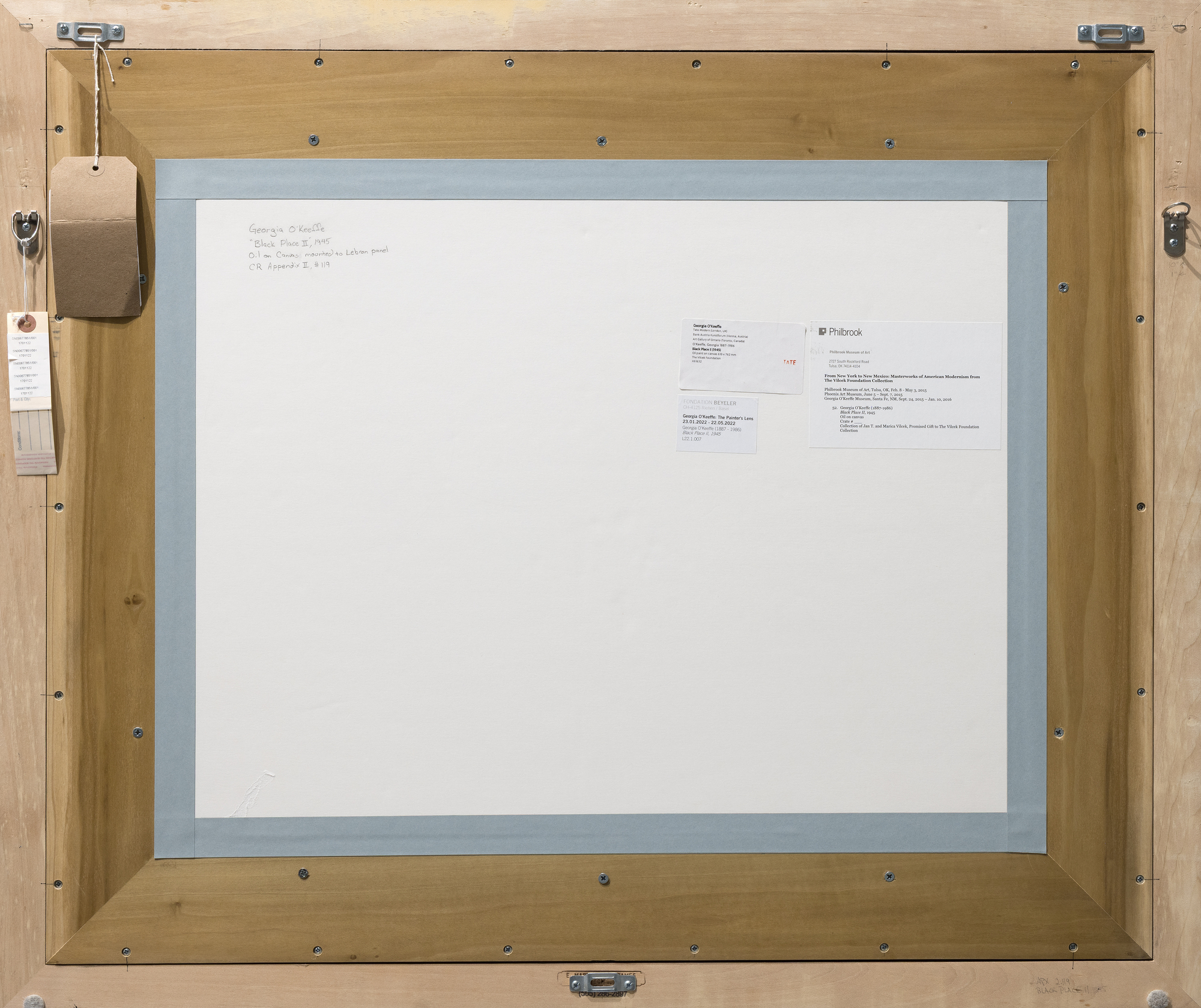
טולסה, אוקלהומה, מוזיאון פילברוק לאמנות, פיניקס, מניו יורק לניו מקסיקו: יצירות מופת של המודרניזם האמריקאי מאוסף קרן וילצ'ק, 8 בפברואר - 3 במאי 2015, נסע ל: אריזונה, מוזיאון האמנות של פיניקס, 7 ביוני - 7 בספטמבר 2015, סנטה פה, ניו מקסיקו, מוזיאון ג'ורג'יה אוקיף, 25 בספטמבר 2015 - 10 בינואר 2016
סנטה פה, ניו מקסיקו, מוזיאון ג'ורג'יה אוקיף, השאלה מורחבת, ינואר - אפריל 2016
לונדון, טייט מודרן, ג'ורג'יה אוקיף, 6 ביולי - 30 באוקטובר 2016, לאחר מכן נסע לווינה, בנק אוסטריה קונסטפורם, 7 בדצמבר 2016 - 26 במרץ 2016, טורונטו, גלריית האמנות של אונטריו, 22 באפריל - 30 ביולי 2017
סנטה פה, ניו מקסיקו, מוזיאון ג'ורג'יה אוקיף, המקום השחור: ג'ורג'יה אוקיף ומייקל נמינגה, 28 באפריל – 20 באוגוסט, 2018
קורפוס כריסטי, טקסס, מוזיאון האמנות של דרום טקסס, יצירות מופת של המודרניזם האמריקאי מאוסף וילצ'ק לאמנות אמריקאית, 13 בספטמבר 2018 - 6 בינואר 2019
ויצ'יטה, קנזס, מוזיאון האמנות של ויצ'יטה, ג'ורג'יה או'קיף: אמנות, דימוי, סגנון, 30 במרץ – 23 ביוני, 2019, נסע ל: רינו, נבאדה, מוזיאון האמנות של נבאדה, 20 ביולי – 20 באוקטובר, 2019, ווסט פאלם ביץ', פלורידה, מוזיאון האמנות של נורטון, 21 בנובמבר, 2019 – 9 בפברואר, 2020
פריז, מרכז פומפידו, ג'ורג'יה אוקיף, 8 בספטמבר – 6 בדצמבר 2021, נסע ל: באזל, שוויץ, קרן ביילר, 23 בינואר – 22 במאי 2022
ניופורט, רוד איילנד, מוזיאון האמנות של ניופורט, ג'ורג'יה אוקיף: "דברים שלא היו לי מילים עליהם", 16 ביולי - 16 באוקטובר, 2022
סן דייגו, קליפורניה, מוזיאון סן דייגו לאמנות, או'קיף ומור, 13 במאי - 27 באוגוסט, 2023, נסע ל: אלבקרקי, ניו מקסיקו, מוזיאון אלבקרקי, 30 בספטמבר - 31 בדצמבר, 2023, מונטריאול, קנדה, מוזיאון מונטריאול לאמנויות יפות, 10 בפברואר - 2 ביוני, 2024, בוסטון, מסצ'וסטס, מוזיאון לאמנויות יפות, 13 באוקטובר, 2024 - 20 בינואר, 2025
ספרות
רוברט מ. קואטס, "גלריות האמנות - בני זמנו, כולל מוזיאון ויטני", הניו
יורקר XXII, 16 בפברואר 1946, עמ' 84
"תערוכות ניו יורק - ג'ורג'יה אוקיף", כתב העת Art Outlook של MKR, אפריל 1946, עמ' 1, 3 (עם איורים)
מוזיאון ויטני לאמנות אמריקאית, תערוכה שנתית של ציור אמריקאי עכשווי, ניו יורק, 1948, מס' 105
מוזיאון דאלאס לאמנויות יפות, תערוכת ציורים מאת ג'ורג'יה אוקיף, דאלאס, 1953, מס' 22
גלריות הירשל ואדלר, רכישות חשובות אחרונות: ציורים אמריקאיים מסוף המאה ה-19 ותחילת המאה ה-20, ניו יורק, 1972, מס' 52 (מאויר)
גלריית וושבורן, התודעה מעל החומר: ציירים של הדברים האימננטיים, ניו יורק, 1972, מס' 7, עמ' 3 (מאויר)
הילטון קרמר, "אמנים מביטים מערבה: תערוכות חדשות בגלריות ACA מציגות מגוון רחב של סגנונות ומדיומים", הניו יורק טיימס, 23 בספטמבר 1972, עמ' L27
ג'יימס ר. מלו, "נופים: הממשי והדמיוני - באמנות אמריקאית", הניו יורק טיימס, 8 באוקטובר 1972, עמ' D27
ג'ון פרו, "האם מישהו רוצה את כל האמנות הזאת?", The Village Voice, 5 באוקטובר 1972, עמ' 29
סנפורד שוורץ, "מכתב ניו יורק", ארט אינטרנשיונל XVI, דצמבר 1972, עמ' 61
הירשל ואדלר, ג'ורג'יה אוקיף: ציורים ועבודות נבחרות על נייר, ניו יורק, 1986, מס' 28 (מאויר ועל הכריכה הקדמית)
שרין אודל, שטח שנוי במחלוקת: מיתוס ומשמעויות באמנות דרום-מערבית, אלבקרקי, 1996, כרך 8, עמ' xi, 120-134, 174 (עם איורים ועל הכריכה הקדמית)
ברברה בוהלר ליינס, ג'ורג'יה או'קיף: קטלוג רייסון. כרך שני, ניו הייבן, וושינגטון די.סי., ואביקיו, ניו מקסיקו, 1999, מס' 119, עמ' 1107 (עם איורים)
Barbara Buhler Lynes & Carolyn Kastner, Georgia O'Keeffe בניו מקסיקו: Architecture, Katsinam, and the Land, Santa Fe, NM, 2012, pl. 49, עמ'. 140 (בציור)
דן בישוף, "תחושת המקום של האמנית ג'ורג'יה אוקיף", סטאר-לדג'ר, 30 בספטמבר 2012
מרתה שוונדנר, "רוחם של חפצי תרבות", הניו יורק טיימס, 4 בינואר
2013, עמ' NJ11
ריי מארק רינלדי, "האמנות המערבית בהשראת ג'ורג'יה אוקיף מגיעה למוזיאון האמנות של דנבר",
דנבר פוסט, 15 בפברואר, 2013
ויליאם סי. אייג'י ולואיס קאצ'ור, יצירות מופת של המודרניזם האמריקאי: מהוילצ'ק
אוסף, לונדון, 2013, עמ' 11, 160–61, 235, 240, 267 (עם איורים)
טניה ברסון וארין ב. קו, ג'ורג'יה אוקיף, לונדון, 2016, עמ' 178, 255 (עם איורים)
מרתה רוי דל ארבול, ג'ורג'יה אוקיף, פריז, 2021, מס' 75, עמ' 40, 206-207, 312 (עם איורים)
אניטה פלדמן, חנה היגהאם, ג'ניפר לורן, ברברה בוהלר ליינס, אריאל פלוטק וכריס סטפנס, או'קיף ומור, סן דייגו, 2023, עמ' 142 (עם איורים)
... פחות...
"המקום השחור 2" (1945) של ג'ורג'יה אוקיף שייכת לאחת הסדרות העמוקות והמחמירות ביותר בקריירה שלה, בהשראת מסעות חוזרים ונשנים לאדמות ביסטי, אזור מרוחק ושלא מעולם בצפון מערב ניו מקסיקו, אותו כינתה "המקום השחור". מתוך התמקדות עמוקות בנוף זה, אוקיף נהגה לחנות בו כדי שתוכל לבחון את צורותיו המשתנות ואת דקויותיו הגווניות בשעות שונות של היום. בעבודה זו, היא מצמצמת את הסצנה לעיקריה: שתי גבעות ענקיות הנלחצות זו בזו, ללא אופק נראה לעין, וקומפוזיציה המוגדרת על ידי כוח משיכה, דממה ומונומנטליות שקטה. הצורות המרחפות והמשתלבות יוצרות תחושה של קנה מידה שמרגישה אינטימית ועצומה כאחד, ומעוררת נוף הנחווה כנוכחות ולא כפנורמה.


יצירות מסדרת "מקום שחור" הן נדירות במיוחד. מתוך ארבעה עשר הקנבסים שצייר או'קיף, רק ארבעה נותרו בידיים פרטיות; השאר מוחזקים על ידי מוסדות גדולים, כולל המוזיאון המטרופוליטן לאמנות, SFMOMA ומכון האמנות של שיקגו. כתוצאה מכך, הזדמנויות להיתקל ביצירה מקבוצה זו מחוץ לאוספי המוזיאונים הן נדירות ביותר.


ל"מקום שחור 2" שושלת מפוארת, מימיה הראשונים באוספי הגלריה המפורסמת של אלפרד שטיגליץ בניו יורק, "מקום אמריקאי", דרך הפילנתרופ והאספן הנודע מפילדלפיה דניאל דיטריך, ועד לאוסף של יאן ט. ומריקה וילצ'ק. מורשת הציור מודגשת עוד יותר על ידי חייו המוסדיים הארוכים באופן יוצא דופן. הוא הוצג כבר בשנת 1946 בתערוכה "מקום אמריקאי" של שטיגליץ, והמשיך להופיע בתערוכות רטרוספקטיביות מוסדיות גדולות, כולל תערוכות במרכז פומפידו ולאחרונה במוזיאון לאמנויות יפות בבוסטון. תשומת הלב הציבורית והאקדמית המתמשכת הזו ביססה היטב את חשיבותם של ציורי "מקום שחור" ביצירתו של אוקיף.
לברר