גב

אלפרד סיסלי(1839-1899)

$1,350,000

 
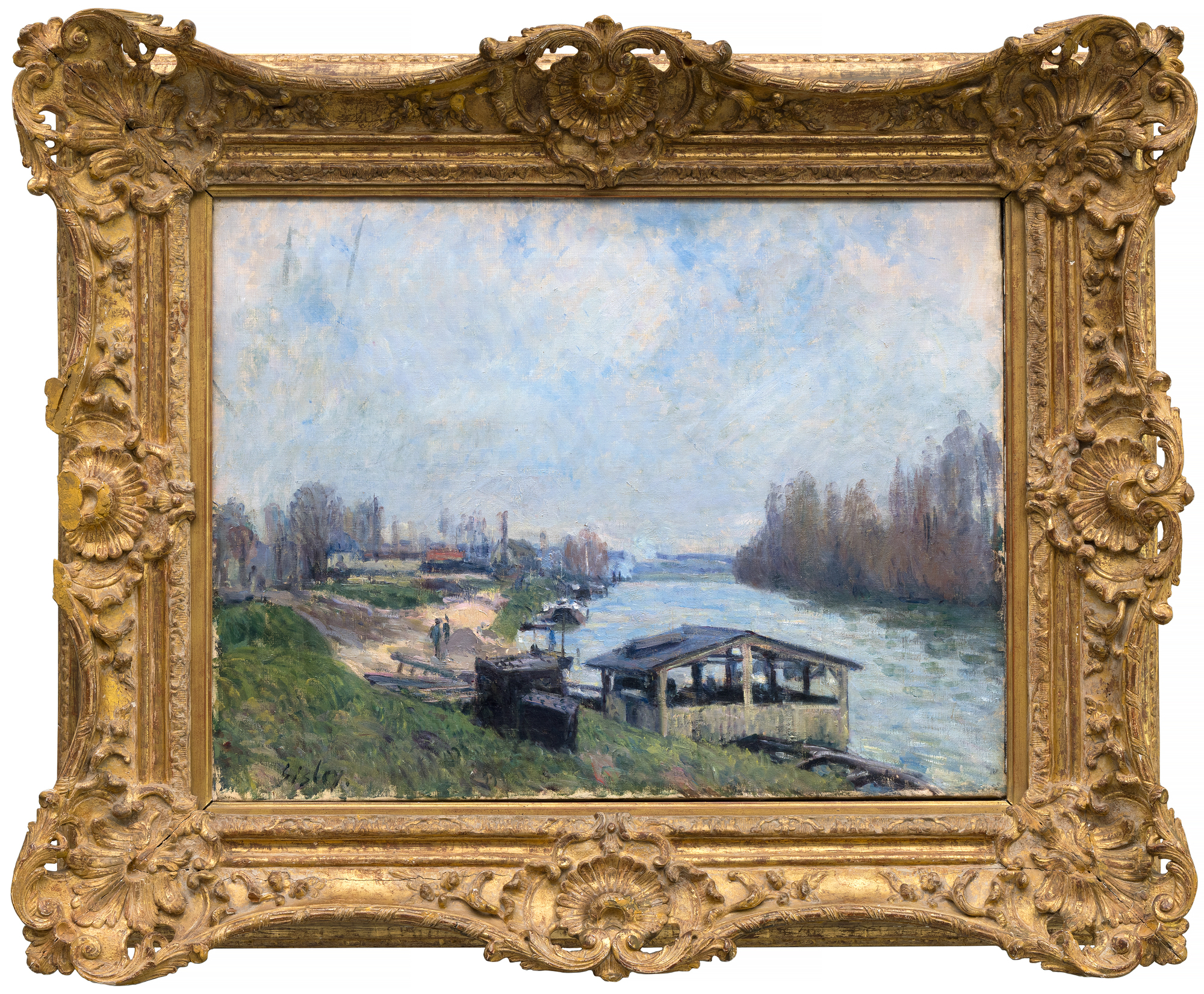
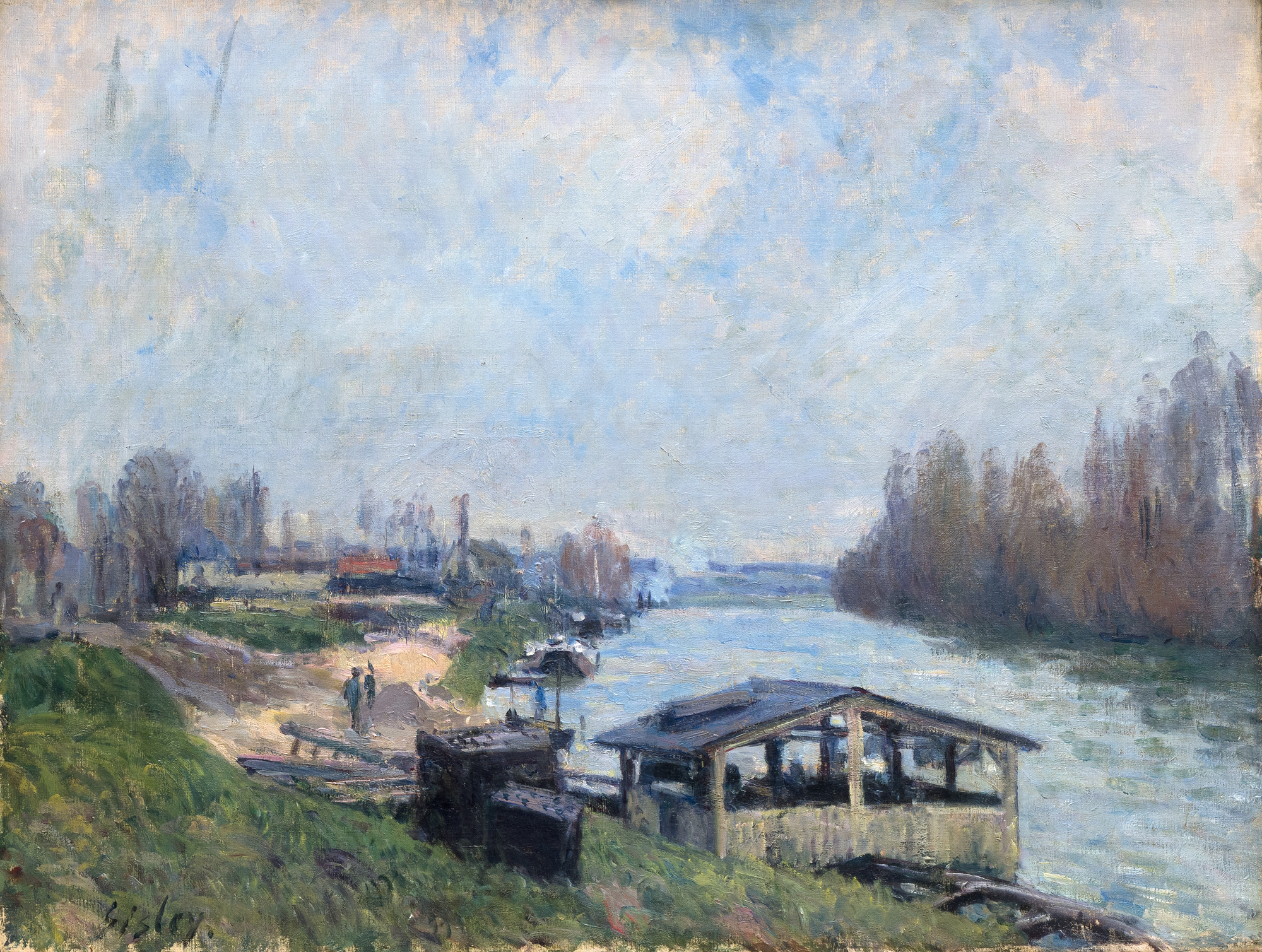
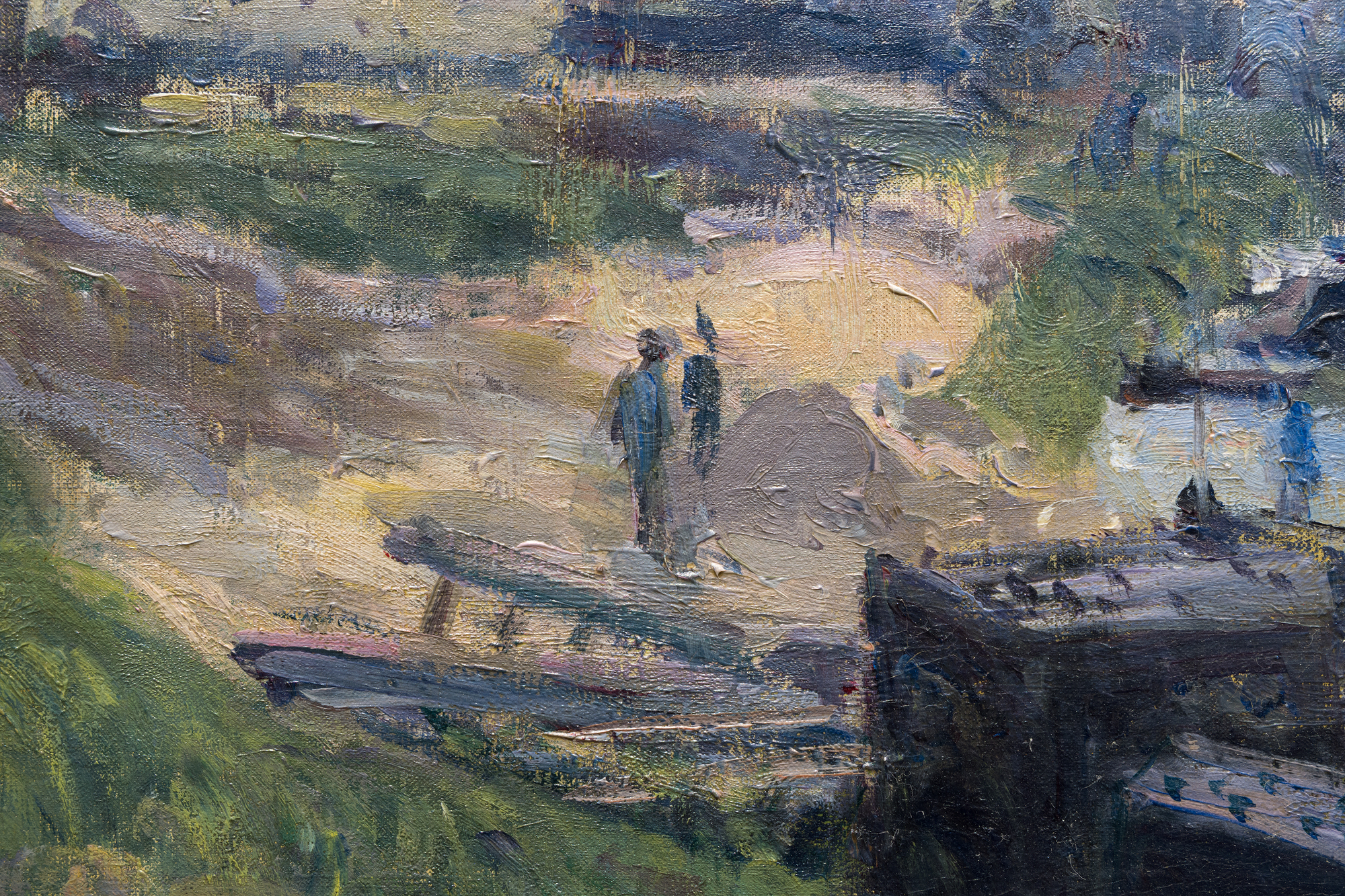
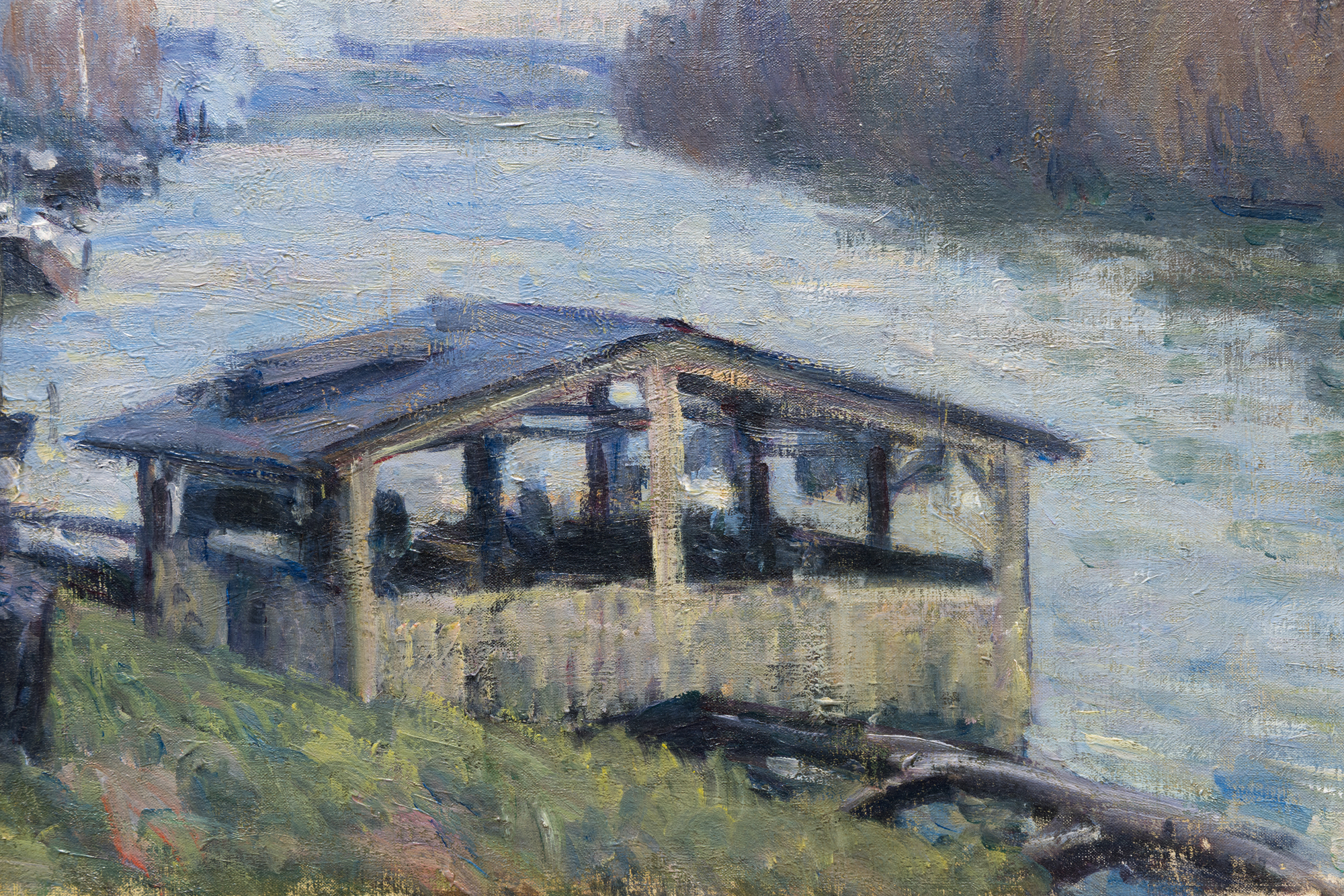
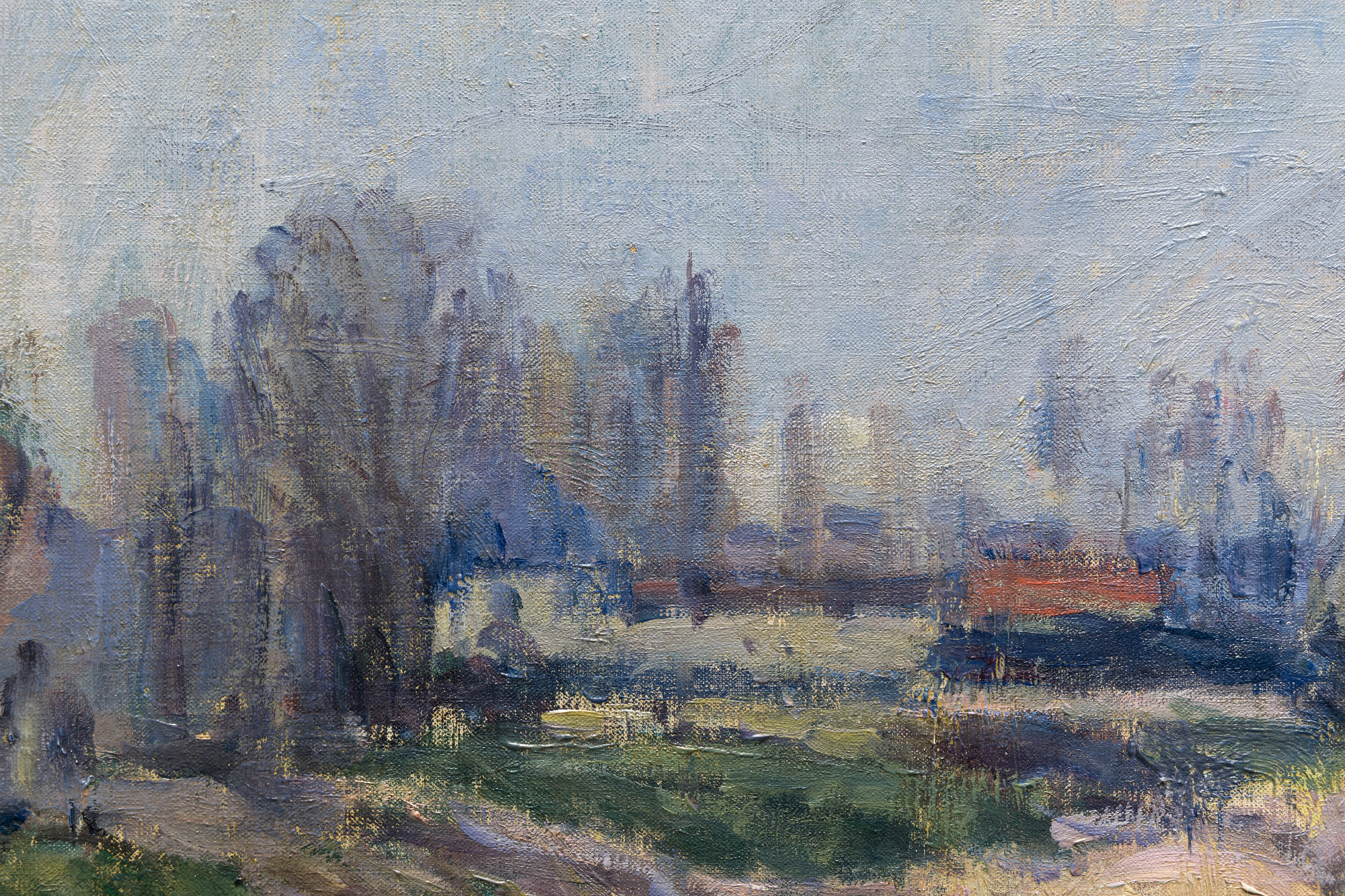
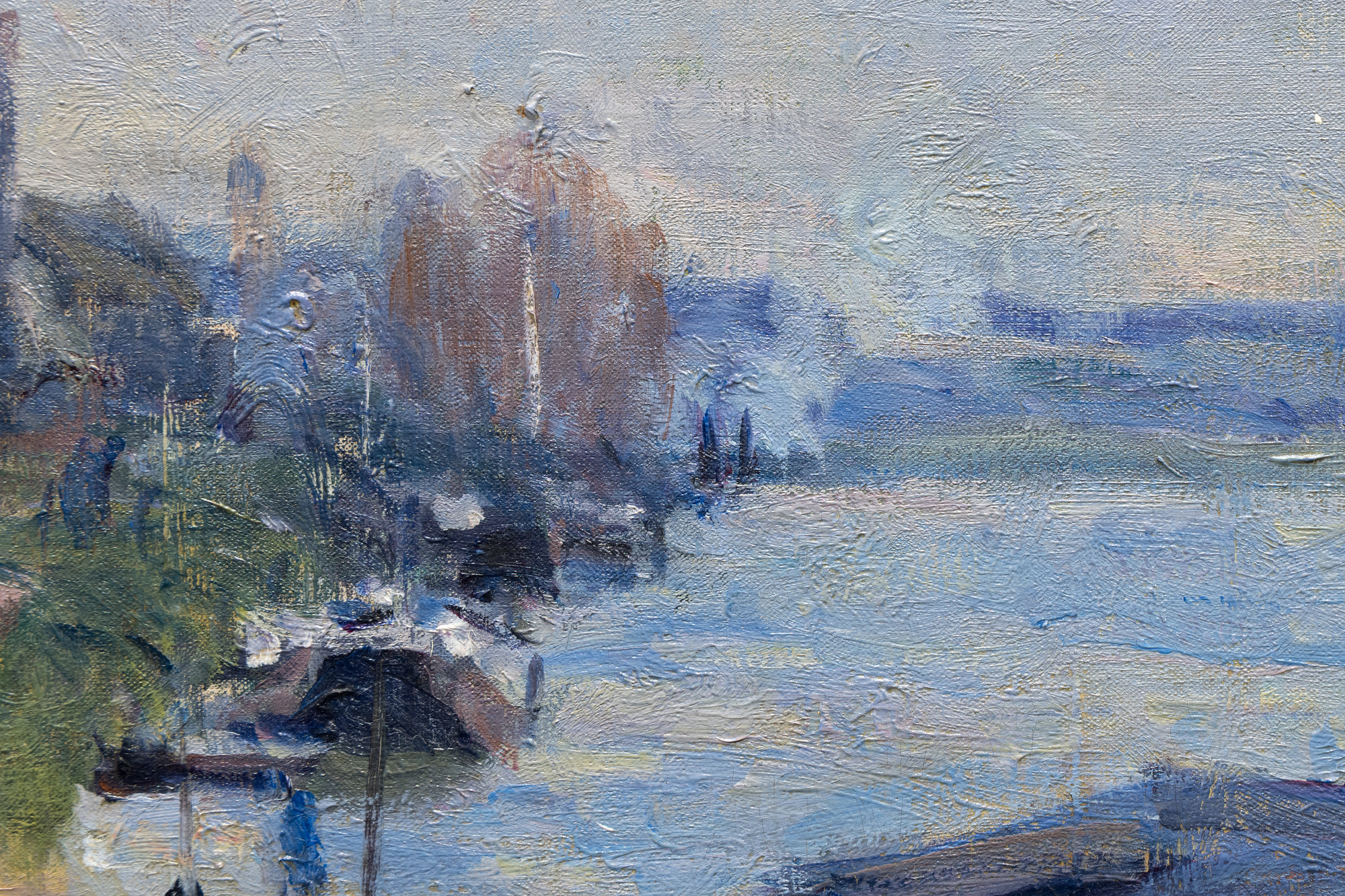
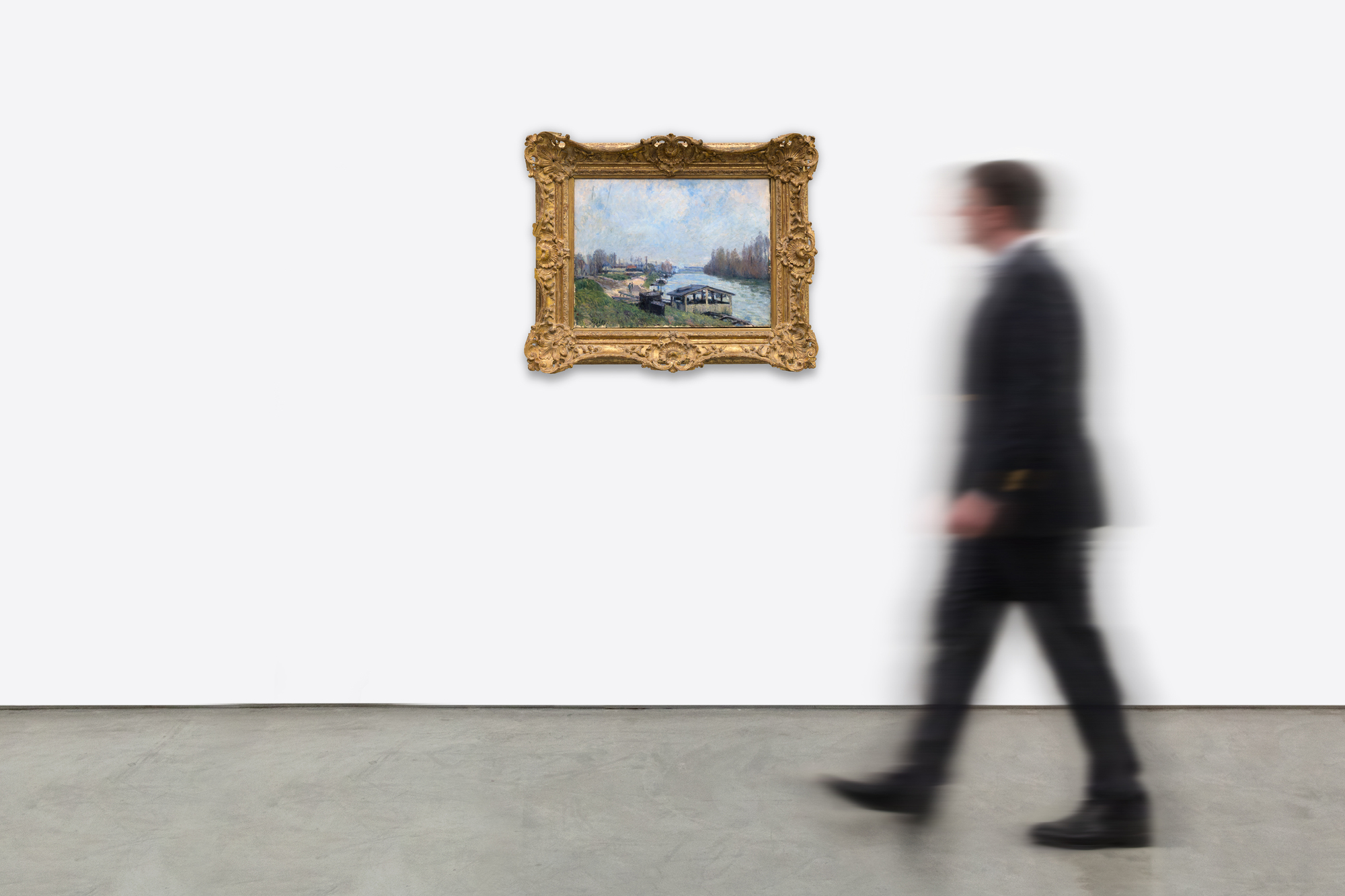
<div>Alfred Sisley’s <em>Le Lavoir de Billancourt</em> (1879) is a superb example of the artist’s lifelong devotion to painting directly before nature, and to the quiet drama of landscape in flux. Often described as the “purest” plein air painter of the Impressionist circle, Sisley maintained an almost exclusive relationship with landscape, attending to the subtlest changes of season, weather, and time of day. His river scenes in particular have long been compared to Monet’s for their sensitivity to water—its shifting reflections, softened edges, and the way light dissolves form into atmosphere. </div><br><br><div> </div><br><br><div>Painted along the Seine at Billancourt—an industrial town west of Paris—this work belongs to the sequence of views Sisley produced after the upheavals of 1871, when he moved his family first to Louveciennes and later to nearby Marly-le-Roi. The Seine valley offered him an ever-renewing motif: looping river bends, villages threaded along the banks, and a landscape marked by both history and modern life. Here, the floating washing house (a lavoir) sits low on the water, a practical structure where locals could wash clothes directly in the river for a small fee. Sisley transforms this everyday subject into an evocation of lived place, where human activity is integrated seamlessly into the broader rhythms of sky and current. </div><br><br><div> </div><br><br><div>The 1870s are widely recognized as Sisley’s “golden period”—when his work speaks in a distinctly personal voice rather than under the overt influence of Corot, Courbet, or even early Monet. After ceasing to exhibit at the Salon after 1877, his compositions grew more complex and less dependent on traditional recession and linear perspective, shifting instead toward interlocking patterns and the expressive energy of his brushwork. In<em> Le Lavoir de Billancourt</em>, layers of pigment are built up in quick, multidirectional strokes, creating a richly textured surface saturated with color and air. This heightened spontaneity aligns with contemporary praise for Sisley’s ability to seize passing moments—clouds, breeze, and trembling foliage—so that space and light feel inseparable, and the scene remains vibrantly in motion. The painting is recorded in the François Dault<em> Alfred Sisley: catalogue raisonné de l'oeuvre peint</em> (1959) as no. 315. </div> <div>Alfred Sisley’s <em>Le Lavoir de Billancourt</em> (1879) is a superb example of the artist’s lifelong devotion to painting directly before nature, and to the quiet drama of landscape in flux. Often described as the “purest” plein air painter of the Impressionist circle, Sisley maintained an almost exclusive relationship with landscape, attending to the subtlest changes of season, weather, and time of day. His river scenes in particular have long been compared to Monet’s for their sensitivity to water—its shifting reflections, softened edges, and the way light dissolves form into atmosphere. </div><br><br><div> </div><br><br><div>Painted along the Seine at Billancourt—an industrial town west of Paris—this work belongs to the sequence of views Sisley produced after the upheavals of 1871, when he moved his family first to Louveciennes and later to nearby Marly-le-Roi. The Seine valley offered him an ever-renewing motif: looping river bends, villages threaded along the banks, and a landscape marked by both history and modern life. Here, the floating washing house (a lavoir) sits low on the water, a practical structure where locals could wash clothes directly in the river for a small fee. Sisley transforms this everyday subject into an evocation of lived place, where human activity is integrated seamlessly into the broader rhythms of sky and current. </div><br><br><div> </div><br><br><div>The 1870s are widely recognized as Sisley’s “golden period”—when his work speaks in a distinctly personal voice rather than under the overt influence of Corot, Courbet, or even early Monet. After ceasing to exhibit at the Salon after 1877, his compositions grew more complex and less dependent on traditional recession and linear perspective, shifting instead toward interlocking patterns and the expressive energy of his brushwork. In<em> Le Lavoir de Billancourt</em>, layers of pigment are built up in quick, multidirectional strokes, creating a richly textured surface saturated with color and air. This heightened spontaneity aligns with contemporary praise for Sisley’s ability to seize passing moments—clouds, breeze, and trembling foliage—so that space and light feel inseparable, and the scene remains vibrantly in motion. The painting is recorded in the François Dault<em> Alfred Sisley: catalogue raisonné de l'oeuvre peint</em> (1959) as no. 315. </div> <div>Alfred Sisley’s <em>Le Lavoir de Billancourt</em> (1879) is a superb example of the artist’s lifelong devotion to painting directly before nature, and to the quiet drama of landscape in flux. Often described as the “purest” plein air painter of the Impressionist circle, Sisley maintained an almost exclusive relationship with landscape, attending to the subtlest changes of season, weather, and time of day. His river scenes in particular have long been compared to Monet’s for their sensitivity to water—its shifting reflections, softened edges, and the way light dissolves form into atmosphere. </div><br><br><div> </div><br><br><div>Painted along the Seine at Billancourt—an industrial town west of Paris—this work belongs to the sequence of views Sisley produced after the upheavals of 1871, when he moved his family first to Louveciennes and later to nearby Marly-le-Roi. The Seine valley offered him an ever-renewing motif: looping river bends, villages threaded along the banks, and a landscape marked by both history and modern life. Here, the floating washing house (a lavoir) sits low on the water, a practical structure where locals could wash clothes directly in the river for a small fee. Sisley transforms this everyday subject into an evocation of lived place, where human activity is integrated seamlessly into the broader rhythms of sky and current. </div><br><br><div> </div><br><br><div>The 1870s are widely recognized as Sisley’s “golden period”—when his work speaks in a distinctly personal voice rather than under the overt influence of Corot, Courbet, or even early Monet. After ceasing to exhibit at the Salon after 1877, his compositions grew more complex and less dependent on traditional recession and linear perspective, shifting instead toward interlocking patterns and the expressive energy of his brushwork. In<em> Le Lavoir de Billancourt</em>, layers of pigment are built up in quick, multidirectional strokes, creating a richly textured surface saturated with color and air. This heightened spontaneity aligns with contemporary praise for Sisley’s ability to seize passing moments—clouds, breeze, and trembling foliage—so that space and light feel inseparable, and the scene remains vibrantly in motion. The painting is recorded in the François Dault<em> Alfred Sisley: catalogue raisonné de l'oeuvre peint</em> (1959) as no. 315. </div> <div>Alfred Sisley’s <em>Le Lavoir de Billancourt</em> (1879) is a superb example of the artist’s lifelong devotion to painting directly before nature, and to the quiet drama of landscape in flux. Often described as the “purest” plein air painter of the Impressionist circle, Sisley maintained an almost exclusive relationship with landscape, attending to the subtlest changes of season, weather, and time of day. His river scenes in particular have long been compared to Monet’s for their sensitivity to water—its shifting reflections, softened edges, and the way light dissolves form into atmosphere. </div><br><br><div> </div><br><br><div>Painted along the Seine at Billancourt—an industrial town west of Paris—this work belongs to the sequence of views Sisley produced after the upheavals of 1871, when he moved his family first to Louveciennes and later to nearby Marly-le-Roi. The Seine valley offered him an ever-renewing motif: looping river bends, villages threaded along the banks, and a landscape marked by both history and modern life. Here, the floating washing house (a lavoir) sits low on the water, a practical structure where locals could wash clothes directly in the river for a small fee. Sisley transforms this everyday subject into an evocation of lived place, where human activity is integrated seamlessly into the broader rhythms of sky and current. </div><br><br><div> </div><br><br><div>The 1870s are widely recognized as Sisley’s “golden period”—when his work speaks in a distinctly personal voice rather than under the overt influence of Corot, Courbet, or even early Monet. After ceasing to exhibit at the Salon after 1877, his compositions grew more complex and less dependent on traditional recession and linear perspective, shifting instead toward interlocking patterns and the expressive energy of his brushwork. In<em> Le Lavoir de Billancourt</em>, layers of pigment are built up in quick, multidirectional strokes, creating a richly textured surface saturated with color and air. This heightened spontaneity aligns with contemporary praise for Sisley’s ability to seize passing moments—clouds, breeze, and trembling foliage—so that space and light feel inseparable, and the scene remains vibrantly in motion. The painting is recorded in the François Dault<em> Alfred Sisley: catalogue raisonné de l'oeuvre peint</em> (1959) as no. 315. </div> <div>Alfred Sisley’s <em>Le Lavoir de Billancourt</em> (1879) is a superb example of the artist’s lifelong devotion to painting directly before nature, and to the quiet drama of landscape in flux. Often described as the “purest” plein air painter of the Impressionist circle, Sisley maintained an almost exclusive relationship with landscape, attending to the subtlest changes of season, weather, and time of day. His river scenes in particular have long been compared to Monet’s for their sensitivity to water—its shifting reflections, softened edges, and the way light dissolves form into atmosphere. </div><br><br><div> </div><br><br><div>Painted along the Seine at Billancourt—an industrial town west of Paris—this work belongs to the sequence of views Sisley produced after the upheavals of 1871, when he moved his family first to Louveciennes and later to nearby Marly-le-Roi. The Seine valley offered him an ever-renewing motif: looping river bends, villages threaded along the banks, and a landscape marked by both history and modern life. Here, the floating washing house (a lavoir) sits low on the water, a practical structure where locals could wash clothes directly in the river for a small fee. Sisley transforms this everyday subject into an evocation of lived place, where human activity is integrated seamlessly into the broader rhythms of sky and current. </div><br><br><div> </div><br><br><div>The 1870s are widely recognized as Sisley’s “golden period”—when his work speaks in a distinctly personal voice rather than under the overt influence of Corot, Courbet, or even early Monet. After ceasing to exhibit at the Salon after 1877, his compositions grew more complex and less dependent on traditional recession and linear perspective, shifting instead toward interlocking patterns and the expressive energy of his brushwork. In<em> Le Lavoir de Billancourt</em>, layers of pigment are built up in quick, multidirectional strokes, creating a richly textured surface saturated with color and air. This heightened spontaneity aligns with contemporary praise for Sisley’s ability to seize passing moments—clouds, breeze, and trembling foliage—so that space and light feel inseparable, and the scene remains vibrantly in motion. The painting is recorded in the François Dault<em> Alfred Sisley: catalogue raisonné de l'oeuvre peint</em> (1959) as no. 315. </div> <div>Alfred Sisley’s <em>Le Lavoir de Billancourt</em> (1879) is a superb example of the artist’s lifelong devotion to painting directly before nature, and to the quiet drama of landscape in flux. Often described as the “purest” plein air painter of the Impressionist circle, Sisley maintained an almost exclusive relationship with landscape, attending to the subtlest changes of season, weather, and time of day. His river scenes in particular have long been compared to Monet’s for their sensitivity to water—its shifting reflections, softened edges, and the way light dissolves form into atmosphere. </div><br><br><div> </div><br><br><div>Painted along the Seine at Billancourt—an industrial town west of Paris—this work belongs to the sequence of views Sisley produced after the upheavals of 1871, when he moved his family first to Louveciennes and later to nearby Marly-le-Roi. The Seine valley offered him an ever-renewing motif: looping river bends, villages threaded along the banks, and a landscape marked by both history and modern life. Here, the floating washing house (a lavoir) sits low on the water, a practical structure where locals could wash clothes directly in the river for a small fee. Sisley transforms this everyday subject into an evocation of lived place, where human activity is integrated seamlessly into the broader rhythms of sky and current. </div><br><br><div> </div><br><br><div>The 1870s are widely recognized as Sisley’s “golden period”—when his work speaks in a distinctly personal voice rather than under the overt influence of Corot, Courbet, or even early Monet. After ceasing to exhibit at the Salon after 1877, his compositions grew more complex and less dependent on traditional recession and linear perspective, shifting instead toward interlocking patterns and the expressive energy of his brushwork. In<em> Le Lavoir de Billancourt</em>, layers of pigment are built up in quick, multidirectional strokes, creating a richly textured surface saturated with color and air. This heightened spontaneity aligns with contemporary praise for Sisley’s ability to seize passing moments—clouds, breeze, and trembling foliage—so that space and light feel inseparable, and the scene remains vibrantly in motion. The painting is recorded in the François Dault<em> Alfred Sisley: catalogue raisonné de l'oeuvre peint</em> (1959) as no. 315. </div> <div>Alfred Sisley’s <em>Le Lavoir de Billancourt</em> (1879) is a superb example of the artist’s lifelong devotion to painting directly before nature, and to the quiet drama of landscape in flux. Often described as the “purest” plein air painter of the Impressionist circle, Sisley maintained an almost exclusive relationship with landscape, attending to the subtlest changes of season, weather, and time of day. His river scenes in particular have long been compared to Monet’s for their sensitivity to water—its shifting reflections, softened edges, and the way light dissolves form into atmosphere. </div><br><br><div> </div><br><br><div>Painted along the Seine at Billancourt—an industrial town west of Paris—this work belongs to the sequence of views Sisley produced after the upheavals of 1871, when he moved his family first to Louveciennes and later to nearby Marly-le-Roi. The Seine valley offered him an ever-renewing motif: looping river bends, villages threaded along the banks, and a landscape marked by both history and modern life. Here, the floating washing house (a lavoir) sits low on the water, a practical structure where locals could wash clothes directly in the river for a small fee. Sisley transforms this everyday subject into an evocation of lived place, where human activity is integrated seamlessly into the broader rhythms of sky and current. </div><br><br><div> </div><br><br><div>The 1870s are widely recognized as Sisley’s “golden period”—when his work speaks in a distinctly personal voice rather than under the overt influence of Corot, Courbet, or even early Monet. After ceasing to exhibit at the Salon after 1877, his compositions grew more complex and less dependent on traditional recession and linear perspective, shifting instead toward interlocking patterns and the expressive energy of his brushwork. In<em> Le Lavoir de Billancourt</em>, layers of pigment are built up in quick, multidirectional strokes, creating a richly textured surface saturated with color and air. This heightened spontaneity aligns with contemporary praise for Sisley’s ability to seize passing moments—clouds, breeze, and trembling foliage—so that space and light feel inseparable, and the scene remains vibrantly in motion. The painting is recorded in the François Dault<em> Alfred Sisley: catalogue raisonné de l'oeuvre peint</em> (1959) as no. 315. </div> <div>Alfred Sisley’s <em>Le Lavoir de Billancourt</em> (1879) is a superb example of the artist’s lifelong devotion to painting directly before nature, and to the quiet drama of landscape in flux. Often described as the “purest” plein air painter of the Impressionist circle, Sisley maintained an almost exclusive relationship with landscape, attending to the subtlest changes of season, weather, and time of day. His river scenes in particular have long been compared to Monet’s for their sensitivity to water—its shifting reflections, softened edges, and the way light dissolves form into atmosphere. </div><br><br><div> </div><br><br><div>Painted along the Seine at Billancourt—an industrial town west of Paris—this work belongs to the sequence of views Sisley produced after the upheavals of 1871, when he moved his family first to Louveciennes and later to nearby Marly-le-Roi. The Seine valley offered him an ever-renewing motif: looping river bends, villages threaded along the banks, and a landscape marked by both history and modern life. Here, the floating washing house (a lavoir) sits low on the water, a practical structure where locals could wash clothes directly in the river for a small fee. Sisley transforms this everyday subject into an evocation of lived place, where human activity is integrated seamlessly into the broader rhythms of sky and current. </div><br><br><div> </div><br><br><div>The 1870s are widely recognized as Sisley’s “golden period”—when his work speaks in a distinctly personal voice rather than under the overt influence of Corot, Courbet, or even early Monet. After ceasing to exhibit at the Salon after 1877, his compositions grew more complex and less dependent on traditional recession and linear perspective, shifting instead toward interlocking patterns and the expressive energy of his brushwork. In<em> Le Lavoir de Billancourt</em>, layers of pigment are built up in quick, multidirectional strokes, creating a richly textured surface saturated with color and air. This heightened spontaneity aligns with contemporary praise for Sisley’s ability to seize passing moments—clouds, breeze, and trembling foliage—so that space and light feel inseparable, and the scene remains vibrantly in motion. The painting is recorded in the François Dault<em> Alfred Sisley: catalogue raisonné de l'oeuvre peint</em> (1959) as no. 315. </div> <div>Alfred Sisley’s <em>Le Lavoir de Billancourt</em> (1879) is a superb example of the artist’s lifelong devotion to painting directly before nature, and to the quiet drama of landscape in flux. Often described as the “purest” plein air painter of the Impressionist circle, Sisley maintained an almost exclusive relationship with landscape, attending to the subtlest changes of season, weather, and time of day. His river scenes in particular have long been compared to Monet’s for their sensitivity to water—its shifting reflections, softened edges, and the way light dissolves form into atmosphere. </div><br><br><div> </div><br><br><div>Painted along the Seine at Billancourt—an industrial town west of Paris—this work belongs to the sequence of views Sisley produced after the upheavals of 1871, when he moved his family first to Louveciennes and later to nearby Marly-le-Roi. The Seine valley offered him an ever-renewing motif: looping river bends, villages threaded along the banks, and a landscape marked by both history and modern life. Here, the floating washing house (a lavoir) sits low on the water, a practical structure where locals could wash clothes directly in the river for a small fee. Sisley transforms this everyday subject into an evocation of lived place, where human activity is integrated seamlessly into the broader rhythms of sky and current. </div><br><br><div> </div><br><br><div>The 1870s are widely recognized as Sisley’s “golden period”—when his work speaks in a distinctly personal voice rather than under the overt influence of Corot, Courbet, or even early Monet. After ceasing to exhibit at the Salon after 1877, his compositions grew more complex and less dependent on traditional recession and linear perspective, shifting instead toward interlocking patterns and the expressive energy of his brushwork. In<em> Le Lavoir de Billancourt</em>, layers of pigment are built up in quick, multidirectional strokes, creating a richly textured surface saturated with color and air. This heightened spontaneity aligns with contemporary praise for Sisley’s ability to seize passing moments—clouds, breeze, and trembling foliage—so that space and light feel inseparable, and the scene remains vibrantly in motion. The painting is recorded in the François Dault<em> Alfred Sisley: catalogue raisonné de l'oeuvre peint</em> (1959) as no. 315. </div> <div>Alfred Sisley’s <em>Le Lavoir de Billancourt</em> (1879) is a superb example of the artist’s lifelong devotion to painting directly before nature, and to the quiet drama of landscape in flux. Often described as the “purest” plein air painter of the Impressionist circle, Sisley maintained an almost exclusive relationship with landscape, attending to the subtlest changes of season, weather, and time of day. His river scenes in particular have long been compared to Monet’s for their sensitivity to water—its shifting reflections, softened edges, and the way light dissolves form into atmosphere. </div><br><br><div> </div><br><br><div>Painted along the Seine at Billancourt—an industrial town west of Paris—this work belongs to the sequence of views Sisley produced after the upheavals of 1871, when he moved his family first to Louveciennes and later to nearby Marly-le-Roi. The Seine valley offered him an ever-renewing motif: looping river bends, villages threaded along the banks, and a landscape marked by both history and modern life. Here, the floating washing house (a lavoir) sits low on the water, a practical structure where locals could wash clothes directly in the river for a small fee. Sisley transforms this everyday subject into an evocation of lived place, where human activity is integrated seamlessly into the broader rhythms of sky and current. </div><br><br><div> </div><br><br><div>The 1870s are widely recognized as Sisley’s “golden period”—when his work speaks in a distinctly personal voice rather than under the overt influence of Corot, Courbet, or even early Monet. After ceasing to exhibit at the Salon after 1877, his compositions grew more complex and less dependent on traditional recession and linear perspective, shifting instead toward interlocking patterns and the expressive energy of his brushwork. In<em> Le Lavoir de Billancourt</em>, layers of pigment are built up in quick, multidirectional strokes, creating a richly textured surface saturated with color and air. This heightened spontaneity aligns with contemporary praise for Sisley’s ability to seize passing moments—clouds, breeze, and trembling foliage—so that space and light feel inseparable, and the scene remains vibrantly in motion. The painting is recorded in the François Dault<em> Alfred Sisley: catalogue raisonné de l'oeuvre peint</em> (1959) as no. 315. </div>
Le Lavoir de Billancourt 1879 20 x 25 5/8 אינץ' (50.8 x 65.09 ס"מ) שמן על בד
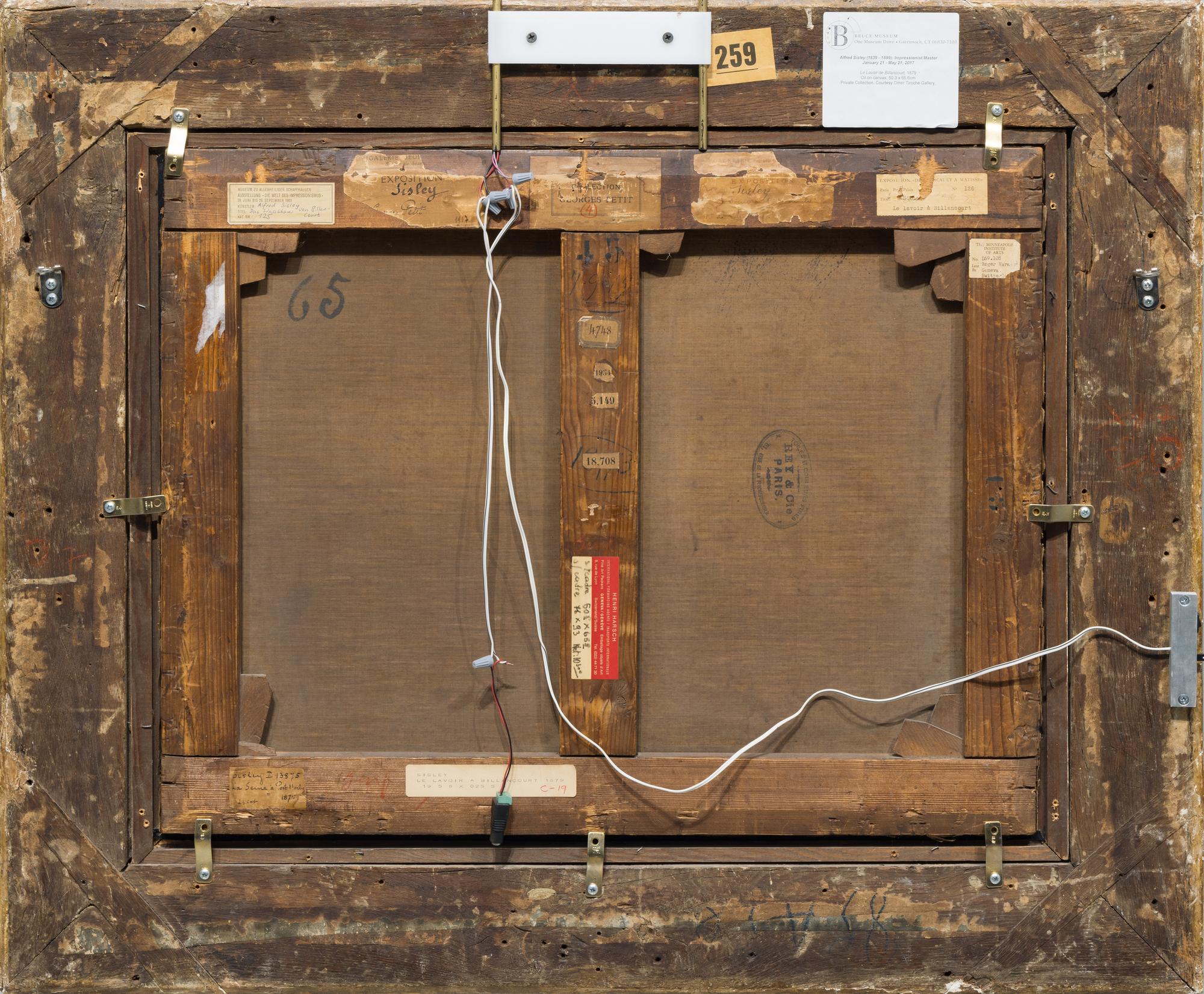
מקור ומקור
אנרי פואדץ, פריז
גלריית ז'ורז' פטי, פריז, 27 באפריל 1900, פריט 79
ז'ורז' פטיט, נרכש במכירה הנ"ל
מכירה: גלריית ז'ורז' פטיט, פריז, 4-5 במרץ, 1921, פריט 113
רוזן דה לנסקיי, פריז
מלון דרואו, פריז, 6 באפריל 1922, חלקה 16
אז'ן בלוט, פריז, נרכש במכירה הנ"ל
ד"ר ארתור שרפנטייה, פריז
אוסף פרטי, שוויץ, נרכש בסביבות 1950
אוסף פרטי, ממוצא של הנ"ל
אוסף פרטי, אירופה
סותביס ניו יורק, 6 במאי 2015, לוט
... עוד...250
אוסף פרטי, לונדון, נרכש במכירה הנ"ל
תערוכה
פריז, גלריית ז'ורז' פטי, אלפרד סיסלי, 1917, מס' 83
פריז, Durand-Ruel, Tableaux de Sisley, 1930, מס'. 23
פריז, גלריית ארט בראון, סיסלי, 1933, מס' 13
Berne, Kunstmuseum, Alfred Sisley, 1958, no. 38
פריז, Musée du Petit-Palais, De Gericault à Matisse, Chefs-d'oeuvre des collections Suisse, 1959, no. 126
Schaffhausen, Museum Zu Allerheiligen, Die Welt des Impressionnismus, 1963, no. 125
מיניאפוליס, מכון מיניאפוליס לאמנויות, העבר שהתגלה מחדש: ציור צרפתי 1800-1900, 1969
 
ספרות
מקסימיליאן גוטייה, "Hommage à Sisley", ב-L'Art vivant, 1933, מס'. 170, עמ'. 116 (בציור)
פרנסואה דאולט, אלפרד סיסלי, Catalogue raisonné de l'oeuvre peint, פריז, 1959, מס. 315 (בציור)
Jacques Lassaigne & Slyvie Gache-Patin, Sisley, Paris, 1982, p. 31 (בציור)
מרי אן סטיבנס, עורכת, אלפרד סיסלי, לונדון, 1992, עמ' 154
Sylvie Brame & François Lorenceau, Alfred Sisley: Catalog Critique des Peintures et des Pastels, Paris, 2021, p. 155, 488 (מצויר)
... פחות...
"הבית של בילנקור" (1879) מאת אלפרד סיסלי הוא דוגמה מצוינת למסירותו לאורך חייו של האמן לציור היישר אל מול הטבע, ולדרמה השקטה של ​​נוף בשינוי. סיסלי, המתואר לעתים קרובות כצייר הפלאין אייר "הטהור" ביותר של החוג האימפרסיוניסטי, שמר על קשר כמעט בלעדי עם הנוף, תוך שהוא מתמקד בשינויים העדינים ביותר של עונות השנה, מזג האוויר ושעת היום. סצנות הנהר שלו בפרט הושוו זה מכבר לזו של מונה בשל רגישותן למים - השתקפויותיהם המשתנות, קצוותיהם המרוככים והאופן שבו אור ממיס צורה באטמוספירה.


ציור זה, שצויר לאורך הסיין בבילנקור - עיירה תעשייתית ממערב לפריז - שייך לרצף הנופים שסיזלי יצר לאחר הטלטלות של 1871, כאשר העביר את משפחתו תחילה ללובסיין ומאוחר יותר למארלי-לה-רואה הסמוכה. עמק הסיין הציע לו מוטיב מתחדש ללא הרף: עיקולי נהר מתפתלים, כפרים השזורים לאורך הגדות, ונוף המסומן הן בהיסטוריה והן בחיים המודרניים. כאן, בית הכביסה הצף (לבואר) יושב נמוך על המים, מבנה פרקטי שבו המקומיים יכלו לכבס בגדים ישירות בנהר תמורת תשלום סמלי. סיזלי הופך את הנושא היומיומי הזה לעוררות של מקום חי, שבו הפעילות האנושית משולבת בצורה חלקה במקצבים הרחבים יותר של השמיים והזרם.


שנות ה-70 של המאה ה-19 מוכרות באופן נרחב כ"תקופת הזהב" של סיסלי - כאשר עבודתו מדברת בקול אישי מובהק ולא תחת השפעה גלויה של קורו, קורבה או אפילו מונה המוקדם. לאחר שהפסיק להציג בסלון לאחר 1877, הקומפוזיציות שלו הפכו מורכבות יותר ופחות תלויות בנסיגה מסורתית ובפרספקטיבה לינארית, ובמקום זאת עברו לעבר דפוסים שלובים ואנרגיה אקספרסיבית של עבודת המכחול שלו. בציור "Le Lavoir de Billancourt", שכבות של פיגמנט נבנות במשיכות מהירות ורב-כיווניות, ויוצרות משטח עשיר בעל מרקם רווי בצבע ואוויר. ספונטניות מוגברת זו מתיישבת עם שבחים עכשוויים ליכולתו של סיסלי לתפוס רגעים חולפים - עננים, בריזה ועלווה רועדת - כך שמרחב ואור מרגישים בלתי נפרדים, והסצנה נשארת בתנועה תוססת. הציור מתועד ב"פרנסואה דא אלפרד סיסלי: catalogue raisonné de l'ouvre peint" (1959) כמספר 315.
לברר