MENU
Heather James
SEARCH


  • Home
  • About
    • Palm Desert
    • Jackson Hole
    • New York
    • London
    • Los Angeles
    • Montecito
    • Consultants
    • Services
  • Viewing Room
  • Artists
    • Artists
    • Categories
  • Artwork
  • Exhibitions
  • Publications
    • Gallery Tours
    • Exhibition Tours
    • Videos
    • Catalogs
  • Learn
    • Art as an Investment
    • Press
    • News
    • Education
  • Sell
  • New Arrivals
  • Contact
  • Advisory
  • Home
  • About
    • Palm Desert
    • Jackson Hole
    • New York
    • London
    • Los Angeles
    • Montecito
    • Consultants
    • Services
  • Viewing Room
  • Artists
    • Artists
    • Categories
  • Artwork
  • Exhibitions
  • Publications
    • Gallery Tours
    • Exhibition Tours
    • Videos
    • Catalogs
  • Learn
    • Art as an Investment
    • Press
    • News
    • Education
  • Sell
  • New Arrivals
  • Contact
  • Advisory

Artwork

Artists Categories Price
Cottonwood Tree (Near Abiquiu), New Mexico (1943) by celebrated American artist Georgia O’Keeffe is exemplary of the airier, more naturalistic style that the desert inspired in her. O’Keeffe had great affinity for the distinctive beauty of the Southwest, and made her home there among the spindly trees, dramatic vistas, and bleached animal skulls that she so frequently painted. O’Keeffe took up residence at Ghost Ranch, a dude ranch twelve miles outside of the village of Abiquiú in northern New Mexico and painted this cottonwood tree around there. The softer style befitting this subject is a departure from her bold architectural landscapes and jewel-toned flowers.
<br>
<br>The cottonwood tree is abstracted into soft patches of verdant greens through which more delineated branches are seen, spiraling in space against pockets of blue sky. The modeling of the trunk and delicate energy in the leaves carry forward past experimentations with the regional trees of the Northeast that had captivated O’Keeffe years earlier: maples, chestnuts, cedars, and poplars, among others. Two dramatic canvases from 1924, Autumn Trees, The Maple and The Chestnut Grey, are early instances of lyrical and resolute centrality, respectively. As seen in these early tree paintings, O’Keeffe exaggerated the sensibility of her subject with color and form.
<br>
<br>In her 1974 book, O’Keeffe explained: “The meaning of a word— to me— is not as exact as the meaning of a color. Color and shapes make a more definite statement than words.” Her exacting, expressive color intrigued. The Precisionist painter Charles Demuth described how, in O’Keeffe’s work, “each color almost regains the fun it must have felt within itself on forming the first rainbow” (As quoted in C. Eldridge, Georgia O’Keeffe, New York, 1991, p. 33). As well, congruities between forms knit together her oeuvre. Subjects like hills and petals undulate alike, while antlers, trees, and tributaries correspond in their branching morphology.
<br>
<br>The sinewy contours and gradated hues characteristic of O’Keeffe find an incredible range across decades of her tree paintings. In New Mexico, O’Keeffe returned to the cottonwood motif many times, and the seasonality of this desert tree inspired many forms. The vernal thrill of new growth was channeled into spiraling compositions like Spring Tree No.1 (1945). Then, cottonwood trees turned a vivid autumnal yellow provided a breathtaking compliment to the blue backdrop of Mount Pedernal. The ossified curves of Dead Cottonweed Tree (1943) contain dramatic pools of light and dark, providing a foil to the warm, breathing quality of this painting, Cottonwood Tree (Near Abiquiu). The aural quality of this feathered cottonwood compels a feeling guided by O’Keeffe’s use of form of color.
FEATURED
GEORGIA O'KEEFFE
Cottonwood Tree (Near Abiquiu), New Mexico
1943
36 x 30 in.
oil on canvas

<div>Claude Monet’s <em>Le bassin d’Argenteuil</em> (1875) is a luminous example from one of the most pivotal periods of his career, painted in the late spring or summer of 1875, just one year after the groundbreaking first Impressionist exhibition. Set along the Seine at Argenteuil, the composition captures a quiet basin animated by small boats, figures, and reflections, rendered with loose, expressive brushwork that conveys the fleeting effects of light and atmosphere. The gentle diffusion of water and sky creates a shimmering surface, perfectly suited to Monet’s plein air practice and his desire to record perception in the moment. </div>
<br>
<br><div> </div>
<br>
<br><div>Argenteuil was central to the crystallization of Impressionism, marking a time when its ideas, subject matter, and collaborative spirit fully coalesced. Between 1871 and 1878, Monet’s presence there drew fellow artists including Renoir, Manet, Sisley, and Caillebotte, fostering an environment of shared experimentation and innovation. </div>
<br>
<br><div> </div>
<br>
<br><div>The painting’s early provenance further enhances its significance. It was owned by Oscar A. H. Schmitz, the German writer and intellectual known for his writings on Jungian psychology and his discerning collection of 19th-century art. Following Schmitz’s unexpected death in 1933, the collection was sent to the Kunstmuseum Basel. In 1936, the art dealer Wildenstein & Co. took over 62 works from the collection and organized a major exhibition and sale in Paris and New York.<em> Le bassin d’Argenteuil</em> is included in the Daniel Wildenstein catalogue raisonné (1996), vol. II, p. 153, as no. 371, and is published in eight books. </div>
CLAUDE MONET
Le bassin d'Argenteuil
1875
21 3/4 x 29 1/4 in.
oil on canvas

<div><font face=Lato size=3 color="#191919"><em>Argenteuil, l’Hospice</em> from 1872 belongs to one of the most formative chapters in Claude Monet’s career, painted during his early years in Argenteuil where he created nearly one hundred eighty canvases between 1871 and 1878. First owned by Paul Durand Ruel, Monet’s dealer and the most important champion of the Impressionists, the painting is included in the Wildenstein catalogue and was featured in the National Gallery London’s landmark exhibition <em>Monet and Architecture </em>in 2018. Created in the same year as his breakthrough <em>Impression, Sunrise</em>, the work reflects the moment when Monet’s vision for modern landscape took shape and laid the foundation for the movement that would soon be known as Impressionism.</font></div>
<br>
<br><div> </div>
<br>
<br><div><font face=Lato size=3 color="#191919">Monet settled in Argenteuil in late 1871, determined to renew his artistic direction after the upheavals of war and exile. The town offered an enticing blend of historical architecture, modern industry, rustic gardens, and the ever-shifting Seine, all within easy reach of Paris. The Aubrey House, where Monet lived, became a gathering place for Renoir, Manet, Sisley, Caillebotte, and later Pissarro, a setting that fostered both artistic exchange and the planning of the first Impressionist exhibition of 1874. As scholar Paul Hayes Tucker has noted, Argenteuil offered Monet a rare diversity of motifs that he encountered daily, ranging from the charmingly old to the strikingly new.</font></div>
<br>
<br><div> </div>
<br>
<br><div><font face=Lato size=3 color="#191919">In this painting Monet set his easel on rue Pierre Guienne, with his back to the Aubrey House, and painted the seventeenth century building that served at the time as the hospice of the Porte Saint Denis. The structure appears at right, viewed from the Seine, rendered with a quiet clarity that captures the atmosphere of an early spring day. The palette reflects both a reverence for the site’s history and an appreciation for Eugène Boudin, the friend and mentor who had encouraged Monet to paint the play of air and light years earlier and who joined him for a housewarming at Argenteuil on January 2, 1872. The hospice later became the Musée du Vieil Argenteuil, further reinforcing the historical resonance of the site.</font></div>
<br>
<br><div> </div>
<br>
<br><div><font face=Lato size=3 color="#191919"><em>Argenteuil, l’Hospice</em> stands as one of Monet’s earliest paintings from this crucial period and offers a faithful, atmospheric interpretation of a place deeply intertwined with the origins of Impressionism. Its blend of gentle tonalities, soft spring light, and direct observation reveals the artist’s growing confidence in painting the world as he perceived it, moment by moment, as a new vision for modern landscape art emerged.</font></div>
FEATURED
CLAUDE MONET
Argenteuil, l’Hospice
1872
20 x 25 5/8 in.
oil on canvas

JOAN MIRO - Tête de femme (déesse) - bronze with black patina - 66 x 36 1/2 x 30 in.
FEATURED
JOAN MIRO
Tête de femme (déesse)
1970 (cast 1988)
66 x 36 1/2 x 30 in.
bronze with black patina

<div>Paul Signac’s "Pilote de la Meuse" (1924) is a refined late masterpiece that unites his devotion to color theory with his lifelong love of sailing. The composition is rigorously constructed around a highly structured framework of verticals and horizontals—the horizon line, the river’s surface, and the upright masts establish a sense of order and clarity. This geometry is gently softened by subtle diagonals: the angled masts, the slanted smokestack of a distant tugboat, and the wind-filled sails introduce movement and visual counterpoint without disrupting the overall balance.</div>
<br>
<br><div> </div>
<br>
<br><div>Executed in predominantly blue and green tones, the painting exemplifies Signac’s evolved Neo-Impressionist technique. While he and Georges Seurat pioneered pointillism as a scientific, color-theory-driven alternative to Impressionism, Signac’s later works from the 1910s and 1920s mark a decisive shift. Here, the earlier tight dots give way to broader, rectangular “mosaic strokes,” allowing color to carry greater physical presence and expressive freedom. The water in the foreground becomes a vibrant checkerboard of shifting hues, conveying turbulent weather, moving light, and wind-driven currents.</div>
<br>
<br><div> </div>
<br>
<br><div>A single prominent sailboat dominates the scene, accompanied by a few smaller vessels and the tugboat in the distance, whose swirling smoke animates the sky. This restrained yet dynamic marine subject reflects Signac’s deep personal connection to sailing—he owned 32 boats and traveled extensively by water.</div>
<br>
<br><div> </div>
<br>
<br><div>Similar maritime scenes from this mature period are held in major institutional collections, including the Minneapolis Institute of Art, The Metropolitan Museum of Art, and the Musée d’Orsay, underscoring the significance of this composition within Signac’s final artistic phase.</div>
<br>
<br><div> </div>
<br>
<br><div>The painting is accompanied by exceptional archival material: nine typed onion skins by Edmond Sussfeld; three autograph letters signed by Paul Signac; two autograph letters and the original invoice from the merchant Léon Marseille; and a certificate of authenticity from Mrs. Marina Ferretti-Bocquillon, providing outstanding historical context and provenance.</div>
PAUL SIGNAC
Pilote de la Meuse
1924
19 3/4 x 25 1/2 in.
oil on canvas

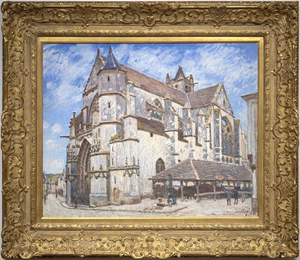
Between Île-de-France and Burgundy and on the edge of the Fontainebleau Forest lies the medieval village of Moret-sur-Loing, established in the 12th century. When Alfred Sisley described its character to Monet in a letter dated 31 August 1881 as “a chocolate-box landscape…” he meant it as a memento of enticement; that its keep, the ramparts, the church, the fortified gates, and the ornate facades nestled along the river were, for a painter, a setting of unmatched charm. An ancient church, always the most striking townscape feature along the Seine Valley, would be a presence in Sisley’s townscape views as it was for Corot, and for Monet at Vétheuil. But unlike Monet whose thirty views of Rouen Cathedral were executed so he could trace the play of light and shadow across the cathedral façade and capture the ephemeral nature of moment-to-moment changes of light and atmosphere, Sisley set out to affirm the permanent nature of the church of Notre-Dame at Moret-sur-Loing.  Monet’s sole concern was air and light, and Sisley’s appears to be an homage keepsake. The painting exudes respect for the original architects and builders of a structure so impregnable and resolute, it stood then as it did in those medieval times, and which for us, stands today, as it will, for time immemorial.
<br>
<br>Nevertheless, Sisley strived to show the changing appearance of the motif through a series of atmospheric changes. He gave the works titles such as “In Sunshine”, “Under Frost”, and “In Rain” and exhibited them as a group at the Salon du Champ-de-Mars in 1894, factors that suggest he thought of them as serial interpretations. Nevertheless, unlike Monet’s work, l’église de Moret, le Soir reveals that Sisley chose to display the motif within a spatial context that accentuates its compositional attributes — the plunging perspective of the narrow street at left, the strong diagonal recession of the building lines as a counterbalance to the right, and the imposing weight of the stony building above the line of sight.
FEATURED
ALFRED SISLEY
L'Église de Moret, le Soir
1894
31 1/4 x 39 1/2 in.
oil on canvas

WILLEM DE KOONING - Woman in a Rowboat - oil on paper laid on masonite - 47 1/2 x 36 1/4 in.
FEATURED
WILLEM DE KOONING
Woman in a Rowboat
1964
47 1/2 x 36 1/4 in.
oil on paper laid on masonite

During the early 1870s, Winslow Homer frequently painted scenes of country living near a small farm hamlet renowned for generations for its remarkable stands of wheat, situated between the Hudson River and the Catskills in New York state. Today Hurley is far more famous for inspiring one of Homer’s greatest works, Snap the Whip painted the summer of 1872. Among the many other paintings inspired by the region, Girl Standing in the Wheatfield is rich in sentiment, but not over sentimentalized. It directly relates to an 1866 study painted in France entitled, In the Wheatfields, and another, painted the following year after he returned to America. But Homer would have undoubtedly been most proud of this one. It is a portrait, a costume study, a genre painting in the great tradition of European pastoral painting, and a dramatically backlit, atmospheric tour de force steeped in the quickly fading gloaming hour light buoyed with lambent, flowery notes and wheat spike touches. In 1874, Homer sent four paintings to the National Academy of Design exhibition. One was titled, “Girl”. Might it not be this one?
FEATURED
WINSLOW HOMER
In the Wheatfield (Girl Standing in a Wheat Field)
1873
21 3/4 x 13 1/2 in.
oil on canvas

<div>When forty rural Sacramento Delta landscapes by Wayne Thiebaud were unveiled at a San Francisco gallery opening in November 1997, attendees were amazed by paintings they never anticipated. This new frontier betrayed neither Thiebaud’s mastery of confectionary-shop colors nor his impeccable eye for formal relationships. Rather, his admirers were shocked to learn that all but seven of these forty interpretations had been completed in just two years. As his son Paul recalled, “the refinements of my father’s artistic process were ever changing in a chameleon-like frenzy.” The new direction had proved an exhilarating experience, each painting an affirmation of Wayne Thiebaud’s impassioned response to the fields and levees of the local environment he dearly loved.   </div>
<br>
<br><div> </div>
<br>
<br><div>Viewed from the perspective of a bird or a plane, "The Riverhouse" is an agrarian tapestry conceived with a kaleidoscopic range of shapes and simple forms; fields striped with furrows or striated fans, deliriously colored parallelograms and trapezoids, an orchard garnished pizza-shaped wedge, and a boldly limned river, the lifeline of a thirsty California central valley largely dependent upon transported water. "The Riverhouse" is a painting that ‘moves’ between seamlessly shifting planes of aerial mapping that recalls Richard Diebenkorn’s stroke of insight when he took his first commercial flight the spring of 1951, and those partitions engaging a more standard vanishing point perspective. Thiebaud explained his process as “orchestrating with as much variety and tempo as I can.” Brightly lit with a fauve-like intensity, "The Riverhouse" is a heady concoction of vibrant pigment and rich impasto, one that recalls his indebtedness to Pierre Bonnard whose color Thiebaud referred to as “a bucket full of hot coals and ice cubes.” Among his many other influences, the insertion of objects — often tiny — that defy a rational sense of scale that reflects his interest in Chinese landscape painting.  As always, his mastery as a painter recalls his titular pies and cakes with their bewitching rainbow-like halos and side-by-side colors of equal intensity but differing in hues to create the vibratory effect of an aura, what Thiebaud explained “denotes an attempt to develop as much energy and light and visual power as you can.” </div>
<br>
<br><div> </div>
<br>
<br><div>Thiebaud’s Sacramento Delta landscapes are an integral and important part of his oeuvre. Paintings such as "The Riverhouse" rival the best abstract art of the twentieth century. His good friend, Willem de Kooning thought so, too.</div>
WAYNE THIEBAUD
The Riverhouse
2001/2005
18 x 35 3/4 in.
oil on canvas

<div><font face=Lato size=3 color=black><em>Booksellers by the Seine</em> (1888) emerges from a pivotal moment in Childe Hassam’s early career, created during his period of study in Paris when he was absorbing the influence of the French Impressionists while already demonstrating the skill of an accomplished academic painter. In this finely observed scene along the banks of the Seine, Hassam turns his attention to everyday urban life, depicting Parisians as they browse the open air bookstalls that have lined the river for generations.</font></div>
<br>
<br><div> </div>
<br>
<br><div><font face=Lato size=3 color=black>The painting reflects Hassam’s gift for portraying people interacting naturally with their surroundings, a hallmark of his finest works. Here he captures not only the activity of the booksellers but also the shifting atmosphere of the city itself, conveyed through soft dabs of paint that suggest autumn leaves floating gently through the air and settling along the foreground. This delicate blending of human presence, weather, and light reveals Hassam’s deep interest in the transient beauty of urban life and marks <em>Booksellers by the Seine</em> as an evocative example from an essential period in his artistic development.</font></div>
CHILDE HASSAM
Booksellers by the Seine
1888
28 1/2 x 19 1/4 in.
oil on canvas

<div><font face=Lato size=3 color="#191919">As the idea of using drawings, whether in pencil or pastel to prepare a painting was at odds with Monet’s publicised creative process, he tended to downplay its importance in his work. However, after his death eight folios containing over four hundred drawings came to light as well as many pastels. This convenient and lightweight medium allowed him to experiment with composition and colour and develop ideas for his oil paintings at speed. He also used pastel to produce finished pictures, as in this example.</font></div>
<br>
<br><div><font face=Lato size=3 color="#191919"> </font></div>
<br>
<br><div><font face=Lato size=3 color="#191919">During the 1880s Monet returned to the Normandy coast. He found inspiration in the sparkling light and famous limestone cliffs, as had Delacroix and Courbet. As well as working directly in oils, he followed Boudin’s example and used black chalk and pastel to study the effects of light and colour on the sky, sea and land.</font></div>
<br>
<br><div><font face=Lato size=3 color="#191919"> </font></div>
<br>
<br><div><font face=Lato size=3 color="#191919">In this seascape at Etretat, twenty miles round the coast to the north of Le Havre, Monet has chosen an unusual composition, dividing the landscape down the centre with the vertiginous cliffs; the left half of the picture composed of earthy greens and browns, the right half a sun dappled sea that dissolves into the sky, the horizon only suggested by the lightest touch of charcoal. This picture has a marked difference in atmosphere to another pastel of the nearby Porte d’Aval, dateable to the same period, whose late afternoon sky shows the range of expression that could be achieved with pastel. By the summer of 1885 the year he made this pastel Monet had largely abandoned urban subjects, and was more drawn towards natural phenomena. He painted many views along the coast under different light conditions. As noted in the catalogue raisonné on Monet, this pastel is not a preparatory study for an oil painting, but a wholly original composition. It demonstrates how well the painter understood and enjoyed the versatility of the medium when trying to capture such variable weather.</font></div>
CLAUDE MONET
Étretat, le Cap d’Antifer
c. 1885
10 1/2 x 13 3/8 in.
pastel on paper mounted on board

<div>Pierre Bonnard’s <em>La robe de chambre rouge (Marthe Bonnard)</em> (1912) is a richly intimate portrait of the artist’s lifelong muse and wife, Marthe de Meligny, painted at a moment when Bonnard was redefining modern interior painting through color, memory, and psychological nuance. Seated and absorbed in a private moment, Marthe is enveloped by a saturated red ground that presses close to the picture plane, dissolving traditional depth in favor of chromatic intensity. Her patterned robe and softly modeled face emerge through Bonnard’s layered brushwork, where color functions less as description than as emotional atmosphere. </div>
<br>
<br><div> </div>
<br>
<br><div>Painted in 1912, the work was exhibited extensively from the year of its creation, appearing in seven exhibitions across Paris, Rotterdam, and Munich, signaling its immediate recognition within Bonnard’s circle and the broader European avant-garde. The painting also boasts a distinguished provenance, having passed through the collections of notable French Jewish collector Alphonse Kahn; Eugène Blot, the influential gallerist, collector, and sculpture castor; and Jacques Dupont, the celebrated Olympic cyclist. </div>
<br>
<br><div> </div>
<br>
<br><div><em>La robe de chambre rouge</em> is published seven times, including Bonnard’s 1968 catalogue raisonné, where it is listed as no. 674. The artist’s portraits of Marthe occupy a central place in his oeuvre. Closely related examples are held in the permanent collections of major institutions such as the Tate, the Museum of Modern Art, the Guggenheim, and The Metropolitan Museum of Art, underscoring the enduring significance of these deeply personal yet formally radical compositions. </div>
FEATURED
PIERRE BONNARD
La robe de chambre rouge (Marthe Bonnard)
1912
21 x 27 1/4 in.
oil on canvas

<div><font face=Lato size=3>Camille Pissarro’s La Briqueterie Delafolie à Éragny (1884) offers a vivid rural scene from Éragny. The painting has never been to auction, instead gracing numerous exhibitions in Zurich, Paris, Brussels, Warsaw, and Santa Barbara since its creation. Documented as no. 776 in volume III of the catalogue raisonné by Joachim Pissarro and Claire Durand-Ruel Snollaerts (illustrated p. 514), it stands as a testament to Pissarro’s Impressionist legacy. </font></div>
<br>
<br><div><font face=Lato size=3> </font></div>
<br>
<br><div><font face=Lato size=3>The foreground features a polychrome meadow. The staccato green, ochre, and lilac brushstrokes in all directions convey the wind’s gentle movement through the field beneath a fleecy sky. In the distance, the Delafolie brickyard emerges, owned by Pissarro’s good friend and neighbor. The catalogue raisonné notes:  </font></div>
<br>
<br><div><font face=Lato size=3> </font></div>
<br>
<br><div><font face=Lato size=3>“The Delafolie brickyard at Éragny, refers to a local family-owned and operated brickyard. Mr. Delafolie wasn’t just a bricklayer—he was Pissarro’s neighbor and brewed his own cider. His cider was reportedly so good that Claude Monet once wrote to Pissarro asking who the merchant was and how he could order a keg for himself. Pissarro and Mr. Delafolie were good friends, and Pissarro often took advantage of Mr. Delafolie’s regular deliveries to Paris and Gisors to ship his paintings along with the bricks.”  </font></div>
<br>
<br><div><font face=Lato size=3> </font></div>
<br>
<br><div><font face=Lato size=3>Similar works reside in the Musée d’Orsay, the Walters Art Museum, and the Birmingham Museum of Art. This painting offers collectors a rare, well-traveled piece, embodying Pissarro’s intimate connection to Éragny’s landscape and community. </font></div>
CAMILLE PISSARRO
La Briqueterie Delafolie à Éragny
1884
18 1/4 x 21 7/8 in.
oil on canvas

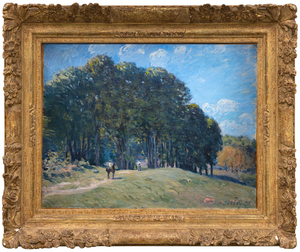
<div>Alfred Sisley’s Cavalier en lisière de forêt (Horseman on the Edge of the Forest), from 1875, is a luminous painting depicting a tranquil road near Marly-le-Roi, where Sisley found creative renewal after moving from Paris’s Batignolles quarter. This work, included in the 2021 catalogue raisonné of the work of Alfred Sisley prepared by Francois Daulte with Galerie Brame & Lorenceau and the Comité Alfred Sisley as no.196, showcases his unrivaled commitment to plein-air painting, even compared to Impressionist peers like Monet and Pissarro. Likely executed entirely outdoors, it captures the immediacy of a summer morning with feathery brushstrokes of muted greens, ochres, and blues, rendering a path winding into a forest, a lone horseman, and two figures—one with a parasol. </div>
<br>
<br><div> </div>
<br>
<br><div>Sisley’s move to Marly-le-Roi, driven by a love for greenery and the need to support his young family amid financial strain post-Franco-Prussian War, shaped this work. Painted after the 1874 Impressionist exhibition’s disappointing sales, it reflects resilience. The diffused light and geometric composition—path and trees anchoring a vast sky—evoke the region’s gentle haze. Camille Pissarro, a close colleague, hailed Sisley as “a great and beautiful artist, in my opinion he is a master equal to the greatest” (Pissarro, quoted in C. Lloyd, ‘Alfred Sisley and the Purity of Vision’, pp. 5-33, M. Stevens (ed.), Alfred Sisley, exh. cat., New Haven and London, 1992, p. 8). The 2021 Brame and Lorenceau catalogue notes 360 of Sisley’s 1,013 oil paintings reside in museums, affirming his legacy. </div>
<br>
<br><div> </div>
<br>
<br><div>This concise yet evocative piece offers collectors a rare glimpse into Sisley’s mastery, blending nature’s beauty with Impressionist innovation. </div>
ALFRED SISLEY
Cavalier en lisière de forêt
1875
19 1/4 x 25 3/4 in.
oil on canvas

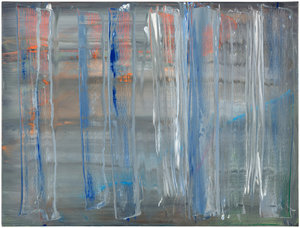
<div><font face=Lato size=3>Widely recognized as one of the most consequential artists of our time, Gerhard Richters career now rivals that of Picasso's in terms of productivity and genius. The multi-faceted subject matter, ranging from slightly out-of-focus photographic oil paintings to Kelly-esque grid paintings to his "squeegee" works, Richter never settles for repeating the same thought- but is constantly evolving his vision. Richter has been honored by significant retrospective exhibitions, including the pivotal 2002 show,  "Gerhard Richter: Forty Years of Painting," at the Museum of Modern Art, New York.    "Abstraktes Bild 758-2" (1992) comes from a purely abstract period in Richter's work- where the message is conveyed using a truly physical painting style, where applied paint layers are distorted with a wooden "Squeegee" tool. Essentially, Richter is sculpting the layers of paint, revealing the underlayers and their unique color combinations; there is a degree of "art by chance". If the painting does not work, Richter will move on- a method pioneered by Jackson Pollock decades earlier.    Richter is included in prominent museums and collections worldwide, including the Tate, London, The Museum of Modern Art, New York, and the San Francisco Museum of Modern Art, among many others.</font></div>
FEATURED
GERHARD RICHTER
Abstraktes Bild 758-2
1992
24 1/2 x 32 1/4 in.
oil on canvas

<div><font face=Lato size=3 color=black>A rare and important painting by Giulio Cesare Procaccini depicting the legendary Judith Beheading Holofernes—a subject that has captivated artists from Caravaggio and Artemisia Gentileschi to Kehinde Wiley and Robert Longo. The dramatic biblical scene, rendered with striking chiaroscuro, exemplifies Procaccini’s mastery of light and emotion and his engagement with one of art history’s most enduring themes of justice and triumph.</font></div>
<br>
<br><div><font face=Lato size=3 color=black> </font></div>
<br>
<br><div><font face=Lato size=3 color=black>This work holds exceptional provenance, having been commissioned by Giovanni Carlo Doria, one of Genoa’s most prominent collectors whose holdings included works by Leonardo da Vinci, Titian, and Van Dyck, remaining in the Doria family collection for approximately 300 years. It is recorded in the artist’s catalogue raisonné and has an extensive literature history.</font></div>
<br>
<br><div><font face=Lato size=3 color=black> </font></div>
<br>
<br><div><font face=Lato size=3 color=black>Comparable compositions by Procaccini appear in major museum collections such as the National Gallery of Art, Washington, D.C., and the Hermitage Museum, Saint Petersburg.  This painting represents a rare opportunity to acquire a museum-caliber example of the artist’s work, distinguished by both its art historical significance and exceptional provenance.</font></div>
<br>
<br><div><font color=black> </font></div>
FEATURED
GIULIO CESARE PROCACCINI
Judith with the Head of Holofernes
52 x 38 3/4 in.
oil on canvas

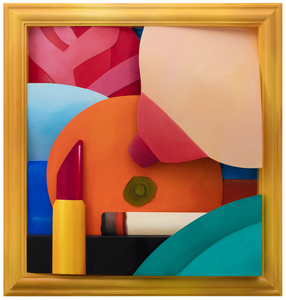
Tom Wesselmann was a leader of the Pop Art movement. He is best remembered for large-scale works, including his Great American Nude series, in which Wesselmann combined sensual imagery with everyday objects depicted in bold and vibrant colors. As he developed in his practice, Wesselmann grew beyond the traditional canvas format and began creating shaped canvases and aluminum cut-outs that often functioned as sculptural drawings. Continuing his interest in playing with scale, Wesselmann began focusing more closely on the body parts that make up his nudes. He created his Mouth series and his Bedroom series in which particular elements, rather than the entire sitter, become the focus.
<br> 
<br>Bedroom Breast (2004) combines these techniques, using vivid hues painted on cut-out aluminum. The work was a special commission for a private collector's residence, and the idea of a bedroom breast piece in oil on 3-D cut-out aluminum was one Wesselmann had been working with for many years prior to this work's creation. The current owner of the piece believed in Wesselmann's vision and loved the idea of bringing the subject to his home.
<br>
<br>It's one of, if not the last, piece Wesselmann completed before he passed away. The present work is the only piece of its kind - there has never been an oil on aluminum in 3D at this scale or of this iconography.  
TOM WESSELMANN
Bedroom Breast
2004
80 x 76 x 10 in.
oil on cut-out aluminum

<div><font face=Lato size=3 color=black><em>The Isle of Shoals</em> reflects one of the most personal and sustained subjects in the career of Childe Hassam, remaining in the artists own collection for twenty years. Hassam first visited the Isles of Shoals in 1884, returning regularly until 1915, and the rugged beauty of this small island group off the Gulf of Maine became a central source of inspiration throughout his life. The shifting light, scattered wildflowers, and crystalline waters offered a constant supply of visual poetry, and the islands became the setting for many of his most luminous and celebrated landscapes and coastal scenes.</font></div>
<br>
<br><div> </div>
<br>
<br><div><font face=Lato size=3 color=black>Similar views of the Isles of Shoals now reside in the permanent collections of the Metropolitan Museum of Art, the National Gallery of Art, and the Dallas Museum of Art, underscoring the importance of the subject within Hassam’s oeuvre. The significance of this body of work was further affirmed in 2016 when the Peabody Essex Museum organized a major exhibition devoted entirely to his Shoals paintings.</font></div>
<br>
<br><div> </div>
<br>
<br><div><font face=Lato size=3 color=black>In <em>The Isle of Shoals</em>, Hassam captures the clear northern light and the quiet splendor of the rocky coast, presenting a scene that reflects both the serenity of the islands and the artists deep connection to them.</font></div>
FEATURED
CHILDE HASSAM
The Isle of Shoals
1908
25 x 30 in.
oil on cradled wooden panel

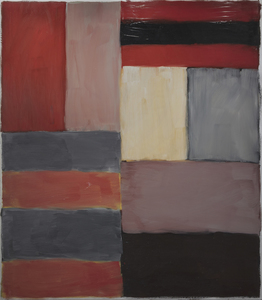
The frame of reference for Irish American Sean Scully’s signature blocks and stripes is vast. From Malevich’s central premise that geometry can provide the means for universal understanding to Rothko’s impassioned approach to color and rendering of the dramatic sublime, Scully learned how to condense the splendor of the natural world into simple modes of color, light, and composition. Born in Dublin in 1945 and London-raised, Scully was well-schooled in figurative drawing when he decided to catch the spirit of his lodestar, Henri Matisse, by visiting Morocco in 1969. He was captivated by the dazzling tessellated mosaics and richly dyed fabrics and began to paint grids and stipes of color. Subsequent adventures provided further inspiration as the play of intense light on the reflective surfaces of Mayan ruins and the ancient slabs of stone at Stonehenge brought the sensation of light, space, and geometric movement to Scully’s paintings. The ability to trace the impact of Scully’s travels throughout his paintings reaffirms the value of abstract art as a touchstone for real-life experience.
<br>
<br>
<br>Painted in rich, deep hues and layered, nuanced surfaces, Grey Red is both poetic and full of muscular formalism. Scully appropriately refers to these elemental forms as ‘bricks,’ suggesting the formal calculations of an architect. As he explained, “these relationships that I see in the street doorways, in windows between buildings, and in the traces of structures that were once full of life, I take for my work. I use these colors and forms and put them together in a way that perhaps reminds you of something, though you’re not sure of that” (David Carrier, Sean Scully, 2004, pg. 98). His approach is organic, less formulaic; intuitive painter’s choices are layering one color upon another so that contrasting hues and colors vibrate with subliminal energy. Diebenkorn comes to mind in his pursuit of radiant light. But here, the radiant bands of terracotta red, gray, taupe, and black of Grey Red resonate with deep, smoldering energy and evoke far more affecting passion than you would think it could impart. As his good friend, Bono wrote, “Sean approaches the canvas like a kickboxer, a plasterer, a builder. The quality of painting screams of a life being lived.”
FEATURED
SEAN SCULLY
Grey Red
2012
85 x 75 in.
oil on aluminum

<div><font face=Lato size=3>Painted during John Singer Sargent's trip to the Austrian Tyrol in the summer of 1914, this work captures a moment of profound historical tension as Austria declared war on Serbia that July, placing Sargent at the threshold of the First World War. The painting offers a strikingly intimate and unexpected view of the Alpine landscape, framed from within a sheep pen with the mountain itself largely cropped from sight. This choice of vantage point shifts the viewers focus to the meeting point of the valley and the rising slope, where deep verdant greens anchor the composition and an overcast sky suggests a subtle sense of unease beyond the tranquil pastoral foreground.</font></div>
<br>
<br><div> </div>
<br>
<br><div><font face=Lato size=3>The work is included in the Sargent catalogue raisonne by Richard Ormond and Elaine Kilmurray, confirming its secure place within the artists documented production. Sargent created several related works during his 1914 stay in the Tyrol across both oil and watercolor, including <em>Tyrolese Interior </em>at The Metropolitan Museum of Art, <em>Woodsheds Tyrol</em> at the Art Institute of Chicago, and <em>Trout Stream</em> <em>in the Tyrol</em> at the de Young Museum. Together these works demonstrate Sargent's sustained engagement with the region and its distinctive light, atmosphere, and rural architecture during this pivotal year.</font></div>
<br>
<br><div> </div>
<br>
<br><div><font face=Lato size=3>This painting also carries distinguished provenance, having been previously held in the collection of Henry Clay Frick, the American industrialist and founder of the Frick Collection, before being given as a gift to his friend and lawyer Louis Cass Ledyard, who also served as counsel to J P Morgan. Its rarity within Sargents mature Tyrolean subjects is further underscored by the small number of comparable works that have reached the market, with only one closely related painting from this period, A Tyrolese Crucifix from 1915, having appeared at auction in recent decades.</font></div>
<br>
<br><div> </div>
<br>
<br><div><font face=Lato size=3>Sargents work continues to receive major institutional recognition, including the forthcoming exhibition Sargent Dazzling Paris at the Musee d Orsay in 2025 to 2026, reaffirming the ongoing relevance of his mature European landscapes within the broader narrative of early twentieth century art.</font></div>
FEATURED
JOHN SINGER SARGENT
A Mountain Sheepfold in the Tyrol
1914-15
28 1/4 x 36 in.
oil on canvas

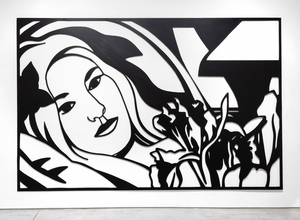
Tom Wesselmann will undoubtedly be remembered for associating his erotic themes with the colors of the American flag. But Wesselmann had considerable gifts as a draftsman, and the line was his principal preoccupation, first as a cartoonist and later as an ardent admirer of Matisse. That he also pioneered a method of turning drawings into laser-cut steel wall reliefs proved a revelation. He began to focus ever more on drawing for the sake of drawing, enchanted that the new medium could be lifted and held: “It really is like being able to pick up a delicate line drawing from the paper.”
<br>
<br>The Steel Drawings caused both excitement and confusion in the art world. After acquiring one of the ground-breaking works in 1985, the Whitney Museum of American Art wrote Wesselmann wondering if it should be cataloged as a drawing or a sculpture. The work had caused such a stir that when Eric Fischl visited Wesselmann at his studio and saw steel-cut works for the first time, he remembered feeling jealous. He wanted to try it but dared not. It was clear: ‘Tom owned the technique completely.’
<br>
<br>Wesselmann owed much of that technique to his year-long collaboration with metalwork fabricator Alfred Lippincott. Together, in 1984 they honed a method for cutting the steel with a laser that provided the precision he needed to show the spontaneity of his sketches. Wesselmann called it ‘the best year of my life’, elated at the results that he never fully achieved with aluminum that required each shape be hand-cut.  “I anticipated how exciting it would be for me to get a drawing back in steel. I could hold it in my hands. I could pick it up by the lines…it was so exciting…a kind of near ecstasy, anyway, but there’s really been something about the new work that grabbed me.”
<br>
<br>Bedroom Brunette with Irises is a Steel Drawing masterwork that despite its uber-generous scale, utilizes tight cropping to provide an unimposing intimacy while maintaining a free and spontaneous quality. The figure’s outstretched arms and limbs and body intertwine with the petals and the interior elements providing a flowing investigative foray of black lines and white ‘drop out’ shapes provided by the wall. It recalls Matisse and any number of his reclining odalisque paintings. Wesselmann often tested monochromatic values to discover the extent to which color would transform his hybrid objects into newly developed Steel Drawing works and, in this case, continued with a color steel-cut version of the composition Bedroom Blonde with Irises (1987) and later still, in 1993 with a large-scale drawing in charcoal and pastel on paper.
FEATURED
TOM WESSELMANN
Bedroom Brunette with Irises
1988/2004
105 3/4 x 164 5/8 in.
oil on cut-out aluminum

<div><font face=Lato size=3 color=black>Irving Norman conceived and created <em>The Human Condition</em> at a time when he must have reflected deeply on the totality of his life. Given its grand scale and cinematic treatment, it impresses as a profound culmination of his artistic journey, synthesizing decades of themes, insights, and experiences into a single monumental work. A man of great humility and an artist of uncommon skill, he translated a horrendous war experience into impactful allegories of unforgettable, often visceral imagery. He worked in solitude with relentless forbearance in a veritable vacuum without fame or financial security. Looking to the past, acutely aware of present trends, he knew, given the human predicament, he was forecasting the future. As one New York Times reviewer mused in 2008, "In light of current circumstances, Mr. Norman's dystopian vision may strike some…as eerily pertinent," an observation that recalled recent events.<br>
<br></font></div>
<br>
<br><div><font face=Lato size=3 color=black>Irving Norman's figures, manipulated by their environment and physical space, are of a style that exaggerates the malleability of the human form to underscore their vulnerability and subjugation. This literal and symbolic elasticity suggests that these figures are stretched, compressed, or twisted by the forces of their environment, emphasizing their lack of autonomy and the oppressive systems that govern their existence. While these figures reflect vulnerability, Norman's structural choice in <em>The Human Condition</em> creates a stark juxtaposition that shifts attention toward the central tableau. A commanding female figure, rising above the calamitous failures and atrocities of the past, is joined by a man, forming a symbolic "couple,” suggesting the unity and shared responsibility of a new vision. Their hands, magnified and upturned, present these children as a vision offering hope and renewal for the future. The gesture, combined with the futuristic clothing of the diminutive figures, reinforces the idea of an alternative path—a brighter, forward-looking humanity. The central tableau acts as a metaphorical offering, inviting the viewer to consider a future untouched by the weight of darkness from which these figures emerge.<br>
<br></font></div>
<br>
<br><div><font face=Lato size=3 color=black>Here, Norman underscores a hopeful, if not optimistic, vision for generations ahead. The structural decision suggests a deliberate shift in focus: the darker scenes relegated to the sides represent the burdens, past and present. At the same time, the central figures embody the potential for a future shaped by resilience and renewal. This juxtaposition distinguishes <em>The Human Condition</em> as a reflection of Norman's later years, where a tempered hope emerges to claim the high ground over the war-mongering, abject corruption, frantic pleasure-seeking, and the dehumanizing effects of modern society.<br>
<br></font></div>
<br>
<br><div><font face=Lato size=3 color=black>Throughout his long career, Norman stood tall in his convictions; he turned, faced the large, empty canvases, and designed and painted complex, densely populated scenes. As for recognition, he rationalized the situation—fame or fortune risked the unsullied nature of an artist's quest. Ultimately, <em>The Human Condition</em> is a summation of Norman's life and work and a call to action, urging us to examine our complicity in the systems he so vividly depicted. Through meticulous craftsmanship and allegorical intensity, it is a museum-worthy masterwork that continues to resonate, its themes as pertinent today as they were when Norman painstakingly brought his vision to life.</font></div>
IRVING NORMAN
The Human Condition
1980-1981
120 x 182 in.
oil on canvas

<div><font face=Lato size=3 color="#191919">Rendered with the soft luminosity and intimate charm that define Pierre-Auguste Renoir’s late portraiture, Buste de femme au corsage vert depicts Gabrielle Renard — the artist’s beloved model and cousin of his wife, Aline Charigot. Gabrielle was a central figure in Renoir’s domestic and artistic life for nearly two decades and appears in nearly 200 of his works, more than any other sitter. Her familiar presence inspired some of Renoir’s most tender portrayals of femininity and grace, as seen here in the delicate modeling of flesh tones and the gentle harmony of greens and rose hues.</font></div>
<br>
<br><div> </div>
<br>
<br><div><font face=Lato size=3 color="#191919">This painting carries distinguished provenance, first owned by the influential Berlin art dealer Paul Cassirer, a key promoter of French Impressionism and Post-Impressionism in Germany. The work is certified by the Wildenstein Plattner Institute and registered with the Art Loss Register, with a signed letter from Sotheby’s confirming inclusion in the forthcoming Renoir Catalogue Raisonné. Comparable examples of Gabrielle portraits are held in major museum collections, including The Metropolitan Museum of Art, Harvard Art Museums, and the Musée de l’Orangerie.</font></div>
<br>
<br><div> </div>
<br>
<br><div><font face=Lato size=3 color="#191919"><em>Buste de femme au corsage vert</em> exemplifies Renoir’s enduring devotion to beauty and the human form, rendered with a late-career refinement that bridges sensuality and serenity. It stands as an evocative example of the artist’s lifelong exploration of intimacy, and a rare opportunity to acquire a work linked to one of Impressionism’s most personal and storied muses.</font></div>
FEATURED
PIERRE-AUGUSTE RENOIR
Buste de femme au corsage vert
1908
18 3/8 x 13 in.
oil on canvas

ROBERT HENRI - Girl with Muff - oil on canvas - 57 1/4 x 38 1/4 in.
FEATURED
ROBERT HENRI
Girl with Muff
1912
57 1/4 x 38 1/4 in.
oil on canvas

<div><font face=Lato size=3 color=black>Olga de Amaral’s <em>Memento 7</em> exemplifies the Colombian artist’s mastery in transforming textile into a medium of profound sculptural and symbolic resonance. Woven from natural fibers and coated with gesso, metallic leaf, and pigments, the work shimmers between material solidity and optical flux. Its surface glints with gold, refracting light in rhythmic intervals that shift as the viewer moves, evoking both the permanence of memory and its fragility.</font></div>
<br>
<br><div> </div>
<br>
<br><div><font face=Lato size=3 color=black>The <em>Memento</em> series, from which this piece belongs, explores memory as a layered, luminous presence. By embedding gold leaf within the weave, de Amaral connects her practice to pre-Columbian traditions in which gold was not a mere material but a carrier of spiritual and cultural meaning. In <em>Memento 7</em>, geometric patterning and a richly textured surface create a sense of sacred tapestry, collapsing distinctions between painting, sculpture, and textile.</font></div>
<br>
<br><div> </div>
<br>
<br><div><font face=Lato size=3 color=black>De Amaral’s work has been celebrated internationally for expanding the language of fiber art into realms of architecture and abstraction. <em>Memento 7</em> resonates with major institutional holdings of her work, including the Museum of Modern Art (New York), the Metropolitan Museum of Art, the Art Institute of Chicago, and the Musée d’Art Moderne de Paris. Within these collections, her gilded weavings stand as both objects of rare material beauty and meditations on history, place, and the metaphysics of light.</font></div>
<br>
<br><div> </div>
<br>
<br><div><font face=Lato size=3 color=black><em>Memento 7</em> thus embodies the artist’s unique synthesis of ancestral craft and modern abstraction, offering a powerful reflection on memory, time, and transformation.</font></div>
FEATURED
OLGA DE AMARAL
Memento 7
2010
68 x 32 3/4 in.
linen, gesso, acrylic, and gold leaf

<div><font face=Lato size=3><em>Flowers Before the Sun</em>, a monumental 1989 oil on canvas by James Rosenquist, stands out as a pinnacle of his 1980s floral series, weaving vibrant botanical forms with faint human traces. A key figure of 1960s Pop Art, Rosenquist transitioned from his early commercial-driven works to a deeply personal style, a change reflected in this painting’s dazzling array of flowers in yellows and reds set against a swirling, cosmic backdrop of whites, purples, and oranges. Inspired by the move of his studio to Aripeka, Florida, and the adoption of advanced color photocopier technology, the work fuses nature’s splendor with abstract flair in a fresh approach. </font></div>
<br>
<br><div> </div>
<br>
<br><div><font face=Lato size=3>The striated layers of hyper-detailed imagery and profusion of warm colors evoke a radiant, otherworldly sun, while subtle human hints add intimacy, reflecting his distinctive blend of advertising heritage with personal vision. Crafted during a time of technological and environmental influence, it captures the vibrancy of Florida’s tropical flora and affirms Rosenquist’s enduring legacy with dramatic brilliance. </font></div>
FEATURED
JAMES ROSENQUIST
Flowers Before the Sun
1989
84 x 144 in.
oil on canvas

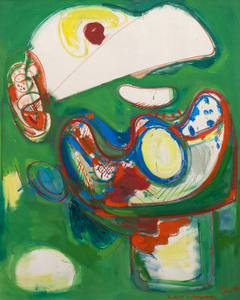
<div><font face=Lato size=3 color=black>Hans Hofmann's <em>Baal</em> channels the charged energy of its evocative title, rooted in ancient Semitic tradition. The name refers to a lord or master but also carries associations with primal forces of nature, chaos, and creation. Hofmann's work reflects this duality, blending structured design with the untamed vitality of gestural abstraction to create a composition oscillating between entropy and order.</font></div>
<br>
<br><div> </div>
<br>
<br><div><font face=Lato size=3 color=black>Painted at age 65, <em>Baal</em> also showcases Hofmann's willingness to revisit earlier disciplines while addressing the challenges of mid-century abstraction. Its vibrant palette and bold use of complementary colors, particularly the juxtaposition of red and green, heightens the painting's dynamism. His muscular brushwork also reflects his lifelong experimentation with the tension between form and freedom; undulating lines and biomorphic forms evoke the surrealist influence of Miró and the spiritual resonance of Kandinsky's gestural abstractions. Like these predecessors, Hofmann sought to translate "inner necessity" into visual expression, guided by his fertile imagination. Yet the planal elements and curvilinear shapes of <em>Baal</em> also reflect the influence of improvisational painting, a hallmark of Abstract Expressionism as practiced by contemporaries like Arshile Gorky, among others. It is a composition that teems with movement and energy, suggesting a cosmos in flux—chaotic yet deliberate.</font></div>
<br>
<br><div> </div>
<br>
<br><div><font face=Lato size=3 color=black>Exhibited the same year at Betty Parsons Gallery in New York, <em>Baal</em> signals Hofmann's evolution as a master and innovator. With its vivid dynamism and symbolic title, the painting epitomizes Hofmann's ability to infuse abstraction with elemental power, crafting a deeply personal exploration of form and color.</font></div>
FEATURED
HANS HOFMANN
Baal
1947
59 3/8 x 47 1/4 in.
oil on canvas

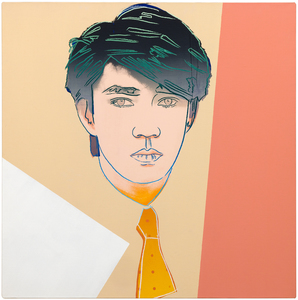
<div><font color=black>Andy Warhol’s “<em>Ryuichi Sakamoto”</em> from 1983, a vibrant 40 by 40 inch canvas, captures the Japanese composer and electronic-music pioneer in the artist’s signature Pop-Art idiom, transforming a celebrity photograph into a study of color, repetition, and glamour. </font></div>
<br>
<br><div> </div>
<br>
<br><div><font color=black>The composition highlights Sakamoto’s stylized face, rendered with precise silkscreen outlines. His dark, textured hair is set against a peach panel, intersected by a white triangular section. Warhol enhanced the silkscreen process with hand-drawn touches that heighten Sakamoto’s facial features. Blending mechanical and manual techniques gives the portrait both the polish of a silkscreen print and the tactility of a painting.</font></div>
<br>
<br><div><font color=black>By the 1980s, Ryuichi Sakamoto was celebrated worldwide as co-founder of Yellow Magic Orchestra and for his pioneering solo work in electronic, orchestral, and film-score composition. By choosing one of the few non-Western, male subjects in Warhol’s roster, he acknowledged Sakamoto’s global influence and beauty, making this portrait especially rare in the artist’s oeuvre. Part of a broader series of celebrity portraits alongside icons like Mick Jagger, Debbie Harry, and Prince, “<em>Ryuichi Sakamoto”</em> exemplifies Warhol’s fascination with fame as commodity, screen-printing public personas to interrogate the intersection of art, commerce, and media.</font></div>
<br>
<br><div> </div>
<br>
<br><div><font color=black>A lithographic version of this painting is held by the Tate London and the National Galleries of Scotland, affirming its cultural significance.</font></div>
<br>
<br><div> </div>
<br>
<br><div><font color=black>This work stands as both a vibrant homage to one of music’s most innovative figures and a testament to Warhol’s enduring exploration of image-making. Its bold palette and iconic subject continue to resonate in contemporary collections seeking a nexus of music history, Pop-Art heritage, and cross-cultural dialogue.</font></div>
FEATURED
ANDY WARHOL
Ryuichi Sakamoto
1983
39 3/4 x 39 3/4 x 1 1/2 in.
acrylic and silkscreen on canvas

<div><font face=Lato size=3 color=black>Lynne Mapp Drexler’s <em>Spring Sun</em> (1971) exemplifies the vibrant, lyrical abstraction that has brought her renewed recognition in recent years. Composed of concentric circles, cascading brushstrokes, and radiant hues of yellow, orange, and red, the canvas pulses with the rhythm of light and season. Drexler’s painterly vocabulary—layering gestural strokes over pointillist clusters—creates a dynamic surface that evokes both natural phenomena and musical structure, reflecting her lifelong love of symphonic composition.</font></div>
<br>
<br><div><font face=Lato size=3> </font></div>
<br>
<br><div><font face=Lato size=3 color=black>Painted in 1971, <em>Spring Sun</em> belongs to an important moment in Drexler’s career when she was synthesizing her studies under Hans Hofmann and Robert Motherwell into a personal visual language rooted in color and pattern. The immersive composition suggests not only the brilliance of spring sunlight but also the expressive intensity with which Drexler approached abstraction.</font></div>
<br>
<br><div><font face=Lato size=3> </font></div>
<br>
<br><div><font face=Lato size=3 color=black>Her contributions have been increasingly recognized by major institutions. The Portland Museum of Art presented a landmark retrospective, <em>Lynne Drexler: Color Notes</em> (2022–2023), and her work has also been exhibited at MoMA PS1 and the Parrish Art Museum. <em>Spring Sun</em> demonstrates why Drexler is now regarded as a vital figure within the second generation of Abstract Expressionists, whose bold use of color and structure continues to resonate with contemporary audiences.</font></div>
FEATURED
LYNNE MAPP DREXLER
Spring Sun
1971
35 5/8 x 39 3/4 x 1 in.
oil on canvas

<div>"Planting (Spring Plowing)", a vibrant watercolor and graphite on paper by Thomas Hart Benton, circa 1939-40, embodies the artist’s signature Regionalist style. The work depicts a rural scene where two figures toil in a field, one guiding a plow pulled by a donkey, the other carrying a bucket, sowing seeds under a bright, cloud-streaked sky. The rolling, richly hued earth, painted in warm browns and oranges, contrasts with the lush green foliage and distant trees, while a small structure sits at the horizon, grounding the composition in everyday life. Benton’s dynamic lines and fluid brushwork capture the rhythm of labor and the vitality of spring, infusing the scene with a sense of movement and purpose. </div>
<br>
<br><div> </div>
<br>
<br><div>The reverse image of this artwork was transformed into a lithograph in 1939, with notable examples housed in prestigious museum collections including the Smithsonian American Art Museum, Nelson Atkins Museum of Art, Minneapolis Institute of Art, and the Chazen Museum of Art. This print adaptation underscores the piece’s cultural significance, reflecting Benton’s influence on American art during the Depression era and the resonance of this particular subject celebrating the resilience and harmony of its people with nature. Created with a keen eye for detail and a deep connection to the land, "Planting (Spring Plowing)" showcases Benton’s ability to blend realism with his hallmark muscular style. It is accompanied by two letters written by Thomas Hart Benton to Lon Ramsey, its original owner, and bears an inscription by the artist on the verso.  </div>
FEATURED
THOMAS HART BENTON
Planting (Spring Plowing)
c.1939-40
18 x 21 3/4 in.
watercolor and graphite on paper

ANDREW WYETH - Star Route - watercolor on paper - 21 1/4 x 29 in.
ANDREW WYETH
Star Route
1977
21 1/4 x 29 in.
watercolor on paper

<div><font face=Lato size=3 color=black>Paul Signac’s <em>Saint-Briac. D’une fenêtre</em> (1885) captures the quiet beauty of the Breton landscape at a pivotal moment in the artist’s evolution from Impressionism to Neo-Impressionism. Painted during one of his frequent stays in Saint-Briac-sur-Mer, a coastal village in Brittany, this work reflects Signac’s early fascination with the play of light, color, and atmosphere before his full embrace of </font><font
<br>face=HelveticaNeue size=3 color="#191919">Pointilist </font><font face=Lato
<br>size=3 color=black>technique. The composition, framed as if viewed from a window, balances structured geometry with painterly spontaneity, suggesting the artist’s growing concern with order and harmony in nature.</font></div>
<br>
<br><div> </div>
<br>
<br><div><font face=Lato size=3 color=black>The work once belonged to the French composer and conductor Jules Rivière and has been discussed in major art historical texts, including <em>Connaissance des Arts</em> (1956), Sophie Monneret’s <em>L’Impressionisme et son époque</em> (1980), and Françoise Cachin’s <em>Signac: Catalogue raisonné de l’oeuvre peint</em> (2000), where it is illustrated as entry no. 102. Comparable examples from the same Saint-Briac series are housed in the Metropolitan Museum of Art, the Art Institute of Chicago, and the Carnegie Museum of Art. Collectively, these works reveal Signac’s transition toward the structured luminosity that would soon define Neo-Impressionism and secure his place among the leading innovators of modern painting.</font></div>
FEATURED
PAUL SIGNAC
Saint-Briac. D'une fenetre
1885
25 1/2 x 18 1/8 in.
oil on canvas

<div><font face=Lato size=3 color=black>Hans Hofmann's <em>The Zoo</em> (1944) brims with playful energy, its abstract forms suggesting a whimsical exploration of animalistic shapes and gestures. Dominated by a vivid blue field punctuated by bold strokes of red, green, and yellow, the formal elements and composition provide a lively interplay of color. While the title invites the viewer to seek out zoo-like references, the forms are ambiguous yet evocative: sweeping red arcs might suggest the curve of a tail, while the triangular green shape evokes the profile of an enclosure or a cage. The painting captures not the literal essence of a zoo but the dynamism and movement one might associate with such a space.</font></div>
<br>
<br><div> </div>
<br>
<br><div><font face=Lato size=3 color=black>Heavily influenced by Surrealist automatism and the biomorphic forms of Joan Miró, the organic shapes and bold colors seem to pulse with life, blurring the boundary between abstraction and figuration. Yet, unlike Miró's delicate dreamscapes, Hofmann's brushwork carries a muscular energy, grounding the composition in his signature gestural style.</font></div>
<br>
<br><div><font face=Lato size=3 color=black><em>The Zoo</em> reflects Hofmann's ability to balance spontaneity with deliberate compositional choices. The result is a vibrant, joy-filled work that celebrates the world's visual complexity and the boundless creative freedom of abstraction during this pivotal phase of his career.</font></div>
HANS HOFMANN
The Zoo
1944
21 3/8 x 24 1/2 in.
oil on panel

<div><font face=Lato size=3 color=black>Any analysis of Hans Hofmann’s oeuvre is incomplete without considering his small landscapes, which occupied him between 1940 and 1944. These works capture a pivotal moment in his artistic evolution, transitioning from Matisse-inspired figurative still lifes, portraits, and interiors to the pure abstraction that would later define his career. “Landscape #108” exemplifies this shift. Its compressed composition and severe clustering of intense colors prefigure the artist’s mature works, channeling the same ferocious dynamism that is the hallmark of our appreciation for the artist. The Fauvist palette and electric strokes vibrate with energy, their interplay of light and dark creating a rhythmic tension that feels almost musical. While modest in scale, the painting’s boldness and dynamism hint at the daring risks Hofmann would later embrace in his larger abstractions. Rooted in Fauvism and resonant with Kandinsky’s early work, “Landscape #108” remains a robust testament to Hofmann’s evolving visual language during this transformative period.</font></div>
HANS HOFMANN
Landscape No. 108
1941
23 1/4 x 29 1/4 in.
oil on panel

<div><font face=Calibri size=3 color=black>Camille Claudel's life story reflects an era when societal constraints often dimmed the brilliance of women; their genius was viewed as a threat to the male-dominated world. Most introductions to Claudel are steeped in misleading biographical details related to her as Rodin's assistant, mistress, or lover, associations that diminish her achievements as a first-rate sculptor whose work borrows little from Rodin in style or subject matter. Despite these challenges, Claudel's legacy has endured, celebrated through exhibitions, biographies, and films since her rediscovery in 1982. </font></div>
<br>
<br><div> </div>
<br>
<br><div><font face=Calibri size=3 color=black><em>“La Vague (The Wave),”</em> a remarkable sculpture of three women frolicking joyfully, embodies Claudel's passion for art and connection to nature. The women, their hair unruly like the sea, are depicted in a moment of freedom and abandon, yet the looming wave hints at the inevitable sorrow to come—a metaphor for Claudel's life, shadowed by fate. This piece, initially shown in plaster and later cast in bronze with an onyx marble wave, draws direct inspiration from Hokusai's <em>“The Great Wave,”</em> reflecting the Parisian fascination with Japanese art at the time. While <em>“La Vague”</em> showcases Claudel's technical mastery and the influence of Japanese aesthetics, it also poignantly symbolizes her acceptance of the overpowering forces of nature and the tragic course her life would ultimately take. This bronze, cast in 1997, is one of only two not held in a museum, further emphasizing the rarity of and reverence for Claudel's work.</font></div>
FEATURED
CAMILLE CLAUDEL
La Vague (The Wave)
c. 1897 / posthumous cast 1997
24 1/4 x 19 x 24 in.
bronze

A major figure in both the Abstract Expressionist and American Figurative Expressionist movements of the 1940s and 1950s, Elaine de Kooning's prolific output defied singular categorization. Her versatile styles explored the spectrum of realism to abstraction, resulting in a career characterized by intense expression and artistic boundary-pushing. A striking example of de Kooning's explosive creativity is Untitled (Totem Pole), an extremely rare sculptural painting by the artist that showcases her command of color. 
<br>
<br>She created this piece around 1960, the same period as her well-known bullfight paintings. She left New York in 1957 to begin teaching at the University of New Mexico in Albuquerque, and from there would visit Ciudad Juárez, where she observed the bullfights that inspired her work. An avid traveler, de Kooning drew inspiration from various sources, resulting in a diverse and experimental body of work.
FEATURED
ELAINE DE KOONING
Untitled (Totem Pole)
c. 1960
97 x 12 3/8 x 12 3/8 in.
oil on canvas stretched over cardboard cylinders

<div><font face=Lato size=3 color=black>Kenneth Noland’s <em>Gray Reflection</em> (1978) comes from the late 1970s, when the artist was deeply engaged with shaped canvases and the refinement of surface and form. The cool slate ground is animated by faint tonal shifts and angled color bands that cut across the polygonal field, creating both balance and quiet momentum.<br>
<br></font></div>
<br>
<br><div><font face=Lato size=3 color=black>This period was far less prolific than his celebrated 1960s circle paintings, making works such as <em>Gray Reflection </em>comparatively rare. While not part of a named series, it resonates with other late-1970s explorations like <em>Burnt Beige </em>at the Cranbrook Art Museum.<br>
<br></font></div>
<br>
<br><div><font face=Lato size=3 color=black>Noland, a central figure of post-painterly abstraction alongside Morris Louis and Helen Frankenthaler, is represented in major museum collections including MoMA, Tate, and the National Gallery of Art.</font></div>
KENNETH NOLAND
Gray Reflection
1978
66 1/4 x 88 1/2 in.
acrylic on canvas

JIM DINE - Feet and Hands - painted bronze - 83 x 32 x 32 in.
JIM DINE
Feet and Hands
2018
83 x 32 x 32 in.
painted bronze

<div>Lynne Mapp Drexler’s "Sporadic Spring" (1963) exemplifies her dynamic approach to color and gesture during her revered 1960s period, a formative decade that has recently been celebrated in the major exhibition "Lynne Drexler: Color Notes" at the Farnsworth Art Museum (May 4, 2024 – January 12, 2025). The canvas is entirely covered in dense layers of short, repetitive brushstrokes rendered in vivid greens, reds, and oranges. These strokes coalesce into an array of circles, rhombuses, and rectangles, forming a “sporadic” yet remarkably harmonious mosaic that activates the entire surface of the painting. </div>
<br>
<br><div> </div>
<br>
<br><div>In this work, color takes precedence over form, with Drexler using chromatic intensity to create rhythm and structure. Her technique resonates with Hans Hofmann’s influential “push-pull” theory, in which color relationships generate spatial depth and tension without relying on traditional perspective. At the same time, the gestural vigor and improvisational quality of the brushwork reflect the influence of her teacher Robert Motherwell, who encouraged expressive freedom and emotional immediacy. </div>
<br>
<br><div> </div>
<br>
<br><div>"Sporadic Spring" captures Drexler’s synthesis of discipline and spontaneity, revealing how she forged a distinct voice within the New York School while anticipating the lyrical abstraction that would define her mature style. </div>
LYNNE MAPP DREXLER
Sporadic Spring
1963
40 x 29 1/2 in.
oil on canvas

<div><font face=Lato size=3 color=black>Known for his ability to blend traditional Japanese techniques with modern aesthetics, Hiroshi Senju's sublime depictions of bands of cascading veils of paint evoke sensations of tranquility and awe. Senju began exploring waterfall imagery in the early 1990s, pouring translucent pigment onto mulberry paper mounted on board, creating cascading movement. In this work, "<em>Waterfall," </em>he masterfully bonds ribbons of cascading water into two curtain-like ethereal panels. Senju's interest in synesthesia is undeniable. "<em>Waterfall</em>" conjures sound, smell, and feel sensations as much as the rushing water's appearance. In the present work, he placed these dynamic elements in a context that grounds the viewer's sense of place within the natural world. A wedge of blue in the upper left corner contrasts the otherwise monochromatic palette, providing a sky association bounded by a hillside or cliff (for which Senju is known). Additionally, as the cascading water descends, it reaches a destination expanse at the bottom of the picture plane, where the force of the water disperses into a fine mist at the point of contact, serving as a visual anchor. </font></div>
<br>
<br><div><font face=Lato size=3 color=black> </font></div>
<br>
<br><div><font face=Lato size=3 color=black>Senju's finesse is evident throughout. He uses mulberry paper, a traditional Japanese material known for its delicate texture and strength. The paper's natural fibers absorb pigments in ways that create subtle gradients and fluidity, enhancing the visual effect of the cascading water. He employs traditional Nihonga techniques, such as layering washes to build depth and movement and utilizing varied brush strokes to achieve different effects. Additionally, he incorporates modern methods like the airbrush to apply fine mists of pigment, creating smooth and seamless gradients that mimic the delicate spray and vapor associated with cascading water.</font></div>
<br>
<br><div> </div>
<br>
<br><div><font face=Lato size=3 color=black>Hiroshi Senju pays homage to the traditional art forms of his heritage while pushing the boundaries of contemporary art. His ability to convey the sublime through simplicity and abstraction makes this artwork a testament to his unique vision and artistic mastery. It stands as a serene reminder of nature's timeless beauty, captured through the ability of a master painter and artist.  </font></div>
FEATURED
HIROSHI SENJU
Waterfall
2021
36 x 46 in.
natural pigments and platinum on Japanese mulberry paper mounted on board

DAVID SMITH - Untitled - oil on canvas - 12 x 16 in.
FEATURED
DAVID SMITH
Untitled
c. 1936
12 x 16 in.
oil on canvas

DAVID SMITH - Untitled - oil on canvas - 12 x 15 3/4 in.
DAVID SMITH
Untitled
c. 1936
12 x 15 3/4 in.
oil on canvas

Under the Tang China experienced a period of great cultural flowering, remarkable for its achievements across all areas of the arts and sciences. The tolerance of the Tang Imperial Court to outside influence and the free movement along the East- West trade route known as the Silk Road saw major urban centres become thriving cosmopolitan cities, with the Chinese capital, Chang’an (modern Xian) expanding to reach a population of over one million.
<br>
<br>In keeping with centuries of tradition, funerary rites remained very important. A separate government department existed with responsibility for overseeing the manufacture of funerary wares. Officially there were limits on the number of grave goods and restrictions on the size of the objects which could accompany the deceased, according to rank – the highest ranked officials were meant to have a maximum of 90 figurines, no more than 30cm tall while members of the Imperial family were allowed several hundred up to about one meter tall. However, these rules were frequently broken. The deceased’s relatives believed they could improve their ancestor’s status in the afterlife by providing mingqi in excess of necessity, thereby ensuring their own good fortune. Tang Dynasty figurative ceramics share particular characteristics. The forms are animated and life-like, the subject matter covers all aspects of social and ritual life and the scale of the figures was reasonably small with the exception of some magnificent larger works commissioned for the tombs of the elite. Figures of courtiers and entertainers, polo players and the exotic travelers who now regularly arrived in the Chinese cities with their great pack camels became common place, illustrating the cosmopolitan nature of the times. The variety of forms tells us that craftsmen had scope for individual innovation and were not controlled by rules regarding particular styles. Now the funerary wares spoke not only of power and military strength, but also of the sophistication and intellectual achievements of the deceased.
CHINESE
Sancai-Glazed Horse with Cut-Fur Blanket
Tang Dynasty (618-907 AD)
29 1/2 x 33 x 12 in.
glazed pottery

<div><font face=Lato size=3 color=black><em>Afternoon</em> is a rare early painting by George Inness, created when the artist was only twenty one and actively shaping the foundations of his career. Although largely self-taught, Inness was immersed in a transformative period during the mid-eighteen forties, studying at the National Academy of Design in New York where he closely observed the work of Hudson River School painters such as Thomas Cole and Asher Durand. This moment marked his first public exhibitions at the Academy in 1844, followed by the opening of his own studio in 1848, placing <em>Afternoon</em> squarely within the formative years in which his artistic voice began to emerge.</font></div>
<br>
<br><div> </div>
<br>
<br><div><font face=Lato size=3 color=black>The painting also reflects the subtle influence of French landscaper Regis Francois Gignoux, under whom the young Inness studied before making his first trip to Europe in 1851. This early training helped shape the atmospheric sensitivity and poetic naturalism that would later define his mature style.</font></div>
<br>
<br><div> </div>
<br>
<br><div><font face=Lato size=3 color=black><em>Afternoon</em> carries distinguished provenance, having passed through the collections of several important nineteenth and early twentieth century New Yorkers, including politician Cornelius Gardiner, financier and philanthropist Emerson McMillian, and later the philanthropist Agnes Ladson Dana. This lineage, combined with the paintings exceptional early date, makes it an especially significant example from the beginning of Innesss enduring contribution to American landscape painting.</font></div>
FEATURED
GEORGE INNESS
Afternoon
1846
34 1/2 x 49 1/4 in.
oil on canvas

HERB ALPERT - Arrowhead - bronze - 201 x 48 x 48 in.
HERB ALPERT
Arrowhead
2015
201 x 48 x 48 in.
bronze

<div>Andrew Wyeth’s "Quart and a Half" (1961) belongs to a deeply personal sequence of works inspired by a single day he and his wife, Betsy, spent picking blueberries in a field as a storm gathered. That afternoon became the genesis for one of Wyeth’s most iconic tempera paintings, "Distant Thunder" (1961), which depicts Betsy reclining in the grass with their dog, suffused with a charged stillness before the storm. A preparatory watercolor, "Blueberries, Study for Distant Thunder" (1961, Farnsworth Art Museum), further traces the theme. "Quart and a Half" marks the haunting aftermath, shifting focus from figure to still life: a blueberry carton and tin cup sit abandoned in the grass, their utilitarian presence transformed into emblems of memory and absence. </div>
<br>
<br><div> </div>
<br>
<br><div>The composition is stripped to essentials—a high horizon line, a darkened field, and the luminous carton and cup catching the eye. The disturbed grass, delicately rendered in intricate strokes, becomes a subtle index of Betsy’s earlier presence, now vanished. That empty imprint became the emotional core of the painting, an emblem of transience. As an early still life, the work reveals Wyeth’s ability to invest the simplest objects with profound emotional resonance, extending the still-life tradition, long associated with mortality and the ephemeral nature of life, into a meditation on the quiet echoes of lived experience. Executed in watercolor, the painting also highlights Wyeth’s balance of spontaneity and restraint, the flickering grasses animated with immediacy yet anchored by a deliberate compositional rigor. </div>
<br>
<br><div> </div>
<br>
<br><div>"Quart and a Half" also holds distinguished exhibition history. It was featured in the traveling retrospective "Andrew Wyeth: Temperas, Watercolors, Dry Brush, Drawings 1938 into 1966", shown at the Philadelphia Museum of Art, the Baltimore Museum of Art, and the Whitney Museum of American Art (1966–67). Earlier, the work was chosen as the cover image for the catalogue of the 1963 University of Arizona Art Gallery exhibition, underscoring its importance within Wyeth’s oeuvre. Together with "Distant Thunder" and its study, this watercolor transforms a shared picnic into an enduring meditation on memory, impermanence, and the poetry of everyday life. </div>
FEATURED
ANDREW WYETH
Quart and a Half
1961
21 x 29 1/4 in.
watercolor on paper

<div><font face=Calibri size=3 color=black>Standing at an impressive 103 inches, this elegantly spare “Sonambient” sculpture by Harry Bertoia allows us to marvel at one of the finest artisans of his generation. This piece, the tallest in the series currently available here at Heather James Fine Art, features a precise arrangement of 36 slender tines in a 6 x 6 grid. This arrangement's uniformity and symmetry are visually captivating and crucial for the sculpture's acoustic properties. The rods, austere and uncapped by finials, have an aged patina with copper undertones, suggesting Bertoia's use of copper or a similar alloy known for its resonant qualities and distinctive coloration. Given the outstanding length of these rods, the attachment method is particularly noteworthy. Bertoia meticulously inserted each rod into individual holes in the base plate using precision drilling and securing techniques such as welding that ensured the rods were firmly anchored and stable, maintaining the structural integrity essential for consistent acoustic performance.</font></div>
<br>
<br><div> </div>
<br>
<br><div><font face=Calibri size=3 color=black>Beyond his uncompromising nature, Bertoia's work draws significant inspiration from natural elements. This sculpture's tall, slender rods evoke images of reeds or tall grasses swaying gently in the wind. This dynamic interaction between the sculpture and its environment mirrors the movement of plants, creating an immersive, naturalistic experience. Yet when activated or moved by air currents, the rods of this monumental work initiate metallic undertones that confirm its materiality without betraying its profound connection to the natural world.</font></div>
<br>
<br><div><font face=Calibri size=3 color=black>Integrating technical precision and natural inspiration depends on exacting construction that ensures durability and acoustic consistency, while its kinetic and auditory nature imbues the piece with a sense of vitality. This fusion invites viewers to engage with the sculpture on multiple sensory levels, appreciating its robust craftsmanship and evocative, naturalistic qualities. Bertoia's ability to blend these elements results in a work that is both a technical marvel and a tribute to the beauty of the natural world.</font></div>
HARRY BERTOIA
Untitled (Sounding Sculpture)
c.1970
103 x 16 x 16 in.
metal

<div><font face=Lato size=3 color=black><em>Houghton Farms (Girls Strolling in an Orchard)</em> belongs to a pivotal moment in Winslow Homers career, created during the late 1870s as he transitioned from the wartime subjects that first brought him acclaim to the watercolor medium and domestic pastoral themes that would secure his place in the American canon. This period marked Homers sustained engagement with Houghton Farm in Mountainville in the Hudson Valley, where he spent extended time with his childhood friend and patron Lawson Valentine. Over these visits Homer produced approximately fifty watercolors, forming one of the most important bodies of early work in the medium. The significance of this output was later celebrated in the 2009 exhibition at Syracuse Art Galleries, <em>Winslow Homers Empire State: Houghton Farm and Beyond</em>.</font></div>
<br>
<br><div> </div>
<br>
<br><div><font face=Lato size=3 color=black>This watercolor is included in the artists catalogue raisonne and relates closely to other early examples from Houghton Farm, including <em>Fresh Air</em> from 1878 in the collection of the Brooklyn Museum. Its serene orchard scene, rendered with a soft and muted palette, reflects the themes of nostalgia, calm, and peace that define Homer's Restoration period. The transparency of the watercolor medium allows Homer to create a delicate, atmospheric impression of a misty morning, animated by touches of bright color in the figures dress patterns, the bow on a hat, a headwrap, and the bluebird perched on a branch.</font></div>
<br>
<br><div> </div>
<br>
<br><div><font face=Lato size=3 color=black>The continued importance of Homer's watercolor practice is affirmed by the current exhibition at the Museum of Fine Arts Boston, <em>Of Light and Air: Winslow Homer in Watercolor</em>, which underscores the enduring resonance of works from this transformative period. <em>Houghton Farms (Girls Strolling in an Orchard)</em> stands as a beautifully preserved example from the moment when Homer embraced watercolor as his primary mode of expression, illuminating the quiet lyricism that came to define his mature art.</font></div>
WINSLOW HOMER
Houghton Farms (Girls Strolling in an Orchard)
1879
9 1/2 x 13 in.
watercolor and graphite on paper

Mel Ramos is best known for his paintings of superheroes and female nudes juxtaposed with pop culture imagery. Many of the subjects in his paintings emerge from iconic brands or cultural touchstones like Chiquita bananas, M&M bags, or Snickers. In these works, visual delight is combined with suggested edible and commercial indulgence.
<br>
<br>Leta and the Hill Myna diverges from some of Ramos’ other nudes. Here Ramos depicts his wife, whom he spoke of as his greatest muse. Like his works depicting superheroes, Leta and the Hill Myna is imbued with mythos and lore. Myna birds are native to South Asia where some are taught to speak, often to recite religious. Furthermore, playing on his wife’s name and the avian theme, Ramos is referencing the famous tale of Leda and the Swan in which Zeus embodies a bird to rape Leda. The story has been reinterpreted throughout history, including by great artists such as Paul Cezanne, Cy Twombly and Fernando Botero. With this depiction, Ramos places himself in that same art historical lineage.
MEL RAMOS
Leta and the Hill Myna
1969
60 x 52 in.
oil on canvas

<div>Camille Pissarro’s<em> Paysage avec batteuse à Montfoucault </em>(c. 1875) is an exceptionally vivid pastel that unites the artist’s keen observation of rural life with the Impressionists’ fascination for light, atmosphere, and immediacy. Executed at a moment when Pissarro was deeply engaged with agrarian subjects, the composition centers on a working landscape—haystacks and farm structures set against dense foliage—where a solitary figure anchors the scene in lived experience. The motif is quintessentially Impressionist: an unembellished view of the modern, “seen” world, and a fleeting moment of real life recorded with speed and sensitivity. </div>
<br>
<br><div> </div>
<br>
<br><div>Pastel, with its directness and chromatic intensity, proved uniquely efficient for Impressionist artists seeking to capture transient light effects and faithful likenesses without the slower procedures of oil. Here, Pissarro exploits the medium’s strengths brilliantly. Soft, powdery passages dissolve edges into atmosphere, while firmer, painterly strokes build structure and texture across the hay, timber, and ground. The surface retains a remarkable freshness, with color that remains luminous and varied—cool blues and greens offset by warm straw, ochres, and sunlit highlights—allowing the viewer to experience the work’s original spontaneity. </div>
<br>
<br><div> </div>
<br>
<br><div>This work’s significance is underscored by its recent exhibition history: it was shown in 2020 at the J. Paul Getty Museum in<em> Powder and Light: Pastels in Late Nineteenth Century</em>, a focused exploration of how artists of the period embraced pastel as both experimental and modern. Beautifully preserved,<em> Paysage avec batteuse à Montfoucault </em>offers a direct encounter with Pissarro’s touch—each stroke visible, each tonal shift purposeful—capturing the countryside not as an ideal, but as a place of work, weather, and changing light. </div>
FEATURED
CAMILLE PISSARRO
Paysage avec batteuse a Montfoucault
c. 1875
10 3/8 x 14 3/4 in.
pastel on paper laid down on board

RICHARD SERRA - Cape Breton Horizontal Reversal No. 16 - litho-crayon on two sheets of handmade paper - 19 3/4 x 55 7/8 in.
FEATURED
RICHARD SERRA
Cape Breton Horizontal Reversal No. 16
2014
19 3/4 x 55 7/8 in.
litho-crayon on two sheets of handmade paper

<div>Joseph Kleitsch’s <em>Studio Interior</em> (1918) is a compelling early work that reflects the artist’s academic-realist foundation and marks a pivotal moment just before his relocation from the Chicago to California. Painted shortly before this transition, the work reveals Kleitsch’s disciplined approach to composition and observation, shaped by his rigorous training in Budapest, Munich, and Paris. The scene depicts a quiet, lived-in studio space, where light enters through an open doorway to animate furniture, canvases, and everyday objects with a subdued yet attentive handling of color and tone. </div>
<br>
<br><div> </div>
<br>
<br><div>The interior is constructed with careful spatial logic and an emphasis on structure, underscoring Kleitsch’s preference for academic realism at this stage of his career. While in Chicago, his portrait and interior scenes were often distinguished by a “jeweled” palette—rich, saturated hues deployed with restraint—and that sensibility is evident here in the layered colors that enliven the otherwise low-keyed room. Subtle shifts in light guide the eye through the composition, balancing chromatic richness with solidity and calm. </div>
<br>
<br><div> </div>
<br>
<br><div>In the years leading up to his move west, Kleitsch was actively involved with Chicago’s artistic institutions, including the Palette and Chisel Club and the Art Institute of Chicago, situating him within a dynamic environment of evolving modern influences. During this time, Impressionist and Post-Impressionist works were increasingly visible in American exhibitions. While Kleitsch maintains a measured realism here, the Impressionist influence was incubating; he would later become renowned as a “master of gorgeous color” owing to the high-keyed vibrant palette of his California landscapes. </div>
<br>
<br><div> </div>
<br>
<br><div><em>Studio Interior</em> has been exhibited twice, both times in California, as part of exhibitions highlighting Kleitsch’s importance to the history of California art. Seen in retrospect, the painting offers a revealing glimpse of the artist’s roots before his later, more luminous California landscapes would come to define his legacy. </div>
<br>
<br><div> </div>
<br>
<br><div> </div>
FEATURED
JOSEPH KLEITSCH
Studio Interior
1918
30 x 40 in.
oil on canvas

HERB ALPERT - Untitled - bronze - 102 x 40 x 20 in.
HERB ALPERT
Untitled
102 x 40 x 20 in.
bronze

<div>Andy Warhol’s <em>Grace Kelly</em> (1984) is a dazzling screenprint that immortalizes one of Hollywood’s most iconic stars, who later became Princess of Monaco. This impression, one of 30 artist’s proofs aside from the regular edition of 225, depicts Kelly with radiant canary yellow hair set against a turquoise ground. Her face, rendered through Warhol’s crisp silkscreened contours, is at once immediately recognizable and transformed into a bold graphic emblem. </div>
<br>
<br><div> </div>
<br>
<br><div>The image is based on a film still from<em> Fourteen Hours</em> (1951), Kelly’s screen debut, which Warhol reimagines through his signature Pop sensibility. By isolating and intensifying her features with vibrant color contrasts, he heightens both the glamour of the actress and the constructed nature of celebrity imagery. The turquoise background vibrates against Kelly’s luminous hair, underscoring Warhol’s mastery of color as a tool of both allure and abstraction. </div>
<br>
<br><div> </div>
<br>
<br><div>Created during a period when Warhol was revisiting the great icons of his earlier career, <em>Grace Kelly</em> encapsulates his fascination with beauty, fame, and cultural mythmaking. The work distills Kelly’s presence into a timeless symbol—simultaneously a celebration of her cinematic allure and a meditation on the transformation of star into legend. </div>
<br>
<br><div> </div>
<br>
<br><div> </div>
ANDY WARHOL
Grace Kelly
1984
40 x 32 in.
color screenprint

This painting has remained in the same private collection since its creation.  Along with its companion work, "Untitled" (1991) was on display in the lobby of Chicago's Heller International Building at 500 West Monroe Street from the building's opening in 1992 until its renovation in 2015.
<br>
<br>The November 2018 sale of Schnabel's "Large Rose Painting, (Near Van Gogh's Grave)" for $1.2 million at auction demonstrates a strong demand for the artist's work. This major sale was only the second-highest price paid for a Schnabel at auction: the record was set in November of 2017 when "Ethnic Type #14" sold for $1.4 million.  
<br>
<br>A recent museum exhibition, "Julian Schnabel: Symbols of Actual Life" at the Legion of Honor, Fine Arts Museums of San Francisco, in 2018, featured several of Schnabel's large-scale paintings.
FEATURED
JULIAN SCHNABEL
Untitled
1991
96 x 120 in.
oil, resin, gesso, fabric and leather on seamed dropcloth

After disappointing sales at Weyhe Gallery in 1928, Calder turned from sculpted wire portraits and figures to the more conventional medium of wood. On the advice of sculptor Chaim Gross, he purchased small blocks of wood from Monteath, a Brooklyn supplier of tropical woods. He spent much of that summer on a Peekskill, New York farm carving. In each case, the woodblock suggested how he might preserve its overall shape and character as he subsumed those attributes in a single form.  There was a directness about working in wood that appealed to him. Carved from a single block of wood, Woman with Square Umbrella is not very different from the subjects of his wire sculptures except that he supplanted the ethereal nature of using wire with a more corporeal medium.
<br>© 2023 Calder Foundation, New York / Artists Rights Society (ARS), New York
ALEXANDER CALDER
Woman with Square Umbrella
1928
19 x 6 x 6 in.
wood

<div><font face=Lato size=3 color=black>Alexander Calder’s <em>Tornado in Space</em> (1932) is a rare drawing from the crucial moment when he was redefining his artistic language through abstraction and movement. Authenticated by the Calder Foundation (registration number A08417), the work is composed of bold, spiraling lines that circle and intersect in rhythmic trajectories. These orbit-like forms suggest both natural forces and mechanical precision, capturing the sensation of motion on a flat surface and foreshadowing the spatial dynamics of his earliest mobiles.</font></div>
<br>
<br><div> </div>
<br>
<br><div><font face=Lato size=3 color=black>The drawing embodies Calder’s fascination with the invisible energies of the universe, transforming paper into a field of movement and space. The economy of line emphasizes gesture and rhythm rather than depiction, distilling his explorations into a graphic composition of striking clarity. This sheet belongs to a key group of works on paper from 1932, including <em>Space Tunnel</em> and <em>Movement in Space</em>, in which Calder experimented with drawing as a means of testing ideas that would later find expression in three-dimensional form.</font></div>
<br>
<br><div> </div>
<br>
<br><div><font face=Lato size=3 color=black>The provenance further strengthens the importance of this work. <em>Tornado in Space </em>was acquired through Calder’s longtime New York dealer, Klaus Perl's of Perls Gallery, and has remained in the same private collection for over fifty years. Closely related works from this period are now housed in the Centre Pompidou, the National Gallery of Art, and the Museum of Modern Art, underscoring the rarity and art-historical resonance of this drawing.</font></div>
<br>
<br><div> </div>
<br>
<br><div>© 2023 Calder Foundation, New York / Artists Rights Society (ARS), New York</div>
ALEXANDER CALDER
Tornado in Space
1932
30 1/2 x 22 1/2 in.
ink on paper

<div><font face=Lato size=3>Andy Warhol’s "Marilyn #30" (1967) is part of the artist’s landmark Marilyn portfolio, one of his most celebrated and sought-after series. From an edition of 250 (this work numbered 138/250, with 26 artist’s proofs), the portfolio is represented in major institutions including the Museum of Modern Art, New York. </font></div>
<br>
<br><div><font face=Lato size=3> </font></div>
<br>
<br><div><font face=Lato size=3>Based on a publicity still from the 1953 film Niagara, Warhol’s Marilyns epitomize his fascination with celebrity, mass media, and the power of the reproduced image. Each print in the series was created with five screens—one carrying the photographic likeness and four for areas of color—deliberately layered with bold hues that are at times slightly off-register. This misalignment heightens the tension between glamour and artifice, echoing the fragile brilliance of Marilyn Monroe’s own persona. </font></div>
<br>
<br><div><font face=Lato size=3> </font></div>
<br>
<br><div><font face=Lato size=3>As one of Warhol’s defining bodies of work, the "Marilyn" prints remain icons of Pop Art, merging Hollywood stardom with silkscreen’s mechanical repetition to create a timeless meditation on fame, desire, and image. </font></div>
ANDY WARHOL
Marilyn No. 30
1967
36 x 36 in.
color screenprint

Roger Brown is known for his personal and often fantastical imagery and highly stylized paintings with figures and objects that reflect his interest in everyday experiences. Acid Rain explores themes of modern life and social commentary that reflect the role of the artist in society and the potential of art to instigate change. On a more personal level, the theme of acid rain may symbolize corrosive emotional or psychological states, such as depression, anxiety, or the feeling of being overwhelmed by circumstances beyond one's control. Just as acid rain was a largely unseen but devastating environmental problem, the crisis of the emerging HIV/AIDS epidemic likely motivated Brown to create the work to process personal grief, critique the inadequate response from political leaders, and advocate for compassion, understanding, and medical research.
FEATURED
ROGER BROWN
Acid Rain
1984
48 x 72 x 2 in.
oil on canvas

As a member of the legendary Gutai Art Association that flourished between 1954 and 1972, Sadamasa Motonaga emerged when post-atomic surrealist existentialism was at the forefront of artistic development in Japan. Yet he chose a different path. He turned his back on the destruction wrought by the war and created work that was fresh, jubilant, and playful. “Untitled” of 1966 is in his classic style, which developed concurrently with Morris Louis’ so-called ‘Veil’ paintings. It might suggest the brightly lit comb, eye and mottled plumage of a gallinaceous bird, but any such associations are probably arbitrary and unintended. Instead, it is a brilliantly successful display of Motonaga’s avant-garde take on traditional Japanese Tarashikomi — the technique that involves tilting the canvas at different angles to allow mixtures of resin and enamel to flow upon one another before the paint is fully dry.
SADAMASA MOTONAGA
Untitled
1966
16 x 12 1/2 in.
oil on canvas

GEORGE RICKEY - Space Churn with Squares - kinetic sculpture in stainless steel - 35 1/2 x 20 x 13 in.
FEATURED
GEORGE RICKEY
Space Churn with Squares
1969
35 1/2 x 20 x 13 in.
kinetic sculpture in stainless steel

<div>Camille Pissarro’s<em> Paysannes assises </em>(c. 1880) is a richly colored, large-scale pastel that distills the artist’s humanism and modernity into an intimate, everyday encounter. Two peasant women sit in quiet conversation, their bodies described with confident contour and softened planes of color that feel both immediate and tender. The warm tone of the paper becomes an active field, allowing passages of blue, green, and rose to breathe around the figures, while Pissarro’s unmistakably painterly strokes—alternately feathered and emphatic—give the scene texture, light, and lived presence. Bright yet restrained, the work is iconically Pissarro: direct, unsentimental, and deeply attentive to rural life. </div>
<br>
<br><div> </div>
<br>
<br><div>Often called the backbone of Impressionism, Pissarro was the movement’s most consistent, experimental, and unifying force. He was the only artist to exhibit in all eight Impressionist exhibitions from 1874 to 1886, and his generosity as a mentor shaped the next generation—Cézanne, Gauguin, Seurat, and Signac among them. In pastel, a medium prized for its speed and chromatic intensity, Pissarro found an especially apt vehicle for capturing fleeting effects and the immediacy of observation, without sacrificing structure or psychological nuance. </div>
<br>
<br><div> </div>
<br>
<br><div>The enduring importance of his work is underscored by recent museum attention, including the Denver Art Museum’s major exhibition positioning him as “the first Impressionist” (<em>The Honest Eye: Camille Pissarro's Impressionism</em>, October 26, 2025 – February 8, 2026), the first significant U.S. survey of the artist in four decades. <em>Paysannes assises</em> also resonates with closely related figure studies in major collections, such as examples at LACMA and The Morgan Library, affirming the centrality of these pastoral subjects within Pissarro’s practice and within Impressionism itself. </div>
CAMILLE PISSARRO
Paysannes Assises
c.1880
16 x 22 in.
crayon on paper

IRVING NORMAN - How Come - oil on canvas - 90 x 60 in.
IRVING NORMAN
How Come
1968
90 x 60 in.
oil on canvas

Alexander Calder's Rouge Mouille (Wet Red) features a background of red circles, some dispersing like explosions, creating a sense of energetic expansion, and others running downward as if streaming trails of a firework display. This animated backdrop is adorned with numerous opaque round balls, predominantly black, but interspersed with striking blue, red, and subtle yellow spheres. The strategic placement of the colorful spheres against the explosive reds captures the awe and spectacle of a fireworks show, transforming the painting into a visual metaphor for this dazzling and celebratory event. The artwork resonates with excitement and vibrancy, encapsulating its ephemeral beauty in a static medium.
ALEXANDER CALDER
Rouge Mouille
1965
42 1/4 x 29 5/8 in.
gouache and ink on paper

© 2023 Calder Foundation, New York / Artists Rights Society (ARS), New York
FEATURED
ALEXANDER CALDER
Three Pyramids + Blue Ball
1973
29 1/2 x 43 1/4 in.
gouache and ink on paper

© 2023 Calder Foundation, New York / Artists Rights Society (ARS), New York
<br>Two Crosses by Alexander Calder is a striking work on paper, blending transparent watercolor and gouache, showcasing his signature repertoire of shapes and symbols. At its heart lies a large, black 'X' on a fluid, grayish wash, and nearby, a smaller, opaque black cross overlapping a semi-opaque red ball, and to its left, a roundish transparent wash patch hosts a black crescent shape. Several spheres in black provide accompaniment, and the artist's favored primary colors, and at the lower margin, his charming undulating line. Calder's sparing use of watercolor allows the paper's white to showcase the forms and symbols, creating a dynamic, impactful artwork where simplicity and the interplay of transparent and opaque elements captivate the viewer.
ALEXANDER CALDER
Two Crosses
1965
21 1/8 x 29 1/2 in.
gouache and ink on paper

JEPPE HEIN - Geometric Mirrors VII - Aluminum, stainless steel and high polished steel (super mirror) - 78 3/4 x 72 3/4 x 39 3/8 in
FEATURED
JEPPE HEIN
Geometric Mirrors VII
2012
78 3/4 x 72 3/4 x 39 3/8 in
Aluminum, stainless steel and high polished steel (super mirror)

<div><font face=Lato size=3 color=black>Executed in mixed media on paper, <em>The Indian</em> from 1944 showcases Hofmann’s ability to offer a powerful interplay between abstraction and figuration. Surrounded by an atmospheric expanse of deep blues and punctuated by vivid accents of red and yellow, the central form suggests the stylized head of a Native American. Shaped not by direct detailing techniques but subtractive reduction, Hofmann shaped the figure by enclosing it with dynamic strokes of the deep blue surround, punctuated by vivid reds and yellows, as if carving the form out of the surrounding space. This approach emphasizes the figure’s presence while allowing it to remain enigmatic, suspended within an atmospheric mélange of bold, gestural marks.</font></div>
<br>
<br><div> </div>
<br>
<br><div><font face=Lato size=3 color=black>The tension between the central form and its vibrant background exemplifies Hofmann’s transition during the 1940s from Cubist rigor to more unrestricted, expressionistic techniques. <em>The Indian</em> captures the energy of this pivotal period, with its layered abstraction and symbolic undertones reflecting Hofmann’s ability to unite gestural spontaneity with deliberate compositional balance.</font></div>
HANS HOFMANN
The Indian
1944
22 x 15 in.
mixed media on paper

Zigzag, Sun, and Crags, painted in 1972, recalls the early morning hour of June 9, 1922 when the young seafaring adventurer Sandy (Alexander) Calder was awakened on the deck of the H. F. Alexander by the intense beams of tropical sunlight that burst across the bow. He stood, squinting against the glare, then turned his head to the west and felt a sudden rush of sensations that brought to him a cosmic resonance he had never felt before. 
<br>
<br>“It was early one morning on a calm sea, off Guatemala, when over my couch — a coil of rope — I saw the beginning of a fiery red sunrise on one side and the moon looking like a silver coin on the other. Of the whole trip this impressed me most of all; it left me with a lasting sensation of the solar system.” 
<br>
<br>Zignag, Sun, and Crags is not a simple memento of that experience. It is an exhilarating work that celebrates Calder’s inimitable way of imparting the wonder of the natural world by amplifying our experience of it. If, as he might wish, it brings a sense of interconnectedness and belonging as it did to him along the coast of Guatemala as a young Merchant Marine, so much the better.
ALEXANDER CALDER
Zigzag Sun and Crags
1972
29 1/2 x 43 in.
gouache and ink on paper

JOHN CHAMBERLAIN - ASARABACA - industrial weight aluminum foil with acrylic lacquer and polyester resin - 20 x 23 x 22 in.
FEATURED
JOHN CHAMBERLAIN
ASARABACA
1973
20 x 23 x 22 in.
industrial weight aluminum foil with acrylic lacquer and polyester resin

<div><font face=Lato size=3 color=black>Lee Krasner’s "<em>Water No. 5</em>" channels water's fluid, ever-changing energy into a luminous abstraction, demonstrating her deep sensitivity to the natural world and unparalleled skill in transforming it into art. As part of her "Water" series of some twenty works, "<em>No. 5"</em> reflects Krasner's fascination with the rhythms of nature, inspired by her life on Long Island's East End. Living along the shoreline, she experienced its tidal flows, reflective light, and the expansive motion of water—elements that found their way into this series' fluid brushstrokes and layered washes.</font></div>
<br>
<br><div><font face=Lato size=3> </font></div>
<br>
<br><div><font face=Lato size=3 color=black>Cataloged as "gouache on paper," the patent transparency in works like “<em>Water No. 5</em>” suggests Krasner used traditional watercolor techniques to create the denser, opaque effects often associated with gouache. Artists can achieve such opacity in watercolor by increasing the pigment-to-water ratio, layering translucent washes for depth, or using pigments naturally prone to granulation and saturation. Krasner's choice of Howell paper, known for its medium-to-rough "tooth," also enhanced these effects, as its texture scatters light to give pigments a more solid appearance. These techniques demonstrate Krasner's mastery of her materials and her intuitive, practical approach to experimentation, allowing her to expand the expressive possibilities of watercolor without relying solely on gouache. </font></div>
<br>
<br><div><font face=Lato size=3> </font></div>
<br>
<br><div><font face=Lato size=3 color=black>Krasner was not alone in finding inspiration in the Long Island landscape. Her neighbor, Willem de Kooning, similarly responded to the shoreline's vitality, translating its undulating rhythms into his work of the 1960s. For Krasner, however, the "Water" series lacks figurative references, resting solely on her ability to capture nature’s transformative energy through abstraction. With "<em>Water No. 5",</em> Krasner achieved a profound synthesis of technique and vision, merging the meditative power of her surroundings with the dynamic energy of her artistic practice, underscoring her position as a pioneering force in postwar American art.</font></div>
FEATURED
LEE KRASNER
Water No. 5
1969
12 1/4 x 9 1/4 in.
gouache on howell paper

<div><font face=Aptos size=3 color=black>Michael Corinne West’s story is a significant one. A prolific painter and poet at the forefront of the Abstract Expressionist movement, West is the artist least likely to be acknowledged as standing among the first generation with the core group of male artists. Placed in a confrontational role as one of the few women defying a male-dominated mythology, she shifted to gestural painting in the mid-1940s, often laying the canvases on the floor and working like Jackson Pollock. Her earliest work in black and white predates Franz Kline’s by several years. It included “<em>Black and White” </em>of 1947, which impressed Clement Greenberg, who was never inclined to dish a gratuitous compliment. Despite the changing tides of art and fashion, her devotion to mysticism, inner emotional states, and the subconscious as they relate to Abstract Expressionism continued unfazed and steady.  </font></div>
<br>
<br><div> </div>
<br>
<br><div><font face=Aptos size=3 color=black>“<em>The Day After</em>,” painted in 1963, is West’s visceral, abstract response to a pivotal moment in American history — the assassination of President John F. Kennedy. The overlapping layers of saturated blood-red tones clashing with forceful strokes of black suggest the rupture in the national consciousness and evoke feelings of disruption and confusion, embodying the artist’s internalized grief. West transformed the event into a deeply personal expression of mourning, capturing the weight of a nation’s sorrow in a form that defies literal representation yet speaks volumes emotionally.  </font></div>
FEATURED
MICHAEL CORINNE WEST
The Day After
1963
85 1/4 x 50 1/8 in.
oil on canvas

"Wigwam rouge et jaune", a captivating gouache painting by Alexander Calder, is a vibrant exploration of design and color. Dominated by a lattice of diagonal lines intersecting near their pinnacle, the composition exudes a dynamic balance. Calder introduces an element of whimsy with red and yellow diamond shapes, infusing the piece with playfulness and creating a festive atmosphere. Red balls at the right-leaning lines' apex evoke a whimsical impression, while smaller gray spheres atop left-leaning lines offer contrast and equilibrium. Calder's masterful fusion of simplicity and vital design elements makes Wigwam rouge et jaune a visual delight.
ALEXANDER CALDER
Wigwam rouge et jaune
1965
29 1/2 x 43 1/4 in.
gouache and ink on paper

WILLIAM KENTRIDGE - Porter Series: Carte L'Europe (Shower Woman) - mohair and silk embroidered tapestry - 98 3/8 x 137 7/8 in.
FEATURED
WILLIAM KENTRIDGE
Porter Series: Carte L'Europe (Shower Woman)
2006-2007
98 3/8 x 137 7/8 in.
mohair and silk embroidered tapestry

<div><font face=Lato size=3 color=black><em>Dancing Girl</em> dates from 1881 to 1882, a dynamic and exploratory moment in William Merritt Chase’s career when he was actively engaging with European subjects and broadening the expressive range of American painting. The work is included in the Chase catalogue raisonne and reflects the artists fascination with Spanish themes, which many American painters of the period encountered firsthand while studying the masters in the Prado and absorbing the culture, costume, and movement of Spain. Although the painting was later mislabeled by an early owner as an Italian street scene, Chase was in Spain during the summer when this work was created, firmly situating it within his Spanish period.</font></div>
<br>
<br><div> </div>
<br>
<br><div><font face=Lato size=3 color=black>The animated single figure captures a woman in motion, a subject that is notably rare within Chases oeuvre and distinct from the more contemplative female figures that dominate his most valuable works. His auction record painting, <em>I Think I Am Ready Now</em> from around 1883, shares the focus on a single female figure from the same period, underscoring the importance of this moment in his artistic development. The present work also relates closely to important institutional examples, including <em>Carmencita</em> from 1885 in the Metropolitan Museum of Art and <em>A Tambourine Player</em> in the Montclair Art Museum, both of which highlight Chases sustained interest in dancers and Spanish costume.</font></div>
<br>
<br><div> </div>
<br>
<br><div><font face=Lato size=3 color=black>The painting was held on long term loan to the Museum of Fine Arts Boston from 1906 to 1922, affirming its early institutional recognition. Chase’s Spanish works should be viewed in dialogue with those of John Singer Sargent, whom he met in 1881 while Sargent was developing studies for <em>El Jaleo</em>, as both artists looked to Velázquez for inspiration. <em>Dancing Girl</em> stands as a spirited and uncommon example of Chase portraying a woman at play, capturing movement, rhythm, and cultural immediacy at the height of his European engagement.</font></div>
<br>
<br><div> </div>
WILLIAM MERRITT CHASE
Dancing Girl
1881-82
26 x 15 1/2 in.
oil on canvas

The daughter of minimalist sculptor Tony Smith, Kiki's art is not limited to any single medium or technique, and her work often invites multiple interpretations. Club embodies the form and dimensions of a human leg, the essential element for movement and stability. Smith's title invites the viewer to reimagine a leg as a weapon and consider the fragility of the human condition, the power dynamics of bodily autonomy, and the complex interplay between strength and vulnerability. Such a transformation of a body part into an object conveys both protection and aggression and reflects upon how gender-specific bodies navigate our social and personal environment. Club exemplifies Smith's ability to create pieces rich in symbolism, open to interpretation, and provoke thought about the human experience.
FEATURED
KIKI SMITH
Club
1992
33 x 8 x 6 in.
cast bronze

© 2023 Calder Foundation, New York / Artists Rights Society (ARS), New York
ALEXANDER CALDER
Bobine
1972
29 1/2 x 43 1/4 in.
gouache and ink on paper

Irving Norman was born in 1906 in Vilna, then part of the Russian Empire, now Lithuania. Norman's immigration to New York City in 1923 was short-lived, as he would return to Europe to fight as part of the Abraham Lincoln battalion against the Spanish dictator Francisco Franco. After the War, Norman would eventually settle in Half Moon Bay, California, where he embarked on a prolific studio practice.  
<br>
<br>Norman's work portrays the horrors of war and his firsthand knowledge of totalitarian dictatorships. Norman's work has been described as "Social Surrealism," and his grand scenes are immediate and arresting. The large-scale works of Norman truly capture the power of his lived experiences; they are as much a visual record as they are a warning for the future, intended to inspire change.
FEATURED
IRVING NORMAN
American Street Scene
1961
74 x 90 in.
oil on canvas

ALEXANDER CALDER - Mickey Mouse - gouache and ink on paper - 30 x 43 3/8 in.
ALEXANDER CALDER
Mickey Mouse
1974
30 x 43 3/8 in.
gouache and ink on paper

Jim Dine was an American Pop artist whose work meditated on objects with childlike appeal to find a universal and nostalgic language. Dine’s robes are among the most recognizable images to have emerged from his long and illustrious career. They were first shown at Sidney Janis gallery in the fall of 1964 – this is one such example. Double Silver Point Robes is a large-scale mixed media assemblage. The work is executed in silverpoint – a technique that utilizes a piece of silver as a drawing instrument over a specially prepared ground by which it oxidizes over a period of months to create a warm brown tone. The two joined canvases feature blocks of wood in place of where the heads should be and a hanging wood element that moves in response to air currents.
FEATURED
JIM DINE
Double Silver Point Robes
1964
53 1/2 x 96 in.
silverpoint and acrylic on 2 joined canvases, wood, knife, and string in artist's frame

ALEXANDER CALDER - Directions - gouache and ink on paper - 29 1/2 x 43 1/4 in.
ALEXANDER CALDER
Directions
1974
29 1/2 x 43 1/4 in.
gouache and ink on paper

ALEXANDER CALDER - The Forest - gouache and ink on paper - 43 x 29 1/4 in.
ALEXANDER CALDER
The Forest
1972
43 x 29 1/4 in.
gouache and ink on paper

ALEXANDER CALDER - Red Petals, Blue Moon - gouache and ink on paper - 29 1/2 x 43 1/4 in.
ALEXANDER CALDER
Red Petals, Blue Moon
1972
29 1/2 x 43 1/4 in.
gouache and ink on paper

© 2023 Calder Foundation, New York / Artists Rights Society (ARS), New York
ALEXANDER CALDER
Vive
1972
30 x 43 3/8 in.
gouache and ink on paper

ALEXANDER CALDER - The Oval Spiral - gouache and ink on paper - 43 1/4 x 29 1/2 in.
ALEXANDER CALDER
The Oval Spiral
1974
43 1/4 x 29 1/2 in.
gouache and ink on paper

CHARLES JOSEPH FREDERIC SOULACROIX - Afternoon Tea - oil on canvas - 34 x 25 3/4 in.
FEATURED
CHARLES JOSEPH FREDERIC SOULACROIX
Afternoon Tea
19th century
34 x 25 3/4 in.
oil on canvas

<div><font face=Lato size=3>Maurice de Vlaminck’s <em>Le Viaduc de Saint-Germain-en-Laye</em> (circa 1910-1911), an arresting oil on canvas framed in ornate gold, captures the industrial elegance of a viaduct west of Paris. This work, set to be included in the forthcoming catalogue raisonné by the Wildenstein Plattner Institute, reflects Vlaminck’s fascination with the Saint-Germain area. Known for painting its urban landscapes and Seine-side scenes, he infused this particular scene with angular Cubist elements gaining traction in early 20th-century art. The viaduct, built in the 1880s to carry the Paris-Saint-Germain railway line, looms with golden arches against a turbulent gray sky, its unyielding structure juxtaposed with the fractured rooflines of quaint village houses. </font></div>
<br>
<br><div><font face=Lato size=3> </font></div>
<br>
<br><div><font face=Lato size=3>Vlaminck’s bold brushstrokes and muted palette create a textured, almost sculptural effect, with trees and rooftops rendered in dynamic, faceted shapes. The overcast sky enhances the scene’s ambient intensity, while the viaduct’s arches dominate, symbolizing modernity amid rural charm. This work exemplifies his early Fauvist roots evolving into Cubist influences, showcasing a pioneering style. </font></div>
<br>
<br><div><font face=Lato size=3> </font></div>
<br>
<br><div><font face=Lato size=3>A resident of the region, Vlaminck frequently depicted its evolving landscape, blending tradition with innovation. "Le Viaduc de Saint-Germain-en-Laye" offers collectors a rare glimpse into his transformative period. Its striking composition and historical context make it a compelling addition to any collection, celebrating Vlaminck’s contribution to modern art’s development. </font></div>
FEATURED
MAURICE DE VLAMINCK
Le Viaduc de Saint-Germain-en-Laye
1910-1911
26 x 32 x 1 in.
oil on canvas

<div><font face=Lato size=3>Leon Polk Smith’s "Constellation Blue Violet Green Red" (1968) is a striking example of the artist’s radical exploration of form and color in postwar abstraction. Executed in acrylic on canvas, the work consists of four rounded-square panels arranged in a diamond formation. Each panel bears a crisp division of color: black at the outer edge, paired with one of four luminous hues—blue, violet, green, and red—creating a rhythmic interplay of symmetry and variation. </font></div>
<br>
<br><div><font face=Lato size=3> </font></div>
<br>
<br><div><font face=Lato size=3>Smith was a central figure in the development of hard-edge painting and geometric abstraction, aligned with contemporaries such as Ellsworth Kelly and Carmen Herrera. His "Constellation" series, begun in the 1960s, was groundbreaking for its use of multiple shaped canvases installed directly on the wall, eschewing traditional frames in favor of compositions that expand dynamically into surrounding space. </font></div>
<br>
<br><div><font face=Lato size=3> </font></div>
<br>
<br><div><font face=Lato size=3>While Smith was highly prolific in both works on paper and monumental single-panel paintings, multi-panel "Constellation" works remain less common within his oeuvre. Today, his paintings are represented in major institutions including The Museum of Modern Art, the Whitney Museum of American Art, and the Brooklyn Museum. In "Constellation Blue Violet Green Red", the clarity of Smith’s vision is on full display—color and geometry united in a constellation that feels both precise and expansive, disciplined yet alive with visual energy. </font></div>
FEATURED
LEON POLK SMITH
Constellation Blue Violet Green Red
1968
36 x 36 1/4 in.
acrylic on canvas

<div><font face=HelveticaNeue size=3 color="#191919">Jules Olitski’s <em>Beauty of Eve</em> (1989) exemplifies the artist’s signature “mitt” paintings, where color field abstraction, gesture, and texture converge into a richly tactile surface. Thick layers of acrylic are applied with expressive movement using unconventional tools such as mitts, brooms, and squeegees to explore the physical depth and material presence of paint. <em>Beauty of Eve</em> captures the height of this experimentation.</font></div>
<br>
<br><div> </div>
<br>
<br><div><font face=HelveticaNeue size=3 color="#191919">Olitski received major recognition at the Metropolitan Museum of Art in 1969, where he became the first living artist given a solo exhibition at the museum. His work is represented in many major permanent and public collections, including The Boston Museum of Fine Arts, Boston, MA; The Art Institute of Chicago, Chicago, IL; The Hirshhorn Museum and Sculpture Garden, Washington, D.C.; The Museum of Fine Arts, Houston, TX; Tate Modern, London, UK; Toledo Museum of Art, Toledo, OH; The Metropolitan Museum of Art; The Museum of Modern Art; The Solomon R. Guggenheim Museum; and The Whitney Museum of American Art, New York</font></div>
FEATURED
JULES OLITSKI
Beauty of Eve
1989
42 1/2 x 55 3/4 in.
water and oil based acrylic on canvas

<div>"Untitled”, a rare and intimate mixed media on paper piece by Anni Albers, was a personal gift to its owner, Katherine Weber, wife of Albers Foundation president Nicholas Fox Weber, presented during a visit in Connecticut. Never offered for sale, this artwork stands apart from Albers’ renowned textile creations, showcasing her versatility as an abstract artist. Created with a delicate interplay of pencil, ink, and watercolor, the composition features geometric shapes and subtle color gradients that dance across the surface, reflecting her inventive exploration of form and texture. This piece, likely from her later career, highlights her shift toward printmaking and drawing after 1963, moving beyond the pictorial weavings of the 1950s. </div>
<br>
<br><div> </div>
<br>
<br><div>Born in Berlin and trained at the Bauhaus in the 1920s, where she later taught, Albers pioneered avant-garde textile designs blending functionality with bold abstractions. Her time at Black Mountain College and trips to Mexico exposed her to pre-Columbian art, influencing her use of forgotten techniques and abstract motifs, as seen in simplified and intuitive form in our work. Its intimate scale and personal provenance lend it a unique charm, contrasting with her larger public commissions. This piece offers a window into the experimental spirit that marks Albers’ legacy within 20th-century art and design. </div>
FEATURED
ANNI ALBERS
Untitled
4 x 15 1/2 in.
felt tipped pen on paper

<div><font face=Calibri size=3 color=black>Richard Prince's "<em>Untitled</em>" from 2009 is a provocative and multilayered piece that engages with the themes of censorship, appropriation, and the boundaries of art. Prince uses a photographic montage of naked, intertwined bodies—imagery that evokes the explicit nature of an orgy and obscures its tawdry nature with a pattern of pink, egg-shaped acrylic elements covering much of the underlying image. The placement of these shapes is seemingly arbitrary, yet they play a crucial role in how the viewer perceives the piece. This obscuring overlay can be interpreted as a visual metaphor for censorship, alluding to how society imposes restrictions on what is deemed acceptable for public consumption. By covering parts of the bodies, Prince draws attention to the act of censorship itself rather than merely the content being censored. The viewer is left to imagine what lies beneath, heightening the sense of curiosity and the taboo.</font></div>
<br>
<br><div> </div>
<br>
<br><div><font face=Calibri size=3 color=black>Prince's work often critiques mass media and the commercialization of culture, and this piece is no exception. By altering found images, he questions the ownership and authorship of visual culture. The "censorship" elements in this work might also reference the commodification of sex and how the media sanitizes or obscures the raw, human aspects of such imagery to make it more palatable for the public.</font></div>
<br>
<br><div> </div>
<br>
<br><div><font face=Calibri size=3 color=black>In "<em>Untitled</em>," Prince challenges viewers to confront their perceptions of morality, art, and the power dynamics inherent in censorship. The work serves as a commentary on how images are manipulated and controlled in society, pushing the boundaries of what is considered art and what is considered obscene. Through this layered approach, Prince continues his exploration of the intersections between art, culture, and societal norms.</font></div>
FEATURED
RICHARD PRINCE
Untitled (Censor Painting Pink)
2009
35 1/2 x 30 in.
acrylic on inkjet board

"A Dream Within a Dream" is a significant series of paintings and silkscreens by Ryan McGinnes that takes its name from a famous poem by Edgar Allan Poe. Exploring themes of perception, reality, and the subconscious mind, McGinnes incorporates a variety of symbols and motifs, including geometric shapes, botanical elements, and figurative motifs, which he arranges in intricate patterns that seem to shift and morph before the viewer's eyes. The title suggests a sense of ambiguity and uncertainty, reflecting the elusive nature of reality and the fleeing quality of human experience. By engaging with themes of perception and illusion, McGinnes encourages viewers to question their assumptions about the world and to consider the possibility that reality may be more fluid and subjective than it appears.
FEATURED
RYAN MCGINNESS
A Dream Within A Dream
2007
96 1/4 x 143 x 2 3/4 in.
acrylic on canvas

ALEXANDER CALDER - Tracks - gouache and ink on paper - 29 3/8 x 41 1/8 in.
ALEXANDER CALDER
Tracks
1962
29 3/8 x 41 1/8 in.
gouache and ink on paper

"A drawing is simply a line going for a walk."
<br>-Paul Klee
<br>
<br>A significant draftsman, Paul Klee's works on paper rival his works on canvas in their technical proficiency and attention to his modern aesthetic.  As an early teacher at the Bauhaus school, Klee traveled extensively and inspired a generation of 20th Century Artists.  
<br>
<br>Klee transcended a particular style, instead creating his own unique visual vocabulary.  In Klee's work, we see a return to basic, geometric forms and a removal of artistic embellishment.  "Der Hafen von Plit" was once owned by Alfred H. Barr, Jr., the First Director of the Museum of Modern Art, New York.
FEATURED
PAUL KLEE
der Hafen von Plit
1927
14 1/4 x 19 1/2 in.
pen and ink on laid paper, mounted on wove paper

HARRY BERTOIA - Willow Sculpture - stainless steel - 61 1/2 x 39 x 39 in.
HARRY BERTOIA
Willow Sculpture
c. 1970-1979
61 1/2 x 39 x 39 in.
stainless steel

IRVING NORMAN - Snapshots - oil on canvas - 40 x 90 in.
IRVING NORMAN
Snapshots
1968
40 x 90 in.
oil on canvas

© 2023 Calder Foundation, New York / Artists Rights Society (ARS), New York
ALEXANDER CALDER
Cercles
1974
30 3/4 x 22 1/2 in.
gouache and ink on paper

IRVING NORMAN - Wanderers - oil on canvas - 90 x 30 in.
IRVING NORMAN
Wanderers
90 x 30 in.
oil on canvas

© 2023 Calder Foundation, New York / Artists Rights Society (ARS), New York
ALEXANDER CALDER
L' Envolee
1974
43 3/8 x 30 in.
gouache and ink on paper

<div><font face=Lato size=3 color=black><em>Girl in White (Seated Figure)</em> from 1896 is an elegant example of Frank Bensons gift for intimate portraiture, rendered with a refined palette and a masterful command of light and texture. The painting was originally a personal gift from Benson to his friend and fellow American artist Frederick P. Vinton, remaining in the Vinton family before later entering the distinguished collection of Paul Magriel, a renowned collector and scholar of American art. This early provenance underscores the works longstanding appreciation among artists and connoisseurs alike.</font></div>
<br>
<br><div> </div>
<br>
<br><div><font face=Lato size=3 color=black>The portrait relates closely to similar half-figure studies held in major institutional collections, including the Museum of Fine Arts Boston, the Farnsworth Art Museum, and the National Gallery of Art in Washington, D.C., all of which highlight Bensons importance within the American Impressionist tradition. In this work, the sitter is shown in profile against a simple, reduced background that allows the subtleties of color and drapery to command full attention. The warm, luminous modeling of the skin and the delicate, gossamer like fabric of the dress are heightened by Benson's economical use of tone, creating a sense of quiet focus and graceful restraint.</font></div>
<br>
<br><div> </div>
<br>
<br><div><font face=Lato size=3 color=black>Together, these qualities reveal the depth of Bensons skill during the 1890s and affirm <em>Girl in White (Seated Figure)</em> as a beautifully preserved and emotionally resonant example of his portrait practice.</font></div>
FEATURED
FRANK WESTON BENSON
Girl in White (Seated Figure)
1896
30 x 25 in.
oil on canvas

HARRY BERTOIA - Untitled (Sounding Sculpture) - beryllium copper and bronze with wood base - 36 1/2 x 8 x 8 in.
HARRY BERTOIA
Untitled (Sounding Sculpture)
c. 1970
36 1/2 x 8 x 8 in.
beryllium copper and bronze with wood base

Manuel Neri was a central figure in the Bay Area Figurative Movement in the 1960s. Instead of abstract forms, the group emphasized emotion through the power of the human form. The present work, "Untitled" (1982), explores the female form on a life-sized scale.  Neri preferred to work with just one model throughout his 60-year career, Maria Julia Klimenko. The absence of a face in many of the sculptures adds an element of mystery and ambiguity. The focus of the composition in "Untitled" is the structure and form of the figure.  Manuel Neri is represented in numerous museum collections worldwide, including the Addison Gallery/Phillips Academy; Anderson Collection at Stanford University; Art Institute of Chicago; Cantor Arts Center, Stanford University; Cincinnati Art Museum; Crocker Art Museum, Sacramento, CA; Denver Art Museum, the El Paso Museum of Art, Texas; Fine Arts Museums of San Francisco; Harvard University Art Museums; Hirshhorn Museum and Sculpture Garden, Washington, D.C.; Honolulu Museum of Art, The Metropolitan Museum of Art, New York and the National Gallery of Art, Washington, DC.
FEATURED
MANUEL NERI
Untitled
1982
67 x 24 x 26 in.
painted bronze

<div><font face=Aptos size=3 color=black>María Blanchard, born in 1881, initially emerged as a committed Cubist painter, heavily influenced by her friendships with Juan Gris and other avant-garde figures. Her work in the 1910s showcased rigorous geometric abstraction, yet by the early 1920s, she began to transition toward a more figurative style. This shift aligned her with the “<em>Retour à l'ordre”</em> movement, in which many artists returned to more classical forms after the upheavals of war and early avant-garde experimentation. Blanchard's increasing focus on emotional depth and human subjects became a defining feature of these later works, culminating in pieces like "<em>Fillette à la pomme</em>."</font></div>
<br>
<br><div> </div>
<br>
<br><div><font face=Aptos size=3 color=black>Blanchard's Cubist roots, prominent in the angular treatment of the hands and apple, are softened throughout the girl's modest attire, suggesting a spiritual or religious significance. The model's pious countenance and the muted palette of browns, grays, and blues further reinforce that the painting continues a thread of religious themes, as seen in Picasso's early masterwork, "<em>The First Communion</em>," and Blanchard's own "<em>Girl at her First Communion</em>." The apple held in hand introduces layers of symbolism, often representing knowledge, innocence, or temptation, an association that suggests an emotional transition, bridging childhood and deeper awareness.</font></div>
<br>
<br><div> </div>
<br>
<br><div><font face=Aptos size=3 color=black>Blanchard's ability to fuse Cubist form with symbolic narrative and emotional complexity makes this painting a poignant reflection of her evolution as an artist. She humanizes the rigid forms of Cubism while imbuing her subjects with depth and inner life.</font></div>
FEATURED
MARIA BLANCHARD
Fillette à la pomme
28 1/4 x 23 5/8 in.
oil on canvas

<div><font face=Aptos size=3 color=black>Born in 1881, the same year as fellow Spaniard Pablo Picasso, María Blanchard carved her distinct path within modernist art, blending Cubist influences with emotional depth. <em>"La Comida" </em>demonstrates Blanchard's evolution towards a more figurative style while retaining explicit Cubist references. This shift aligns her work with the “<em>Retour à l'ordre”</em> movement, a tendency many fellow artists embraced at the time. Thematically, “<em>La  Comida</em>” recalls van Gogh's early works, particularly "<em>The Potato Eaters</em>" (1885), in both palette and subject matter. Like van Gogh, Blanchard draws attention to the simplicity of rural life, using muted tones of browns, reds, and ochres to convey the grounded, almost austere nature of the figures around the table.</font></div>
<br>
<br><div> </div>
<br>
<br><div><font face=Aptos size=3 color=black>Blanchard’s work after 1921 progressively bridged the gap between the rigid forms of early Cubism and a more emotive, personal representation of her subjects. Geometric rigors are present, but the scene's naturalistic light and volumetric composition echo Cézanne's influence. The sharp brushstrokes and angular figures evoke a sense of protection, reflecting Blanchard's intention to shield the inner spirit of her characters from the gaze of others. Yet, her sensitive portrayal invites viewers to connect emotionally with her work, engendering a sense of intimacy and quiet communion. Despite the somber palette, there is a subtle warmth, with the figures' inner spirit shielded from judgment, much like those in van Gogh's painting. Yet in synthesizing elements of Cubism, Blanchard added emotional complexity to the rural themes van Gogh explored, making her contribution distinct yet reflective of earlier artistic traditions.</font></div>
MARIA BLANCHARD
La Comida
21 1/2 x 28 3/4 in.
oil on canvas

WALEAD BESHTY - Los Caballos en la Conquista - Ceramica Suro slip cast remnants, glaze, and firing plate - 9 1/2 x 32 1/4 x 21 1/2 in.
FEATURED
WALEAD BESHTY
Los Caballos en la Conquista
2013
9 1/2 x 32 1/4 x 21 1/2 in.
Ceramica Suro slip cast remnants, glaze, and firing plate

The Tang Dynasty (618-907 AD) was a prosperous period that helped shape Chinese history's foundations for future centuries. This era was marked by notable technological and cultural advances, including gunpowder and printing. Among artistic advances during this period was the perfection of the sancai glaze technique, which was a prominent attribute of sculpture during this period. Sancai (tri-colored) glazing used the three glaze-colors were ochre or brown, green and clear. Glazed wares were much more costly to produce than other terracotta wares, and were therefore only reserved for the wealthiest patrons.  
<br>
<br>This Sancai-Glazed Horse would have been an incredible status symbol for its owner and many have been lost to time. This sculpture is comparable to examples held in museum collections worldwide, including the Metropolitan Museum of Art, New York.
CHINESE
Sancai-Glazed Horse
Tang Dynasty (618-907 AD)
25 x 26 x 9 in.
glazed pottery

The Tang Dynasty (618-907 AD) was a prosperous cultural period that helped shape Chinese history's foundations for future centuries. This era was marked by notable technological and cultural advances, including gunpowder and printing. Among artistic advances during this period was the perfection of the sancai glaze technique, which was a prominent attribute of sculpture during this period. Sancai (tri-colored) glazing; the three glaze-colors used were ochre or brown, green and clear. Glazed wares where much more costly to produce than other terracotta wares, and were therefore only reserved for the wealthiest patrons.  
<br>
<br>The Sancai-Glazed Earth Spirit offered here depicts a "Zhenmushou." These are mythical hybrid creatures whose bodies are a combination of dogs, lions, boars and other animals. These fierce looking beasts would be found in pairs guarding the entrance of Tang Dynasty tombs.
CHINESE
Sancai-Glazed Earth Spirit
Tang Dynasty (618-907 AD)
47 1/4 x 14 x 14 in.
glazed pottery

Richard Tuttle is a seminal American postminimalist artist. Tuttle’s work is conceptual and meditative, crossing the boundary of sculpture, painting, and poetry, and often challenging the viewer. Untitled (Cloth and Paint Work #2) from 1973, a pivotal period in the artist’s career, evokes the earlier minimalism of his career while pushing towards material-based conceptual art. In the work he pays homage to Marcel Duchamp’s readymades. Textiles, as in this piece, play a large role in his oeuvre and become sites on which to focus performance, engagement, and meaning.
FEATURED
RICHARD TUTTLE
Untitled (Cloth and Paint Work No. 2)
1973
15 1/2 x 16 in.
rope and oil on canvas

Irving Norman was born in 1906 in Vilna, then part of the Russian Empire, now Lithuania. Norman's immigration to New York City in 1923 was short-lived, as he would return to Europe to fight as part of the Abraham Lincoln battalion against the Spanish dictator Francisco Franco. After the War, Norman would eventually settle in Half Moon Bay, California, where he embarked on a prolific studio practice.  
<br>
<br>Norman's work portrays the horrors of war and his firsthand knowledge of totalitarian dictatorships. Norman's work has been described as "Social Surrealism," and his grand scenes are immediate and arresting. The large-scale works of Norman truly capture the power of his lived experiences; they are as much a visual record as they are a warning for the future, intended to inspire change.
IRVING NORMAN
Bacchanal
1954
69 1/2 x 39 1/2 in.
oil on canvas

<div>Maurice de Vlaminck’s <em>Bouquet de Pivoines dans un Vase Bleu</em> (1913–14) is a prime-period still life that channels the artist’s Fauvist audacity into an image of exuberant, painterly force. A dense spray of peonies—painted as spiraling bursts of pinks, reds, and creamy whites—pushes outward from a deep blue vase, its rounded form anchoring the composition. With vigorous, directional brushstrokes, Vlaminck animates petals and foliage into a rhythmic surge, turning a traditional tabletop motif into a study of movement, texture, and chromatic intensity. </div>
<br>
<br><div> </div>
<br>
<br><div>As one of the core founders of Fauvism, Vlaminck was celebrated for his radical, non-naturalistic use of color, and this work retains that avant-garde approach. Cool blues and sea-greens collide with hot, saturated reds, while the background drapery and angled planes are simplified into sweeping passages that heighten contrast and speed. The paint surface remains boldly worked, emphasizing the physicality of oil on canvas and the immediacy of the artist’s hand. A prominent signature reinforces the picture’s assertive presence and its sense of completed statement. </div>
<br>
<br><div> </div>
<br>
<br><div>The painting will be included in the forthcoming critical catalogue of Maurice de Vlaminck’s works, currently being prepared by Maïté Vallès-Bled and Godeliève de Vlaminck under the auspices of the Wildenstein Institute. Renewed international attention to Vlaminck’s achievements—including a recent retrospective at Museum Barberini in Potsdam, the first in nearly a century—has reaffirmed his vital role in the development of modern painting. <em>Bouquet de Pivoines dans un Vase Bleu </em>captures that legacy: unapologetically modern and powered by color as expression. </div>
MAURICE DE VLAMINCK
Bouquet de Pivoines dans un Vase Bleu
1913-1914
25 3/4 x 21 1/2 in.
oil on canvas

<div><font face=Lato size=3 color="#191919"><em>The Road to the Harbor, Gloucester, Massachusetts</em> is a vibrant and characteristically bold example of Jane Peterson’s celebrated views of the Massachusetts coast, a subject that remains among the most sought after in her work. Previously held in the collection of the artist and her estate, the painting reflects the period when Peterson was producing her finest New England scenes, distilling the atmosphere and color of Gloucester with a confident and expressive hand. Gloucester was one of her most beloved subjects, and comparable paintings of the area have exceeded expectations at auction, often more than doubling their high estimates, underscoring both the desirability of the theme and the competitive value of the present work.</font></div>
<br>
<br><div> </div>
<br>
<br><div><font face=Lato size=3 color="#191919">This large canvas captures a quiet coastal afternoon, with a dirt road leading toward Gloucester Harbor as suggested by the title. Peterson uses saturated colors and broad, lively brushstrokes to animate the scene, from the touches of blue on the rooftops to the shifting interplay of blue and grey in the retreating sky that suggests a moment just after rainfall. The painting relates closely to other Gloucester works in major museum collections, including <em>Old Road, Gloucester</em> at the Virginia Museum of Fine Arts.</font></div>
<br>
<br><div> </div>
<br>
<br><div><font face=Lato size=3 color="#191919">Peterson was known for choosing subjects beyond the conventional expectations for women artists of her time, favoring street scenes, travel, public life, and even wartime experience. <em>The Road to the Harbor, Gloucester, Massachusetts </em>embodies this outward looking spirit, revealing her ability to transform everyday coastal paths into scenes of vivid immediacy and enduring charm.</font></div>
FEATURED
JANE PETERSON
The Road to the Harbor, Gloucester, MA
c. 1915-1918
24 x 30 1/4 in.
oil on canvas

MARIE FELIX HIPPOLYTE-LUCAS - Salome - oil on canvas - 77 x 38 1/8 in.
FEATURED
MARIE FELIX HIPPOLYTE-LUCAS
Salome
20th century
77 x 38 1/8 in.
oil on canvas

<div><font face=Calibri size=3 color=black>Harry Bertoia was an authentic visionary in art, and they are rare. Of those whose métier is sculpture, Alexander Calder and Harry Bertoia are the twentieth-century American standouts. They are engineers of beauty; their creative currency is feats of invention and pure artistry that honor our experience of them (if we are willing to quiet our mind) as if a sacred event. It was Duchamp who suggested Calder call his kinetic works “mobiles”, but it was up to Bertoia himself to coin a word to describe something for which there was little precedent. Visually precise, kinetic, and offering resonant, vibratory sound, a “Sonambient” sculpture is at once a metaphor for our sentient experience in the world yet capable of inducing an aura of transcendent experience. Given that insight, it is easy to understand Bertoia’s view that “I don’t hold onto terms like music and sculpture anymore. Those old distinctions have lost all their meaning.”</font></div>
<br>
<br><div> </div>
<br>
<br><div><font face=Calibri size=3 color=black>The present “Sonambient” sculpture is a forty-eight-inch-tall curtain of thin-gauged tines. Once activated, it becomes a 15 3/4 inch long, 8 inches deep wall of sound. Five rows of narrow tines are staggered in number, alternating between 30 and 29 tines that, when activated, present as an undulating wall of sound. When touched or moved by air currents, the rods produce a sound that, while metallic, does not betray its source of inspiration: the serene connection Bertoia felt in observing the gentle undulating movement of desert grasses. As always, this is a Bertoia sculpture that invites participation in the experience of changing shapes and sounds, a participatory work that asks us to be present in the moment, to connect across time with the object and its creator.</font></div>
HARRY BERTOIA
Untitled (Sounding Sculpture)
c. 1970
48 x 15 3/4 x 8 in.
beryllium and copper rods with a brass base

<div>Joanna Pousette-Dart’s 3 Part Variation No. 11 (2017) is composed of three stacked, curvilinear canvases—forms that resemble canoe hulls or slices of a circle—rising in scale from bottom to top. Each panel has its own restrained palette of blues, yellows, and grays, distinct yet resonant with the others. The proportions and curves echo from one to the next, yet no two forms are alike. </div>
<br>
<br><div> </div>
<br>
<br><div>Within each panel, broad areas of flat color are bisected by rounded shapes whose outer contours align with the painting’s edge. Layered over these are linear arabesque-like structures that visually rhyme—but never directly repeat—the panels’ curves, creating a dynamic interplay between inner drawing and outer shape. The result is both lyrical and precise, a composition where subtle variations generate a complex harmony. </div>
<br>
<br><div> </div>
<br>
<br><div>The beauty of 3 Part Variation No. 11 lies in these relationships: how forms mirror, diverge, and converge across the three canvases. The effect is meditative, like a visual equation that is at once architectural and deeply personal. </div>
JOANNA POUSETTE-DART
3 Part Variation No. 11
2017
76 3/4 x 91 1/2 x 1 1/12 in.
acrylic, canvas, wood panels

<div>"House in the Countryside," a rare early oil on canvas by Piet Mondrian circa 1898, offers a window into the artist’s pre-abstraction period, likely executed "en plein air." This intimate painting, one of approximately 47 works from this phase across various media, showcases Mondrian’s early dedication to capturing the essence of place. The composition features a modest house set within the landscape, rendered with soft, earthy tones and a delicate interplay of light and shadow, reflecting his youthful passion for naturalistic depiction. Unlike his later abstract works, which began after he turned 40 following the 1911 Picasso exhibition that inspired his Cubist turn, these early pieces reveal a confident realism that laid the groundwork for his iconic style. </div>
<br>
<br><div> </div>
<br>
<br><div>The works from this period, prior to Mondrian’s shift toward coastal scenes, boats, and floral subjects, highlight his penchant for landscape, a theme that subtly persisted in his later abstractions, particularly those inspired by the grid-like layout of New York City, such as "Broadway Boogie Woogie" (1942-43) and “New York City I” (1942). With early landscapes offering a more accessible price point yet holding immense academic importance, they attract museums and savvy, thoughtful collectors. Comparable works reside in The Metropolitan Museum of Art, The Cleveland Museum of Art, and The Art Institute of Chicago.  This piece stands as a rare testament to Mondrian’s evolving genius and the foundational role of landscape in his oeuvre. The painting’s most recent owner is Nicholas Fox Weber, the distinguished art historian, scholar, and president of the Josef Albers Foundation. </div>
FEATURED
PIET MONDRIAN
House in the Countryside
c.1898
8 1/4 x 11 3/4 in.
oil on canvas laid on board

WILLIAM MERRITT CHASE - Portrait of the Artist Albert Beck Wenzell - oil on canvas - 20 x 16 in.
FEATURED
WILLIAM MERRITT CHASE
Portrait of the Artist Albert Beck Wenzell
20 x 16 in.
oil on canvas

Nathan Olivera is often associated with the Bay Area Figurative painters of California, but in reality, his work reveals his interest in Willem de Kooning, Alberto Giacometti, and Francis Bacon. These influences are salient characteristics of Nude Stepping from the Carpet. Painted when Olivera was in his early 30s, it is just the sort of painting that established his early reputation for haunting depictions of isolated figures painted in an improvisational style. Oliveira's later work reflects de Kooning's influential comment regarding the challenge of painting visual memories and creating figurations having a tenuous presence, yet the strong horizon line grounding this landscape lends the figure a more corporeal presence than usual.
FEATURED
NATHAN OLIVEIRA
Nude Stepping from the Carpet
1962
52 x 48 in.
oil on canvas

FRANCIS CELENTANO - Undulating Units - acrylic on canvas - 36 x 90 in.
FEATURED
FRANCIS CELENTANO
Undulating Units
1968
36 x 90 in.
acrylic on canvas

Shaped by his native Italy and adopted America, Joseph Stella investigated an extraordinary range of styles and mediums in artworks of astonishing diversity and originality. In 1911, Stella rode the avant-garde wave of Fauvist, Cubist, and Futurist trends, but he was the only American modernist who lived day-to-day with the Italian Old Masters. The pose and handling of "Reclining Nude" relates to a series of works Stella painted during the 1920s depicting seductive women from mythological or fantasy sources such as "Leda and the Swan" and Ondine, a beautiful water nymph from a popular 19th-century romantic German fairy tale. Portrayed instead without floral or symbolist imagery, Reclining Nude, painted in the 1930s, more appropriately reflects that sobering time.
FEATURED
JOSEPH STELLA
Reclining Nude
c. 1935-39
50 x 52 1/2 in.
oil on canvas

<div>Franco-Del No. 1 & No. 3, a striking 2006 acrylic on canvas triptych by Ed Moses, measures 79 1/2 x 110 1/2 inches and exemplifies the artist's innovative approach to abstraction. This expansive work is composed of three distinct yet harmoniously integrated panels, each contributing to a dynamic visual narrative. The left panel features a bold expanse of deep pine green, and the solid black of the center panel adds further depth. These two panels rhythmically set up the rightmost panel, which bursts with vigorous, sweeping strokes of gray, black, and white. The textured, almost sculptural brushwork suggests movement and depth, its gestural energy punctuated by two vertical black lines and a subtle green accent, adding structural tension further enhanced by the rust orange border. </div>
<br>
<br><div> </div>
<br>
<br><div>Moses, known for his experimental techniques, employs acrylic to achieve a rich, tactile surface that invites close inspection. The work’s large scale amplifies its emotional impact, enveloping the viewer in a meditative yet forceful dialogue between order and chaos. Created in 2006, this piece reflects Moses’ late-career mastery, blending spontaneity with deliberate composition.  </div>
FEATURED
ED MOSES
Franco-Del No. 1 & No. 3
2006
79 1/2 x 110 1/2 in.
acrylic on canvas

ALFRED THOMPSON BRICHER - Esopus Creek - oil on canvas - 20 x 40 in.
FEATURED
ALFRED THOMPSON BRICHER
Esopus Creek
1866
20 x 40 in.
oil on canvas

TADASUKE (Tadasky) KUWAYAMA - B-139 - acrylic on canvas - 47 x 47 in.
FEATURED
TADASUKE (Tadasky) KUWAYAMA
B-139
1964
47 x 47 in.
acrylic on canvas

Richard Diebenkorn once explained, “All paintings start out of a mood, out of a relationship with things or people, out of a complete visual impression.” Known for his defining role in the Bay Area Figurative Art movement, a counter to the abstraction dominating post-war New York City, Diebenkorn often oscillated between figuration and abstraction. In 1952, he took a faculty position at the University of Illinois in Urbana for one academic year. There, he taught beginning drawing to architecture students and used one of the bedrooms in his house as a studio. This period from 1952-53, known as the Urbana series, was a productive and pivotal time in the development of Diebenkorn's style. His innovative exploration of figuration through abstraction began in these crucial early years and would come to full realization in his widely celebrated Ocean Park series of the late 1960s-80s.
FEATURED
RICHARD DIEBENKORN
Untitled (Urbana Series)
1952
13 7/8 x 11 in.
ink on paper

<div>Alson Clark’s <em>Autumn, St. Lawrence River</em> (1916) is a celebration of seasonal color and painterly assurance, created during a highly productive summer spent along the St. Lawrence River. Painted at a moment of peak confidence, the work follows closely on the artist’s major success at the Panama–Pacific International Exposition, where Clark filled an entire exhibition room with his paintings—an achievement that firmly established his reputation and momentum at this stage of his career. </div>
<br>
<br><div> </div>
<br>
<br><div>The composition unfolds across a gently rolling landscape animated by the brilliance of early autumn. Trees blaze with saturated yellows, oranges, and soft reds, their foliage rendered in broken, impressionistic strokes against a clear, luminous blue sky. Clark’s confident handling of paint allows color to carry form, creating a sense of depth through overlapping passages. Small grazing cattle dot the hillside, providing scale and a quiet note of pastoral life that anchors the composition without interrupting its chromatic rhythm. </div>
<br>
<br><div> </div>
<br>
<br><div>Clark was celebrated for his ability to fuse American landscape painting with lessons drawn from European Impressionism, and this work exemplifies that synthesis. The surface remains lively and tactile, with visible brushwork that conveys movement and atmosphere while maintaining compositional harmony. <em>Autumn, St. Lawrence River </em>reflects not only the artist’s mastery of color and light, but also the assured vision of a painter fully at ease with his subject, transforming a specific place and moment into a timeless expression of seasonal abundance. </div>
FEATURED
ALSON CLARK
Autumn, St Lawrence River
1916
35 x 46 in.
oil on board

IRVING NORMAN - Man and Time - oil on canvas - 58 x 30 in.
IRVING NORMAN
Man and Time
1986
58 x 30 in.
oil on canvas

As a member of the legendary Gutai Art Association that flourished between 1954 and 1972, Sadamasa Motonaga emerged when post-atomic surrealist existentialism was at the forefront of artistic development in Japan. Yet he chose a different path. He turned his back on the destruction wrought by the war and created work that was fresh, jubilant, and playful. “Untitled” from 1969 is in his classic style, which developed concurrently with Morris Louis’ so-called ‘Veil’ paintings. It is a brilliantly successful display of Motonaga’s avant-garde take on traditional Japanese Tarashikomi — the technique that involves tilting the canvas at different angles to allow mixtures of resin and enamel to flow upon one another before the paint is fully dry.
FEATURED
SADAMASA MOTONAGA
Untitled
1969
14 1/2 x 20 in.
acrylic on board with cotton cloth

NATHAN OLIVEIRA - Untitled - oil on canvas - 84 X 63 in.
NATHAN OLIVEIRA
Untitled
1984
84 X 63 in.
oil on canvas

The essential and dramatic declaration “Let there be light” of Genesis is not so far removed from Mary Corse’s recollection of the moment in 1968 when the late afternoon sun electrified the reflective road markings of Malibu as she drove east. In an instant, the glowing asphalt markings provided the oracle she needed to realize she could ‘put light in the painting and not just make a picture of light’.  Using the same glass microbeads utilized by road maintenance services, she layers and embeds the prismatic material in bands and geometric configurations creating nuanced glimmering abstract fields which shift as the viewer moves in relationship to the work. Move to one side and dimness brightens to light. Walk back and forth and you might feel a rippling effect from its shimmering, prismatic effects.
<br>
<br>A photographic image of a Mary Corse microsphere painting is not only a dull representation, but it also misses the point – it is experience dependent art that requires participation to ‘be’.  Of course, “Untitled” (1975) defies that one-point static perspective and instead, depends upon a real time, interactive art experience which heightens awareness of the body in space as the viewer experiences shifts of retinal stimulation, sensation and feeling. It is a rare bird.  Unusually petite at two-foot square, its design, geometry and color belie her earlier revelation that led to a devotion to her usual reductive palette. Instead, it is a bold statement in sequined color, its center field bounded at the corners by a sparkling red stepped motif that separates it from its starry night sky corner spandrels. It may not include a star motif, but it has the glamour and presence that belongs along Hollywood’s Walk of Fame.
FEATURED
MARY CORSE
Untitled
1975
24 x 24 in.
acrylic and diamond dust on canvas

WILLIAM WENDT - Laguna Hills - oil on canvas - 25 x 30 in.
FEATURED
WILLIAM WENDT
Laguna Hills
25 x 30 in.
oil on canvas

<div><font face=Lato size=3 color=black>Painted in 1954, this "Untitled" canvas exemplifies Ray Parker’s early engagement with Abstract Expressionism, a moment when he was forging a language of bold color and gestural immediacy. Parker worked directly on unstretched canvas, building the composition through broad, saturated brushstrokes that retain a sense of spontaneity and improvisation. The edges of form remain fluid, emphasizing the immediacy of his process. </font></div>
<br>
<br><div> </div>
<br>
<br><div><font face=Lato size=3 color=black>Although Parker would later become best known for his “Simple Paintings,” these early works are both rare and foundational, bridging the raw energy of Abstract Expressionism with the clarity of form that defined his mature style. With fewer than 310 works recorded at auction and very few from the 1950s, canvases of this scale and date seldom appear on the market. A related early abstraction, "Untitled" (1956), is in the collection of the Whitney Museum of American Art. "Untitled" (1954) represents a significant example of Parker’s innovative contribution to postwar American painting. </font></div>
RAY PARKER
Untitled
1954
52 1/4 x 56 x 1 in.
oil on canvas

<div><font face=Lato size=3>"Study for Three Sisters," a 1954 mixed media drawing by Balthus, offers an intimate glimpse into the artist’s preliminary creative process. Executed in pencil with subtle blue watercolor accents, this sketch captures two figures—a reclining woman and a seated child—arranged with a spontaneous yet deliberate energy on a couch. The loose, expressive lines and minimal detailing reveal the immediacy and personality of the subjects, contrasting with the more formal and structured compositions of his final paintings. As a study for the major work "Three Sisters" within a series of significant canvases by the same name, it provides a window into Balthus’ evolution, showcasing how he refined his subjects over time and approached their portrayal with careful consideration. </font></div>
<br>
<br><div><font face=Lato size=3> </font></div>
<br>
<br><div><font face=Lato size=3>Balthus, like many avant-garde artists of the early 20th century such as Paul Gauguin, Edvard Munch, and Pablo Picasso, saw children as vessels of raw, unformed spirit, untouched by societal constraints, and viewed adolescent themes as a potent source of psychological depth and uninhibited expression. This perspective infuses the drawing with a tender yet enigmatic quality. The provenance includes Nicholas Fox Weber, the acclaimed Balthus biographer, adding historical weight to the piece. A related "sister drawing" is held in the Art Institute of Chicago’s permanent collection, further affirming its significance. This work not only highlights Balthus’ mastery of mixed media but also serves as a compelling study of youth and intimacy, inviting viewers to explore the artist’s thoughtful development of his iconic themes. </font></div>
FEATURED
BALTHUS
Study For Three Sisters
1954
15 x 12 in.
mixed media

LEON AUGUSTIN LHERMITTE - The Milk Maid - oil on canvas - 28 x 33 1/4 in.
FEATURED
LEON AUGUSTIN LHERMITTE
The Milk Maid
28 x 33 1/4 in.
oil on canvas

<div>Maurice de Vlaminck’s<em> Fleurs dans un vase</em> (1910-11) is a prime-period still life that channels the artist’s Fauvist sensibilites into an image of exuberant, painterly force. A dynamic spray of blooms in vibrant reds, yellows, and whites flourishes from a dark vase, in a stark contrast of forms and color, creating an almost sculptural effect. With vigorous, directional brushstrokes, Vlaminck animates petals and foliage into a rhythmic surge, turning a traditional tabletop motif into a study of movement, texture, and intensity.</div>
<br>
<br><div> </div>
<br>
<br><div>As one of the core founders of Fauvism, Vlaminck was celebrated for his radical, non-naturalistic use of color, and this work retains that avant-garde approach. Cool blues and greys against saturated oranges, and the faceted planes of the backgroud heighten contrast and create a dynamic composition.  The paint surface remains boldly worked, emphasizing the physicality of oil on canvas and the immediacy of the artist’s hand.</div>
<br>
<br><div> </div>
<br>
<br><div>The painting is accompanied by a certificate of authenticity by the Wildenstein Institute for the catalogue of Maurice de Vlaminck’s works. Renewed international attention to Vlaminck’s achievements, including a recent retrospective at Museum Barberini in Potsdam - the first in nearly a century -has reaffirmed his vital role in the development of modern painting.<em> Fleurs dans un vase </em>captures that legacy: unapologetically modern and powered by color as expression. </div>
MAURICE DE VLAMINCK
Fleurs dans un vase
1910-11
21 1/4 x 15 in.
oil on canvas

M. EVELYN MCCORMICK - The Washington Hotel - oil on canvas - 30 x 40 in.
FEATURED
M. EVELYN MCCORMICK
The Washington Hotel
c.1913
30 x 40 in.
oil on canvas

Pellegrini returns to Classical Mythology to paint an adapted narration of the love story of Cupid and Psyche. Traditionally, Psyche was a young princess who was hailed for her beauty and unfortunately caught the eye of a jealous Venus. Venus entrusted Cupid to punish Psyche by making her fall in love with something hideous. Cupid accidently scratched himself with his amorous dart, by which he immediately fell in love with Psyche. As a result, Cupid disobeyed his mother’s orders to punish Psyche. Ultimately they married, but not before Psyche completed a number of painstaking and nearly impossible tasks at the behest of Venus. 
<br>
<br>Pellegrini’s interpretation of this myth is cast over two canvases with different chromatic palettes, oscillating on a spectrum of abstraction and representation. This creates a disorienting temporal effect that creates a sense of mystery surrounding the passage of time between two lovers.
FEATURED
MAX PELLEGRINI
Psiche e Amore
1998-2001
51 1/4 x 127 in.
oil on canvas

The Liao Dynasty, also known as the Khitan Empire, was an empire in northern China that ruled over the regions of Manchuria, Mongolia, and parts of northern China proper. It was founded by the Yelü family of the Khitan people in the final years of the Tang Dynasty, even though its first ruler, Yelü Abaoji, did not declare an era name until 916. The Liao Empire was destroyed by the Jurchen of the Jin Dynasty in 1125. However, remnants of its people led by Yelu Dashi established the Xi (Western) Liao Dynasty 1125-1220, also known as Kara-Khitan Khanate, which survived until the arrival of Genghis Khan’s Mongolian cavalry.
CHINESE
Procession Ornament
Liao Dynasty, 907-1125AD
22 1/2 x 10 x 8 1/4 in.
gilt bronze

Op Art evolved as an alternative trend in painting to the abstract expressionist movement of the 1950s. The genesis of the movement was in the 1960s, when artists such as Victor Vasarely, Bridget Riley, and Richard Anuszkiewicz embraced a more structured and geometric approach to their painting, often using visual tricks to create a sense of movement.  While the artistic and spiritual predecessors to OP Art, such as Josef Albers (!888-1976), utilized a softer and more subdued approach, the Op Artists were using bold, large-scale works with variable dimensions to create their visual statement.  
<br>
<br>A student of Albers, Richard Anuszkiewicz, used enamel and acrylic paint on wood in such a way to create his uncompromising and exact compositions.  A great sense of action can be felt in the present work, "Translumina". The sister piece to "Translumina," "Translumina II" (1986), is in the permanent collection of the Albright-Knox Art Gallery, Buffalo.
FEATURED
RICHARD ANUSZKIEWICZ
Translumina
1988
48 x 48 in.
acrylic on wood

Signed and titled verso
<br>JR-33-76
JACK ROTH
No. 2
c. 1976
80 x 69 in.
acrylic on canvas

MARC QUINN - Lovebomb - photo laminate on aluminum - 108 1/4 x 71 3/4 x 37 3/4 in.
FEATURED
MARC QUINN
Lovebomb
2006
108 1/4 x 71 3/4 x 37 3/4 in.
photo laminate on aluminum

Jaudon was one of the founders of the Pattern and Decoration movement. With a foundation of feminist theory, Jaudon repositioned what were considered trivial art forms and minor visual images. These forms and symbols were relegated because of their association with the feminine or non-Western. 
<br>
<br>At the same time, Palmyra exemplifies the ability of Jaudon to create aesthetically beautiful works. Jaudon interweaves shades of red into ornate arabesques recalling gothic stonework, celtic knots, and Islamic calligraphy. The crispness of the lines against the impasto and the layering of red tones makes it appear that the lines are carved like stone.
FEATURED
VALERIE JAUDON
Palmyra
1982
84 x 114 in.
oil on canvas

<div><font face=Lato size=3 color="#191919"><em>Figures Along a Venetian Canal, Summer </em>is a vibrant and characteristically bold example of Jane Peterson’s Venetian canal scenes, a subject that represents one of the most collected and widely recognized motifs within her body of work and is one she returned to repeatedly during her European travels. Peterson is known for combining academic draftsmanship with bold color and loose, expressive brushwork. Her work reflects the visual influence of Impressionism, Fauvism, and Art Nouveau. Previously held in the collection of the artist and her estate, this painting is a beautiful example of these influences and of her signature style.</font></div>
<br>
<br><div> </div>
<br>
<br><div><font face=Lato size=3 color="#191919">The medium and smaller format of this canvas was chosen for portability during Peterson’s travels and captures a serene moment with figures moving along the canals, approaching a bridge. Peterson uses saturated colors and broad, lively brushstrokes to animate the scene, as well as use of light to bring the scene to life and create a distinct mood. The painting relates closely to other Venetian scenes in major museum collections, including <em>St. Mark's in Venice</em>, circa 1920 in the permanent collection of The Norton Museum of Art.</font></div>
<br>
<br><div> </div>
<br>
<br><div><font face=Lato size=3 color="#191919">Peterson was known for choosing subjects beyond the conventional expectations for women artists of her time, favoring street scenes, travel, public life, and even wartime experience. <em>Figures Along a Venetian Canal, Summer </em>embodies this outward looking spirit, revealing her ability to transform everyday scenes into moments of vivid immediacy and enduring charm.</font></div>
JANE PETERSON
Figures Along a Venetian Canal, Summer
25 1/2 x 18 1/8 in.
oil on paper on canvas

<div><font face=Lato size=3>Andy Warhol’s <em>Campbell’s Soup I: Vegetable Soup</em> (1968) is part of his first screenprint portfolio dedicated to the iconic soup cans, produced in an edition of 250 with additional artist’s proofs. </font></div>
<br>
<br><div><font face=Lato size=3> </font></div>
<br>
<br><div><font face=Lato size=3>The speed with which the art world embraced Warhol was remarkable: in July 1962, his thirty-two <em>Campbell’s Soup Cans</em> paintings debuted at the Ferus Gallery in Los Angeles, quickly cementing his reputation. Those early canvases, among his last hand-painted works, appeared almost mechanically produced, but Warhol soon abandoned the brush in favor of silkscreen, a commercial process that allowed for both endless repetition and striking variations of his chosen subjects. </font></div>
<br>
<br><div><font face=Lato size=3> </font></div>
<br>
<br><div><font face=Lato size=3><em>Vegetable Soup</em> was one of the original thirty-two varieties and remains a pop culture phenomenon, continually reappearing on everything from plates and mugs to t-shirts, neckties, and even surfboards. Warhol’s transformation of an everyday supermarket staple into an enduring icon underscores his genius for elevating the ordinary into the realm of high art. With its crisp outlines and industrial precision, <em>Vegetable Soup</em> embodies the artist’s most radical contribution: the merging of consumer culture with fine art. </font></div>
FEATURED
ANDY WARHOL
Vegetable Made With Beef Stock
1968
35 x 23 in.
screenprint

<div>John Marin’s "Sea Movement, Maine" (1937) exemplifies his dynamic approach to watercolor, a medium he transformed into one of the most expressive vehicles of early American modernism. Painted during his mature period, the work captures the restless energy of the Maine coast—a subject Marin returned to repeatedly as a source of inspiration. Quick, gestural strokes convey the surging sea and jagged rocks, while washes of deep blue, gray, and black evoke both immediacy and atmosphere. Marin’s hallmark ability to fuse abstraction with observation is evident here: the composition is at once faithful to the rhythms of the natural world and liberated in its expressive freedom. </div>
<br>
<br><div> </div>
<br>
<br><div>The significance of this work is underscored by its inclusion in Sheldon Reich’s 1970 catalogue raisonné (no. 37.19) and its exhibition history in two museum shows, affirming its place within Marin’s celebrated body of Maine seascapes. "Sea Movement, Maine" stands as a vivid testament to the artist’s lifelong pursuit of translating nature’s vitality into painterly form. </div>
FEATURED
JOHN MARIN
Sea Movement, Maine
1937
15 1/2 x 20 1/2 in.
watercolor on paper

<div>Andy Warhol’s <em>Mao</em> (1972) is one of the artist’s most iconic and provocative screenprints, reflecting his fascination with the intersection of political power and celebrity culture. This impression, numbered 244/250, comes from the regular edition of 250, in addition to 50 artist’s proofs. Warhol based the image on the widely circulated official portrait of Chairman Mao Zedong, a figure whose likeness was omnipresent in China during the Cultural Revolution. By reimagining the image through his vivid Pop palette, Warhol transformed a symbol of political authority into a mass-produced cultural icon. </div>
<br>
<br><div> </div>
<br>
<br><div>In this version, Mao’s face is rendered in a striking deep blue, offset by a green shirt and set against a turquoise background. The bold chromatic choices infuse the portrait with both drama and irony, destabilizing the original propagandistic authority of the image. Warhol further heightens this tension by juxtaposing flat, mechanical silkscreen layers with painterly flourishes, blurring the line between mass production and individual expression. </div>
<br>
<br><div> </div>
<br>
<br><div>The <em>Mao </em>series marked a new chapter in Warhol’s career in the 1970s, shifting from Hollywood stars to figures of global influence. Today, these works are regarded as essential statements on the nature of power, fame, and the pervasive reach of the image in contemporary culture. </div>
ANDY WARHOL
Mao #99
1972
36 x 36 in.
color screenprint

Signed, titled and dated ‘81 verso
<br>JR-198-81
FEATURED
JACK ROTH
New Synthesis No. 15
1981
92 x 66 in.
acrylic on canvas

Carl Andre is an American artist who helped pioneer minimalist sculpture and was the husband of famed and celebrated artist Ana Mendieta. This is a classic text piece from the early 1960s and is typical of his poems which are composed by selecting individual words from source texts, and then ordering them on the page according to simple and self-evident criteria, which, in this case, is by alphabetical listing. Aviator Charles Lindbergh deep fascinated Carl Andre whom he returned to as a source for his poetry. This work with its structured repetition like his famed sculptures reflect the minimalism and post-minimalism emerging in the 1960s and the 1970s including fellow concrete poet Christopher Knowles.
FEATURED
CARL ANDRE
Five Hundred Terms for Charles A. Lindbergh
1962
8 x 6 1/8 in.
ink on paper on board

ARNE HIERSOUX - Mem Sahib - acrylic and paper on canvas - 70 1/2 x 120 1/2 in.
ARNE HIERSOUX
Mem Sahib
1962
70 1/2 x 120 1/2 in.
acrylic and paper on canvas

SETH KAUFMAN - Lignum Spire - bronze with green patina - 103 1/2 x 22 x 17 in.
FEATURED
SETH KAUFMAN
Lignum Spire
2021
103 1/2 x 22 x 17 in.
bronze with green patina

Harry Bertoia’s Willow sculpture resonates as an expression of grace and delicacy; qualities that bely the usual associations we have with the intrinsic properties of the alloy of which it is made. This suspended version – the rare version of Willow - seems to have a self-aware presence; one that delights in that contrast of properties. Yet it invites nothing more than existential pleasure in the viewing of it.  Think of Willow as a boldly articulated version of Calder if the latter master had a more organic or corporeal evocation in mind. Suspended, it commands its area yet respects its spatial relationship to its surround. Light, form, space – these are conceptual tools of the sculptor. But who else would think to use reflective material more readily associated with inflexibility and tensor strength to create a bouquet of cascading strands of stainless steel, suspended in space, flora-like and so gracefully beautiful?
FEATURED
HARRY BERTOIA
Untitled (Suspended Willow)
c. 1968
123 x 39 x 39 in.
steel and steel wire

LEONID LAMM - State Power - oil on canvas - 68 3/8 x 66 x 1 in.
FEATURED
LEONID LAMM
State Power
1987
68 3/8 x 66 x 1 in.
oil on canvas

<div>Untitled, a large-scale diptych by Ed Moses, created with acrylic on canvas, showcases his experimental flair and abstract mastery. Measuring 84 x 126 inches, the work comprises two panels that together form a vibrant, chaotic composition. Both panels feature deep green backgrounds adorned with dynamic swirls, circular motifs, and jagged patches of mottled white and black, creating a textured, almost graffiti-like effect. The interplay of overlapping shapes and spontaneous brushwork invites viewers into a layered visual journey. </div>
<br>
<br><div> </div>
<br>
<br><div>Moses, a pioneering artist among the first generation showcased at L.A.’s legendary Ferus Gallery in 1957, brings a rich legacy to this early 2000s piece. His innovative use of acrylic allows for a tactile surface that blends controlled chaos with expressive freedom, and the large scale of the diptych envelops the viewer with this carefully-balanced visual energy. This work exemplifies his boundary-pushing aesthetic, and stands as a powerful testament to Moses’ contribution to contemporary art. </div>
ED MOSES
Nambo Panel I & II
2001-2005
84 x 126 in.
acrylic on canvas

Chuck Close's suite of four glass holograms represents a fascinating intersection of his enduring exploration of self-portraiture and his interest in innovative artistic mediums. Self-portraiture has been a cornerstone in Close's oeuvre, allowing him to delve deeply into the intricacies of human identity and the process of artistic creation. Holograms change with the viewer's position and create a dynamic experience, echoing Close's pixelated works but with added physical presence. Holography demonstrates the artist's commitment to evolving his artistic language, adeptly combining traditional portraiture with modern technological advances to continually challenge and redefine the boundaries of visual representation.
FEATURED
CHUCK CLOSE
Self Portrait
1998-2017
14 x 11 in. ea.
suite of 4 glass holograms

JOANNA POUSETTE-DART - Untitled (Red Desert Study) - acrylic on wood panel - 33 1/2 x 42 x 3/4 in.
FEATURED
JOANNA POUSETTE-DART
Untitled (Red Desert Study)
2008
33 1/2 x 42 x 3/4 in.
acrylic on wood panel

EDGAR ALWIN PAYNE - Venetian Boats at Sotto Marino - oil on canvas - 23 3/8 x 26 1/4 in.
FEATURED
EDGAR ALWIN PAYNE
Venetian Boats at Sotto Marino
1922-1924
23 3/8 x 26 1/4 in.
oil on canvas

Karl Benjamin and his peers Lorser Feitelson, Frederick Hammersley, and John McLaughlin hold a distinctive place in the history of American abstract art. Known for their precise, geometric forms and clean edges emphasizing flatness, they are California's Hard-edge painters who emerged in the late 1950s. Unlike Ellsworth Kelly, for example, their work reflects a brightness, clarity, and palette that suggests California's natural and built environment rather than the more urban and industrial influences felt on the East Coast. Furthermore, compared to the competitive art scene on the East Coast, the California group was a relatively small and close-knit community of artists with a sense of collaboration and shared exploration that contributed to a cohesive movement with a distinct identity.
FEATURED
KARL BENJAMIN
No. 36
1965
50 x 50 in.
oil on canvas

FIONA RAE - Untitled (yellow, red + brown) - oil on canvas - 72 x 78 in.
FEATURED
FIONA RAE
Untitled (yellow, red + brown)
1993
72 x 78 in.
oil on canvas

The Tang Dynasty (618-907 AD) was a prosperous cultural period that helped shape Chinese history's foundations for future centuries. This era was marked by notable technological and cultural advances, including gunpowder and printing. Among artistic advances during this period was the perfection of the sancai glaze technique, which was a prominent attribute of sculpture during this period. Sancai (tri-colored) glazing; the three glaze-colors used were ochre or brown, green and clear. Glazed wares where much more costly to produce than other terracotta wares, and were therefore only reserved for the wealthiest patrons.  
<br>
<br>The Sancai-Glazed Earth Spirit offered here depicts a "Zhenmushou." These are mythical hybrid creatures whose bodies are a combination of dogs, lions, boars and other animals. These fierce looking beasts would be found in pairs guarding the entrance of Tang Dynasty tombs.
CHINESE
Sancai-Glazed Earth Spirit
Tang Dynasty
Height: 44 in.
glazed pottery

CHINESE - Daoist Wooden Figure - lacquered and painted wood - 47 x 20 x 19 in.
CHINESE
Daoist Wooden Figure
14th-17th century
47 x 20 x 19 in.
lacquered and painted wood

KHMER - Male Torso - sandstone - 24 x 9 x 5 in.
FEATURED
KHMER
Male Torso
11th century
24 x 9 x 5 in.
sandstone

HERB ALPERT - Tsunami - acrylic on canvas - 72 x 120 in.
FEATURED
HERB ALPERT
Tsunami
2002
72 x 120 in.
acrylic on canvas

<div>Jules Chéret’s <em>Portrait</em> is a lively pastel chalk on canvas that reveals the painterly sensibility behind the artist best known as the master of Belle Époque poster art. In this composition, two female figures emerge from a whirlwind of color and light, their forms dissolving into strokes of turquoise, rose, and gold. The surface vibrates with movement, recalling the theatrical energy and fleeting glamour that defined fin-de-siècle Paris. Softly modeled yet animated by sweeping gestures, the figures seem caught mid-performance—at once intimate and exuberant. </div>
<br>
<br><div> </div>
<br>
<br><div>Though widely celebrated for his advertising posters, Chéret was deeply influenced by the Rococo masters, particularly Jean-Honoré Fragonard and Antoine Watteau. Their spirit of elegance, sensuality, and decorative flourish permeates this work, where lightness of touch and chromatic brilliance take precedence over strict realism. These same qualities made his vivid lithographic posters for the Eldorado, the Olympia, the Folies Bergère, the Théâtre de l’Opéra, the Alcazar d’Été, and the Moulin Rouge iconic emblems of Parisian modern life. </div>
<br>
<br><div> </div>
<br>
<br><div>Chéret’s success in poster design helped launch a new generation of artists, including Charles Gesmar and Henri de Toulouse-Lautrec, solidifying the poster as a legitimate artistic medium. While he achieved recognition as a painter, it was his advertising imagery—initially undertaken to earn a living but later pursued with conviction—that secured his legacy. Honored with a posthumous exhibition at the Salon d’Automne in 1933, Chéret’s works are now held in major institutions including The Museum of Modern Art, the Musée d’Orsay, the Hermitage Museum, and the Art Institute of Chicago, affirming his enduring place in the history of modern art. </div>
FEATURED
JULES CHERET
Portrait
Late 1800
30 1/2 x 18 1/2 in.
pastel chalk on canvas

ARNE HIERSOUX - Untitled - acrylic and paper on canvas - 71 x 94 in.
FEATURED
ARNE HIERSOUX
Untitled
1962
71 x 94 in.
acrylic and paper on canvas

JAE KON PARK - Untitled - oil on canvas - 51 1/4 x 64 in.
JAE KON PARK
Untitled
1993
51 1/4 x 64 in.
oil on canvas

ROBERT NATKIN - Apollo XL - acrylic on canvas - 88 x 116 1/4 in.
FEATURED
ROBERT NATKIN
Apollo XL
1974
88 x 116 1/4 in.
acrylic on canvas

TIM HAWKINSON - Tusk - 132 jello molds on iron plate - 16 x 14 1/2 x 8 in.
FEATURED
TIM HAWKINSON
Tusk
1988
16 x 14 1/2 x 8 in.
132 jello molds on iron plate

Born in Onomichi in Hiroshima Prefecture, Teraoka studied at what is now Otis College of Art and Design in Los Angeles. His works are inspired by Japanese Ukiyo-e woodcut prints. However, Teraoaka infuses the style and techniques of the traditional art with American Pop Art. The mass-produced nature of Japanese woodcut prints alligns with the obsession with mass production and consumption of Pop Art. Additionally, Ukiyo, meaning “the floating world” in Edo period Japan reflected the transitory nature of Kabuki theater and pleasure houses. This transitory sense of consumerism and pleasure was also evoked in the works by Pop Artists. Teraoka’s works are a collision of two cultures and histories of art finding affinities through similar themes.
<br>
<br>Teraoka’s pieces blend humor and social commentary. He has often touched upon subjects as diverse and urgent as the AIDs crises, consumerism, the attacks on September 11th, and more. Teraoka notes of his own work, “Integrating reality with fantasy, humor with commentary, and history with the present became my challenge.”
<br>
<br>Works by Teraoka can be found in the Tate Modern, the Metropolitan Museum of Art, the San Francisco Museum of Modern Art, the Smithsonian, the Los Angeles County Museum of Art, the Walker Art Center, and more.
FEATURED
MASAMI TERAOKA
Wave Series/Tattooed Woman at Sunset Beach
1984
14 7/8 x 10 in.
watercolor on paper

ARNE HIERSOUX - Yonder Cisco - acrylic and paper on canvas - 59 x 93 3/4 in.
ARNE HIERSOUX
Yonder Cisco
1962
59 x 93 3/4 in.
acrylic and paper on canvas

PAUL JENKINS - Phenomena with Black Anadem - acrylic and oil on canvas - 51 x 51 in.
PAUL JENKINS
Phenomena with Black Anadem
1961
51 x 51 in.
acrylic and oil on canvas

JAE KON PARK - Untitled - oil on canvas - 44 1/4 x 57 3/8 in.
FEATURED
JAE KON PARK
Untitled
1984
44 1/4 x 57 3/8 in.
oil on canvas

<div><font face="Times New Roman" size=3 color="#0E101A">Frank Tenney Johnson began his career as an illustrator for <em>Field and Stream</em> Magazine in 1904. Johnson lived in New York City from 1904 until 1920; however, he traveled to the great American West to gather source material for his studio work. </font></div>
<br>
<br><div> </div>
<br>
<br><div><font face="Times New Roman" size=3 color="#0E101A">Johnson's 1912 trip to the Montana Blackfoot Reservation with Charles Russell was a pivotal moment for the artist; after this trip, he settled in Colorado for many years. After a brief return to California, the artist spent many years in his new studio in Cody, Wyoming.  </font></div>
<br>
<br><div> </div>
<br>
<br><div><font face="Times New Roman" size=3 color="#0E101A">Works from this period gained Johnson the titles the "Master of American Moonlight Painting" and "Master Painter of the Old West." The painting "Scouting" shows an idyllic native scene; Johnson's firsthand studies and experiences with Native people were a recurrent theme in his work.  </font></div>
FEATURED
FRANK TENNEY JOHNSON
Scouting
13 1/2 x 17 in.
oil on canvas

MAXIMILIEN LUCE - La Couture au Jardin, Gisors 1897 - oil on panel - 12 3/4 x 16 1/4 in.
FEATURED
MAXIMILIEN LUCE
La Couture au Jardin, Gisors 1897
1897
12 3/4 x 16 1/4 in.
oil on panel

FRANK STELLA (AFTER) - Metropolitan Museum M - oil on shaped panel - 82 x 82 x 3 3/4 in.
FEATURED
FRANK STELLA (AFTER)
Metropolitan Museum M
1969
82 x 82 x 3 3/4 in.
oil on shaped panel

LÉON AUGUSTIN LHERMITTE - Laveuses, le soir - pastel on paper laid on canvas - 17 1/2 x 13 3/4 in.
FEATURED
LÉON AUGUSTIN LHERMITTE
Laveuses, le soir
1903
17 1/2 x 13 3/4 in.
pastel on paper laid on canvas

WILLIAM THEOPHILUS BROWN - Horse with Swimmers at Beach - acrylic on canvas - 36  x 48 in.
FEATURED
WILLIAM THEOPHILUS BROWN
Horse with Swimmers at Beach
1990
36 x 48 in.
acrylic on canvas

The Arts and Crafts Movement in Great Britain and the corresponding ripples that made their way across the Atlantic Ocean were felt in the work of Jesse Arms Botke (1883-1971).  Botke was born in Chicago, Illinois but found her home in California, where she had a successful career working first in Carmel and later in Southern California. 
<br>
<br>Rich textures, extensive use of gold leaf, and highly stylized birds would become synonymous with Botke's mature work as she established herself as one of the West Coast’s leading decorative mural painters of the 20th century.
<br>
<br>"The White Peacock" (1922) shows an idyllic landscape with Botke's signature bird subject matter; the white peacock and cockatoos were among her favorite aviary subjects. Her work today can be found in countless museum collections, including the Art Institute, Chicago.
FEATURED
JESSIE ARMS BOTKE
The White Peacock
1922
25 x 21 in.
oil on canvas

HASSEL SMITH - Eyeball to Eyeball - oil on canvas - 46 x 46 in.
HASSEL SMITH
Eyeball to Eyeball
1972
46 x 46 in.
oil on canvas

HASSEL SMITH - 9000 and 9 Nights - acrylic and graphite on canvas - 68 x 68 1/8 in.
FEATURED
HASSEL SMITH
9000 and 9 Nights
1981
68 x 68 1/8 in.
acrylic and graphite on canvas

From the late 1950s until the mid-1960s, Ray Parker's early contributions to Color Field painting stand out remarkably for their vibrant, fresh quality. Parker arranged two or more robust, rough-edged color blocks using a vigorous, brushy technique on large canvases prepped with gesso. These blocks, rendered in saturated yet subtly vibrant colors, exhibit a distinct energy. While Parker's compositions may remind one of Rothko's, how the color is delivered — solidly and forcefully — sets them apart. Maintaining the grand scale and dynamism of the New York School, Parker's work diverges by forgoing the emotional intensity often associated with Abstract Expressionism and embraces a vision of the movement devoid of its typical pathos.
FEATURED
RAY PARKER
Untitled
1965
30 1/8 x 23 1/4 in.
oil on canvas

OLAF WIEGHORST - Apaches - oil on canvas - 20 x 24 in.
FEATURED
OLAF WIEGHORST
Apaches
20 x 24 in.
oil on canvas

JAE KON PARK - Untitled - oil on canvas - 45 3/4 x 35 1/2 in.
JAE KON PARK
Untitled
1992
45 3/4 x 35 1/2 in.
oil on canvas

NATHAN OLIVEIRA - Stelae No. 5 - oil on canvas - 66 x 54 1/8 in.
NATHAN OLIVEIRA
Stelae No. 5
1998
66 x 54 1/8 in.
oil on canvas

JAE KON PARK - Untitled - oil on canvas - 34 x 43 1/4 in..
JAE KON PARK
Untitled
1992
34 x 43 1/4 in..
oil on canvas

JAE KON PARK - Untitled - oil on canvas - 36 x 45 1/2 in.
JAE KON PARK
Untitled
1993
36 x 45 1/2 in.
oil on canvas

Born in 1944, Thomas Nozkowski created small, richly hued paintings that reflect the dichotomous influences of the Abstract Expressionists and Bauhaus refugees with whom he studied at the Cooper Union. Using a small brush, his handling includes scraping and rubbing off paint in ways that register in the finished work. He developed a distinctive, wide-ranging vocabulary deploying biomorphic-like geometric forms in varied color schemes and a wide range of associations: tile flooring, to cell clusters, to architecture and outer space. Often, they are distilled from his own memories and experiences. Nozkowski commented on this specific painting (Untitled, 1994) saying that it reflects his fascination with the mythological scenes painted upon Renaissance cassone dowery chest panels. He pronounced it the best one of three or four 15” x 30” panels of this series. Nozkowski was handled for many years by Pace Gallery. He died in 2019.
FEATURED
THOMAS NOZKOWSKI
Untitled
1994
15 x 30 in.
oil on linen on panel

TOM WESSELMANN - Blonde Vivienne - Mixografia® print on handmade paper - 40 1/2 x 40 1/2 in.
TOM WESSELMANN
Blonde Vivienne
1998
40 1/2 x 40 1/2 in.
Mixografia® print on handmade paper

FEATURED
RUSSELL YOUNG
Elvis Heartbreak Hotel
2020
63 x 94 in.
acrylic, oil based ink, and screenprint with diamond dust on linen

FRANCISCO TOLEDO - Untitled - mixed media on paper - 8 x 10 1/4 in.
FEATURED
FRANCISCO TOLEDO
Untitled
8 x 10 1/4 in.
mixed media on paper

Hand blown glass with multiple incalmo of colored glass and filligrana. Switching the axel of the glass bubble and adjoining two glass bubbles with raticallo technique. Engraved partially on the surface with different patterns.
<br>
<br>Lino Tagliapietra, a native to Murano, is one of the world's preeminent glass artists.
FEATURED
LINO TAGLIAPIETRA
Mandara
2002
13 x 11 x 3 in.
glass

HENRY MOORE - Emperors' Heads - bronze with brown patina - 6 3/4 x 8 1/4 x 4 1/2 in.
FEATURED
HENRY MOORE
Emperors' Heads
1961
6 3/4 x 8 1/4 x 4 1/2 in.
bronze with brown patina

Cylindrical offering posts, ai tos, are erected as offerings to distant ancestors. This post has two faces and represents the first ancestral pair. The people of Belu, also called Tetum, recognize three types of offering pole; ai tos, for distant progenitors, sometimes described as gods; foho, for intermediary beings; and lor, for the recently deported.
<br>
<br>Many offerings are brought to the ai tos. When a carving is first finished, rice and a pig are sacrificed. Later, to inaugurate the post there are massive offerings from the village. At regular intervals the post is dressed in fine clothing, even an artificial beard, and food is brought to the ancestor, bei.
FEATURED
INDONESIAN
Offering Post- Aitos
43 1/2 x 11 x 12 in.
stone

MARILYN MINTER - After Hours - chromogenic print - 85 1/2 x 55 3/4 in.
FEATURED
MARILYN MINTER
After Hours
2011
85 1/2 x 55 3/4 in.
chromogenic print

This well preserved bell is one of the largest known bronzes from the Southeast Asian Bronze Age, generally named after the Dongson site in North Vietnam.  The swirling band design is finely and crisply cast. Dongson bronze drums were also reported in South China, Thailand, Laos, West Malaysia, and Indonesia and as Far East as Western Iranian Java. 
<br>
<br>The Dong Son culture is a Bronze age culture including all of southeast Asia and into the Indo-Malaya Archipelago from about 1000 to 1 BC. Centered on the Red River Valley of Vietnam, the Dong Son were sophisticated agriculturalists, raising rice and buffalo. Dong Son probably arose from local Neolithic cultures, such as Phung Nguyen and Dong Dau phases. Dong Son is identified with the Van Lang ruling dynasty, the first ruling dynasty of Vietnam. By the second century BC, impacts from the Han Dynasty in China were being felt and according to historic records, the Dong Son were absorbed into the Han Dynasty territory.
FEATURED
SOUTHEAST ASIAN
Thai Bell
Dongson Culture (1000 BC-200 AD)
22 1/2 x 12 x 10 in.
bronze

CHUCK CLOSE - Kate - archival pigment print - 32 x 24 in.
CHUCK CLOSE
Kate
2011
32 x 24 in.
archival pigment print

ANDY WARHOL - The Shadow (from Myths) - color screenprint with diamond dust on paper - 37 1/2 x 37 1/2 in.
ANDY WARHOL
The Shadow (from Myths)
1981
37 1/2 x 37 1/2 in.
color screenprint with diamond dust on paper

MEL RAMOS - Lola Cola; A.C. Annie; Della Monty; Tobacco Red - four offset color lithographs - 30 3/4 x 25 1/4 in. ea.
FEATURED
MEL RAMOS
Lola Cola; A.C. Annie; Della Monty; Tobacco Red
1971-1972
30 3/4 x 25 1/4 in. ea.
four offset color lithographs

KENNETH NOLAND - Winds 82-23 - painted monotype on handmade paper - 86 1/2 x 31 3/8 in.
KENNETH NOLAND
Winds 82-23
1982
86 1/2 x 31 3/8 in.
painted monotype on handmade paper

JEAN-FRANCOIS RAFFAELLI - Landscape - pastel on cardboard - 17 5/8 x 23 1/2 in.
FEATURED
JEAN-FRANCOIS RAFFAELLI
Landscape
17 5/8 x 23 1/2 in.
pastel on cardboard

TOM WESSELMANN - Still Life With Blonde and Goldfish - Mixografia® print on handmade paper - 33 1/4 x 38 3/4 in.
TOM WESSELMANN
Still Life With Blonde and Goldfish
2000
33 1/4 x 38 3/4 in.
Mixografia® print on handmade paper

<div><font face=Lato size=3 color="#191919">Robert Indiana’s <em>Heliotherapy</em> reimagines his iconic <em>LOVE</em> motif through a vision of renewal and optimism. Created in 1995, the title refers to sunlight as a source of healing, reflecting Indiana’s desire late in life to revisit his 1960s antiwar symbol with a message of hope and compassion. He enriched the original reds, greens, and blues with radiant bands of yellow, transforming his emblem of love into one of light, warmth, and restoration.</font></div>
<br>
<br><div> </div>
<br>
<br><div><font face=Lato size=3 color="#191919">The composition echoes Indiana’s celebrated 1965 <em>LOVE</em> Christmas card for the Museum of Modern Art, the image that made him a household name. With its vivid palette and spiritual depth, <em>Heliotherapy</em> stands as a late reflection on love as both universal and curative. Comparable works are held in the collections of the Museum of Modern Art and the Smithsonian American Art Museum, underscoring the enduring legacy of Indiana’s most iconic image.</font></div>
FEATURED
ROBERT INDIANA
Heliotherapy Love
1995
37 x 37 1/2 in.
screenprint in colors

JEAN BERAUD - La Parisienne - oil on canvas - 13 3/4 x 9 5/8 in.
FEATURED
JEAN BERAUD
La Parisienne
13 3/4 x 9 5/8 in.
oil on canvas

GEORGES LEMMEN - Madame Lemmen et ses enfants dans un jardin, 1900 - oil on paper and pastel laid down on board - 9 x 12 in.
FEATURED
GEORGES LEMMEN
Madame Lemmen et ses enfants dans un jardin, 1900
1900
9 x 12 in.
oil on paper and pastel laid down on board

EDGAR ALWIN PAYNE - Sierra Nevada Mountains - oil on canvas - 9 3/4 x 13 1/2 in.
EDGAR ALWIN PAYNE
Sierra Nevada Mountains
c. 1930
9 3/4 x 13 1/2 in.
oil on canvas

ALFRED STEVENS - The Connoisseur - oil on panel - 8 7/8 x 6 7/8 in.
FEATURED
ALFRED STEVENS
The Connoisseur
1877
8 7/8 x 6 7/8 in.
oil on panel

TOM WESSELMANN - Sunset Nude with Yellow Tulips - Mixografia® print on handmade paper - 37 3/4 x 41 3/4 in.
TOM WESSELMANN
Sunset Nude with Yellow Tulips
2004-06
37 3/4 x 41 3/4 in.
Mixografia® print on handmade paper

RUSSELL YOUNG - Marilyn Superstar - acrylic, enamel, screenprint, and diamond dust on canvas
dust on linen - 70 x 54 1/2 in.
RUSSELL YOUNG
Marilyn Superstar
2017
70 x 54 1/2 in.
acrylic, enamel, screenprint, and diamond dust on canvas dust on linen

FELIPE CASTANEDA - Mujer con Guitarra - marble - 16 1/2 x 10 1/2 x 10 in.
FELIPE CASTANEDA
Mujer con Guitarra
1983
16 1/2 x 10 1/2 x 10 in.
marble

IRVING NORMAN - Striptease - pencil and colored pencil on paper - 30 x 20 in.
IRVING NORMAN
Striptease
c. 1945
30 x 20 in.
pencil and colored pencil on paper

AI WEIWEI - "Fairytale" Chairs - wood - 49 x 45 x 17 1/2 in.
FEATURED
AI WEIWEI
"Fairytale" Chairs
2007
49 x 45 x 17 1/2 in.
wood

SAM FRANCIS - Untitled (Black and White Composition) - acrylic on paper - 23 3/4 x 17 3/4 in.
FEATURED
SAM FRANCIS
Untitled (Black and White Composition)
1988
23 3/4 x 17 3/4 in.
acrylic on paper

JASPER JOHNS - Voice 2 - lithograph in seven colors on handmade Fred Stiegenthaler paper - 17 x 23 in.
FEATURED
JASPER JOHNS
Voice 2
1982
17 x 23 in.
lithograph in seven colors on handmade Fred Stiegenthaler paper

FERNANDO CANOVAS - Sodom & Gomorrah - acrylic on canvas - 63 5/8 x 51 1/4 in.
FEATURED
FERNANDO CANOVAS
Sodom & Gomorrah
1997
63 5/8 x 51 1/4 in.
acrylic on canvas

<div><font face=Lato size=3 color=black>Wayne Thiebaud’s <em>Breakfast</em>, from an edition of 50, demonstrates the artist’s signature blend of Pop-inflected realism and painterly intimacy. Executed in colored drypoint, the work captures the simple subject of a morning meal with a remarkable freshness: hatching lines soften and blur the composition, creating a pastel-like effect that distinguishes it from the crispness of commercial print design. Though slightly faded, the impression retains the playful chromatic sensibility and softly modeled shadowing that became hallmarks of Thiebaud’s style.</font></div>
<br>
<br><div><font face=Lato size=3> </font></div>
<br>
<br><div><font face=Lato size=3 color=black>Since the early 1960s, Thiebaud has been celebrated for his depictions of food—cakes, pies, gumball machines, and diner counters—rendered not as literal meals but as cultural icons, at once nostalgic and idealized. In <em>Breakfast</em>, the modest meal is transformed into a subject of contemplation and delight, celebrating the pleasures of everyday American life while evoking memory and desire. The combination of precision and informality speaks to Thiebaud’s ability to merge the immediacy of drawing with the enduring resonance of painting.</font></div>
<br>
<br><div><font face=Lato size=3> </font></div>
<br>
<br><div><font face=Lato size=3 color=black>Institutional recognition of the work’s importance is reflected in its inclusion within the National Gallery of Art, Washington, affirming its role within Thiebaud’s larger project of elevating common objects into images of enduring cultural significance.</font></div>
FEATURED
WAYNE THIEBAUD
Breakfast
1995
18 x 23 5/8 in.
colored etching and drypoint

CAMILLE PISSARRO - Two Workers in the Workfield - pencil on paper - 6 1/4 x 11 1/4 in.
CAMILLE PISSARRO
Two Workers in the Workfield
6 1/4 x 11 1/4 in.
pencil on paper

JEAN MANNHEIM - Turquoise Creek - oil on board - 20 x 24 in.
FEATURED
JEAN MANNHEIM
Turquoise Creek
20 x 24 in.
oil on board

RUSSELL YOUNG - Mick Jagger (Sympathy for the Devil) - acrylic, oil based ink, screenprint with diamond dust on linen - 62 x 48 in.
RUSSELL YOUNG
Mick Jagger (Sympathy for the Devil)
2020
62 x 48 in.
acrylic, oil based ink, screenprint with diamond dust on linen

RUSSELL YOUNG - Knockin on Heavens Door - acrylic paint, oil based paint, enamel hand pulled
screenprint on linen - 74 x 55 in.
RUSSELL YOUNG
Knockin on Heavens Door
2018
74 x 55 in.
acrylic paint, oil based paint, enamel hand pulled screenprint on linen

ELLSWORTH KELLY - Untitled, (from portfolio Eight by Eight to celebrate the Temporary Contemporary) - lithograph on arches paper - 28 3/4 x 40 3/4 in.
FEATURED
ELLSWORTH KELLY
Untitled, (from portfolio Eight by Eight to celebrate the Temporary Contemporary)
1983
28 3/4 x 40 3/4 in.
lithograph on arches paper

SAUL KAMINER - La Peluquera - oil on canvas - 63 1/4 x 51 1/4 in.
FEATURED
SAUL KAMINER
La Peluquera
1989
63 1/4 x 51 1/4 in.
oil on canvas

PAUL GRIMM - Rooted Silence - oil on board - 20 x 24 in.
FEATURED
PAUL GRIMM
Rooted Silence
20 x 24 in.
oil on board

FELIPE CASTANEDA - Pensando - marble - 11 1/2 x 7 x 7 in.
FELIPE CASTANEDA
Pensando
1986
11 1/2 x 7 x 7 in.
marble

FELIPE CASTANEDA - Mujer Peinandose - bronze - 16 1/4 x 11 3/4 x 11 in.
FEATURED
FELIPE CASTANEDA
Mujer Peinandose
1983
16 1/4 x 11 3/4 x 11 in.
bronze

FELIPE CASTANEDA - Mujer Hincada - black onyx - 15 3/4 x 8 1/2 x 9 in
FELIPE CASTANEDA
Mujer Hincada
1983
15 3/4 x 8 1/2 x 9 in
black onyx

JACK ROTH - Untitled - acrylic on canvas - 18 x 30 1/8 in.
JACK ROTH
Untitled
1980
18 x 30 1/8 in.
acrylic on canvas

ALEX KATZ - Vivien - silkscreen on museum board - 39 x 41 in.
FEATURED
ALEX KATZ
Vivien
2012
39 x 41 in.
silkscreen on museum board

RUSSELL YOUNG - Beatlemania - acrylic, oil based ink, and diamond dust screenprint on linen - 36 x 60 in.
RUSSELL YOUNG
Beatlemania
2023
36 x 60 in.
acrylic, oil based ink, and diamond dust screenprint on linen

JORGE PARDO - Untitled - Mixografía® diptych print on handmade paper, 22k gold - 51 1/4 x 55 3/4 x 4 1/2 in.
FEATURED
JORGE PARDO
Untitled
2006
51 1/4 x 55 3/4 x 4 1/2 in.
Mixografía® diptych print on handmade paper, 22k gold

KENNETH NOLAND - Diagonal Stripe VI-21 - handmade paper - 48 x 33 1/2  in.
FEATURED
KENNETH NOLAND
Diagonal Stripe VI-21
1978
48 x 33 1/2 in.
handmade paper

RUSSELL YOUNG - Marilyn Desire Live - acrylic paint, enamel, and diamond dust screenprint
on linen - 62 x 48 in.
RUSSELL YOUNG
Marilyn Desire Live
2010
62 x 48 in.
acrylic paint, enamel, and diamond dust screenprint on linen

LOUIS VALTAT - Allée d'arbres - oil on canvas - 7 5/8 x 9 1/2 in.
FEATURED
LOUIS VALTAT
Allée d'arbres
c. 1908
7 5/8 x 9 1/2 in.
oil on canvas

JEAN BERAUD - Le Dimanche près de St Philippe du Roule
près de St
Philippe du
Roule - ink on paper - 10 3/4 x 15 5/8 in.
JEAN BERAUD
Le Dimanche près de St Philippe du Roule près de St Philippe du Roule
1880
10 3/4 x 15 5/8 in.
ink on paper

JAMES MCDOUGAL HART - Landscape 1884 - oil on canvas - 17 x 24 1/8 in.
FEATURED
JAMES MCDOUGAL HART
Landscape 1884
1884
17 x 24 1/8 in.
oil on canvas

RUSSELL YOUNG - Elizabeth Taylor Portrait - screenprint on linen - 62 x 48 in.
RUSSELL YOUNG
Elizabeth Taylor Portrait
2008
62 x 48 in.
screenprint on linen

RUSSELL YOUNG - Kurt Cobain - acrylic paint, enamel and diamond dust screen print on linen - 62 x 48 in.
RUSSELL YOUNG
Kurt Cobain
2009
62 x 48 in.
acrylic paint, enamel and diamond dust screen print on linen

ELLSWORTH KELLY - Red Curve - color lithograph - 10 x 7 1/2 in.
ELLSWORTH KELLY
Red Curve
1999
10 x 7 1/2 in.
color lithograph

RUSSELL YOUNG - Brando Bike - screenprint on linen - 62 x 48 in.
RUSSELL YOUNG
Brando Bike
2008
62 x 48 in.
screenprint on linen

The character shown here is the character for long life, read shou in Chinese and kotobuki in Japanese. The elegance of the characters, especially when depicted in their cursive forms, has made them poplar decorative motifs on textiles, ceramics, lacquer and many other media. Here the character, built up using gold-wrapped threads, is surrounded by chrysanthemums, which are also symbols of long-life because of their health-giving properties. Such a fukusa was likely made as a cover for a birthday gift.
JAPANESE
Chinese Character for Long Life
Meiji Period (1868-1912)
27 x 25 in.
silk embroidery

ANDRE KERTESZ - Satiric Dancer - gelatin silver print - 9 1/2 x 7 5/8 inches
FEATURED
ANDRE KERTESZ
Satiric Dancer
1926, Printed c. 1979
9 1/2 x 7 5/8 inches
gelatin silver print

Here, a Noh actor in full costume and mask is crossing the wing of a Noh stage. The stage is flanked by pine trees, and pines are also a motif on his kimono. Typically a pine tree is painted on the back wall of Noh stages to represent the tree through which this theatrical form was, by legend, passed down from heaven to mankind. In Japanese culture, the evergreen pine has come to be an important symbol of longevity and steadfastness.
<br>
<br>The practice of laying fukusa over presents placed on wooden or lacquer trays became wide spread during the Edo period, (17th to 19th century). What begun as a functional practice to protect gifts from the elements, took on a decorative life of its own. Well-to-do families owned large numbers of fukusa and often commissioned famous artists of the
<br>time to design exclusively for them. The drawings were then created by such techniques as tie-dying, stenciling, slit embroidery, tapestry, painting with embroidery and combinations of all methods. Each time a fukusa was required, it was chosen not only for the occasion but also for the season, the gift itself, and the status of the donor and the recipient. Fukusa were also part of the brides’ trousseau and could be given on the occasion of a wedding. Fukusa were made of square or oblong pieces of silk, lined and often embellished with tassels, and sometimes bearing the monogram or family crest on the reverse. Etiquette decreed that the fukusa were not usually to be considered part of the gift itself and were to be returned covering a token gift or an acknowledgement of the gift. However, some recipients such as bureaucrats, who accepted gifts from people currying favors, elected to keep the fukusa along with the gifts they covered, thus adding to their own store of gift covers.
JAPANESE
Noh Actor
Meiji Period (1868-1912)
27 1/2 x 25 in.
silk embroidery with gold and silk floss

This fukusa features octagonal containers called kai-oke used to hold the traditional shell game kai-awase, or “shell-matching.” The game began around the 12th century and was originally played by court ladies, who vied with each other to match 180 pairs of clam shells painted on the inside with literary or poetic themes. Later, in the Edo period, the game became associated with weddings, and even the motif of the game symbolizes a happy match in marriage. This fukusa likely covered a wedding gift.
JAPANESE
Boxes and Shell Game
Meiji Period (1868-1912)
26 1/2 x 25 1/2 in.
silk embroidery

RAY PARKER - Untitled - watercolor - 18 7/8 x 29 7/8 in.
RAY PARKER
Untitled
1979
18 7/8 x 29 7/8 in.
watercolor

ELLSWORTH KELLY - Red Curve (Black State) - color lithograph - 10 x 7 1/2 in.
ELLSWORTH KELLY
Red Curve (Black State)
1999
10 x 7 1/2 in.
color lithograph

WILLIAM WEGMAN - Armed Chair - color photo lithograph - 49 3/4 x 37 1/2 in.
FEATURED
WILLIAM WEGMAN
Armed Chair
1991
49 3/4 x 37 1/2 in.
color photo lithograph

NORMAN ROCKWELL - The Art Critic - collotype on paper - 30 1/2 x 27 1/2
FEATURED
NORMAN ROCKWELL
The Art Critic
30 1/2 x 27 1/2
collotype on paper

JOSEF ALBERS - Formulation: Articulation - screenprint - left: 10 x 17 1/2 in. right: 6 x 10 1/2 in.
JOSEF ALBERS
Formulation: Articulation
1972
left: 10 x 17 1/2 in. right: 6 x 10 1/2 in.
screenprint

JOSEF ALBERS - Formulation: Articulation - screenprint - 12 x 11 3/4 in. ea.
JOSEF ALBERS
Formulation: Articulation
1972
12 x 11 3/4 in. ea.
screenprint

JOSEF ALBERS - Formulation: Articulation - screenprint - 9 1/8 x 13 7/8 in. ea.
FEATURED
JOSEF ALBERS
Formulation: Articulation
1972
9 1/8 x 13 7/8 in. ea.
screenprint

JOSEF ALBERS - Formulation: Articulation - screenprint - 11 5/8 x 12 3/4 in. ea.
JOSEF ALBERS
Formulation: Articulation
1972
11 5/8 x 12 3/4 in. ea.
screenprint

RUSSELL YOUNG - Easy Rider - screenprint on canvas - 27 x 37 in.
RUSSELL YOUNG
Easy Rider
2007
27 x 37 in.
screenprint on canvas

LAWRENCE SCHILLER - End of the Day, Marilyn Monroe, "Something's Got to Give" - silver gelatin print - 20 x 24 in.
LAWRENCE SCHILLER
End of the Day, Marilyn Monroe, "Something's Got to Give"
1962
20 x 24 in.
silver gelatin print

Inquire
Join List Short Form

CONNECT

Back to Top
© Copyright 2026 Heather James. All Rights Reserved.
  • Privacy Policy
  • Terms and Conditions

Thank you for contacting us!

Would you like to customize your art preferences?

Go to Communication Preferences

Education

Education is of the utmost importance at Heather James Art Advisory. Whether you are a seasoned collector or just beginning, we aim to grow with our clients and believe fully in providing information and insight to help our clients learn and cultivate their art interests.

Curation

Heather James Art Advisory brings decades of curatorial experience with guidance from our Senior Curatorial staff who have organized exhibitions globally at museums, galleries and in private residences. Bringing together aesthetic and art historical elements, we will help your collection and home reflect your artistic interests.

Logistics

HJ Art Advisory provides complete logistics when handling, transporting, and supervising our clients’ artworks. Our oversight involves every aspect of care with the artwork.  We oversee every step of the process with transporting, installing, and storing artworks. We advise on and facilitate framing design, lighting, security requirements, conservation and condition assessment.

Documentation
  • When purchasing artworks, HJ Art Advisory researches the provenance of the artwork and will seek representations and warranties from the seller, that the seller has valid title and that the object is free from any liens, claims and encumbrances.
  • HJ Art Advisory will seek indemnification for a full refund for the artwork in the event of breach of warranty (possibly include this line???).
  • Private Sales and Auction Process: Critical information to capture include:  Artist, Artwork Title, Date, Medium, Dimensions, Price, Image, Offering entity, Provenance, Certificates, Invoice (when possible), Condition report, Liens, Litigation, Ownership Title.
Museum Loans

Heather James has been honored to facilitate loans to top museums across the world including MoMA, the Centre Pompidou, and more. HJ Art Advisory takes care of all the necessary paperwork and logistics for our collectors who decide to lend an artwork to a museum exhibition.

Sales and Acquisitions

HJ Art Advisory is focused on sourcing artworks for potential acquisitions from private sales, auction houses, and artist commissions. HJ Art Advisory continually monitors the private and public market for significant artworks pertaining to our clients’ interests that will enhance their collections. We negotiate the sale or selling price on behalf of a collector in order to achieve the best possible deal for our clients.

Finance
  • HJ Art Advisory assists clients with asset-backed lending, purchasing art for trusts, estate planning. We offer our expertise on art market insights to best position our clients when making decisions for their collection. We work with estates, legal teams, and financial advisors to best support our clients and their goals.
  • Heather James Fine Art is not a registered investment, legal, or tax advisor. All investment and financial opinions expressed by Heather James Fine Art are opinion based on personal research. Past performance is not a guarantee of future return, nor is it necessarily indicative of future performance.
Value & Insurance

HJ Art Advisory group evaluates and appraises art collections for insurance valuation, acquisition, and deaccession. This involves in-depth research of both private and public art market analysis to determine value.

Authentication

HJ Art Advisory maintains the highest standards of due diligence through inquiry, research, and provenance of objects prior to acquisition to determine that clear title can be obtained.  Such research includes, but is not limited to, determining:

  • Ownership history of the object
  • Countries in which the object has been located and when.
  • Exhibition history of the object
  • Publication history of the object
  • Any claims object ownership if they’ve been made
  • Databases of stolen objects relevant to the object
  • The circumstances under which the object is being offered
  • Relevant research sources, including: The ArtLoss Register or other databases.
  • Warranty and indemnification representations from the seller, ensuring the seller has valid title, and the object is free from any liens, claims and encumbrances
  • Nazi/World War II Era research and documentation following guidelines relating to the acquisition of objects likely to have been in German-occupied Europe between 1933 and 1945
Connoisseurship

HJ Art Advisory works with, and on behalf, of clients developing new collections or with well-established collections, providing advice and an in-depth offering of services. Our extensive knowledge and experience along with many years in the art business positions our highly skilled and experienced staff to provide guidance and direction on multiple levels.

Want to know more about this / these works?  Send us a message to let us know your interest.

Inquire - Art Single
  • 日本語
  • 中文 (简体)
  • Deutsch
  • Français
  • Español
  • עברית
  • العربية‏