גב

מקס פכשטיין(1881-1955)

 
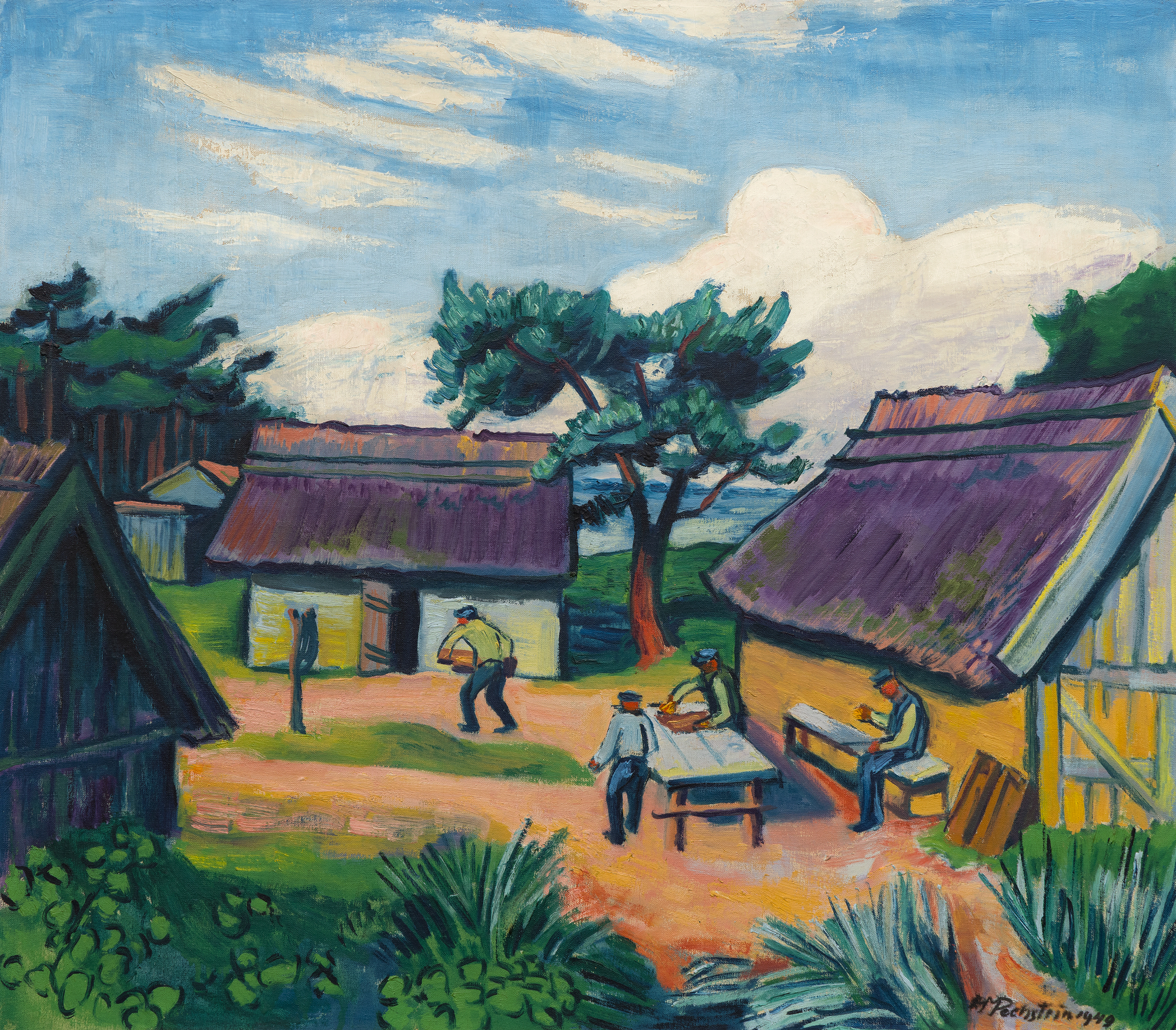
<div><font face=Lato size=3 color=black><em>Alte Fischerhütten</em> (1949) by Max Pechstein is an oil on canvas in which the artist transforms a humble cluster of weathered fishing huts into a study of light, form, and atmosphere. Broad, rhythmic brushstrokes delineate the worn timbers and thatched roofs, while a sky streaked with lavender and rose imbues the scene with a quiet, almost meditative luminosity. Pechstein’s bold outlines and flattened perspective are tempered by a late-career restraint, allowing the simple geometry of dunes, huts, and sea to resonate with an almost timeless calm.<br><br></font></div><br><br><div><font face=Lato size=3 color=black>Though painted in 1949, this work reaches back to a motif Pechstein first explored between 1927 and 1930 during summers on the Baltic coast and in the village of Rowe with <em>Herbstabend </em>(1927) and <em>Getreideernte</em> (1930). In a letter from that earlier period he wrote of his inspiration:<br><br></font></div><br><br><div><font face=Lato size=3 color=black>“A small, empty fishing hut on the lagoon, which Martin Sakuth had set aside for me… it was there that I first felt the heady, eternal rhythm of the sea.” (translated)<br><br></font></div><br><br><div><font face=Lato size=3 color=black>By revisiting these modest structures in his final decade, Pechstein fuses the elemental power of wind, sand, and sea with a masterful control of color and form. <em>Alte Fischerhütten</em> thus stands as a poignant culmination of his lifelong dialogue with vernacular architecture and elemental landscapes, an enduring testament to his vision of nature’s quiet grandeur.</font></div> <div><font face=Lato size=3 color=black><em>Alte Fischerhütten</em> (1949) by Max Pechstein is an oil on canvas in which the artist transforms a humble cluster of weathered fishing huts into a study of light, form, and atmosphere. Broad, rhythmic brushstrokes delineate the worn timbers and thatched roofs, while a sky streaked with lavender and rose imbues the scene with a quiet, almost meditative luminosity. Pechstein’s bold outlines and flattened perspective are tempered by a late-career restraint, allowing the simple geometry of dunes, huts, and sea to resonate with an almost timeless calm.<br><br></font></div><br><br><div><font face=Lato size=3 color=black>Though painted in 1949, this work reaches back to a motif Pechstein first explored between 1927 and 1930 during summers on the Baltic coast and in the village of Rowe with <em>Herbstabend </em>(1927) and <em>Getreideernte</em> (1930). In a letter from that earlier period he wrote of his inspiration:<br><br></font></div><br><br><div><font face=Lato size=3 color=black>“A small, empty fishing hut on the lagoon, which Martin Sakuth had set aside for me… it was there that I first felt the heady, eternal rhythm of the sea.” (translated)<br><br></font></div><br><br><div><font face=Lato size=3 color=black>By revisiting these modest structures in his final decade, Pechstein fuses the elemental power of wind, sand, and sea with a masterful control of color and form. <em>Alte Fischerhütten</em> thus stands as a poignant culmination of his lifelong dialogue with vernacular architecture and elemental landscapes, an enduring testament to his vision of nature’s quiet grandeur.</font></div> <div><font face=Lato size=3 color=black><em>Alte Fischerhütten</em> (1949) by Max Pechstein is an oil on canvas in which the artist transforms a humble cluster of weathered fishing huts into a study of light, form, and atmosphere. Broad, rhythmic brushstrokes delineate the worn timbers and thatched roofs, while a sky streaked with lavender and rose imbues the scene with a quiet, almost meditative luminosity. Pechstein’s bold outlines and flattened perspective are tempered by a late-career restraint, allowing the simple geometry of dunes, huts, and sea to resonate with an almost timeless calm.<br><br></font></div><br><br><div><font face=Lato size=3 color=black>Though painted in 1949, this work reaches back to a motif Pechstein first explored between 1927 and 1930 during summers on the Baltic coast and in the village of Rowe with <em>Herbstabend </em>(1927) and <em>Getreideernte</em> (1930). In a letter from that earlier period he wrote of his inspiration:<br><br></font></div><br><br><div><font face=Lato size=3 color=black>“A small, empty fishing hut on the lagoon, which Martin Sakuth had set aside for me… it was there that I first felt the heady, eternal rhythm of the sea.” (translated)<br><br></font></div><br><br><div><font face=Lato size=3 color=black>By revisiting these modest structures in his final decade, Pechstein fuses the elemental power of wind, sand, and sea with a masterful control of color and form. <em>Alte Fischerhütten</em> thus stands as a poignant culmination of his lifelong dialogue with vernacular architecture and elemental landscapes, an enduring testament to his vision of nature’s quiet grandeur.</font></div> <div><font face=Lato size=3 color=black><em>Alte Fischerhütten</em> (1949) by Max Pechstein is an oil on canvas in which the artist transforms a humble cluster of weathered fishing huts into a study of light, form, and atmosphere. Broad, rhythmic brushstrokes delineate the worn timbers and thatched roofs, while a sky streaked with lavender and rose imbues the scene with a quiet, almost meditative luminosity. Pechstein’s bold outlines and flattened perspective are tempered by a late-career restraint, allowing the simple geometry of dunes, huts, and sea to resonate with an almost timeless calm.<br><br></font></div><br><br><div><font face=Lato size=3 color=black>Though painted in 1949, this work reaches back to a motif Pechstein first explored between 1927 and 1930 during summers on the Baltic coast and in the village of Rowe with <em>Herbstabend </em>(1927) and <em>Getreideernte</em> (1930). In a letter from that earlier period he wrote of his inspiration:<br><br></font></div><br><br><div><font face=Lato size=3 color=black>“A small, empty fishing hut on the lagoon, which Martin Sakuth had set aside for me… it was there that I first felt the heady, eternal rhythm of the sea.” (translated)<br><br></font></div><br><br><div><font face=Lato size=3 color=black>By revisiting these modest structures in his final decade, Pechstein fuses the elemental power of wind, sand, and sea with a masterful control of color and form. <em>Alte Fischerhütten</em> thus stands as a poignant culmination of his lifelong dialogue with vernacular architecture and elemental landscapes, an enduring testament to his vision of nature’s quiet grandeur.</font></div> <div><font face=Lato size=3 color=black><em>Alte Fischerhütten</em> (1949) by Max Pechstein is an oil on canvas in which the artist transforms a humble cluster of weathered fishing huts into a study of light, form, and atmosphere. Broad, rhythmic brushstrokes delineate the worn timbers and thatched roofs, while a sky streaked with lavender and rose imbues the scene with a quiet, almost meditative luminosity. Pechstein’s bold outlines and flattened perspective are tempered by a late-career restraint, allowing the simple geometry of dunes, huts, and sea to resonate with an almost timeless calm.<br><br></font></div><br><br><div><font face=Lato size=3 color=black>Though painted in 1949, this work reaches back to a motif Pechstein first explored between 1927 and 1930 during summers on the Baltic coast and in the village of Rowe with <em>Herbstabend </em>(1927) and <em>Getreideernte</em> (1930). In a letter from that earlier period he wrote of his inspiration:<br><br></font></div><br><br><div><font face=Lato size=3 color=black>“A small, empty fishing hut on the lagoon, which Martin Sakuth had set aside for me… it was there that I first felt the heady, eternal rhythm of the sea.” (translated)<br><br></font></div><br><br><div><font face=Lato size=3 color=black>By revisiting these modest structures in his final decade, Pechstein fuses the elemental power of wind, sand, and sea with a masterful control of color and form. <em>Alte Fischerhütten</em> thus stands as a poignant culmination of his lifelong dialogue with vernacular architecture and elemental landscapes, an enduring testament to his vision of nature’s quiet grandeur.</font></div> <div><font face=Lato size=3 color=black><em>Alte Fischerhütten</em> (1949) by Max Pechstein is an oil on canvas in which the artist transforms a humble cluster of weathered fishing huts into a study of light, form, and atmosphere. Broad, rhythmic brushstrokes delineate the worn timbers and thatched roofs, while a sky streaked with lavender and rose imbues the scene with a quiet, almost meditative luminosity. Pechstein’s bold outlines and flattened perspective are tempered by a late-career restraint, allowing the simple geometry of dunes, huts, and sea to resonate with an almost timeless calm.<br><br></font></div><br><br><div><font face=Lato size=3 color=black>Though painted in 1949, this work reaches back to a motif Pechstein first explored between 1927 and 1930 during summers on the Baltic coast and in the village of Rowe with <em>Herbstabend </em>(1927) and <em>Getreideernte</em> (1930). In a letter from that earlier period he wrote of his inspiration:<br><br></font></div><br><br><div><font face=Lato size=3 color=black>“A small, empty fishing hut on the lagoon, which Martin Sakuth had set aside for me… it was there that I first felt the heady, eternal rhythm of the sea.” (translated)<br><br></font></div><br><br><div><font face=Lato size=3 color=black>By revisiting these modest structures in his final decade, Pechstein fuses the elemental power of wind, sand, and sea with a masterful control of color and form. <em>Alte Fischerhütten</em> thus stands as a poignant culmination of his lifelong dialogue with vernacular architecture and elemental landscapes, an enduring testament to his vision of nature’s quiet grandeur.</font></div> <div><font face=Lato size=3 color=black><em>Alte Fischerhütten</em> (1949) by Max Pechstein is an oil on canvas in which the artist transforms a humble cluster of weathered fishing huts into a study of light, form, and atmosphere. Broad, rhythmic brushstrokes delineate the worn timbers and thatched roofs, while a sky streaked with lavender and rose imbues the scene with a quiet, almost meditative luminosity. Pechstein’s bold outlines and flattened perspective are tempered by a late-career restraint, allowing the simple geometry of dunes, huts, and sea to resonate with an almost timeless calm.<br><br></font></div><br><br><div><font face=Lato size=3 color=black>Though painted in 1949, this work reaches back to a motif Pechstein first explored between 1927 and 1930 during summers on the Baltic coast and in the village of Rowe with <em>Herbstabend </em>(1927) and <em>Getreideernte</em> (1930). In a letter from that earlier period he wrote of his inspiration:<br><br></font></div><br><br><div><font face=Lato size=3 color=black>“A small, empty fishing hut on the lagoon, which Martin Sakuth had set aside for me… it was there that I first felt the heady, eternal rhythm of the sea.” (translated)<br><br></font></div><br><br><div><font face=Lato size=3 color=black>By revisiting these modest structures in his final decade, Pechstein fuses the elemental power of wind, sand, and sea with a masterful control of color and form. <em>Alte Fischerhütten</em> thus stands as a poignant culmination of his lifelong dialogue with vernacular architecture and elemental landscapes, an enduring testament to his vision of nature’s quiet grandeur.</font></div> <div><font face=Lato size=3 color=black><em>Alte Fischerhütten</em> (1949) by Max Pechstein is an oil on canvas in which the artist transforms a humble cluster of weathered fishing huts into a study of light, form, and atmosphere. Broad, rhythmic brushstrokes delineate the worn timbers and thatched roofs, while a sky streaked with lavender and rose imbues the scene with a quiet, almost meditative luminosity. Pechstein’s bold outlines and flattened perspective are tempered by a late-career restraint, allowing the simple geometry of dunes, huts, and sea to resonate with an almost timeless calm.<br><br></font></div><br><br><div><font face=Lato size=3 color=black>Though painted in 1949, this work reaches back to a motif Pechstein first explored between 1927 and 1930 during summers on the Baltic coast and in the village of Rowe with <em>Herbstabend </em>(1927) and <em>Getreideernte</em> (1930). In a letter from that earlier period he wrote of his inspiration:<br><br></font></div><br><br><div><font face=Lato size=3 color=black>“A small, empty fishing hut on the lagoon, which Martin Sakuth had set aside for me… it was there that I first felt the heady, eternal rhythm of the sea.” (translated)<br><br></font></div><br><br><div><font face=Lato size=3 color=black>By revisiting these modest structures in his final decade, Pechstein fuses the elemental power of wind, sand, and sea with a masterful control of color and form. <em>Alte Fischerhütten</em> thus stands as a poignant culmination of his lifelong dialogue with vernacular architecture and elemental landscapes, an enduring testament to his vision of nature’s quiet grandeur.</font></div> <div><font face=Lato size=3 color=black><em>Alte Fischerhütten</em> (1949) by Max Pechstein is an oil on canvas in which the artist transforms a humble cluster of weathered fishing huts into a study of light, form, and atmosphere. Broad, rhythmic brushstrokes delineate the worn timbers and thatched roofs, while a sky streaked with lavender and rose imbues the scene with a quiet, almost meditative luminosity. Pechstein’s bold outlines and flattened perspective are tempered by a late-career restraint, allowing the simple geometry of dunes, huts, and sea to resonate with an almost timeless calm.<br><br></font></div><br><br><div><font face=Lato size=3 color=black>Though painted in 1949, this work reaches back to a motif Pechstein first explored between 1927 and 1930 during summers on the Baltic coast and in the village of Rowe with <em>Herbstabend </em>(1927) and <em>Getreideernte</em> (1930). In a letter from that earlier period he wrote of his inspiration:<br><br></font></div><br><br><div><font face=Lato size=3 color=black>“A small, empty fishing hut on the lagoon, which Martin Sakuth had set aside for me… it was there that I first felt the heady, eternal rhythm of the sea.” (translated)<br><br></font></div><br><br><div><font face=Lato size=3 color=black>By revisiting these modest structures in his final decade, Pechstein fuses the elemental power of wind, sand, and sea with a masterful control of color and form. <em>Alte Fischerhütten</em> thus stands as a poignant culmination of his lifelong dialogue with vernacular architecture and elemental landscapes, an enduring testament to his vision of nature’s quiet grandeur.</font></div> <div><font face=Lato size=3 color=black><em>Alte Fischerhütten</em> (1949) by Max Pechstein is an oil on canvas in which the artist transforms a humble cluster of weathered fishing huts into a study of light, form, and atmosphere. Broad, rhythmic brushstrokes delineate the worn timbers and thatched roofs, while a sky streaked with lavender and rose imbues the scene with a quiet, almost meditative luminosity. Pechstein’s bold outlines and flattened perspective are tempered by a late-career restraint, allowing the simple geometry of dunes, huts, and sea to resonate with an almost timeless calm.<br><br></font></div><br><br><div><font face=Lato size=3 color=black>Though painted in 1949, this work reaches back to a motif Pechstein first explored between 1927 and 1930 during summers on the Baltic coast and in the village of Rowe with <em>Herbstabend </em>(1927) and <em>Getreideernte</em> (1930). In a letter from that earlier period he wrote of his inspiration:<br><br></font></div><br><br><div><font face=Lato size=3 color=black>“A small, empty fishing hut on the lagoon, which Martin Sakuth had set aside for me… it was there that I first felt the heady, eternal rhythm of the sea.” (translated)<br><br></font></div><br><br><div><font face=Lato size=3 color=black>By revisiting these modest structures in his final decade, Pechstein fuses the elemental power of wind, sand, and sea with a masterful control of color and form. <em>Alte Fischerhütten</em> thus stands as a poignant culmination of his lifelong dialogue with vernacular architecture and elemental landscapes, an enduring testament to his vision of nature’s quiet grandeur.</font></div>
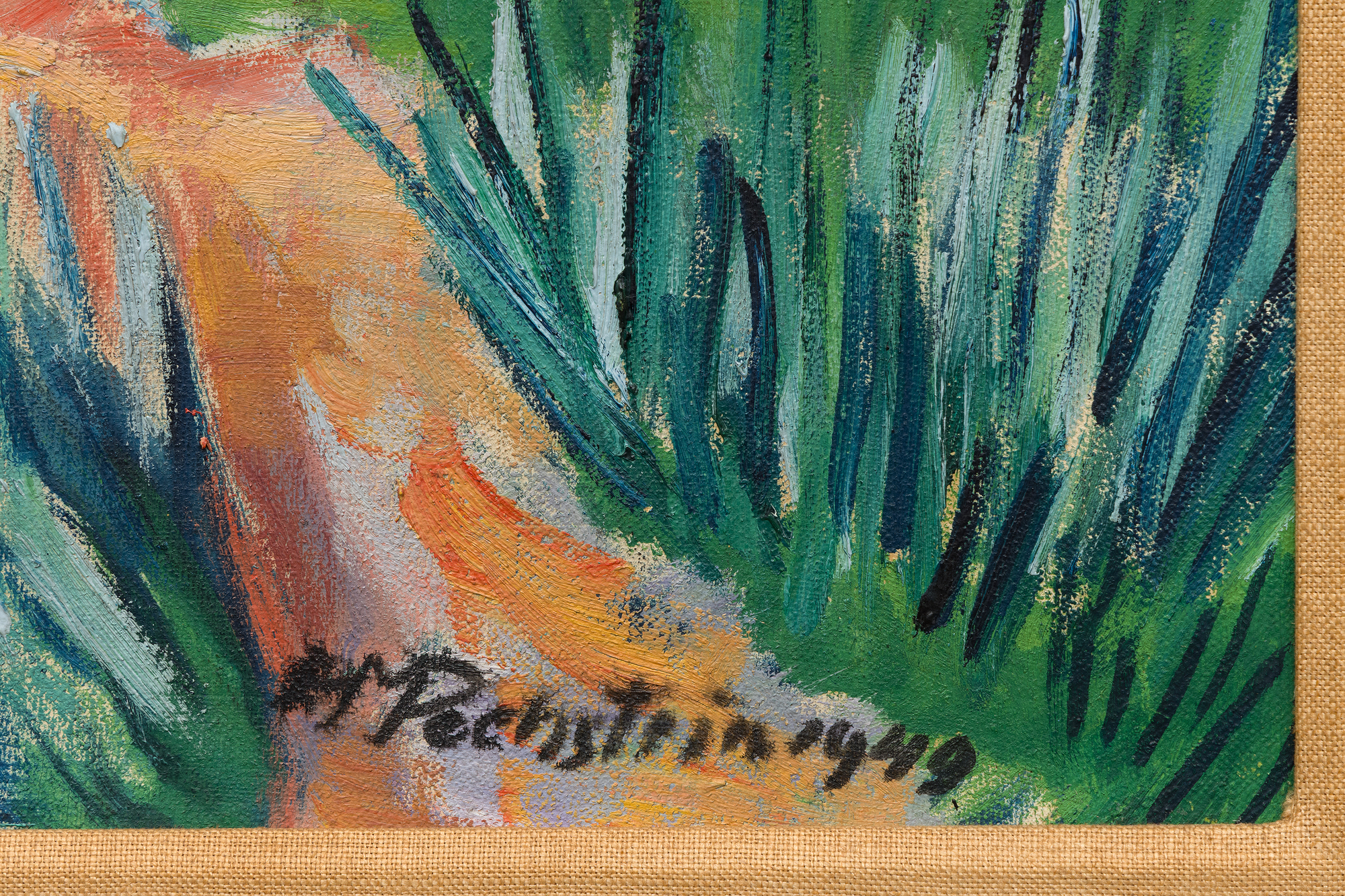
אלטה פישרהוטן 1949 28 x 31 5/8 אינץ' (71.12 x 80.33 ס"מ) שמן על בד
מקור ומקור
אוסף פרטי, אירופה
למפרץ, קלן, 15 ביוני 1966, חלקה 531
גלריות אמנים נבחרים, ניו יורק, נרכשו עד 1970
אוסף פרטי, ניו יורק, נרכש מהנ"ל
אוסף פרטי, מירידה מלמעלה
פיליפס, ניו יורק, יום רביעי, 15 בנובמבר 2023, מגרש 123
אוסף פרטי, נרכש מהנ"ל
ספרות
איה סויקה, מקס פצ'שטיין ה- Catalgoue raisonne of paintings oil, כרך ב' 1919–1954, מינכן, 2011, מס'. 1949/12 עמ' 490, מאויר
"Alte Fischerhütten" (1949) מאת מקס פכשטיין הוא ציור שמן על בד שבו האמן הופך צביר צנוע של בקתות דייגים שחוקות למחקר של אור, צורה ואווירה. משיכות מכחול רחבות וקצביות משרטטות את הקורות השחוקות וגגות הקש, בעוד שמיים מכוסי לבנדר וורוד מעניקים לסצנה זוהר שקט, כמעט מדיטטיבי. קווי המתאר הנועזים והפרספקטיבה השטוחה של פכשטיין ממותנים על ידי איפוק מסוף הקריירה שלו, המאפשר לגיאומטריה הפשוטה של ​​דיונות, בקתות וים להדהד עם שלווה כמעט נצחית.


למרות שצוירה בשנת 1949, יצירה זו מתייחסת למוטיב שפצשטיין חקר לראשונה בין השנים 1927 ו-1930 במהלך קיצים בחוף הבלטי ובכפר רואו (Rowe) עם הציורים "Herbstabend" (1927) ו-"Getreideernte" (1930). במכתב מאותה תקופה מוקדמת יותר הוא כתב על השראתו:


"בקתת דייגים קטנה וריקה על הלגונה, שמרטין סקות' הקדיש לי... שם הרגשתי לראשונה את הקצב הנצחי והמרגיע של הים." (בתרגום)


על ידי ביקור חוזר במבנים צנועים אלה בעשור האחרון לחייו, פכשטיין משלב את הכוח האלמנטרי של הרוח, החול והים עם שליטה מרשימה בצבע ובצורה. "הביתן הפישר האלטה" עומד אפוא כשיאה נוגעת ללב של הדיאלוג שלו לאורך כל חייו עם אדריכלות עממית ונופים אלמנטריים, עדות מתמשכת לחזונו את גדולתו השקטה של ​​הטבע.
לברר