Back

MAX PECHSTEIN (1881-1955)

 
<div><font face=Lato size=3 color=black><em>Alte Fischerhütten</em> (1949) by Max Pechstein is an oil on canvas in which the artist transforms a humble cluster of weathered fishing huts into a study of light, form, and atmosphere. Broad, rhythmic brushstrokes delineate the worn timbers and thatched roofs, while a sky streaked with lavender and rose imbues the scene with a quiet, almost meditative luminosity. Pechstein’s bold outlines and flattened perspective are tempered by a late-career restraint, allowing the simple geometry of dunes, huts, and sea to resonate with an almost timeless calm.<br>
<br></font></div>
<br>
<br><div><font face=Lato size=3 color=black>Though painted in 1949, this work reaches back to a motif Pechstein first explored between 1927 and 1930 during summers on the Baltic coast and in the village of Rowe with <em>Herbstabend </em>(1927) and <em>Getreideernte</em> (1930). In a letter from that earlier period he wrote of his inspiration:<br>
<br></font></div>
<br>
<br><div><font face=Lato size=3 color=black>“A small, empty fishing hut on the lagoon, which Martin Sakuth had set aside for me… it was there that I first felt the heady, eternal rhythm of the sea.” (translated)<br>
<br></font></div>
<br>
<br><div><font face=Lato size=3 color=black>By revisiting these modest structures in his final decade, Pechstein fuses the elemental power of wind, sand, and sea with a masterful control of color and form. <em>Alte Fischerhütten</em> thus stands as a poignant culmination of his lifelong dialogue with vernacular architecture and elemental landscapes, an enduring testament to his vision of nature’s quiet grandeur.</font></div> <div><font face=Lato size=3 color=black><em>Alte Fischerhütten</em> (1949) by Max Pechstein is an oil on canvas in which the artist transforms a humble cluster of weathered fishing huts into a study of light, form, and atmosphere. Broad, rhythmic brushstrokes delineate the worn timbers and thatched roofs, while a sky streaked with lavender and rose imbues the scene with a quiet, almost meditative luminosity. Pechstein’s bold outlines and flattened perspective are tempered by a late-career restraint, allowing the simple geometry of dunes, huts, and sea to resonate with an almost timeless calm.<br>
<br></font></div>
<br>
<br><div><font face=Lato size=3 color=black>Though painted in 1949, this work reaches back to a motif Pechstein first explored between 1927 and 1930 during summers on the Baltic coast and in the village of Rowe with <em>Herbstabend </em>(1927) and <em>Getreideernte</em> (1930). In a letter from that earlier period he wrote of his inspiration:<br>
<br></font></div>
<br>
<br><div><font face=Lato size=3 color=black>“A small, empty fishing hut on the lagoon, which Martin Sakuth had set aside for me… it was there that I first felt the heady, eternal rhythm of the sea.” (translated)<br>
<br></font></div>
<br>
<br><div><font face=Lato size=3 color=black>By revisiting these modest structures in his final decade, Pechstein fuses the elemental power of wind, sand, and sea with a masterful control of color and form. <em>Alte Fischerhütten</em> thus stands as a poignant culmination of his lifelong dialogue with vernacular architecture and elemental landscapes, an enduring testament to his vision of nature’s quiet grandeur.</font></div> <div><font face=Lato size=3 color=black><em>Alte Fischerhütten</em> (1949) by Max Pechstein is an oil on canvas in which the artist transforms a humble cluster of weathered fishing huts into a study of light, form, and atmosphere. Broad, rhythmic brushstrokes delineate the worn timbers and thatched roofs, while a sky streaked with lavender and rose imbues the scene with a quiet, almost meditative luminosity. Pechstein’s bold outlines and flattened perspective are tempered by a late-career restraint, allowing the simple geometry of dunes, huts, and sea to resonate with an almost timeless calm.<br>
<br></font></div>
<br>
<br><div><font face=Lato size=3 color=black>Though painted in 1949, this work reaches back to a motif Pechstein first explored between 1927 and 1930 during summers on the Baltic coast and in the village of Rowe with <em>Herbstabend </em>(1927) and <em>Getreideernte</em> (1930). In a letter from that earlier period he wrote of his inspiration:<br>
<br></font></div>
<br>
<br><div><font face=Lato size=3 color=black>“A small, empty fishing hut on the lagoon, which Martin Sakuth had set aside for me… it was there that I first felt the heady, eternal rhythm of the sea.” (translated)<br>
<br></font></div>
<br>
<br><div><font face=Lato size=3 color=black>By revisiting these modest structures in his final decade, Pechstein fuses the elemental power of wind, sand, and sea with a masterful control of color and form. <em>Alte Fischerhütten</em> thus stands as a poignant culmination of his lifelong dialogue with vernacular architecture and elemental landscapes, an enduring testament to his vision of nature’s quiet grandeur.</font></div> <div><font face=Lato size=3 color=black><em>Alte Fischerhütten</em> (1949) by Max Pechstein is an oil on canvas in which the artist transforms a humble cluster of weathered fishing huts into a study of light, form, and atmosphere. Broad, rhythmic brushstrokes delineate the worn timbers and thatched roofs, while a sky streaked with lavender and rose imbues the scene with a quiet, almost meditative luminosity. Pechstein’s bold outlines and flattened perspective are tempered by a late-career restraint, allowing the simple geometry of dunes, huts, and sea to resonate with an almost timeless calm.<br>
<br></font></div>
<br>
<br><div><font face=Lato size=3 color=black>Though painted in 1949, this work reaches back to a motif Pechstein first explored between 1927 and 1930 during summers on the Baltic coast and in the village of Rowe with <em>Herbstabend </em>(1927) and <em>Getreideernte</em> (1930). In a letter from that earlier period he wrote of his inspiration:<br>
<br></font></div>
<br>
<br><div><font face=Lato size=3 color=black>“A small, empty fishing hut on the lagoon, which Martin Sakuth had set aside for me… it was there that I first felt the heady, eternal rhythm of the sea.” (translated)<br>
<br></font></div>
<br>
<br><div><font face=Lato size=3 color=black>By revisiting these modest structures in his final decade, Pechstein fuses the elemental power of wind, sand, and sea with a masterful control of color and form. <em>Alte Fischerhütten</em> thus stands as a poignant culmination of his lifelong dialogue with vernacular architecture and elemental landscapes, an enduring testament to his vision of nature’s quiet grandeur.</font></div> <div><font face=Lato size=3 color=black><em>Alte Fischerhütten</em> (1949) by Max Pechstein is an oil on canvas in which the artist transforms a humble cluster of weathered fishing huts into a study of light, form, and atmosphere. Broad, rhythmic brushstrokes delineate the worn timbers and thatched roofs, while a sky streaked with lavender and rose imbues the scene with a quiet, almost meditative luminosity. Pechstein’s bold outlines and flattened perspective are tempered by a late-career restraint, allowing the simple geometry of dunes, huts, and sea to resonate with an almost timeless calm.<br>
<br></font></div>
<br>
<br><div><font face=Lato size=3 color=black>Though painted in 1949, this work reaches back to a motif Pechstein first explored between 1927 and 1930 during summers on the Baltic coast and in the village of Rowe with <em>Herbstabend </em>(1927) and <em>Getreideernte</em> (1930). In a letter from that earlier period he wrote of his inspiration:<br>
<br></font></div>
<br>
<br><div><font face=Lato size=3 color=black>“A small, empty fishing hut on the lagoon, which Martin Sakuth had set aside for me… it was there that I first felt the heady, eternal rhythm of the sea.” (translated)<br>
<br></font></div>
<br>
<br><div><font face=Lato size=3 color=black>By revisiting these modest structures in his final decade, Pechstein fuses the elemental power of wind, sand, and sea with a masterful control of color and form. <em>Alte Fischerhütten</em> thus stands as a poignant culmination of his lifelong dialogue with vernacular architecture and elemental landscapes, an enduring testament to his vision of nature’s quiet grandeur.</font></div> <div><font face=Lato size=3 color=black><em>Alte Fischerhütten</em> (1949) by Max Pechstein is an oil on canvas in which the artist transforms a humble cluster of weathered fishing huts into a study of light, form, and atmosphere. Broad, rhythmic brushstrokes delineate the worn timbers and thatched roofs, while a sky streaked with lavender and rose imbues the scene with a quiet, almost meditative luminosity. Pechstein’s bold outlines and flattened perspective are tempered by a late-career restraint, allowing the simple geometry of dunes, huts, and sea to resonate with an almost timeless calm.<br>
<br></font></div>
<br>
<br><div><font face=Lato size=3 color=black>Though painted in 1949, this work reaches back to a motif Pechstein first explored between 1927 and 1930 during summers on the Baltic coast and in the village of Rowe with <em>Herbstabend </em>(1927) and <em>Getreideernte</em> (1930). In a letter from that earlier period he wrote of his inspiration:<br>
<br></font></div>
<br>
<br><div><font face=Lato size=3 color=black>“A small, empty fishing hut on the lagoon, which Martin Sakuth had set aside for me… it was there that I first felt the heady, eternal rhythm of the sea.” (translated)<br>
<br></font></div>
<br>
<br><div><font face=Lato size=3 color=black>By revisiting these modest structures in his final decade, Pechstein fuses the elemental power of wind, sand, and sea with a masterful control of color and form. <em>Alte Fischerhütten</em> thus stands as a poignant culmination of his lifelong dialogue with vernacular architecture and elemental landscapes, an enduring testament to his vision of nature’s quiet grandeur.</font></div> <div><font face=Lato size=3 color=black><em>Alte Fischerhütten</em> (1949) by Max Pechstein is an oil on canvas in which the artist transforms a humble cluster of weathered fishing huts into a study of light, form, and atmosphere. Broad, rhythmic brushstrokes delineate the worn timbers and thatched roofs, while a sky streaked with lavender and rose imbues the scene with a quiet, almost meditative luminosity. Pechstein’s bold outlines and flattened perspective are tempered by a late-career restraint, allowing the simple geometry of dunes, huts, and sea to resonate with an almost timeless calm.<br>
<br></font></div>
<br>
<br><div><font face=Lato size=3 color=black>Though painted in 1949, this work reaches back to a motif Pechstein first explored between 1927 and 1930 during summers on the Baltic coast and in the village of Rowe with <em>Herbstabend </em>(1927) and <em>Getreideernte</em> (1930). In a letter from that earlier period he wrote of his inspiration:<br>
<br></font></div>
<br>
<br><div><font face=Lato size=3 color=black>“A small, empty fishing hut on the lagoon, which Martin Sakuth had set aside for me… it was there that I first felt the heady, eternal rhythm of the sea.” (translated)<br>
<br></font></div>
<br>
<br><div><font face=Lato size=3 color=black>By revisiting these modest structures in his final decade, Pechstein fuses the elemental power of wind, sand, and sea with a masterful control of color and form. <em>Alte Fischerhütten</em> thus stands as a poignant culmination of his lifelong dialogue with vernacular architecture and elemental landscapes, an enduring testament to his vision of nature’s quiet grandeur.</font></div> <div><font face=Lato size=3 color=black><em>Alte Fischerhütten</em> (1949) by Max Pechstein is an oil on canvas in which the artist transforms a humble cluster of weathered fishing huts into a study of light, form, and atmosphere. Broad, rhythmic brushstrokes delineate the worn timbers and thatched roofs, while a sky streaked with lavender and rose imbues the scene with a quiet, almost meditative luminosity. Pechstein’s bold outlines and flattened perspective are tempered by a late-career restraint, allowing the simple geometry of dunes, huts, and sea to resonate with an almost timeless calm.<br>
<br></font></div>
<br>
<br><div><font face=Lato size=3 color=black>Though painted in 1949, this work reaches back to a motif Pechstein first explored between 1927 and 1930 during summers on the Baltic coast and in the village of Rowe with <em>Herbstabend </em>(1927) and <em>Getreideernte</em> (1930). In a letter from that earlier period he wrote of his inspiration:<br>
<br></font></div>
<br>
<br><div><font face=Lato size=3 color=black>“A small, empty fishing hut on the lagoon, which Martin Sakuth had set aside for me… it was there that I first felt the heady, eternal rhythm of the sea.” (translated)<br>
<br></font></div>
<br>
<br><div><font face=Lato size=3 color=black>By revisiting these modest structures in his final decade, Pechstein fuses the elemental power of wind, sand, and sea with a masterful control of color and form. <em>Alte Fischerhütten</em> thus stands as a poignant culmination of his lifelong dialogue with vernacular architecture and elemental landscapes, an enduring testament to his vision of nature’s quiet grandeur.</font></div> <div><font face=Lato size=3 color=black><em>Alte Fischerhütten</em> (1949) by Max Pechstein is an oil on canvas in which the artist transforms a humble cluster of weathered fishing huts into a study of light, form, and atmosphere. Broad, rhythmic brushstrokes delineate the worn timbers and thatched roofs, while a sky streaked with lavender and rose imbues the scene with a quiet, almost meditative luminosity. Pechstein’s bold outlines and flattened perspective are tempered by a late-career restraint, allowing the simple geometry of dunes, huts, and sea to resonate with an almost timeless calm.<br>
<br></font></div>
<br>
<br><div><font face=Lato size=3 color=black>Though painted in 1949, this work reaches back to a motif Pechstein first explored between 1927 and 1930 during summers on the Baltic coast and in the village of Rowe with <em>Herbstabend </em>(1927) and <em>Getreideernte</em> (1930). In a letter from that earlier period he wrote of his inspiration:<br>
<br></font></div>
<br>
<br><div><font face=Lato size=3 color=black>“A small, empty fishing hut on the lagoon, which Martin Sakuth had set aside for me… it was there that I first felt the heady, eternal rhythm of the sea.” (translated)<br>
<br></font></div>
<br>
<br><div><font face=Lato size=3 color=black>By revisiting these modest structures in his final decade, Pechstein fuses the elemental power of wind, sand, and sea with a masterful control of color and form. <em>Alte Fischerhütten</em> thus stands as a poignant culmination of his lifelong dialogue with vernacular architecture and elemental landscapes, an enduring testament to his vision of nature’s quiet grandeur.</font></div> <div><font face=Lato size=3 color=black><em>Alte Fischerhütten</em> (1949) by Max Pechstein is an oil on canvas in which the artist transforms a humble cluster of weathered fishing huts into a study of light, form, and atmosphere. Broad, rhythmic brushstrokes delineate the worn timbers and thatched roofs, while a sky streaked with lavender and rose imbues the scene with a quiet, almost meditative luminosity. Pechstein’s bold outlines and flattened perspective are tempered by a late-career restraint, allowing the simple geometry of dunes, huts, and sea to resonate with an almost timeless calm.<br>
<br></font></div>
<br>
<br><div><font face=Lato size=3 color=black>Though painted in 1949, this work reaches back to a motif Pechstein first explored between 1927 and 1930 during summers on the Baltic coast and in the village of Rowe with <em>Herbstabend </em>(1927) and <em>Getreideernte</em> (1930). In a letter from that earlier period he wrote of his inspiration:<br>
<br></font></div>
<br>
<br><div><font face=Lato size=3 color=black>“A small, empty fishing hut on the lagoon, which Martin Sakuth had set aside for me… it was there that I first felt the heady, eternal rhythm of the sea.” (translated)<br>
<br></font></div>
<br>
<br><div><font face=Lato size=3 color=black>By revisiting these modest structures in his final decade, Pechstein fuses the elemental power of wind, sand, and sea with a masterful control of color and form. <em>Alte Fischerhütten</em> thus stands as a poignant culmination of his lifelong dialogue with vernacular architecture and elemental landscapes, an enduring testament to his vision of nature’s quiet grandeur.</font></div>
Alte Fischerhutten194928 x 31 5/8 in.(71.12 x 80.33 cm) oil on canvas
Provenance
Private Collection, Europe
Lempertz, Cologne, June 15, 1966, lot 531
Selected Artists Galleries, New York, acquired by 1970
Private Collection, New York, acquired from the above
Private Collection, by descent from above
Phillips, New York, Wednesday, November 15, 2023, lot 123
Private Collection, acquired from the above
Literature
Aya Soika, Max Pechstein The Catalgoue raisonne of oil paintings, Volume II 1919–1954, Munich, 2011, no. 1949/12, p. 490, illustrated
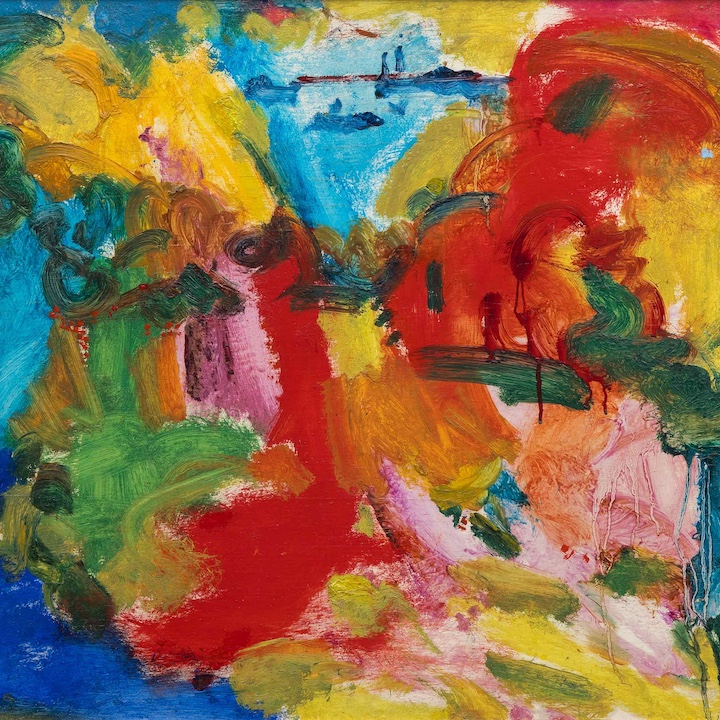
Alte Fischerhütten (1949) by Max Pechstein is an oil on canvas in which the artist transforms a humble cluster of weathered fishing huts into a study of light, form, and atmosphere. Broad, rhythmic brushstrokes delineate the worn timbers and thatched roofs, while a sky streaked with lavender and rose imbues the scene with a quiet, almost meditative luminosity. Pechstein’s bold outlines and flattened perspective are tempered by a late-career restraint, allowing the simple geometry of dunes, huts, and sea to resonate with an almost timeless calm.


Though painted in 1949, this work reaches back to a motif Pechstein first explored between 1927 and 1930 during summers on the Baltic coast and in the village of Rowe with Herbstabend (1927) and Getreideernte (1930). In a letter from that earlier period he wrote of his inspiration:


“A small, empty fishing hut on the lagoon, which Martin Sakuth had set aside for me… it was there that I first felt the heady, eternal rhythm of the sea.” (translated)


By revisiting these modest structures in his final decade, Pechstein fuses the elemental power of wind, sand, and sea with a masterful control of color and form. Alte Fischerhütten thus stands as a poignant culmination of his lifelong dialogue with vernacular architecture and elemental landscapes, an enduring testament to his vision of nature’s quiet grandeur.
Inquire