
CLAUDE MONET (1840-1926)
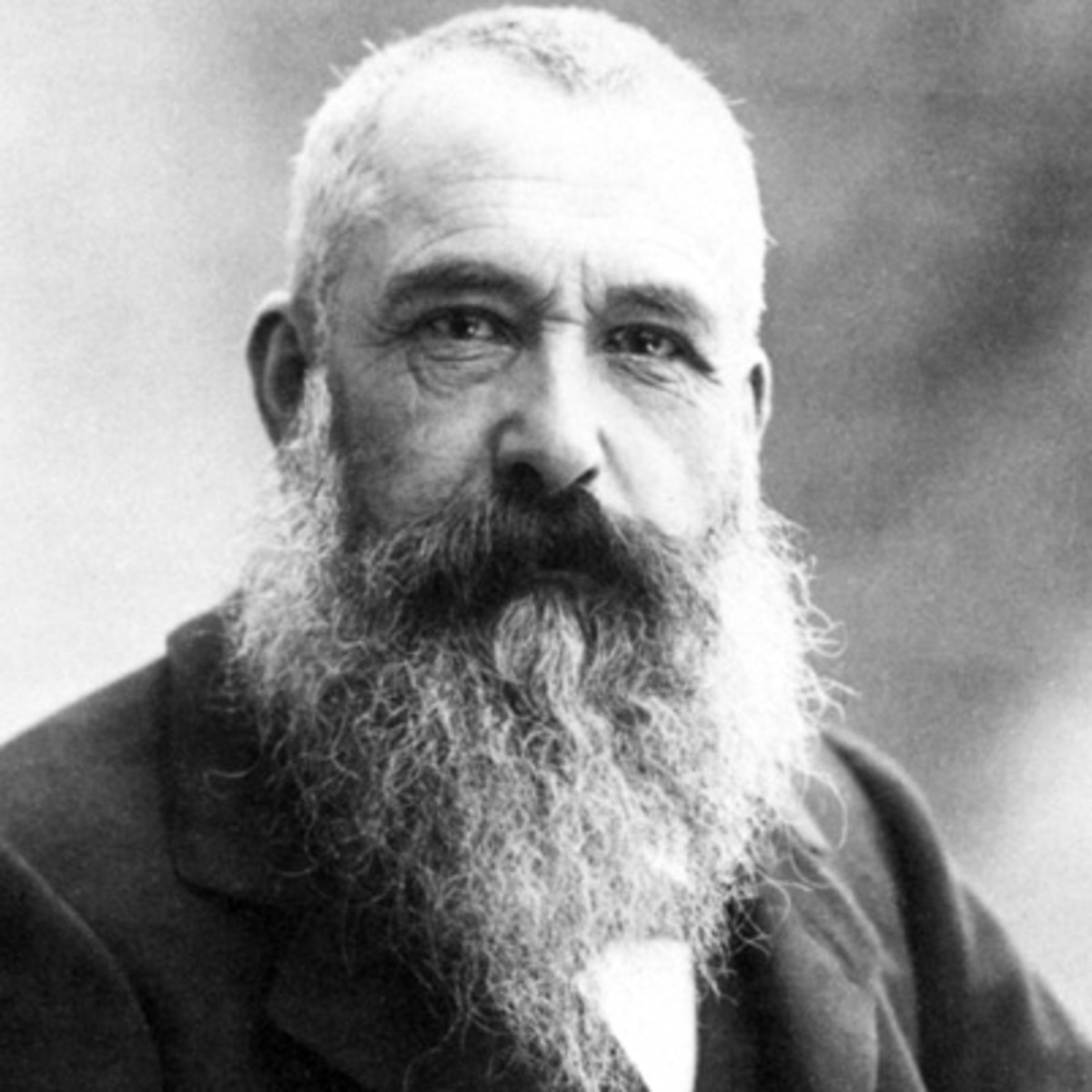 Claude Monet (1840–1926) was a French painter and the leading figure of Impressionism, a movement that fundamentally transformed modern art through its radical approach to light, color, and perception. Born in Paris to a grocer’s family, Monet spent his formative years in Le Havre, where his early talent for drawing was encouraged. A pivotal influence came in his teens through contact with landscape painter Eugène Boudin, who introduced him to painting outdoors and observing nature directly—an approach that would define Monet’s career.
By 1859, Monet was in Paris, committed to becoming an artist. In 1862, he entered the studio of Charles Gleyre, where he formed close friendships with Pierre-Auguste Renoir, Alfred Sisley, and Frédéric Bazille. During the 1860s, Édouard Manet influenced Monet’s figure compositions, while collaborative painting sessions with Renoir, particularly at Bougival, helped him develop a freer, more fluid landscape style. Monet increasingly embraced en plein air techniques, painting directly before his subject to capture transient effects of light and atmosphere.
Monet emerged as a central figure in the Impressionist exhibitions, the first of which was held in 1874. His painting "Impression, Sunrise" (1872), with its loose brushwork and emphasis on mood over detail, inadvertently gave the movement its name and came to symbolize its break from academic tradition. During the Franco-Prussian War, Monet lived in London, where he studied the effects of fog and light, later settling in Argenteuil upon his return to France, where he lived until 1878.
After a period of sustained travel to paint the various climes of France in the early 1880s, Monet established himself in Giverny in 1883. From there, Monet traveled with the specific goal of developing major series—returning again and again to motifs like haystacks, poplars, and the Rouen Cathedral to record shifting light and weather. Over time, however, his journeys grew less frequent as he returned more consistently to Giverny, where the garden he shaped—especially the lily pond—became one of his most enduring and absorbing subjects. His major series, including the waterlilies, haystacks, and cathedrals, represent the culmination of his lifelong exploration of perception and remain among the most influential achievements in the history of art.
ARTWORK


Exhibitions
Learn
CATALOGS

Art Investment Opportunities
CATALOGS

Revolutions in Modern Art
CATALOGS

