返回

MAX PECHSTEIN (1881-1955)

 
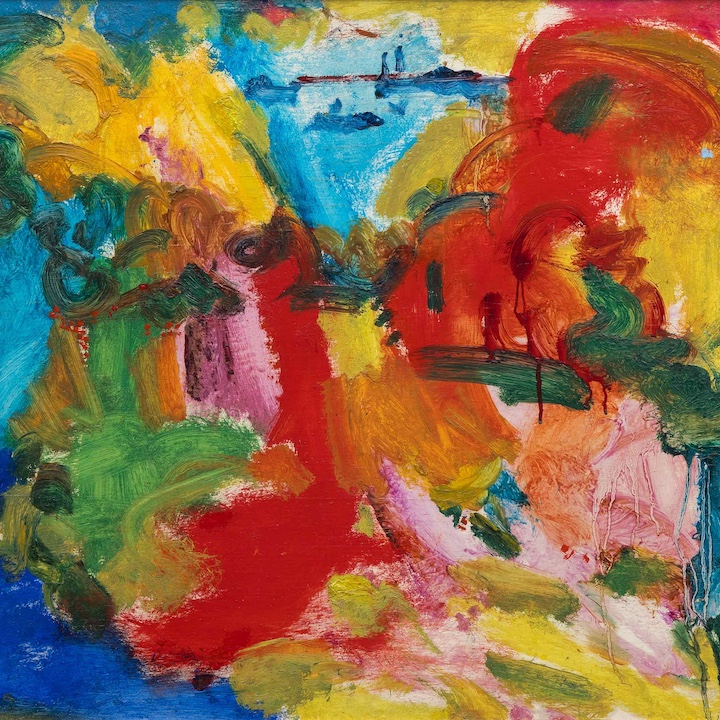
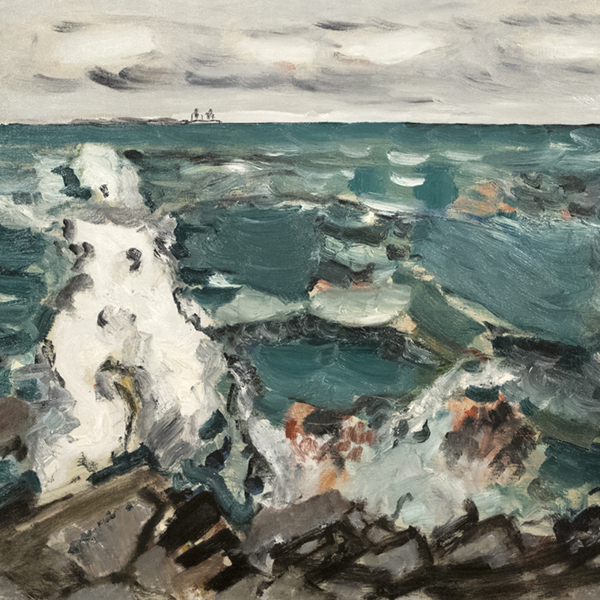
<div><font face=Lato size=3 color=black><em>Alte Fischerhütten</em> (1949) by Max Pechstein is an oil on canvas in which the artist transforms a humble cluster of weathered fishing huts into a study of light, form, and atmosphere. Broad, rhythmic brushstrokes delineate the worn timbers and thatched roofs, while a sky streaked with lavender and rose imbues the scene with a quiet, almost meditative luminosity. Pechstein’s bold outlines and flattened perspective are tempered by a late-career restraint, allowing the simple geometry of dunes, huts, and sea to resonate with an almost timeless calm.<br><br></font></div><br><br><div><font face=Lato size=3 color=black>Though painted in 1949, this work reaches back to a motif Pechstein first explored between 1927 and 1930 during summers on the Baltic coast and in the village of Rowe with <em>Herbstabend </em>(1927) and <em>Getreideernte</em> (1930). In a letter from that earlier period he wrote of his inspiration:<br><br></font></div><br><br><div><font face=Lato size=3 color=black>“A small, empty fishing hut on the lagoon, which Martin Sakuth had set aside for me… it was there that I first felt the heady, eternal rhythm of the sea.” (translated)<br><br></font></div><br><br><div><font face=Lato size=3 color=black>By revisiting these modest structures in his final decade, Pechstein fuses the elemental power of wind, sand, and sea with a masterful control of color and form. <em>Alte Fischerhütten</em> thus stands as a poignant culmination of his lifelong dialogue with vernacular architecture and elemental landscapes, an enduring testament to his vision of nature’s quiet grandeur.</font></div> <div><font face=Lato size=3 color=black><em>Alte Fischerhütten</em> (1949) by Max Pechstein is an oil on canvas in which the artist transforms a humble cluster of weathered fishing huts into a study of light, form, and atmosphere. Broad, rhythmic brushstrokes delineate the worn timbers and thatched roofs, while a sky streaked with lavender and rose imbues the scene with a quiet, almost meditative luminosity. Pechstein’s bold outlines and flattened perspective are tempered by a late-career restraint, allowing the simple geometry of dunes, huts, and sea to resonate with an almost timeless calm.<br><br></font></div><br><br><div><font face=Lato size=3 color=black>Though painted in 1949, this work reaches back to a motif Pechstein first explored between 1927 and 1930 during summers on the Baltic coast and in the village of Rowe with <em>Herbstabend </em>(1927) and <em>Getreideernte</em> (1930). In a letter from that earlier period he wrote of his inspiration:<br><br></font></div><br><br><div><font face=Lato size=3 color=black>“A small, empty fishing hut on the lagoon, which Martin Sakuth had set aside for me… it was there that I first felt the heady, eternal rhythm of the sea.” (translated)<br><br></font></div><br><br><div><font face=Lato size=3 color=black>By revisiting these modest structures in his final decade, Pechstein fuses the elemental power of wind, sand, and sea with a masterful control of color and form. <em>Alte Fischerhütten</em> thus stands as a poignant culmination of his lifelong dialogue with vernacular architecture and elemental landscapes, an enduring testament to his vision of nature’s quiet grandeur.</font></div> <div><font face=Lato size=3 color=black><em>Alte Fischerhütten</em> (1949) by Max Pechstein is an oil on canvas in which the artist transforms a humble cluster of weathered fishing huts into a study of light, form, and atmosphere. Broad, rhythmic brushstrokes delineate the worn timbers and thatched roofs, while a sky streaked with lavender and rose imbues the scene with a quiet, almost meditative luminosity. Pechstein’s bold outlines and flattened perspective are tempered by a late-career restraint, allowing the simple geometry of dunes, huts, and sea to resonate with an almost timeless calm.<br><br></font></div><br><br><div><font face=Lato size=3 color=black>Though painted in 1949, this work reaches back to a motif Pechstein first explored between 1927 and 1930 during summers on the Baltic coast and in the village of Rowe with <em>Herbstabend </em>(1927) and <em>Getreideernte</em> (1930). In a letter from that earlier period he wrote of his inspiration:<br><br></font></div><br><br><div><font face=Lato size=3 color=black>“A small, empty fishing hut on the lagoon, which Martin Sakuth had set aside for me… it was there that I first felt the heady, eternal rhythm of the sea.” (translated)<br><br></font></div><br><br><div><font face=Lato size=3 color=black>By revisiting these modest structures in his final decade, Pechstein fuses the elemental power of wind, sand, and sea with a masterful control of color and form. <em>Alte Fischerhütten</em> thus stands as a poignant culmination of his lifelong dialogue with vernacular architecture and elemental landscapes, an enduring testament to his vision of nature’s quiet grandeur.</font></div> <div><font face=Lato size=3 color=black><em>Alte Fischerhütten</em> (1949) by Max Pechstein is an oil on canvas in which the artist transforms a humble cluster of weathered fishing huts into a study of light, form, and atmosphere. Broad, rhythmic brushstrokes delineate the worn timbers and thatched roofs, while a sky streaked with lavender and rose imbues the scene with a quiet, almost meditative luminosity. Pechstein’s bold outlines and flattened perspective are tempered by a late-career restraint, allowing the simple geometry of dunes, huts, and sea to resonate with an almost timeless calm.<br><br></font></div><br><br><div><font face=Lato size=3 color=black>Though painted in 1949, this work reaches back to a motif Pechstein first explored between 1927 and 1930 during summers on the Baltic coast and in the village of Rowe with <em>Herbstabend </em>(1927) and <em>Getreideernte</em> (1930). In a letter from that earlier period he wrote of his inspiration:<br><br></font></div><br><br><div><font face=Lato size=3 color=black>“A small, empty fishing hut on the lagoon, which Martin Sakuth had set aside for me… it was there that I first felt the heady, eternal rhythm of the sea.” (translated)<br><br></font></div><br><br><div><font face=Lato size=3 color=black>By revisiting these modest structures in his final decade, Pechstein fuses the elemental power of wind, sand, and sea with a masterful control of color and form. <em>Alte Fischerhütten</em> thus stands as a poignant culmination of his lifelong dialogue with vernacular architecture and elemental landscapes, an enduring testament to his vision of nature’s quiet grandeur.</font></div> <div><font face=Lato size=3 color=black><em>Alte Fischerhütten</em> (1949) by Max Pechstein is an oil on canvas in which the artist transforms a humble cluster of weathered fishing huts into a study of light, form, and atmosphere. Broad, rhythmic brushstrokes delineate the worn timbers and thatched roofs, while a sky streaked with lavender and rose imbues the scene with a quiet, almost meditative luminosity. Pechstein’s bold outlines and flattened perspective are tempered by a late-career restraint, allowing the simple geometry of dunes, huts, and sea to resonate with an almost timeless calm.<br><br></font></div><br><br><div><font face=Lato size=3 color=black>Though painted in 1949, this work reaches back to a motif Pechstein first explored between 1927 and 1930 during summers on the Baltic coast and in the village of Rowe with <em>Herbstabend </em>(1927) and <em>Getreideernte</em> (1930). In a letter from that earlier period he wrote of his inspiration:<br><br></font></div><br><br><div><font face=Lato size=3 color=black>“A small, empty fishing hut on the lagoon, which Martin Sakuth had set aside for me… it was there that I first felt the heady, eternal rhythm of the sea.” (translated)<br><br></font></div><br><br><div><font face=Lato size=3 color=black>By revisiting these modest structures in his final decade, Pechstein fuses the elemental power of wind, sand, and sea with a masterful control of color and form. <em>Alte Fischerhütten</em> thus stands as a poignant culmination of his lifelong dialogue with vernacular architecture and elemental landscapes, an enduring testament to his vision of nature’s quiet grandeur.</font></div> <div><font face=Lato size=3 color=black><em>Alte Fischerhütten</em> (1949) by Max Pechstein is an oil on canvas in which the artist transforms a humble cluster of weathered fishing huts into a study of light, form, and atmosphere. Broad, rhythmic brushstrokes delineate the worn timbers and thatched roofs, while a sky streaked with lavender and rose imbues the scene with a quiet, almost meditative luminosity. Pechstein’s bold outlines and flattened perspective are tempered by a late-career restraint, allowing the simple geometry of dunes, huts, and sea to resonate with an almost timeless calm.<br><br></font></div><br><br><div><font face=Lato size=3 color=black>Though painted in 1949, this work reaches back to a motif Pechstein first explored between 1927 and 1930 during summers on the Baltic coast and in the village of Rowe with <em>Herbstabend </em>(1927) and <em>Getreideernte</em> (1930). In a letter from that earlier period he wrote of his inspiration:<br><br></font></div><br><br><div><font face=Lato size=3 color=black>“A small, empty fishing hut on the lagoon, which Martin Sakuth had set aside for me… it was there that I first felt the heady, eternal rhythm of the sea.” (translated)<br><br></font></div><br><br><div><font face=Lato size=3 color=black>By revisiting these modest structures in his final decade, Pechstein fuses the elemental power of wind, sand, and sea with a masterful control of color and form. <em>Alte Fischerhütten</em> thus stands as a poignant culmination of his lifelong dialogue with vernacular architecture and elemental landscapes, an enduring testament to his vision of nature’s quiet grandeur.</font></div> <div><font face=Lato size=3 color=black><em>Alte Fischerhütten</em> (1949) by Max Pechstein is an oil on canvas in which the artist transforms a humble cluster of weathered fishing huts into a study of light, form, and atmosphere. Broad, rhythmic brushstrokes delineate the worn timbers and thatched roofs, while a sky streaked with lavender and rose imbues the scene with a quiet, almost meditative luminosity. Pechstein’s bold outlines and flattened perspective are tempered by a late-career restraint, allowing the simple geometry of dunes, huts, and sea to resonate with an almost timeless calm.<br><br></font></div><br><br><div><font face=Lato size=3 color=black>Though painted in 1949, this work reaches back to a motif Pechstein first explored between 1927 and 1930 during summers on the Baltic coast and in the village of Rowe with <em>Herbstabend </em>(1927) and <em>Getreideernte</em> (1930). In a letter from that earlier period he wrote of his inspiration:<br><br></font></div><br><br><div><font face=Lato size=3 color=black>“A small, empty fishing hut on the lagoon, which Martin Sakuth had set aside for me… it was there that I first felt the heady, eternal rhythm of the sea.” (translated)<br><br></font></div><br><br><div><font face=Lato size=3 color=black>By revisiting these modest structures in his final decade, Pechstein fuses the elemental power of wind, sand, and sea with a masterful control of color and form. <em>Alte Fischerhütten</em> thus stands as a poignant culmination of his lifelong dialogue with vernacular architecture and elemental landscapes, an enduring testament to his vision of nature’s quiet grandeur.</font></div> <div><font face=Lato size=3 color=black><em>Alte Fischerhütten</em> (1949) by Max Pechstein is an oil on canvas in which the artist transforms a humble cluster of weathered fishing huts into a study of light, form, and atmosphere. Broad, rhythmic brushstrokes delineate the worn timbers and thatched roofs, while a sky streaked with lavender and rose imbues the scene with a quiet, almost meditative luminosity. Pechstein’s bold outlines and flattened perspective are tempered by a late-career restraint, allowing the simple geometry of dunes, huts, and sea to resonate with an almost timeless calm.<br><br></font></div><br><br><div><font face=Lato size=3 color=black>Though painted in 1949, this work reaches back to a motif Pechstein first explored between 1927 and 1930 during summers on the Baltic coast and in the village of Rowe with <em>Herbstabend </em>(1927) and <em>Getreideernte</em> (1930). In a letter from that earlier period he wrote of his inspiration:<br><br></font></div><br><br><div><font face=Lato size=3 color=black>“A small, empty fishing hut on the lagoon, which Martin Sakuth had set aside for me… it was there that I first felt the heady, eternal rhythm of the sea.” (translated)<br><br></font></div><br><br><div><font face=Lato size=3 color=black>By revisiting these modest structures in his final decade, Pechstein fuses the elemental power of wind, sand, and sea with a masterful control of color and form. <em>Alte Fischerhütten</em> thus stands as a poignant culmination of his lifelong dialogue with vernacular architecture and elemental landscapes, an enduring testament to his vision of nature’s quiet grandeur.</font></div> <div><font face=Lato size=3 color=black><em>Alte Fischerhütten</em> (1949) by Max Pechstein is an oil on canvas in which the artist transforms a humble cluster of weathered fishing huts into a study of light, form, and atmosphere. Broad, rhythmic brushstrokes delineate the worn timbers and thatched roofs, while a sky streaked with lavender and rose imbues the scene with a quiet, almost meditative luminosity. Pechstein’s bold outlines and flattened perspective are tempered by a late-career restraint, allowing the simple geometry of dunes, huts, and sea to resonate with an almost timeless calm.<br><br></font></div><br><br><div><font face=Lato size=3 color=black>Though painted in 1949, this work reaches back to a motif Pechstein first explored between 1927 and 1930 during summers on the Baltic coast and in the village of Rowe with <em>Herbstabend </em>(1927) and <em>Getreideernte</em> (1930). In a letter from that earlier period he wrote of his inspiration:<br><br></font></div><br><br><div><font face=Lato size=3 color=black>“A small, empty fishing hut on the lagoon, which Martin Sakuth had set aside for me… it was there that I first felt the heady, eternal rhythm of the sea.” (translated)<br><br></font></div><br><br><div><font face=Lato size=3 color=black>By revisiting these modest structures in his final decade, Pechstein fuses the elemental power of wind, sand, and sea with a masterful control of color and form. <em>Alte Fischerhütten</em> thus stands as a poignant culmination of his lifelong dialogue with vernacular architecture and elemental landscapes, an enduring testament to his vision of nature’s quiet grandeur.</font></div> <div><font face=Lato size=3 color=black><em>Alte Fischerhütten</em> (1949) by Max Pechstein is an oil on canvas in which the artist transforms a humble cluster of weathered fishing huts into a study of light, form, and atmosphere. Broad, rhythmic brushstrokes delineate the worn timbers and thatched roofs, while a sky streaked with lavender and rose imbues the scene with a quiet, almost meditative luminosity. Pechstein’s bold outlines and flattened perspective are tempered by a late-career restraint, allowing the simple geometry of dunes, huts, and sea to resonate with an almost timeless calm.<br><br></font></div><br><br><div><font face=Lato size=3 color=black>Though painted in 1949, this work reaches back to a motif Pechstein first explored between 1927 and 1930 during summers on the Baltic coast and in the village of Rowe with <em>Herbstabend </em>(1927) and <em>Getreideernte</em> (1930). In a letter from that earlier period he wrote of his inspiration:<br><br></font></div><br><br><div><font face=Lato size=3 color=black>“A small, empty fishing hut on the lagoon, which Martin Sakuth had set aside for me… it was there that I first felt the heady, eternal rhythm of the sea.” (translated)<br><br></font></div><br><br><div><font face=Lato size=3 color=black>By revisiting these modest structures in his final decade, Pechstein fuses the elemental power of wind, sand, and sea with a masterful control of color and form. <em>Alte Fischerhütten</em> thus stands as a poignant culmination of his lifelong dialogue with vernacular architecture and elemental landscapes, an enduring testament to his vision of nature’s quiet grandeur.</font></div>
Alte Fischerhutten194928 x 31 5/8 英寸(71.12 x 80.33 厘米(71.12 x 80.33 厘米)布面油画
种源
欧洲私人收藏
伦珀茨,科隆,1966 年 6 月 15 日,拍 卖品号:531
纽约精选艺术家画廊,1970 年收购
私人收藏,纽约,从上述机构购得
私人收藏,从上述机构购得
菲利普斯,纽约,2023 年 11 月 15 日,星期三,拍 卖品号:123
私人收藏,购自上款
文学
Aya Soika,《马克斯-佩希施泰因油画作品集》,第二卷,1919-1954 年,慕尼黑,2011 年,编号 1949/12,第 490 页,有插图
马克斯-佩希施泰因的作品《Alte Fischerhütten》(1949 年)是一幅布面油画,艺术家将一群简陋的风化渔舍转变为对光线、形式和氛围的研究。宽阔而有节奏的笔触勾勒出破旧的木头和茅草屋顶,而天空中淡紫色和玫瑰色的条纹则为画面增添了宁静、近乎沉思的光辉。佩希施泰因大胆的轮廓和扁平的透视被他职业生涯晚期的克制所节制,让沙丘、小屋和大海的简单几何图形与一种近乎永恒的平静产生共鸣。


虽然这幅作品创作于 1949 年,但佩希施泰因在 1927 年至 1930 年间,在波罗的海沿岸和罗尔村的夏天,通过《Herbstabend》(1927 年)和《Getreideernte》(1930 年)首次探索了这一主题。在早期的一封信中,他写到了自己的创作灵感:


"马丁-萨库特为我留出的环礁湖边的一间空荡荡的小渔舍......在那里,我第一次感受到了大海令人陶醉的永恒节奏"。(译者注)


佩希施泰因在最后十年重访这些简陋的建筑,将风、沙和海的元素力量与对色彩和形式的精湛控制融为一体。因此,《Alte Fischerhütten 》是他毕生与乡土建筑和自然景观对话的凄美结晶,也是他对大自然宁静壮美愿景的永恒见证。
询问